Tag: Trade War

  • The Great Chip Divide: Geopolitics Reshapes the Global AI Landscape

    The Great Chip Divide: Geopolitics Reshapes the Global AI Landscape

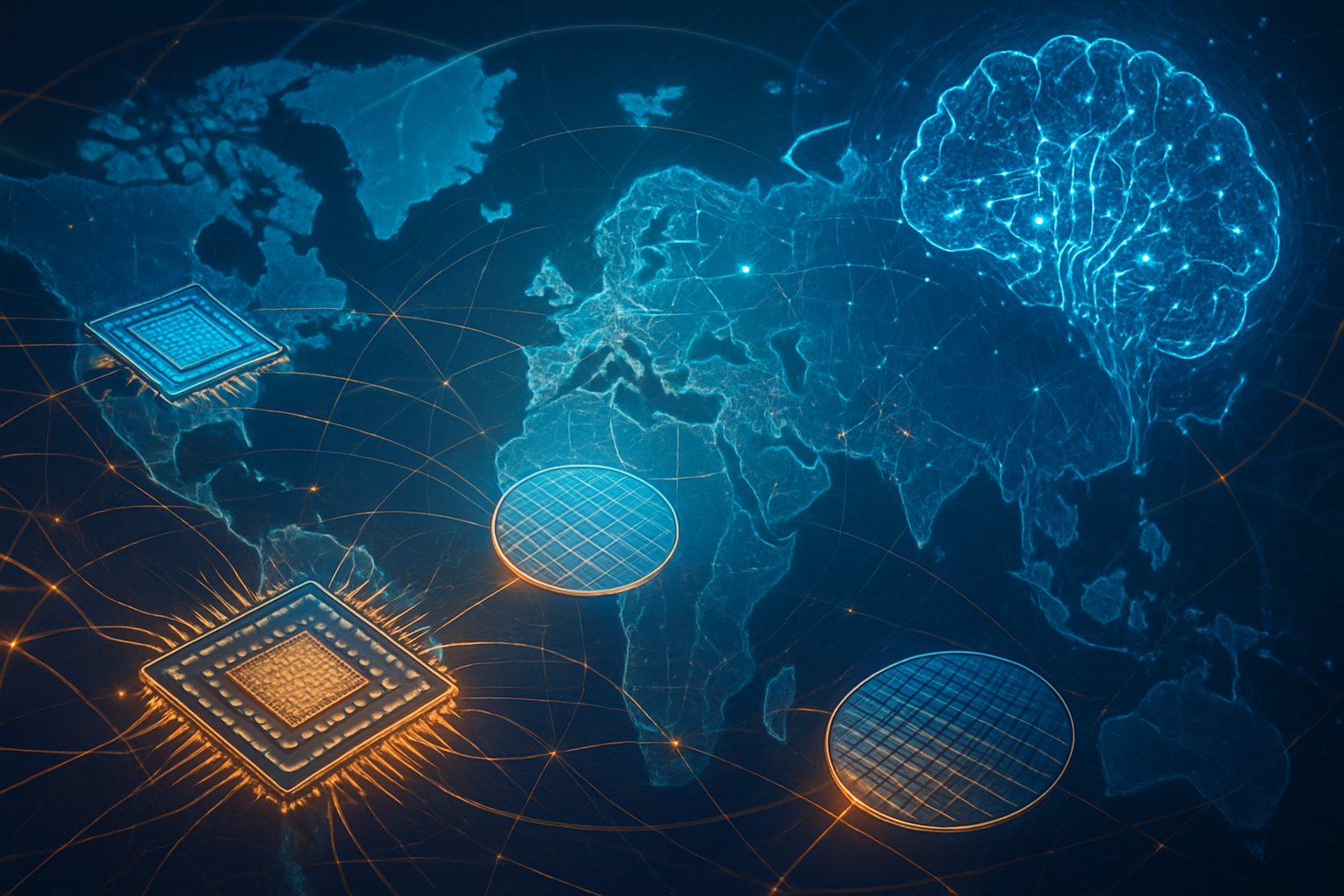
    As of late 2025, the world finds itself in the throes of an unprecedented technological arms race, with advanced Artificial Intelligence (AI) chips emerging as the new battleground for global power and national security. The intricate web of production, trade, and innovation in the semiconductor industry is being fundamentally reshaped by escalating geopolitical tensions, primarily between the United States and China. Beijing's assertive policies aimed at achieving technological self-reliance are not merely altering supply chains but are actively bifurcating the global AI ecosystem, forcing nations and corporations to choose sides or forge independent paths.

    This intense competition extends far beyond economic rivalry, touching upon critical aspects of military modernization, data sovereignty, and the very future of technological leadership. The implications are profound, influencing everything from the design of next-generation AI models to the strategic alliances formed between nations, creating a fragmented yet highly dynamic landscape where innovation is both a tool for progress and a weapon in a complex geopolitical chess match.

    The Silicon Curtain: China's Drive for Self-Sufficiency and Global Reactions

    The core of this geopolitical upheaval lies in China's unwavering commitment to technological sovereignty, particularly in advanced semiconductors and AI. Driven by national security imperatives and an ambitious goal to lead the world in AI by 2030, Beijing has implemented a multi-pronged strategy. Central to this is the "Dual Circulation Strategy," introduced in 2020, which prioritizes domestic innovation and consumption to build resilience against external pressures while selectively engaging with global markets. This is backed by massive state investment, including a new $8.2 billion National AI Industry Investment Fund launched in 2025, with public sector spending on AI projected to exceed $56 billion this year alone.

    A significant policy shift in late 2025 saw the Chinese government mandate that state-funded data centers exclusively use domestically-made AI chips. Projects less than 30% complete have been ordered to replace foreign chips, with provinces offering substantial electricity bill reductions for compliance. This directive directly targets foreign suppliers like NVIDIA Corporation (NASDAQ: NVDA) and Advanced Micro Devices (NASDAQ: AMD), accelerating the rise of an indigenous AI chip ecosystem. Chinese companies such as Huawei, with its Ascend series, Cambricon, MetaX, Moore Threads, and Enflame, are rapidly developing domestic alternatives. Huawei's Ascend 910C chip, expected to mass ship in September 2025, is reportedly rivaling NVIDIA's H20 for AI inference tasks. Furthermore, China is investing heavily in software-level optimizations and model compression techniques to maximize the utility of its available hardware, demonstrating a holistic approach to overcoming hardware limitations. This strategic pivot is a direct response to U.S. export controls, which have inadvertently spurred China's drive for self-sufficiency and innovation in compute efficiency.

    Corporate Crossroads: Navigating a Fragmented Market

    The immediate impact of this "chip divide" is acutely felt across the global technology industry, fundamentally altering competitive landscapes and market positioning. U.S. chipmakers, once dominant in the lucrative Chinese market, are experiencing significant financial strain. NVIDIA Corporation (NASDAQ: NVDA), for instance, reportedly lost $5.5 billion in Q1 2025 due to bans on selling its H20 AI chips to China, with potential total losses reaching $15 billion. Similarly, Advanced Micro Devices (NASDAQ: AMD) faces challenges in maintaining its market share. These companies are now forced to diversify their markets and adapt their product lines to comply with ever-tightening export regulations, including new restrictions on previously "China-specific" chips.

    Conversely, Chinese AI chip developers and manufacturers are experiencing an unprecedented surge in demand and investment. Companies like Huawei, Cambricon, and others are rapidly scaling up production and innovation, driven by government mandates and a captive domestic market. This has led to a bifurcation of the global AI ecosystem, with two parallel systems emerging: one aligned with the U.S. and its allies, and another centered on China's domestic capabilities. This fragmentation poses significant challenges for multinational corporations, which must navigate divergent technological standards, supply chains, and regulatory environments. For startups, particularly those in China, this offers a unique opportunity to grow within a protected market, potentially leading to the emergence of new AI giants. However, it also limits their access to cutting-edge Western technology and global collaboration. The shift is prompting companies worldwide to re-evaluate their supply chain strategies, exploring geographical diversification and reshoring initiatives to mitigate geopolitical risks and ensure resilience.

    A New Cold War for Silicon: Broader Implications and Concerns

    The geopolitical struggle over AI chip production is more than a trade dispute; it represents a new "cold war" for silicon, with profound wider significance for the global AI landscape. This rivalry fits into a broader trend of technological decoupling, where critical technologies are increasingly viewed through a national security lens. The primary concern for Western powers, particularly the U.S., is to prevent China from acquiring advanced AI capabilities that could enhance its military modernization, surveillance infrastructure, and cyber warfare capacities. This has led to an aggressive stance on export controls, exemplified by the U.S. tightening restrictions on advanced AI chips (including NVIDIA's H100, H800, and the cutting-edge Blackwell series) and semiconductor manufacturing equipment.

    However, these measures have inadvertently accelerated China's indigenous innovation, leading to a more self-reliant, albeit potentially less globally integrated, AI ecosystem. The world is witnessing the emergence of divergent technological paths, which could lead to reduced interoperability and distinct standards for AI development. Supply chain disruptions are a constant threat, with China leveraging its dominance in rare earth materials as a countermeasure in tech disputes, impacting the global manufacturing of AI chips. The European Union (EU) and other nations are deeply concerned about their dependence on both the U.S. and China for AI platforms and raw materials. The EU, through its Chips Act and plans for AI "gigafactories," aims to reduce this dependency, while Japan and South Korea are similarly investing heavily in domestic production and strategic partnerships to secure their positions in the global AI hierarchy. This era of technological nationalism risks stifling global collaboration, slowing down overall AI progress, and creating a less secure, more fragmented digital future.

    The Road Ahead: Dual Ecosystems and Strategic Investments

    Looking ahead, the geopolitical implications of AI chip production are expected to intensify, leading to further segmentation of the global tech landscape. In the near term, experts predict the continued development of two distinct AI ecosystems—one predominantly Western, leveraging advanced fabrication technologies from Taiwan (primarily Taiwan Semiconductor Manufacturing Company (NYSE: TSM)), South Korea, and increasingly the U.S. and Europe, and another robustly domestic within China. This will spur innovation in both camps, albeit with different focuses. Western companies will likely push the boundaries of raw computational power, while Chinese firms will excel in optimizing existing hardware and developing innovative software solutions to compensate for hardware limitations.

    Long-term developments will likely see nations redoubling efforts in domestic semiconductor manufacturing. The U.S. CHIPS and Science Act, with its $52.7 billion funding, aims for 30% of global advanced chip output by 2032. Japan's Rapidus consortium is targeting domestic 2nm chip manufacturing by 2027, while the EU's Chips Act has attracted billions in investment. South Korea, in a landmark deal, secured over 260,000 NVIDIA Blackwell GPUs in late 2025, positioning itself as a major AI infrastructure hub. Challenges remain significant, including the immense capital expenditure required for chip fabs, the scarcity of highly specialized talent, and the complex interdependencies of the global supply chain. Experts predict a future where national security dictates technological policy more than ever, with strategic alliances and conditional technology transfers becoming commonplace. The potential for "sovereign AI" infrastructures, independent of foreign platforms, is a key focus for several nations aiming to secure their digital futures.

    A New Era of Tech Nationalism: Navigating the Fragmented Future

    The geopolitical implications of AI chip production and trade represent a watershed moment in the history of technology and international relations. The key takeaway is the irreversible shift towards a more fragmented global tech landscape, driven by national security concerns and the pursuit of technological sovereignty. China's aggressive push for self-reliance, coupled with U.S. export controls, has initiated a new era of tech nationalism where access to cutting-edge AI chips is a strategic asset, not merely a commercial commodity. This development marks a significant departure from the globally integrated supply chains that characterized the late 20th and early 21st centuries.

    The significance of this development in AI history cannot be overstated; it will shape the trajectory of AI innovation, the competitive dynamics of tech giants, and the balance of power among nations for decades to come. While it may foster domestic innovation within protected markets, it also risks stifling global collaboration, increasing costs, and potentially creating less efficient, divergent technological pathways. What to watch for in the coming weeks and months includes further announcements of state-backed investments in semiconductor manufacturing, new export control measures, and the continued emergence of indigenous AI chip alternatives. The resilience of global supply chains, the formation of new tech alliances, and the ability of companies to adapt to this bifurcated world will be critical indicators of the long-term impact of this profound geopolitical realignment.


    This content is intended for informational purposes only and represents analysis of current AI developments.

    TokenRing AI delivers enterprise-grade solutions for multi-agent AI workflow orchestration, AI-powered development tools, and seamless remote collaboration platforms.
    For more information, visit https://www.tokenring.ai/.

  • Geopolitical Fault Lines Jolt Global Auto Industry: German Supplier Aumovio Navigates China’s Chip Export Curbs

    Geopolitical Fault Lines Jolt Global Auto Industry: German Supplier Aumovio Navigates China’s Chip Export Curbs

    November 3, 2025 – The delicate balance of global supply chains has once again been rattled, with German automotive supplier Aumovio reportedly seeking urgent exemptions from China's recently imposed export constraints on chips manufactured by Nexperia. This development, surfacing on November 3, 2025, underscores the profound and immediate impact of escalating geopolitical tensions on the indispensable semiconductor industry, particularly for the global automotive sector. The crisis, which began in late September 2025, has highlighted the inherent fragility of a highly interconnected world, where national security concerns are increasingly overriding traditional economic logic, leaving industries like automotive grappling with potential production shutdowns.

    The immediate significance of Aumovio's plea cannot be overstated. It serves as a stark illustration of how a single point of failure within a complex global supply chain, exacerbated by international political maneuvering, can send ripple effects across continents. For the automotive industry, which relies heavily on a steady flow of foundational semiconductor components, the Nexperia chip saga represents a critical stress test, forcing a re-evaluation of long-held sourcing strategies and a renewed focus on resilience in an increasingly unpredictable geopolitical landscape.

    Geopolitical Chessboard Disrupts Foundational Chip Supply

    The current predicament traces its roots to late September 2025, when the Dutch government, reportedly under significant pressure from the United States, effectively moved to assert control over Nexperia, a Dutch-headquartered chipmaker whose parent company, Wingtech Technology, is backed by the Chinese government. Citing national security concerns, this move was swiftly met with retaliation from Beijing. In early October 2025, China's Ministry of Commerce imposed an export ban on finished semiconductor products from Nexperia's facilities in China, specifically preventing their re-export to European clients. Beijing vehemently criticized the Dutch intervention as improper and accused the US of meddling, setting the stage for a dramatic escalation of trade tensions.

    Nexperia is not a manufacturer of cutting-edge, advanced logic chips, but rather a crucial global supplier of "mature node" chips, including diodes, transistors, and voltage regulators. These seemingly mundane components are, in fact, the bedrock of modern electronics, indispensable across a vast array of industries, with the automotive sector being a primary consumer. Nexperia's unique supply chain model, where most products are manufactured in Europe but then sent to China for finishing and packaging before re-export, made China's ban particularly potent and disruptive. Unlike previous supply chain disruptions that often targeted advanced processors, this incident highlights that even foundational, "older" chip designs are critical and their absence can cripple global manufacturing.

    The technical implications for the automotive industry are severe. Nexperia's components are integral to countless onboard electronic systems in vehicles, from power management ICs and power semiconductors for electric vehicle (EV) battery management systems to motor drives and body control modules. These are not easily substituted; the process of qualifying and integrating alternative components by automakers is notoriously time-consuming, often taking months or even years. This inherent inertia in the automotive supply chain meant that the initial export restrictions immediately sparked widespread alarm, with European carmakers and parts suppliers warning of significant production bottlenecks and potential shutdowns within days or weeks. Initial reactions from the industry indicated a scramble for alternative sources and a stark realization of their vulnerability to geopolitical actions impacting seemingly minor, yet critical, components.

    Ripple Effects Across the Global Tech and Auto Landscape

    The Nexperia chip crisis has sent palpable tremors through the global tech and automotive sectors, exposing vulnerabilities and reshaping competitive dynamics. Among the most directly impacted are major German carmakers like Volkswagen (XTRA: VOW) and BMW (XTRA: BMW), both of whom had already issued stark warnings about looming production stoppages and were preparing to implement reduced working hours for employees. Beyond Germany, Nissan (TYO: 7201) and Honda (TYO: 7267) also reported immediate impacts, with Honda halting production at a facility in Mexico and adjusting operations in North America. These companies, heavily reliant on a just-in-time supply chain, find themselves in a precarious position, facing direct financial losses from manufacturing delays and potential market share erosion if they cannot meet demand.

    The competitive implications extend beyond just the automakers. Semiconductor companies with diversified manufacturing footprints outside of China, or those specializing in mature node chips with alternative packaging capabilities, may stand to benefit in the short term as automakers desperately seek alternative suppliers. However, the crisis also underscores the need for all semiconductor companies to reassess their global manufacturing and supply chain strategies to mitigate future geopolitical risks. For tech giants with significant automotive divisions or those investing heavily in autonomous driving and EV technologies, the disruption highlights the foundational importance of even the simplest chips and the need for robust, resilient supply chains. This incident could accelerate investments in regionalized manufacturing and onshoring initiatives, potentially shifting market positioning in the long run.

    The potential disruption to existing products and services is significant. Beyond direct manufacturing halts, the inability to procure essential components can delay the launch of new vehicle models, impact the rollout of advanced driver-assistance systems (ADAS), and slow down the transition to electric vehicles, all of which rely heavily on a consistent supply of various semiconductor types. This forces companies to prioritize existing models or even consider redesigns to accommodate available components, potentially increasing costs and compromising initial design specifications. The market positioning of companies that can quickly adapt or those with more resilient supply chains will undoubtedly strengthen, while those heavily exposed to single-source dependencies in geopolitically sensitive regions face an uphill battle to maintain their competitive edge and avoid significant reputational damage.

    A Broader Canvas of Geopolitical Fragmentation

    The Nexperia chip saga fits squarely into a broader and increasingly concerning trend of geopolitical fragmentation and the "weaponization of supply chains." This incident is not merely a trade dispute; it is a direct manifestation of escalating tensions, particularly between the United States and China, with Europe often caught in the crosshairs. The Dutch government's decision to intervene with Nexperia, driven by national security concerns and US pressure, reflects a wider shift where strategic autonomy and supply chain resilience are becoming paramount national objectives, often at the expense of pure economic efficiency. This marks a significant departure from the decades-long push for globalized, interconnected supply chains, signaling a new era where national interests frequently override traditional corporate considerations.

    The impacts are far-reaching. Beyond the immediate disruption to the automotive industry, this situation raises fundamental concerns about the future of global trade and investment. It accelerates the trend towards "de-risking" or even "decoupling" from certain regions, prompting companies to rethink their entire global manufacturing footprint. This could lead to increased costs for consumers as companies invest in less efficient, but more secure, regional supply chains. Potential concerns also include the fragmentation of technological standards, reduced innovation due to restricted collaboration, and a general chilling effect on international business as companies face heightened political risks. This situation echoes previous trade disputes, such as the US-China trade war under the Trump administration, but with a more direct and immediate impact on critical technological components, suggesting a deeper and more structural shift in international relations.

    Comparisons to previous AI milestones and breakthroughs, while seemingly disparate, reveal a common thread: the increasing strategic importance of advanced technology and its underlying components. Just as breakthroughs in AI capabilities have spurred a race for technological supremacy, the control over critical hardware like semiconductors has become a central battleground. This incident underscores that the "brains" of AI — the chips — are not immune to geopolitical machinations. It highlights that the ability to innovate and deploy AI depends fundamentally on secure access to the foundational hardware, making semiconductor supply chain resilience a critical component of national AI strategies.

    The Road Ahead: Diversification and Regionalization

    Looking ahead, the Nexperia chip crisis is expected to accelerate several key developments in the near and long term. In the immediate future, companies will intensify their efforts to diversify their sourcing strategies, actively seeking out alternative suppliers and building greater redundancy into their supply chains. This will likely involve engaging with multiple vendors across different geographic regions, even if it means higher initial costs. The partial lifting of China's export ban, allowing for exemptions, provides some critical breathing room, but it does not resolve the underlying geopolitical tensions that sparked the crisis. Therefore, companies will continue to operate with a heightened sense of risk and urgency.

    Over the long term, experts predict a significant push towards regionalization and even reshoring of semiconductor manufacturing and packaging capabilities. Governments, particularly in Europe and North America, are already investing heavily in domestic chip production facilities to reduce reliance on single points of failure in Asia. This trend will likely see increased investment in "mature node" chip production, as the Nexperia incident demonstrated the critical importance of these foundational components. Potential applications on the horizon include the development of more robust supply chain monitoring and analytics tools, leveraging AI to predict and mitigate future disruptions.

    However, significant challenges remain. Building new fabrication plants is incredibly capital-intensive and time-consuming, meaning that immediate solutions to supply chain vulnerabilities are limited. Furthermore, the global nature of semiconductor R&D and manufacturing expertise makes complete decoupling difficult, if not impossible, without significant economic drawbacks. Experts predict that the coming years will be characterized by a delicate balancing act: governments and corporations striving for greater self-sufficiency while still needing to engage with a globally interconnected technological ecosystem. What happens next will largely depend on the ongoing diplomatic efforts between major powers and the willingness of nations to de-escalate trade tensions while simultaneously fortifying their domestic industrial bases.

    Securing the Future: Resilience in a Fragmented World

    The Aumovio-Nexperia situation serves as a potent reminder of the profound interconnectedness and inherent vulnerabilities of modern global supply chains, particularly in the critical semiconductor sector. The crisis, emerging on November 3, 2025, and rooted in geopolitical tensions stemming from late September 2025, underscores that even foundational components like mature node chips can become strategic assets in international disputes, with immediate and severe consequences for industries like automotive. The key takeaway is clear: the era of purely economically driven, hyper-efficient global supply chains is yielding to a new paradigm where geopolitical risk, national security, and resilience are paramount considerations.

    This development holds significant weight in the annals of AI history, not because it's an AI breakthrough, but because it highlights the fundamental dependence of AI innovation on a secure and stable hardware supply. Without the underlying chips, the "brains" of AI systems, the most advanced algorithms and models remain theoretical. The incident underscores that the race for AI supremacy is not just about software and data, but also about controlling the means of production for the essential hardware. It's a stark assessment of how geopolitical friction can directly impede technological progress and economic stability.

    In the long term, this event will undoubtedly accelerate the ongoing shift towards more diversified, regionalized, and resilient supply chains. Companies and governments alike will prioritize strategic autonomy and de-risking over pure cost efficiency, leading to potentially higher costs for consumers but greater stability in critical sectors. What to watch for in the coming weeks and months includes further diplomatic negotiations to ease export restrictions, announcements from major automotive players regarding supply chain adjustments, and continued government investments in domestic semiconductor manufacturing capabilities. The Aumovio case is a microcosm of a larger global realignment, where the pursuit of technological leadership is increasingly intertwined with geopolitical strategy.


    This content is intended for informational purposes only and represents analysis of current AI developments.

    TokenRing AI delivers enterprise-grade solutions for multi-agent AI workflow orchestration, AI-powered development tools, and seamless remote collaboration platforms.
    For more information, visit https://www.tokenring.ai/.

  • Escalating Tech Tensions: EU Considers DUV Export Ban as China Weaponizes Rare Earths

    Escalating Tech Tensions: EU Considers DUV Export Ban as China Weaponizes Rare Earths

    Brussels, Belgium – October 23, 2025 – The global technology landscape is bracing for significant upheaval as the European Union actively considers a ban on the export of Deep Ultraviolet (DUV) lithography machines to China. This potential retaliatory measure comes in direct response to Beijing's recently expanded and strategically critical export controls on rare earth elements, igniting fears of a deepening "tech cold war" and unprecedented disruptions to the global semiconductor supply chain and international relations. The move signals a dramatic escalation in the ongoing struggle for technological dominance and strategic autonomy, with profound implications for industries worldwide, from advanced electronics to electric vehicles and defense systems.

    The proposed DUV machine export ban is not merely a symbolic gesture but a calculated counter-move targeting China's industrial ambitions, particularly its drive for self-sufficiency in semiconductor manufacturing. While the EU's immediate focus remains on diplomatic de-escalation, the discussions underscore a growing determination among Western powers to protect critical technologies and reduce strategic dependencies. This tit-for-tat dynamic, where essential resources and foundational manufacturing equipment are weaponized, marks a critical juncture in international trade policy, moving beyond traditional tariffs to controls over the very building blocks of the digital economy.

    The Technical Chessboard: DUV Lithography Meets Rare Earth Dominance

    The core of this escalating trade dispute lies in two highly specialized and strategically vital technological domains: DUV lithography and rare earth elements. Deep Ultraviolet (DUV) lithography is the workhorse of the semiconductor industry, employing deep ultraviolet light (typically 193 nm) to print intricate circuit patterns onto silicon wafers. While Extreme Ultraviolet (EUV) lithography is used for the most cutting-edge chips (7nm and below), DUV technology remains indispensable for manufacturing over 95% of chip layers globally, powering everything from smartphone touchscreens and memory chips to automotive navigation systems. The Netherlands-based ASML Holding N.V. (AMS: ASML, NASDAQ: ASML) is the world's leading manufacturer of these sophisticated machines, and the Dutch government has already implemented national export restrictions on some advanced DUV technology to China since early 2023, largely in coordination with the United States. An EU-wide ban would solidify and expand such restrictions.

    China, on the other hand, holds an overwhelming dominance in the global rare earth market, controlling approximately 70% of global rare earth mining and a staggering 90% of global rare earth processing. These 17 elements are crucial for a vast array of high-tech applications, including permanent magnets for electric vehicles and wind turbines, advanced electronics, and critical defense systems. Beijing's strategic tightening of export controls began in April 2025 with seven heavy rare earth elements. However, the situation escalated dramatically on October 9, 2025, when China's Ministry of Commerce and the General Administration of Customs announced comprehensive new measures, effective November 8, 2025. These expanded controls added five more rare earth elements (including holmium, erbium, and europium) and, crucially, extended restrictions to include processing equipment and associated technologies. Furthermore, new "foreign direct product" rules, mirroring US regulations, are set to take effect on December 1, 2025, allowing China to restrict products made abroad using Chinese rare earth materials or technologies. This represents a strategic shift from volume-based restrictions to "capability-based controls," aimed at preserving China's technological lead in the rare earth value chain.

    The proposed EU DUV ban would be a direct, reciprocal response to China's "capability-based controls." While China targets the foundational materials and processing knowledge for high-tech manufacturing, the EU would target the foundational equipment necessary for China to produce a wide range of essential semiconductors. This differs significantly from previous trade disputes, as it directly attacks the technological underpinnings of industrial capacity, rather than just finished goods or raw materials. Initial reactions from policy circles suggest a strong sentiment within the EU that such a measure, though drastic, might be necessary to demonstrate resolve and counter China's economic coercion.

    Competitive Implications Across the Tech Spectrum

    The ripple effects of such a trade conflict would be felt across the entire technology ecosystem, impacting established tech giants, semiconductor manufacturers, and emerging startups alike. For ASML Holding N.V. (AMS: ASML, NASDAQ: ASML), the world's sole producer of EUV and a major producer of DUV lithography systems, an EU-wide ban would further solidify existing restrictions on its sales to China, potentially impacting its revenue streams from the Chinese market, though it would also align with broader Western efforts to control advanced technology exports. Chinese semiconductor foundries, such as Semiconductor Manufacturing International Corporation (HKG: 0981, SSE: 688046), would face significant challenges in expanding or even maintaining their mature node production capabilities without access to new DUV machines, hindering their ambition for self-sufficiency.

    On the other side, European industries heavily reliant on rare earths – including automotive manufacturers transitioning to electric vehicles, renewable energy companies building wind turbines, and defense contractors – would face severe supply chain disruptions, production delays, and increased costs. While the immediate beneficiaries of such a ban might be non-Chinese rare earth processing companies or alternative DUV equipment manufacturers (if any could scale up quickly), the broader impact is likely to be negative for global trade and economic efficiency. US tech giants, while not directly targeted by the EU's DUV ban, would experience indirect impacts through global supply chain instability, potential increases in chip prices, and a more fragmented global market.

    This situation forces companies to re-evaluate their global supply chain strategies, accelerating trends towards "de-risking" and diversification away from single-country dependencies. Market positioning will increasingly be defined by access to critical resources and foundational technologies, potentially leading to significant investment in domestic or allied production capabilities for both rare earths and semiconductors. Startups and smaller innovators, particularly those in hardware development, could face higher barriers to entry due to increased component costs and supply chain uncertainties.

    A Defining Moment in the Broader AI Landscape

    While not directly an AI advancement, this geopolitical struggle over DUV machines and rare earths has profound implications for the broader AI landscape. AI development, from cutting-edge research to deployment in various applications, is fundamentally dependent on hardware – the chips, sensors, and power systems that rely on both advanced and mature node semiconductors, and often incorporate rare earth elements. Restrictions on DUV machines could slow China's ability to produce essential chips for AI accelerators, edge AI devices, and the vast data centers that fuel AI development. Conversely, rare earth controls impact the magnets in advanced robotics, drones, and other AI-powered physical systems, as well as the manufacturing processes for many electronic components.

    This scenario fits into a broader trend of technological nationalism and the weaponization of economic dependencies. It highlights the growing recognition that control over foundational technologies and critical raw materials is paramount for national security and economic competitiveness in the age of AI. The potential concerns are widespread: economic decoupling could lead to less efficient global innovation, higher costs for consumers, and a slower pace of technological advancement in affected sectors. There's also the underlying concern that such controls could impact military applications, as both DUV machines and rare earths are vital for defense technologies.

    Comparing this to previous AI milestones, this event signifies a shift from celebrating breakthroughs in algorithms and models to grappling with the geopolitical realities of their underlying hardware infrastructure. It underscores that the "AI race" is not just about who has the best algorithms, but who controls the means of production for the chips and components that power them. This is a critical juncture where supply chain resilience and strategic autonomy become as important as computational power and data access for national AI strategies.

    The Path Ahead: Diplomacy, Diversification, and Disruption

    The coming weeks and months will be crucial in determining the trajectory of this escalating tech rivalry. Near-term developments will center on the outcomes of diplomatic engagements between the EU and China. EU Trade Commissioner Maroš Šefčovič has invited Chinese Commerce Minister Wang Wentao to Brussels for face-to-face negotiations following a "constructive" video call in October 2025. The effectiveness of China's new rare earth export controls, which become effective on November 8, 2025, and their extraterritorial "foreign direct product" rules on December 1, 2025, will also be closely watched. The EU's formal decision regarding the DUV export ban, and whether it materializes as a collective measure or remains a national prerogative like the Netherlands', will be a defining moment.

    In the long term, experts predict a sustained push towards diversification of rare earth supply chains, with significant investments in mining and processing outside China, particularly in North America, Australia, and Europe. Similarly, efforts to onshore or "friend-shore" semiconductor manufacturing will accelerate, with initiatives like the EU Chips Act and the US CHIPS Act gaining renewed urgency. However, these efforts face immense challenges, including the high cost and environmental impact of establishing new rare earth processing facilities, and the complexity and capital intensity of building advanced semiconductor fabs. What experts predict is a more fragmented global tech ecosystem, where supply chains are increasingly bifurcated along geopolitical lines, leading to higher production costs and potentially slower innovation in certain areas.

    Potential applications and use cases on the horizon might include new material science breakthroughs to reduce reliance on specific rare earths, or advanced manufacturing techniques that require less sophisticated lithography. However, the immediate future is more likely to be dominated by efforts to secure existing supply chains and mitigate risks.

    A Critical Juncture in AI's Global Fabric

    In summary, the EU's consideration of a DUV machine export ban in response to China's rare earth controls represents a profound and potentially irreversible shift in global trade and technology policy. This development underscores the escalating tech rivalry between major powers, where critical resources and foundational manufacturing capabilities are increasingly weaponized as instruments of geopolitical leverage. The implications are severe, threatening to fragment global supply chains, increase costs, and reshape international relations for decades to come.

    This moment will be remembered as a critical juncture in AI history, not for a breakthrough in AI itself, but for defining the geopolitical and industrial landscape upon which future AI advancements will depend. It highlights the vulnerability of a globally interconnected technological ecosystem to strategic competition and the urgent need for nations to balance interdependence with strategic autonomy. What to watch for in the coming weeks and months are the outcomes of the diplomatic negotiations, the practical enforcement and impact of China's rare earth controls, and the EU's ultimate decision regarding DUV export restrictions. These actions will set the stage for the future of global technology and the trajectory of AI development.


    This content is intended for informational purposes only and represents analysis of current AI developments.

    TokenRing AI delivers enterprise-grade solutions for multi-agent AI workflow orchestration, AI-powered development tools, and seamless remote collaboration platforms.
    For more information, visit https://www.tokenring.ai/.

  • Global Supply Chains Brace for Impact as Dutch-China Chip Standoff Escalates Over Nexperia

    Global Supply Chains Brace for Impact as Dutch-China Chip Standoff Escalates Over Nexperia

    Amsterdam, Netherlands – October 21, 2025 – A deepening geopolitical rift between the Netherlands and China over the critical chipmaker Nexperia has sent shockwaves through the global automotive supply chain and intensified international trade tensions. The Dutch government's unprecedented move to seize control of Nexperia, citing national economic security and severe governance shortcomings, has triggered swift and significant retaliation from Beijing, threatening to cripple an already fragile automotive industry dependent on Nexperia's vital components.

    The escalating dispute, which saw the Dutch government invoke a Cold War-era emergency law in late September and subsequently suspend Nexperia's Chinese CEO, Zhang Xuezheng, on October 7, has been met with China's imposition of export restrictions on Nexperia's products manufactured on Chinese soil. This tit-for-tat escalation underscores the growing intersection of economic policy and national security, with the Netherlands acting under intense pressure from the United States to safeguard access to crucial semiconductor technology and prevent its transfer to China. Automakers worldwide are now bracing for potential production halts within weeks, highlighting the precarious nature of highly globalized supply chains in an era of heightened geopolitical competition.

    Unpacking the Nexperia Nexus: Governance, Geopolitics, and Critical Components

    The current stand-off is rooted in a complex interplay of corporate governance issues, allegations of financial misconduct, and the broader U.S.-China technology rivalry. Nexperia, a Dutch-based company with deep historical ties to Philips Semiconductors, was acquired by China's Wingtech Technology (SSE: 600745) between 2017 and 2019, a move reflecting China's strategic push into the global semiconductor industry. Zhang Xuezheng, Wingtech's founder, assumed the role of Nexperia's CEO in 2020, setting the stage for the current conflict.

    The Dutch government's intervention was triggered by "recent and acute signals of serious governance shortcomings and actions within Nexperia." Court documents revealed allegations against Zhang Xuezheng, including "recklessness" and conflicts of interest. These claims suggest he dismissed Dutch managers, replaced them with inexperienced staff, and reportedly ordered Nexperia to purchase $200 million worth of silicon wafers from another of his companies, WingSkySemi, despite Nexperia's limited need. Critically, there were fears he intended to transfer Nexperia's European manufacturing operations and technological knowledge to China, raising alarms about intellectual property and strategic autonomy.

    A significant catalyst for the Dutch action was mounting pressure from the United States. In June 2025, U.S. officials warned the Netherlands that Nexperia risked losing access to the American market if Zhang Xuezheng remained CEO, following Wingtech Technology's placement on the U.S. "entity list" of sanctioned companies in 2024. In September 2025, the U.S. expanded its export control restrictions to include subsidiaries at least 50% owned by entities on its Entity List, directly impacting Nexperia due to its Chinese ownership. The Dutch government's seizure of control was thus a calculated move to preserve Nexperia's market access and prevent its technological capabilities from being fully absorbed into a sanctioned entity. This situation differs from previous tech disputes, such as the U.S. restrictions on Huawei, by directly involving a Western government's intervention into the ownership and management of a private company, rather than solely relying on export controls. Initial reactions from the AI research community and industry experts have focused on the precedent this sets for government intervention in critical technology sectors and the potential for further fragmentation of global tech supply chains.

    The Ripple Effect: Automotive Giants and the Semiconductor Scramble

    The implications of the Nexperia stand-off are particularly dire for the automotive sector, which is still recovering from the lingering effects of the 2020-2022 chip crisis. Nexperia is a high-volume supplier of discrete semiconductors, including diodes, transistors, and MOSFETs, which are indispensable components in a vast array of vehicle electronics, from engine control units to advanced driver-assistance systems (ADAS). The company commands approximately 40% of the global market for basic transistors and diodes, making its disruption a critical threat to automotive production worldwide.

    China's retaliatory export ban on Nexperia's Chinese-manufactured products has severed a vital supply line, placing major automakers such as BMW (BMWYY), Toyota (TM), Mercedes-Benz (MBG), Volkswagen (VWAGY), and Stellantis (STLA) in an immediate predicament. These companies are heavily reliant on Nexperia's chips and face the prospect of production halts within weeks, as existing inventories are rapidly depleting. The European Automobile Manufacturers' Association (ACEA) has voiced "deep concern" about "significant disruption to European vehicle manufacturing," underscoring the severity of the situation.

    This development creates competitive advantages for chipmakers outside of the direct conflict zone, particularly Taiwanese manufacturers, who have already reported a surge in transferred and rush orders. While some automakers diversified their supplier base after the previous chip crisis, many still depend on Nexperia, and the process of qualifying and integrating alternative sources is both time-consuming and costly. This disruption not only threatens existing product lines but also forces companies to re-evaluate their entire supply chain resilience strategies, potentially accelerating the trend towards regionalized manufacturing and increased domestic chip production, albeit at a higher cost.

    A New Era of Tech Nationalism and Supply Chain Fragmentation

    The Nexperia crisis is more than just a corporate dispute; it is a stark manifestation of a broader trend towards tech nationalism and the weaponization of economic interdependence. This incident fits into the evolving geopolitical landscape where critical technologies, particularly semiconductors, are increasingly viewed as matters of national security. The Dutch government's use of an emergency law to seize control of Nexperia highlights a growing willingness by Western nations to intervene directly in the ownership and management of strategically vital companies, especially when Chinese state-backed entities are involved.

    This situation builds upon previous milestones, such as the U.S. restrictions on Huawei and the UK's forced divestment of Nexperia's stake in Newport Wafer Fab in 2022, demonstrating a concerted effort by Western governments to limit China's access to advanced technology and prevent the transfer of intellectual property. The Nexperia case, however, represents a significant escalation, pushing the boundaries of state intervention into corporate governance. Potential concerns include the precedent this sets for international investment, the risk of further fracturing global supply chains, and the potential for a tit-for-tat cycle of retaliatory measures that could harm global trade and economic growth. China's accusation of "21st-century piracy" and its swift export restrictions underscore the high stakes involved and the breakdown of trust in established market principles.

    The Road Ahead: Diplomatic Deadlock and Supply Chain Reshaping

    The immediate future of the Nexperia stand-off remains uncertain, with a diplomatic stalemate currently in effect. As of October 21, 2025, Dutch Minister of Economic Affairs, Vincent Karremans, has confirmed ongoing direct talks with Chinese counterparts to resolve the dispute and lift the export ban, acknowledging the "mutually dependent relationship" and shared interest in finding a solution. However, no immediate progress has been reported. Adding to the complexity, Nexperia's Chinese division publicly declared its independence from Dutch headquarters, instructing its employees to disregard directives from the Netherlands, leading to accusations from the Dutch HQ of "falsehoods" and "unauthorised actions" by the ousted CEO.

    Expected near-term developments include continued diplomatic efforts, likely accompanied by increasing pressure from the automotive industry for a swift resolution. In the long term, this incident will likely accelerate the trend towards supply chain diversification and regionalization. Companies will prioritize resilience over cost efficiency, investing in domestic or allied-nation manufacturing capabilities to reduce reliance on potentially volatile geopolitical hotspots. Potential applications on the horizon include the development of more robust, localized semiconductor ecosystems and increased government funding for strategic industries. Challenges that need to be addressed include the high cost of reshoring manufacturing, the shortage of skilled labor, and the need for international cooperation to establish new, secure supply chain norms. Experts predict that this stand-off will serve as a critical turning point, pushing the global economy further away from unchecked globalization and towards a more fragmented, security-conscious model.

    A Defining Moment for Global Tech and Trade

    The geopolitical stand-off between the Netherlands and China over Nexperia represents a defining moment in the ongoing struggle for technological supremacy and economic security. The key takeaways are clear: critical technologies are now firmly intertwined with national security, governments are increasingly willing to intervene directly in corporate affairs to protect strategic assets, and global supply chains are highly vulnerable to geopolitical disruptions.

    This development's significance in AI history, while not directly an AI breakthrough, lies in its impact on the foundational hardware that underpins AI development. The availability and security of semiconductor supply chains are paramount for the continued advancement and deployment of AI technologies. A fractured and uncertain chip supply environment could slow innovation and increase costs for AI companies, tech giants, and startups alike. The Nexperia crisis underscores the fragility of the global tech ecosystem and the systemic risks posed by escalating geopolitical tensions.

    What to watch for in the coming weeks and months includes the outcome of diplomatic negotiations, any further retaliatory measures from China, and the strategies major automakers adopt to mitigate the impending chip shortages. The long-term impact will likely reshape global trade patterns, accelerate the decoupling of technology supply chains, and usher in an era where economic policy is increasingly dictated by national security imperatives.


    This content is intended for informational purposes only and represents analysis of current AI developments.

    TokenRing AI delivers enterprise-grade solutions for multi-agent AI workflow orchestration, AI-powered development tools, and seamless remote collaboration platforms.
    For more information, visit https://www.tokenring.ai/.

  • NXP Semiconductors Navigates Reignited Trade Tensions Amidst AI Supercycle: A Valuation Under Scrutiny

    NXP Semiconductors Navigates Reignited Trade Tensions Amidst AI Supercycle: A Valuation Under Scrutiny

    October 14, 2025 – The global technology landscape finds NXP Semiconductors (NASDAQ: NXPI) at a critical juncture, as earlier optimism surrounding easing trade war fears has given way to renewed geopolitical friction between the United States and China. This oscillating trade environment, coupled with an insatiable demand for artificial intelligence (AI) technologies, is profoundly influencing NXP's valuation and reshaping investment strategies across the semiconductor and AI sectors. While the AI boom continues to drive unprecedented capital expenditure, a re-escalation of trade tensions in October 2025 introduces significant uncertainty, pushing companies like NXP to adapt rapidly to a fragmented yet innovation-driven market.

    The initial months of 2025 saw NXP Semiconductors' stock rebound as a more conciliatory tone emerged in US-China trade relations, signaling a potential stabilization for global supply chains. However, this relief proved short-lived. Recent actions, including China's expanded export controls on rare earth minerals and the US's retaliatory threats of 100% tariffs on all Chinese goods, have reignited trade war anxieties. This dynamic environment places NXP, a key player in automotive and industrial semiconductors, in a precarious position, balancing robust demand in its core markets against the volatility of international trade policy. The immediate significance for the semiconductor and AI sectors is a heightened sensitivity to geopolitical rhetoric, a dual focus on global supply chain diversification, and an unyielding drive toward AI-fueled innovation despite ongoing trade uncertainties.

    Economic Headwinds and AI Tailwinds: A Detailed Look at Semiconductor Market Dynamics

    The semiconductor industry, with NXP Semiconductors at its forefront, is navigating a complex interplay of robust AI-driven growth and persistent macroeconomic headwinds in October 2025. The global semiconductor market is projected to reach approximately $697 billion in 2025, an 11-15% year-over-year increase, signaling a strong recovery and setting the stage for a $1 trillion valuation by 2030. This growth is predominantly fueled by the AI supercycle, yet specific market factors and broader economic trends exert considerable influence.

    NXP's cornerstone, the automotive sector, remains a significant growth engine. The automotive semiconductor market is expected to exceed $85 billion in 2025, driven by the escalating adoption of electric vehicles (EVs), advancements in Advanced Driver-Assistance Systems (ADAS) (Level 2+ and Level 3 autonomy), sophisticated infotainment systems, and 5G connectivity. NXP's strategic focus on this segment is evident in its Q2 2025 automotive sales, which showed a 3% sequential increase to $1.73 billion, demonstrating resilience against broader declines. The company's acquisition of TTTech Auto in January 2025 and the launch of advanced imaging radar processors (S32R47) designed for Level 2+ to Level 4 autonomous driving underscore its commitment to this high-growth area.

    Conversely, NXP's Industrial & IoT segment has shown weakness, with an 11% decline in Q1 2025 and continued underperformance in Q2 2025, despite the overall IIoT chipset market experiencing robust growth projected to reach $120 billion by 2030. This suggests NXP faces specific challenges or competitive pressures within this recovering segment. The consumer electronics market offers a mixed picture; while PC and smartphone sales anticipate modest growth, the real impetus comes from AR/XR applications and smart home devices leveraging ambient computing, fueling demand for advanced sensors and low-power chips—areas NXP also targets, albeit with a niche focus on secure mobile wallets.

    Broader economic trends, such as inflation, continue to exert pressure. Rising raw material costs (e.g., silicon wafers up to 25% by 2025) and increased utility expenses affect profitability. Higher interest rates elevate borrowing costs for capital-intensive semiconductor companies, potentially slowing R&D and manufacturing expansion. NXP noted increased financial expenses in Q2 2025 due to rising interest costs. Despite these headwinds, global GDP growth of around 3.2% in 2025 indicates a recovery, with the semiconductor industry significantly outpacing it, highlighting its foundational role in modern innovation. The insatiable demand for AI is the most significant market factor, driving investments in AI accelerators, high-bandwidth memory (HBM), GPUs, and specialized edge AI architectures. Global sales for generative AI chips alone are projected to surpass $150 billion in 2025, with companies increasingly focusing on AI infrastructure as a primary revenue source. This has led to massive capital flows into expanding manufacturing capabilities, though a recent shift in investor focus from AI hardware to AI software firms and renewed trade restrictions dampen enthusiasm for some chip stocks.

    AI's Shifting Tides: Beneficiaries, Competitors, and Strategic Realignment

    The fluctuating economic landscape and the complex dance of trade relations are profoundly affecting AI companies, tech giants, and startups in October 2025, creating both clear beneficiaries and intense competitive pressures. The recent easing of trade war fears, albeit temporary, provided a significant boost, particularly for AI-related tech stocks. However, the subsequent re-escalation introduces new layers of complexity.

    Companies poised to benefit from periods of reduced trade friction and the overarching AI boom include semiconductor giants like Nvidia (NASDAQ: NVDA), Broadcom (NASDAQ: AVGO), AMD (NASDAQ: AMD), Micron Technology (NASDAQ: MU), Intel (NASDAQ: INTC), and Qualcomm (NASDAQ: QCOM). Lower tariffs and stable supply chains directly translate to reduced costs and improved market access, especially in crucial markets like China. Broadcom, for instance, saw a significant surge after partnering with OpenAI to produce custom AI processors. Major tech companies with global footprints, such as Apple (NASDAQ: AAPL), Microsoft (NASDAQ: MSFT), and Amazon (NASDAQ: AMZN), also stand to gain from overall global economic stability and improved cross-border business operations. In the cloud infrastructure space, Google Cloud (NASDAQ: GOOGL) is experiencing a "meteoric rise," stealing significant market share, while Microsoft Azure continues to benefit from robust AI infrastructure spending.

    The competitive landscape among AI labs and tech companies is intensifying. AMD is aggressively challenging Nvidia's long-standing dominance in AI chips with its next-generation Instinct MI300 series accelerators, offering superior memory capacity and bandwidth tailored for large language models (LLMs) and generative AI. This provides a potentially more cost-effective alternative to Nvidia's GPUs. Nvidia, in response, is diversifying by pushing to "democratize" AI supercomputing with its new DGX Spark, a desktop-sized AI supercomputer, aiming to foster innovation in robotics, autonomous systems, and edge computing. A significant strategic advantage is emerging from China, where companies are increasingly leading in the development and release of powerful open-source AI models, potentially influencing industry standards and global technology trajectories. This contrasts with American counterparts like OpenAI and Google, who tend to keep their most powerful AI models proprietary.

    However, potential disruptions and concerns also loom. Rising concerns about "circular deals" and blurring lines between revenue and equity among a small group of influential tech companies (e.g., OpenAI, Nvidia, AMD, Oracle, Microsoft) raise questions about artificial demand and inflated valuations, reminiscent of the dot-com bubble. Regulatory scrutiny on market concentration is also growing, with competition bodies actively monitoring the AI market for potential algorithmic collusion, price discrimination, and entry barriers. The re-escalation of trade tensions, particularly the new US tariffs and China's rare earth export controls, could disrupt supply chains, increase costs, and force companies to realign their procurement and manufacturing strategies, potentially fragmenting the global tech ecosystem. The imperative to demonstrate clear, measurable returns on AI investments is growing amidst "AI bubble" concerns, pushing companies to prioritize practical, value-generating applications over speculative hype.

    AI's Grand Ascent: Geopolitical Chess, Ethical Crossroads, and a New Industrial Revolution

    The wider significance of easing, then reigniting, trade war fears and dynamic economic trends on the broader AI landscape in October 2025 cannot be overstated. These developments are not merely market fluctuations but represent a critical phase in the ongoing AI revolution, characterized by unprecedented investment, geopolitical competition, and profound ethical considerations.

    The "AI Supercycle" continues its relentless ascent, fueled by massive government and private sector investments. The European Union's €110 billion pledge and the US CHIPS Act's substantial funding for advanced chip manufacturing underscore AI's status as a core component of national strategy. Strategic partnerships, such as OpenAI's collaborations with Broadcom (NASDAQ: AVGO) and AMD (NASDAQ: AMD) to design custom AI chips, highlight a scramble for enhanced performance, scalability, and supply chain resilience. The global AI market is projected to reach an astounding $1.8 trillion by 2030, with an annual growth rate of approximately 35.9%, firmly establishing AI as a fundamental economic driver. Furthermore, AI is becoming central to strengthening global supply chain resilience, with predictive analytics and optimized manufacturing processes becoming commonplace. AI-driven workforce analytics are also transforming global talent mobility, addressing skill shortages and streamlining international hiring.

    However, this rapid advancement is accompanied by significant concerns. Geopolitical fragmentation in AI is a pressing issue, with diverging national strategies and the absence of unified global standards for "responsible AI" leading to regionalized ecosystems. While the UN General Assembly has initiatives for international AI governance, keeping pace with rapid technological developments and ensuring compliance with regulations like the EU AI Act remains a challenge. Ethical AI and deep-rooted bias in large models are also critical concerns, with potential for discrimination in various applications and significant financial losses for businesses. The demand for robust ethical frameworks and responsible AI practices is growing. Moreover, the "AI Divide" risks exacerbating global inequalities, as smaller and developing countries may lack access to the necessary infrastructure, talent, and resources. The immense demands on compute power and energy consumption, with global AI compute requirements potentially reaching 200 gigawatts by 2030, raise serious questions about environmental impact and sustainability.

    Compared to previous AI milestones, the current era is distinct. AI is no longer merely an algorithmic advancement or a hardware acceleration; it's transitioning into an "engineer" that designs and optimizes its own underlying hardware, accelerating innovation at an unprecedented pace. The development and adoption rates are dramatically faster than previous AI booms, with AI training computation doubling every six months. AI's geopolitical centrality, moving beyond purely technological innovation to a core instrument of national influence, is also far more pronounced. Finally, the "platformization" of AI, exemplified by OpenAI's Apps SDK, signifies a shift from standalone applications to foundational ecosystems that integrate AI across diverse services, blurring the lines between AI interfaces, app ecosystems, and operating systems. This marks a truly transformative period for global AI development.

    The Horizon: Autonomous Agents, Specialized Silicon, and Persistent Challenges

    Looking ahead, the AI and semiconductor sectors are poised for profound transformations, driven by evolving technological capabilities and the imperative to navigate geopolitical and economic complexities. For NXP Semiconductors (NASDAQ: NXPI), these future developments present both immense opportunities and significant challenges.

    In the near term (2025-2027), AI will see the proliferation of autonomous agents, moving beyond mere tools to become "digital workers" capable of complex decision-making and multi-agent coordination. Generative AI will become widespread, with 75% of businesses expected to use it for synthetic data creation by 2026. Edge AI, enabling real-time decisions closer to the data source, will continue its rapid growth, particularly in ambient computing for smart homes. The semiconductor sector will maintain its robust growth trajectory, driven by AI chips, with global sales projected to reach $697 billion in 2025. High Bandwidth Memory (HBM) will remain a critical component for AI infrastructure, with demand expected to outstrip supply. NXP is strategically positioned to capitalize on these trends, targeting 6-10% CAGR from 2024-2027, with its automotive and industrial sectors leading the charge (8-12% growth). The company's investments in software-defined vehicles (SDV), radar systems, and strategic acquisitions like TTTech Auto and Kinara AI underscore its commitment to secure edge processing and AI-optimized solutions.

    Longer term (2028-2030 and beyond), AI will achieve "hyper-autonomy," orchestrating decisions and optimizing entire value chains. Synthetic data will likely dominate AI model training, and "machine customers" (e.g., smart appliances making purchases) are predicted to account for 20% of revenue by 2030. Advanced AI capabilities, including neuro-symbolic AI and emotional intelligence, will drive agent adaptability and trust, transforming healthcare, entertainment, and smart environments. The semiconductor industry is on track to become a $1 trillion market by 2030, propelled by advanced packaging, chiplets, and 3D ICs, alongside continued R&D in new materials. Data centers will remain dominant, with the total semiconductor market for this segment growing to nearly $500 billion by 2030, led by GPUs and AI ASICs. NXP's long-term strategy will hinge on leveraging its strengths in automotive and industrial markets, investing in R&D for integrated circuits and processors, and navigating the increasing demand for secure edge processing and connectivity.

    The easing of trade war fears earlier in 2025 provided a temporary boost, reducing tariff burdens and stabilizing supply chains. However, the re-escalation of tensions in October 2025 means geopolitical considerations will continue to shape the industry, fostering localized production and potentially fragmented global supply chains. The "AI Supercycle" remains the primary economic driver, leading to massive capital investments and rapid technological advancements. Key applications on the horizon include hyper-personalization, advanced robotic systems, transformative healthcare AI, smart environments powered by ambient computing, and machine-to-machine commerce. Semiconductors will be critical for advanced autonomous systems, smart infrastructure, extended reality (XR), and high-performance AI data centers.

    However, significant challenges persist. Supply chain resilience remains vulnerable to geopolitical conflicts and concentration of critical raw materials. The global semiconductor industry faces an intensifying talent shortage, needing an additional one million skilled workers by 2030. Technological hurdles, such as the escalating cost of new fabrication plants and the limits of Moore's Law, demand continuous innovation in advanced packaging and materials. The immense power consumption and carbon footprint of AI operations necessitate a strong focus on sustainability. Finally, ethical and regulatory frameworks for AI, data governance, privacy, and cybersecurity will become paramount as AI agents grow more autonomous, demanding robust compliance strategies. Experts predict a sustained "AI Supercycle" that will fundamentally reshape the semiconductor industry into a trillion-dollar market, with a clear shift towards specialized silicon solutions and increased R&D and CapEx, while simultaneously intensifying the focus on sustainability and talent scarcity.

    A Crossroads for AI and Semiconductors: Navigating Geopolitical Currents and the Innovation Imperative

    The current state of NXP Semiconductors (NASDAQ: NXPI) and the broader AI and semiconductor sectors in October 2025 is defined by a dynamic interplay of technological exhilaration and geopolitical uncertainty. While the year began with a hopeful easing of trade war fears, the subsequent re-escalation of US-China tensions has reintroduced volatility, underscoring the delicate balance between global economic integration and national strategic interests. The overarching narrative remains the "AI Supercycle," a period of unprecedented investment and innovation that continues to reshape industries and redefine technological capabilities.

    Key Takeaways: NXP Semiconductors' valuation, initially buoyed by a perceived de-escalation of trade tensions, is now facing renewed pressure from retaliatory tariffs and export controls. Despite strong analyst sentiment and NXP's robust performance in the automotive segment—a critical growth driver—the company's outlook is intricately tied to the shifting geopolitical landscape. The global economy is increasingly reliant on massive corporate capital expenditures in AI infrastructure, which acts as a powerful growth engine. The semiconductor industry, fueled by this AI demand, alongside automotive and IoT sectors, is experiencing robust growth and significant global investment in manufacturing capacity. However, the reignition of US-China trade tensions, far from easing, is creating market volatility and challenging established supply chains. Compounding this, growing concerns among financial leaders suggest that the AI market may be experiencing a speculative bubble, with a potential disconnect between massive investments and tangible returns.

    Significance in AI History: These developments mark a pivotal moment in AI history. The sheer scale of investment in AI infrastructure signifies AI's transition from a specialized technology to a foundational pillar of the global economy. This build-out, demanding advanced semiconductor technology, is accelerating innovation at an unprecedented pace. The geopolitical competition for semiconductor dominance, highlighted by initiatives like the CHIPS Act and China's export controls, underscores AI's strategic importance for national security and technological sovereignty. The current environment is forcing a crucial shift towards demonstrating tangible productivity gains from AI, moving beyond speculative investment to real-world, specialized applications.

    Final Thoughts on Long-Term Impact: The long-term impact will be transformative yet complex. Sustained high-tech investment will continue to drive innovation in AI and semiconductors, fundamentally reshaping industries from automotive to data centers. The emphasis on localized semiconductor production, a direct consequence of geopolitical fragmentation, will create more resilient, though potentially more expensive, supply chains. For NXP, its strong position in automotive and IoT, combined with strategic local manufacturing initiatives, could provide resilience against global disruptions, but navigating renewed trade barriers will be crucial. The "AI bubble" concerns suggest a potential market correction that could lead to a re-evaluation of AI investments, favoring companies that can demonstrate clear, measurable returns. Ultimately, the firms that successfully transition AI from generalized capabilities to specialized, scalable applications delivering tangible productivity will emerge as long-term winners.

    What to Watch For in the Coming Weeks and Months:

    1. NXP's Q3 2025 Earnings Call (late October): This will offer critical insights into the company's performance, updated guidance, and management's response to the renewed trade tensions.
    2. US-China Trade Negotiations: The effectiveness of any diplomatic efforts and the actual impact of the 100% tariffs on Chinese goods, slated for November 1st, will be closely watched.
    3. Inflation and Fed Policy: The Federal Reserve's actions regarding persistent inflation amidst a softening labor market will influence overall economic stability and investor sentiment.
    4. AI Investment Returns: Look for signs of increased monetization and tangible productivity gains from AI investments, or further indications of a speculative bubble.
    5. Semiconductor Inventory Levels: Continued normalization of automotive inventory levels, a key catalyst for NXP, and broader trends in inventory across other semiconductor end markets.
    6. Government Policy and Subsidies: Further developments regarding the implementation of the CHIPS Act and similar global initiatives, and their impact on domestic manufacturing and supply chain diversification.

    This content is intended for informational purposes only and represents analysis of current AI developments.

    TokenRing AI delivers enterprise-grade solutions for multi-agent AI workflow orchestration, AI-powered development tools, and seamless remote collaboration platforms.
    For more information, visit https://www.tokenring.ai/.
  • China’s Tariff Threats Send Tech Stocks Reeling, But Wedbush Sees a ‘Buying Opportunity’

    China’s Tariff Threats Send Tech Stocks Reeling, But Wedbush Sees a ‘Buying Opportunity’

    Global financial markets were gripped by renewed uncertainty on October 10, 2025, as former President Donald Trump reignited fears of a full-blown trade war with China, threatening "massive" new tariffs. Beijing swiftly retaliated by expanding its export controls on critical materials and technologies, sending shockwaves through the tech sector and triggering a broad market sell-off. While investors scrambled for safer havens, influential voices like Wedbush Securities are urging a contrarian view, suggesting that the market's knee-jerk reaction presents a strategic "buying opportunity" for discerning investors in the tech space.

    The escalating tensions, fueled by concerns over rare earth exports and a potential cancellation of high-level meetings, have plunged market sentiment into a state of fragility. The immediate aftermath saw significant declines across major US indexes, with the tech-heavy Nasdaq Composite experiencing the sharpest drops. This latest volley in the US-China economic rivalry underscores a persistent geopolitical undercurrent that continues to dictate the fortunes of multinational corporations and global supply chains.

    Market Turmoil and Wedbush's Contrarian Call

    The announcement of potential new tariffs by former President Trump on October 10, 2025, targeting Chinese products, was met with an immediate and sharp downturn across global stock markets. The S&P 500 (NYSEARCA: SPY) fell between 1.8% and 2.1%, the Dow Jones Industrial Average (NYSEARCA: DIA) declined by 1% to 1.5%, and the Nasdaq Composite (NASDAQ: QQQ) sank by 1.7% to 2.7%. The tech sector bore the brunt of the sell-off, with the PHLX Semiconductor Index plummeting by 4.1%. Individual tech giants also saw significant drops; Nvidia (NASDAQ: NVDA) closed down approximately 2.7%, Advanced Micro Devices (NASDAQ: AMD) shares sank between 6% and 7%, and Qualcomm (NASDAQ: QCOM) fell 5.5% amidst a Chinese antitrust probe. Chinese tech stocks listed in the US, such as Alibaba (NYSE: BABA) and Baidu (NASDAQ: BIDU), also experienced substantial losses.

    In response to the US threats, China expanded its export control regime on the same day, targeting rare earth production technologies, key rare earth elements, lithium battery equipment, and superhard materials. Beijing also placed 14 Western entities on its "unreliable entity list," including US drone firms. These actions are seen as strategic leverage in the ongoing trade and technology disputes, reinforcing a trend towards economic decoupling. Investors reacted by fleeing to safety, with the 10-year Treasury yield falling and gold futures resuming their ascent. Conversely, stocks of rare earth companies like USA Rare Earth Inc (OTCQB: USAR) and MP Materials Corp (NYSE: MP) surged, driven by expectations of increased domestic production interest.

    Despite the widespread panic, analysts at Wedbush Securities have adopted a notably bullish stance. They argue that the current market downturn, particularly in the tech sector, represents an overreaction to geopolitical noise rather than a fundamental shift in technological demand or innovation. Wedbush's investment advice centers on identifying high-quality tech companies with strong underlying fundamentals, robust product pipelines, and diversified revenue streams that are less susceptible to short-term trade fluctuations. They believe that the long-term growth trajectory of artificial intelligence, cloud computing, and cybersecurity remains intact, making current valuations attractive entry points for investors.

    Wedbush's perspective highlights a critical distinction between temporary geopolitical headwinds and enduring technological trends. While acknowledging the immediate volatility, their analysis suggests that the current market environment is creating a temporary discount on valuable assets. This contrarian view advises investors to look beyond the immediate headlines and focus on the inherent value and future growth potential of leading tech innovators, positioning the current slump as an opportune moment for strategic accumulation rather than divestment.

    Competitive Implications and Corporate Strategies

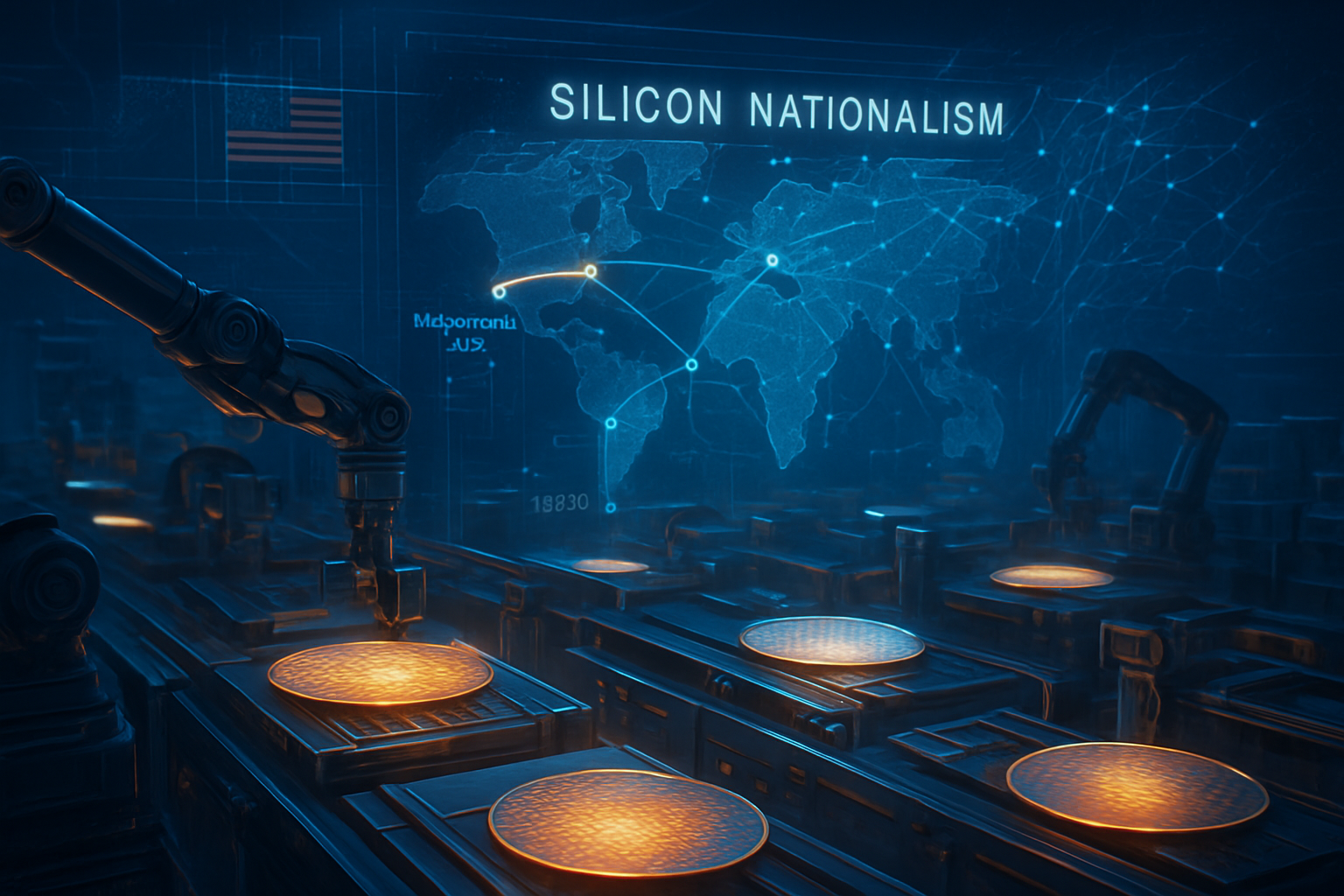
    The renewed tariff threats and export controls have significant competitive implications for major AI labs, tech giants, and startups, accelerating the trend towards supply chain diversification and regionalization. Companies heavily reliant on Chinese manufacturing or consumer markets, particularly those in the semiconductor and hardware sectors, face increased pressure to "friend-shore" or "reshoring" production. For instance, major players like Apple (NASDAQ: AAPL), Nvidia (NASDAQ: NVDA), TSMC (NYSE: TSM), Micron (NASDAQ: MU), and IBM (NYSE: IBM) have already committed substantial investments to US manufacturing and AI infrastructure, aiming to reduce their dependence on cross-border supply chains. This strategic shift is not merely about avoiding tariffs but also about national security and technological sovereignty.

    The competitive landscape is being reshaped by this geopolitical friction. Companies with robust domestic manufacturing capabilities or diversified global supply chains stand to benefit, as they are better insulated from trade disruptions. Conversely, those with highly concentrated supply chains in China face increased costs, delays, and potential market access issues. This situation could disrupt existing products or services, forcing companies to redesign supply chains, find alternative suppliers, or even alter product offerings to comply with new regulations and avoid punitive tariffs. Startups in critical technology areas, especially those focused on domestic production or alternative material sourcing, might find new opportunities as larger companies seek resilient partners.

    The "cold tech war" scenario, characterized by intense technological competition without direct military conflict, is compelling tech companies to reconsider their market positioning and strategic advantages. Investment in R&D for advanced materials, automation, and AI-driven manufacturing processes is becoming paramount to mitigate risks associated with geopolitical instability. Companies that can innovate domestically and reduce reliance on foreign components, particularly from China, will gain a significant competitive edge. This includes a renewed focus on intellectual property protection and the development of proprietary technologies that are less susceptible to export controls or forced technology transfers.

    Furthermore, the escalating tensions are fostering an environment where governments are increasingly incentivizing domestic production through subsidies and tax breaks. This creates a strategic advantage for companies that align with national economic security objectives. The long-term implication is a more fragmented global tech ecosystem, where regional blocs and national interests play a larger role in shaping technological development and market access. Companies that can adapt quickly to this evolving landscape, demonstrating agility in supply chain management and a strategic focus on domestic innovation, will be best positioned to thrive.

    Broader Significance in the AI Landscape

    The recent escalation of US-China trade tensions, marked by tariff threats and expanded export controls, holds profound significance for the broader AI landscape and global technological trends. This situation reinforces the ongoing "decoupling" narrative, where geopolitical competition increasingly dictates the development, deployment, and accessibility of advanced AI technologies. It signals a move away from a fully integrated global tech ecosystem towards one characterized by regionalized supply chains and nationalistic technological agendas, profoundly impacting AI research collaboration, talent mobility, and market access.

    The impacts extend beyond mere economic considerations, touching upon the very foundation of AI innovation. Restrictions on the export of critical materials and technologies, such as rare earths and advanced chip manufacturing equipment, directly impede the development and production of cutting-edge AI hardware, including high-performance GPUs and specialized AI accelerators. This could lead to a bifurcation of AI development paths, with distinct technological stacks emerging in different geopolitical spheres. Such a scenario could slow down global AI progress by limiting the free flow of ideas and components, potentially increasing costs and reducing efficiency due to duplicated efforts and fragmented standards.

    Comparisons to previous AI milestones and breakthroughs highlight a crucial difference: while past advancements often fostered global collaboration and open innovation, the current climate introduces significant barriers. The focus shifts from purely technical challenges to navigating complex geopolitical risks. This environment necessitates that AI companies not only innovate technologically but also strategically manage their supply chains, intellectual property, and market access in a world increasingly divided by trade and technology policies. The potential for "AI nationalism," where countries prioritize domestic AI development for national security and economic advantage, becomes a more pronounced trend.

    Potential concerns arising from this scenario include a slowdown in the pace of global AI innovation, increased costs for AI development and deployment, and a widening technological gap between nations. Furthermore, the politicization of technology could lead to the weaponization of AI capabilities, raising ethical and security dilemmas on an international scale. The broader AI landscape must now contend with the reality that technological leadership is inextricably linked to geopolitical power, making the current trade tensions a pivotal moment in shaping the future trajectory of artificial intelligence.

    Future Developments and Expert Predictions

    Looking ahead, the near-term future of the US-China tech relationship is expected to remain highly volatile, with continued tit-for-tat actions in tariffs and export controls. Experts predict that both nations will intensify efforts to build resilient, independent supply chains, particularly in critical sectors like semiconductors, rare earths, and advanced AI components. This will likely lead to increased government subsidies and incentives for domestic manufacturing and R&D in both the US and China. We can anticipate further restrictions on technology transfers and investments, creating a more fragmented global tech market.

    In the long term, the "cold tech war" is expected to accelerate the development of alternative technologies and new geopolitical alliances. Countries and companies will be driven to innovate around existing dependencies, potentially fostering breakthroughs in areas like advanced materials, novel chip architectures, and AI-driven automation that reduce reliance on specific geopolitical regions. The emphasis will shift towards "trusted" supply chains, leading to a realignment of global manufacturing and technological partnerships. This could also spur greater investment in AI ethics and governance frameworks within national borders as countries seek to control the narrative and application of their domestic AI capabilities.

    Challenges that need to be addressed include mitigating the economic impact of decoupling, ensuring fair competition, and preventing the complete balkanization of the internet and technological standards. The risk of intellectual property theft and cyber warfare also remains high. Experts predict that companies with a strong focus on innovation, diversification, and strategic geopolitical awareness will be best positioned to navigate these turbulent waters. They also anticipate a growing demand for AI solutions that enhance supply chain resilience, enable localized production, and facilitate secure data management across different geopolitical zones.

    What experts predict will happen next is a continued push for technological self-sufficiency in both the US and China, alongside an increased focus on multilateral cooperation among allied nations to counter the effects of fragmentation. The role of international bodies in mediating trade disputes and setting global technology standards will become even more critical, though their effectiveness may be challenged by the prevailing nationalistic sentiments. The coming years will be defined by a delicate balance between competition and the necessity of collaboration in addressing global challenges, with AI playing a central role in both.

    A New Era of Geopolitical Tech: Navigating the Divide

    The recent re-escalation of US-China trade tensions, marked by renewed tariff threats and retaliatory export controls on October 10, 2025, represents a significant inflection point in the history of artificial intelligence and the broader tech industry. The immediate market downturn, while alarming, has been framed by some, like Wedbush Securities, as a strategic buying opportunity, underscoring a critical divergence in investment philosophy: short-term volatility versus long-term technological fundamentals. The key takeaway is that geopolitical considerations are now inextricably linked to technological development and market performance, ushering in an era where strategic supply chain management and national technological sovereignty are paramount.

    This development's significance in AI history lies in its acceleration of a fragmented global AI ecosystem. No longer can AI progress be viewed solely through the lens of open collaboration and unfettered global supply chains. Instead, companies and nations are compelled to prioritize resilience, domestic innovation, and trusted partnerships. This shift will likely reshape how AI research is conducted, how technologies are commercialized, and which companies ultimately thrive in an increasingly bifurcated world. The "cold tech war" is not merely an economic skirmish; it is a fundamental reordering of the global technological landscape.

    Final thoughts on the long-term impact suggest a more localized and diversified tech industry, with significant investments in domestic manufacturing and R&D across various regions. While this might lead to some inefficiencies and increased costs in the short term, it could also spur unprecedented innovation in areas previously overlooked due to reliance on centralized supply chains. The drive for technological self-sufficiency will undoubtedly foster new breakthroughs and strengthen national capabilities in critical AI domains.

    In the coming weeks and months, watch for further policy announcements from both the US and China regarding trade and technology. Observe how major tech companies continue to adjust their supply chain strategies and investment portfolios, particularly in areas like semiconductor manufacturing and rare earth sourcing. Pay close attention to the performance of companies identified as having strong fundamentals and diversified operations, as their resilience will be a key indicator of market adaptation. The current environment demands a nuanced understanding of both market dynamics and geopolitical currents, as the future of AI will be shaped as much by policy as by technological innovation.


    This content is intended for informational purposes only and represents analysis of current AI developments.

    TokenRing AI delivers enterprise-grade solutions for multi-agent AI workflow orchestration, AI-powered development tools, and seamless remote collaboration platforms.
    For more information, visit https://www.tokenring.ai/.