Tag: Travel

  • Google’s AI Takes Flight: Revolutionizing Travel Planning with Gemini, AI Mode, and Smart Flight Deals

    Google’s AI Takes Flight: Revolutionizing Travel Planning with Gemini, AI Mode, and Smart Flight Deals

    In a significant leap forward for artificial intelligence applications, Google (NASDAQ: GOOGL) has unveiled a suite of powerful new AI-driven features designed to fundamentally transform the travel planning experience. Announced primarily around late March and August-September of 2025, these innovations—including an enhanced "AI Mode" within Search, advanced travel capabilities in the Gemini app, and a groundbreaking "Flight Deals" tool—are poised to make trip orchestration more intuitive, personalized, and efficient than ever before. This strategic integration of cutting-edge AI aims to alleviate the complexities of travel research, allowing users to effortlessly discover destinations, craft detailed itineraries, and secure optimal flight arrangements, signaling a new era of intelligent assistance for globetrotters and casual vacationers alike.

    Beneath the Hood: A Technical Deep Dive into Google's Travel AI

    Google's latest AI advancements in travel planning represent a sophisticated integration of large language models, real-time data analytics, and personalized user experiences. The "AI Mode," primarily showcased through "AI Overviews" in Google Search, leverages advanced natural language understanding (NLU) to interpret complex, conversational queries. Unlike traditional keyword-based searches, AI Mode can generate dynamic, day-by-day itineraries complete with suggested activities, restaurants, and points of interest, even for broad requests like "create an itinerary for Costa Rica with a focus on nature." This capability is powered by Google's latest foundational models, which can synthesize vast amounts of information from across the web, including user reviews and real-time trends, to provide contextually relevant and up-to-date recommendations. The integration allows for continuous contextual search, where the AI remembers previous interactions and refines suggestions as the user's planning evolves, a significant departure from the fragmented search experiences of the past.

    The Gemini app, Google's flagship AI assistant, elevates personalization through its new travel-focused capabilities and the introduction of "Gems." These "Gems" are essentially custom AI assistants that users can train for specific needs, such as a "Sustainable Travel Gem" or a "Pet-Friendly Planner Gem." Technically, Gems are specialized instances of Gemini, configured with predefined prompts and access to specific data sources or user preferences, allowing them to provide highly tailored advice, packing lists, and deal alerts. Gemini's deep integration with Google Flights, Google Hotels, and Google Maps is crucial, enabling it to pull real-time pricing, availability, and location data. Furthermore, its ability to leverage a user's Gmail, YouTube history, and stored search data (with user permission) allows for an unprecedented level of personalized recommendations, distinguishing it from general-purpose AI chatbots. The "Deep Research" feature, which can generate in-depth travel reports and even audio summaries, demonstrates Gemini's multimodal capabilities and its capacity for complex information synthesis. A notable technical innovation is Google Maps' new screenshot recognition feature, powered by Gemini, which can identify locations from saved images and compile them into mappable itineraries, streamlining the often-manual process of organizing visual travel inspiration.

    The "Flight Deals" tool, rolled out around August 14, 2025, represents a significant enhancement in value-driven travel. This tool moves beyond simple price comparisons by allowing users to express flexible travel intentions in natural language, such as "week-long trip this winter to a warm, tropical destination." The underlying AI analyzes real-time Google Flights data, comparing current prices against historical median prices for similar trips over the past 12 months, factoring in variables like time of year, trip length, and cabin class. A "deal" is identified when the price is significantly lower than typical. This approach differs from previous flight search engines that primarily relied on specific date and destination inputs, offering a more exploratory and budget-conscious way to discover travel opportunities. The addition of a filter to exclude basic economy fares for U.S. and Canadian trips further refines the search, addressing common traveler pain points associated with restrictive ticket types.

    Reshaping the Competitive Landscape: Implications for Tech Giants and Startups

    Google's aggressive push into AI-powered travel planning carries profound implications for the entire tech industry, particularly for major players and burgeoning startups in the travel sector. Google (NASDAQ: GOOGL) itself stands to benefit immensely, solidifying its position as the de facto starting point for online travel research. By integrating advanced planning tools directly into Search and its Gemini app, Google aims to capture a larger share of the travel booking funnel, potentially reducing reliance on third-party online travel agencies (OTAs) like Expedia Group (NASDAQ: EXPE) and Booking Holdings (NASDAQ: BKNG) for initial inspiration and itinerary building. The seamless flow from AI-generated itineraries to direct booking options on Google Flights and Hotels could significantly increase conversion rates within Google's ecosystem.

    The competitive implications for other tech giants are substantial. Companies like Microsoft (NASDAQ: MSFT) with its Copilot AI, and Amazon (NASDAQ: AMZN) with its Alexa-based services, will need to accelerate their own AI integrations into lifestyle and e-commerce verticals to keep pace. While these companies also offer travel-related services, Google's deep integration with its vast search index, mapping data, and flight/hotel platforms provides a formidable strategic advantage. For specialized travel startups, this development presents both challenges and opportunities. Startups focused on niche travel planning, personalized recommendations, or deal aggregation may find themselves in direct competition with Google's increasingly sophisticated offerings. However, there's also potential for collaboration, as Google's platforms could serve as powerful distribution channels for innovative travel services that can integrate with its AI ecosystem. The disruption to existing products is clear: manual research across multiple tabs and websites will become less necessary, potentially impacting traffic to independent travel blogs, review sites, and comparison engines that don't offer similar AI-driven synthesis. Google's market positioning is strengthened by leveraging its core competencies in search and AI to create an end-to-end travel planning solution that is difficult for competitors to replicate without similar foundational AI infrastructure and data access.

    Broader Significance: AI's Evolving Role in Daily Life

    Google's AI-driven travel innovations fit squarely within the broader AI landscape's trend towards hyper-personalization and conversational interfaces. This development signifies a major step in making AI not just a tool for specific tasks, but a proactive assistant that understands complex human intentions and anticipates needs. It underscores the industry's shift from AI as a backend technology to a front-end, interactive agent deeply embedded in everyday activities. The impact extends beyond convenience; by democratizing access to sophisticated travel planning, these tools could empower a wider demographic to explore travel, potentially boosting the global tourism industry.

    However, potential concerns also emerge. The reliance on AI for itinerary generation and deal finding raises questions about algorithmic bias, particularly in recommendations for destinations, accommodations, or activities. There's a risk that AI might inadvertently perpetuate existing biases in its training data or prioritize certain commercial interests over others. Data privacy is another critical consideration, as Gemini's ability to integrate with a user's Gmail, YouTube, and search history, while offering unparalleled personalization, necessitates robust privacy controls and transparent data usage policies. Compared to previous AI milestones, such as early recommendation engines or even the advent of voice assistants, Google's current push represents a more holistic and deeply integrated application of AI, moving from simple suggestions to comprehensive, dynamic planning. It highlights the increasing sophistication of large language models in handling real-world, multi-faceted problems that require contextual understanding and synthesis of diverse information.

    The Horizon: Future Developments and Uncharted Territories

    Looking ahead, the evolution of AI in travel planning is expected to accelerate, driven by continuous advancements in large language models and multimodal AI. In the near term, we can anticipate further refinement of AI Mode's itinerary generation, potentially incorporating real-time event schedules, personalized dietary preferences, and even dynamic adjustments based on weather forecasts or local crowd levels. The Gemini app is likely to expand its "Gems" capabilities, allowing for even more granular customization and perhaps community-shared Gems. We might see deeper integration with smart home devices, allowing users to verbally plan trips and receive updates through their home assistants. Experts predict that AI will increasingly move towards predictive travel, where the system might proactively suggest trips based on a user's past behavior, stated preferences, and even calendar events, presenting personalized packages before the user even begins to search.

    Long-term developments could include fully autonomous travel agents that handle every aspect of a trip, from booking flights and hotels to managing visas, insurance, and even ground transportation, all with minimal human intervention. Virtual and augmented reality (VR/AR) could integrate with these AI platforms, allowing users to virtually "experience" destinations or accommodations before booking. Challenges that need to be addressed include ensuring the ethical deployment of AI, particularly regarding fairness in recommendations and the prevention of discriminatory outcomes. Furthermore, the accuracy and reliability of real-time data integration will be paramount, as travel plans are highly sensitive to sudden changes. The regulatory landscape around AI usage in personal data and commerce will also continue to evolve, requiring constant adaptation from tech companies. Experts envision a future where travel planning becomes almost invisible, seamlessly woven into our digital lives, with AI acting as a truly proactive and intelligent concierge, anticipating our wanderlust before we even articulate it.

    Wrapping Up: A New Era of Intelligent Exploration

    Google's latest suite of AI-powered travel tools—AI Mode in Search, the enhanced Gemini app, and the innovative Flight Deals tool—marks a pivotal moment in the integration of artificial intelligence into daily life. These developments, unveiled primarily in 2025, signify a profound shift from manual, fragmented travel planning to an intuitive, personalized, and highly efficient experience. Key takeaways include the power of natural language processing to generate dynamic itineraries, the deep personalization offered by Gemini's custom "Gems," and the ability of AI to uncover optimal flight deals based on flexible criteria.

    This advancement is not merely an incremental update; it represents a significant milestone in AI history, demonstrating the practical application of sophisticated AI models to solve complex, real-world problems. It solidifies Google's strategic advantage in the AI race and sets a new benchmark for how technology can enhance human experiences. While concerns around data privacy and algorithmic bias warrant continued vigilance, the overall impact promises to democratize personalized travel planning and open up new possibilities for exploration. In the coming weeks and months, the industry will be watching closely to see user adoption rates, the evolution of these tools, and how competitors respond to Google's ambitious vision for the future of travel. The journey towards truly intelligent travel planning has just begun, and the landscape is set to change dramatically.


    This content is intended for informational purposes only and represents analysis of current AI developments.

    TokenRing AI delivers enterprise-grade solutions for multi-agent AI workflow orchestration, AI-powered development tools, and seamless remote collaboration platforms.
    For more information, visit https://www.tokenring.ai/.
  • AI-Powered CT Scanners Revolutionize US Air Travel: A New Era of Security and Convenience Dawns

    AI-Powered CT Scanners Revolutionize US Air Travel: A New Era of Security and Convenience Dawns

    October 4, 2025 – The skies above the United States are undergoing a profound transformation, ushering in an era where airport security is not only more robust but also remarkably more efficient and passenger-friendly. At the heart of this revolution are advanced AI-powered Computed Tomography (CT) scanners, sophisticated machines that are fundamentally reshaping the experience of air travel. These cutting-edge technologies are moving beyond the limitations of traditional 2D X-ray systems, providing detailed 3D insights into carry-on luggage, enhancing threat detection capabilities, drastically improving operational efficiency, and significantly elevating the overall passenger journey.

    The immediate significance of these AI CT scanners cannot be overstated. By leveraging artificial intelligence to interpret volumetric X-ray images, airports are now equipped with an intelligent defense mechanism that can identify prohibited items with unprecedented precision, including explosives and weapons. This technological leap has begun to untangle the long-standing bottlenecks at security checkpoints, allowing travelers the convenience of keeping laptops, other electronic devices, and even liquids within their bags. The rollout, which began with pilot programs in 2017 and saw significant acceleration from 2018 onwards, continues to gain momentum, promising a future where airport security is a seamless part of the travel experience, rather than a source of stress and delay.

    A Technical Deep Dive into Intelligent Screening

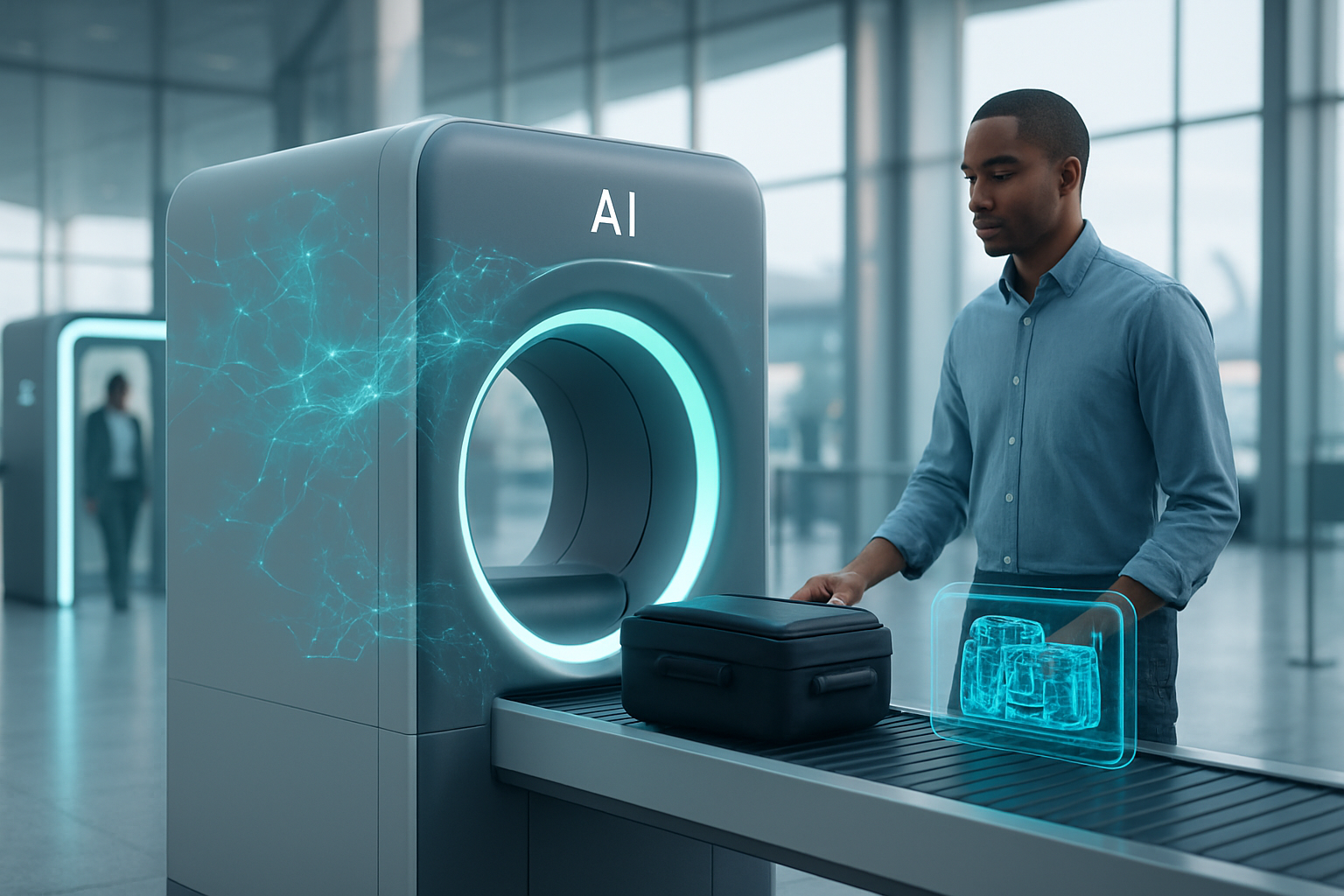
    The core of advanced AI CT scanners lies in the sophisticated integration of computed tomography with powerful artificial intelligence and machine learning (ML) algorithms. Unlike conventional 2D X-ray machines that produce flat, static images often cluttered by overlapping items, CT scanners generate high-resolution, volumetric 3D representations from hundreds of different views as baggage passes through a rotating gantry. This allows security operators to "digitally unpack" bags, zooming in, out, and rotating images to inspect contents from any angle, without physical intervention.

    The AI advancements are critical. Deep neural networks, trained on vast datasets of X-ray images, enable these systems to recognize threat characteristics based on shape, texture, color, and density. This leads to Automated Prohibited Item Detection Systems (APIDS), which leverage machine learning to automatically identify a wide range of prohibited items, from weapons and explosives to narcotics. Companies like SeeTrue and ScanTech AI (with its Sentinel platform) are at the forefront of developing such AI, continuously updating their databases with new threat profiles. Technical specifications include automatic explosives detection (EDS) capabilities that meet stringent regulatory standards (e.g., ECAC EDS CB C3 and TSA APSS v6.2 Level 1), and object recognition software (like Smiths Detection's iCMORE or Rapiscan's ScanAI) that highlights specific prohibited items. These systems significantly increase checkpoint throughput, potentially doubling it, by eliminating the need to remove items and by reducing false alarms, with some conveyors operating at speeds up to 0.5 m/s.

    Initial reactions from the AI research community and industry experts have been largely optimistic, hailing these advancements as a transformative leap. Experts agree that AI-powered CT scanners will drastically improve threat detection accuracy, reduce human errors, and lower false alarm rates. This paradigm shift also redefines the role of security screeners, transitioning them from primary image interpreters to overseers who reinforce AI decisions and focus on complex cases. However, concerns have been raised regarding potential limitations of early AI algorithms, the risk of consistent flaws if AI is not trained properly, and the extensive training required for screeners to adapt to interpreting dynamic 3D images. Privacy and cybersecurity also remain critical considerations, especially as these systems integrate with broader airport datasets.

    Industry Shifts: Beneficiaries, Disruptions, and Market Positioning

    The widespread adoption of AI CT scanners is profoundly reshaping the competitive landscape for AI companies, tech giants, and startups. The most immediate beneficiaries are the manufacturers of these advanced security systems and the developers of the underlying AI algorithms.

    Leading the charge are established security equipment manufacturers such as Smiths Detection (LSE: SMIN), Rapiscan Systems, and Leidos (NYSE: LDOS), who collectively dominate the global market. These companies are heavily investing in and integrating advanced AI into their CT scanners. Analogic Corporation (NASDAQ: ALOG) has also secured substantial contracts with the TSA for its ConneCT systems. Beyond hardware, specialized AI software and algorithm developers like SeeTrue and ScanTech AI are experiencing significant growth, focusing on improving accuracy and reducing false alarms. Companies providing integrated security solutions, such as Thales (EPA: HO) with its biometric and cybersecurity offerings, and training and simulation companies like Renful Premier Technologies, are also poised for expansion.

    For major AI labs and tech giants, this presents opportunities for market leadership and consolidation. These larger entities could develop or license their advanced AI/ML algorithms to scanner manufacturers or offer platforms that integrate CT scanners with broader airport operational systems. The ability to continuously update and improve AI algorithms to recognize evolving threats is a critical competitive factor. Strategic partnerships between airport consortiums and tech companies are also becoming more common to achieve autonomous airport operations.

    The disruption to existing products and services is substantial. Traditional 2D X-ray machines are increasingly becoming obsolete, replaced by superior 3D CT technology. This fundamentally alters long-standing screening procedures, such as the requirement to remove laptops and liquids, minimizing manual inspections. Consequently, the roles of security staff are evolving, necessitating significant retraining and upskilling. Airports must also adapt their infrastructure and operational planning to accommodate the larger CT scanners and new workflows, which can cause short-term disruptions. Companies will compete on technological superiority, continuous AI innovation, enhanced passenger experience, seamless integration capabilities, and global scalability, all while demonstrating strong return on investment.

    Wider Significance: AI's Footprint in Critical Infrastructure

    The deployment of advanced AI CT scanners in airport security is more than just a technological upgrade; it's a significant marker in the broader AI landscape, signaling a deeper integration of intelligent systems into critical infrastructure. This trend aligns with the wider adoption of AI across the aviation industry, from air traffic management and cybersecurity to predictive maintenance and customer service. The US Department of Homeland Security's framework for AI in critical infrastructure underscores this shift towards leveraging AI for enhanced security, resilience, and efficiency.

    In terms of security, the move from 2D to 3D imaging, coupled with AI's analytical power, is a monumental leap. It significantly improves the ability to detect concealed threats and identify suspicious patterns, moving aviation security from a reactive to a more proactive stance. This continuous learning capability, where AI algorithms adapt to new threat data, is a hallmark of modern AI breakthroughs. However, this transformative journey also brings forth critical concerns. Privacy implications arise from the detailed images and the potential integration with biometric data; while the TSA states data is not retained for long, public trust hinges on transparency and robust privacy protection.

    Ethical considerations, particularly algorithmic bias, are paramount. Reports of existing full-body scanners causing discomfort for people of color and individuals with religious head coverings highlight the need for a human-centered design approach to avoid unintentional discrimination. The ethical limits of AI in assessing human intent also remain a complex area. Furthermore, the automation offered by AI CT scanners raises concerns about job displacement for human screeners. While AI can automate repetitive tasks and create new roles focused on oversight and complex decision-making, the societal impact of workforce transformation must be carefully managed. The high cost of implementation and the logistical challenges of widespread deployment also remain significant hurdles.

    Future Horizons: A Glimpse into Seamless Travel

    Looking ahead, the evolution of AI CT scanners in airport security promises a future where air travel is characterized by unparalleled efficiency and convenience. In the near term, we can expect continued refinement of AI algorithms, leading to even greater accuracy in threat detection and a further reduction in false alarms. The European Union's mandate for CT scanners by 2026 and the TSA's ongoing deployment efforts underscore the rapid adoption. Passengers will increasingly experience the benefit of keeping all items in their bags, with some airports already trialing "walk-through" security scanners where bags are scanned alongside passengers.

    Long-term developments envision fully automated and self-service checkpoints where AI handles automatic object recognition, enabling "alarm-only" viewing of X-ray images. This could lead to security experiences as simple as walking along a travelator, with only flagged bags diverted. AI systems will also advance to predictive analytics and behavioral analysis, moving beyond object identification to anticipating risks by analyzing passenger data and behavior patterns. The integration with biometrics and digital identities, creating a comprehensive, frictionless travel experience from check-in to boarding, is also on the horizon. The TSA is exploring remote screening capabilities to further optimize operations.

    Potential applications include advanced Automated Prohibited Item Detection Systems (APIDS) that significantly reduce operator scanning time, and AI-powered body scanning that pinpoints threats without physical pat-downs. Challenges remain, including the substantial cost of deployment, the need for vast quantities of high-quality data to train AI, and the ongoing battle against algorithmic bias and cybersecurity threats. Experts predict that AI, biometric security, and CT scanners will become standard features globally, with the market for aviation security body scanners projected to reach USD 4.44 billion by 2033. The role of security personnel will fundamentally shift to overseeing AI, and a proactive, multi-layered security approach will become the norm, crucial for detecting evolving threats like 3D-printed weapons.

    A New Chapter in Aviation Security

    The advent of advanced AI CT scanners marks a pivotal moment in the history of aviation security and the broader application of artificial intelligence. These intelligent systems are not merely incremental improvements; they represent a fundamental paradigm shift, delivering enhanced threat detection accuracy, significantly improved passenger convenience, and unprecedented operational efficiency. The ability of AI to analyze complex 3D imagery and detect threats faster and more reliably than human counterparts highlights its growing capacity to augment and, in specific data-intensive tasks, even surpass human performance. This firmly positions AI as a critical enabler for a more proactive and intelligent security posture in critical infrastructure.

    The long-term impact promises a future where security checkpoints are no longer the dreaded bottlenecks of air travel but rather seamless, integrated components of a streamlined journey. This will likely lead to the standardization of advanced screening technologies globally, potentially lifting long-standing restrictions on liquids and electronics. However, this transformative journey also necessitates continuous vigilance regarding cybersecurity, data privacy, and the ethical implications of AI, particularly concerning potential biases and the evolving roles for human security personnel.

    In the coming weeks and months, travelers and industry observers alike should watch for the accelerated deployment of these CT scanners in major international airports, particularly as deadlines like the UK's June 2024 target for major airports and the EU's 2026 mandate approach. Keep an eye on regulatory adjustments, as governments begin to formally update carry-on rules in response to these advanced capabilities. Monitoring performance metrics, such as reported reductions in wait times and improvements in passenger satisfaction, will be crucial indicators of success. Finally, continued advancements in AI algorithms and their integration with other cutting-edge security technologies will signal the ongoing evolution towards a truly seamless and intelligent air travel experience.


    This content is intended for informational purposes only and represents analysis of current AI developments.

    TokenRing AI delivers enterprise-grade solutions for multi-agent AI workflow orchestration, AI-powered development tools, and seamless remote collaboration platforms. For more information, visit https://www.tokenring.ai/.