Tag: Trump Administration

  • Trump Establishes “One Nation, One AI” Policy: New Executive Order Blocks State-Level Regulations

    Trump Establishes “One Nation, One AI” Policy: New Executive Order Blocks State-Level Regulations

    In a move that fundamentally reshapes the American technological landscape, President Donald Trump has signed a sweeping Executive Order aimed at establishing a singular national framework for artificial intelligence. Signed on December 11, 2025, the order—titled "Ensuring a National Policy Framework for Artificial Intelligence"—seeks to prevent a "patchwork" of conflicting state-level regulations from hindering the development and deployment of AI technologies. By asserting federal preemption, the administration is effectively sidelining state-led initiatives in California, Colorado, and New York that sought to impose strict safety and transparency requirements on AI developers.

    The immediate significance of this order cannot be overstated. It marks the final pivot of the administration’s "Make America First in AI" agenda, moving away from the safety-centric oversight of the previous administration toward a model of aggressive deregulation. The White House argues that for the United States to maintain its lead over global competitors, specifically China, American companies must be liberated from the "cumbersome and contradictory" rules of 50 different states. The order signals a new era where federal authority is used not to regulate, but to protect the industry from regulation.

    The Mechanics of Preemption: A New Legal Shield for AI

    The December Executive Order introduces several unprecedented mechanisms to enforce federal supremacy over AI policy. Central to this is the creation of an AI Litigation Task Force within the Department of Justice, which is scheduled to become fully operational by January 10, 2026. This task force is charged with challenging any state law that the administration deems "onerous" or an "unconstitutional burden" on interstate commerce. The legal strategy relies heavily on the Dormant Commerce Clause, arguing that because AI models are developed and deployed across state and national borders, they are inherently beyond the regulatory purview of individual states.

    Technically, the order targets specific categories of state regulation that the administration has labeled as "anti-innovation." These include mandatory algorithmic audits for "bias" and "discrimination," such as those found in Colorado’s SB 24-205, and California’s rigorous transparency requirements for large-scale foundation models. The administration has categorized these state-level mandates as "engineered social agendas" or "Woke AI" requirements, claiming they force developers to bake ideological biases into their software. By preempting these rules, the federal government aims to provide a "minimally burdensome" standard that focuses on performance and economic growth rather than social impact.

    Initial reactions from the AI research community are sharply divided. Proponents of the order, including many high-profile researchers at top labs, argue that a single federal standard will accelerate the pace of experimentation. They point out that the cost of compliance for a startup trying to navigate 50 different sets of rules is often prohibitive. Conversely, safety advocates and some academic researchers warn that by stripping states of their ability to regulate, the federal government is creating a "vacuum of accountability." They argue that the lack of local oversight could lead to a "race to the bottom" where safety protocols are sacrificed for speed.

    Big Tech and the Silicon Valley Victory

    The announcement has been met with quiet celebration across the headquarters of America’s largest technology firms. Major players such as Microsoft (NASDAQ:MSFT), Alphabet (NASDAQ:GOOGL), Meta Platforms (NASDAQ:META), and NVIDIA (NASDAQ:NVDA) have long lobbied for a unified federal approach to AI. For these giants, the order provides the "clarity and predictability" needed to deploy trillions of dollars in capital. By removing the threat of a fragmented regulatory environment, the administration has essentially lowered the long-term operational risk for companies building the next generation of Large Language Models (LLMs) and autonomous systems.

    Startups and venture capital firms are also positioned as major beneficiaries. Prominent investors, including Marc Andreessen of Andreessen Horowitz, have praised the move as a "lifeline" for the American startup ecosystem. Without the threat of state-level lawsuits or expensive compliance audits, smaller AI labs can focus their limited resources on technical breakthroughs rather than legal defense. This shift is expected to consolidate the U.S. market, making it more attractive for domestic investment while potentially disrupting the plans of international competitors who must still navigate the complex regulatory environment of the European Union’s AI Act.

    However, the competitive implications are not entirely one-sided. While the order protects incumbents and domestic startups, it also removes certain consumer protections that some smaller, safety-focused firms had hoped to use as a market differentiator. By standardizing a "minimally burdensome" framework, the administration may inadvertently reduce the incentive for companies to invest in the very safety and transparency features that European and Asian markets are increasingly demanding. This could create a strategic rift between U.S.-based AI services and the rest of the world.

    The Wider Significance: Innovation vs. Sovereignty

    This Executive Order represents a major milestone in the history of AI policy, signaling a complete reversal of the approach taken by the Biden administration. Whereas the previous Executive Order 14110 focused on managing risks and protecting civil rights, Trump’s EO 14179 and the subsequent December preemption order prioritize "global AI dominance" above all else. This shift reflects a broader trend in 2025: the framing of AI not just as a tool for productivity, but as a critical theater of national security and geopolitical competition.

    The move also touches on a deeper constitutional tension regarding state sovereignty. By threatening to withhold federal funding—specifically from the Broadband Equity Access and Deployment (BEAD) program—for states that refuse to align with federal AI policy, the administration is using significant financial leverage to enforce its will. This has sparked a bipartisan backlash among state Attorneys General, who argue that the federal government is overstepping its bounds and stripping states of their traditional role in consumer protection.

    Comparisons are already being drawn to the early days of the internet, when the federal government largely took a hands-off approach to regulation. Supporters of the preemption order argue that this "permissionless innovation" is exactly what allowed the U.S. to dominate the digital age. Critics, however, point out that AI is fundamentally different from the early web, with the potential to impact physical safety, democratic integrity, and the labor market in ways that static websites never could. The concern is that by the time the federal government decides to act, the "unregulated" development may have already caused irreversible societal shifts.

    Future Developments: A Supreme Court Showdown Looms

    The near-term future of this Executive Order will likely be decided in the courts. California Governor Gavin Newsom has already signaled that his state will not back down, calling the order an "illegal infringement on California’s rights." Legal experts predict a flurry of lawsuits in early 2026, as states seek to defend their right to protect their citizens from deepfakes, algorithmic bias, and job displacement. This is expected to culminate in a landmark Supreme Court case that will define the limits of federal power in the age of artificial intelligence.

    Beyond the legal battles, the industry is watching to see how the Department of Commerce defines the "onerous" laws that will be officially targeted for preemption. The list, expected in late January 2026, will serve as a roadmap for which state-level protections are most at risk. Meanwhile, we may see a push in Congress to codify this preemption into law, which would provide a more permanent legislative foundation for the administration's "One Nation, One AI" policy and make it harder for future administrations to reverse.

    Experts also predict a shift in how AI companies approach international markets. As the U.S. moves toward a deregulated model, the "Brussels Effect"—where EU regulations become the global standard—may strengthen. U.S. companies may find themselves building two versions of their products: a "high-performance" version for the domestic market and a "compliant" version for export to more regulated regions like Europe and parts of Asia.

    A New Chapter for American Technology

    The "Ensuring a National Policy Framework for Artificial Intelligence" Executive Order marks a definitive end to the era of cautious, safety-first AI policy in the United States. By centralizing authority and actively dismantling state-level oversight, the Trump administration has placed a massive bet on the idea that speed and scale are the most important metrics for AI success. The key takeaway for the industry is clear: the federal government is now the primary, and perhaps only, regulator that matters.

    In the history of AI development, this moment will likely be remembered as the "Great Preemption," a time when the federal government stepped in to ensure that the "engines of innovation" were not slowed by local concerns. Whether this leads to a new golden age of American technological dominance or a series of unforeseen societal crises remains to be seen. The long-term impact will depend on whether the federal government can effectively manage the risks of AI on its own, without the "laboratory of the states" to test different regulatory approaches.

    In the coming weeks, stakeholders should watch for the first filings from the AI Litigation Task Force and the reactions from the European Union, which may see this move as a direct challenge to its own regulatory ambitions. As 2026 begins, the battle for the soul of AI regulation has moved from the statehouses to the federal courts, and the stakes have never been higher.


    This content is intended for informational purposes only and represents analysis of current AI developments.

    TokenRing AI delivers enterprise-grade solutions for multi-agent AI workflow orchestration, AI-powered development tools, and seamless remote collaboration platforms.
    For more information, visit https://www.tokenring.ai/.
  • Trump Administration Launches ‘United States Tech Force’ to Recruit 1,000 Elite AI Engineers

    Trump Administration Launches ‘United States Tech Force’ to Recruit 1,000 Elite AI Engineers

    In a bold move to solidify American dominance in the global artificial intelligence race, the second Trump administration has officially launched the "United States Tech Force" (USTF). The initiative aims to recruit a specialized corps of 1,000 elite AI engineers and technologists to modernize the nation’s aging government infrastructure and spearhead the integration of advanced machine learning into federal operations. Announced on December 15, 2025, the program is a cornerstone of the administration’s broader "Winning the Race: America’s AI Action Plan," signaling a massive shift toward a tech-centric federal workforce.

    The USTF is designed to bridge the widening gap between the private sector's rapid innovation and the government’s legacy systems. By offering high-tier salaries and bypassing traditional bureaucratic hurdles, the administration hopes to lure top-tier talent from Silicon Valley to Washington, D.C. This development comes at a critical juncture as the United States intensifies its competition with China for AI supremacy, positioning the federal government not just as a regulator, but as a primary architect of the next generation of AI-driven public services and national defense.

    Technical Elite: 1,000 Engineers for the "Stargate" Era

    The United States Tech Force is not a standard federal hiring surge; it is a highly selective "skills-first" recruitment drive. The program targets 1,000 engineers, data scientists, and cybersecurity specialists for two-year service terms. Unlike traditional civil service roles, the USTF does not require a college degree if applicants can prove "elite" technical proficiency through rigorous assessments and portfolios. These recruits will be placed in high-impact roles at the Department of War—the recently rebranded Department of Defense—and the Treasury, as well as the newly established "Trump Accounts" portal at the IRS.

    Technically, the USTF is the human component of the "Stargate" project, a $500 billion public-private partnership focused on building massive AI data centers and energy infrastructure across states like Texas and Ohio. These engineers will be tasked with migrating fragmented federal data into secure, cloud-native AI environments. The technical specifications of the initiative emphasize "battle-hardened" software engineering and the deployment of autonomous systems. Initial reactions from the AI research community are mixed; while some praise the focus on technical merit over credentials, others worry that a two-year term is insufficient for the deep architectural overhauls required by the government’s complex, decade-old systems.

    Silicon Valley Goes to Washington: Industry Impact and Corporate Synergy

    The announcement has sent ripples through the tech industry, as major players move to align themselves with the federal surge. Companies like Microsoft (NASDAQ: MSFT), Nvidia (NASDAQ: NVDA), and Oracle (NYSE: ORCL) have already signed on as partners. These firms are not only providing the hardware and cloud infrastructure for the initiative but have also agreed to create a "revolving door" for talent, promising to prioritize USTF alumni for high-paying roles once their two-year government service concludes. This creates a powerful strategic advantage for these giants, essentially allowing them to help shape the very federal systems they may later bid to maintain.

    However, the initiative poses a competitive challenge for smaller AI startups. With the federal government offering salaries between $150,000 and $200,000—placing recruits at the GS-13 and GS-14 pay grades—the USTF is competing directly for the same pool of "early-career" talent that typically fuels the startup ecosystem. Furthermore, the administration’s decision to allow recruits to retain their private-sector stock options has sparked debate. While it makes the roles more attractive to employees of Amazon (NASDAQ: AMZN) or Meta (NASDAQ: META), critics argue it creates a massive conflict of interest, potentially leading to "regulatory capture" where government tech policy is influenced by the financial interests of Big Tech.

    A Post-DOGE Pivot: The Broader AI Landscape

    The launch of the Tech Force is being viewed by many as a strategic "re-staffing" following the massive workforce reductions led by the Department of Government Efficiency (DOGE) earlier in 2025. After cutting over 200,000 federal roles and dismantling units like the U.S. Digital Service (USDS), the administration is now selectively "surging" specialized talent back into the fold. This "fire-and-hire" strategy is unprecedented in federal history and reflects a belief that the government should be leaner in bureaucracy but more potent in technical capability.

    The broader significance lies in the "AI Arms Race." By embedding elite engineers directly into national security and infrastructure, the U.S. is signaling a shift toward an offensive AI posture. This mirrors previous milestones like the Manhattan Project or the Apollo program, but with a modern, decentralized twist. However, the focus on "coders" over "ethicists" has drawn fire from civil society groups. Organizations like Public Citizen have warned that sidelining AI safety and ethics experts in favor of pure engineering talent could lead to the deployment of biased or unaccountable algorithms in critical areas like law enforcement and financial oversight.

    The Road Ahead: 2026 and the Future of Federal AI

    As the first wave of recruitment begins in late December 2025, the tech world is watching to see how quickly these 1,000 engineers can be integrated. The first cohort is expected to be in place by March 2026. Near-term projects include the automation of federal procurement and the deployment of AI-driven predictive maintenance for the nation’s power grid. In the long term, the administration envisions the Tech Force as a permanent "surge capacity" that can be deployed to any agency facing a technical crisis or a major modernization hurdle.

    Challenges remain, particularly regarding security clearances and the inherent friction between fast-moving tech culture and slow-moving federal bureaucracy. Experts predict that the success of the USTF will hinge on whether these engineers are given the actual authority to bypass legacy protocols. If successful, the program could serve as a blueprint for other nations looking to modernize their civil services. If it fails, it may be remembered as an expensive experiment that further blurred the lines between private corporate interests and public governance.

    Conclusion: A New Era for the Federal Workforce

    The United States Tech Force represents a paradigm shift in how the federal government views its workforce. By prioritizing elite technical skills and offering competitive compensation, the Trump administration is attempting to build a "digital vanguard" capable of navigating the complexities of the 21st century. The initiative’s deep ties to industry leaders like Palantir (NYSE: PLTR) and Apple (NASDAQ: AAPL) suggest a future where the boundary between public service and private enterprise is increasingly porous.

    As we move into 2026, the USTF will be a primary indicator of the administration’s ability to execute its ambitious AI agenda. Whether this "Tech Force" can truly modernize the government or if it will simply become a high-tech extension of corporate Silicon Valley remains to be seen. For now, the recruitment drive is on, and the eyes of the global tech community are firmly fixed on Washington.


    This content is intended for informational purposes only and represents analysis of current AI developments.

    TokenRing AI delivers enterprise-grade solutions for multi-agent AI workflow orchestration, AI-powered development tools, and seamless remote collaboration platforms.
    For more information, visit https://www.tokenring.ai/.
  • The 2027 Cliff: Trump Administration Secures High-Stakes ‘Busan Truce’ Delaying Semiconductor Tariffs

    The 2027 Cliff: Trump Administration Secures High-Stakes ‘Busan Truce’ Delaying Semiconductor Tariffs

    In a move that has sent ripples through the global technology sector, the Trump administration has officially announced a tactical delay of semiconductor tariffs on Chinese imports until June 23, 2027. This decision, finalized in late 2025, serves as the cornerstone of the "Busan Truce"—a fragile diplomatic agreement reached between President Donald Trump and President Xi Jinping during the APEC summit in South Korea. The reprieve provides a critical breathing room for an AI industry that has been grappling with skyrocketing infrastructure costs and the looming threat of a total supply chain fracture.

    The immediate significance of this delay cannot be overstated. By setting the initial tariff rate at 0% for the next 18 months, the administration has effectively averted an immediate price shock for foundational "legacy" chips that power everything from data center cooling systems to the edge-AI devices currently flooding the consumer market. However, the June 2027 deadline acts as a "Sword of Damocles," forcing Silicon Valley to accelerate its "de-risking" strategies and onshore manufacturing capabilities before the 0% rate escalates into a potentially crippling protectionist wall.

    The Mechanics of the Busan Truce: A Tactical Reprieve

    The technical core of this announcement lies in the recalibration of the Section 301 investigation into China’s non-market practices. Rather than imposing immediate, broad-based levies, the U.S. Trade Representative (USTR) has opted for a tiered escalation strategy. The primary focus is on "foundational" or "legacy" semiconductors—chips manufactured on 28nm nodes or older. While these are not the cutting-edge H100s or B200s used for training Large Language Models (LLMs), they are essential for the power management and peripheral logic of AI servers. By delaying these tariffs, the administration is attempting to decouple the U.S. economy from Chinese mature-node dominance without triggering a domestic manufacturing crisis in the short term.

    Industry experts and the AI research community have reacted with a mix of relief and skepticism. The "Busan Truce" is not a formal treaty but a verbal and memorandum-based agreement that relies on mutual concessions. In exchange for the tariff delay, Beijing has agreed to a one-year pause on its aggressive export controls for rare earth metals, including gallium and germanium—elements vital for high-frequency AI communication hardware. However, technical analysts point out that China still maintains a "0.1% de minimis" threshold on refined rare earth elements, meaning they can still throttle the supply of finished magnets and specialized components at will, despite the raw material pause.

    This "transactional" approach to trade policy marks a significant departure from the more rigid export bans of the previous few years. The administration is essentially using the June 2027 date as a countdown clock for American firms to transition their supply chains. The technical challenge, however, remains immense: building a 28nm-capable foundry from scratch typically takes three to five years, meaning the 18-month window provided by the truce may still be insufficient for a total transition away from Chinese silicon.

    Winners, Losers, and the New 'Revenue-Sharing' Reality

    The impact on major technology players has been immediate and profound. NVIDIA (NASDAQ: NVDA), Advanced Micro Devices (NASDAQ: AMD), and Intel (NASDAQ: INTC) find themselves navigating a complex new landscape where market access is granted in exchange for "sovereignty fees." Under a new revenue-sharing model introduced alongside the truce, these companies are permitted to sell specifically neutered, high-end AI accelerators to the Chinese market, provided they pay a 25% "revenue share" directly to the U.S. Treasury. This allows these giants to maintain their lucrative Chinese revenue streams while funding the very domestic manufacturing subsidies that seek to replace Chinese suppliers.

    Apple (NASDAQ: AAPL) has emerged as a primary beneficiary of this strategic pivot. By pledging a staggering $100 billion investment into U.S.-based manufacturing and R&D over the next five years, the Cupertino giant secured a specific reprieve from the broader tariff regime. This "investment-for-exemption" strategy is becoming the new standard for tech titans. Meanwhile, smaller AI startups and hardware manufacturers are facing a more difficult path; while they benefit from the 0% tariff on legacy chips, they lack the capital to make the massive domestic investment pledges required to secure long-term protection from the 2027 "cliff."

    The competitive implications are also shifting toward the foundries. Intel (NASDAQ: INTC), as a domestic champion, stands to gain significantly as the 2027 deadline approaches, provided it can execute on its foundry roadmap. Conversely, the cost of building AI data centers has continued to rise due to auxiliary tariffs on steel, aluminum, and advanced cooling systems—materials not covered by the semiconductor truce. NVIDIA (NASDAQ: NVDA) reportedly raised prices on its latest AI accelerators by 15% in late 2025, citing the logistical overhead of navigating this fragmented global trade environment.

    Geopolitics and the Rare Earth Standoff

    The wider significance of the June 2027 delay is deeply rooted in the "Critical Minerals War." Throughout 2024 and early 2025, China weaponized its monopoly on rare earth elements, banning the export of antimony and "superhard materials" essential for the high-precision machinery used in chip fabrication. The Busan Truce’s one-year pause on these restrictions is seen as a major diplomatic win for the U.S., yet it remains a fragile peace. China continues to restrict the export of the refining technologies needed to process these minerals, ensuring that even if the U.S. mines its own rare earths, it remains dependent on Chinese infrastructure for processing.

    This development fits into a broader trend of "technological mercantilism," where AI hardware is no longer just a commodity but a primary instrument of statecraft. The 2027 deadline aligns with the anticipated completion of several major U.S. fabrication plants funded by the CHIPS Act, suggesting that the Trump administration is timing its trade pressure to coincide with the moment the U.S. achieves greater silicon self-sufficiency. This is a high-stakes gamble: if domestic capacity isn't ready by mid-2027, the resulting tariff wall could lead to a massive inflationary spike in AI services and consumer electronics.

    Furthermore, the truce highlights a growing divide in the AI landscape. While the U.S. and China are engaged in this "managed competition," other regions like the EU and Japan are being forced to choose sides or develop their own independent supply chains. The "0.1% de minimis" rule implemented by Beijing is particularly concerning for the global AI landscape, as it gives China extraterritorial reach over any AI hardware produced anywhere in the world that contains even trace amounts of Chinese-processed minerals.

    The Road to June 2027: What Lies Ahead

    Looking forward, the tech industry is entering a period of frantic "friend-shoring" and vertical integration. In the near term, expect to see major AI lab operators and cloud providers investing directly in mining and mineral processing to bypass the rare earth bottleneck. We are also likely to see an explosion in "AI-driven material science," as companies use their own models to discover synthetic alternatives to the rare earth metals currently under Chinese control.

    The long-term challenge remains the "2027 Cliff." As that date approaches, market volatility is expected to increase as investors weigh the possibility of a renewed trade war against the progress of U.S. domestic chip production. Experts predict that the administration may use the threat of the 2027 escalation to extract further concessions from Beijing, potentially leading to a "Phase Two" deal that addresses intellectual property theft and state subsidies more broadly. However, if diplomatic relations sour before then, the AI industry could face a sudden and catastrophic decoupling.

    Summary and Final Assessment

    The Trump administration’s decision to delay semiconductor tariffs until June 2027 represents a calculated "tactical retreat" designed to protect the current AI boom while preparing for a more self-reliant future. The Busan Truce has successfully de-escalated a looming crisis, securing a temporary flow of rare earth metals and providing a cost-stabilization window for hardware manufacturers. Yet, the underlying tensions of the U.S.-China tech rivalry remain unresolved, merely pushed further down the road.

    This development will likely be remembered as a pivotal moment in AI history—the point where the industry moved from a globalized "just-in-time" supply chain to a geopolitically-driven "just-in-case" model. For now, the AI industry has its reprieve, but the clock is ticking. In the coming months, the focus will shift from trade headlines to the construction sites of new foundries and the laboratories of material scientists, as the world prepares for the inevitable arrival of June 2027.


    This content is intended for informational purposes only and represents analysis of current AI developments.

    TokenRing AI delivers enterprise-grade solutions for multi-agent AI workflow orchestration, AI-powered development tools, and seamless remote collaboration platforms.
    For more information, visit https://www.tokenring.ai/.
  • The Silicon Curtain: Trump’s 18-Month Reprieve Rewrites the Global AI Arms Race

    The Silicon Curtain: Trump’s 18-Month Reprieve Rewrites the Global AI Arms Race

    On December 23, 2025, the Trump administration fundamentally altered the trajectory of the global technology sector by announcing a strategic delay on new tariffs for Chinese-made semiconductors. While the administration’s Section 301 investigation reaffirmed that China’s trade practices are "unreasonable" and "burdensome," the Office of the U.S. Trade Representative (USTR) has opted to set the tariff rate on legacy chips at 0% until June 23, 2027. This 18-month window provides a critical buffer for a global supply chain that remains deeply intertwined with Chinese manufacturing, even as the "Silicon Curtain" begins to descend.

    The decision is a calculated pivot in the "tech Cold War," shifting the focus from the immediate denial of technology to a structured, time-bound financial deterrence. By delaying the 25-50% tariffs that were expected to go into effect in early 2026, the administration aims to prevent a massive inflationary shock to the automotive and consumer electronics sectors. For the AI industry, this reprieve offers a brief moment of stability in an era of unprecedented geopolitical volatility, allowing the West to build out its domestic "Silicon Shield" before the trade barriers become permanent.

    Strategic De-escalation and the Legacy Chip Buffer

    The 18-month window specifically targets "legacy" or mature-node semiconductors—typically those produced on 28nm processes or older. While these are not the cutting-edge chips used to train frontier AI models like GPT-5 or Llama 4, they are the essential "workhorses" of the modern world. These chips power everything from the power management systems in electric vehicles to the sensors in medical devices and the basic networking hardware that supports AI data centers. Immediate tariffs on these components would have likely crippled U.S. manufacturing, as domestic alternatives are not yet operating at the necessary scale.

    Initial reactions from the AI research community and industry experts have been pragmatic. Economists note that the delay serves as a vital "carrot" in ongoing negotiations with Beijing, particularly regarding China’s dominance over rare earth minerals like gallium and germanium, which are essential for domestic chip production. By pushing the "tariff cliff" to mid-2027, the U.S. is betting that its multi-billion-dollar investments in domestic fabrication—led by the CHIPS Act and private capital—will be ready to absorb the demand currently met by Chinese foundries.

    The Corporate Pivot: Winners and the Cost of Security

    Major technology players have responded to the news with a mixture of relief and accelerated strategic shifts. NVIDIA (NASDAQ: NVDA) saw a relief rally following the announcement, as the delay ensures that the basic components required for its massive "Stargate" AI infrastructure projects remain affordable in the short term. However, the company is already preparing for the 2027 deadline by diversifying its assembly partners and pushing for more U.S.-based integration. Similarly, Apple (NASDAQ: AAPL) has utilized this window to double down on its $100 billion manufacturing commitment, with the TSMC (NYSE: TSM) Arizona fabs now serving as the centerpiece for "tariff-shielded" production of its AI-enabled A-series and M-series processors.

    Intel (NASDAQ: INTC) stands to be a primary beneficiary of the 2027 cliff. As the company works to perfect its 18A process node by 2026, the looming tariffs on Chinese competitors act as a powerful incentive for domestic "hyperscalers" like Microsoft (NASDAQ: MSFT) and Alphabet (NASDAQ: GOOGL) to migrate their hardware orders to Intel’s domestic foundries. For these tech giants, the 18-month reprieve is not a return to the status quo, but a final warning to "reshore" their supply chains or face a projected 15-25% increase in AI server costs once the tariffs are fully implemented.

    From Export Controls to Economic Statecraft

    The emergence of the "Silicon Curtain" marks a transition from the 2022-era export controls to a new regime of economic statecraft. While the 2022 policies focused on denying China access to high-end AI accelerators, the 2027 tariff plan uses cost as a weapon to force a geographical shift in manufacturing. This creates a "bifurcation" of the global tech stack, where the world is split into two incompatible ecosystems: one led by the U.S. and its allies, focused on high-performance, market-driven AI, and another led by China, focused on state-subsidized "sovereign" silicon.

    This shift carries a potential "Innovation Tax." Analysts warn that the rising cost of secure, non-Chinese hardware could raise the total cost of building cutting-edge AI data centers by nearly 17%. Such a barrier may consolidate power within the "Trillion-Dollar Club"—including Meta (NASDAQ: META) and Amazon (NASDAQ: AMZN)—while pricing out smaller AI startups and academic labs. Furthermore, there is a growing concern that this fragmentation will hinder global AI safety efforts, as the two technological blocs may develop diverging standards for alignment and governance.

    The Horizon: 2027 and the Rise of Edge AI

    Looking ahead, the industry is preparing for a "structural cliff" in June 2027. To mitigate the high costs of centralized, tariff-impacted data centers, many experts predict a surge in "Edge AI" and software optimization. By making models "lighter" through techniques like quantization, companies may be able to run sophisticated AI applications on older, more affordable legacy chips that are currently exempt from the most aggressive trade restrictions. We are also likely to see the rise of "Sovereign AI" hubs in neutral regions like the UAE or Japan, which could become attractive destinations for training frontier models outside the immediate blast radius of the US-China trade war.

    The immediate challenge remains the "reshoring" timeline. If the TSMC Arizona sites and Intel’s Ohio expansions face further delays or yield issues, the 2027 deadline could lead to aggressive stockpiling and market volatility in late 2026. The administration has signaled that the 18-month window is firm, but the tech industry’s ability to reinvent its supply chain in such a short period will be the ultimate test of the "Silicon Shield" theory.

    A New Chapter in Technological Sovereignty

    The Trump administration’s decision to delay semiconductor tariffs until 2027 is a defining moment in the history of the AI age. It acknowledges the reality of global interdependence while simultaneously signaling its end. By creating this 18-month buffer, the U.S. has granted the tech industry a final opportunity to decouple from Chinese manufacturing without triggering a global recession.

    As we move into 2026, the industry must watch for the completion of domestic fabs and the potential for China to retaliate via further export restrictions on critical minerals. The "Silicon Curtain" is no longer a theoretical concept—it is a policy reality. The next 18 months will determine whether the West can successfully build a self-sustaining AI infrastructure or if the 2027 tariff cliff will lead to a period of prolonged technological inflation and fragmented innovation.


    This content is intended for informational purposes only and represents analysis of current AI developments.

    TokenRing AI delivers enterprise-grade solutions for multi-agent AI workflow orchestration, AI-powered development tools, and seamless remote collaboration platforms.
    For more information, visit https://www.tokenring.ai/.

  • Silicon Sovereignty: China’s Strategic Pivot as Trump-Era Restrictions Redefine the Global Semiconductor Landscape

    Silicon Sovereignty: China’s Strategic Pivot as Trump-Era Restrictions Redefine the Global Semiconductor Landscape

    As of December 19, 2025, the global semiconductor industry has entered a period of "strategic bifurcation." Following a year of intense industrial mobilization, China has signaled a decisive shift from merely surviving U.S.-led sanctions to actively building a vertically integrated, self-contained AI ecosystem. This movement comes as the second Trump administration has fundamentally rewritten the rules of engagement, moving away from the "small yard, high fence" approach of the previous years toward a transactional "pay-to-play" export model that has sent shockwaves through the global supply chain.

    The immediate significance of this development cannot be overstated. By leveraging massive state capital and innovative software optimizations, Chinese tech giants and state-backed fabs are proving that hardware restrictions may slow, but cannot stop, the march toward domestic AI capability. With the recent launch of the "Triple Output" AI strategy, Beijing aims to triple its domestic production of AI processors by the end of 2026, a goal that looks increasingly attainable following a series of technical breakthroughs in the final quarter of 2025.

    Breakthroughs in the Face of Scarcity

    The technical landscape in late 2025 is dominated by news of China’s successful push into the 5nm logic node. Teardowns of the newly released Huawei Mate 80 series have confirmed that SMIC (HKG: 0981) has achieved volume production on its "N+3" 5nm-class node. Remarkably, this was accomplished without access to Extreme Ultraviolet (EUV) lithography machines. Instead, SMIC utilized advanced Deep Ultraviolet (DUV) systems paired with Self-Aligned Quadruple Patterning (SAQP). While this method is significantly more expensive and complex than EUV-based manufacturing, it demonstrates a level of engineering resilience that many Western analysts previously thought impossible under current export bans.

    Beyond logic chips, a significant milestone was reached on December 17, 2025, when reports emerged from a Shenzhen-based research collective—often referred to as China’s "Manhattan Project" for chips—confirming the development of a functional EUV machine prototype. While the prototype is not yet ready for commercial-scale manufacturing, it has successfully generated the critical 13.5nm light required for advanced lithography. This breakthrough suggests that China could potentially reach EUV-enabled production by the 2028–2030 window, significantly shortening the expected timeline for total technological independence.

    Furthermore, Chinese AI labs have turned to software-level innovation to bridge the "compute gap." Companies like DeepSeek have championed the FP8 (UE8M0) data format, which optimizes how AI models process information. By standardizing this format, domestic processors like the Huawei Ascend 910C are achieving training performance comparable to restricted Western hardware, such as the NVIDIA (NASDAQ: NVDA) H100, despite running on less efficient 7nm or 5nm hardware. This "software-first" approach has become a cornerstone of China's strategy to maintain AI parity while hardware catch-up continues.

    The Trump Administration’s Transactional Tech Policy

    The corporate landscape has been upended by the Trump administration’s radical "Revenue Share" policy, announced on December 8, 2025. In a dramatic pivot, the U.S. government now permits companies like NVIDIA (NASDAQ: NVDA), AMD (NASDAQ: AMD), and Intel (NASDAQ: INTC) to export high-end (though not top-tier) AI chips, such as the H200 series, to approved Chinese entities—provided the U.S. government receives a 25% revenue stake on every sale. This "export tax" is designed to fund domestic American R&D while simultaneously keeping Chinese firms "addicted" to American software stacks and hardware architectures, preventing them from fully migrating to domestic alternatives.

    However, this transactional approach is balanced by the STRIDE Act, passed in November 2025. The Semiconductor Technology Resilience, Integrity, and Defense Enhancement Act mandates a "Clean Supply Chain," barring any company receiving CHIPS Act subsidies from using Chinese-made semiconductor manufacturing equipment for a decade. This has created a competitive vacuum where Western firms are incentivized to purge Chinese tools, even as U.S. chip designers scramble to navigate the new revenue-sharing licenses. Major AI labs in the U.S. are now closely watching how these "taxed" exports will affect the pricing of global AI services.

    The strategic advantages are shifting. While U.S. tech giants maintain a lead in raw compute power, Chinese firms are becoming masters of efficiency. Big Fund III, China’s Integrated Circuit Industry Investment Fund, has deployed approximately $47.5 billion this year, specifically targeting chokepoints like 3D Advanced Packaging and Electronic Design Automation (EDA) software. By focusing on these "bottleneck" technologies, China is positioning its domestic champions to eventually bypass the need for Western design tools and packaging services entirely, threatening the long-term market dominance of firms like ASML (NASDAQ: ASML) and Tokyo Electron (TYO: 8035).

    Global Supply Chain Bifurcation and Geopolitical Friction

    The broader significance of these developments lies in the physical restructuring of the global supply chain. The "China Plus One" strategy has reached its zenith in 2025, with Vietnam and Malaysia emerging as the new nerve centers of semiconductor assembly and testing. Malaysia is now the world’s fourth-largest semiconductor exporter, having absorbed much of the packaging work that was formerly centralized in China. Meanwhile, Mexico has become the primary hub for AI server assembly serving the North American market, effectively decoupling the final stages of production from Chinese influence.

    However, this bifurcation has created significant friction between the U.S. and its allies. The Trump administration’s "Revenue Share" deal has angered officials in the Netherlands and South Korea. Partners like ASML (NASDAQ: ASML) and Samsung (KRX: 005930) have questioned why they are pressured to forgo the Chinese market while U.S. firms are granted licenses to sell advanced chips in exchange for payments to the U.S. Treasury. ASML, in particular, has seen its revenue share from China plummet from nearly 50% in 2024 to roughly 20% by late 2025, leading to internal pressure for the Dutch government to push back against further U.S. maintenance bans on existing equipment.

    This era of "chip diplomacy" is also seeing China use its own leverage in the raw materials market. In December 2025, Beijing intensified export controls on gallium, germanium, and rare earth elements—materials essential for the production of advanced sensors and power electronics. This tit-for-tat escalation mirrors previous AI milestones, such as the 2023 export controls, but with a heightened sense of permanence. The global landscape is no longer a single, interconnected market; it is two competing ecosystems, each racing to secure its own resource base and manufacturing floor.

    Future Horizons: The Path to 2030

    Looking ahead, the next 12 to 24 months will be a critical test for China’s "Triple Output" strategy. Experts predict that if SMIC can stabilize yields on its 5nm process, the cost of domestic AI hardware will drop significantly, potentially allowing China to export its own "sanction-proof" AI infrastructure to Global South nations. We also expect to see the first commercial applications of 3D-stacked "chiplets" from Chinese firms, which allow multiple smaller chips to be combined into a single powerful processor, a key workaround for lithography limitations.

    The long-term challenge remains the maintenance of existing Western-made equipment. As the U.S. pressures ASML and Tokyo Electron to stop servicing machines already in China, the industry is watching to see if Chinese engineers can develop "aftermarket" maintenance capabilities or if these fabs will eventually grind to a halt. Predictions for 2026 suggest a surge in "gray market" parts and a massive push for domestic component replacement in the semiconductor manufacturing equipment (SME) sector.

    Conclusion: A New Era of Silicon Realpolitik

    The events of late 2025 mark a definitive end to the era of globalized semiconductor cooperation. China’s rally of its domestic industry, characterized by the Mate 80’s 5nm breakthrough and the Shenzhen EUV prototype, demonstrates a formidable capacity for state-led innovation. Meanwhile, the Trump administration’s "pay-to-play" policies have introduced a new level of pragmatism—and volatility—into the tech war, prioritizing U.S. revenue and software dominance over absolute decoupling.

    The key takeaway is that the "compute gap" is no longer a fixed distance, but a moving target. As China optimizes its software and matures its domestic manufacturing, the strategic advantage of U.S. export controls may begin to diminish. In the coming months, the industry must watch the implementation of the STRIDE Act and the response of U.S. allies, as the world adjusts to a fragmented, high-stakes semiconductor reality where silicon is the ultimate currency of sovereign power.


    This content is intended for informational purposes only and represents analysis of current AI developments.

    TokenRing AI delivers enterprise-grade solutions for multi-agent AI workflow orchestration, AI-powered development tools, and seamless remote collaboration platforms.
    For more information, visit https://www.tokenring.ai/.
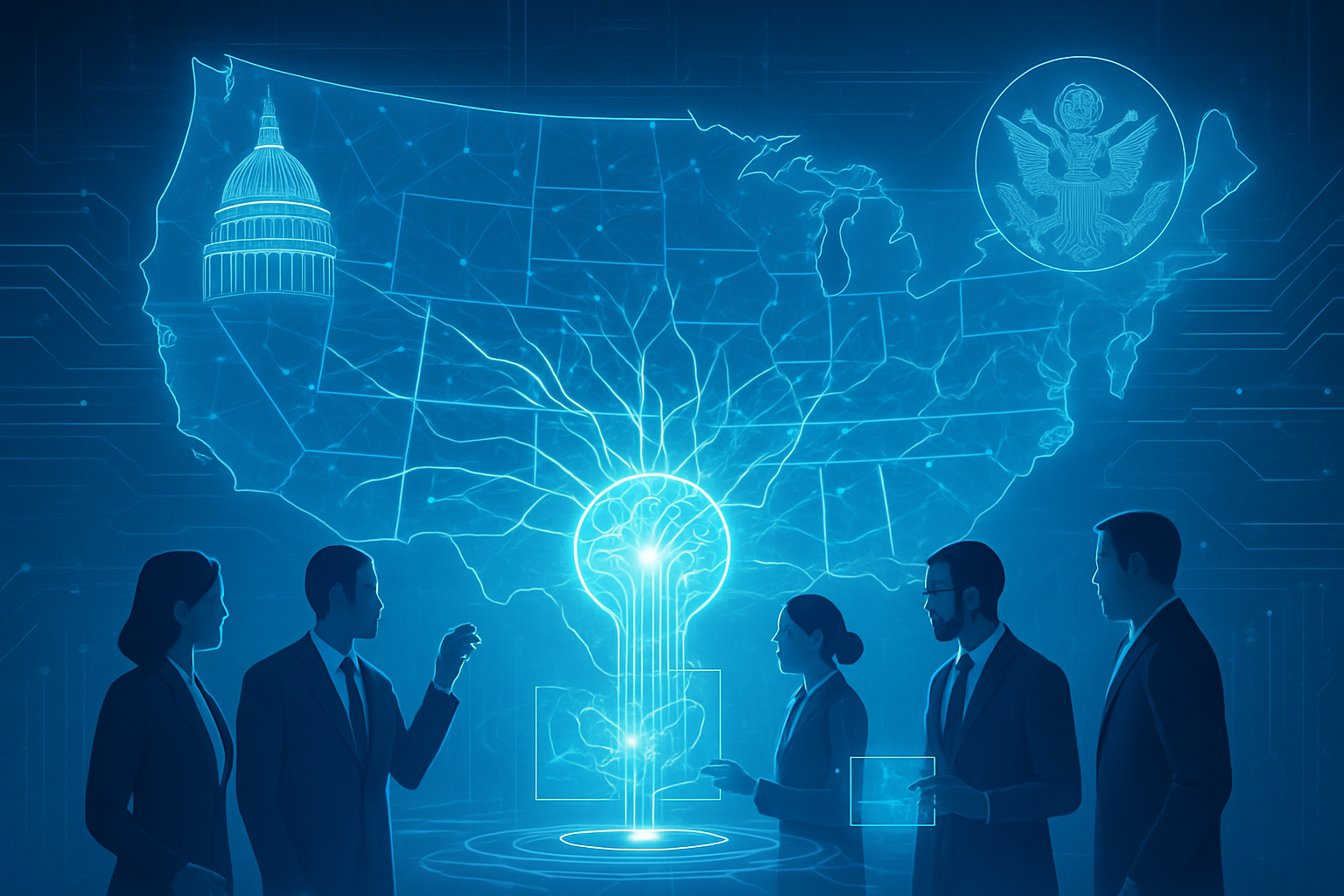
  • America’s AI Gambit: Trump’s ‘Tech Force’ and Federal Supremacy Drive New Era of Innovation

    America’s AI Gambit: Trump’s ‘Tech Force’ and Federal Supremacy Drive New Era of Innovation

    Washington D.C., December 16, 2025 – The United States, under the Trump administration, is embarking on an aggressive and multi-faceted strategy to cement its leadership in artificial intelligence (AI), viewing it as the linchpin of national security, economic prosperity, and global technological dominance. Spearheaded by initiatives like the newly launched "United States Tech Force," a sweeping executive order to preempt state AI regulations, and the ambitious "Genesis Mission" for scientific discovery, these policies aim to rapidly accelerate AI development and integration across federal agencies and the broader economy. This bold pivot signals a clear intent to outpace international rivals and reshape the domestic AI landscape, prioritizing innovation and a "minimally burdensome" regulatory framework.

    The immediate significance of these developments, particularly as the "Tech Force" begins active recruitment and the regulatory executive order takes effect, is a profound shift in how the US government will acquire, deploy, and govern AI. The administration's approach is a direct response to perceived skill gaps within the federal workforce and a fragmented regulatory environment, seeking to streamline progress and unleash the full potential of American AI ingenuity.

    Unpacking the Architecture of America's AI Ascent

    The core of the Trump administration's AI strategy is built upon several key pillars, each designed to address specific challenges and propel the nation forward in the AI race.

    The "United States Tech Force" (US Tech Force), announced in mid-December 2025 by the Office of Personnel Management (OPM), is a groundbreaking program designed to inject top-tier technical talent into the federal government. Targeting an initial cohort of approximately 1,000 technologists, including early-career software engineers, data scientists, and AI specialists, as well as experienced engineering managers, the program offers competitive annual salaries ranging from $150,000 to $200,000 for two-year service terms. Participants are expected to possess expertise in machine learning engineering, natural language processing, computer vision, data architecture, and cloud computing. They will be deployed across critical federal agencies like the Treasury Department and the Department of Defense, working on "high-stakes missions" to develop and deploy AI systems for predictive analytics, cybersecurity, and modernizing legacy IT infrastructure. This initiative dramatically differs from previous federal tech recruitment efforts, such as the Presidential Innovation Fellows program, by its sheer scale, direct industry partnerships with over 25 major tech companies (including Amazon Web Services (NASDAQ: AMZN), Apple (NASDAQ: AAPL), Google (NASDAQ: GOOGL), Meta (NASDAQ: META), Microsoft (NASDAQ: MSFT), Nvidia (NASDAQ: NVDA), OpenAI, Oracle (NYSE: ORCL), Palantir (NYSE: PLTR), Salesforce (NYSE: CRM), Uber (NYSE: UBER), xAI, and Adobe (NASDAQ: ADBE)), and a clear mandate to address the AI skills gap. Initial reactions from the AI research community have been largely positive, acknowledging the critical need for government AI talent, though some express cautious optimism about long-term retention and integration within existing bureaucratic structures.

    Complementing this talent push is the "Ensuring a National Policy Framework for Artificial Intelligence" Executive Order (EO), signed by President Trump on December 11, 2025. This EO aims to establish federal supremacy in AI regulation, preempting what the administration views as a "patchwork of 50 different state regulatory regimes" that stifle innovation. Key directives include the establishment of an "AI Litigation Task Force" within 30 days by the Attorney General to challenge state AI laws deemed inconsistent with federal policy or unconstitutionally regulating interstate commerce. The Commerce Department is also tasked with identifying "onerous" state AI laws, particularly those requiring AI models to "alter their truthful outputs." From a technical perspective, this order seeks to standardize technical requirements and ethical guidelines across the nation, reducing compliance fragmentation for developers. Critics, however, raise concerns about potential constitutional challenges from states and the impact on efforts to mitigate algorithmic bias, which many state-level regulations prioritize.

    Finally, "The Genesis Mission", launched by Executive Order 14363 on November 24, 2025, is a Department of Energy-led initiative designed to leverage federal scientific data and high-performance computing to accelerate AI-driven scientific discovery. Likened to the Manhattan Project and Apollo missions, its ambitious goal is to double US scientific productivity within a decade. The mission's centerpiece is the "American Science and Security Platform," an integrated IT infrastructure combining supercomputing, secure cloud-based AI environments, and vast federal scientific datasets. This platform will enable the development of scientific foundation models, AI agents, and automated research systems across critical technology domains like advanced manufacturing, biotechnology, and quantum information science. Technically, this implies a massive investment in secure data platforms, high-performance computing, and specialized AI hardware, fostering an environment for large-scale AI model training and ethical AI development.

    Corporate Crossroads: AI Policy's Rippling Effects on Industry

    The US government's assertive AI policy is poised to significantly impact AI companies, tech giants, and startups, creating both opportunities and potential disruptions.

    Tech giants whose employees participate in the "Tech Force" stand to benefit from closer ties with the federal government, gaining invaluable insights into government AI needs and potentially influencing future procurement and policy. Companies already deeply involved in government contracts, such as Palantir (NYSE: PLTR) and Anduril, are explicitly mentioned as partners, further solidifying their market positioning in the federal sector. The push for a "minimally burdensome" national regulatory framework, as outlined in the AI National Framework EO, largely aligns with the lobbying efforts of major tech firms, promising reduced compliance costs across multiple states. These large corporations, with their robust legal teams and vast resources, are also better equipped to navigate the anticipated legal challenges arising from federal preemption efforts and to provide the necessary infrastructure for initiatives like "The Genesis Mission."

    For startups, the impact is more nuanced. While a uniform national standard, if successfully implemented, could ease scaling for startups operating nationally, the immediate legal uncertainty caused by federal challenges to existing state laws could be disruptive, especially for those that have already adapted to specific state frameworks. However, "The Genesis Mission" presents significant opportunities for specialized AI startups in scientific and defense-related fields, particularly those focused on secure AI solutions and specific technological domains. Federal contracts and collaboration opportunities could provide crucial funding and validation. Conversely, startups in states with progressive AI regulations (e.g., California, Colorado, New York) might face short-term hurdles but could gain long-term advantages by pioneering ethical AI solutions if public sentiment and future regulatory demands increasingly value responsible AI.

    The competitive landscape is being reshaped by this federal intervention. The "Tech Force" fosters a "revolving door" of talent and expertise, potentially allowing participating companies to better understand and respond to federal priorities, setting de facto standards for AI deployment within government. The preemption EO aims to level the playing field across states, preventing a fragmented regulatory landscape that could impede national growth. However, the most significant disruption stems from the anticipated legal battles between the federal government and states over AI regulation, creating an environment of regulatory flux that demands an agile compliance posture from all companies.

    A New Chapter in the AI Saga: Wider Implications

    These US AI policy initiatives mark a pivotal moment in the broader AI landscape, signaling a clear shift in national strategy and drawing parallels to historical technological races.

    The explicit comparison of "The Genesis Mission" to endeavors like the Manhattan Project and the Apollo missions underscores a national recognition of AI's transformative potential and strategic imperative on par with the nuclear and space races of the 20th century. This frames AI not merely as a technological advancement but as a foundational element of national power and scientific leadership in an era of intensified geopolitical competition, particularly with China.

    The "Ensuring a National Policy Framework for Artificial Intelligence" Executive Order represents a significant departure from previous approaches, including the Biden administration's focus on risk mitigation and responsible AI development. The Trump administration's deregulatory, innovation-first stance aims to unleash private sector innovation by removing perceived "cumbersome regulation." While this could catalyze rapid advancements, it also raises concerns about unchecked AI development, particularly regarding issues like algorithmic bias, privacy, and safety, which were central to many state-level regulations now targeted for preemption. The immediate impact will likely be a "fluctuating and unstable regulatory landscape" as federal agencies implement directives and states potentially challenge federal preemption efforts, leading to legal and constitutional disputes.

    The collective impact of "The Genesis Mission" and "Tech Force" signifies a deeper integration of AI into core government functions—from scientific research and defense to general public service. This aims to enhance efficiency, drive breakthroughs, and ensure the federal government possesses the necessary talent to navigate the AI revolution. Economically, the emphasis on accelerating AI innovation, building infrastructure (data centers, semiconductors), and fostering a skilled workforce is intended to drive growth across various sectors. However, ethical and societal debates, particularly concerning job displacement, misinformation, and the implications of the federal policy's stance on "truthful outputs" versus bias mitigation, will remain at the forefront.

    The Horizon of AI: Anticipating Future Trajectories

    The aggressive stance of the US government's AI policy sets the stage for several expected near-term and long-term developments, alongside significant challenges.

    In the near term, the "US Tech Force" is expected to onboard its first cohort by March 2026, rapidly embedding AI expertise into federal agencies to tackle immediate modernization needs. Concurrently, the "AI Litigation Task Force" will begin challenging state AI laws, initiating a period of legal contention and regulatory uncertainty. "The Genesis Mission" will proceed with identifying critical national science and technology challenges and inventorying federal computing resources, laying the groundwork for its ambitious scientific platform.

    Long-term developments will likely see the "Tech Force" fostering a continuous pipeline of AI talent within the government, potentially establishing a permanent cadre of federal technologists. The legal battles over federal preemption are predicted to culminate in a more unified, albeit potentially contested, national AI regulatory framework, which the administration aims to be "minimally burdensome." "The Genesis Mission" is poised to radically expand America's scientific capabilities, with AI-driven breakthroughs in energy, biotechnology, materials science, and national security becoming more frequent and impactful. Experts predict the creation of a "closed-loop AI experimentation platform" that automates research, compressing years of progress into months.

    Potential applications and use cases on the horizon include AI-powered predictive analytics for economic forecasting and disaster response, advanced AI for cybersecurity defenses, autonomous systems for defense and logistics, and accelerated drug discovery and personalized medicine through AI-enabled scientific research. The integration of AI into core government functions will streamline public services and enhance operational efficiency across the board.

    However, several challenges must be addressed. The most pressing is the state-federal conflict over AI regulation, which could create prolonged legal uncertainty and hinder nationwide AI adoption. Persistent workforce gaps in AI, cybersecurity, and data science within the federal government, despite the "Tech Force," will require sustained effort. Data governance, quality, and privacy remain critical barriers, especially for scaling AI applications across diverse federal datasets. Furthermore, ensuring the cybersecurity and safety of increasingly complex AI systems, and navigating intricate acquisition processes and intellectual property issues in public-private partnerships, will be paramount.

    Experts predict a shift towards specialized AI solutions over massive, general-purpose models, driven by the unsustainable costs of large language models. Data security and observability will become foundational for AI, and partner ecosystems will be crucial due to the complexity and talent scarcity in AI operations. AI capabilities are expected to be seamlessly woven into core business applications, moving beyond siloed projects. There is also growing speculation about an "AI bubble," leading to a focus on profitability and realized business value over broad experimentation.

    A Defining Moment for American AI

    In summary, the Trump administration's AI initiatives in late 2025 represent a forceful and comprehensive effort to cement US leadership in artificial intelligence. By emphasizing deregulation, strategic investment in scientific discovery through "The Genesis Mission," and a centralized federal approach to governance via the preemption Executive Order, these policies aim to unleash rapid innovation and secure geopolitical advantage. The "US Tech Force" is a direct and ambitious attempt to address the human capital aspect, infusing critical AI talent into the federal government.

    This is a defining moment in AI history, marking a significant shift towards a national strategy that prioritizes speed, innovation, and federal control to achieve "unquestioned and unchallenged global technological dominance." The long-term impact could be transformative, accelerating scientific breakthroughs, enhancing national security, and fundamentally reshaping the American economy. However, the path forward will be marked by ongoing legal and political conflicts, especially concerning the balance of power between federal and state governments in AI regulation, and persistent debates over the ethical implications of rapid AI advancement.

    What to watch for in the coming weeks and months are the initial actions of the AI Litigation Task Force, the Commerce Department's evaluation of state AI laws, and the first deployments of the "US Tech Force" members. These early steps will provide crucial insights into the practical implementation and immediate consequences of this ambitious national AI strategy.


    This content is intended for informational purposes only and represents analysis of current AI developments.

    TokenRing AI delivers enterprise-grade solutions for multi-agent AI workflow orchestration, AI-powered development tools, and seamless remote collaboration platforms.
    For more information, visit https://www.tokenring.ai/.
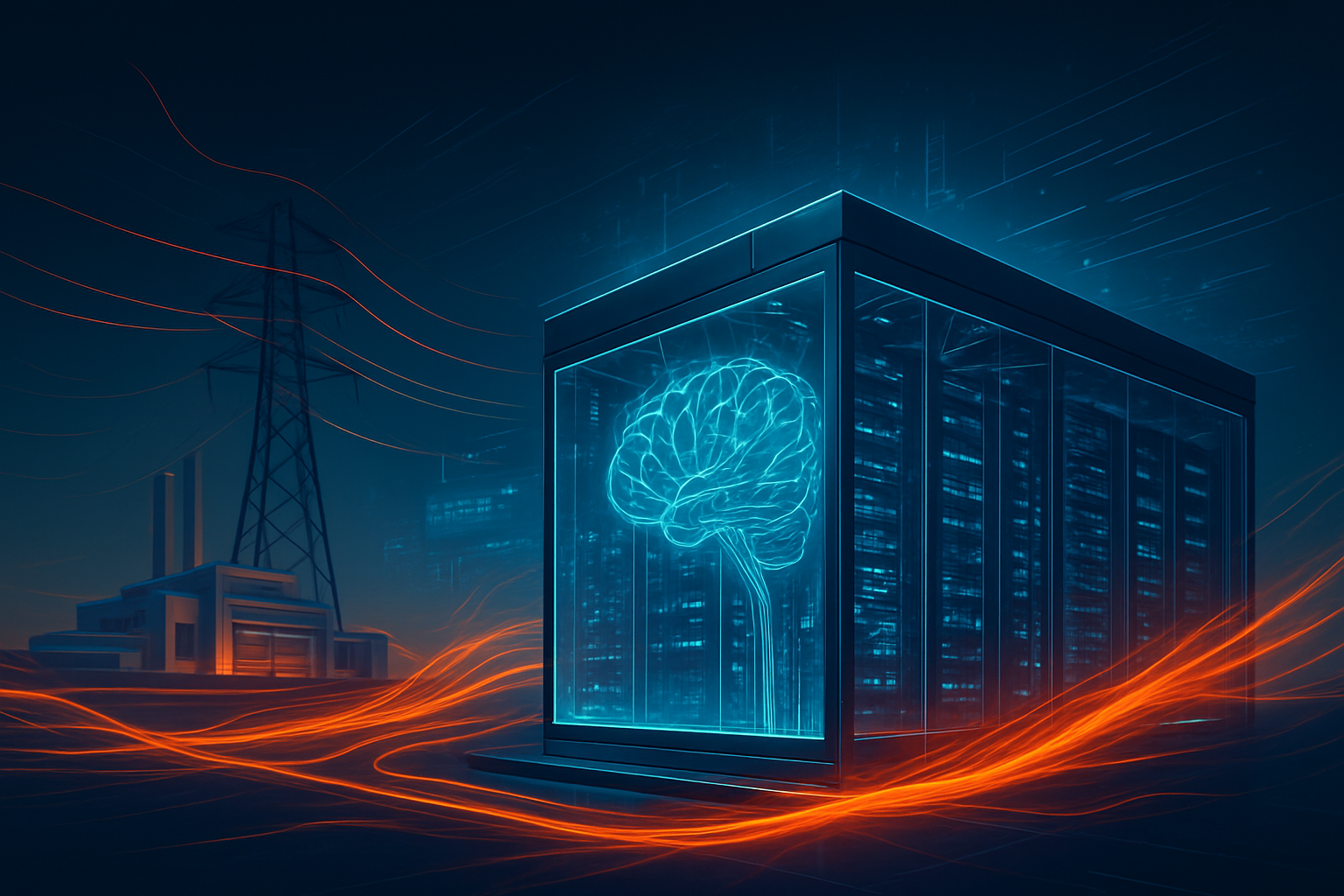
  • Trump’s AI Energy Vision: A Deregulated Future Powered by Fossil Fuels

    Trump’s AI Energy Vision: A Deregulated Future Powered by Fossil Fuels

    Washington D.C., December 12, 2025 – Former President Donald Trump's administration is rapidly shaping a new landscape for artificial intelligence and energy, characterized by an aggressive push for deregulation, a strong emphasis on fossil fuels, and a streamlined approach to building the vast energy infrastructure required by modern AI. With recent executive orders issued in January, July, and a pivotal one in December 2025, the administration is moving to establish a unified national AI framework while simultaneously accelerating the development of data centers and their power sources, largely through conventional energy means. This dual focus aims to cement American leadership in AI, but it also signals a significant departure from previous clean energy trajectories, setting the stage for potential clashes over environmental policy and federal versus state authority.

    The immediate significance of these integrated policies is profound, suggesting a future where the prodigious energy demands of AI are met with a "drill, baby, drill" mentality, rather than a "green" one. The administration's "America's AI Action Plan" and its accompanying executive orders are designed to remove perceived bureaucratic hurdles, allowing for the rapid expansion of AI infrastructure. However, critics are quick to point out that this acceleration comes at a potential cost to environmental sustainability and could ignite constitutional battles over the preemption of state-level AI regulations, creating a complex and potentially contentious path forward for the nation's technological and energy future.

    Policy Frameworks and Technical Implications

    The cornerstone of the Trump administration's strategy for AI and energy is a series of interconnected policy initiatives designed to foster rapid innovation and infrastructure development. The "America's AI Action Plan" serves as a comprehensive strategic framework, explicitly identifying AI as a transformative technology that necessitates significant expansion of energy generation and grid capacity. This plan is not merely theoretical; it is being actively implemented through executive actions that directly impact the technical and operational environment for AI.

    Key among these is Executive Order 14179, "Removing Barriers to American Leadership in Artificial Intelligence," issued in January 2025, which laid the groundwork for the National AI Action Plan. This was followed by Executive Order 14318, "Accelerating Federal Permitting of Data Center Infrastructure," in July 2025, a critical directive aimed at streamlining the notoriously slow permitting process for the massive data centers that are the physical backbone of AI. This order directly addresses the technical bottleneck of infrastructure build-out, recognizing that the sheer computational power required by advanced AI models translates into colossal energy demands. The most recent and arguably most impactful is the Executive Order "Ensuring a National Policy Framework for Artificial Intelligence," issued in December 2025. This order seeks to establish a single national regulatory framework for AI, explicitly preempting potentially "cumbersome" state-level AI laws. Technically, this aims to prevent a fragmented regulatory landscape that could stifle the development and deployment of AI technologies, ensuring a consistent environment for innovation.

    These policies diverge sharply from previous approaches that often sought to balance technological advancement with environmental regulations and decentralized governance. The "Genesis Mission" by the Department of Energy (DOE), allocating $320 million for AI for science projects, further underscores a national commitment to leveraging AI for scientific discovery, particularly in energy dominance and national security, by integrating an AI platform to harness federal scientific datasets. Furthermore, the "Speed to Power" initiative directly addresses the technical challenge of grid capacity, encouraging federal lands to host more AI-ready data centers with on-site generation and storage. This aggressive stance, prioritizing speed and deregulation, aims to outpace global competitors, particularly China, by removing what the administration views as unnecessary obstacles to technological and energy expansion. Initial reactions from the AI research community are mixed, with some welcoming the push for accelerated development and infrastructure, while others express concern over the potential for unchecked growth and the preemption of ethical and safety regulations at the state level.

    Impact on AI Companies, Tech Giants, and Startups

    The Trump administration's AI energy plans are poised to create significant ripple effects across the technology and energy sectors, presenting both unprecedented opportunities and substantial challenges for companies of all sizes. The explicit prioritization of fossil fuels and the streamlining of permitting processes for energy infrastructure and data centers suggest a clear set of beneficiaries.

    Companies involved in traditional energy production, such as major oil and gas corporations like ExxonMobil (NYSE: XOM) and Chevron (NYSE: CVX), stand to gain significantly from reduced regulations and increased drilling permits. Their resources will be crucial in meeting the expanded energy demands of a rapidly growing AI infrastructure. Similarly, firms specializing in power grid development and data center construction will likely see a boom in contracts, benefiting from the "Speed to Power" initiative and accelerated federal permitting. This could include construction giants and specialized data center developers.

    For major AI labs and tech giants, the competitive implications are complex. Companies like Google (NASDAQ: GOOGL), Microsoft (NASDAQ: MSFT), and Amazon (NASDAQ: AMZN), which are heavily invested in AI development and operate massive data centers, could benefit from the expedited infrastructure build-out and a unified national AI regulatory framework. This could reduce their operational overhead and accelerate deployment timelines. However, these companies also have significant public commitments to sustainability and renewable energy. A federal policy heavily favoring fossil fuels could create tension between their corporate environmental goals and the national energy strategy, potentially impacting their public image and investor relations.

    Startups in the AI sector might find it easier to scale their operations due to the increased availability of data center capacity and potentially lower energy costs, assuming fossil fuel prices remain competitive. However, startups focused on green AI or AI-driven energy efficiency solutions might face a less favorable policy environment compared to an administration prioritizing clean energy. The potential for a federal preemption of state AI laws could also create a more predictable, albeit potentially less nuanced, regulatory landscape for all AI companies, reducing the complexity of compliance across different jurisdictions. This could disrupt existing products or services that were designed with specific state regulations in mind, requiring adjustments to their operational and ethical frameworks.

    Wider Significance and Broader Implications

    The Trump administration's integrated AI and energy strategy marks a pivotal moment in the broader AI landscape, signaling a clear shift towards prioritizing rapid technological advancement and economic competitiveness, even at the potential expense of environmental considerations. This approach fits into a global trend of nations vying for AI supremacy, but it carves out a distinct path by explicitly linking AI's insatiable energy appetite to a deregulated, fossil-fuel-centric energy policy.

    The economic impacts are likely to be substantial. Proponents argue that streamlining regulations and boosting traditional energy production will lead to lower energy costs, fueling a domestic AI boom and creating jobs in both the energy and technology sectors. However, critics raise concerns about the potential for increased household energy costs if the clean energy transition is stalled, and the risk to existing private investments in renewable energy, which could see their incentives curtailed or eliminated. The withdrawal from the Paris Climate Accord, a stated goal, would also isolate the U.S. from international climate efforts, potentially leading to trade disputes and diplomatic tensions.

    Environmental concerns are paramount. A robust emphasis on fossil fuels, coupled with regulatory rollbacks on emissions and drilling, could significantly increase greenhouse gas emissions and exacerbate climate change. This contrasts sharply with previous AI milestones that often emphasized sustainable development and ethical AI. The rapid build-out of data centers, powered by conventional energy, could lock in carbon-intensive infrastructure for decades. Societal impacts could include increased air and water pollution in communities near expanded drilling sites and power plants, raising questions about environmental justice. Furthermore, the executive order to preempt state AI laws, while aiming for national consistency, raises significant concerns about democratic processes and the ability of states to address local ethical and safety concerns related to AI. This could lead to a less diverse and potentially less robust regulatory ecosystem for AI governance.

    Future Developments and Expert Predictions

    Looking ahead, the Trump administration's AI energy plans are expected to drive several significant near-term and long-term developments. In the immediate future, we can anticipate accelerated approval processes for new data centers and associated energy infrastructure, particularly in regions with abundant fossil fuel resources. The "Speed to Power" initiative will likely see a rapid deployment of new power generation capacity, potentially including natural gas plants and even a renewed focus on nuclear energy, to meet the burgeoning demands of AI.

    In the long term, this strategy could solidify the U.S. as a leader in AI development, albeit one with a distinct energy profile. Potential applications and use cases on the horizon include AI-driven optimization of traditional energy grids, enhanced oil and gas exploration, and AI for national security applications, particularly in defense and intelligence, where a less risk-averse approach is anticipated. The "Genesis Mission" suggests a future where AI accelerates scientific discovery across various fields, leveraging massive federal datasets.

    However, significant challenges need to be addressed. The legal battle over federal preemption of state AI laws is almost certainly going to escalate, creating regulatory uncertainty until resolved. Environmental groups and states committed to clean energy are expected to mount strong opposition to the administration's energy policies. Technically, ensuring the stability and resilience of an energy grid rapidly expanding to meet AI demands, especially with a reliance on traditional sources, will be a critical engineering challenge. Experts predict that while the immediate acceleration of AI infrastructure will be palpable, the long-term sustainability and global competitiveness of a fossil-fuel-dependent AI ecosystem will face increasing scrutiny and potential headwinds from international climate policies and evolving market preferences for green technologies.

    Comprehensive Wrap-up and Outlook

    Former President Trump's AI energy plans represent a bold and potentially transformative direction for American technology and industry. The key takeaways include a fervent commitment to AI leadership through deregulation, a pronounced pivot back to fossil fuels, and an aggressive strategy to rapidly expand the energy infrastructure necessary for advanced AI. The recent executive orders in January, July, and December 2025 underscore the administration's resolve to implement this vision swiftly, fundamentally reshaping both the regulatory and physical landscapes of AI and energy.

    This development holds significant historical weight in the context of AI's evolution. It positions the U.S. to potentially outpace competitors in raw AI compute power and deployment speed, but it also marks a critical divergence from the global trend towards sustainable and ethically governed AI. The decision to prioritize speed and energy dominance via traditional sources over environmental sustainability sets a precedent that will be debated and analyzed for years to come.

    In the coming weeks and months, observers should closely watch several key areas. The legal challenges to federal AI preemption will be paramount, as will the pace of new data center and energy infrastructure approvals. The response from clean energy industries and international partners to the U.S.'s energy policy shifts will also be crucial indicators of the long-term viability and global acceptance of this strategy. The interplay between rapid AI innovation and its environmental footprint will remain a central theme, defining the trajectory of AI development under this administration.


    This content is intended for informational purposes only and represents analysis of current AI developments.

    TokenRing AI delivers enterprise-grade solutions for multi-agent AI workflow orchestration, AI-powered development tools, and seamless remote collaboration platforms.
    For more information, visit https://www.tokenring.ai/.

  • India’s Tech Sector: A Beacon of Confidence Amidst AI Tides and Geopolitical Shifts, Says NASSCOM President Rajesh Nambiar

    India’s Tech Sector: A Beacon of Confidence Amidst AI Tides and Geopolitical Shifts, Says NASSCOM President Rajesh Nambiar

    Bengaluru, India – October 17, 2025 – Despite the transformative pressures of advanced artificial intelligence and the lingering complexities from the political landscape of former President Donald Trump's administration, Rajesh Nambiar, President of the National Association of Software and Service Companies (NASSCOM), expresses unwavering confidence in India's technology sector. Nambiar champions India's tech industry as a global leader, highlighting its profound resilience, dynamic adaptability, and strategic positioning to not only navigate but also shape the future of the intelligence age. His optimism underscores the sector's pivotal role in India's economic aspirations, aiming for a $7 trillion economy by 2030 with a significant $1 trillion contribution from technology.

    Nambiar's steadfast belief stems from India's proven track record of overcoming global crises, from the Y2K scare to the COVID-19 pandemic, consistently emerging stronger. This inherent robustness, coupled with aggressive innovation and a vast talent pool, positions India uniquely to capitalize on the AI revolution. While acknowledging the "new complexity" introduced by shifting geopolitical dynamics, particularly during the Trump era's focus on protectionism and visa policies, Nambiar maintains that the opportunities far outweigh the challenges, solidifying India's indispensable role in the global technology ecosystem.

    India's AI Pivot: From Ready to First

    The Indian tech sector is undergoing a profound transformation, moving beyond mere "AI-readiness" to embracing an "AI-first" ethos. Nambiar emphasizes the critical importance of "learnability" as generative AI reshapes industries, viewing these advancements as powerful "tailwinds" driving an intelligent and resilient transformation capable of absorbing market volatility. This shift involves deeply embedding innovation, ethical considerations, and accountability into every facet of operations, from data governance to sustainability.

    A key driver of this evolution is the rapid expansion of Global Capability Centers (GCCs) across India, now numbering over 1,760. These centers are no longer just support hubs but have evolved into frontline innovation engines, leading product development and AI integration for multinational corporations. This redefines India's perception from a back-office service provider to a strategic orchestrator of cutting-edge technology design. Nambiar forecasts that the rise of Agentic AI alone could unlock substantial new opportunities, potentially generating between $300 billion and $500 billion for India's technology services. This new era will be characterized by a seamless convergence of human expertise and AI-driven automation, fundamentally reshaping delivery models, boosting productivity, and redefining pricing frameworks. The NASSCOM chief also notes the emergence of low-code/no-code paradigms, where English may increasingly become the most popular programming language, further democratizing technology creation. India is exceptionally well-positioned to lead this AI-driven paradigm shift, boasting a talent pool of over 500,000 AI-skilled professionals, a number three times larger than the collective talent of G20 nations.

    Competitive Edge: Beneficiaries and Market Dynamics

    The AI revolution and India's strategic response are poised to significantly benefit a wide array of companies, from established tech giants to burgeoning startups. Major Indian IT services companies such as Tata Consultancy Services (NSE: TCS), Infosys (NSE: INFY), Wipro (NSE: WIPRO), and HCLTech (NSE: HCLTECH) are actively investing in AI capabilities, reskilling their workforce, and integrating generative AI into their service offerings to enhance productivity and create new revenue streams. These companies stand to gain by leveraging India's vast AI talent pool and cost-effective innovation hubs to deliver advanced AI solutions to their global clientele, solidifying their competitive edge.

    India's vibrant startup ecosystem, the third-largest globally, is another significant beneficiary. With approximately 35,000 startups, including 3,600 deep tech ventures and over 240 generative AI startups, the country is witnessing a surge in funding for AI-focused innovations. This burgeoning ecosystem is fostering a culture of agile development and rapid deployment of AI-powered products and services, creating disruption and new market opportunities. The competitive implications for major AI labs and tech companies globally are substantial, as India's cost-effective and skilled workforce offers an attractive alternative for AI development and deployment. This could lead to a re-evaluation of global AI strategies, potentially shifting more R&D and implementation work towards India. Furthermore, the development of indigenous AI capabilities within India could lead to innovative solutions tailored for local markets, which could then be scaled globally, posing a challenge to existing products and services from Western tech giants.

    Broader Implications: Geopolitics, Talent, and Innovation

    India's robust tech sector, as articulated by Nambiar, holds wider significance beyond economic metrics. As the world's largest sourcing hub, commanding 58% of the global market, India plays a critical role in bridging the significant STEM and digital talent shortages faced by countries like the United States. This symbiotic relationship underscores India's importance in America's growth story, a fact that Nambiar believes fosters a deeper, bipartisan understanding of the Indian tech industry's value, even amidst past political rhetoric.

    During former President Trump's administration, concerns around H-1B visa restrictions and potential tariff walls created a "wild card" scenario for the Indian IT sector, which derives 60-62% of its revenue from the US market. However, Nambiar's pragmatic view highlighted that the technology trade relationship presented "more opportunity than actually challenges," noting the industry's historical resilience irrespective of the US presidential party. This adaptability is a testament to the sector's ability to pivot and find new avenues for growth, including strengthening bilateral tech corridors through initiatives like the US CEO Forum. The ongoing demand for digitally skilled talent, despite AI advancements, further solidifies India's position as an indispensable global talent provider. The push for indigenous AI capabilities also reflects a broader trend towards technological sovereignty and self-reliance, aligning with global geopolitical shifts and ensuring that India's innovation addresses both domestic and global challenges.

    The Road Ahead: Shaping the Intelligence Age

    Looking ahead, Nambiar envisions India's tech industry at an "inflection point," moving towards "long-term leadership" rather than merely sustained resilience. He anticipates a "tech-led growth" model where virtually every company will operate as a technology company, driven by continuous demand for digitally skilled talent. The focus will increasingly be on fostering a generation of "builders who think beyond code," capable of creating scalable solutions in cutting-edge domains.

    Expected near-term developments include a continued surge in generative AI adoption across industries, leading to enhanced productivity and new service offerings. Long-term, Nambiar points to emerging fields such as quantum computing and advanced cybersecurity as critical areas for India to cultivate expertise and develop indigenous capabilities. Challenges remain, particularly in upskilling the workforce at scale to keep pace with rapid technological advancements and ensuring ethical AI deployment. Experts predict that India's strategic investments in talent development, research, and a supportive startup ecosystem will cement its position as a global AI powerhouse, driving innovation that extends far beyond its borders.

    A Legacy of Resilience and a Future Forged in AI

    In summary, Rajesh Nambiar's confidence in India's tech sector is rooted in its profound resilience, dynamic adaptability, and strategic positioning amidst the dual forces of AI advancements and evolving geopolitical landscapes. The industry has consistently demonstrated its ability to not only withstand global shocks but also to innovate and thrive, becoming a critical engine for India's economic ambitions and a significant contributor to the global technology narrative. The shift towards an "AI-first" mindset, coupled with a vast and rapidly upskilling talent pool, positions India to unlock unprecedented opportunities in the intelligence age.

    This development signifies India's transition from a major IT services provider to a strategic driver of global technology design and innovation. The long-term impact will see India playing an even more central role in shaping the future of AI, fostering ethical development, and providing scalable solutions to complex global challenges. What to watch for in the coming weeks and months includes further announcements on government policies supporting AI research and development, new partnerships between Indian tech firms and global entities, and continued growth in funding for AI startups, all of which will underscore India's unwavering march towards becoming a global technology leader.


    This content is intended for informational purposes only and represents analysis of current AI developments.

    TokenRing AI delivers enterprise-grade solutions for multi-agent AI workflow orchestration, AI-powered development tools, and seamless remote collaboration platforms.
    For more information, visit https://www.tokenring.ai/.