Tag: TSMC

  • TSMC: The Unseen AI Powerhouse Driving Global Tech Forward Amidst Soaring Performance

    TSMC: The Unseen AI Powerhouse Driving Global Tech Forward Amidst Soaring Performance

    Taiwan Semiconductor Manufacturing Company (NYSE: TSM), the world's preeminent independent semiconductor foundry, is not merely a component supplier; it is the foundational bedrock upon which the artificial intelligence revolution is being built. With its stock reaching unprecedented highs and revenue surging by over 40% year-over-year in early 2025, TSMC's market performance is a testament to its indispensable role in the global technology ecosystem. As of October 1, 2025, the company's financial prowess and technological supremacy have solidified its position as a critical strategic asset, particularly as demand for advanced AI and high-performance computing (HPC) chips continues its exponential climb. Its ability to consistently deliver cutting-edge process nodes makes it the silent enabler of every major AI breakthrough and the linchpin of an increasingly AI-driven world.

    TSMC's immediate significance extends far beyond its impressive financial statements. The company manufactures nearly 90% of the world's most advanced logic chips, holding a dominant 70.2% share of the global pure-play foundry market. This technological monopoly creates a "silicon shield" for Taiwan, underscoring its geopolitical importance. Major tech giants like NVIDIA (NASDAQ: NVDA), Apple (NASDAQ: AAPL), AMD (NASDAQ: AMD), Qualcomm (NASDAQ: QCOM), and Broadcom (NASDAQ: AVGO) are profoundly reliant on TSMC for the production of their most sophisticated designs. The confluence of surging AI demand and TSMC's unparalleled manufacturing capabilities means that its performance and strategic decisions directly dictate the pace of innovation across the entire tech industry.

    The Microscopic Marvels: Inside TSMC's AI-Driven Dominance

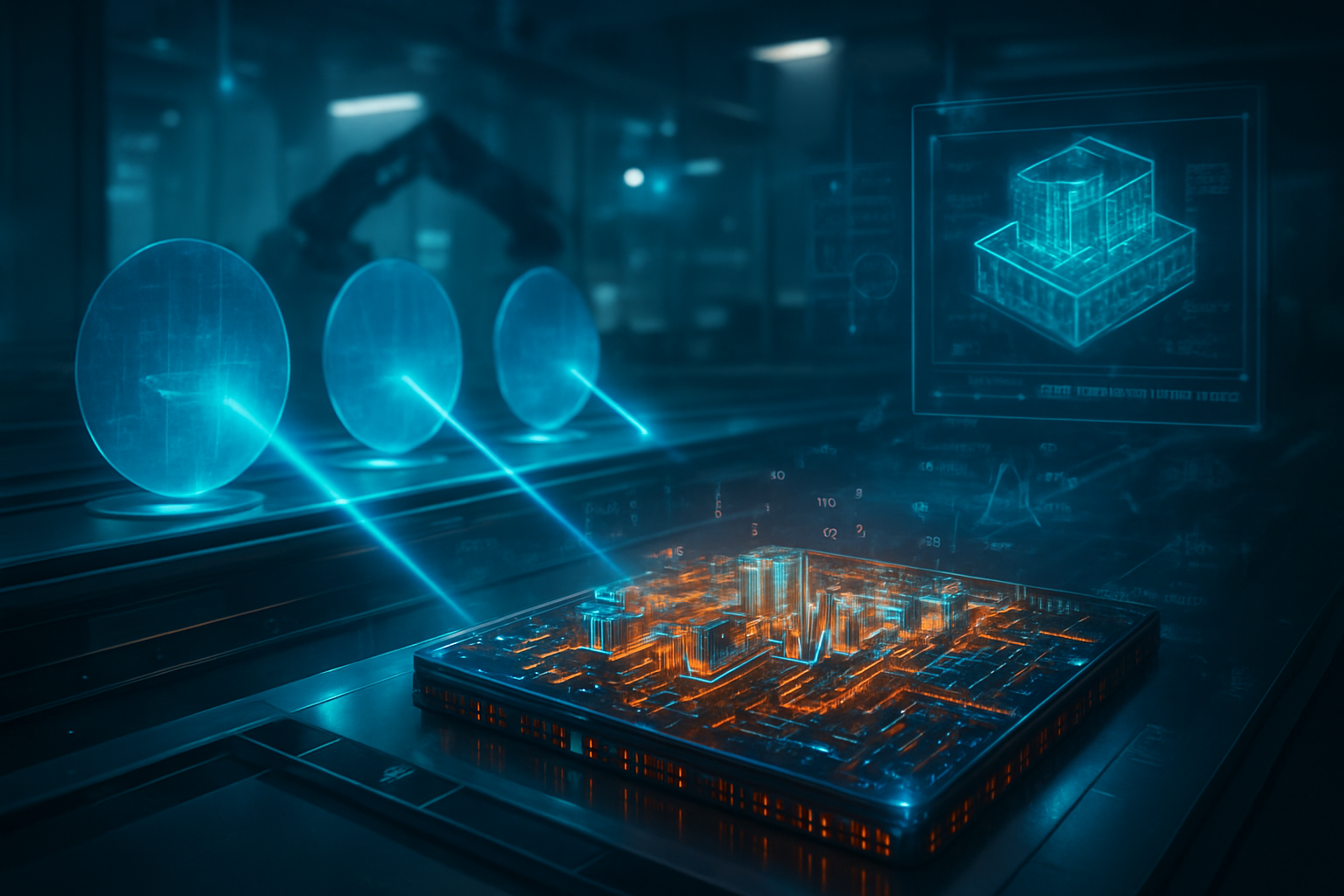
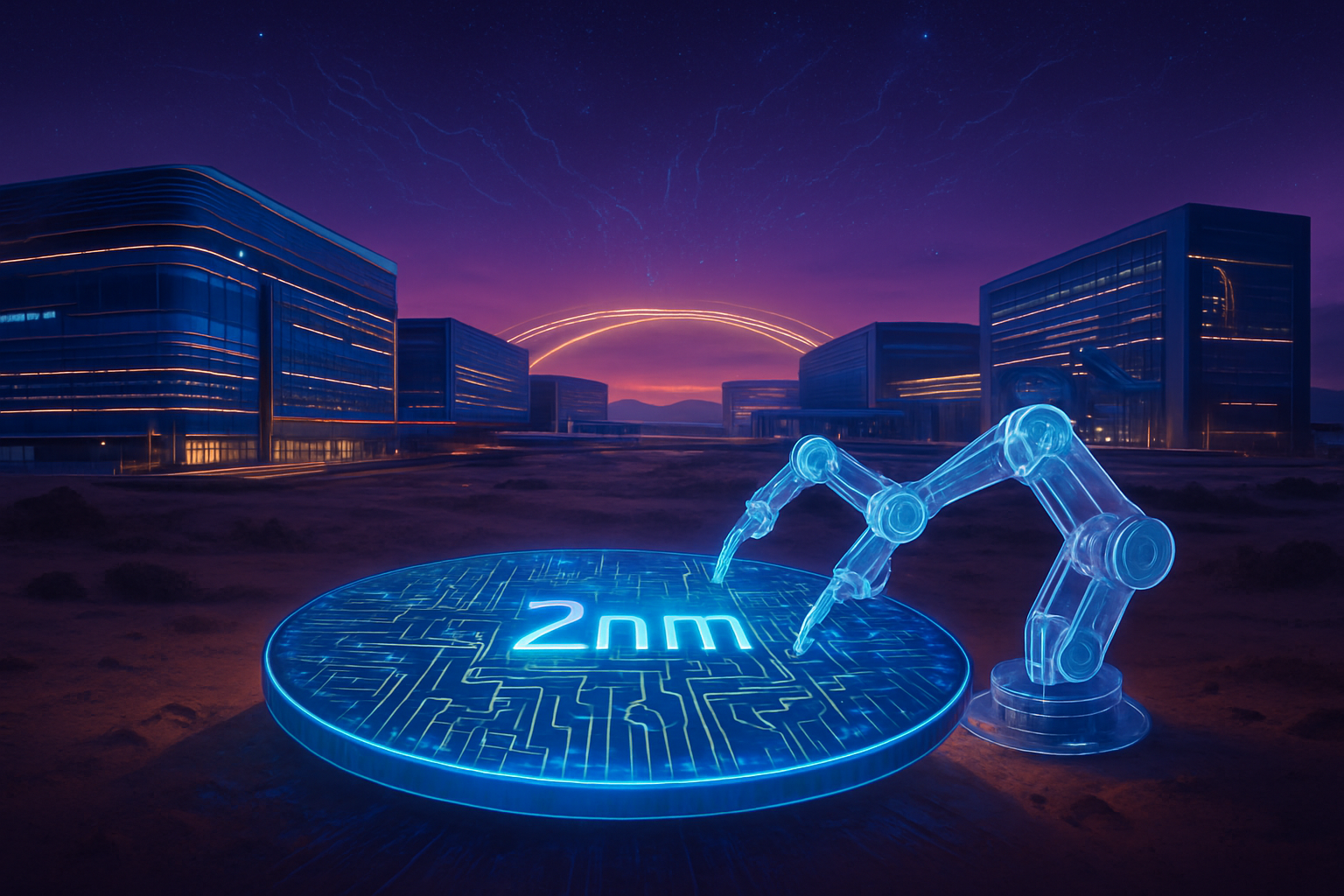
    TSMC's sustained market leadership is rooted in its relentless pursuit of technological advancement and its strategic alignment with the burgeoning AI sector. The company's technical prowess in developing and mass-producing increasingly smaller and more powerful process nodes is unmatched. Its 3nm and 5nm technologies are currently at the heart of the most advanced smartphones, data center processors, and, critically, AI accelerators. Looking ahead, TSMC is on track for mass production of its 2nm chips in 2025, promising further leaps in performance and power efficiency. Beyond this, the development of the 1.4nm A14 process, which will leverage second-generation gate-all-around (GAA) nanosheet transistors, signifies a continuous pipeline of innovation designed to meet the insatiable demands of future AI workloads. These advancements are not incremental; they represent foundational shifts that enable AI models to become more complex, efficient, and capable.

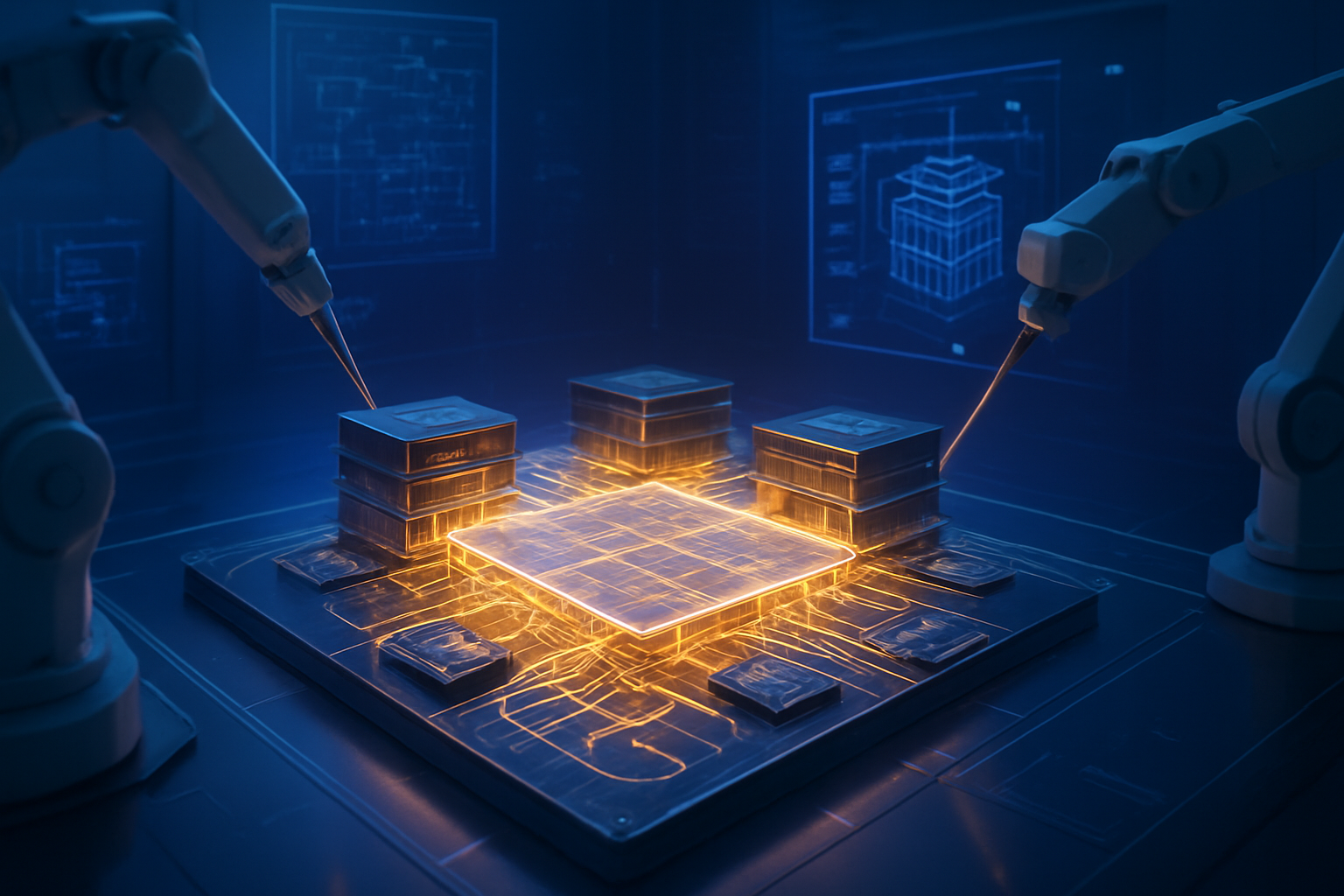
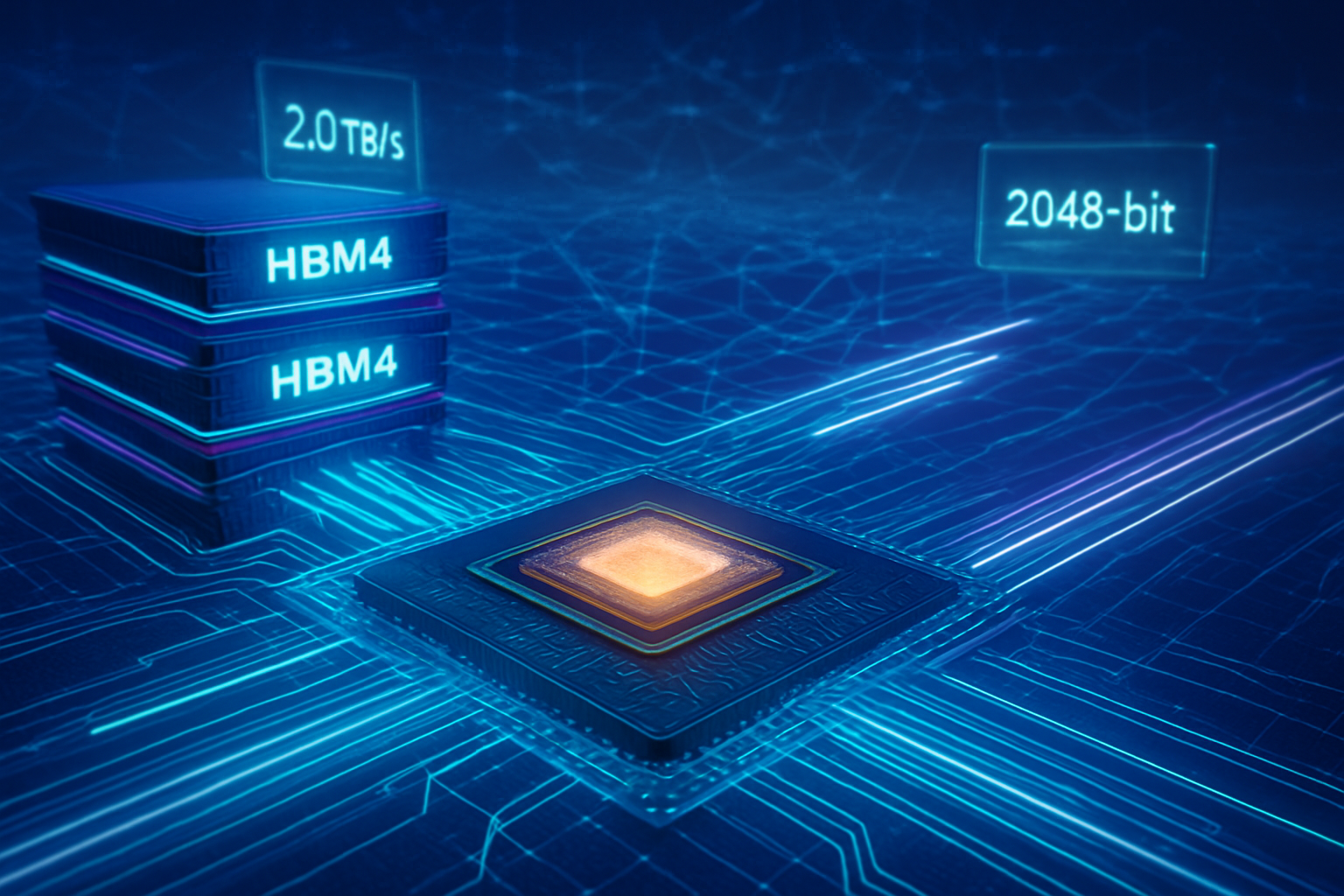
    Beyond raw transistor density, TSMC is also a leader in advanced semiconductor packaging. Its innovative System-on-Wafer-X (SoW-X) platform, for instance, is designed to integrate multiple high-bandwidth memory (HBM) stacks directly with logic dies. By 2027, this technology is projected to integrate up to 12 HBM stacks, dramatically boosting the computing power and data throughput essential for next-generation AI processing. This vertical integration of memory and logic within a single package addresses critical bottlenecks in AI hardware, allowing for faster data access and more efficient parallel processing. Such packaging innovations are as crucial as process node shrinks in unlocking the full potential of AI.

    The symbiotic relationship between TSMC and AI extends even to the design of the chips themselves. The company is increasingly leveraging AI-powered design tools and methodologies to optimize chip layouts, improve energy efficiency, and accelerate the design cycle. This internal application of AI to chip manufacturing aims to achieve as much as a tenfold improvement in the energy efficiency of advanced AI hardware, demonstrating a holistic approach to fostering AI innovation. This internal adoption of AI not only streamlines TSMC's own operations but also sets a precedent for the entire semiconductor industry.

    TSMC's growth drivers are unequivocally tied to the global surge in AI and High-Performance Computing (HPC) demand. AI-related applications alone accounted for a staggering 60% of TSMC's Q2 2025 revenue, up from 52% the previous year, with wafer shipments for AI products projected to be 12 times those of 2021 by the end of 2025. This exponential growth, coupled with the company's ability to command premium pricing for its advanced manufacturing capabilities, has led to significant expansions in its gross, operating, and net profit margins, underscoring the immense value it provides to the tech industry.

    Reshaping the AI Landscape: Beneficiaries and Competitive Dynamics

    TSMC's technological dominance profoundly impacts the competitive landscape for AI companies, tech giants, and startups alike. The most obvious beneficiaries are the fabless semiconductor companies that design the cutting-edge AI chips but lack the colossal capital and expertise required for advanced manufacturing. NVIDIA (NASDAQ: NVDA), for example, relies heavily on TSMC's advanced nodes for its industry-leading GPUs, which are the backbone of most AI training and inference operations. Similarly, Apple (NASDAQ: AAPL) depends on TSMC for its custom A-series and M-series chips, which power its devices and increasingly integrate sophisticated on-device AI capabilities. AMD (NASDAQ: AMD), Qualcomm (NASDAQ: QCOM), and Broadcom (NASDAQ: AVGO) also leverage TSMC's foundries for their high-performance processors and specialized AI accelerators.

    The competitive implications are significant. Companies with strong design capabilities but without access to TSMC's leading-edge processes face a substantial disadvantage. This creates a de facto barrier to entry for new players in the high-performance AI chip market, solidifying the market positioning of TSMC's current clientele. While some tech giants like Intel (NASDAQ: INTC) are investing heavily in their own foundry services (Intel Foundry Services), TSMC's established lead and proven track record make it the preferred partner for most demanding AI chip designs. This dynamic means that strategic partnerships with TSMC are paramount for maintaining a competitive edge in AI hardware development.

    Potential disruption to existing products or services is minimal for TSMC's clients, as TSMC is the enabler, not the disrupter, of these products. Instead, the disruption occurs at the level of companies that cannot secure advanced manufacturing capacity, or those whose designs are not optimized for TSMC's leading nodes. TSMC's market positioning as the "neutral" foundry partner allows it to serve a diverse range of competitors, albeit with its own strategic leverage. Its ability to continuously push the boundaries of semiconductor physics provides a strategic advantage to the entire ecosystem it supports, further entrenching its role as an indispensable partner for AI innovation.

    The Geopolitical "Silicon Shield" and Broader AI Trends

    TSMC's strategic importance extends far beyond commercial success; it forms a crucial "silicon shield" for Taiwan, profoundly influencing global geopolitical dynamics. The concentration of advanced chip manufacturing in Taiwan, particularly TSMC's near-monopoly on sub-5nm processes, gives the island immense leverage on the world stage. In an era of escalating US-China tech rivalry, control over leading-edge semiconductor supply chains has become a national security imperative. TSMC's operations are thus intertwined with complex geopolitical considerations, making its stability and continued innovation a matter of international concern.

    This fits into the broader AI landscape by highlighting the critical dependence of AI development on hardware. While software algorithms and models capture much of the public's attention, the underlying silicon infrastructure provided by companies like TSMC is what makes advanced AI possible. Any disruption to this supply chain could have catastrophic impacts on AI progress globally. The company's aggressive global expansion, with new facilities in the U.S. (Arizona), Japan, and Germany, alongside continued significant investments in Taiwan for 2nm and 1.6nm production, is a direct response to both surging global demand and the imperative to enhance supply chain resilience. While these new fabs aim to diversify geographical risk, Taiwan remains the heart of TSMC's most advanced R&D and production, maintaining its strategic leverage.

    Potential concerns primarily revolve around geopolitical instability in the Taiwan Strait, which could severely impact global technology supply chains. Additionally, the increasing cost and complexity of developing next-generation process nodes pose a challenge, though TSMC has historically managed these through scale and innovation. Comparisons to previous AI milestones underscore TSMC's foundational role; just as breakthroughs in algorithms and data fueled earlier AI advancements, the current wave of generative AI and large language models is fundamentally enabled by the unprecedented computing power that TSMC's chips provide. Without TSMC's manufacturing capabilities, the current AI boom would simply not be possible at its current scale and sophistication.

    The Road Ahead: 2nm, A16, and Beyond

    Looking ahead, TSMC is poised for continued innovation and expansion, with several key developments on the horizon. The mass production of 2nm chips in 2025 will be a significant milestone, offering substantial performance and power efficiency gains critical for the next generation of AI accelerators and high-performance processors. Beyond 2nm, the company is already developing the A16 process, which is expected to further push the boundaries of transistor technology, and is also working on a 1.4nm A14 process. These advancements promise to deliver even greater computing density and energy efficiency, enabling more powerful and sustainable AI systems.

    The expected near-term and long-term developments include not only further process node shrinks but also continued enhancements in advanced packaging technologies. TSMC's SoW-X platform will evolve to integrate even more HBM stacks, addressing the growing memory bandwidth requirements of future AI models. Potential applications and use cases on the horizon are vast, ranging from even more sophisticated generative AI models and autonomous systems to advanced scientific computing and personalized medicine, all powered by TSMC's silicon.

    However, challenges remain. Geopolitical tensions, particularly concerning Taiwan, will continue to be a significant factor. The escalating costs of R&D and fab construction for each successive generation of technology also pose financial hurdles, requiring massive capital expenditures. Furthermore, the global demand for skilled talent in advanced semiconductor manufacturing will intensify. Experts predict that TSMC will maintain its leadership position for the foreseeable future, given its substantial technological lead and ongoing investment. The company's strategic partnerships with leading AI chip designers will also continue to be a critical driver of its success and the broader advancement of AI.

    The AI Revolution's Unseen Architect: A Comprehensive Wrap-Up

    In summary, Taiwan Semiconductor Manufacturing Company (NYSE: TSM) stands as the indispensable architect of the artificial intelligence revolution. Its recent market performance, characterized by surging revenues, expanding profits, and a robust stock trajectory, underscores its critical strategic importance. Key takeaways include its unparalleled technological leadership in advanced process nodes (3nm, 2nm, and upcoming 1.4nm), its pioneering efforts in advanced packaging, and its foundational role in enabling the most powerful AI chips from industry giants like NVIDIA and Apple. The company's growth is inextricably linked to the exponential demand for AI and HPC, making it a pivotal player in shaping the future of technology.

    TSMC's significance in AI history cannot be overstated. It is not just a manufacturer; it is the enabler of the current AI boom, providing the raw computing power that allows complex algorithms to flourish. Its "silicon shield" role for Taiwan also highlights its profound geopolitical impact, making its stability a global concern. The long-term impact of TSMC's continuous innovation will be felt across every sector touched by AI, from healthcare and automotive to finance and entertainment.

    What to watch for in the coming weeks and months includes further updates on its 2nm and A16 production timelines, the progress of its global fab expansion projects in the U.S., Japan, and Germany, and any shifts in geopolitical dynamics that could affect its operations. As AI continues its rapid evolution, TSMC's ability to consistently deliver the most advanced and efficient silicon will remain the critical determinant of how quickly and effectively the world embraces the next wave of intelligent technologies.

    This content is intended for informational purposes only and represents analysis of current AI developments.

    TokenRing AI delivers enterprise-grade solutions for multi-agent AI workflow orchestration, AI-powered development tools, and seamless remote collaboration platforms.
    For more information, visit https://www.tokenring.ai/.
  • The Crucible of Compute: Inside the Escalating AI Chip Wars of Late 2025

    The Crucible of Compute: Inside the Escalating AI Chip Wars of Late 2025

    The global technology landscape is currently gripped by an unprecedented struggle for silicon supremacy: the AI chip wars. As of late 2025, this intense competition in the semiconductor market is not merely an industrial race but a geopolitical flashpoint, driven by the insatiable demand for artificial intelligence capabilities and escalating rivalries, particularly between the United States and China. The immediate significance of this technological arms race is profound, reshaping global supply chains, accelerating innovation, and redefining the very foundation of the digital economy.

    This period is marked by an extraordinary surge in investment and innovation, with the AI chip market projected to reach approximately $92.74 billion by the end of 2025, contributing to an overall semiconductor market nearing $700 billion. The outcome of these wars will determine not only technological leadership but also geopolitical influence for decades to come, as AI chips are increasingly recognized as strategic assets integral to national security and future economic dominance.

    Technical Frontiers: The New Age of AI Hardware

    The advancements in AI chip technology by late 2025 represent a significant departure from earlier generations, driven by the relentless pursuit of processing power for increasingly complex AI models, especially large language models (LLMs) and generative AI, while simultaneously tackling critical energy efficiency concerns.

    NVIDIA (the undisputed leader in AI GPUs) continues to push boundaries with architectures like Blackwell (introduced in 2024) and the anticipated Rubin. These GPUs move beyond the Hopper architecture (H100/H200) by incorporating second-generation Transformer Engines for FP4 and FP8 precision, dramatically accelerating AI training and inference. The H200, for instance, boasts 141 GB of HBM3e memory and 4.8 TB/s bandwidth, a substantial leap over its predecessors. AMD (a formidable challenger) is aggressively expanding its Instinct MI300 series (e.g., MI325X, MI355X) with its own "Matrix Cores" and impressive HBM3 bandwidth. Intel (a traditional CPU giant) is also making strides with its Gaudi 3 AI accelerators and Xeon 6 processors, alongside specialized chips like Spyre Accelerator and NorthPole.

    Beyond traditional GPUs, the landscape is diversifying. Neural Processing Units (NPUs) are gaining significant traction, particularly for edge AI and integrated systems, due to their superior energy efficiency and low-latency processing. Newer NPUs, like Intel's NPU 4 in Lunar Lake laptop chips, achieve up to 48 TOPS, making them "Copilot+ ready" for next-generation AI PCs. Application-Specific Integrated Circuits (ASICs) are proliferating as major cloud service providers (CSPs) like Google (with its TPUs, like the anticipated Trillium), Amazon (with Trainium and Inferentia chips), and Microsoft (with Azure Maia 100 and Cobalt 100) develop their own custom silicon to optimize performance and cost for specific cloud workloads. OpenAI (Microsoft-backed) is even partnering with Broadcom (a leading semiconductor and infrastructure software company) and TSMC (Taiwan Semiconductor Manufacturing Company, the world's largest dedicated semiconductor foundry) to develop its own custom AI chips.

    Emerging architectures are also showing immense promise. Neuromorphic computing, mimicking the human brain, offers energy-efficient, low-latency solutions for edge AI, with Intel's Loihi 2 demonstrating 10x efficiency over GPUs. In-Memory Computing (IMC), which integrates memory and compute, is tackling the "von Neumann bottleneck" by reducing data transfer, with IBM Research showcasing scalable 3D analog in-memory architecture. Optical computing (photonic chips), utilizing light instead of electrons, promises ultra-high speeds and low energy consumption for AI workloads, with China unveiling an ultra-high parallel optical computing chip capable of 2560 TOPS.

    Manufacturing processes are equally revolutionary. The industry is rapidly moving to smaller process nodes, with TSMC's N2 (2nm) on track for mass production in 2025, featuring Gate-All-Around (GAAFET) transistors. Intel's 18A (1.8nm-class) process, introducing RibbonFET and PowerVia (backside power delivery), is in "risk production" since April 2025, challenging TSMC's lead. Advanced packaging technologies like chiplets, 3D stacking (TSMC's 3DFabric and CoWoS), and High-Bandwidth Memory (HBM3e and anticipated HBM4) are critical for building complex, high-performance AI chips. Initial reactions from the AI research community are overwhelmingly positive regarding the computational power and efficiency, yet they emphasize the critical need for energy efficiency and the maturity of software ecosystems for these novel architectures.

    Corporate Chessboard: Shifting Fortunes in the AI Arena

    The AI chip wars are profoundly reshaping the competitive dynamics for AI companies, tech giants, and startups, creating clear winners, formidable challengers, and disruptive pressures across the industry. The global AI chip market's explosive growth, with generative AI chips alone potentially exceeding $150 billion in sales in 2025, underscores the stakes.

    NVIDIA remains the primary beneficiary, with its GPUs and the CUDA software ecosystem serving as the backbone for most advanced AI training and inference. Its dominant market share, valued at over $4.5 trillion by late 2025, reflects its indispensable role for major tech companies like Google (an AI pioneer and cloud provider), Microsoft (a major cloud provider and OpenAI backer), Meta (parent company of Facebook and a leader in AI research), and OpenAI (Microsoft-backed, developer of ChatGPT). AMD is aggressively positioning itself as a strong alternative, gaining market share with its Instinct MI350 series and a strategy centered on an open ecosystem and strategic acquisitions. Intel is striving for a comeback, leveraging its Gaudi 3 accelerators and Core Ultra processors to capture segments of the AI market, with the U.S. government viewing its resurgence as strategically vital.

    Beyond the chip designers, TSMC stands as an indispensable player, manufacturing the cutting-edge chips for NVIDIA, AMD, and in-house designs from tech giants. Companies like Broadcom and Marvell Technology (a fabless semiconductor company) are also benefiting from the demand for custom AI chips, with Broadcom notably securing a significant custom AI chip order from OpenAI. AI chip startups are finding niches by offering specialized, affordable solutions, such as Groq Inc. (a startup developing AI accelerators) with its Language Processing Units (LPUs) for fast AI inference.

    Major AI labs and tech giants are increasingly pursuing vertical integration, developing their own custom AI chips to reduce dependency on external suppliers, optimize performance for their specific workloads, and manage costs. Google continues its TPU development, Microsoft has its Azure Maia 100, Meta acquired chip startup Rivos and launched its MTIA program, and Amazon (parent company of AWS) utilizes Trainium and Inferentia chips. OpenAI's pursuit of its own custom AI chips (XPUs) alongside its reliance on NVIDIA highlights this strategic imperative. This "acquihiring" trend, where larger companies acquire specialized AI chip startups for talent and technology, is also intensifying.

    The rapid advancements are disrupting existing product and service models. There's a growing shift from exclusive reliance on public cloud providers to enterprises investing in their own AI infrastructure for cost-effective inference. The demand for highly specialized chips is challenging general-purpose chip manufacturers who fail to adapt. Geopolitical export controls, particularly from the U.S. targeting China, have forced companies like NVIDIA to develop "downgraded" chips for the Chinese market, potentially stifling innovation for U.S. firms while simultaneously accelerating China's domestic chip production. Furthermore, the flattening of Moore's Law means future performance gains will increasingly rely on algorithmic advancements and specialized architectures rather than just raw silicon density.

    Global Reckoning: The Wider Implications of Silicon Supremacy

    The AI chip wars of late 2025 extend far beyond corporate boardrooms and research labs, profoundly impacting global society, economics, and geopolitics. These developments are not just a trend but a foundational shift, redefining the very nature of technological power.

    Within the broader AI landscape, the current era is characterized by the dominance of specialized AI accelerators, a relentless move towards smaller process nodes (like 2nm and A16) and advanced packaging, and a significant rise in on-device AI and edge computing. AI itself is increasingly being leveraged in chip design and manufacturing, creating a self-reinforcing cycle of innovation. The concept of "sovereign AI" is emerging, where nations prioritize developing independent AI capabilities and infrastructure, further fueled by the demand for high-performance chips in new frontiers like humanoid robotics.

    Societally, AI's transformative potential is immense, promising to revolutionize industries and daily life as its integration becomes more widespread and costs decrease. However, this also brings potential disruptions to labor markets and ethical considerations. Economically, the AI chip market is a massive engine of growth, attracting hundreds of billions in investment. Yet, it also highlights extreme supply chain vulnerabilities; TSMC alone produces approximately 90% of the world's most advanced semiconductors, making the global electronics industry highly susceptible to disruptions. This has spurred nations like the U.S. (through the CHIPS Act) and the EU (with the European Chips Act) to invest heavily in diversifying supply chains and boosting domestic production, leading to a potential bifurcation of the global tech order.

    Geopolitically, semiconductors have become the centerpiece of global competition, with AI chips now considered "the new oil." The "chip war" is largely defined by the high-stakes rivalry between the United States and China, driven by national security concerns and the dual-use nature of AI technology. U.S. export controls on advanced semiconductor technology to China aim to curb China's AI advancements, while China responds with massive investments in domestic production and companies like Huawei (a Chinese multinational technology company) accelerating their Ascend AI chip development. Taiwan's critical role, particularly TSMC's dominance, provides it with a "silicon shield," as any disruption to its fabs would be catastrophic globally.

    However, this intense competition also brings significant concerns. Exacerbated supply chain risks, market concentration among a few large players, and heightened geopolitical instability are real threats. The immense energy consumption of AI data centers also raises environmental concerns, demanding radical efficiency improvements. Compared to previous AI milestones, the current era's scale of impact is far greater, its geopolitical centrality unprecedented, and its supply chain dependencies more intricate and fragile. The pace of innovation and investment is accelerated, pushing the boundaries of what was once thought possible in computing.

    Horizon Scan: The Future Trajectory of AI Silicon

    The future trajectory of the AI chip wars promises continued rapid evolution, marked by both incremental advancements and potentially revolutionary shifts in computing paradigms. Near-term developments over the next 1-3 years will focus on refining specialized hardware, enhancing energy efficiency, and maturing innovative architectures.

    We can expect a continued push for specialized accelerators beyond traditional GPUs, with ASICs and FPGAs gaining prominence for inference workloads. In-Memory Computing (IMC) will increasingly address the "memory wall" bottleneck, integrating memory and processing to reduce latency and power, particularly for edge devices. Neuromorphic computing, with its brain-inspired, energy-efficient approach, will see greater integration into edge AI, robotics, and IoT. Advanced packaging techniques like 3D stacking and chiplets, along with new memory technologies like MRAM and ReRAM, will become standard. A paramount focus will remain on energy efficiency, with innovations in cooling solutions (like Microsoft's microfluidic cooling) and chip design.

    Long-term developments, beyond three years, hint at more transformative changes. Photonics or optical computing, using light instead of electrons, promises ultra-high speeds and bandwidth for AI workloads. While nascent, quantum computing is being explored for its potential to tackle complex machine learning tasks, potentially impacting AI hardware in the next five to ten years. The vision of "software-defined silicon," where hardware becomes as flexible and reconfigurable as software, is also emerging. Critically, generative AI itself will become a pivotal tool in chip design, automating optimization and accelerating development cycles.

    These advancements will unlock a new wave of applications. Edge AI and IoT will see enhanced real-time processing capabilities in smart sensors, autonomous vehicles, and industrial devices. Generative AI and LLMs will continue to drive demand for high-performance GPUs and ASICs, with future AI servers increasingly relying on hybrid CPU-accelerator designs for inference. Autonomous systems, healthcare, scientific research, and smart cities will all benefit from more intelligent and efficient AI hardware.

    Key challenges persist, including the escalating power consumption of AI, the immense cost and complexity of developing and manufacturing advanced chips, and the need for resilient supply chains. The talent shortage in semiconductor engineering remains a critical bottleneck. Experts predict sustained market growth, with NVIDIA maintaining leadership but facing intensified competition from AMD and custom silicon from hyperscalers. Geopolitically, the U.S.-China tech rivalry will continue to drive strategic investments, export controls, and efforts towards supply chain diversification and reshoring. The evolution of AI hardware will move towards increasing specialization and adaptability, with a growing emphasis on hardware-software co-design.

    Final Word: A Defining Contest for the AI Era

    The AI chip wars of late 2025 stand as a defining contest of the 21st century, profoundly impacting technological innovation, global economics, and international power dynamics. The relentless pursuit of computational power to fuel the AI revolution has ignited an unprecedented race in the semiconductor industry, pushing the boundaries of physics and engineering.

    The key takeaways are clear: NVIDIA's dominance, while formidable, is being challenged by a resurgent AMD and the strategic vertical integration of hyperscalers developing their own custom AI silicon. Technological advancements are accelerating, with a shift towards specialized architectures, smaller process nodes, advanced packaging, and a critical focus on energy efficiency. Geopolitically, the US-China rivalry has cemented AI chips as strategic assets, leading to export controls, nationalistic drives for self-sufficiency, and a global re-evaluation of supply chain resilience.

    This period's significance in AI history cannot be overstated. It underscores that the future of AI is intrinsically linked to semiconductor supremacy. The ability to design, manufacture, and control these advanced chips determines who will lead the next industrial revolution and shape the rules for AI's future. The long-term impact will likely see bifurcated tech ecosystems, further diversification of supply chains, sustained innovation in specialized chips, and an intensified focus on sustainable computing.

    In the coming weeks and months, watch for new product launches from NVIDIA (Blackwell iterations, Rubin), AMD (MI400 series, "Helios"), and Intel (Panther Lake, Gaudi advancements). Monitor the deployment and performance of custom AI chips from Google, Amazon, Microsoft, and Meta, as these will indicate the success of their vertical integration strategies. Keep a close eye on geopolitical developments, especially any new export controls or trade measures between the US and China, as these could significantly alter market dynamics. Finally, observe the progress of advanced manufacturing nodes from TSMC, Samsung, and Intel, and the development of open-source AI software ecosystems, which are crucial for fostering broader innovation and challenging existing monopolies. The AI chip wars are far from over; they are intensifying, promising a future shaped by silicon.

    This content is intended for informational purposes only and represents analysis of current AI developments.
    TokenRing AI delivers enterprise-grade solutions for multi-agent AI workflow orchestration, AI-powered development tools, and seamless remote collaboration platforms.
    For more information, visit https://www.tokenring.ai/.