Tag: TSMC

  • 3D Logic: Stacking the Future of Semiconductor Architecture

    3D Logic: Stacking the Future of Semiconductor Architecture

    The semiconductor industry has officially moved beyond the flatlands of traditional chip design. As of December 2024, the "2D barrier" that has governed Moore’s Law for decades is being dismantled by a new generation of vertical 3D logic chips. By stacking memory and compute layers like floors in a skyscraper, researchers and tech giants are unlocking performance levels previously deemed impossible. This architectural shift represents the most significant change in chip design since the invention of the integrated circuit, effectively eliminating the "memory wall"—the data transfer bottleneck that has long hampered AI development.

    This breakthrough is not merely a theoretical exercise; it is a direct response to the insatiable power and data demands of generative AI and large-scale neural networks. By moving data vertically over microns rather than horizontally over millimeters, these 3D stacks drastically reduce power consumption while increasing the speed of AI workloads by orders of magnitude. As the world approaches 2026, the transition to 3D logic is set to redefine the competitive landscape for hardware manufacturers and AI labs alike.

    The Technical Leap: From 2.5D to Monolithic 3D

    The transition to true 3D logic represents a departure from the "2.5D" packaging that has dominated the industry for the last few years. While 2.5D designs, such as NVIDIA’s (NASDAQ: NVDA) Blackwell architecture, place chiplets side-by-side on a silicon interposer, the new 3D paradigm involves direct vertical bonding. Leading this charge is TSMC (NYSE: TSM) with its System on Integrated Chips (SoIC) platform. In late 2025, TSMC achieved a 6μm bond pitch, allowing for logic-on-logic stacking that offers interconnect densities ten times higher than previous generations. This enables different chip components to communicate with nearly the same speed and efficiency as if they were on a single piece of silicon, but with the modularity of a multi-story building.

    Complementing this is the rise of Complementary FET (CFET) technology, which was a highlight of the December 2025 IEDM conference. Unlike traditional FinFETs or Gate-All-Around (GAA) transistors that sit side-by-side, CFETs stack n-type and p-type transistors on top of each other. This verticality effectively doubles the transistor density for the same footprint, providing a roadmap for the upcoming "A10" (1nm) nodes. Furthermore, Intel (NASDAQ: INTC) has successfully deployed its Foveros Direct 3D technology in the new Clearwater Forest Xeon processors. This uses hybrid bonding to create copper-to-copper connections between layers, reducing latency and allowing for a more compact, power-efficient design than any 2D predecessor.

    The most radical advancement comes from a collaboration between Stanford University, MIT, and SkyWater Technology (NASDAQ: SKYT). They have demonstrated a "monolithic 3D" AI chip that integrates Carbon Nanotube FETs (CNFETs) and Resistive RAM (RRAM) directly over traditional CMOS logic. This approach doesn't just stack finished chips; it builds the entire structure layer-by-layer in a single manufacturing process. Initial tests show a 4x improvement in throughput for large language models (LLMs), with simulations suggesting that taller stacks could yield a 100x to 1,000x gain in energy efficiency. This differs from existing technology by removing the physical separation between memory and compute, allowing AI models to "think" where they "remember."

    Market Disruption and the New Hardware Arms Race

    The shift to 3D logic is recalibrating the power dynamics among the world’s most valuable companies. NVIDIA (NASDAQ: NVDA) remains at the forefront with its newly announced "Rubin" R100 platform. By utilizing 8-Hi HBM4 memory stacks and 3D chiplet designs, NVIDIA is targeting a memory bandwidth of 13 TB/s—nearly double that of its predecessor. This allows the company to maintain its lead in the AI training market, where data movement is the primary cost. However, the complexity of 3D stacking has also opened a window for Intel (NASDAQ: INTC) to reclaim its "process leadership" title. Intel’s 18A node and PowerVia 2.0—a backside power delivery system that moves power routing to the bottom of the chip—have become the benchmark for high-performance AI silicon in 2025.

    For specialized AI startups and hyperscalers like Amazon (NASDAQ: AMZN) and Google (NASDAQ: GOOGL), 3D logic offers a path to custom silicon that is far more efficient than general-purpose GPUs. By stacking their own proprietary AI accelerators directly onto high-bandwidth memory (HBM) using Samsung’s (KRX: 005930) SAINT-D platform, these companies can reduce the energy cost of AI inference by up to 70%. This is a strategic advantage in a market where electricity costs and data center cooling are becoming the primary constraints on AI scaling. Samsung’s ability to stack DRAM directly on logic without an interposer is a direct challenge to the traditional supply chain, potentially disrupting the dominance of dedicated packaging firms.

    The competitive implications extend to the foundry model itself. As 3D stacking requires tighter integration between design and manufacturing, the "fabless" model is evolving into a "co-design" model. Companies that cannot master the thermal and electrical complexities of vertical stacking risk being left behind. We are seeing a shift where the value is moving from the individual chip to the "System-on-Package" (SoP). This favors integrated players and those with deep partnerships, like the alliance between Apple (NASDAQ: AAPL) and TSMC, which is rumored to be working on a 3D-stacked "M5" chip for 2026 that could bring server-grade AI capabilities to consumer devices.

    The Wider Significance: Breaking the Memory Wall

    The broader significance of 3D logic cannot be overstated; it is the key to solving the "Memory Wall" problem that has plagued computing for decades. In a traditional 2D architecture, the energy required to move data between the processor and memory is often orders of magnitude higher than the energy required to actually perform the computation. By stacking these components vertically, the distance data must travel is reduced from millimeters to microns. This isn't just an incremental improvement; it is a fundamental shift that enables "Agentic AI"—systems capable of long-term reasoning and multi-step tasks that require massive, high-speed access to persistent memory.

    However, this breakthrough brings new concerns, primarily regarding thermal management. Stacking high-performance logic layers is akin to stacking several space heaters on top of each other. In 2025, the industry has had to pioneer microfluidic cooling—circulating liquid through tiny channels etched directly into the silicon—to prevent these 3D skyscrapers from melting. There are also concerns about manufacturing yields; if one layer in a ten-layer stack is defective, the entire expensive unit may have to be discarded. This has led to a surge in AI-driven "Design for Test" (DfT) tools that can predict and mitigate failures before they occur.

    Comparatively, the move to 3D logic is being viewed by historians as a milestone on par with the transition from vacuum tubes to transistors. It marks the end of the "Planar Era" and the beginning of the "Volumetric Era." Just as the skyscraper allowed cities to grow when they ran out of land, 3D logic allows computing power to grow when we run out of horizontal space on a silicon wafer. This trend is essential for the sustainability of AI, as the world cannot afford the projected energy costs of 2D-based AI scaling.

    The Horizon: 1nm, Glass Substrates, and Beyond

    Looking ahead, the near-term focus will be on the refinement of hybrid bonding and the commercialization of glass substrates. Unlike organic substrates, glass offers superior flatness and thermal stability, which is critical for maintaining the alignment of vertically stacked layers. By 2026, we expect to see the first high-volume AI chips using glass substrates, enabling even larger and more complex 3D packages. The long-term roadmap points toward "True Monolithic 3D," where multiple layers of logic are grown sequentially on the same wafer, potentially leading to chips with hundreds of layers.

    Future applications for this technology extend far beyond data centers. 3D logic will likely enable "Edge AI" devices—such as AR glasses and autonomous drones—to perform complex real-time processing that currently requires a cloud connection. Experts predict that by 2028, the "AI-on-a-Cube" will be the standard form factor, with specialized layers for sensing, memory, logic, and even integrated photonics for light-speed communication between chips. The challenge remains the cost of manufacturing, but as yields improve, 3D architecture will trickle down from $40,000 AI GPUs to everyday consumer electronics.

    A New Dimension for Intelligence

    The emergence of 3D logic marks a definitive turning point in the history of technology. By breaking the 2D barrier, the semiconductor industry has found a way to continue the legacy of Moore’s Law through architectural innovation rather than just physical shrinking. The primary takeaways are clear: the "memory wall" is falling, energy efficiency is the new benchmark for performance, and the vertical stack is the new theater of competition.

    As we move into 2026, the significance of this development will be felt in every sector touched by AI. From more capable autonomous agents to more efficient data centers, the "skyscraper" approach to silicon is the foundation upon which the next decade of artificial intelligence will be built. Watch for the first performance benchmarks of NVIDIA’s Rubin and Intel’s Clearwater Forest in early 2026; they will be the first true tests of whether 3D logic can live up to its immense promise.


    This content is intended for informational purposes only and represents analysis of current AI developments.

    TokenRing AI delivers enterprise-grade solutions for multi-agent AI workflow orchestration, AI-powered development tools, and seamless remote collaboration platforms.
    For more information, visit https://www.tokenring.ai/.

  • Intel’s 18A Comeback: Can the US Giant Retake the Manufacturing Crown?

    Intel’s 18A Comeback: Can the US Giant Retake the Manufacturing Crown?

    As the sun sets on 2025, the global semiconductor landscape has reached a definitive turning point. Intel (NASDAQ: INTC) has officially transitioned its flagship 18A process node into high-volume manufacturing (HVM), signaling the successful completion of its audacious "five nodes in four years" (5N4Y) strategy. This milestone is more than just a technical achievement; it represents a high-stakes geopolitical victory for the United States, as the company seeks to reclaim the manufacturing crown it lost to TSMC (NYSE: TSM) nearly a decade ago.

    The 18A node is the linchpin of Intel’s "IDM 2.0" vision, a roadmap designed to transform the company into a world-class foundry while maintaining its lead in PC and server silicon. With the support of the U.S. government’s $3 billion "Secure Enclave" initiative and a massive $8.9 billion federal equity stake, Intel is positioning itself as the "National Champion" of domestic chip production. As of late December 2025, the first 18A-powered products—the "Panther Lake" client CPUs and "Clearwater Forest" Xeon server chips—are already reaching customers, marking the first time in years that Intel has been in a dead heat with its Asian rivals for process leadership.

    The Technical Leap: RibbonFET and PowerVia

    The Intel 18A process is not a mere incremental update; it introduces two foundational shifts in transistor architecture that have eluded the industry for years. The first is RibbonFET, Intel’s implementation of Gate-All-Around (GAA) technology. Unlike the traditional FinFET transistors used for the past decade, RibbonFET surrounds the channel with the gate on all four sides, allowing for better control over electrical current and significant reductions in power leakage. While TSMC and Samsung (KRX: 005930) are also moving to GAA, Intel’s implementation on 18A is optimized for high-performance computing and AI workloads.

    The second, and perhaps more critical, innovation is PowerVia. This is the industry’s first commercial implementation of backside power delivery, a technique that moves the power wiring from the top of the silicon wafer to the bottom. By separating the power and signal wires, Intel has solved a major bottleneck in chip design, reducing voltage drop and clearing "congestion" on the chip’s surface. Initial industry analysis suggests that PowerVia provides a 6% to 10% frequency gain and a significant boost in power efficiency, giving Intel a temporary technical lead over TSMC’s N2 node, which is not expected to integrate similar backside power technology until its "A16" node in 2026.

    Industry experts have reacted with cautious optimism. While TSMC still maintains a slight lead in raw transistor density—boasting approximately 313 million transistors per square millimeter compared to Intel 18A’s 238 million—Intel’s yield rates for 18A have stabilized at an impressive 60% by late 2025. This is a stark contrast to the early 2020s, when Intel’s 10nm and 7nm delays nearly crippled the company. The research community views 18A as the moment Intel finally "fixed" its execution engine, delivering a node that is competitive in both performance and manufacturability.

    A New Foundry Powerhouse: Microsoft, AWS, and the Secure Enclave

    The successful ramp of 18A has fundamentally altered the competitive dynamics of the AI industry. Intel Foundry, now operating as a largely independent subsidiary, has secured a roster of "anchor" customers that were once unthinkable. Microsoft (NASDAQ: MSFT) has officially committed to using 18A for its Maia 2 AI accelerators, while Amazon (NASDAQ: AMZN) is utilizing the node for its custom AI Fabric chips. These tech giants are eager to diversify their supply chains away from a total reliance on Taiwan, seeking the "geographical resilience" that Intel’s U.S.-based fabs in Oregon and Arizona provide.

    The strategic significance is further underscored by the Secure Enclave program. This $3 billion Department of Defense initiative ensures that the U.S. military has a dedicated, secure supply of leading-edge AI and defense chips. By 2025, Intel has become the only company capable of manufacturing sub-2nm chips on American soil, a fact that has led the U.S. government to take a nearly 10% equity stake in the company. This "silicon nationalism" provides Intel with a financial and regulatory moat that its competitors in Taiwan and South Korea cannot easily replicate.

    Even rivals are taking notice. NVIDIA (NASDAQ: NVDA) finalized a $5 billion strategic investment in Intel in late 2025, co-developing custom x86 CPUs for data centers. While NVIDIA still relies on TSMC for its flagship Blackwell and Rubin GPUs, the partnership suggests a future where Intel could eventually manufacture portions of NVIDIA’s massive AI portfolio. For startups and smaller AI labs, the emergence of a viable second source for leading-edge manufacturing is expected to ease the supply constraints that have plagued the industry since the start of the AI boom.

    Geopolitics and the End of the Monopoly

    Intel’s 18A success fits into a broader global trend of decoupling and "friend-shoring." For years, the world’s most advanced AI models were dependent on a single point of failure: the 100-mile-wide Taiwan Strait. By bringing 18A to high-volume manufacturing in the U.S., Intel has effectively ended TSMC’s monopoly on the most advanced process nodes. This achievement is being compared to the 1970s "Sputnik moment," representing a massive mobilization of state and private capital to secure technological sovereignty.

    However, this comeback has not been without its costs. To reach this point, Intel underwent a brutal restructuring in early 2025 under new CEO Lip-Bu Tan, who replaced Pat Gelsinger. Tan’s "back-to-basics" approach saw the company cut 20% of its workforce and narrow its focus strictly to 18A and its successor, 14A. While the technical milestone has been reached, the financial toll remains heavy; Intel’s foundry business is not expected to reach profitability until 2027, despite the 80% surge in its stock price over the course of 2025.

    The potential concerns now shift from "Can they build it?" to "Can they scale it profitably?" TSMC remains a formidable opponent with a much larger ecosystem of design tools and a proven track record of high-yield volume production. Critics argue that Intel’s reliance on government subsidies could lead to inefficiencies, but for now, the momentum is clearly in Intel's favor as it proves that American manufacturing can still compete at the "bleeding edge."

    The Road to 1.4nm: What Lies Ahead

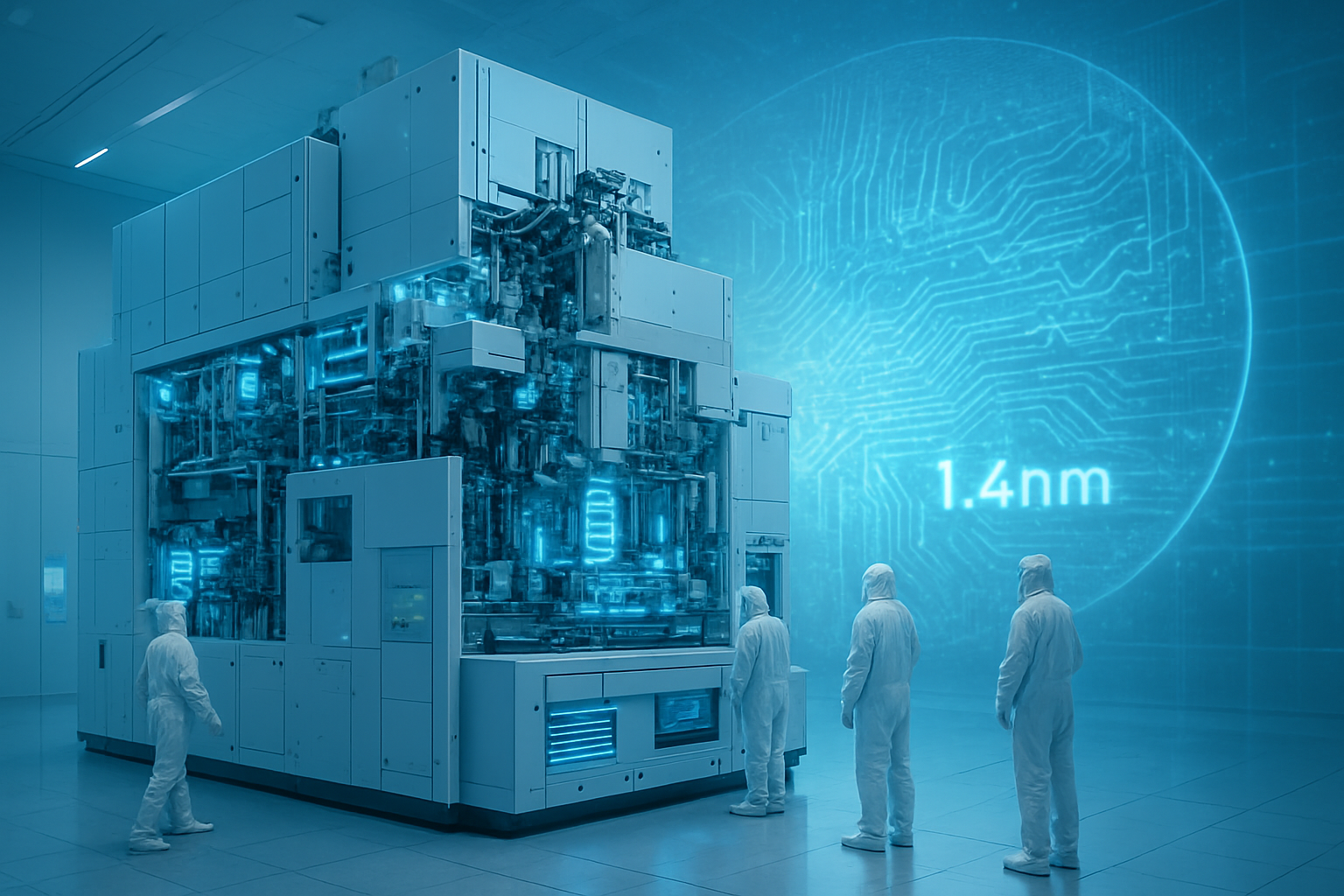
    Looking toward 2026 and beyond, Intel is already preparing its next move: the Intel 14A node. This 1.4nm-class process is expected to enter risk production by late 2026, utilizing "High-NA" EUV lithography machines that Intel has already installed in its Oregon facilities. The 14A node aims to extend Intel’s lead in power efficiency and will be the first to feature even more advanced iterations of RibbonFET technology.

    Near-term developments will focus on the mobile market. While Intel 18A has dominated the data center and PC markets in 2025, it has yet to win over Apple (NASDAQ: AAPL) or Qualcomm for their flagship smartphone chips. Reports suggest that Apple is in advanced negotiations to move some lower-end M-series production to Intel by 2027, but the "crown jewel" of the iPhone processor remains with TSMC for now. Intel must prove that 18A can meet the stringent thermal and battery-life requirements of the mobile world to truly claim total manufacturing dominance.

    Experts predict that the next two years will be a "war of attrition" between Intel and TSMC. The focus will shift from transistor architecture to "advanced packaging"—the art of stacking multiple chips together to act as one. Intel’s Foveros and EMIB packaging technologies are currently world-leading, and the company plans to integrate these with 18A to create massive "system-on-package" solutions for the next generation of generative AI models.

    A Historic Pivot in Silicon History

    The story of Intel 18A is a rare example of a legacy giant successfully reinventing itself under extreme pressure. By delivering on the "five nodes in four years" promise, Intel has closed a gap that many analysts thought was permanent. The significance of this development in AI history cannot be overstated: it ensures that the hardware foundation for future artificial intelligence will be geographically distributed and technologically diverse.

    The key takeaways for the end of 2025 are clear: Intel is back in the game, the U.S. has a domestic leading-edge foundry, and the "2nm era" has officially begun. While the financial road to recovery is still long, the technical hurdles that once seemed insurmountable have been cleared.

    In the coming months, the industry will be watching the retail performance of Panther Lake laptops and the first benchmarks of Microsoft’s 18A-based AI chips. If these products meet their performance targets, the manufacturing crown may well find its way back to Santa Clara by the time the next decade begins.


    This content is intended for informational purposes only and represents analysis of current AI developments.

    TokenRing AI delivers enterprise-grade solutions for multi-agent AI workflow orchestration, AI-powered development tools, and seamless remote collaboration platforms.
    For more information, visit https://www.tokenring.ai/.
  • The 2nm Sprint: TSMC vs. Samsung in the Race for Next-Gen Silicon

    The 2nm Sprint: TSMC vs. Samsung in the Race for Next-Gen Silicon

    As of December 24, 2025, the semiconductor industry has reached a fever pitch in what analysts are calling the most consequential transition in the history of silicon manufacturing. The race to dominate the 2-nanometer (2nm) era is no longer a theoretical roadmap; it is a high-stakes reality. Taiwan Semiconductor Manufacturing Company (TSMC) (NYSE: TSM) has officially entered high-volume manufacturing (HVM) for its N2 process, while Samsung Electronics (KRX: 005930) is aggressively positioning its second-generation 2nm node (SF2P) to capture the exploding demand for artificial intelligence (AI) infrastructure and flagship mobile devices.

    This shift represents more than just a minor size reduction. It marks the industry's collective move toward Gate-All-Around (GAA) transistor architecture, a fundamental redesign of the transistor itself to overcome the physical limitations of the aging FinFET design. With AI server racks now demanding unprecedented power levels and flagship smartphones requiring more efficient on-device neural processing, the winner of this 2nm sprint will essentially dictate the pace of AI evolution for the remainder of the decade.

    The move to 2nm is defined by the transition from FinFET to GAAFET (Gate-All-Around Field-Effect Transistor) or "nanosheet" architecture. TSMC’s N2 process, which reached mass production in the fourth quarter of 2025, marks the company's first jump into nanosheets. By wrapping the gate around all four sides of the channel, TSMC has achieved a 10–15% speed improvement and a 25–30% reduction in power consumption compared to its 3nm (N3E) node. Initial yield reports for TSMC's N2 are remarkably strong, with internal data suggesting yields as high as 80% for early commercial batches, a feat attributed to the company's cautious, iterative approach to the new architecture.

    Samsung, conversely, is leveraging what it calls a "generational head start." Having introduced GAA technology at the 3nm stage, Samsung’s SF2 and its enhanced SF2P processes are technically third-generation GAA designs. This experience has allowed Samsung to offer Multi-Bridge Channel FET (MBCFET), which provides designers with greater flexibility to vary nanosheet widths to optimize for either extreme performance or ultra-low power. While Samsung’s yields have historically lagged behind TSMC’s, the company reported a breakthrough in late 2025, reaching a stable 60% yield for its SF2 node, which is currently powering the Exynos 2600 for the upcoming Galaxy S26 series.

    Industry experts have noted that the 2nm era also introduces "Backside Power Delivery" (BSPDN) as a critical secondary innovation. While TSMC has reserved its "Super Power Rail" for its enhanced N2P and A16 (1.6nm) nodes expected in late 2026, Intel (NASDAQ: INTC) has already pioneered this with its "PowerVia" technology on the 18A node. This separation of power and signal lines is essential for AI chips, as it drastically reduces "voltage droop," allowing chips to maintain higher clock speeds under the massive workloads required for Large Language Model (LLM) training.

    Initial reactions from the AI research community have been overwhelmingly focused on the thermal implications. At the 2nm level, power density has become so extreme that air cooling is increasingly viewed as obsolete for data center applications. The consensus among hardware architects is that 2nm AI accelerators, such as NVIDIA's (NASDAQ: NVDA) projected "Rubin" series, will necessitate a mandatory shift to direct-to-chip liquid cooling to prevent thermal throttling during intensive training cycles.

    The competitive landscape for 2nm is characterized by a fierce tug-of-war over the world's most valuable tech giants. TSMC remains the dominant force, with Apple (NASDAQ: AAPL) serving as its "alpha customer." Apple has reportedly secured nearly 50% of TSMC’s initial 2nm capacity for its A20 and A20 Pro chips, which will debut in the iPhone 18. This partnership ensures that Apple maintains its lead in on-device AI performance, providing the hardware foundation for more complex, autonomous Siri agents.

    However, Samsung is making strategic inroads by targeting the "Big Tech" hyperscalers. Samsung is currently running Multi-Project Wafer (MPW) sample tests with AMD (NASDAQ: AMD) for its second-generation SF2P node. AMD is reportedly pursuing a "dual-foundry" strategy, using TSMC for its Zen 6 "Venice" server CPUs while exploring Samsung’s 2nm for its next-generation Ryzen processors to mitigate supply chain risks. Similarly, Google (NASDAQ: GOOGL) is in deep negotiations with Samsung to produce its custom AI Tensor Processing Units (TPUs) at Samsung’s nearly completed facility in Taylor, Texas.

    Samsung’s Taylor fab has become a significant strategic advantage. Under Taiwan’s "N-2" policy, TSMC is required to keep its most advanced manufacturing technology in Taiwan for at least two years before exporting it to overseas facilities. This means TSMC’s Arizona plant will not produce 2nm chips until at least 2027. Samsung, however, is positioning its Texas fab as the only facility in the United States capable of mass-producing 2nm silicon in 2026. For US-based companies like Google and Meta (NASDAQ: META) that are under pressure to secure domestic supply chains, Samsung’s US-based 2nm capacity is an attractive alternative to TSMC’s Taiwan-centric production.

    Market dynamics are also being shaped by pricing. TSMC’s 2nm wafers are estimated to cost upwards of $30,000 each, a 50% increase over 3nm prices. Samsung has responded with an aggressive pricing model, reportedly undercutting TSMC by roughly 33%, with SF2 wafers priced near $20,000. This pricing gap is forcing many AI startups and second-tier chip designers to reconsider their loyalty to TSMC, potentially leading to a more fragmented and competitive foundry market.

    The significance of the 2nm transition extends far beyond corporate rivalry; it is a vital necessity for the survival of the AI boom. As LLMs scale toward tens of trillions of parameters, the energy requirements for training and inference have reached a breaking point. Gartner predicts that by 2027, nearly 40% of existing AI data centers will be operationally constrained by power availability. The 2nm node is the industry's primary weapon against this "power wall."

    By delivering a 30% reduction in power consumption, 2nm chips allow data center operators to pack more compute density into existing power envelopes. This is particularly critical for the transition from "Generative AI" to "Agentic AI"—autonomous systems that can reason and execute tasks in real-time. These agents require constant, low-latency background processing that would be prohibitively expensive and energy-intensive on 3nm or 5nm hardware. The efficiency of 2nm silicon is the "gating factor" that will determine whether AI agents become ubiquitous or remain limited to high-end enterprise applications.

    Furthermore, the 2nm era is coinciding with the integration of HBM4 (High Bandwidth Memory). The combination of 2nm logic and HBM4 is expected to provide over 15 TB/s of bandwidth, allowing massive models to fit into smaller GPU clusters. This reduces the communication latency that currently plagues large-scale AI training. Compared to the 7nm milestone that enabled the first wave of deep learning, or the 5nm node that powered the ChatGPT explosion, the 2nm breakthrough is being viewed as the "efficiency milestone" that makes AI economically sustainable at a global scale.

    However, the move to 2nm also raises concerns regarding the "Economic Wall." As wafer costs soar, the barrier to entry for custom silicon is rising. Only the wealthiest corporations can afford to design and manufacture at 2nm, potentially leading to a concentration of AI power among a handful of "Silicon Superpowers." This has prompted a surge in chiplet-based designs, where only the most critical compute dies are built on 2nm, while less sensitive components remain on older, cheaper nodes.

    Looking ahead, the 2nm sprint is merely a precursor to the 1.4nm (A14) era. Both TSMC and Samsung have already begun outlining their 1.4nm roadmaps, with production targets set for 2027 and 2028. These future nodes will rely heavily on High-NA (Numerical Aperture) Extreme Ultraviolet (EUV) lithography, a next-generation manufacturing technology that allows for even finer circuit patterns. Intel has already taken delivery of the world’s first High-NA EUV machines, signaling that the three-way battle for silicon supremacy will only intensify.

    In the near term, the industry is watching for the first 2nm-powered AI accelerators to hit the market in mid-2026. These chips are expected to enable "World Models"—AI systems that can simulate physical reality with high fidelity, a prerequisite for advanced robotics and autonomous vehicles. The challenge remains the complexity of the manufacturing process; as transistors approach the size of a few dozen atoms, quantum tunneling and other physical anomalies become increasingly difficult to manage.

    Predicting the next phase, analysts suggest that the focus will shift from raw transistor density to "System-on-Wafer" technologies. Rather than individual chips, foundries may begin producing entire wafers as single, interconnected AI processing units. This would eliminate the bottlenecks of traditional chip packaging, but it requires the near-perfect yields that TSMC and Samsung are currently fighting to achieve at the 2nm level.

    The 2nm sprint represents a pivotal moment in the history of computing. TSMC’s successful entry into high-volume manufacturing with its N2 node secures its position as the industry’s reliable powerhouse, while Samsung’s aggressive testing of its second-generation GAA process and its strategic US-based production in Texas offer a compelling alternative for a geopolitically sensitive world. The key takeaways from this race are clear: the architecture of the transistor has changed forever, and the energy efficiency of 2nm silicon is now the primary currency of the AI era.

    In the context of AI history, the 2nm breakthrough will likely be remembered as the point where hardware finally began to catch up with the soaring ambitions of software architects. It provides the thermal and electrical headroom necessary for the next generation of autonomous agents and trillion-parameter models to move from research labs into the pockets and desktops of billions of users.

    In the coming weeks and months, the industry will be watching for the first production samples from Samsung’s Taylor fab and the final performance benchmarks of Apple’s A20 silicon. As the first 2nm chips begin to roll off the assembly lines, the race for next-gen silicon will move from the cleanrooms of Hsinchu and Pyeongtaek to the data centers and smartphones that define modern life. The sprint is over; the 2nm era has begun.


    This content is intended for informational purposes only and represents analysis of current AI developments.

    TokenRing AI delivers enterprise-grade solutions for multi-agent AI workflow orchestration, AI-powered development tools, and seamless remote collaboration platforms.
    For more information, visit https://www.tokenring.ai/.
  • The GAA Transition: The Multi-Node Race to 2nm and Beyond

    The GAA Transition: The Multi-Node Race to 2nm and Beyond

    As 2025 draws to a close, the semiconductor industry has reached a historic inflection point: the definitive end of the FinFET era and the birth of the Gate-All-Around (GAA) age. This transition represents the most significant structural overhaul of the transistor since 2011, a shift necessitated by the insatiable power and performance demands of generative AI. By wrapping the transistor gate around all four sides of the channel, manufacturers have finally broken through the "leakage wall" that threatened to stall Moore’s Law at the 3nm threshold.

    The stakes could not be higher for the three titans of silicon—Taiwan Semiconductor Manufacturing Co. (NYSE: TSM), Intel (NASDAQ: INTC), and Samsung (KRX: 005930). As of December 2025, the race to dominate the 2nm node has evolved into a high-stakes chess match of yield rates, architectural innovation, and supply chain sovereignty. With AI data centers consuming record levels of electricity, the superior power efficiency of GAA is no longer a luxury; it is the fundamental requirement for the next generation of silicon.

    The Architecture of the Future: RibbonFET, MBCFET, and Nanosheets

    The technical core of the 2nm transition lies in the move from the "fin" structure to horizontal "nanosheets." While FinFETs controlled current on three sides of the channel, GAA architectures wrap the gate entirely around the conducting channel, providing near-perfect electrostatic control. However, the three major players have taken divergent paths to achieve this. Intel (NASDAQ: INTC) has bet its future on "RibbonFET," its proprietary GAA implementation, paired with "PowerVia"—a revolutionary backside power delivery network (BSPDN). By moving power delivery to the back of the wafer, Intel has effectively decoupled power and signal wires, reducing voltage droop by 30% and allowing for significantly higher clock speeds in its new 18A (1.8nm) chips.

    TSMC (NYSE: TSM), conversely, has adopted a more iterative approach with its N2 (2nm) node. While it utilizes horizontal nanosheets, it has deferred the integration of backside power delivery to its upcoming A16 node, expected in late 2026. This "conservative" strategy has paid off in reliability; as of late 2025, TSMC’s N2 yields are reported to be between 65% and 70%, the highest in the industry. Meanwhile, Samsung (KRX: 005930), which was the first to market with GAA at the 3nm node under the "Multi-Bridge Channel FET" (MBCFET) brand, is currently mass-producing its SF2 (2nm) node. Samsung’s MBCFET design offers unique flexibility, allowing designers to vary the width of the nanosheets to prioritize either low power consumption or high performance within the same chip.

    The industry reaction to these advancements has been one of cautious optimism tempered by the sheer complexity of the manufacturing process. Experts at the 2025 IEEE International Electron Devices Meeting (IEDM) noted that while the GAA transition solves the leakage issues of FinFET, it introduces new challenges in "parasitic capacitance" and thermal management. Initial reports from early testers of Intel's 18A "Panther Lake" processors suggest that the combination of RibbonFET and PowerVia has yielded a 15% performance-per-watt increase over previous generations, a figure that has the AI research community eagerly anticipating the next wave of edge-AI hardware.

    Market Dominance and the Battle for AI Sovereignty

    The shift to 2nm is reshaping the competitive landscape for tech giants and AI startups alike. Apple (NASDAQ: AAPL) has once again leveraged its massive capital reserves to secure more than 50% of TSMC’s initial 2nm capacity. This move ensures that the upcoming A20 and M5 series chips will maintain a substantial lead in mobile and laptop efficiency. For Apple, the 2nm node is the key to running more complex "On-Device AI" models without sacrificing the battery life that has become a hallmark of its silicon.

    Intel’s successful ramp of the 18A node has positioned the company as a credible alternative to TSMC for the first time in a decade. Major cloud providers, including Microsoft (NASDAQ: MSFT) and Amazon (NASDAQ: AMZN), have signed on as 18A customers for their custom AI accelerators. This shift is a direct result of Intel’s "IDM 2.0" strategy, which aims to provide a "Western Foundry" option for companies looking to diversify their supply chains away from the geopolitical tensions surrounding the Taiwan Strait. For Microsoft and AWS, the ability to source 2nm-class silicon from facilities in Oregon and Arizona provides a strategic layer of resilience that was previously unavailable.

    Samsung (KRX: 005930), despite facing yield bottlenecks that have kept its SF2 success rates near 40–50%, remains a critical player by offering aggressive pricing. Companies like AMD (NASDAQ: AMD) and Google (NASDAQ: GOOGL) are reportedly exploring Samsung’s SF2 node for secondary sourcing. This "multi-foundry" approach is becoming the new standard for the industry. As the cost of a single 2nm wafer reaches a staggering $30,000, chip designers are increasingly moving toward "chiplet" architectures, where only the most critical compute cores are manufactured on the expensive 2nm GAA node, while less sensitive components remain on 3nm or 5nm FinFET processes.

    A New Era for the Global AI Landscape

    The transition to GAA at the 2nm node is more than just a technical milestone; it is the engine driving the next phase of the AI revolution. In the broader landscape, the efficiency gains provided by GAA are essential for the sustainability of large-scale AI training. As NVIDIA (NASDAQ: NVDA) prepares its "Rubin" architecture for 2026, the industry is looking toward 2nm to help mitigate the escalating power costs of massive GPU clusters. Without the leakage control provided by GAA, the thermal density of future AI chips would likely have become unmanageable, leading to a "thermal wall" that could have throttled AI progress.

    However, the move to 2nm also highlights growing concerns regarding the "silicon divide." The extreme cost and complexity of GAA manufacturing mean that only a handful of companies can afford to design for the most advanced nodes. This concentration of power among a few "hyper-scalers" and established giants could potentially stifle innovation among smaller AI startups that lack the capital to book 2nm capacity. Furthermore, the reliance on High-NA EUV (Extreme Ultraviolet) lithography—of which there is a limited global supply—creates a new bottleneck in the global tech economy.

    Compared to previous milestones, such as the transition from planar to FinFET, the GAA shift is far more disruptive to the design ecosystem. It requires entirely new Electronic Design Automation (EDA) tools and a rethinking of how power is routed through a chip. As we look back from the end of 2025, it is clear that the companies that mastered these complexities early—most notably TSMC and Intel—have secured a significant strategic advantage in the "AI Arms Race."

    Looking Ahead: 1.6nm and the Road to Angstrom-Scale

    The race does not end at 2nm. Even as the industry stabilizes its GAA production, the roadmap for 2026 and 2027 is already coming into focus. TSMC has already teased its A16 (1.6nm) node, which will finally integrate its "Super Power Rail" backside power delivery. Intel is similarly looking toward "Intel 14A," aiming to push the boundaries of RibbonFET even further. The next major hurdle will be the introduction of "Complementary FET" (CFET) structures, which stack n-type and p-type transistors on top of each other to further increase logic density.

    In the near term, the most significant development to watch will be the "SF2Z" node from Samsung, which promises to combine its MBCFET architecture with backside power by 2027. Experts predict that the next two years will be defined by a "refinement phase," where foundries focus on improving the yields of these complex GAA structures. Additionally, the integration of advanced packaging, such as TSMC’s CoWoS-L and Intel’s Foveros, will become just as important as the transistor itself, as the industry moves toward "system-on-wafer" designs to keep up with the demands of trillion-parameter AI models.

    Conclusion: The 2nm Milestone in Perspective

    The successful transition to Gate-All-Around transistors at the 2nm node marks the beginning of a new chapter in computing history. By overcoming the physical limitations of the FinFET, the semiconductor industry has ensured that the hardware required to power the AI era can continue to scale. TSMC (NYSE: TSM) remains the volume leader with its N2 node, while Intel (NASDAQ: INTC) has successfully staged a technological comeback with its 18A process and PowerVia integration. Samsung (KRX: 005930) continues to push the boundaries of design flexibility, ensuring a competitive three-way market.

    As we move into 2026, the primary focus will shift from "can it be built?" to "can it be built at scale?" The high cost of 2nm wafers will continue to drive the adoption of chiplet-based designs, and the geopolitical importance of these manufacturing hubs will only increase. For now, the 2nm GAA transition stands as a testament to human engineering—a feat that has effectively extended the life of Moore’s Law and provided the silicon foundation for the next decade of artificial intelligence.


    This content is intended for informational purposes only and represents analysis of current AI developments.

    TokenRing AI delivers enterprise-grade solutions for multi-agent AI workflow orchestration, AI-powered development tools, and seamless remote collaboration platforms.
    For more information, visit https://www.tokenring.ai/.
  • Glass Substrates: The New Frontier for High-Performance Computing

    Glass Substrates: The New Frontier for High-Performance Computing

    As the semiconductor industry races toward the era of the one-trillion transistor package, the traditional foundations of chip manufacturing are reaching their physical breaking point. For decades, organic substrates—the material that connects a chip to the motherboard—have been the industry standard. However, the relentless demands of generative AI and high-performance computing (HPC) have exposed their limits in thermal stability and interconnect density. To bridge this gap, the industry is undergoing a historic pivot toward glass core substrates, a transition that promises to unlock the next decade of Moore’s Law.

    Intel Corporation (NASDAQ: INTC) has emerged as the vanguard of this movement, positioning glass not just as a material upgrade, but as the essential platform for the next generation of AI chiplets. By replacing the resin-based organic core with a high-purity glass panel, engineers can achieve unprecedented levels of flatness and thermal resilience. This shift is critical for the massive, multi-die "system-in-package" (SiP) architectures required to power the world’s most advanced AI models, where heat management and data throughput are the primary bottlenecks to progress.

    The Technical Leap: Why Glass Outshines Organic

    The technical transition from organic Ajinomoto Build-up Film (ABF) to glass core substrates is driven by three critical factors: thermal expansion, surface flatness, and interconnect density. Organic substrates are prone to "warpage" as they heat up, a significant issue when trying to bond multiple massive chiplets onto a single package. Glass, by contrast, remains stable at temperatures up to 400°C, offering a 50% reduction in pattern distortion compared to organic materials. This thermal coefficient of expansion (TCE) matching allows for much tighter integration of silicon dies, ensuring that the delicate connections between them do not snap under the intense heat generated by AI workloads.

    At the heart of this advancement are Through Glass Vias (TGVs). Unlike the mechanically or laser-drilled holes in organic substrates, TGVs are created using high-precision laser-etched processes, allowing for aspect ratios as high as 20:1. This enables a 10x increase in interconnect density, allowing thousands of more paths for power and data to flow through the substrate. Furthermore, glass boasts an atomic-level flatness that organic materials cannot replicate. This allows for direct lithography on the substrate, enabling sub-2-micron lines and spaces that are essential for the high-bandwidth communication required between compute tiles and High Bandwidth Memory (HBM).

    Initial reactions from the semiconductor research community have been overwhelmingly positive, with experts noting that glass substrates effectively solve the "thermal wall" that has plagued recent 3nm and 2nm designs. By reducing signal loss by as much as 67% at high frequencies, glass core technology is being hailed as the "missing link" for 100GHz+ high-frequency AI workloads and the eventual integration of light-based data transfer.

    A High-Stakes Race for Market Dominance

    The transition to glass has ignited a fierce competitive landscape among the world’s leading foundries and equipment manufacturers. While Intel (NASDAQ: INTC) holds a significant lead with over 600 patents and a billion-dollar R&D line in Chandler, Arizona, it is not alone. Samsung Electronics (KRX: 005930) has fast-tracked its own glass substrate roadmap, with its subsidiary Samsung Electro-Mechanics already supplying prototype samples to major AI players like Advanced Micro Devices (NASDAQ: AMD) and Broadcom (NASDAQ: AVGO). Samsung aims for mass production as early as 2026, potentially challenging Intel’s first-mover advantage.

    Meanwhile, Taiwan Semiconductor Manufacturing Company (NYSE: TSM) is taking a more evolutionary approach. TSMC is integrating glass into its established "Chip-on-Wafer-on-Substrate" (CoWoS) ecosystem through a new variant called CoPoS (Chip-on-Panel-on-Substrate). This strategy ensures that TSMC remains the primary partner for Nvidia (NASDAQ: NVDA), as it scales its "Rubin" and "Blackwell" GPU architectures. Additionally, Absolics—a joint venture between SKC and Applied Materials (NASDAQ: AMAT)—is nearing commercialization at its Georgia facility, targeting the high-end server market for Amazon (NASDAQ: AMZN) and other hyperscalers.

    The shift to glass poses a potential disruption to traditional substrate suppliers who fail to adapt. For AI companies, the strategic advantage lies in the ability to pack more compute power into a smaller, more efficient footprint. Those who secure early access to glass-packaged chips will likely see a 15–20% improvement in power efficiency, a critical metric for data centers struggling with the massive energy costs of AI training.

    The Broader Significance: Packaging as the New Frontier

    This transition marks a fundamental shift in the semiconductor industry: packaging is no longer just a protective shell; it is now the primary driver of performance scaling. As traditional transistor shrinking (node scaling) becomes exponentially more expensive and physically difficult, "Advanced Packaging" has become the new frontier. Glass substrates are the ultimate manifestation of this trend, serving as the bridge to the 1-trillion transistor packages envisioned for the late 2020s.

    Beyond raw performance, the move to glass has profound implications for the future of optical computing. Because glass is transparent and thermally stable, it is the ideal medium for co-packaged optics (CPO). This will eventually allow AI chips to communicate via light (photons) rather than electricity (electrons) directly from the substrate, virtually eliminating the bandwidth bottlenecks that currently limit the size of AI clusters. This mirrors previous industry milestones like the shift from aluminum to copper interconnects or the introduction of FinFET transistors—moments where a fundamental material change enabled a new era of growth.

    However, the transition is not without concerns. The brittleness of glass presents unique manufacturing challenges, particularly in handling and dicing large 600mm x 600mm panels. Critics also point to the high initial costs and the need for an entirely new supply chain for glass-handling equipment. Despite these hurdles, the industry consensus is that the limitations of organic materials are now a greater risk than the challenges of glass.

    Future Developments and the Road to 2030

    Looking ahead, the next 24 to 36 months will be defined by the "qualification phase," where Intel, Samsung, and Absolics move from pilot lines to high-volume manufacturing. We expect to see the first commercial AI accelerators featuring glass core substrates hit the market by late 2026 or early 2027. These initial products will likely target the most demanding "Super-AI" servers, where the cost of the substrate is offset by the massive performance gains.

    In the long term, glass substrates will enable the integration of passive components—like inductors and capacitors—directly into the core of the substrate. This will further reduce the physical footprint of AI hardware, potentially bringing high-performance AI capabilities to edge devices and autonomous vehicles that were previously restricted by thermal and space constraints. Experts predict that by 2030, glass will be the standard for any chiplet-based architecture, effectively ending the reign of organic substrates in the high-end market.

    Conclusion: A Clear Vision for AI’s Future

    The transition from organic to glass core substrates represents one of the most significant material science breakthroughs in the history of semiconductor packaging. Intel’s early leadership in this space has set the stage for a new era of high-performance computing, where the substrate itself becomes an active participant in the chip’s performance. By solving the dual crises of thermal instability and interconnect density, glass provides the necessary runway for the next generation of AI innovation.

    As we move into 2026, the industry will be watching the yield rates and production volumes of these new glass-based lines. The success of this transition will determine which semiconductor giants lead the AI revolution and which are left behind. In the high-stakes world of silicon, the future has never looked clearer—and it is made of glass.


    This content is intended for informational purposes only and represents analysis of current AI developments.

    TokenRing AI delivers enterprise-grade solutions for multi-agent AI workflow orchestration, AI-powered development tools, and seamless remote collaboration platforms.
    For more information, visit https://www.tokenring.ai/.

  • The Silicon Squeeze: How Advanced Packaging and the ‘Thermal Wall’ are Redefining the AI Arms Race

    The Silicon Squeeze: How Advanced Packaging and the ‘Thermal Wall’ are Redefining the AI Arms Race

    As of December 23, 2025, the global race for artificial intelligence supremacy has shifted from a battle over transistor counts to a desperate scramble for physical space and thermal relief. While the industry spent the last decade focused on shrinking logic gates, the primary constraints of 2025 are no longer the chips themselves, but how they are tied together and kept from melting. Advanced packaging—specifically TSMC’s Chip-on-Wafer-on-Substrate (CoWoS) technology—and the looming "thermal wall" have emerged as the twin gatekeepers of AI progress, dictating which companies can ship products and which data centers can stay online.

    This shift represents a fundamental change in semiconductor economics. For giants like Nvidia (NASDAQ: NVDA) and AMD (NASDAQ: AMD), the challenge is no longer just designing the world’s most powerful GPU; it is securing a spot in the highly specialized "backend" factories where these chips are assembled into massive, multi-die systems. As power densities reach unprecedented levels, the industry is simultaneously undergoing a forced migration toward liquid cooling, a transition that is minting new winners in the infrastructure space while threatening to leave air-cooled legacy facilities in the dust.

    The Technical Frontier: CoWoS-L and the Rise of the 'Silicon Skyscraper'

    At the heart of the current supply bottleneck is TSMC (NYSE: TSM) and its proprietary CoWoS technology. In 2025, the industry has transitioned heavily toward CoWoS-L (Local Silicon Interconnect), a sophisticated packaging method that uses tiny silicon bridges to link multiple compute dies and High Bandwidth Memory (HBM) modules. This approach allows Nvidia’s Blackwell and the upcoming Rubin architectures to function as a single, massive processor, bypassing the physical size limits of traditional chip manufacturing. By the end of 2025, TSMC is expected to reach a monthly CoWoS capacity of 75,000 to 80,000 wafers—nearly double its 2024 output—yet demand from hyperscalers continues to outpace this expansion.

    Technical specifications for these next-gen accelerators have pushed packaging to its breaking point. Current AI chips are now exceeding the "reticle limit," the maximum size a single chip can be printed on a wafer. To solve this, engineers are stacking chips vertically and horizontally, creating what industry experts call "silicon skyscrapers." However, this density introduces a phenomenon known as Coefficient of Thermal Expansion (CTE) mismatch. When these multi-layered stacks heat up, different materials—silicon, organic substrates, and solder—expand at different rates. In early 2025, this led to significant yield challenges for high-end GPUs, as microscopic cracks formed in the interconnects, forcing a redesign of the substrate layers to ensure structural integrity under extreme heat.

    Initial reactions from the AI research community have been a mix of awe and concern. While these packaging breakthroughs have enabled a 30x increase in inference performance for large language models, the complexity of the manufacturing process has created a "tiered" AI market. Only the largest tech companies can afford the premium for CoWoS-allocated chips, leading to a widening gap between the "compute-rich" and the "compute-poor." Researchers at leading labs note that while the logic is faster, the latency involved in moving data across these complex packaging interconnects remains the final frontier for optimizing model training.

    Market Impact: The New Power Brokers of the AI Supply Chain

    The scarcity of advanced packaging has reshaped the competitive landscape, turning backend assembly into a strategic weapon. While TSMC remains the undisputed leader, the sheer volume of demand has forced a new "split manufacturing" model. TSMC now focuses on the high-margin "Chip-on-Wafer" (CoW) stage, while outsourcing the "on Substrate" (oS) assembly to Outsourced Semiconductor Assembly and Test (OSAT) providers. This has been a massive boon for companies like ASE Technology (NYSE: ASX) and Amkor Technology (NASDAQ: AMKR), which have become essential partners for Nvidia and AMD. ASE, in particular, has seen its specialized facilities in Taiwan become dedicated extensions of the Nvidia supply chain, handling the final assembly for the Blackwell B200 and GB200 systems.

    For the major AI labs, this bottleneck has necessitated a shift in strategy. Microsoft (NASDAQ: MSFT), Google (NASDAQ: GOOGL), and Amazon (NASDAQ: AMZN) are no longer just competing on software; they are increasingly designing their own custom AI silicon (ASICs) to bypass the standard GPU queues. However, even these custom chips require CoWoS packaging, leading to a "co-opetition" where tech giants must negotiate for packaging capacity alongside their primary rivals. This has given TSMC unprecedented pricing power and a strategic advantage that some analysts believe will persist through 2027, as new facilities like AP8 in Tainan only begin to reach full scale in late 2025.

    The Thermal Wall: Liquid Cooling Becomes Mandatory

    As chip designs become denser, the industry has hit the "thermal wall." In 2025, top-tier AI accelerators are reaching Thermal Design Power (TDP) ratings of 1,200W to 2,700W per module. At these levels, traditional air cooling is physically incapable of dissipating heat fast enough to prevent the silicon from throttling or sustaining permanent damage. This has triggered a massive infrastructure pivot: liquid cooling is no longer an exotic option for enthusiasts; it is a mandatory requirement for AI data centers. Direct-to-Chip (D2C) cooling, where liquid-filled cold plates sit directly on the processor, has become the standard for the newest Nvidia GB200 NVL72 racks.

    This transition has catapulted infrastructure companies into the spotlight. Vertiv (NYSE: VRT) and Delta Electronics have seen record growth as they race to provide the Coolant Distribution Units (CDUs) and manifolds required to manage the heat of 100kW+ server racks. The wider significance of this shift cannot be overstated; it represents the end of the "air-cooled era" of computing. Data center operators are now forced to retrofit old facilities with liquid piping—a costly and complex endeavor—or build entirely new "AI Factories" from the ground up. This has also raised environmental concerns, as the massive power requirements of these liquid-cooled clusters place immense strain on regional power grids, leading to a surge in interest for small modular reactors (SMRs) to power the next generation of AI hubs.

    Future Horizons: Microfluidics and 3D Integration

    Looking ahead to 2026 and 2027, the industry is exploring even more radical solutions to the packaging and thermal dilemmas. One of the most promising developments is microfluidic cooling, where cooling channels are etched directly into the silicon or the interposer itself. By bringing the coolant within micrometers of the heat-generating transistors, researchers believe they can handle power densities exceeding 3kW per chip. Microsoft and TSMC are reportedly already testing these "in-chip" cooling systems for future iterations of the Maia accelerator series, which could potentially reduce thermal resistance by 15% compared to current cold-plate technology.

    Furthermore, the move toward 3D IC (Integrated Circuit) stacking—where logic is stacked directly on top of logic—will require even more advanced thermal management. Experts predict that the next major milestone will be the integration of optical interconnects directly into the package. By using light instead of electricity to move data between chips, manufacturers can significantly reduce the heat generated by traditional copper wiring. However, the challenge of aligning lasers with sub-micron precision within a mass-produced package remains a significant hurdle that the industry is racing to solve by the end of the decade.

    Summary and Final Thoughts

    The developments of 2025 have made one thing clear: the future of AI is as much a feat of mechanical and thermal engineering as it is of computer science. The CoWoS bottleneck has demonstrated that even the most brilliant algorithms are at the mercy of physical manufacturing capacity. Meanwhile, the "thermal wall" has forced a total reimagining of data center architecture, moving the industry toward a liquid-cooled future that was once the stuff of science fiction.

    As we look toward 2026, the key indicators of success will be the ramp-up of TSMC’s AP8 and AP7 facilities and the ability of OSATs like Amkor and ASE to take on more complex packaging roles. For investors and industry observers, the focus should remain on the companies that bridge the gap between silicon and the physical world. The AI revolution is no longer just in the cloud; it is in the pipes, the pumps, and the microscopic bridges of the world’s most advanced packages.


    This content is intended for informational purposes only and represents analysis of current AI developments.

    TokenRing AI delivers enterprise-grade solutions for multi-agent AI workflow orchestration, AI-powered development tools, and seamless remote collaboration platforms.
    For more information, visit https://www.tokenring.ai/.

  • The Silicon Frontier: TSMC’s A16 and Super Power Rail Redefine the AI Chip Race

    The Silicon Frontier: TSMC’s A16 and Super Power Rail Redefine the AI Chip Race

    As the global appetite for artificial intelligence continues to outpace existing hardware capabilities, the semiconductor industry has reached a historic inflection point. Taiwan Semiconductor Manufacturing Company (NYSE: TSM), the world’s largest contract chipmaker, has officially entered the "Angstrom Era" with the unveiling of its A16 process. This 1.6nm-class node represents more than just a reduction in transistor size; it introduces a fundamental architectural shift known as "Super Power Rail" (SPR). This breakthrough is designed to solve the physical bottlenecks that have long plagued high-performance computing, specifically the routing congestion and power delivery issues that limit the scaling of next-generation AI accelerators.

    The significance of A16 cannot be overstated. For the first time in decades, the primary driver for leading-edge process nodes has shifted from mobile devices to AI data centers. While Apple Inc. (NASDAQ: AAPL) has traditionally been the first to adopt TSMC’s newest technologies, the A16 node is being tailor-made for the massive, power-hungry GPUs and custom ASICs that fuel Large Language Models (LLMs). By moving the power delivery network to the backside of the wafer, TSMC is effectively doubling the available space for signal routing, enabling a leap in performance and energy efficiency that was previously thought to be hitting a physical wall.

    The Architecture of Angstrom: Nanosheets and Super Power Rails

    Technically, the A16 process is an evolution of TSMC’s 2nm (N2) family, utilizing second-generation Gate-All-Around (GAA) Nanosheet transistors. However, the true innovation lies in the Super Power Rail (SPR), TSMC’s proprietary implementation of Backside Power Delivery (BSPDN). In traditional chip manufacturing, both signal wires and power lines are crammed onto the front side of the silicon wafer. As transistors shrink, these wires compete for space, leading to "routing congestion" and significant "IR drop"—a phenomenon where voltage decreases as it travels through the complex web of circuitry. SPR solves this by moving the entire power delivery network to the backside of the wafer, allowing the front side to be dedicated exclusively to signal routing.

    Unlike the "PowerVia" approach currently being deployed by Intel Corporation (NASDAQ: INTC), which uses nano-Through Silicon Vias (nTSVs) to bridge the power network to the transistors, TSMC’s Super Power Rail connects the power network directly to the transistor’s source and drain. This direct-contact scheme is significantly more complex to manufacture but offers superior electrical characteristics. According to TSMC, A16 provides an 8% to 10% speed boost at the same voltage compared to its N2P process, or a 15% to 20% reduction in power consumption at the same clock speed. Furthermore, the removal of power rails from the front side allows for a logic density improvement of up to 1.1x, enabling more transistors to be packed into the same physical area.

    Initial reactions from the AI research community and industry experts have been overwhelmingly positive, though cautious regarding the manufacturing complexity. Dr. Wei-Chung Hsu, a senior semiconductor analyst, noted that "A16 is the most aggressive architectural change we’ve seen since the transition to FinFET. By decoupling power and signal, TSMC is giving chip designers a clean slate to optimize for the 1000-watt chips that the AI era demands." This sentiment is echoed by EDA (Electronic Design Automation) partners who are already racing to update their software tools to handle the unique thermal and routing challenges of backside power.

    The AI Power Play: NVIDIA and OpenAI Take the Lead

    The shift to A16 has triggered a massive realignment among tech giants. For the first decade of the smartphone era, Apple was the undisputed "anchor tenant" for every new TSMC node. However, as of late 2025, reports indicate that NVIDIA Corporation (NASDAQ: NVDA) has secured the lion's share of A16 capacity for its upcoming "Feynman" architecture GPUs, expected to arrive in 2027. These chips will be the first to leverage Super Power Rail to manage the extreme power densities required for trillion-parameter model training.

    Furthermore, the A16 era marks the entry of new players into the leading-edge foundry market. OpenAI is reportedly working with Broadcom Inc. (NASDAQ: AVGO) to design its first in-house AI inference chips on the A16 node, aiming to reduce its multi-billion dollar reliance on external hardware vendors. This move positions OpenAI not just as a software leader, but as a vertical integrator capable of competing with established silicon incumbents. Meanwhile, Advanced Micro Devices (NASDAQ: AMD) is expected to follow suit, utilizing A16 for its MI400 series to maintain parity with NVIDIA’s performance gains.

    Intel, however, remains a formidable challenger. While Samsung Electronics (KRX: 005930) has reportedly delayed its 1.4nm mass production to 2029 due to yield issues, Intel’s 14A node is on track for 2026/2027. Intel is betting heavily on ASML’s (NASDAQ: ASML) High-NA EUV lithography—a technology TSMC has notably deferred for the A16 node in favor of more mature, cost-effective standard EUV. This creates a fascinating strategic divergence: TSMC is prioritizing architectural innovation (SPR), while Intel is prioritizing lithographic precision. For AI startups and cloud providers, this competition is a boon, offering two distinct paths to sub-2nm performance and a much-needed diversification of the global supply chain.

    Beyond Moore’s Law: The Broader Implications for AI Infrastructure

    The arrival of A16 and backside power delivery is more than a technical milestone; it is a necessity for the survival of the AI boom. Current AI data centers are facing a "power wall," where the energy required to cool and power massive GPU clusters is becoming the primary constraint on growth. By delivering a 20% reduction in power consumption, A16 allows data center operators to either reduce their carbon footprint or, more likely, pack 20% more compute power into the same energy envelope. This efficiency is critical as the industry moves toward "sovereign AI," where nations seek to build their own localized data centers to protect data privacy.

    However, the transition to A16 is not without its concerns. The cost of manufacturing these "Angstrom-class" wafers is skyrocketing, with industry estimates placing the price of a single A16 wafer at nearly $50,000. This represents a significant jump from the $20,000 price point seen during the 5nm era. Such high costs could lead to a bifurcation of the tech industry, where only the wealthiest "hyperscalers" like Microsoft (NASDAQ: MSFT), Alphabet (NASDAQ: GOOGL), and Amazon (NASDAQ: AMZN) can afford the absolute cutting edge, potentially widening the gap between AI leaders and smaller startups.

    Thermal management also presents a new set of challenges. With the power delivery network moved to the back of the chip, "hot spots" are now buried under layers of metal, making traditional top-side cooling less effective. This is expected to accelerate the adoption of liquid cooling and immersion cooling technologies in AI data centers, as traditional air cooling reaches its physical limits. The A16 node is thus acting as a catalyst for innovation across the entire data center stack, from the transistor level up to the facility's cooling infrastructure.

    The Roadmap Ahead: From 1.6nm to 1.4nm and Beyond

    Looking toward the future, TSMC’s A16 is just the beginning of a rapid-fire roadmap. Risk production is scheduled to begin in early 2026, with volume production ramping up in the second half of the year. This puts the first A16-powered AI chips on the market by early 2027. Following closely behind is the A14 (1.4nm) node, which will likely integrate the High-NA EUV machines that TSMC is currently evaluating in its research labs. This progression suggests that the cadence of semiconductor innovation has actually accelerated in response to the AI gold rush, defying predictions that Moore’s Law was nearing its end.

    Near-term developments will likely focus on "3D IC" packaging, where A16 logic chips are stacked directly on top of HBM4 (High Bandwidth Memory) or other logic dies. This "System-on-Integrated-Chips" (SoIC) approach will be necessary to keep the data flowing fast enough to satisfy A16’s increased processing power. Experts predict that the next two years will see a flurry of announcements regarding "chiplet" ecosystems, as designers mix and match A16 high-performance cores with older, cheaper nodes for less critical functions to manage the soaring costs of 1.6nm silicon.

    A New Era of Compute

    TSMC’s A16 process and the introduction of Super Power Rail represent a masterful response to the unique demands of the AI era. By moving power delivery to the backside of the wafer, TSMC has bypassed the routing bottlenecks that threatened to stall chip performance, providing a clear path to 1.6nm and beyond. The shift in lead customers from mobile to AI underscores the changing priorities of the global economy, as the race for compute power becomes the defining competition of the 21st century.

    As we look toward 2026 and 2027, the industry will be watching two things: the yield rates of TSMC’s SPR implementation and the success of Intel’s High-NA EUV strategy. The duopoly between TSMC and Intel at the leading edge will provide the foundation for the next generation of AI breakthroughs, from real-time video generation to autonomous scientific discovery. While the costs are higher than ever, the potential rewards of Angstrom-class silicon ensure that the silicon frontier will remain the most watched space in technology for years to come.


    This content is intended for informational purposes only and represents analysis of current AI developments.

    TokenRing AI delivers enterprise-grade solutions for multi-agent AI workflow orchestration, AI-powered development tools, and seamless remote collaboration platforms.
    For more information, visit https://www.tokenring.ai/.
  • US-China Chip War Escalation: New Tariffs and the Section 301 Investigation

    US-China Chip War Escalation: New Tariffs and the Section 301 Investigation

    In a landmark decision that reshapes the global technology landscape, the Office of the United States Trade Representative (USTR) officially concluded its Section 301 investigation into China’s semiconductor industry today, December 23, 2025. The investigation, which has been the subject of intense geopolitical speculation for over a year, formally branded Beijing’s state-backed semiconductor expansion as "unreasonable" and "actionable." While the findings justify immediate and severe trade penalties, the U.S. government has opted for a strategic "trade truce," scheduling a new wave of aggressive tariffs to take effect on June 23, 2027.

    This 18-month "reprieve" period serves as a high-stakes cooling-off window, intended to allow American companies to further decouple their supply chains from Chinese foundries while providing the U.S. with significant diplomatic leverage. The announcement marks a pivotal escalation in the ongoing "Chip War," signaling that the battle for technological supremacy has moved beyond high-end AI processors into the "legacy" chips that power everything from electric vehicles to medical devices.

    The Section 301 Verdict: Legacy Dominance as a National Threat

    The USTR’s final report details a systematic effort by the Chinese government to achieve global dominance in the semiconductor sector through non-market policies. The investigation highlighted massive state subsidies, forced technology transfers, and intellectual property infringement as the primary drivers behind the rapid growth of companies like SMIC (HKG: 0981). Unlike previous trade actions that focused almost exclusively on cutting-edge 3nm or 5nm processes used in high-end AI, this new investigation focuses heavily on "foundational" or "legacy" chips—typically 28nm and above—which are increasingly produced in China.

    Technically, the U.S. is concerned about the "overconcentration" of these foundational chips in a single geography. While these chips are not as sophisticated as the latest AI silicon, they are the "workhorses" of the modern economy. The USTR findings suggest that China’s ability to flood the market with low-cost, state-subsidized legacy chips poses a structural threat to the viability of Western chipmakers who cannot compete on price alone. To counter this, the U.S. has set the current additional duty rate for these chips at 0% for the reprieve period, with a final, likely substantial, rate to be announced 30 days before the June 2027 implementation. This comes on top of the 50% tariffs that were already enacted on January 1, 2025.

    Industry Impact: NVIDIA’s Waiver and the TSMC Safe Haven

    The immediate reaction from the tech sector has been one of cautious relief mixed with long-term anxiety. NVIDIA (NASDAQ: NVDA), the current titan of the AI era, received a surprising one-year waiver as part of this announcement. In a strategic pivot, the administration will allow NVIDIA to continue shipping its H200 AI chips to the Chinese market, provided the company pays a 25% "national security fee" on each unit. This move is seen as a pragmatic attempt to maintain American dominance in the AI software layer while still collecting revenue from Chinese demand.

    Meanwhile, TSMC (NYSE: TSM) appears to have successfully insulated itself from the worst of the fallout. Through its massive $100 billion to $200 billion investment in Arizona-based fabrication plants, the Taiwanese giant has secured a likely exemption from the "universal" tariffs being considered under the parallel Section 232 national security investigation. Rumors circulating in Washington suggest that the U.S. may even facilitate a deal for TSMC to take a significant minority stake in Intel (NASDAQ: INTC), further anchoring the world’s most advanced manufacturing capabilities on American soil. Intel, for its part, continues to benefit from CHIPS Act subsidies but faces the daunting task of diversifying its revenue away from China, which still accounts for nearly 30% of its business.

    The Broader AI Landscape: Security vs. Inflation

    The 2027 tariff deadline is not just a trade policy; it is a fundamental reconfiguration of the AI infrastructure map. By targeting the legacy chips that facilitate the sensors, power management, and connectivity of AI-integrated hardware, the U.S. is attempting to ensure that the entire "AI stack"—not just the brain—is free from adversarial influence. This fits into a broader trend of "technological sovereignty" where nations are prioritizing supply chain security over the raw efficiency of globalized trade.

    However, the wider significance of these trade actions includes a looming inflationary threat. Industry analysts warn that if the 2027 tariffs are set at the 100% to 300% levels previously threatened, the cost of downstream electronics could skyrocket. S&P Global estimates that a 25% tariff on semiconductors could add over $1,100 to the cost of a single vehicle in the U.S. by 2027. This creates a difficult balancing act for the government: protecting the domestic chip industry while preventing a surge in consumer prices for products like laptops, medical equipment, and telecommunications gear.

    The Road to 2027: Rare Earths and Diplomatic Maneuvers

    Looking ahead, the 18-month reprieve is widely viewed as a "truce" following the Busan Summit in October 2025. This window provides a crucial period for negotiations regarding China’s own restrictions on rare earth metals like gallium, germanium, and antimony—materials essential for semiconductor manufacturing. Experts predict that the final tariff rates announced in 2027 will be directly tied to China's willingness to ease its export controls on these critical minerals.

    Furthermore, the Department of Commerce is expected to conclude its broader Section 232 national security investigation by mid-2026. This could lead to "universal" tariffs on all semiconductor imports, though officials have hinted that companies committing to significant U.S.-based manufacturing will receive "safe harbor" status. The near-term focus for tech giants like Apple (NASDAQ: AAPL) will be the rapid reshoring of not just final assembly, but the sourcing of the thousands of derivative components that currently rely on the Chinese ecosystem.

    A New Era of Managed Trade

    The conclusion of the Section 301 investigation marks the end of the era of "blind engagement" in the semiconductor trade. By setting a hard deadline for 2027, the U.S. has effectively put the global tech industry on a "war footing," demanding a transition to more secure, albeit more expensive, supply chains. This development is perhaps the most significant milestone in semiconductor policy since the original CHIPS Act, as it moves the focus from building domestic capacity to actively dismantling reliance on foreign adversaries.

    In the coming weeks, market watchers should look for the specific criteria the USTR will use to define "legacy" chips and any further waivers granted to U.S. firms. The long-term impact will likely be a bifurcated global tech market: one centered on a U.S.-led "trusted" supply chain and another centered on China’s state-subsidized ecosystem. As we move toward 2027, the ability of companies to navigate this geopolitical divide will be as critical to their success as the performance of the chips they design.


    This content is intended for informational purposes only and represents analysis of current AI developments.

    TokenRing AI delivers enterprise-grade solutions for multi-agent AI workflow orchestration, AI-powered development tools, and seamless remote collaboration platforms.
    For more information, visit https://www.tokenring.ai/.

  • TSMC Arizona’s 3nm Acceleration: Bringing Advanced Manufacturing to US Soil

    TSMC Arizona’s 3nm Acceleration: Bringing Advanced Manufacturing to US Soil

    As of December 23, 2025, the landscape of global semiconductor manufacturing has reached a pivotal turning point. Taiwan Semiconductor Manufacturing Company (NYSE: TSM), the world’s leading contract chipmaker, has officially accelerated its roadmap for its sprawling Fab 21 complex in Phoenix, Arizona. With Phase 1 already churning out high volumes of 4nm and 5nm silicon, the company has confirmed that early equipment installation and cleanroom preparation for Phase 2—the facility’s 3nm production line—are well underway. This development marks a significant victory for the U.S. strategy to repatriate critical technology infrastructure and secure the supply chain for the next generation of artificial intelligence.

    The acceleration of the Arizona site, which was once plagued by labor disputes and construction delays, signals a newfound confidence in the American "Silicon Desert." By pulling forward the timeline for 3nm production to 2027—a full year ahead of previous estimates—TSMC is responding to insatiable demand from domestic tech giants who are eager to insulate their AI hardware from geopolitical volatility in the Pacific.

    Technical Milestones and the 92% Yield Breakthrough

    The technical prowess displayed at Fab 21 has silenced many early skeptics of U.S.-based advanced manufacturing. In a milestone report released late this year, TSMC (NYSE: TSM) revealed that its Arizona Phase 1 facility has achieved a 4nm yield rate of 92%. Remarkably, this figure is approximately four percentage points higher than the yields achieved at equivalent facilities in Taiwan. This success is attributed to the implementation of "Digital Twin" manufacturing technology, where a virtual model of the fab allows engineers to simulate and optimize processes in real-time before they are executed on the physical floor.

    The transition to 3nm (N3) technology in Phase 2 represents a massive leap in transistor density and energy efficiency. The 3nm process is expected to offer up to a 15% speed improvement at the same power level or a 30% power reduction at the same speed compared to the 5nm node. As of December 2025, the physical shell of the Phase 2 fab is complete, and the installation of internal infrastructure—including hyper-cleanroom HVAC systems and specialized chemical delivery networks—is progressing rapidly. The primary "tool-in" phase, involving the move-in of multi-million dollar Extreme Ultraviolet (EUV) lithography machines, is now slated for early 2026, setting the stage for volume production in 2027.

    A Windfall for AI Giants and the End-to-End Supply Chain

    The acceleration of 3nm capabilities in Arizona is a strategic boon for the primary architects of the AI revolution. Apple (NASDAQ: AAPL), NVIDIA (NASDAQ: NVDA), and AMD (NASDAQ: AMD) have already secured the lion's share of the capacity at Fab 21. For NVIDIA, the ability to produce its high-end Blackwell AI processors on U.S. soil reduces the logistical and political risks associated with shipping wafers across the Taiwan Strait. While the front-end wafers are currently the focus, the recent groundbreaking of a $7 billion advanced packaging facility by Amkor Technology (NASDAQ: AMKR) in nearby Peoria, Arizona, is the final piece of the puzzle.

    By 2027, the partnership between TSMC and Amkor will enable a "100% American-made" lifecycle for AI chips. Historically, even chips fabricated in the U.S. had to be sent to Taiwan for Chip-on-Wafer-on-Substrate (CoWoS) packaging. The emergence of a domestic packaging ecosystem ensures that companies like NVIDIA and AMD can maintain a resilient, end-to-end supply chain within North America. This shift not only provides a competitive advantage in terms of lead times but also allows these firms to market their products as "sovereign-secure" to government and enterprise clients.

    The Geopolitical Significance of the Silicon Desert

    The strategic importance of TSMC’s Arizona expansion cannot be overstated. It serves as the crown jewel of the U.S. CHIPS and Science Act, which provided TSMC with $6.6 billion in direct grants and up to $5 billion in loans. As of late 2025, the U.S. Department of Commerce has finalized several tranches of this funding, citing TSMC's ability to meet and exceed its technical milestones. This development places the U.S. in a much stronger position relative to global competitors, including Samsung (KRX: 005930) and Intel (NASDAQ: INTC), both of which are racing to bring their own advanced nodes to market.

    This move toward "geographic decoupling" is a direct response to the heightened tensions in the South China Sea. By establishing a "GigaFab" cluster in Arizona—now projected to include a total of six fabs with a total investment of $165 billion—TSMC is creating a high-security alternative to its Taiwan-based operations. This has fundamentally altered the global semiconductor landscape, moving the center of gravity for high-end manufacturing closer to the software and design hubs of Silicon Valley.

    Looking Ahead: The Road to 2nm and Beyond

    The roadmap for TSMC Arizona does not stop at 3nm. In April 2025, the company broke ground on Phase 3 (Fab 3), which is designated for the even more advanced 2nm (N2) and A16 (1.6nm) angstrom-class process nodes. These technologies will be essential for the next generation of AI models, which will require exponential increases in computational power and efficiency. Experts predict that by 2030, the Arizona complex will be capable of producing the most advanced semiconductors in the world, potentially reaching parity with TSMC’s flagship "Fab 18" in Tainan.

    However, challenges remain. The industry continues to grapple with a shortage of specialized talent required to operate these highly automated facilities. While the 92% yield rate suggests that the initial workforce hurdles have been largely overcome, the scale of the expansion—from two fabs to six—will require a massive influx of engineers and technicians over the next five years. Furthermore, the integration of advanced packaging on-site will require a new level of coordination between TSMC and its ecosystem partners.

    Conclusion: A New Era for American Silicon

    The status of TSMC’s Fab 21 in December 2025 represents a landmark achievement in industrial policy and technological execution. The acceleration of 3nm equipment installation and the surprising yield success of Phase 1 have transformed the "Silicon Desert" from a theoretical ambition into a tangible reality. For the U.S., this facility is more than just a factory; it is a critical safeguard for the future of artificial intelligence and national security.

    As we move into 2026, the industry will be watching closely for the arrival of the first EUV tools in Phase 2 and the continued progress of the Phase 3 groundbreaking. With the support of the CHIPS Act and the commitment of the world's largest tech companies, TSMC Arizona has set a new standard for global semiconductor manufacturing, ensuring that the most advanced chips of the future will bear the "Made in USA" label.


    This content is intended for informational purposes only and represents analysis of current AI developments.

    TokenRing AI delivers enterprise-grade solutions for multi-agent AI workflow orchestration, AI-powered development tools, and seamless remote collaboration platforms.
    For more information, visit https://www.tokenring.ai/.

  • The Memory Margin Flip: Samsung and SK Hynix Set to Surpass TSMC Margins Amid HBM3e Explosion

    The Memory Margin Flip: Samsung and SK Hynix Set to Surpass TSMC Margins Amid HBM3e Explosion

    In a historic shift for the semiconductor industry, the long-standing hierarchy of profitability is being upended. For years, the pure-play foundry model pioneered by Taiwan Semiconductor Manufacturing Company (NYSE: TSM) has been the gold standard for financial performance, consistently delivering gross margins that left memory makers in the dust. However, as of late 2025, a "margin flip" is underway. Driven by the insatiable demand for High-Bandwidth Memory (HBM3e) and the looming transition to HBM4, South Korean giants Samsung (KRX: 005930) and SK Hynix (KRX: 000660) are now projected to surpass TSMC in gross margins, marking a pivotal moment in the AI hardware era.

    This seismic shift is fueled by a perfect storm of supply constraints and the technical evolution of AI clusters. As the industry moves from training massive models to the high-volume inference stage, the "memory wall"—the bottleneck created by the speed at which data can be moved from memory to the processor—has become the primary constraint for tech giants. Consequently, memory is no longer a cyclical commodity; it has become the most precious real estate in the AI data center, allowing memory manufacturers to command unprecedented pricing power and record-breaking profits.

    The Technical Engine: HBM3e and the Death of the Memory Wall

    The technical specifications of HBM3e represent a quantum leap over its predecessors, specifically designed to meet the demands of trillion-parameter Large Language Models (LLMs). While standard HBM3 offered bandwidths of roughly 819 GB/s, the HBM3e stacks currently shipping in late 2025 have shattered the 1.2 TB/s barrier. This 50% increase in bandwidth, coupled with pin speeds exceeding 9.2 Gbps, allows AI accelerators to feed data to logic units at rates previously thought impossible. Furthermore, the transition to 12-high (12-Hi) stacking has pushed capacity to 36GB per cube, enabling systems like NVIDIA’s latest Blackwell-Ultra architecture to house nearly 300GB of high-speed memory on a single package.

    This technical dominance is reflected in the projected gross margins for Q4 2025. Analysts now forecast that Samsung’s memory division and SK Hynix will see gross margins ranging between 63% and 67%, while TSMC is expected to maintain a stable but lower range of 59% to 61%. The disparity stems from the fact that while TSMC must grapple with the massive capital expenditures of its 2nm transition and the dilution from new overseas fabs in Arizona and Japan, the memory makers are benefiting from a global shortage that has allowed them to hike server DRAM prices by over 60% in a single year.

    Initial reactions from the AI research community highlight that the focus has shifted from raw FLOPS (floating-point operations per second) to "effective throughput." Experts note that in late 2025, the performance of an AI cluster is more closely correlated with its HBM capacity and bandwidth than the clock speed of its GPUs. This has effectively turned Samsung and SK Hynix into the new gatekeepers of AI performance, a role traditionally held by the logic foundries.

    Strategic Maneuvers: NVIDIA and AMD in the Crosshairs

    For major chip designers like NVIDIA (NASDAQ: NVDA) and AMD (NASDAQ: AMD), this shift has necessitated a radical change in supply chain strategy. NVIDIA, in particular, has moved to a "strategic capacity capture" model. To ensure it isn't sidelined by the HBM shortage, NVIDIA has entered into massive prepayment agreements, with purchase obligations reportedly reaching $45.8 billion by mid-2025. These prepayments effectively finance the expansion of SK Hynix and Micron (NASDAQ: MU) production lines, ensuring that NVIDIA remains first in line for the most advanced HBM3e and HBM4 modules.

    AMD has taken a different approach, focusing on "raw density" to challenge NVIDIA’s dominance. By integrating 288GB of HBM3e into its MI325X series, AMD is betting that hyperscalers like Meta (NASDAQ: META) and Google (NASDAQ: GOOGL) will prefer chips that can run massive models on fewer nodes, thereby reducing the total cost of ownership. This strategy, however, makes AMD even more dependent on the yields and pricing of the memory giants, further empowering Samsung and SK Hynix in price negotiations.

    The competitive landscape is also seeing the rise of alternative memory solutions. To mitigate the extreme costs of HBM, NVIDIA has begun utilizing LPDDR5X—typically found in high-end smartphones—for its Grace CPUs. This allows the company to tap into high-volume consumer supply chains, though it remains a stopgap for the high-performance requirements of the H100 and Blackwell successors. The move underscores a growing desperation among logic designers to find any way to bypass the high-margin toll booths set up by the memory makers.

    The Broader AI Landscape: Supercycle or Bubble?

    The "Memory Margin Flip" is more than just a corporate financial milestone; it represents a structural shift in the value of the semiconductor stack. Historically, memory was treated as a low-margin, high-volume commodity. In the AI era, it has become "specialized logic," with HBM4 introducing custom base dies that allow memory to be tailored to specific AI workloads. This evolution fits into the broader trend of "vertical integration" where the distinction between memory and computing is blurring, as seen in the development of Processing-in-Memory (PIM) technologies.

    However, this rapid ascent has sparked concerns of an "AI memory bubble." Critics argue that the current 60%+ margins are unsustainable and driven by "double-ordering" from hyperscalers like Amazon (NASDAQ: AMZN) who are terrified of being left behind. If AI adoption plateaus or if inference techniques like 4-bit quantization significantly reduce the need for high-bandwidth data access, the industry could face a massive oversupply crisis by 2027. The billions being poured into "Mega Fabs" by SK Hynix and Samsung could lead to a glut that crashes prices just as quickly as they rose.

    Comparatively, proponents of the "Supercycle" theory argue that this is the "early internet" phase of accelerated computing. They point out that unlike the dot-com bubble, the 2025 boom is backed by the massive cash flows of the world’s most profitable companies. The shift from general-purpose CPUs to accelerated GPUs and TPUs is a permanent architectural change in global infrastructure, meaning the demand for data bandwidth will remain insatiable for the foreseeable future.

    Future Horizons: HBM4 and Beyond

    Looking ahead to 2026, the transition to HBM4 will likely cement the memory makers' dominance. HBM4 is expected to carry a 40% to 50% price premium over HBM3e, with unit prices projected to reach the mid-$500 range. A key development to watch is the "custom base die," where memory makers may actually utilize TSMC’s logic processes for the bottom layer of the HBM stack. While this increases production complexity, it allows for even tighter integration with AI processors, further increasing the value-add of the memory component.

    Beyond HBM, we are seeing the emergence of new form factors like Socamm2—removable, stackable modules being developed by Samsung in partnership with NVIDIA. These modules aim to bring HBM-like performance to edge-AI and high-end workstations, potentially opening up a massive new market for high-margin memory outside of the data center. The challenge remains the extreme precision required for manufacturing; even a minor drop in yield for these 12-high and 16-high stacks can erase the profit gains from high pricing.

    Conclusion: A New Era of Semiconductor Power

    The projected margin flip of late 2025 marks the end of an era where logic was king and memory was an afterthought. Samsung and SK Hynix have successfully navigated the transition from commodity suppliers to indispensable AI partners, leveraging the physical limitations of data movement to capture a larger share of the AI gold rush. As their gross margins eclipse those of TSMC, the power dynamics of the semiconductor industry have been fundamentally reset.

    In the coming months, the industry will be watching for the first official Q4 2025 earnings reports to see if these projections hold. The key indicators will be HBM4 sampling success and the stability of server DRAM pricing. If the current trajectory continues, the "Memory Margin Flip" will be remembered as the moment when the industry realized that in the age of AI, it doesn't matter how fast you can think if you can't remember the data.


    This content is intended for informational purposes only and represents analysis of current AI developments.

    TokenRing AI delivers enterprise-grade solutions for multi-agent AI workflow orchestration, AI-powered development tools, and seamless remote collaboration platforms.
    For more information, visit https://www.tokenring.ai/.