Tag: TSMC

  • Navigating the Paradox: Why TSMC’s Growth Rate Moderates Amidst Surging AI Chip Demand

    Navigating the Paradox: Why TSMC’s Growth Rate Moderates Amidst Surging AI Chip Demand

    Taiwan Semiconductor Manufacturing Company (TSMC) (NYSE: TSM), the undisputed titan of the global semiconductor foundry industry, has been at the epicenter of the artificial intelligence (AI) revolution. As the primary manufacturer for the advanced chips powering everything from generative AI models to autonomous vehicles, one might expect an uninterrupted surge in its financial performance. Indeed, the period from late 2024 into late 2025 has largely been characterized by robust growth, with TSMC repeatedly raising its annual revenue forecasts for 2025. However, a closer look reveals instances of moderated growth rates and specific sequential dips in revenue, creating a nuanced picture that demands investigation. This apparent paradox – a slowdown in certain growth metrics despite insatiable demand for AI chips – highlights the complex interplay of market dynamics, production realities, and macroeconomic headwinds facing even the most critical players in the tech ecosystem.

    This article delves into the multifaceted reasons behind these periodic decelerations in TSMC's otherwise impressive growth trajectory, examining how external factors, internal constraints, and the sheer scale of its operations contribute to a more intricate narrative than a simple boom-and-bust cycle. Understanding these dynamics is crucial for anyone keen on the future of AI and the foundational technology that underpins it.

    Unpacking the Nuances: Beyond the Headline Growth Figures

    While TSMC's overall financial performance through 2025 has been remarkably strong, with record-breaking profits and revenue in Q3 2025 and an upward revision of its full-year revenue growth forecast to the mid-30% range, specific data points have hinted at a more complex reality. For instance, the first quarter of 2025 saw a 5.1% year-over-year decrease in revenue, primarily attributed to typical smartphone seasonality and disruptions caused by an earthquake in Taiwan. More recently, the projected revenue for Q4 2025 indicated a slight sequential decrease from the preceding record-setting quarter, a rare occurrence for what is historically a peak period. Furthermore, monthly revenue data for October 2025 showed a moderation in year-over-year growth to 16.9%, the slowest pace since February 2024. These instances, rather than signaling a collapse in demand, point to a confluence of factors that can temper even the most powerful growth engines.

    A primary technical bottleneck contributing to this moderation, despite robust demand, is the constraint in advanced packaging capacity, specifically CoWoS (Chip-on-Wafer-on-Substrate). AI chips, particularly those from industry leaders like Nvidia (NASDAQ: NVDA) and Advanced Micro Devices (NASDAQ: AMD), rely heavily on this sophisticated packaging technology to integrate multiple dies, including high-bandwidth memory (HBM), into a single package, enabling the massive parallel processing required for AI workloads. TSMC's CEO, C.C. Wei, openly acknowledged that production capacity remains tight, and the company is aggressively expanding its CoWoS output, aiming to quadruple it by the end of 2025 and reach 130,000 wafers per month by 2026. This capacity crunch means that even with orders flooding in, the physical ability to produce and package these advanced chips at the desired volume can act as a temporary governor on revenue growth.

    Beyond packaging, other factors contribute to the nuanced growth picture. The sheer scale of TSMC's operations means that achieving equally high percentage growth rates becomes inherently more challenging as its revenue base expands. A 30% growth on a multi-billion-dollar quarterly revenue base represents an astronomical increase in absolute terms, but the percentage itself might appear to moderate compared to earlier, smaller bases. Moreover, ongoing macroeconomic uncertainty leads to more conservative guidance from management, as seen in their Q4 2025 outlook. Geopolitical risks, particularly U.S.-China trade tensions and export restrictions, also introduce an element of volatility, potentially impacting demand from certain segments or necessitating costly adjustments to global supply chains. The ramp-up costs for new overseas fabs, such as those in Arizona, are also expected to dilute gross margins by 1-2%, further influencing the financial picture. Initial reactions from the AI research community and industry experts generally acknowledge these complexities, recognizing that while the long-term AI trend is undeniable, short-term fluctuations are inevitable due to manufacturing realities and broader economic forces.

    Ripples Across the AI Ecosystem: Impact on Tech Giants and Startups

    TSMC's position as the world's most advanced semiconductor foundry means that any fluctuations in its production capacity or growth trajectory send ripples throughout the entire AI ecosystem. Companies like Nvidia (NASDAQ: NVDA), AMD (NASDAQ: AMD), Apple (NASDAQ: AAPL), and Qualcomm (NASDAQ: QCOM), which are at the forefront of AI hardware innovation, are deeply reliant on TSMC's manufacturing prowess. For these tech giants, a constrained CoWoS capacity, for example, directly translates into a limited supply of their most advanced AI accelerators and processors. While they are TSMC's top-tier customers and likely receive priority, even they face lead times and allocation challenges, potentially impacting their ability to fully capitalize on the explosive AI demand. This can affect their quarterly earnings, market share, and the speed at which they can bring next-generation AI products to market.

    The competitive implications are significant. For instance, companies like Intel (NASDAQ: INTC) with its nascent foundry services (IFS) and Samsung (KRX: 005930) Foundry, which are striving to catch up in advanced process nodes and packaging, might see a window of opportunity, however slight, if TSMC's bottlenecks persist. While TSMC's lead remains substantial, any perceived vulnerability could encourage customers to diversify their supply chains, fostering a more competitive foundry landscape in the long run. Startups in the AI hardware space, often with less purchasing power and smaller volumes, could face even greater challenges in securing wafer allocation, potentially slowing their time to market and hindering their ability to innovate and scale.

    Moreover, the situation underscores the strategic importance of vertical integration or close partnerships. Hyperscalers like Google (NASDAQ: GOOGL), Amazon (NASDAQ: AMZN), and Microsoft (NASDAQ: MSFT), which are designing their own custom AI chips (TPUs, Inferentia, Maia AI Accelerator), are also highly dependent on TSMC for manufacturing. Any delay or capacity constraint at TSMC can directly impact their data center buildouts and their ability to deploy AI services at scale, potentially disrupting existing products or services that rely on these custom silicon solutions. The market positioning and strategic advantages of AI companies are thus inextricably linked to the operational efficiency and capacity of their foundry partners. Companies with strong, long-term agreements and diversified sourcing strategies are better positioned to navigate these supply-side challenges.

    Broader Significance: AI's Foundational Bottleneck

    The dynamics observed at TSMC are not merely an isolated corporate challenge; they represent a critical bottleneck in the broader AI landscape. The insatiable demand for AI compute, driven by the proliferation of large language models, generative AI, and advanced analytics, has pushed the semiconductor industry to its limits. TSMC's situation highlights that while innovation in AI algorithms and software is accelerating at an unprecedented pace, the physical infrastructure—the advanced chips and the capacity to produce them—remains a foundational constraint. This fits into broader trends where the physical world struggles to keep up with the demands of the digital.

    The impacts are wide-ranging. From a societal perspective, a slowdown in the production of AI chips, even if temporary or relative, could potentially slow down the deployment of AI-powered solutions in critical sectors like healthcare, climate modeling, and scientific research. Economically, it can lead to increased costs for AI hardware, impacting the profitability of companies deploying AI and potentially raising the barrier to entry for smaller players. Geopolitical concerns are also amplified; Taiwan's pivotal role in advanced chip manufacturing means that any disruptions, whether from natural disasters or geopolitical tensions, have global ramifications, underscoring the need for resilient and diversified supply chains.

    Comparisons to previous AI milestones reveal a consistent pattern: advancements in algorithms and software often outpace the underlying hardware capabilities. In the early days of deep learning, GPU availability was a significant factor. Today, it's the most advanced process nodes and, critically, advanced packaging techniques like CoWoS that define the cutting edge. This situation underscores that while software can be iterated rapidly, the physical fabrication of semiconductors involves multi-year investment cycles, complex supply chains, and highly specialized expertise. The current scenario serves as a stark reminder that the future of AI is not solely dependent on brilliant algorithms but also on the robust and scalable manufacturing infrastructure that brings them to life.

    The Road Ahead: Navigating Capacity and Demand

    Looking ahead, TSMC is acutely aware of the challenges and is implementing aggressive strategies to address them. The company's significant capital expenditure plans, earmarking billions for capacity expansion, particularly in advanced nodes (3nm, 2nm, and beyond) and CoWoS packaging, signal a strong commitment to meeting future AI demand. Experts predict that TSMC's investments will eventually alleviate the current packaging bottlenecks, but it will take time, likely extending into 2026 before supply can fully catch up with demand. The focus on 2nm technology, with fabs actively being expanded, indicates their commitment to staying at the forefront of process innovation, which will be crucial for the next generation of AI accelerators.

    Potential applications and use cases on the horizon are vast, ranging from even more sophisticated generative AI models requiring unprecedented compute power to pervasive AI integration in edge devices, industrial automation, and personalized healthcare. These applications will continue to drive demand for smaller, more efficient, and more powerful chips. However, challenges remain. Beyond simply expanding capacity, TSMC must also navigate increasing geopolitical pressures, rising manufacturing costs, and the need for a skilled workforce in multiple global locations. The successful ramp-up of overseas fabs, while strategically important for diversification, adds complexity and cost.

    What experts predict will happen next is a continued period of intense investment in semiconductor manufacturing, with a focus on advanced packaging becoming as critical as process node leadership. The industry will likely see continued efforts by major AI players to secure long-term capacity commitments and potentially even invest directly in foundry capabilities or co-develop manufacturing processes. The race for AI dominance will increasingly become a race for silicon, making TSMC's operational health and strategic decisions paramount. The near-term will likely see continued tight supply for the most advanced AI chips, while the long-term outlook remains bullish for TSMC, given its indispensable role.

    A Critical Juncture for AI's Foundational Partner

    In summary, while Taiwan Semiconductor Manufacturing Company (NYSE: TSM) has demonstrated remarkable growth from late 2024 to late 2025, overwhelmingly fueled by the unprecedented demand for AI chips, the narrative of a "slowdown" is more accurately understood as a moderation in growth rates and specific sequential dips. These instances are primarily attributable to factors such as seasonal demand fluctuations, one-off events like earthquakes, broader macroeconomic uncertainties, and crucially, the current bottlenecks in advanced packaging capacity, particularly CoWoS. TSMC's indispensable role in manufacturing the most advanced AI silicon means these dynamics have profound implications for tech giants, AI startups, and the overall pace of AI development globally.

    This development's significance in AI history lies in its illumination of the physical constraints underlying the digital revolution. While AI software and algorithms continue to evolve at breakneck speed, the production of the advanced hardware required to run them remains a complex, capital-intensive, and time-consuming endeavor. The current situation underscores that the "AI race" is not just about who builds the best models, but also about who can reliably and efficiently produce the foundational chips.

    As we look to the coming weeks and months, all eyes will be on TSMC's progress in expanding its CoWoS capacity and its ability to manage macroeconomic headwinds. The company's future earnings reports and guidance will be critical indicators of both its own health and the broader health of the AI hardware market. The long-term impact of these developments will likely shape the competitive landscape of the semiconductor industry, potentially encouraging greater diversification of supply chains and continued massive investments in advanced manufacturing globally. The story of TSMC in late 2025 is a testament to the surging power of AI, but also a sober reminder of the intricate and challenging realities of bringing that power to life.


    This content is intended for informational purposes only and represents analysis of current AI developments.

    TokenRing AI delivers enterprise-grade solutions for multi-agent AI workflow orchestration, AI-powered development tools, and seamless remote collaboration platforms.
    For more information, visit https://www.tokenring.ai/.

  • TSMC Shatters Records with AI-Driven October Sales, Signals Explosive Growth Ahead

    TSMC Shatters Records with AI-Driven October Sales, Signals Explosive Growth Ahead

    Hsinchu, Taiwan – November 10, 2025 – Taiwan Semiconductor Manufacturing Company (TSMC) (NYSE: TSM), the world's largest contract chipmaker, has once again demonstrated its pivotal role in the global technology landscape, reporting record-breaking consolidated net revenue of NT$367.47 billion (approximately US$11.87 billion) for October 2025. This remarkable performance, representing an 11.0% surge from September and a substantial 16.9% increase year-over-year, underscores the relentless demand for advanced semiconductors, primarily fueled by the burgeoning artificial intelligence (AI) revolution. The company's optimistic outlook for future revenue growth solidifies its position as an indispensable engine driving the next wave of technological innovation.

    This unprecedented financial milestone is a clear indicator of the semiconductor industry's robust health, largely propelled by an insatiable global appetite for high-performance computing (HPC) and AI accelerators. As AI applications become more sophisticated and pervasive, the demand for cutting-edge processing power continues to escalate, placing TSMC at the very heart of this transformative shift. The company's ability to consistently deliver advanced manufacturing capabilities is not just a testament to its engineering prowess but also a critical enabler for tech giants and startups alike vying for leadership in the AI era.

    The Technical Backbone of the AI Revolution: TSMC's Advanced Process Technologies

    TSMC's record October sales are inextricably linked to its unparalleled leadership in advanced process technologies. The company's 3nm and 5nm nodes are currently in high demand, forming the foundational bedrock for the most powerful AI chips and high-end processors. In the third quarter of 2025, advanced nodes (7nm and below) accounted for a dominant 74% of TSMC's total wafer revenue, with the 5nm family contributing a significant 37% and the cutting-edge 3nm family adding 23% to this figure. This demonstrates a clear industry migration towards smaller, more efficient, and more powerful transistors, a trend TSMC has consistently capitalized on.

    These advanced nodes are not merely incremental improvements; they represent a fundamental shift in semiconductor design and manufacturing, enabling higher transistor density, improved power efficiency, and superior performance crucial for complex AI workloads. For instance, the transition from 5nm to 3nm allows for a significant boost in computational capabilities while reducing power consumption, directly impacting the efficiency and speed of large language models, AI training, and inference engines. This technical superiority differs markedly from previous generations, where gains were less dramatic, and fewer companies could truly push the boundaries of Moore's Law.

    Beyond logic manufacturing, TSMC's advanced packaging solutions, such as Chip-on-Wafer-on-Substrate (CoWoS), are equally critical. As AI chips grow in complexity, integrating multiple dies (e.g., CPU, GPU, HBM memory) into a single package becomes essential for achieving the required bandwidth and performance. CoWoS technology enables this intricate integration, and demand for it is broadening rapidly, extending beyond core AI applications to include smartphone, server, and networking customers. The company is actively expanding its CoWoS production capacity to meet this surging requirement, with the anticipated volume production of 2nm technology in 2026 poised to further solidify TSMC's dominant position, pushing the boundaries of what's possible in chip design.

    Initial reactions from the AI research community and industry experts have been overwhelmingly positive, highlighting TSMC's indispensable role. Many view the company's sustained technological lead as a critical accelerant for AI innovation, enabling researchers and developers to design chips that were previously unimaginable. The continued advancements in process technology are seen as directly translating into more powerful AI models, faster training times, and more efficient AI deployment across various industries.

    Reshaping the AI Landscape: Impact on Tech Giants and Startups

    TSMC's robust performance and technological leadership have profound implications for AI companies, tech giants, and nascent startups across the globe. Foremost among the beneficiaries is NVIDIA (NASDAQ: NVDA), a titan in AI acceleration. The recent visit by NVIDIA CEO Jensen Huang to Taiwan to request additional wafer supplies from TSMC underscores the critical reliance on TSMC's fabrication capabilities for its next-generation AI GPUs, including the highly anticipated Blackwell AI platform and upcoming Rubin AI GPUs. Without TSMC, NVIDIA's ability to meet the surging demand for its market-leading AI hardware would be severely hampered.

    Beyond NVIDIA, other major AI chip designers such as Advanced Micro Devices (AMD) (NASDAQ: AMD), Apple (NASDAQ: AAPL), and Qualcomm (NASDAQ: QCOM) are also heavily dependent on TSMC's advanced nodes for their respective high-performance processors and AI-enabled devices. TSMC's capacity and technological roadmap directly influence these companies' product cycles, market competitiveness, and ability to innovate. A strong TSMC translates to a more robust supply chain for these tech giants, allowing them to bring cutting-edge AI products to market faster and more reliably.

    The competitive implications for major AI labs and tech companies are significant. Access to TSMC's leading-edge processes can be a strategic advantage, enabling companies to design more powerful and efficient AI accelerators. Conversely, any supply constraints or delays at TSMC could ripple through the industry, potentially disrupting product launches and slowing the pace of AI development for companies that rely on its services. Startups in the AI hardware space also stand to benefit, as TSMC's foundries provide the necessary infrastructure to bring their innovative chip designs to fruition, albeit often at a higher cost for smaller volumes.

    This development reinforces TSMC's market positioning as the de facto foundry for advanced AI chips, providing it with substantial strategic advantages. Its ability to command premium pricing for its sub-5nm wafers and CoWoS packaging further solidifies its financial strength, allowing for continued heavy investment in R&D and capacity expansion. This virtuous cycle ensures TSMC maintains its lead, while simultaneously enabling the broader AI industry to flourish with increasingly powerful hardware.

    Wider Significance: The Cornerstone of AI's Future

    TSMC's strong October sales and optimistic outlook are not just a financial triumph for one company; they represent a critical barometer for the broader AI landscape and global technological trends. This performance underscores the fact that the AI revolution is not a fleeting trend but a fundamental, industrial transformation. The escalating demand for TSMC's advanced chips signifies a massive global investment in AI infrastructure, from cloud data centers to edge devices, all requiring sophisticated silicon.

    The impacts are far-reaching. On one hand, TSMC's robust output ensures a continued supply of the essential hardware needed to train and deploy increasingly complex AI models, accelerating breakthroughs in fields like scientific research, healthcare, autonomous systems, and generative AI. On the other hand, it highlights potential concerns related to supply chain concentration. With such a critical component of the global tech ecosystem largely dependent on a single company, and indeed a single geographic region (Taiwan), geopolitical stability becomes paramount. Any disruption could have catastrophic consequences for the global economy and the pace of AI development.

    Comparisons to previous AI milestones and breakthroughs reveal a distinct pattern: hardware innovation often precedes and enables software leaps. Just as specialized GPUs powered the deep learning revolution a decade ago, TSMC's current and future process technologies are poised to enable the next generation of AI, including multimodal AI, truly autonomous agents, and AI systems with greater reasoning capabilities. This current boom is arguably more profound than previous tech cycles, driven by the foundational shift in how computing is performed and utilized across almost every industry. The sheer scale of capital expenditure by tech giants into AI infrastructure, largely reliant on TSMC, indicates a sustained, long-term commitment.

    Charting the Course Ahead: Future Developments

    Looking ahead, TSMC's trajectory appears set for continued ascent. The company has already upgraded its 2025 full-year revenue forecast, now expecting growth in the "mid-30%" range in U.S. dollar terms, a significant uplift from its previous estimate of around 30%. For the fourth quarter of 2025, TSMC anticipates revenue between US$32.2 billion and US$33.4 billion, demonstrating that robust AI demand is effectively offsetting traditionally slower seasonal trends in the semiconductor industry.

    The long-term outlook is even more compelling. TSMC projects that the compound annual growth rate (CAGR) of its sales from AI-related chips from 2024 to 2029 will exceed an earlier estimate of 45%, reflecting stronger-than-anticipated global demand for computing capabilities. To meet this escalating demand, the company is committing substantial capital expenditure, projected to remain steady at an impressive $40-42 billion for 2025. This investment will fuel capacity expansion, particularly for its 3nm fabrication and CoWoS advanced packaging, ensuring it can continue to serve the voracious appetite of its AI customers. Strategic price increases, including a projected 3-5% rise for sub-5nm wafer prices in 2026 and a 15-20% increase for advanced packaging in 2025, are also on the horizon, reflecting tight supply and limited competition.

    Potential applications and use cases on the horizon are vast, ranging from next-generation autonomous vehicles and smart cities powered by edge AI, to hyper-personalized medicine and real-time scientific simulations. However, challenges remain. Geopolitical tensions, particularly concerning Taiwan, continue to be a significant overhang. The industry also faces the challenge of managing the immense power consumption of AI data centers, demanding even greater efficiency from future chip designs. Experts predict that TSMC's 2nm process, set for volume production in 2026, will be a critical inflection point, enabling another leap in AI performance and efficiency, further cementing its role as the linchpin of the AI future.

    A Comprehensive Wrap-Up: TSMC's Enduring Legacy in the AI Era

    In summary, TSMC's record October 2025 sales are a powerful testament to its unrivaled technological leadership and its indispensable role in powering the global AI revolution. Driven by soaring demand for AI chips, advanced process technologies like 3nm and 5nm, and sophisticated CoWoS packaging, the company has not only exceeded expectations but has also set an optimistic trajectory for sustained, high-growth revenue in the coming years. Its strategic investments in capacity expansion and R&D ensure it remains at the forefront of semiconductor innovation.

    This development's significance in AI history cannot be overstated. TSMC is not merely a supplier; it is an enabler, a foundational pillar upon which the most advanced AI systems are built. Its ability to consistently push the boundaries of semiconductor manufacturing directly translates into more powerful, efficient, and accessible AI, accelerating progress across countless industries. The company's performance serves as a crucial indicator of the health and momentum of the entire AI ecosystem.

    For the long term, TSMC's continued dominance in advanced manufacturing is critical for the sustained growth and evolution of AI. What to watch for in the coming weeks and months includes further details on their 2nm process development, the pace of CoWoS capacity expansion, and any shifts in global geopolitical stability that could impact the semiconductor supply chain. As AI continues its rapid ascent, TSMC will undoubtedly remain a central figure, shaping the technological landscape for decades to come.


    This content is intended for informational purposes only and represents analysis of current AI developments.

    TokenRing AI delivers enterprise-grade solutions for multi-agent AI workflow orchestration, AI-powered development tools, and seamless remote collaboration platforms.
    For more information, visit https://www.tokenring.ai/.
  • GlobalFoundries Forges Strategic Alliance with TSMC, Unleashing Next-Gen GaN Power Technology

    GlobalFoundries Forges Strategic Alliance with TSMC, Unleashing Next-Gen GaN Power Technology

    Saratoga County, NY – November 10, 2025 – GlobalFoundries (NASDAQ: GFS) today announced a pivotal strategic move, entering into a technology licensing agreement with Taiwan Semiconductor Manufacturing Company (NYSE: TSM) for advanced 650V and 80V Gallium Nitride (GaN) technology. This landmark collaboration is set to dramatically accelerate GlobalFoundries' product roadmap in next-generation power management solutions, signaling a significant shift in the competitive landscape of the semiconductor industry and validating the burgeoning importance of GaN as a successor to traditional silicon in high-performance power applications.

    This agreement, building on a prior comprehensive patent cross-licensing pact from 2019, underscores a growing trend of strategic partnerships over litigation in the fiercely competitive semiconductor sector. By leveraging TSMC's proven GaN expertise, GlobalFoundries aims to rapidly expand its GaN portfolio, targeting high-growth markets such as data centers, industrial applications, and the burgeoning electric vehicle (EV) and renewable energy sectors. The immediate significance lies in the expedited development of more efficient and compact power systems, crucial for the ongoing energy transition and the increasing demand for high-performance electronics.

    Unpacking the GaN Revolution: Technical Deep Dive into the Licensing Agreement

    The core of this strategic alliance lies in the licensing of 650V and 80V Gallium Nitride (GaN) technology. GaN is a wide-bandgap semiconductor material that boasts superior electron mobility and breakdown electric field strength compared to conventional silicon. These intrinsic properties allow GaN-based power devices to operate at higher switching frequencies and temperatures, with significantly lower on-resistance and gate charge. This translates directly into vastly improved power conversion efficiency, reduced power losses, and smaller form factors for power components—advantages that silicon-based solutions are increasingly struggling to match as they approach their physical limits.

    Specifically, the 650V GaN technology is critical for high-voltage applications such as electric vehicle chargers, industrial power supplies, and server power delivery units in data centers, where efficiency gains can lead to substantial energy savings and reduced operational costs. The 80V GaN technology, conversely, targets lower voltage, high-current applications, including consumer electronics like fast chargers for smartphones and laptops, as well as certain automotive subsystems. This dual-voltage focus ensures GlobalFoundries can address a broad spectrum of power management needs across various industries.

    This licensing agreement distinguishes itself from previous approaches by directly integrating TSMC's mature and proven GaN intellectual property into GlobalFoundries' manufacturing processes. While GlobalFoundries already possesses expertise in high-voltage GaN-on-silicon technology at its Burlington, Vermont facility, this partnership with TSMC provides a direct pathway to leverage established, high-volume production-ready designs and processes, significantly reducing development time and risk. Initial reactions from the AI research community and industry experts are overwhelmingly positive, viewing this as a pragmatic move that will accelerate the mainstream adoption of GaN technology and foster greater innovation by increasing the number of players capable of delivering advanced GaN solutions.

    Reshaping the Landscape: Implications for AI Companies and Tech Giants

    This strategic licensing agreement is set to send ripples across the AI and broader tech industries, with several companies poised to benefit significantly. Companies heavily reliant on efficient power delivery for their AI infrastructure, such as major cloud service providers (e.g., Amazon (NASDAQ: AMZN), Google (NASDAQ: GOOGL), Microsoft (NASDAQ: MSFT)) and data center operators, stand to gain from the increased availability of high-efficiency GaN power solutions. These components will enable more compact and energy-efficient power supplies for AI accelerators, servers, and networking equipment, directly impacting the operational costs and environmental footprint of large-scale AI deployments.

    The competitive implications for major AI labs and tech companies are substantial. As AI models grow in complexity and computational demand, the power budget for training and inference becomes a critical constraint. More efficient power management enabled by GaN technology can translate into greater computational density within existing infrastructure, allowing for more powerful AI systems without proportional increases in energy consumption or physical space. This could subtly shift competitive advantages towards companies that can effectively integrate these advanced power solutions into their hardware designs.

    Furthermore, this development has the potential to disrupt existing products and services across various sectors. For instance, in the automotive industry, the availability of U.S.-based GaN manufacturing at GlobalFoundries (NASDAQ: GFS) could accelerate the development and adoption of more efficient EV powertrains and charging systems, directly impacting established automotive players and EV startups alike. In consumer electronics, faster and more compact charging solutions could become standard, pushing companies to innovate further. Market positioning will favor those who can quickly integrate these power technologies to deliver superior performance and energy efficiency in their offerings, providing strategic advantages in a highly competitive market.

    Broader Significance: GaN's Role in the Evolving AI Landscape

    GlobalFoundries' embrace of TSMC's GaN technology fits perfectly into the broader AI landscape and the overarching trend towards more sustainable and efficient computing. As AI workloads continue to grow exponentially, the energy consumption of data centers and AI training facilities has become a significant concern. GaN technology offers a tangible pathway to mitigate this issue by enabling power systems with significantly higher efficiency, thereby reducing energy waste and carbon emissions. This move underscores the semiconductor industry's commitment to supporting the "green AI" initiative, where technological advancements are aligned with environmental responsibility.

    The impacts extend beyond mere efficiency. The ability to create smaller, more powerful, and cooler-running power components opens doors for new form factors and applications for AI. Edge AI devices, for instance, could become even more compact and powerful, enabling sophisticated AI processing in constrained environments like drones, autonomous vehicles, and advanced robotics, where space and thermal management are critical. Potential concerns, however, include the initial cost of GaN technology compared to silicon, and the ramp-up time for widespread adoption and manufacturing scale. While GaN is maturing, achieving silicon-level cost efficiencies and production volumes will be a continuous challenge.

    This milestone can be compared to previous breakthroughs in semiconductor materials, such as the transition from germanium to silicon, or the introduction of high-k metal gate technology. Each of these advancements unlocked new levels of performance and efficiency, paving the way for subsequent generations of computing. The widespread adoption of GaN, catalyzed by such licensing agreements, represents a similar inflection point for power electronics, which are fundamental to virtually all modern AI systems. It signifies a strategic investment in the foundational technologies that will power the next wave of AI innovation.

    The Road Ahead: Future Developments and Expert Predictions

    Looking ahead, the licensing agreement between GlobalFoundries and TSMC (NYSE: TSM) is expected to usher in several near-term and long-term developments. In the near term, we anticipate GlobalFoundries to rapidly qualify the licensed GaN technology at its Burlington, Vermont facility, with development slated for early 2026 and volume production commencing later that year. This will quickly bring U.S.-based GaN manufacturing capacity online, providing a diversified supply chain option for global customers. We can expect to see an accelerated release of new GaN-based power products from GlobalFoundries, targeting initial applications in high-voltage power supplies and fast chargers.

    Potential applications and use cases on the horizon are vast. Beyond current applications, GaN's superior properties could enable truly integrated power management solutions on a chip, leading to highly compact and efficient power delivery networks for advanced processors and AI accelerators. This could also fuel innovation in wireless power transfer, medical devices, and even space applications, where robust and lightweight power systems are crucial. Experts predict that the increased availability and competition in the GaN market will drive down costs, making the technology more accessible for a wider range of applications and accelerating its market penetration.

    However, challenges remain. Further improvements in GaN reliability, particularly under extreme operating conditions, will be essential for widespread adoption in critical applications like autonomous vehicles. The integration of GaN with existing silicon-based manufacturing processes also presents engineering hurdles. What experts predict will happen next is a continued push for standardization, further advancements in GaN-on-silicon substrate technologies to reduce cost, and the emergence of more sophisticated GaN power ICs that integrate control and protection features alongside power switches. This collaboration is a significant step towards realizing that future.

    Comprehensive Wrap-Up: A New Era for Power Semiconductors

    GlobalFoundries' strategic licensing of next-generation GaN technology from TSMC marks a profoundly significant moment in the semiconductor industry, with far-reaching implications for the future of AI and electronics. The key takeaway is the validation and acceleration of GaN as a critical enabling technology for high-efficiency power management, essential for the ever-increasing demands of AI workloads, electric vehicles, and sustainable energy solutions. This partnership underscores a strategic shift towards collaboration to drive innovation, rather than costly disputes, between major industry players.

    This development's significance in AI history cannot be overstated. Just as advancements in processor technology have propelled AI forward, improvements in power delivery are equally fundamental. More efficient power means more computational power within existing energy budgets, enabling the development of more complex and capable AI systems. It represents a foundational improvement that will indirectly but powerfully support the next wave of AI breakthroughs.

    In the long term, this move by GlobalFoundries (NASDAQ: GFS) and TSMC (NYSE: TSM) will contribute to a more robust and diversified global supply chain for advanced semiconductors, particularly for GaN. It reinforces the industry's commitment to energy efficiency and sustainability. What to watch for in the coming weeks and months includes further announcements from GlobalFoundries regarding their GaN product roadmap, progress on the qualification of the technology at their Vermont facility, and the reactions of other major semiconductor manufacturers in the power electronics space. The GaN revolution, now with GlobalFoundries at the forefront, is truly gaining momentum.


    This content is intended for informational purposes only and represents analysis of current AI developments.

    TokenRing AI delivers enterprise-grade solutions for multi-agent AI workflow orchestration, AI-powered development tools, and seamless remote collaboration platforms.
    For more information, visit https://www.tokenring.ai/.

  • Powering the Future: Semiconductor Giants Poised for Explosive Growth in the AI Era

    Powering the Future: Semiconductor Giants Poised for Explosive Growth in the AI Era

    The relentless march of artificial intelligence continues to reshape industries, and at its very core lies the foundational technology of advanced semiconductors. As of November 2025, the AI boom is not just a trend; it's a profound shift driving unprecedented demand for specialized chips, positioning a select group of semiconductor companies for explosive and sustained growth. These firms are not merely participants in the AI revolution; they are its architects, providing the computational muscle, networking prowess, and manufacturing precision that enable everything from generative AI models to autonomous systems.

    This surge in demand, fueled by hyperscale cloud providers, enterprise AI adoption, and the proliferation of intelligent devices, has created a fertile ground for innovation and investment. Companies like Nvidia, Broadcom, AMD, TSMC, and ASML are at the forefront, each playing a critical and often indispensable role in the AI supply chain. Their technologies are not just incrementally improving existing systems; they are defining the very capabilities and limits of next-generation AI, making them compelling investment opportunities for those looking to capitalize on this transformative technological wave.

    The Technical Backbone of AI: Unpacking the Semiconductor Advantage

    The current AI landscape is characterized by an insatiable need for processing power, high-bandwidth memory, and advanced networking capabilities, all of which are directly addressed by the leading semiconductor players.

    Nvidia (NASDAQ: NVDA) remains the undisputed titan in AI computing. Its Graphics Processing Units (GPUs) are the de facto standard for training and deploying most generative AI models. What sets Nvidia apart is not just its hardware but its comprehensive CUDA software platform, which has become the industry standard for GPU programming in AI, creating a formidable competitive moat. This integrated hardware-software ecosystem makes Nvidia GPUs the preferred choice for major tech companies like Microsoft (NASDAQ: MSFT), Meta Platforms (NASDAQ: META), Alphabet (NASDAQ: GOOGL), Amazon (NASDAQ: AMZN), and Oracle (NYSE: ORCL), which are collectively investing hundreds of billions into AI infrastructure. The company projects capital spending on data centers to increase at a compound annual growth rate (CAGR) of 40% between 2025 and 2030, driven by the shift to accelerated computing.

    Broadcom (NASDAQ: AVGO) is carving out a significant niche with its custom AI accelerators and crucial networking solutions. The company's AI semiconductor business is experiencing a remarkable 60% year-over-year growth trajectory into fiscal year 2026. Broadcom's strength lies in its application-specific integrated circuits (ASICs) for hyperscalers, where it commands a substantial 65% revenue share. These custom chips offer power efficiency and performance tailored for specific AI workloads, differing from general-purpose GPUs by optimizing for particular algorithms and deployments. Its Ethernet solutions are also vital for the high-speed data transfer required within massive AI data centers, distinguishing it from traditional network infrastructure providers.

    Advanced Micro Devices (NASDAQ: AMD) is rapidly emerging as a credible and powerful alternative to Nvidia. With its MI350 accelerators gaining traction among cloud providers and its EPYC server CPUs favored for their performance and energy efficiency in AI workloads, AMD has revised its AI chip sales forecast to $5 billion for 2025. While Nvidia's CUDA ecosystem offers a strong advantage, AMD's open software platform and competitive pricing provide flexibility and cost advantages, particularly attractive to hyperscalers looking to diversify their AI infrastructure. This competitive differentiation allows AMD to make significant inroads, with companies like Microsoft and Meta expanding their use of AMD's AI chips.

    The manufacturing backbone for these innovators is Taiwan Semiconductor Manufacturing Company (NYSE: TSM), the world's largest contract chipmaker. TSMC's advanced foundries are indispensable for producing the cutting-edge chips designed by Nvidia, AMD, and others. The company's revenue from high-performance computing, including AI chips, is a significant growth driver, with TSMC revising its full-year revenue forecast upwards for 2025, projecting sales growth of almost 35%. A key differentiator is its CoWoS (Chip-on-Wafer-on-Substrate) technology, a 3D chip stacking solution critical for high-bandwidth memory (HBM) and next-generation AI accelerators. TSMC expects to double its CoWoS capacity by the end of 2025, underscoring its pivotal role in enabling advanced AI chip production.

    Finally, ASML Holding (NASDAQ: ASML) stands as a unique and foundational enabler. As the sole producer of extreme ultraviolet (EUV) lithography machines, ASML provides the essential technology for manufacturing the most advanced semiconductors at 3nm and below. These machines, costing over $300 million each, are crucial for the intricate designs of high-performance AI computing chips. The growing demand for AI infrastructure directly translates into increased orders for ASML's equipment from chip manufacturers globally. Its monopolistic position in this critical technology means that without ASML, the production of next-generation AI chips would be severely hampered, making it a bottleneck and a linchpin of the entire AI revolution.

    Ripple Effects Across the AI Ecosystem

    The advancements and market positioning of these semiconductor giants have profound implications for the broader AI ecosystem, affecting tech titans, innovative startups, and the competitive landscape.

    Major AI labs and tech companies, including those developing large language models and advanced AI applications, are direct beneficiaries. Their ability to innovate and deploy increasingly complex AI models is directly tied to the availability and performance of chips from Nvidia and AMD. For instance, the demand from companies like OpenAI for Nvidia's H100 and upcoming B200 GPUs drives Nvidia's record revenues. Similarly, Microsoft and Meta's expanded adoption of AMD's MI300X chips signifies a strategic move towards diversifying their AI hardware supply chain, fostering a more competitive market for AI accelerators. This competition could lead to more cost-effective and diverse hardware options, benefiting AI development across the board.

    The competitive implications are significant. Nvidia's long-standing dominance, bolstered by CUDA, faces challenges from AMD's improving hardware and open software approach, as well as from Broadcom's custom ASIC solutions. This dynamic pushes all players to innovate faster and offer more compelling solutions. Tech giants like Google (NASDAQ: GOOGL) and Amazon (NASDAQ: AMZN), while customers of these semiconductor firms, also develop their own in-house AI accelerators (e.g., Google's TPUs, Amazon's Trainium/Inferentia) to reduce reliance and optimize for their specific workloads. However, even these in-house efforts often rely on TSMC's advanced manufacturing capabilities.

    For startups, access to powerful and affordable AI computing resources is critical. The availability of diverse chip architectures from AMD, alongside Nvidia's offerings, provides more choices, potentially lowering barriers to entry for developing novel AI applications. However, the immense capital expenditure required for advanced AI infrastructure also means that smaller players often rely on cloud providers, who, in turn, are the primary customers of these semiconductor companies. This creates a tiered benefit structure where the semiconductor giants enable the cloud providers, who then offer AI compute as a service. The potential disruption to existing products or services is immense; for example, traditional CPU-centric data centers are rapidly transitioning to GPU-accelerated architectures, fundamentally changing how enterprise computing is performed.

    Broader Significance and Societal Impact

    The ascendancy of these semiconductor powerhouses in the AI era is more than just a financial story; it represents a fundamental shift in the broader technological landscape, with far-reaching societal implications.

    This rapid advancement in AI-specific hardware fits perfectly into the broader trend of accelerated computing, where specialized processors are outperforming general-purpose CPUs for tasks like machine learning, data analytics, and scientific simulations. It underscores the industry's move towards highly optimized, energy-efficient architectures necessary to handle the colossal datasets and complex algorithms that define modern AI. The AI boom is not just about software; it's deeply intertwined with the physical limitations and breakthroughs in silicon.

    The impacts are multifaceted. Economically, these companies are driving significant job creation in high-tech manufacturing, R&D, and related services. Their growth contributes substantially to national GDPs, particularly in regions like Taiwan (TSMC) and the Netherlands (ASML). Socially, the powerful AI enabled by these chips promises breakthroughs in healthcare (drug discovery, diagnostics), climate modeling, smart infrastructure, and personalized education.

    However, potential concerns also loom. The immense demand for these chips creates supply chain vulnerabilities, as highlighted by Nvidia CEO Jensen Huang's active push for increased chip supplies from TSMC. Geopolitical tensions, particularly concerning Taiwan, where TSMC is headquartered, pose a significant risk to the global AI supply chain. The energy consumption of vast AI data centers powered by these chips is another growing concern, driving innovation towards more energy-efficient designs. Furthermore, the concentration of advanced chip manufacturing capabilities in a few companies and regions raises questions about technological sovereignty and equitable access to cutting-edge AI infrastructure.

    Comparing this to previous AI milestones, the current era is distinct due to the scale of commercialization and the direct impact on enterprise and consumer applications. Unlike earlier AI winters or more academic breakthroughs, today's advancements are immediately translated into products and services, creating a virtuous cycle of investment and innovation, largely powered by the semiconductor industry.

    The Road Ahead: Future Developments and Challenges

    The trajectory of these semiconductor companies is inextricably linked to the future of AI itself, promising continuous innovation and addressing emerging challenges.

    In the near term, we can expect continued rapid iteration in chip design, with Nvidia, AMD, and Broadcom releasing even more powerful and specialized AI accelerators. Nvidia's projected 40% CAGR in data center capital spending between 2025 and 2030 underscores the expectation of sustained demand. TSMC's commitment to doubling its CoWoS capacity by the end of 2025 highlights the immediate need for advanced packaging to support these next-generation chips, which often integrate high-bandwidth memory directly onto the processor. ASML's forecast of 15% year-over-year sales growth for 2025, driven by structural growth from AI, indicates strong demand for its lithography equipment, ensuring the pipeline for future chip generations.

    Longer-term, the focus will likely shift towards greater energy efficiency, new computing paradigms like neuromorphic computing, and more sophisticated integration of memory and processing. Potential applications are vast, extending beyond current generative AI to truly autonomous systems, advanced robotics, personalized medicine, and potentially even general artificial intelligence. Companies like Micron Technology (NASDAQ: MU) with its leadership in High-Bandwidth Memory (HBM) and Marvell Technology (NASDAQ: MRVL) with its custom AI silicon and interconnect products, are poised to benefit significantly as these trends evolve.

    Challenges remain, primarily in managing the immense demand and ensuring a robust, resilient supply chain. Geopolitical stability, access to critical raw materials, and the need for a highly skilled workforce will be crucial. Experts predict that the semiconductor industry will continue to be the primary enabler of AI innovation, with a focus on specialized architectures, advanced packaging, and software optimization to unlock the full potential of AI. The race for smaller, faster, and more efficient chips will intensify, pushing the boundaries of physics and engineering.

    A New Era of Silicon Dominance

    In summary, the AI boom has irrevocably cemented the semiconductor industry's role as the fundamental enabler of technological progress. Companies like Nvidia, Broadcom, AMD, TSMC, and ASML are not just riding the wave; they are generating its immense power. Their innovation in GPUs, custom ASICs, advanced manufacturing, and critical lithography equipment forms the bedrock upon which the entire AI ecosystem is being built.

    The significance of these developments in AI history cannot be overstated. This era marks a definitive shift from general-purpose computing to highly specialized, accelerated architectures, demonstrating how hardware innovation can directly drive software capabilities and vice versa. The long-term impact will be a world increasingly permeated by intelligent systems, with these semiconductor giants providing the very 'brains' and 'nervous systems' that power them.

    In the coming weeks and months, investors and industry observers should watch for continued earnings reports reflecting strong AI demand, further announcements regarding new chip architectures and manufacturing capacities, and any strategic partnerships or acquisitions aimed at solidifying market positions or addressing supply chain challenges. The future of AI is, quite literally, being forged in silicon, and these companies are its master smiths.


    This content is intended for informational purposes only and represents analysis of current AI developments.

    TokenRing AI delivers enterprise-grade solutions for multi-agent AI workflow orchestration, AI-powered development tools, and seamless remote collaboration platforms.
    For more information, visit https://www.tokenring.ai/.
  • The Silicon Supercycle: How AI Data Centers Are Forging a New Era for Semiconductors

    The Silicon Supercycle: How AI Data Centers Are Forging a New Era for Semiconductors

    The relentless ascent of Artificial Intelligence (AI), particularly the proliferation of generative AI models, is igniting an unprecedented demand for advanced computing infrastructure, fundamentally reshaping the global semiconductor industry. This burgeoning need for high-performance data centers has emerged as the primary growth engine for chipmakers, driving a "silicon supercycle" that promises to redefine technological landscapes and economic power dynamics for years to come. As of November 10, 2025, the industry is witnessing a profound shift, moving beyond traditional consumer electronics drivers to an era where the insatiable appetite of AI for computational power dictates the pace of innovation and market expansion.

    This transformation is not merely an incremental bump in demand; it represents a foundational re-architecture of computing itself. From specialized processors and revolutionary memory solutions to ultra-fast networking, every layer of the data center stack is being re-engineered to meet the colossal demands of AI training and inference. The financial implications are staggering, with global semiconductor revenues projected to reach $800 billion in 2025, largely propelled by this AI-driven surge, highlighting the immediate and enduring significance of this trend for the entire tech ecosystem.

    Engineering the AI Backbone: A Deep Dive into Semiconductor Innovation

    The computational requirements of modern AI and Generative AI are pushing the boundaries of semiconductor technology, leading to a rapid evolution in chip architectures, memory systems, and networking solutions. The data center semiconductor market alone is projected to nearly double from $209 billion in 2024 to approximately $500 billion by 2030, with AI and High-Performance Computing (HPC) as the dominant use cases. This surge necessitates fundamental architectural changes to address critical challenges in power, thermal management, memory performance, and communication bandwidth.

    Graphics Processing Units (GPUs) remain the cornerstone of AI infrastructure. NVIDIA (NASDAQ: NVDA) continues its dominance with its Hopper architecture (H100/H200), featuring fourth-generation Tensor Cores and a Transformer Engine for accelerating large language models. The more recent Blackwell architecture, underpinning the GB200 and GB300, is redefining exascale computing, promising to accelerate trillion-parameter AI models while reducing energy consumption. These advancements, along with the anticipated Rubin Ultra Superchip by 2027, showcase NVIDIA's aggressive product cadence and its strategic integration of specialized AI cores and extreme memory bandwidth (HBM3/HBM3e) through advanced interconnects like NVLink, a stark contrast to older, more general-purpose GPU designs. Challenging NVIDIA, AMD (NASDAQ: AMD) is rapidly solidifying its position with its memory-centric Instinct MI300X and MI450 GPUs, designed for large models on single chips and offering a scalable, cost-effective solution for inference. AMD's ROCm 7.0 software ecosystem, aiming for feature parity with CUDA, provides an open-source alternative for AI developers. Intel (NASDAQ: INTC), while traditionally strong in CPUs, is also making strides with its Arc Battlemage GPUs and Gaudi 3 AI Accelerators, focusing on enhanced AI processing and scalable inferencing.

    Beyond general-purpose GPUs, Application-Specific Integrated Circuits (ASICs) are gaining significant traction, particularly among hyperscale cloud providers seeking greater efficiency and vertical integration. Google's (NASDAQ: GOOGL) seventh-generation Tensor Processing Unit (TPU), codenamed "Ironwood" and unveiled at Hot Chips 2025, is purpose-built for the "age of inference" and large-scale training. Featuring 9,216 chips in a "supercluster," Ironwood offers 42.5 FP8 ExaFLOPS and 192GB of HBM3E memory per chip, representing a 16x power increase over TPU v4. Similarly, Cerebras Systems' Wafer-Scale Engine (WSE-3), built on TSMC's 5nm process, integrates 4 trillion transistors and 900,000 AI-optimized cores on a single wafer, achieving 125 petaflops and 21 petabytes per second memory bandwidth. This revolutionary approach bypasses inter-chip communication bottlenecks, allowing for unparalleled on-chip compute and memory.

    Memory advancements are equally critical, with High-Bandwidth Memory (HBM) becoming indispensable. HBM3 and HBM3e are prevalent in top-tier AI accelerators, offering superior bandwidth, lower latency, and improved power efficiency through their 3D-stacked architecture. Anticipated for late 2025 or 2026, HBM4 promises a substantial leap with up to 2.8 TB/s of memory bandwidth per stack. Complementing HBM, Compute Express Link (CXL) is a revolutionary cache-coherent interconnect built on PCIe, enabling memory expansion and pooling. CXL 3.0/3.1 allows for dynamic memory sharing across CPUs, GPUs, and other accelerators, addressing the "memory wall" bottleneck by creating vast, composable memory pools, a significant departure from traditional fixed-memory server architectures.

    Finally, networking innovations are crucial for handling the massive data movement within vast AI clusters. The demand for high-speed Ethernet is soaring, with Broadcom (NASDAQ: AVGO) leading the charge with its Tomahawk 6 switches, offering 102.4 Terabits per second (Tbps) capacity and supporting AI clusters up to a million XPUs. The emergence of 800G and 1.6T optics, alongside Co-packaged Optics (CPO) which integrate optical components directly with the switch ASIC, are dramatically reducing power consumption and latency. The Ultra Ethernet Consortium (UEC) 1.0 standard, released in June 2025, aims to match InfiniBand's performance, potentially positioning Ethernet to regain mainstream status in scale-out AI data centers. Meanwhile, NVIDIA continues to advance its high-performance InfiniBand solutions with new Quantum InfiniBand switches featuring CPO.

    A New Hierarchy: Impact on Tech Giants, AI Companies, and Startups

    The surging demand for AI data centers is creating a new hierarchy within the technology industry, profoundly impacting AI companies, tech giants, and startups alike. The global AI data center market is projected to grow from $236.44 billion in 2025 to $933.76 billion by 2030, underscoring the immense stakes involved.

    NVIDIA (NASDAQ: NVDA) remains the preeminent beneficiary, controlling over 80% of the market for AI training and deployment GPUs as of Q1 2025. Its fiscal 2025 revenue reached $130.5 billion, with data center sales contributing $39.1 billion. NVIDIA's comprehensive CUDA software platform, coupled with its Blackwell architecture and "AI factory" initiatives, solidifies its ecosystem lock-in, making it the default choice for hyperscalers prioritizing performance. However, U.S. export restrictions to China have slightly impacted its market share in that region. AMD (NASDAQ: AMD) is emerging as a formidable challenger, strategically positioning its Instinct MI350 series GPUs and open-source ROCm 7.0 software as a competitive alternative. AMD's focus on an open ecosystem and memory-centric architectures aims to attract developers seeking to avoid vendor lock-in, with analysts predicting AMD could capture 13% of the AI accelerator market by 2030. Intel (NASDAQ: INTC), while traditionally strong in CPUs, is repositioning, focusing on AI inference and edge computing with its Xeon 6 CPUs, Arc Battlemage GPUs, and Gaudi 3 accelerators, emphasizing a hybrid IT operating model to support diverse enterprise AI needs.

    Hyperscale cloud providers – Amazon (NASDAQ: AMZN) (AWS), Microsoft (NASDAQ: MSFT) (Azure), and Google (NASDAQ: GOOGL) (Google Cloud) – are investing hundreds of billions of dollars annually to build the foundational AI infrastructure. These companies are not only deploying massive clusters of NVIDIA GPUs but are also increasingly developing their own custom AI silicon to optimize performance and cost. A significant development in November 2025 is the reported $38 billion, multi-year strategic partnership between OpenAI and Amazon Web Services (AWS). This deal provides OpenAI with immediate access to AWS's large-scale cloud infrastructure, including hundreds of thousands of NVIDIA's newest GB200 and GB300 processors, diversifying OpenAI's reliance away from Microsoft Azure and highlighting the critical role hyperscalers play in the AI race.

    For specialized AI companies and startups, the landscape presents both immense opportunities and significant challenges. While new ventures are emerging to develop niche AI models, software, and services that leverage available compute, securing adequate and affordable access to high-performance GPU infrastructure remains a critical hurdle. Companies like Coreweave are offering specialized GPU-as-a-service to address this, providing alternatives to traditional cloud providers. However, startups face intense competition from tech giants investing across the entire AI stack, from infrastructure to models. Programs like Intel Liftoff are providing crucial access to advanced chips and mentorship, helping smaller players navigate the capital-intensive AI hardware market. This competitive environment is driving a disruption of traditional data center models, necessitating a complete rethinking of data center engineering, with liquid cooling rapidly becoming standard for high-density, AI-optimized builds.

    A Global Transformation: Wider Significance and Emerging Concerns

    The AI-driven data center boom and its subsequent impact on the semiconductor industry carry profound wider significance, reshaping global trends, geopolitical landscapes, and environmental considerations. This "AI Supercycle" is characterized by an unprecedented scale and speed of growth, drawing comparisons to previous transformative tech booms but with unique challenges.

    One of the most pressing concerns is the dramatic increase in energy consumption. AI models, particularly generative AI, demand immense computing power, making their data centers exceptionally energy-intensive. The International Energy Agency (IEA) projects that electricity demand from data centers could more than double by 2030, with AI systems potentially accounting for nearly half of all data center power consumption by the end of 2025, reaching 23 gigawatts (GW)—roughly twice the total energy consumption of the Netherlands. Goldman Sachs Research forecasts global power demand from data centers to increase by 165% by 2030, straining existing power grids and requiring an additional 100 GW of peak capacity in the U.S. alone by 2030.

    Beyond energy, environmental concerns extend to water usage and carbon emissions. Data centers require substantial amounts of water for cooling; a single large facility can consume between one to five million gallons daily, equivalent to a town of 10,000 to 50,000 people. This demand, projected to reach 4.2-6.6 billion cubic meters of water withdrawal globally by 2027, raises alarms about depleting local water supplies, especially in water-stressed regions. When powered by fossil fuels, the massive energy consumption translates into significant carbon emissions, with Cornell researchers estimating an additional 24 to 44 million metric tons of CO2 annually by 2030 due to AI growth, equivalent to adding 5 to 10 million cars to U.S. roadways.

    Geopolitically, advanced AI semiconductors have become critical strategic assets. The rivalry between the United States and China is intensifying, with the U.S. imposing export controls on sophisticated chip-making equipment and advanced AI silicon to China, citing national security concerns. In response, China is aggressively pursuing semiconductor self-sufficiency through initiatives like "Made in China 2025." This has spurred a global race for technological sovereignty, with nations like the U.S. (CHIPS and Science Act) and the EU (European Chips Act) investing billions to secure and diversify their semiconductor supply chains, reducing reliance on a few key regions, most notably Taiwan's TSMC (NYSE: TSM), which remains a dominant player in cutting-edge chip manufacturing.

    The current "AI Supercycle" is distinctive due to its unprecedented scale and speed. Data center construction spending in the U.S. surged by 190% since late 2022, rapidly approaching parity with office construction spending. The AI data center market is growing at a remarkable 28.3% CAGR, significantly outpacing traditional data centers. This boom fuels intense demand for high-performance hardware, driving innovation in chip design, advanced packaging, and cooling technologies like liquid cooling, which is becoming essential for managing rack power densities exceeding 125 kW. This transformative period is not just about technological advancement but about a fundamental reordering of global economic priorities and strategic assets.

    The Horizon of AI: Future Developments and Enduring Challenges

    Looking ahead, the symbiotic relationship between AI data center demand and semiconductor innovation promises a future defined by continuous technological leaps, novel applications, and critical challenges that demand strategic solutions. Experts predict a sustained "AI Supercycle," with global semiconductor revenues potentially surpassing $1 trillion by 2030, primarily driven by AI transformation across generative, agentic, and physical AI applications.

    In the near term (2025-2027), data centers will see liquid cooling become a standard for high-density AI server racks, with Uptime Institute predicting deployment in over 35% of AI-centric data centers in 2025. Data centers will be purpose-built for AI, featuring higher power densities, specialized cooling, and advanced power distribution. The growth of edge AI will lead to more localized data centers, bringing processing closer to data sources for real-time applications. On the semiconductor front, progression to 3nm and 2nm manufacturing nodes will continue, with TSMC planning mass production of 2nm chips by Q4 2025. AI-powered Electronic Design Automation (EDA) tools will automate chip design, while the industry shifts focus towards specialized chips for AI inference at scale.

    Longer term (2028 and beyond), data centers will evolve towards modular, sustainable, and even energy-positive designs, incorporating advanced optical interconnects and AI-powered optimization for self-managing infrastructure. Semiconductor advancements will include neuromorphic computing, mimicking the human brain for greater efficiency, and the convergence of quantum computing and AI to unlock unprecedented computational power. In-memory computing and sustainable AI chips will also gain prominence. These advancements will unlock a vast array of applications, from increasingly sophisticated generative AI and agentic AI for complex tasks to physical AI enabling autonomous machines and edge AI embedded in countless devices for real-time decision-making in diverse sectors like healthcare, industrial automation, and defense.

    However, significant challenges loom. The soaring energy consumption of AI workloads—projected to consume 21% of global electricity usage by 2030—will strain power grids, necessitating massive investments in renewable energy, on-site generation, and smart grid technologies. The intense heat generated by AI hardware demands advanced cooling solutions, with liquid cooling becoming indispensable and AI-driven systems optimizing thermal management. Supply chain vulnerabilities, exacerbated by geopolitical tensions and the concentration of advanced manufacturing, require diversification of suppliers, local chip fabrication, and international collaborations. AI itself is being leveraged to optimize supply chain management through predictive analytics. Expert predictions from Goldman Sachs Research and McKinsey forecast trillions of dollars in capital investments for AI-related data center capacity and global grid upgrades through 2030, underscoring the scale of these challenges and the imperative for sustained innovation and strategic planning.

    The AI Supercycle: A Defining Moment

    The symbiotic relationship between AI data center demand and semiconductor growth is undeniably one of the most significant narratives of our time, fundamentally reshaping the global technology and economic landscape. The current "AI Supercycle" is a defining moment in AI history, characterized by an unprecedented scale of investment, rapid technological innovation, and a profound re-architecture of computing infrastructure. The relentless pursuit of more powerful, efficient, and specialized chips to fuel AI workloads is driving the semiconductor industry to new heights, far beyond the peaks seen in previous tech booms.

    The key takeaways are clear: AI is not just a software phenomenon; it is a hardware revolution. The demand for GPUs, custom ASICs, HBM, CXL, and high-speed networking is insatiable, making semiconductor companies and hyperscale cloud providers the new titans of the AI era. While this surge promises sustained innovation and significant market expansion, it also brings critical challenges related to energy consumption, environmental impact, and geopolitical tensions over strategic technological assets. The concentration of economic value among a few dominant players, such as NVIDIA (NASDAQ: NVDA) and TSMC (NYSE: TSM), is also a trend to watch.

    In the coming weeks and months, the industry will closely monitor persistent supply chain constraints, particularly for HBM and advanced packaging capacity like TSMC's CoWoS, which is expected to remain "very tight" through 2025. NVIDIA's (NASDAQ: NVDA) aggressive product roadmap, with "Blackwell Ultra" anticipated next year and "Vera Rubin" in 2026, will dictate much of the market's direction. We will also see continued diversification efforts by hyperscalers investing in in-house AI ASICs and the strategic maneuvering of competitors like AMD (NASDAQ: AMD) and Intel (NASDAQ: INTC) with their new processors and AI solutions. Geopolitical developments, such as the ongoing US-China rivalry and any shifts in export restrictions, will continue to influence supply chains and investment. Finally, scrutiny of market forecasts, with some analysts questioning the credibility of high-end data center growth projections due to chip production limitations, suggests a need for careful evaluation of future demand. This dynamic landscape ensures that the intersection of AI and semiconductors will remain a focal point of technological and economic discourse for the foreseeable future.


    This content is intended for informational purposes only and represents analysis of current AI developments.

    TokenRing AI delivers enterprise-grade solutions for multi-agent AI workflow orchestration, AI-powered development tools, and seamless remote collaboration platforms.
    For more information, visit https://www.tokenring.ai/.
  • AI’s Insatiable Demand: Fueling an Unprecedented Semiconductor Supercycle

    AI’s Insatiable Demand: Fueling an Unprecedented Semiconductor Supercycle

    As of November 2025, the relentless and ever-increasing demand from artificial intelligence (AI) applications has ignited an unprecedented era of innovation and development within the high-performance semiconductor sector. This symbiotic relationship, where AI not only consumes advanced chips but also actively shapes their design and manufacturing, is fundamentally transforming the tech industry. The global semiconductor market, propelled by this AI-driven surge, is projected to reach approximately $697 billion this year, with the AI chip market alone expected to exceed $150 billion. This isn't merely incremental growth; it's a paradigm shift, positioning AI infrastructure for cloud and high-performance computing (HPC) as the primary engine for industry expansion, moving beyond traditional consumer markets.

    This "AI Supercycle" is driving a critical race for more powerful, energy-efficient, and specialized silicon, essential for training and deploying increasingly complex AI models, particularly generative AI and large language models (LLMs). The immediate significance lies in the acceleration of technological breakthroughs, the reshaping of global supply chains, and an intensified focus on energy efficiency as a critical design parameter. Companies heavily invested in AI-related chips are significantly outperforming those in traditional segments, leading to a profound divergence in value generation and setting the stage for a new era of computing where hardware innovation is paramount to AI's continued evolution.

    Technical Marvels: The Silicon Backbone of AI Innovation

    The insatiable appetite of AI for computational power is driving a wave of technical advancements across chip architectures, manufacturing processes, design methodologies, and memory technologies. As of November 2025, these innovations are moving the industry beyond the limitations of general-purpose computing.

    The shift towards specialized AI architectures is pronounced. While Graphics Processing Units (GPUs) from companies like NVIDIA (NASDAQ: NVDA) remain foundational for AI training, continuous innovation is integrating specialized AI cores and refining architectures, exemplified by NVIDIA's Blackwell and upcoming Rubin architectures. Google's (NASDAQ: GOOGL) custom-built Tensor Processing Units (TPUs) continue to evolve, with versions like TPU v5 specifically designed for deep learning. Neural Processing Units (NPUs) are becoming ubiquitous, built into mainstream processors from Intel (NASDAQ: INTC) (AI Boost) and AMD (NASDAQ: AMD) (XDNA) for efficient edge AI. Furthermore, custom silicon and ASICs (Application-Specific Integrated Circuits) are increasingly developed by major tech companies to optimize performance for their unique AI workloads, reducing reliance on third-party vendors. A groundbreaking area is neuromorphic computing, which mimics the human brain, offering drastic energy efficiency gains (up to 1000x for specific tasks) and lower latency, with Intel's Hala Point and BrainChip's Akida Pulsar marking commercial breakthroughs.

    In advanced manufacturing processes, the industry is aggressively pushing the boundaries of miniaturization. While 5nm and 3nm nodes are widely adopted, mass production of 2nm technology is expected to commence in 2025 by leading foundries like TSMC (NYSE: TSM) and Samsung (KRX: 005930), offering significant boosts in speed and power efficiency. Crucially, advanced packaging has become a strategic differentiator. Techniques like 3D chip stacking (e.g., TSMC's CoWoS, SoIC; Intel's Foveros; Samsung's I-Cube) integrate multiple chiplets and High Bandwidth Memory (HBM) stacks to overcome data transfer bottlenecks and thermal issues. Gate-All-Around (GAA) transistors, entering production at TSMC and Intel in 2025, improve control over the transistor channel for better power efficiency. Backside Power Delivery Networks (BSPDN), incorporated by Intel into its 18A node for H2 2025, revolutionize power routing, enhancing efficiency and stability in ultra-dense AI SoCs. These innovations differ significantly from previous planar or FinFET architectures and traditional front-side power delivery.

    AI-powered chip design is transforming Electronic Design Automation (EDA) tools. AI-driven platforms like Synopsys' DSO.ai use machine learning to automate complex tasks—from layout optimization to verification—compressing design cycles from months to weeks and improving power, performance, and area (PPA). Siemens EDA's new AI System, unveiled at DAC 2025, integrates generative and agentic AI, allowing for design suggestions and autonomous workflow optimization. This marks a shift where AI amplifies human creativity, rather than merely assisting.

    Finally, memory advancements, particularly in High Bandwidth Memory (HBM), are indispensable. HBM3 and HBM3e are in widespread use, with HBM3e offering speeds up to 9.8 Gbps per pin and bandwidths exceeding 1.2 TB/s. The JEDEC HBM4 standard, officially released in April 2025, doubles independent channels, supports transfer speeds up to 8 Gb/s (with NVIDIA pushing for 10 Gbps), and enables up to 64 GB per stack, delivering up to 2 TB/s bandwidth. SK Hynix (KRX: 000660) and Samsung are aiming for HBM4 mass production in H2 2025, while Micron (NASDAQ: MU) is also making strides. These HBM advancements dramatically outperform traditional DDR5 or GDDR6 for AI workloads. The AI research community and industry experts are overwhelmingly optimistic, viewing these advancements as crucial for enabling more sophisticated AI, though they acknowledge challenges such as capacity constraints and the immense power demands.

    Reshaping the Corporate Landscape: Winners and Challengers

    The AI-driven semiconductor revolution is profoundly reshaping the competitive dynamics for AI companies, tech giants, and startups, creating clear beneficiaries and intense strategic maneuvers.

    NVIDIA (NASDAQ: NVDA) remains the undisputed leader in the AI GPU market as of November 2025, commanding an estimated 85% to 94% market share. Its H100, Blackwell, and upcoming Rubin architectures are the backbone of the AI revolution, with the company's valuation reaching a historic $5 trillion largely due to this dominance. NVIDIA's strategic moat is further cemented by its comprehensive CUDA software ecosystem, which creates significant switching costs for developers and reinforces its market position. The company is also vertically integrating, supplying entire "AI supercomputers" and data centers, positioning itself as an AI infrastructure provider.

    AMD (NASDAQ: AMD) is emerging as a formidable challenger, actively vying for market share with its high-performance MI300 series AI chips, often offering competitive pricing. AMD's growing ecosystem and strategic partnerships are strengthening its competitive edge. Intel (NASDAQ: INTC), meanwhile, is making aggressive investments to reclaim leadership, particularly with its Habana Labs and custom AI accelerator divisions. Its pursuit of the 18A (1.8nm) node manufacturing process, aiming for readiness in late 2024 and mass production in H2 2025, could potentially position it ahead of TSMC, creating a "foundry big three."

    The leading independent foundries, TSMC (NYSE: TSM) and Samsung (KRX: 005930), are critical enablers. TSMC, with an estimated 90% market share in cutting-edge manufacturing, is the producer of choice for advanced AI chips from NVIDIA, Apple (NASDAQ: AAPL), and AMD, and is on track for 2nm mass production in H2 2025. Samsung is also progressing with 2nm GAA mass production by 2025 and is partnering with NVIDIA to build an "AI Megafactory" to redefine chip design and manufacturing through AI optimization.

    A significant competitive implication is the rise of custom AI silicon development by tech giants. Companies like Google (NASDAQ: GOOGL), with its evolving Tensor Processing Units (TPUs) and new Arm-based Axion CPUs, Amazon Web Services (AWS) (NASDAQ: AMZN) with its Trainium and Inferentia chips, and Microsoft (NASDAQ: MSFT) with its Azure Maia 100 and Azure Cobalt 100, are all investing heavily in designing their own AI-specific chips. This strategy aims to optimize performance for their vast cloud infrastructures, reduce costs, and lessen their reliance on external suppliers, particularly NVIDIA. JPMorgan projects custom chips could account for 45% of the AI accelerator market by 2028, up from 37% in 2024, indicating a potential disruption to NVIDIA's pricing power.

    This intense demand is also creating supply chain imbalances, particularly for high-end components like High-Bandwidth Memory (HBM) and advanced logic nodes. The "AI demand shock" is leading to price surges and constrained availability, with HBM revenue projected to increase by up to 70% in 2025, and severe DRAM shortages predicted for 2026. This prioritization of AI applications could lead to under-supply in traditional segments. For startups, while cloud providers offer access to powerful GPUs, securing access to the most advanced hardware can be constrained by the dominant purchasing power of hyperscalers. Nevertheless, innovative startups focusing on specialized AI chips for edge computing are finding a thriving niche.

    Beyond the Silicon: Wider Significance and Societal Ripples

    The AI-driven innovation in high-performance semiconductors extends far beyond technical specifications, casting a wide net of societal, economic, and geopolitical significance as of November 2025. This era marks a profound shift in the broader AI landscape.

    This symbiotic relationship fits into the broader AI landscape as a defining trend, establishing AI not just as a consumer of advanced chips but as an active co-creator of its own hardware. This feedback loop is fundamentally redefining the foundations of future AI development. Key trends include the pervasive demand for specialized hardware across cloud and edge, the revolutionary use of AI in chip design and manufacturing (e.g., AI-powered EDA tools compressing design cycles), and the aggressive push for custom silicon by tech giants.

    The societal impacts are immense. Enhanced automation, fueled by these powerful chips, will drive advancements in autonomous vehicles, advanced medical diagnostics, and smart infrastructure. However, the proliferation of AI in connected devices raises significant data privacy concerns, necessitating ethical chip designs that prioritize robust privacy features and user control. Workforce transformation is also a consideration, as AI in manufacturing automates tasks, highlighting the need for reskilling initiatives. Global equity in access to advanced semiconductor technology is another ethical concern, as disparities could exacerbate digital divides.

    Economically, the impact is transformative. The semiconductor market is on a trajectory to hit $1 trillion by 2030, with generative AI alone potentially contributing an additional $300 billion. This has led to unprecedented investment in R&D and manufacturing capacity, with an estimated $1 trillion committed to new fabrication plants by 2030. Economic profit is increasingly concentrated among a few AI-centric companies, creating a divergence in value generation. AI integration in manufacturing can also reduce R&D costs by 28-32% and operational costs by 15-25% for early adopters.

    However, significant potential concerns accompany this rapid advancement. Foremost is energy consumption. AI is remarkably energy-intensive, with data centers already consuming 3-4% of the United States' total electricity, projected to rise to 11-12% by 2030. High-performance AI chips consume between 700 and 1,200 watts per chip, and CO2 emissions from AI accelerators are forecasted to increase by 300% between 2025 and 2029. This necessitates urgent innovation in power-efficient chip design, advanced cooling, and renewable energy integration. Supply chain resilience remains a vulnerability, with heavy reliance on a few key manufacturers in specific regions (e.g., Taiwan, South Korea). Geopolitical tensions, such as US export restrictions to China, are causing disruptions and fueling domestic AI chip development in China. Ethical considerations also extend to bias mitigation in AI algorithms encoded into hardware, transparency in AI-driven design decisions, and the environmental impact of resource-intensive chip manufacturing.

    Comparing this to previous AI milestones, the current era is distinct due to the symbiotic relationship where AI is an active co-creator of its own hardware, unlike earlier periods where semiconductors primarily enabled AI. The impact is also more pervasive, affecting virtually every sector, leading to a sustained and transformative influence. Hardware infrastructure is now the primary enabler of algorithmic progress, and the pace of innovation in chip design and manufacturing, driven by AI, is unprecedented.

    The Horizon: Future Developments and Enduring Challenges

    Looking ahead, the trajectory of AI-driven high-performance semiconductors promises both revolutionary advancements and persistent challenges. As of November 2025, the industry is poised for continuous evolution, driven by the relentless pursuit of greater computational power and efficiency.

    In the near-term (2025-2030), we can expect continued refinement and scaling of existing technologies. Advanced packaging solutions like TSMC's CoWoS are projected to double in output, enabling more complex heterogeneous integration and 3D stacking. Further advancements in High-Bandwidth Memory (HBM), with HBM4 anticipated in H2 2025 and HBM5/HBM5E on the horizon, will be critical for feeding data-hungry AI models. Mass production of 2nm technology will lead to even smaller, faster, and more energy-efficient chips. The proliferation of specialized architectures (GPUs, ASICs, NPUs) will continue, alongside the development of on-chip optical communication and backside power delivery to enhance efficiency. Crucially, AI itself will become an even more indispensable tool for chip design and manufacturing, with AI-powered EDA tools automating and optimizing every stage of the process.

    Long-term developments (beyond 2030) anticipate revolutionary shifts. The industry is exploring new computing paradigms beyond traditional silicon, including the potential for AI-designed chips with minimal human intervention. Neuromorphic computing, which mimics the human brain's energy-efficient processing, is expected to see significant breakthroughs. While still nascent, quantum computing holds the potential to solve problems beyond classical computers, with AI potentially assisting in the discovery of advanced materials for these future devices.

    These advancements will unlock a vast array of potential applications and use cases. Data centers will remain the backbone, powering ever-larger generative AI and LLMs. Edge AI will proliferate, bringing sophisticated AI capabilities directly to IoT devices, autonomous vehicles, industrial automation, smart PCs, and wearables, reducing latency and enhancing privacy. In healthcare, AI chips will enable real-time diagnostics, advanced medical imaging, and personalized medicine. Autonomous systems, from self-driving cars to robotics, will rely on these chips for real-time decision-making, while smart infrastructure will benefit from AI-powered analytics.

    However, significant challenges still need to be addressed. Energy efficiency and cooling remain paramount concerns. AI systems' immense power consumption and heat generation (exceeding 50kW per rack in data centers) demand innovations like liquid cooling systems, microfluidics, and system-level optimization, alongside a broader shift to renewable energy in data centers. Supply chain resilience is another critical hurdle. The highly concentrated nature of the AI chip supply chain, with heavy reliance on a few key manufacturers (e.g., TSMC, ASML (NASDAQ: ASML)) in geopolitically sensitive regions, creates vulnerabilities. Geopolitical tensions and export restrictions continue to disrupt supply, leading to material shortages and increased costs. The cost of advanced manufacturing and HBM remains high, posing financial hurdles for broader adoption. Technical hurdles, such as quantum tunneling and heat dissipation at atomic scales, will continue to challenge Moore's Law.

    Experts predict that the total semiconductor market will surpass $1 trillion by 2030, with the AI chip market potentially reaching $500 billion for accelerators by 2028. A significant shift towards inference workloads is expected by 2030, favoring specialized ASIC chips for their efficiency. The trend of customization and specialization by tech giants will intensify, and energy efficiency will become an even more central design driver. Geopolitical influences will continue to shape policies and investments, pushing for greater self-reliance in semiconductor manufacturing. Some experts also suggest that as physical limits are approached, progress may increasingly shift towards algorithmic innovation rather than purely hardware-driven improvements to circumvent supply chain vulnerabilities.

    A New Era: Wrapping Up the AI-Semiconductor Revolution

    As of November 2025, the convergence of artificial intelligence and high-performance semiconductors has ushered in a truly transformative period, fundamentally reshaping the technological landscape. This "AI Supercycle" is not merely a transient boom but a foundational shift that will define the future of computing and intelligent systems.

    The key takeaways underscore AI's unprecedented demand driving a massive surge in the semiconductor market, projected to reach nearly $700 billion this year, with AI chips accounting for a significant portion. This demand has spurred relentless innovation in specialized chip architectures (GPUs, TPUs, NPUs, custom ASICs, neuromorphic chips), leading-edge manufacturing processes (2nm mass production, advanced packaging like 3D stacking and backside power delivery), and high-bandwidth memory (HBM4). Crucially, AI itself has become an indispensable tool for designing and manufacturing these advanced chips, significantly accelerating development cycles and improving efficiency. The intense focus on energy efficiency, driven by AI's immense power consumption, is also a defining characteristic of this era.

    This development marks a new epoch in AI history. Unlike previous technological shifts where semiconductors merely enabled AI, the current era sees AI as an active co-creator of the hardware that fuels its own advancement. This symbiotic relationship creates a virtuous cycle, ensuring that breakthroughs in one domain directly propel the other. It's a pervasive transformation, impacting virtually every sector and establishing hardware infrastructure as the primary enabler of algorithmic progress, a departure from earlier periods dominated by software and algorithmic breakthroughs.

    The long-term impact will be characterized by relentless innovation in advanced process nodes and packaging technologies, leading to increasingly autonomous and intelligent semiconductor development. This trajectory will foster advancements in material discovery and enable revolutionary computing paradigms like neuromorphic and quantum computing. Economically, the industry is set for sustained growth, while societally, these advancements will enable ubiquitous Edge AI, real-time health monitoring, and enhanced public safety. The push for more resilient and diversified supply chains will be a lasting legacy, driven by geopolitical considerations and the critical importance of chips as strategic national assets.

    In the coming weeks and months, several critical areas warrant close attention. Expect further announcements and deployments of next-generation AI accelerators (e.g., NVIDIA's Blackwell variants) as the race for performance intensifies. A significant ramp-up in HBM manufacturing capacity and the widespread adoption of HBM4 will be crucial to alleviate memory bottlenecks. The commencement of mass production for 2nm technology will signal another leap in miniaturization and performance. The trend of major tech companies developing their own custom AI chips will intensify, leading to greater diversity in specialized accelerators. The ongoing interplay between geopolitical factors and the global semiconductor supply chain, including export controls, will remain a critical area to monitor. Finally, continued innovation in hardware and software solutions aimed at mitigating AI's substantial energy consumption and promoting sustainable data center operations will be a key focus. The dynamic interaction between AI and high-performance semiconductors is not just shaping the tech industry but is rapidly laying the groundwork for the next generation of computing, automation, and connectivity, with transformative implications across all aspects of modern life.


    This content is intended for informational purposes only and represents analysis of current AI developments.

    TokenRing AI delivers enterprise-grade solutions for multi-agent AI workflow orchestration, AI-powered development tools, and seamless remote collaboration platforms.
    For more information, visit https://www.tokenring.ai/.
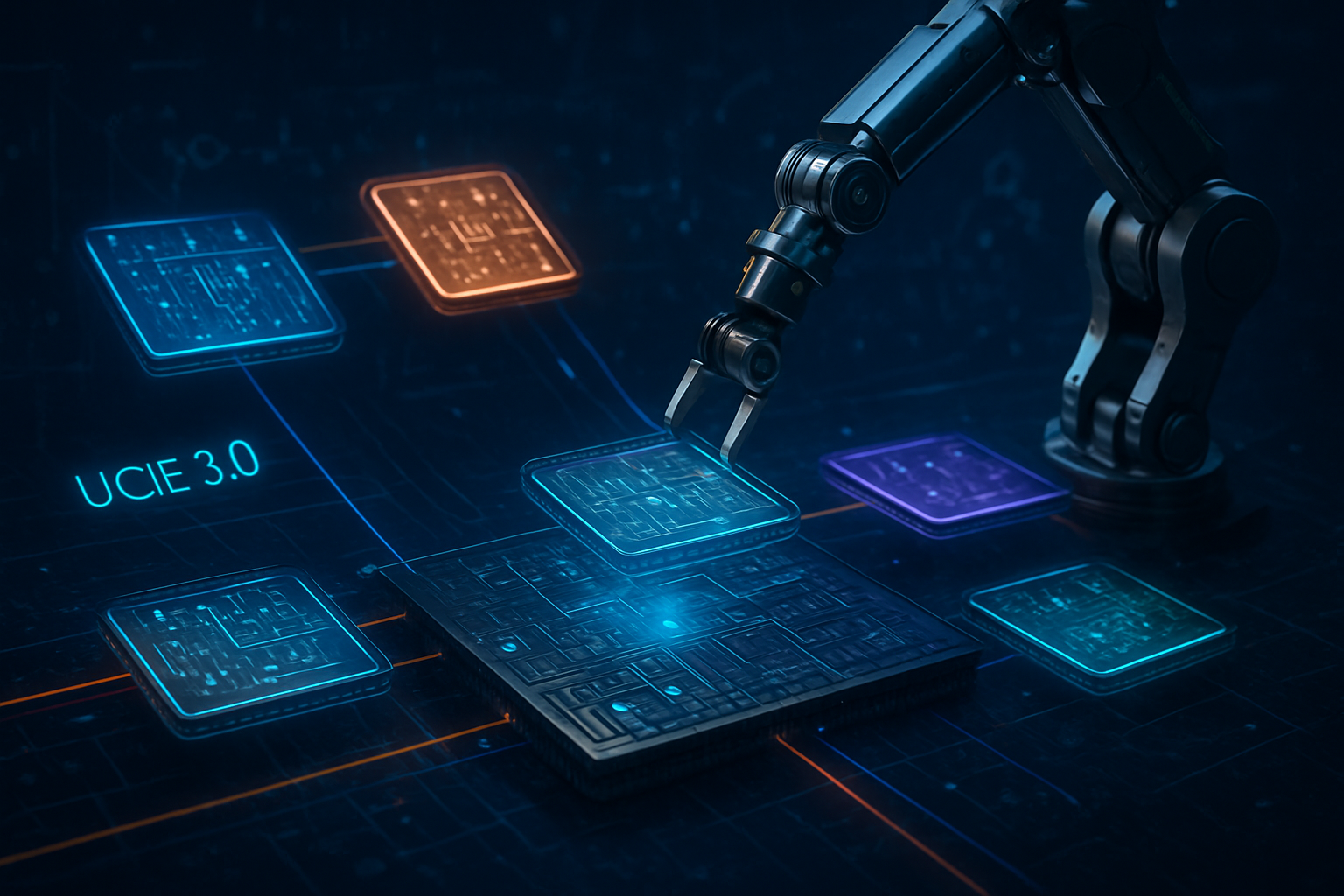
  • The Indispensable Core: Why TSMC Alone Powers the Next Wave of AI Innovation

    The Indispensable Core: Why TSMC Alone Powers the Next Wave of AI Innovation

    TSMC (Taiwan Semiconductor Manufacturing Company) (NYSE: TSM) holds an utterly indispensable and pivotal role in the global AI chip supply chain, serving as the backbone for the next generation of artificial intelligence technologies. As the world's largest and most advanced semiconductor foundry, TSMC manufactures over 90% of the most cutting-edge chips, making it the primary production partner for virtually every major tech company developing AI hardware, including industry giants like Nvidia (NASDAQ: NVDA), Apple (NASDAQ: AAPL), AMD (NASDAQ: AMD), Qualcomm (NASDAQ: QCOM), Google (NASDAQ: GOOGL), Amazon (NASDAQ: AMZN), and Broadcom (NASDAQ: AVGO). Its technological leadership, characterized by advanced process nodes like 3nm and the upcoming 2nm and A14, alongside innovative 3D packaging solutions such as CoWoS (Chip-on-Wafer-on-Substrate) and SoIC (System-on-Integrated-Chips), enables the creation of AI processors that are faster, more power-efficient, and capable of integrating more computational power into smaller spaces. These capabilities are essential for training and deploying complex machine learning models, powering generative AI, large language models, autonomous vehicles, and advanced data centers, thereby directly accelerating the pace of AI innovation globally.

    The immediate significance of TSMC for next-generation AI technologies cannot be overstated; without its unparalleled manufacturing prowess, the rapid advancement and widespread deployment of AI would be severely hampered. Its pure-play foundry model fosters trust and collaboration, allowing it to work with multiple partners simultaneously without competition, further cementing its central position in the AI ecosystem. The "AI supercycle" has led to unprecedented demand for advanced semiconductors, making TSMC's manufacturing capacity and consistent high yield rates critical for meeting the industry's burgeoning needs. Any disruption to TSMC's operations could have far-reaching impacts on the digital economy, underscoring its indispensable role in enabling the AI revolution and defining the future of intelligent computing.

    Technical Prowess: The Engine Behind AI's Evolution

    TSMC has solidified its pivotal role in powering the next generation of AI chips through continuous technical advancements in both process node miniaturization and innovative 3D packaging technologies. The company's 3nm (N3) FinFET technology, introduced into high-volume production in 2022, represents a significant leap from its 5nm predecessor, offering a 70% increase in logic density, 15-20% performance gains at the same power levels, or up to 35% improved power efficiency. This allows for the creation of more complex and powerful AI accelerators without increasing chip size, a critical factor for AI workloads that demand intense computation. Building on this, TSMC's newly introduced 2nm (N2) chip, slated for mass production in the latter half of 2025, promises even more profound benefits. Utilizing first-generation nanosheet transistors and a Gate-All-Around (GAA) architecture—a departure from the FinFET design of earlier nodes—the 2nm process is expected to deliver a 10-15% speed increase at constant power or a 20-30% reduction in power consumption at the same speed, alongside a 15% boost in logic density. These advancements are crucial for enabling devices to operate faster, consume less energy, and manage increasingly intricate AI tasks more efficiently, contrasting sharply with the limitations of previous, larger process nodes.

    Complementing its advanced process nodes, TSMC has pioneered sophisticated 3D packaging technologies such as CoWoS (Chip-on-Wafer-on-Substrate) and SoIC (System-on-Integrated-Chips) to overcome traditional integration barriers and meet the demanding requirements of AI. CoWoS, a 2.5D advanced packaging solution, integrates high-performance compute dies (like GPUs) with High Bandwidth Memory (HBM) on a silicon interposer. This innovative approach drastically reduces data travel distance, significantly increases memory bandwidth, and lowers power consumption per bit transferred, which is essential for memory-bound AI workloads. Unlike traditional flip-chip packaging, which struggles with the vertical and lateral integration needed for HBM, CoWoS leverages a silicon interposer as a high-speed, low-loss bridge between dies. Further pushing the boundaries, SoIC is a true 3D chiplet stacking technology employing hybrid wafer bonding and through-silicon vias (TSV) instead of conventional metal bump stacking. This results in ultra-dense, ultra-short connections between stacked logic devices, reducing reliance on silicon interposers and yielding a smaller overall package size with high 3D interconnect density and ultra-low bonding latency for energy-efficient computing systems. SoIC-X, a bumpless bonding variant, is already being used in specific applications like AMD's (NASDAQ: AMD) MI300 series AI products, and TSMC plans for a future SoIC-P technology that can stack N2 and N3 dies. These packaging innovations are critical as they enable enhanced chip performance even as traditional transistor scaling becomes more challenging.

    The AI research community and industry experts have largely lauded TSMC's technical advancements, recognizing the company as an "undisputed titan" and "key enabler" of the AI supercycle. Analysts and experts universally acknowledge TSMC's indispensable role in accelerating AI innovation, stating that without its foundational manufacturing capabilities, the rapid evolution and deployment of current AI technologies would be impossible. Major clients such as Nvidia (NASDAQ: NVDA), AMD (NASDAQ: AMD), Apple (NASDAQ: AAPL), Google (NASDAQ: GOOGL), and OpenAI are heavily reliant on TSMC for their next-generation AI accelerators and custom AI chips, driving "insatiable demand" for the company's advanced nodes and packaging solutions. This intense demand has, however, led to concerns regarding significant bottlenecks in CoWoS advanced packaging capacity, despite TSMC's aggressive expansion plans. Furthermore, the immense R&D and capital expenditure required for these cutting-edge technologies, particularly the 2nm GAA process, are projected to result in a substantial increase in chip prices—potentially up to 50% compared to 3nm—leading to dissatisfaction among clients and raising concerns about higher costs for consumer electronics. Nevertheless, TSMC's strategic position and technical superiority are expected to continue fueling its growth, with its High-Performance Computing division (which includes AI chips) accounting for a commanding 57% of its total revenue. The company is also proactively utilizing AI to design more energy-efficient chips, aiming for a tenfold improvement, marking a "recursive innovation" where AI contributes to its own hardware optimization.

    Corporate Impact: Reshaping the AI Landscape

    TSMC (NYSE: TSM) stands as the undisputed global leader in advanced semiconductor manufacturing, making it a pivotal force in powering the next generation of AI chips. The company commands over 60% of the world's semiconductor production and more than 90% of the most advanced chips, a position reinforced by its cutting-edge process technologies like 3nm, 2nm, and the upcoming A16 nodes. These advanced nodes, coupled with sophisticated packaging solutions such as CoWoS (Chip-on-Wafer-on-Substrate), are indispensable for creating the high-performance, energy-efficient AI accelerators that drive everything from large language models to autonomous systems. The burgeoning demand for AI chips has made TSMC an indispensable "pick-and-shovel" provider, poised for explosive growth as its advanced process lines operate at full capacity, leading to significant revenue increases. This dominance allows TSMC to implement price hikes for its advanced nodes, reflecting the soaring production costs and immense demand, a structural shift that redefines the economics of the tech industry.

    TSMC's pivotal role profoundly impacts major tech giants, dictating their ability to innovate and compete in the AI landscape. Nvidia (NASDAQ: NVDA), a cornerstone client, relies solely on TSMC for the manufacturing of its market-leading AI GPUs, including the Hopper, Blackwell, and upcoming Rubin series, leveraging TSMC's advanced nodes and critical CoWoS packaging. This deep partnership is fundamental to Nvidia's AI chip roadmap and its sustained market dominance, with Nvidia even drawing inspiration from TSMC's foundry business model for its own AI foundry services. Similarly, Apple (NASDAQ: AAPL) exclusively partners with TSMC for its A-series mobile chips, M-series processors for Macs and iPads, and is collaborating on custom AI chips for data centers, securing early access to TSMC's most advanced nodes, including the upcoming 2nm process. Other beneficiaries include AMD (NASDAQ: AMD), which utilizes TSMC for its Instinct AI accelerators and other chips, and Qualcomm (NASDAQ: QCOM), which relies on TSMC for its Snapdragon SoCs that incorporate advanced on-device AI capabilities. Tech giants like Google (NASDAQ: GOOGL) and Amazon (NASDAQ: AMZN) are also deeply embedded in this ecosystem; Google is shifting its Pixel Tensor chips to TSMC's 3nm process for improved performance and efficiency, a long-term strategic move, while Amazon Web Services (AWS) is developing custom Trainium and Graviton AI chips manufactured by TSMC to reduce dependency on Nvidia and optimize costs. Even Broadcom (NASDAQ: AVGO), a significant player in custom AI and networking semiconductors, partners with TSMC for advanced fabrication, notably collaborating with OpenAI to develop proprietary AI inference chips.

    The implications of TSMC's dominance are far-reaching for competitive dynamics, product disruption, and market positioning. Companies with strong relationships and secured capacity at TSMC gain significant strategic advantages in performance, power efficiency, and faster time-to-market for their AI solutions, effectively widening the gap with competitors. Conversely, rivals like Samsung Foundry and Intel Foundry Services (NASDAQ: INTC) continue to trail TSMC significantly in advanced node technology and yield rates, facing challenges in competing directly. The rising cost of advanced chip manufacturing, driven by TSMC's price hikes, could disrupt existing product strategies by increasing hardware costs, potentially leading to higher prices for end-users or squeezing profit margins for downstream companies. For major AI labs and tech companies, the ability to design custom silicon and leverage TSMC's manufacturing expertise offers a strategic advantage, allowing them to tailor hardware precisely to their specific AI workloads, thereby optimizing performance and potentially reducing operational expenses for their services. AI startups, however, face a tougher landscape. The premium cost and stringent access to TSMC's cutting-edge nodes could raise significant barriers to entry and slow innovation for smaller entities with limited capital. Additionally, as TSMC prioritizes advanced nodes, resources may be reallocated from mature nodes, potentially leading to supply constraints and higher costs for startups that rely on these less advanced technologies. However, the trend of custom chips also presents opportunities, as seen with OpenAI's partnership with Broadcom (NASDAQ: AVGO) and TSMC (NYSE: TSM), suggesting that strategic collaborations can still enable impactful AI hardware development for well-funded AI labs.

    Wider Significance: Geopolitics, Economy, and the AI Future

    TSMC (Taiwan Semiconductor Manufacturing Company) (NYSE: TSM) plays an undeniably pivotal and indispensable role in powering the next generation of AI chips, serving as the foundational enabler for the ongoing artificial intelligence revolution. With an estimated 70.2% to 71% market share in the global pure-play wafer foundry market as of Q2 2025, and projected to exceed 90% in advanced nodes, TSMC's near-monopoly position means that virtually every major AI breakthrough, from large language models to autonomous systems, is fundamentally powered by its silicon. Its unique dedicated foundry business model, which allows fabless companies to innovate at an unprecedented pace, has fundamentally reshaped the semiconductor industry, directly fueling the rise of modern computing and, subsequently, AI. The company's relentless pursuit of technological breakthroughs in miniaturized process nodes (3nm, 2nm, A16, A14) and advanced packaging solutions (CoWoS, SoIC) directly accelerates the pace of AI innovation by producing increasingly powerful and efficient AI chips. This contribution is comparable in importance to previous algorithmic milestones, but with a unique emphasis on the physical hardware foundation, making the current era of AI, defined by specialized, high-performance hardware, simply not possible without TSMC's capabilities. High-performance computing, encompassing AI infrastructure and accelerators, now accounts for a substantial and growing portion of TSMC's revenue, underscoring its central role in driving technological progress.

    TSMC's dominance carries significant implications for technological sovereignty and global economic landscapes. Nations are increasingly prioritizing technological sovereignty, with countries like the United States actively seeking to reduce reliance on Taiwanese manufacturing for critical AI infrastructure. Initiatives like the U.S. CHIPS and Science Act incentivize TSMC to build advanced fabrication plants in the U.S., such as those in Arizona, to enhance domestic supply chain resilience and secure a steady supply of high-end chips. Economically, TSMC's growth acts as a powerful catalyst, driving innovation and investment across the entire tech ecosystem, with the global AI chip market projected to contribute over $15 trillion to the global economy by 2030. However, the "end of cheap transistors" means the higher cost of advanced chips, particularly from overseas fabs which can be 5-20% more expensive than those made in Taiwan, translates to increased expenditures for developing AI systems and potentially costlier consumer electronics. TSMC's substantial pricing power, stemming from its market concentration, further shapes the competitive landscape for AI companies and affects profit margins across the digital economy.

    However, TSMC's pivotal role is deeply intertwined with profound geopolitical concerns and supply chain concentration risks. The company's most advanced chip fabrication facilities are located in Taiwan, a mere 110 miles from mainland China, a region described as one of the most geopolitically fraught areas on earth. This geographic concentration creates what experts refer to as a "single point of failure" for global AI infrastructure, making the entire ecosystem vulnerable to geopolitical tensions, natural disasters, or trade conflicts. A potential conflict in the Taiwan Strait could paralyze the global AI and computing industries, leading to catastrophic economic consequences. This vulnerability has turned semiconductor supply chains into battlegrounds for global technological supremacy, with the United States implementing export restrictions to curb China's access to advanced AI chips, and China accelerating its own drive toward self-sufficiency. While TSMC is diversifying its manufacturing footprint with investments in the U.S., Japan, and Europe, the extreme concentration of advanced manufacturing in Taiwan still poses significant risks, indirectly affecting the stability and affordability of the global tech supply chain and highlighting the fragile foundation upon which the AI revolution currently rests.

    The Road Ahead: Navigating Challenges and Embracing Innovation

    TSMC (NYSE: TSM) is poised to maintain and expand its pivotal role in powering the next generation of AI chips through aggressive advancements in both process technology and packaging. In the near term, TSMC is on track for volume production of its 2nm-class (N2) process in the second half of 2025, utilizing Gate-All-Around (GAA) nanosheet transistors. This will be followed by the N2P and A16 (1.6nm-class) nodes in late 2026, with the A16 node introducing Super Power Rail (SPR) for backside power delivery, particularly beneficial for data center AI and high-performance computing (HPC) applications. Looking further ahead, the company plans mass production of its 1.4nm (A14) node by 2028, with trial production commencing in late 2027, promising a 15% improvement in speed and 20% greater logic density over the 2nm process. TSMC is also actively exploring 1nm technology for around 2029. Complementing these smaller nodes, advanced packaging technologies like Chip-on-Wafer-on-Substrate (CoWoS) and System-on-Integrated-Chip (SoIC) are becoming increasingly crucial, enabling 3D integration of multiple chips to enhance performance and reduce power consumption for demanding AI applications. TSMC's roadmap for packaging includes CoWoS-L by 2027, supporting large N3/N2 chiplets, multiple I/O dies, and up to a dozen HBM3E or HBM4 stacks, and the development of a new packaging method utilizing square substrates to embed more semiconductors per chip, with small-volume production targeted for 2027. These innovations will power next-generation AI accelerators for faster model training and inference in hyperscale data centers, as well as enable advanced on-device AI capabilities in consumer electronics like smartphones and PCs. Furthermore, TSMC is applying AI itself to chip design, aiming to achieve tenfold improvements in energy efficiency for advanced AI hardware.

    Despite these ambitious technological advancements, TSMC faces significant challenges that could impact its future trajectory. The escalating complexity of cutting-edge manufacturing processes, particularly with Extreme Ultraviolet (EUV) lithography and advanced packaging, is driving up costs, with anticipated price increases of 5-10% for advanced manufacturing and up to 10% for AI-related chips. Geopolitical risks pose another substantial hurdle, as the "chip war" between the U.S. and China compels nations to seek greater technological sovereignty. TSMC's multi-billion dollar investments in overseas facilities, such as in Arizona, Japan, and Germany, aim to diversify its manufacturing footprint but come with higher production costs, estimated to be 5-20% more expensive than in Taiwan. Furthermore, Taiwan's mandate to keep TSMC's most advanced technologies local could delay the full implementation of leading-edge fabs in the U.S. until 2030, and U.S. sanctions have already led TSMC to halt advanced AI chip production for certain Chinese clients. Capacity constraints are also a pressing concern, with immense demand for advanced packaging services like CoWoS and SoIC overwhelming TSMC, forcing the company to fast-track its production roadmaps and seek partnerships to meet customer needs. Other challenges include global talent shortages, the need to overcome thermal performance issues in advanced packaging, and the enormous energy demands of developing and running AI models.

    Experts generally maintain a bullish outlook for TSMC (NYSE: TSM), predicting continued strong revenue growth and persistent market share dominance in advanced nodes, potentially exceeding 90% by 2025. The global shortage of AI chips is expected to persist through 2025 and possibly into 2026, ensuring sustained high demand for TSMC's advanced capacity. Analysts view advanced packaging as a strategic differentiator where TSMC holds a clear competitive edge, crucial for the ongoing AI race. Ultimately, if TSMC can effectively navigate these challenges related to cost, geopolitical pressures, and capacity expansion, it is predicted to evolve beyond its foundry leadership to become a fundamental global infrastructure pillar for AI computing. Some projections even suggest that TSMC's market capitalization could reach over $2 trillion within the next five years, underscoring its indispensable role in the burgeoning AI era.

    The Indispensable Core: A Future Forged in Silicon

    TSMC (Taiwan Semiconductor Manufacturing Company) (NYSE: TSM) has solidified an indispensable position as the foundational engine driving the next generation of AI chips. The company's dominance stems from its unparalleled manufacturing prowess in advanced process nodes, such as 3nm and 2nm, which are critical for the performance and power efficiency demanded by cutting-edge AI processors. Key industry players like NVIDIA (NASDAQ: NVDA), Apple (NASDAQ: AAPL), AMD (NASDAQ: AMD), Amazon (NASDAQ: AMZN), and Google (NASDAQ: GOOGL) rely heavily on TSMC's capabilities to produce their sophisticated AI chip designs. Beyond silicon fabrication, TSMC's CoWoS (Chip-on-Wafer-on-Substrate) advanced packaging technology has emerged as a crucial differentiator, enabling the high-density integration of logic dies with High Bandwidth Memory (HBM) that is essential for high-performance AI accelerators. This comprehensive offering has led to AI and High-Performance Computing (HPC) applications accounting for a significant and rapidly growing portion of TSMC's revenue, underscoring its central role in the AI revolution.

    TSMC's significance in AI history is profound, largely due to its pioneering dedicated foundry business model. This model transformed the semiconductor industry by allowing "fabless" companies to focus solely on chip design, thereby accelerating innovation in computing and, subsequently, AI. The current era of AI, characterized by its reliance on specialized, high-performance hardware, would simply not be possible without TSMC's advanced manufacturing and packaging capabilities, effectively making it the "unseen architect" or "backbone" of AI breakthroughs across various applications, from large language models to autonomous systems. Its CoWoS technology, in particular, has created a near-monopoly in a critical segment of the semiconductor value chain, enabling the exponential performance leaps seen in modern AI chips.

    Looking ahead, TSMC's long-term impact on the tech industry will be characterized by a more centralized AI hardware ecosystem and its continued influence over the pace of technological progress. The company's ongoing global expansion, with substantial investments in new fabs in the U.S. and Japan, aims to meet the insatiable demand for AI chips and enhance supply chain resilience, albeit potentially leading to higher costs for end-users and downstream companies. In the coming weeks and months, observers should closely monitor the ramp-up of TSMC's 2nm (N2) process production, which is expected to begin high-volume manufacturing by the end of 2025, and the operational efficiency of its new overseas facilities. Furthermore, the industry will be watching the reactions of major clients to TSMC's planned price hikes for sub-5nm chips in 2026, as well as the competitive landscape with rivals like Intel (NASDAQ: INTC) and Samsung, as these factors will undoubtedly shape the trajectory of AI hardware development.


    This content is intended for informational purposes only and represents analysis of current AI developments.

    TokenRing AI delivers enterprise-grade solutions for multi-agent AI workflow orchestration, AI-powered development tools, and seamless remote collaboration platforms.
    For more information, visit https://www.tokenring.ai/.

  • Navigating the AI Gold Rush: Top Stocks Poised for Growth as of November 2025

    Navigating the AI Gold Rush: Top Stocks Poised for Growth as of November 2025

    As the calendar turns to November 2025, the artificial intelligence sector continues its meteoric rise, solidifying its position as the most transformative force in global technology and finance. Investors are keenly watching a select group of companies that are not just participating in the AI revolution but are actively defining its trajectory. From the foundational hardware powering advanced models to the sophisticated software driving enterprise transformation, the landscape of AI investment is rich with opportunity, albeit accompanied by the inherent volatility of a rapidly evolving market.

    This analysis delves into the leading AI stocks recommended as of November 5th, highlighting the strategic advantages that position them for continued success and the overarching market trends shaping investment decisions in this dynamic domain. The focus remains on companies demonstrating robust technological leadership, significant market penetration, and a clear path to generating substantial returns from their AI endeavors.

    The Pillars of AI: Hardware, Cloud, and Specialized Solutions

    The AI ecosystem is multifaceted, built upon layers of innovation ranging from silicon to sophisticated algorithms. At its core are the semiconductor giants, whose advanced chips provide the computational backbone for all AI operations. Nvidia (NASDAQ: NVDA) remains the undisputed titan in this arena, with its Graphics Processing Units (GPUs) being indispensable for AI training and inference. The company's CUDA software platform further entrenches its competitive moat, fostering a developer ecosystem that is hard to replicate. Similarly, Advanced Micro Devices (NASDAQ: AMD) is recognized as a formidable contender, offering powerful chips that are increasingly critical for AI workloads, garnering strong buy ratings from analysts despite recent market fluctuations. Crucially, Taiwan Semiconductor Manufacturing (NYSE: TSM), the world's largest contract chip manufacturer, underpins much of this innovation, with demand from global tech giants ensuring its sustained growth in AI revenue for years to come. Other hardware enablers like Broadcom (NASDAQ: AVGO) and Super Micro Computer (NASDAQ: SMCI) are also integral, featured prominently in AI-focused ETFs for their contributions to infrastructure.

    Beyond raw processing power, the enterprise AI and cloud solutions segment is dominated by tech behemoths leveraging their vast ecosystems. Microsoft (NASDAQ: MSFT) stands out for its deep integration with OpenAI, providing early access to cutting-edge GPT models and rapidly embedding AI across its Azure, Windows, Office, and Dynamics platforms. This strategy has fueled significant growth in Azure AI services, demonstrating strong enterprise adoption. Alphabet (NASDAQ: GOOGL), Google's parent company, continues its substantial AI investments, enhancing its search algorithms, ad targeting, and cloud services through AI, cementing its position alongside Microsoft and Nvidia as a long-term AI leader. Amazon (NASDAQ: AMZN), through Amazon Web Services (AWS), provides the essential cloud infrastructure for countless AI companies, while also developing proprietary AI chip designs to offer cost-effective alternatives. Specialized software providers like Palantir Technologies (NYSE: PLTR), with its data analytics and AI software expanding from government to commercial sectors, and Snowflake (NYSE: SNOW), critical for data warehousing and analytics, further exemplify the breadth of enterprise AI solutions.

    The landscape also features innovative players focusing on specialized AI applications. Yiren Digital Ltd (NYSE: YRD) in China leverages AI for digital financial services, recently gaining approval for its "Zhiyu Large Model" to enhance insurance operations. Innodata, Inc (NASDAQ: INOD) plays a vital role in the generative AI boom by providing high-quality training data and platforms. Companies like Gorilla Technology Group, Inc (NASDAQ: GRRR) offer AI-driven solutions for security and business intelligence, showcasing the diverse applications of AI across various industries.

    Competitive Dynamics and Market Positioning

    The proliferation of AI is fundamentally reshaping competitive dynamics across the tech industry. Companies like Nvidia and Microsoft are not just benefiting from the AI wave; they are actively dictating its direction through their foundational technologies and extensive platforms. Nvidia's CUDA ecosystem creates a powerful network effect, making it difficult for competitors to dislodge its market dominance in high-performance AI computing. Microsoft's strategic investment in OpenAI and its rapid integration of generative AI across its product suite give it a significant edge in attracting and retaining enterprise customers, potentially disrupting existing software markets and forcing competitors to accelerate their own AI adoption.

    The massive capital expenditures by tech giants like Meta (NASDAQ: META), Microsoft, Alphabet, and Amazon underscore the high stakes involved. These investments in AI infrastructure are not merely incremental; they are strategic moves designed to secure long-term competitive advantages, potentially creating higher barriers to entry for smaller players. However, this also creates opportunities for companies like Super Micro Computer and TSMC, which provide the essential hardware and manufacturing capabilities. Startups, while facing intense competition from these giants, can still thrive by focusing on niche applications, specialized AI models, or innovative service delivery that leverages existing cloud infrastructure. The shift towards agentic AI, where autonomous AI systems can plan and execute multi-step workflows, presents a new frontier for disruption and strategic positioning, with companies like Salesforce (NYSE: CRM) already embedding such capabilities.

    The Broader AI Landscape and Its Societal Implications

    The current wave of AI advancements fits into a broader trend of ubiquitous AI integration, where artificial intelligence is no longer a fringe technology but an embedded component across all sectors. This pervasive integration is expected to transform investment management, healthcare, financial technology, and autonomous vehicles, among others. The global AI market is projected to reach an astounding $1,339.1 billion by 2030, growing at an annual rate of 36.6%, signaling a sustained period of expansion. The focus is increasingly shifting from theoretical AI capabilities to demonstrable Return on Investment (ROI), with businesses under pressure to show tangible benefits from their generative AI deployments.

    However, this rapid expansion is not without its concerns. The high valuations of many AI stocks raise questions about potential market speculation and the risk of an "AI bubble," where prices may outstrip fundamental value. The intense competition and rapid pace of innovation mean that companies failing to adapt quickly risk obsolescence. Furthermore, the immense energy demands of AI development and operation pose a significant challenge. Data centers, already consuming 1.5% of global electricity in 2024, are projected to consume 4.4% by 2030, necessitating a substantial ramp-up in grid capacity and renewable energy sources. Geopolitical tensions, particularly between the US and China, also introduce risks to supply chains and market access. Regulatory uncertainties surrounding AI ethics, data privacy, and intellectual property are emerging as critical factors that could impact operational frameworks and profitability.

    Charting Future Developments and Expert Predictions

    Looking ahead, the near-term future of AI will likely see continued deepening of AI integration across enterprise workflows, with a stronger emphasis on practical applications that drive efficiency and competitive advantage. The concept of "agentic AI" – autonomous AI systems capable of complex task execution – is expected to mature rapidly, leading to the emergence of more sophisticated "virtual coworkers" that can handle multi-step processes. Experts predict a continued surge in demand for specialized AI talent and a further blurring of lines between human and AI-driven tasks in various industries.

    Long-term developments include advancements in quantum computing, with companies like Quantum Computing Inc. (NASDAQ: QUBT) poised to play a crucial role in future AI hardware innovation, potentially unlocking new frontiers in computational power for AI. The healthcare sector is particularly ripe for AI-driven transformation, from drug discovery to personalized medicine, attracting significant investment. However, addressing the scalability of energy infrastructure, navigating complex regulatory landscapes, and mitigating the risks of market overvaluation will be critical challenges that need to be overcome to sustain this growth. Experts foresee a future where AI becomes an even more integral part of daily life, but also one where ethical considerations and responsible development take center stage.

    A New Era of Intelligence: Key Takeaways and Outlook

    The current AI investment landscape, as of November 2025, is characterized by unprecedented growth, profound technological advancements, and significant market opportunities. Key takeaways include the indispensable role of hardware providers like Nvidia and TSMC, the transformative power of cloud-based AI solutions from Microsoft and Alphabet, and the emergence of specialized AI applications across diverse sectors. The shift towards agentic AI and a focus on demonstrable ROI are defining market trends, pushing companies to move beyond hype to tangible value creation.

    This period marks a significant chapter in AI history, comparable to the early days of the internet or mobile computing in its potential for societal and economic impact. The long-term implications suggest a future where AI is not just a tool but a foundational layer of global infrastructure, enhancing productivity, driving innovation, and reshaping industries. However, investors must remain vigilant about potential risks, including high valuations, intense competition, energy constraints, and geopolitical factors.

    In the coming weeks and months, watch for further announcements regarding AI integration in major enterprise software, advancements in energy-efficient AI hardware, and evolving regulatory frameworks. The performance of key players like Nvidia, Microsoft, and Alphabet will continue to serve as bellwethers for the broader AI market. The journey of AI is just beginning, and understanding its current trajectory is crucial for navigating the opportunities and challenges that lie ahead.


    This content is intended for informational purposes only and represents analysis of current AI developments.

    TokenRing AI delivers enterprise-grade solutions for multi-agent AI workflow orchestration, AI-powered development tools, and seamless remote collaboration platforms.
    For more information, visit https://www.tokenring.ai/.

  • TSMC’s Price Hikes Signal a New Era for AI and Advanced Semiconductors

    TSMC’s Price Hikes Signal a New Era for AI and Advanced Semiconductors

    Taiwan Semiconductor Manufacturing Company (NYSE: TSM) (TSMC), the undisputed leader in advanced chip manufacturing, is implementing significant pricing adjustments for its cutting-edge semiconductor processes, a strategic move set to redefine the economics of the tech industry from late 2024 into early 2025 and beyond. These increases, primarily affecting the most advanced nodes crucial for artificial intelligence (AI) and high-performance computing (HPC), are driven by soaring production costs, monumental investments in next-generation technologies and global manufacturing facilities, and the insatiable demand for the chips powering the AI revolution.

    This shift marks a pivotal moment in semiconductor history, signaling the potential end of an era characterized by predictably declining costs per transistor. For decades, Moore's Law underpinned technological progress by promising exponential power increases alongside decreasing costs. However, the immense capital expenditures and the extreme complexities of manufacturing at the angstrom scale mean that for the first time in a major node transition, the cost per transistor is expected to rise, fundamentally altering how companies approach innovation and product development.

    The Escalating Cost of Cutting-Edge Chips: A Technical Deep Dive

    TSMC's pricing adjustments reflect the exponentially increasing complexity and associated costs of advanced manufacturing technologies, particularly Extreme Ultraviolet (EUV) lithography. The company is projected to raise prices for its advanced manufacturing processes by an average of 5-10% starting in 2026, with some reports suggesting annual increases ranging from 3% to 5% for general advanced nodes and up to 10% for AI-related chips. This follows earlier anticipated hikes of up to 10% in 2025 for some advanced nodes.

    The most substantial adjustment is projected for the upcoming 2nm node (N2), slated for high-volume production in late 2025. Initial estimates suggest 2nm wafers will cost at least 50% more than 3nm wafers, potentially exceeding $30,000 per wafer. This is a significant jump from the current 3nm wafer cost, which is in the range of $20,000 to $25,000. For 4nm and 5nm nodes (N4/N5), particularly those used for AI and HPC customers like Advanced Micro Devices (NASDAQ: AMD), NVIDIA Corporation (NASDAQ: NVDA), and Intel Corporation (NASDAQ: INTC), price hikes of up to 10% in 2025 are anticipated. Beyond wafer fabrication, advanced chip-on-wafer-on-substrate (CoWoS) packaging, critical for high-bandwidth memory in AI accelerators, is expected to see price increases of up to 20% over the next two years.

    These increases are directly tied to the astronomical costs of developing and deploying advanced nodes. Each ASML (NASDAQ: ASML) EUV machine, essential for these processes, costs around $350 million, with newer High-NA EUV machines priced even higher. Building a cutting-edge semiconductor fabrication plant capable of 3nm production costs between $15 billion and $20 billion. Furthermore, manufacturing costs at TSMC's new Arizona plant are reportedly 15-30% higher than in Taiwan, contributing to a projected dilution of gross margins by 2-4% from 2025 onward. This multi-year, consecutive price hike strategy for advanced nodes represents a significant departure from TSMC's traditional approach, which historically maintained greater pricing stability. Industry experts describe this as a "structural correction" driven by higher capital, labor, and material costs, rather than purely an opportunistic move.

    Seismic Shifts: Impact on AI Companies, Tech Giants, and Startups

    TSMC's pricing adjustments will profoundly reshape the competitive landscape for AI companies, tech giants, and startups. Major clients, heavily reliant on TSMC's advanced nodes, will face increased manufacturing costs, ultimately impacting product pricing and strategic decisions.

    NVIDIA (NASDAQ: NVDA), a cornerstone client for its cutting-edge GPUs essential for AI and data centers, will face significant cost increases for advanced nodes and CoWoS packaging. While NVIDIA's dominant position in the booming AI market suggests it can likely pass some of these increased costs onto its customers, the financial burden will be substantial. Apple Inc. (NASDAQ: AAPL), expected to be among the first to adopt TSMC's 2nm process for its next-generation A-series and M-series chips, will likely see higher manufacturing costs translate into increased prices for its premium consumer products. Similarly, Advanced Micro Devices (NASDAQ: AMD), whose Zen and Instinct series processors are critical for HPC and AI, will also be impacted by higher wafer and packaging costs, competing with NVIDIA for limited advanced node capacity. Qualcomm Incorporated (NASDAQ: QCOM), transitioning its flagship mobile processors to 3nm and 2nm, will face elevated production costs, likely leading to price adjustments for high-end Android smartphones. For startups and smaller AI labs, the escalating costs of advanced AI chips and infrastructure will raise the barrier to entry, potentially stifling emergent innovation and leading to market consolidation among larger, well-funded players.

    Conversely, TSMC's pricing strategy could create opportunities for competitors. While Intel Corporation (NASDAQ: INTC) continues to rely on TSMC for specific chiplets, its aggressive ramp-up of its own foundry services (Intel Foundry) and advanced nodes (e.g., 18A, comparable to TSMC's 2nm) could make it a more attractive alternative for some chip designers seeking competitive pricing or supply diversification. Samsung Electronics Co., Ltd. (KRX: 005930), another major foundry, is also aggressively pursuing advanced nodes, including 2nm Gate-All-Around (GAA) products, and has reportedly offered 2nm wafers at a lower price than TSMC to gain market share. Despite these competitive pressures, TSMC's unmatched technological leadership, superior yield rates, and approximately 70-71% market share in the global pure-play wafer foundry market ensure its formidable market positioning and strategic advantages remain largely unassailable in the near to mid-term.

    The Broader Tapestry: Wider Significance and Geopolitical Implications

    TSMC's pricing adjustments signify a profound structural shift in the broader AI and tech landscape. The "end of cheap transistors" means that access to the pinnacle of semiconductor technology is now a premium service, not a commodity. This directly impacts AI innovation, as the higher cost of advanced chips translates to increased expenditures for developing and deploying AI systems, from sophisticated large language models to autonomous systems. While it could slow the pace of AI innovation for smaller entities, it also reinforces the advantage of established giants who can absorb these costs.

    The ripple effects will be felt across the digital economy, leading to costlier consumer electronics as chip costs are passed on to consumers. This development also has significant implications for national technology strategies. Geopolitical tensions, particularly the "chip war" between the U.S. and China, are driving nations to seek greater technological sovereignty. TSMC's investments in overseas facilities, such as the multi-billion-dollar fabs in Arizona, are partly influenced by national security concerns and a desire to reduce reliance on foreign suppliers. However, this diversification comes at a significant cost, as chips produced in TSMC's Arizona fabs are estimated to be 5-20% more expensive than those made in Taiwan.

    Concerns also arise regarding increased barriers to entry and market concentration. TSMC's near-monopoly in advanced manufacturing (projected to reach 75% of the global foundry market by 2026) grants it substantial pricing power and creates a critical reliance for the global tech industry. Any disruption to TSMC's operations could have far-reaching impacts. While TSMC is diversifying its manufacturing footprint, the extreme concentration of advanced manufacturing in Taiwan still introduces geopolitical risks, indirectly affecting the stability and affordability of the global tech supply chain. This current situation, driven by the extraordinary financial and technical challenges of pushing to the physical limits of miniaturization, strategic geopolitical costs, and unprecedented AI demand, makes these pricing adjustments a structural shift rather than a cyclical fluctuation.

    The Road Ahead: Future Developments and Expert Predictions

    Looking ahead, TSMC is poised for continued technological advancement and strategic growth, predominantly fueled by the AI supercycle. In the near term (late 2025-2026), TSMC's N2 (2nm-class) process, utilizing Gate-All-Around (GAA) nanosheet transistors, is on track for volume production in the second half of 2025. This will be followed by the N2P and A16 (1.6nm-class) nodes in late 2026, with A16 introducing Super Power Rail (SPR) technology for backside power delivery, particularly beneficial for data center AI and HPC applications. TSMC is also aggressively expanding its advanced packaging capacity, with CoWoS capacity growing at an over 80% compound annual growth rate (CAGR) from 2022 to 2026 and fully booked until 2025.

    Longer-term (beyond 2026), the A14 (1.4nm-class) process is targeted for volume production in 2028, with construction of its fab beginning ahead of schedule in October 2025. By 2027, TSMC plans to introduce System on Wafer-X (SoW-X), a wafer-scale integration technology combined with CoWoS, aiming for a staggering 40 times the current computing power for HPC applications. These advancements are predominantly driven by and tailored for the exponential growth of AI, enabling next-generation AI accelerators, smarter smartphones, autonomous vehicles, and advanced IoT devices.

    However, significant challenges remain. The rising production costs, particularly at overseas fabs, and the complexities of global expansion pose persistent financial and operational hurdles. Geopolitical tensions, intense competition from Samsung and Intel, and global talent shortages further complicate the landscape. Experts generally maintain a bullish outlook for TSMC, anticipating strong revenue growth, persistent market share dominance in advanced nodes (projected to exceed 90% in 2025), and continued innovation. The global shortage of AI chips is expected to continue through 2025 and potentially ease into 2026, indicating sustained high demand for TSMC's advanced capacity.

    A Comprehensive Wrap-Up: The New Paradigm of Chipmaking

    TSMC's pricing adjustments represent more than just a financial decision; they signify a fundamental shift in the economics and geopolitics of advanced semiconductor manufacturing. The key takeaway is the undeniable rise in the cost of cutting-edge chips, driven by the extreme technical challenges of scaling, the strategic imperative of global diversification, and the explosive demand from the AI era. This effectively ends the long-held expectation of perpetually declining transistor costs, ushering in a new paradigm where access to the most advanced silicon comes at a premium.

    This development's significance in the context of AI history cannot be overstated. As AI becomes increasingly sophisticated, its reliance on specialized, high-performance, and energy-efficient chips grows exponentially. TSMC, as the indispensable foundry for major AI players, is not just manufacturing chips; it is setting the pace for the entire digital economy. The AI supercycle is fundamentally reorienting the industry, making advanced semiconductors the bedrock upon which all future AI capabilities will be built.

    The long-term impact on the tech industry and global economy will be multifaceted: higher costs for end-users, potential profit margin pressures for downstream companies, and an intensified push for supply chain diversification. The shift from a cost-driven, globally optimized supply chain to a geopolitically influenced, regionally diversified model is a permanent change. As of late 2024 to early 2025, observers should closely watch the ramp-up of TSMC's 2nm production, the operational efficiency of its overseas fabs, and the reactions of major clients and competitors. Any significant breakthroughs or competitive pricing from Samsung or Intel could influence TSMC's future adjustments, while broader geopolitical and economic conditions will continue to shape the trajectory of this vital industry. The interconnected factors will determine the future of the semiconductor industry and its profound influence on the global technological and economic landscape in the coming years.


    This content is intended for informational purposes only and represents analysis of current AI developments.

    TokenRing AI delivers enterprise-grade solutions for multi-agent AI workflow orchestration, AI-powered development tools, and seamless remote collaboration platforms.
    For more information, visit https://www.tokenring.ai/.

  • The Great Chip Divide: Geopolitics Reshapes the Global AI Landscape

    The Great Chip Divide: Geopolitics Reshapes the Global AI Landscape

    As of late 2025, the world finds itself in the throes of an unprecedented technological arms race, with advanced Artificial Intelligence (AI) chips emerging as the new battleground for global power and national security. The intricate web of production, trade, and innovation in the semiconductor industry is being fundamentally reshaped by escalating geopolitical tensions, primarily between the United States and China. Beijing's assertive policies aimed at achieving technological self-reliance are not merely altering supply chains but are actively bifurcating the global AI ecosystem, forcing nations and corporations to choose sides or forge independent paths.

    This intense competition extends far beyond economic rivalry, touching upon critical aspects of military modernization, data sovereignty, and the very future of technological leadership. The implications are profound, influencing everything from the design of next-generation AI models to the strategic alliances formed between nations, creating a fragmented yet highly dynamic landscape where innovation is both a tool for progress and a weapon in a complex geopolitical chess match.

    The Silicon Curtain: China's Drive for Self-Sufficiency and Global Reactions

    The core of this geopolitical upheaval lies in China's unwavering commitment to technological sovereignty, particularly in advanced semiconductors and AI. Driven by national security imperatives and an ambitious goal to lead the world in AI by 2030, Beijing has implemented a multi-pronged strategy. Central to this is the "Dual Circulation Strategy," introduced in 2020, which prioritizes domestic innovation and consumption to build resilience against external pressures while selectively engaging with global markets. This is backed by massive state investment, including a new $8.2 billion National AI Industry Investment Fund launched in 2025, with public sector spending on AI projected to exceed $56 billion this year alone.

    A significant policy shift in late 2025 saw the Chinese government mandate that state-funded data centers exclusively use domestically-made AI chips. Projects less than 30% complete have been ordered to replace foreign chips, with provinces offering substantial electricity bill reductions for compliance. This directive directly targets foreign suppliers like NVIDIA Corporation (NASDAQ: NVDA) and Advanced Micro Devices (NASDAQ: AMD), accelerating the rise of an indigenous AI chip ecosystem. Chinese companies such as Huawei, with its Ascend series, Cambricon, MetaX, Moore Threads, and Enflame, are rapidly developing domestic alternatives. Huawei's Ascend 910C chip, expected to mass ship in September 2025, is reportedly rivaling NVIDIA's H20 for AI inference tasks. Furthermore, China is investing heavily in software-level optimizations and model compression techniques to maximize the utility of its available hardware, demonstrating a holistic approach to overcoming hardware limitations. This strategic pivot is a direct response to U.S. export controls, which have inadvertently spurred China's drive for self-sufficiency and innovation in compute efficiency.

    Corporate Crossroads: Navigating a Fragmented Market

    The immediate impact of this "chip divide" is acutely felt across the global technology industry, fundamentally altering competitive landscapes and market positioning. U.S. chipmakers, once dominant in the lucrative Chinese market, are experiencing significant financial strain. NVIDIA Corporation (NASDAQ: NVDA), for instance, reportedly lost $5.5 billion in Q1 2025 due to bans on selling its H20 AI chips to China, with potential total losses reaching $15 billion. Similarly, Advanced Micro Devices (NASDAQ: AMD) faces challenges in maintaining its market share. These companies are now forced to diversify their markets and adapt their product lines to comply with ever-tightening export regulations, including new restrictions on previously "China-specific" chips.

    Conversely, Chinese AI chip developers and manufacturers are experiencing an unprecedented surge in demand and investment. Companies like Huawei, Cambricon, and others are rapidly scaling up production and innovation, driven by government mandates and a captive domestic market. This has led to a bifurcation of the global AI ecosystem, with two parallel systems emerging: one aligned with the U.S. and its allies, and another centered on China's domestic capabilities. This fragmentation poses significant challenges for multinational corporations, which must navigate divergent technological standards, supply chains, and regulatory environments. For startups, particularly those in China, this offers a unique opportunity to grow within a protected market, potentially leading to the emergence of new AI giants. However, it also limits their access to cutting-edge Western technology and global collaboration. The shift is prompting companies worldwide to re-evaluate their supply chain strategies, exploring geographical diversification and reshoring initiatives to mitigate geopolitical risks and ensure resilience.

    A New Cold War for Silicon: Broader Implications and Concerns

    The geopolitical struggle over AI chip production is more than a trade dispute; it represents a new "cold war" for silicon, with profound wider significance for the global AI landscape. This rivalry fits into a broader trend of technological decoupling, where critical technologies are increasingly viewed through a national security lens. The primary concern for Western powers, particularly the U.S., is to prevent China from acquiring advanced AI capabilities that could enhance its military modernization, surveillance infrastructure, and cyber warfare capacities. This has led to an aggressive stance on export controls, exemplified by the U.S. tightening restrictions on advanced AI chips (including NVIDIA's H100, H800, and the cutting-edge Blackwell series) and semiconductor manufacturing equipment.

    However, these measures have inadvertently accelerated China's indigenous innovation, leading to a more self-reliant, albeit potentially less globally integrated, AI ecosystem. The world is witnessing the emergence of divergent technological paths, which could lead to reduced interoperability and distinct standards for AI development. Supply chain disruptions are a constant threat, with China leveraging its dominance in rare earth materials as a countermeasure in tech disputes, impacting the global manufacturing of AI chips. The European Union (EU) and other nations are deeply concerned about their dependence on both the U.S. and China for AI platforms and raw materials. The EU, through its Chips Act and plans for AI "gigafactories," aims to reduce this dependency, while Japan and South Korea are similarly investing heavily in domestic production and strategic partnerships to secure their positions in the global AI hierarchy. This era of technological nationalism risks stifling global collaboration, slowing down overall AI progress, and creating a less secure, more fragmented digital future.

    The Road Ahead: Dual Ecosystems and Strategic Investments

    Looking ahead, the geopolitical implications of AI chip production are expected to intensify, leading to further segmentation of the global tech landscape. In the near term, experts predict the continued development of two distinct AI ecosystems—one predominantly Western, leveraging advanced fabrication technologies from Taiwan (primarily Taiwan Semiconductor Manufacturing Company (NYSE: TSM)), South Korea, and increasingly the U.S. and Europe, and another robustly domestic within China. This will spur innovation in both camps, albeit with different focuses. Western companies will likely push the boundaries of raw computational power, while Chinese firms will excel in optimizing existing hardware and developing innovative software solutions to compensate for hardware limitations.

    Long-term developments will likely see nations redoubling efforts in domestic semiconductor manufacturing. The U.S. CHIPS and Science Act, with its $52.7 billion funding, aims for 30% of global advanced chip output by 2032. Japan's Rapidus consortium is targeting domestic 2nm chip manufacturing by 2027, while the EU's Chips Act has attracted billions in investment. South Korea, in a landmark deal, secured over 260,000 NVIDIA Blackwell GPUs in late 2025, positioning itself as a major AI infrastructure hub. Challenges remain significant, including the immense capital expenditure required for chip fabs, the scarcity of highly specialized talent, and the complex interdependencies of the global supply chain. Experts predict a future where national security dictates technological policy more than ever, with strategic alliances and conditional technology transfers becoming commonplace. The potential for "sovereign AI" infrastructures, independent of foreign platforms, is a key focus for several nations aiming to secure their digital futures.

    A New Era of Tech Nationalism: Navigating the Fragmented Future

    The geopolitical implications of AI chip production and trade represent a watershed moment in the history of technology and international relations. The key takeaway is the irreversible shift towards a more fragmented global tech landscape, driven by national security concerns and the pursuit of technological sovereignty. China's aggressive push for self-reliance, coupled with U.S. export controls, has initiated a new era of tech nationalism where access to cutting-edge AI chips is a strategic asset, not merely a commercial commodity. This development marks a significant departure from the globally integrated supply chains that characterized the late 20th and early 21st centuries.

    The significance of this development in AI history cannot be overstated; it will shape the trajectory of AI innovation, the competitive dynamics of tech giants, and the balance of power among nations for decades to come. While it may foster domestic innovation within protected markets, it also risks stifling global collaboration, increasing costs, and potentially creating less efficient, divergent technological pathways. What to watch for in the coming weeks and months includes further announcements of state-backed investments in semiconductor manufacturing, new export control measures, and the continued emergence of indigenous AI chip alternatives. The resilience of global supply chains, the formation of new tech alliances, and the ability of companies to adapt to this bifurcated world will be critical indicators of the long-term impact of this profound geopolitical realignment.


    This content is intended for informational purposes only and represents analysis of current AI developments.

    TokenRing AI delivers enterprise-grade solutions for multi-agent AI workflow orchestration, AI-powered development tools, and seamless remote collaboration platforms.
    For more information, visit https://www.tokenring.ai/.