
Tag: TSMC

  • The Silicon Crucible: Navigating the Global Semiconductor Industry’s Geopolitical Shifts and AI-Driven Boom

    The Silicon Crucible: Navigating the Global Semiconductor Industry’s Geopolitical Shifts and AI-Driven Boom

    The global semiconductor industry, the bedrock of modern technology, is currently navigating a period of unprecedented dynamism, marked by a robust recovery, explosive growth driven by artificial intelligence, and profound geopolitical realignments. As the world becomes increasingly digitized, the demand for advanced chips—from the smallest IoT sensors to the most powerful AI accelerators—continues to surge, propelling the industry towards an ambitious $1 trillion valuation by 2030. This critical sector, however, is not without its complexities, facing challenges from supply chain vulnerabilities and immense capital expenditures to escalating international tensions.

    This article delves into the intricate landscape of the global semiconductor industry, examining the roles of its titans like Intel and TSMC, dissecting the pervasive influence of geopolitical factors, and highlighting the transformative technological and market trends shaping its future. We will explore the fierce competitive environment, the strategic shifts by major players, and the overarching implications for the tech ecosystem and global economy.

    The Technological Arms Race: Advancements at the Atomic Scale

    The heart of the semiconductor industry beats with relentless innovation, primarily driven by advancements in process technology and packaging. At the forefront of this technological arms race are foundry giants like Taiwan Semiconductor Manufacturing Company (TSMC) (NYSE: TSM) and integrated device manufacturers (IDMs) like Intel Corporation (NASDAQ: INTC) and Samsung Electronics (KRX: 005930).

    TSMC, the undisputed leader in pure-play wafer foundry services, holds a commanding position, particularly in advanced node manufacturing. The company's market share in the global pure-play wafer foundry industry is projected to reach 67.6% in Q1 2025, underscoring its pivotal role in supplying the most sophisticated chips to tech behemoths like Apple (NASDAQ: AAPL), NVIDIA Corporation (NASDAQ: NVDA), and Advanced Micro Devices (NASDAQ: AMD). TSMC is currently mass-producing chips on its 3nm process, which offers significant performance and power efficiency improvements over previous generations. Crucially, the company is aggressively pursuing even more advanced nodes, with 2nm technology on the horizon and research into 1.6nm already underway. These advancements are vital for supporting the escalating demands of generative AI, high-performance computing (HPC), and next-generation mobile devices, providing higher transistor density and faster processing speeds. Furthermore, TSMC's expertise in advanced packaging solutions, such as CoWoS (Chip-on-Wafer-on-Substrate), is critical for integrating multiple dies into a single package, enabling the creation of powerful AI accelerators and mitigating the limitations of traditional monolithic chip designs.

    Intel, a long-standing titan of the x86 CPU market, is undergoing a significant transformation with its "IDM 2.0" strategy. This initiative aims to reclaim process leadership and expand its third-party foundry capacity through Intel Foundry Services (IFS), directly challenging TSMC and Samsung. Intel is targeting its 18A (equivalent to 1.8nm) process technology to be ready for manufacturing by 2025, demonstrating aggressive timelines and a commitment to regaining its technological edge. The company has also showcased 2nm prototype chips, signaling its intent to compete at the cutting edge. Intel's strategy involves not only designing and manufacturing its own CPUs and discrete GPUs but also opening its fabs to external customers, diversifying its revenue streams and strengthening its position in the broader foundry market. This move represents a departure from its historical IDM model, aiming for greater flexibility and market penetration. Initial reactions from the industry have been cautiously optimistic, with experts watching closely to see if Intel can execute its ambitious roadmap and effectively compete with established foundry leaders. The success of IFS is seen as crucial for global supply chain diversification and reducing reliance on a single region for advanced chip manufacturing.

    The competitive landscape is further intensified by fabless giants like NVIDIA and AMD. NVIDIA, a dominant force in GPUs, has become indispensable for AI and machine learning, with its accelerators powering the vast majority of AI data centers. Its continuous innovation in GPU architecture and software platforms like CUDA ensures its leadership in this rapidly expanding segment. AMD, a formidable competitor to Intel in CPUs and NVIDIA in GPUs, has gained significant market share with its high-performance Ryzen and EPYC processors, particularly in the data center and server markets. These fabless companies rely heavily on advanced foundries like TSMC to manufacture their cutting-edge designs, highlighting the symbiotic relationship within the industry. The race to develop more powerful, energy-efficient chips for AI applications is driving unprecedented R&D investments and pushing the boundaries of semiconductor physics and engineering.

    Geopolitical Tensions Reshaping Supply Chains

    Geopolitical factors are profoundly reshaping the global semiconductor industry, driving a shift from an efficiency-focused, globally integrated supply chain to one prioritizing national security, resilience, and technological sovereignty. This realignment is largely influenced by escalating US-China tech tensions, strategic restrictions on rare earth elements, and concerted domestic manufacturing pushes in various regions.

    The rivalry between the United States and China for technological dominance has transformed into a "chip war," characterized by stringent export controls and retaliatory measures. The US government has implemented sweeping restrictions on the export of advanced computing chips, such as NVIDIA's A100 and H100 GPUs, and sophisticated semiconductor manufacturing equipment to China. These controls, tightened repeatedly since October 2022, aim to curb China's progress in artificial intelligence and military applications. US allies, including the Netherlands, which hosts ASML Holding NV (AMS: ASML), a critical supplier of advanced lithography systems, and Japan, have largely aligned with these policies, restricting sales of their most sophisticated equipment to China. This has created significant uncertainty and potential revenue losses for major US tech firms reliant on the Chinese market.

    In response, China is aggressively pursuing self-sufficiency in its semiconductor supply chain through massive state-led investments. Beijing has channeled hundreds of billions of dollars into developing an indigenous semiconductor ecosystem, from design and fabrication to assembly, testing, and packaging, with the explicit goal of creating an "all-Chinese supply chain." While China has made notable progress in producing legacy chips (28 nanometers or larger) and in specific equipment segments, it still lags significantly behind global leaders in cutting-edge logic chips and advanced lithography equipment. For instance, Semiconductor Manufacturing International Corporation (SMIC) (HKG: 0981) is estimated to be at least five years behind TSMC in leading-edge logic chip manufacturing.

    Adding another layer of complexity, China's near-monopoly on the processing of rare earth elements (REEs) gives it significant geopolitical leverage. REEs are indispensable for semiconductor manufacturing, used in everything from manufacturing equipment magnets to wafer fabrication processes. In April and October 2025, China's Ministry of Commerce tightened export restrictions on specific rare earth elements and magnets deemed critical for defense, energy, and advanced semiconductor production, explicitly targeting overseas defense and advanced semiconductor users, especially for chips 14nm or more advanced. These restrictions, along with earlier curbs on gallium and germanium exports, introduce substantial risks, including production delays, increased costs, and potential bottlenecks for semiconductor companies globally.

    Motivated by national security and economic resilience, governments worldwide are investing heavily to onshore or "friend-shore" semiconductor manufacturing. The US CHIPS and Science Act, passed in August 2022, authorizes approximately $280 billion in new funding, with $52.7 billion directly allocated to boost domestic semiconductor research and manufacturing. This includes $39 billion in manufacturing subsidies and a 25% advanced manufacturing investment tax credit. Intel, for example, received $8.5 billion, and TSMC received $6.6 billion for its three new facilities in Phoenix, Arizona. Similarly, the EU Chips Act, effective September 2023, allocates €43 billion to double Europe's share in global chip production from 10% to 20% by 2030, fostering innovation and building a resilient supply chain. These initiatives, while aiming to reduce reliance on concentrated global supply chains, are leading to a more fragmented and regionalized industry model, potentially resulting in higher manufacturing costs and increased prices for electronic goods.

    Emerging Trends Beyond AI: A Diversified Future

    While AI undeniably dominates headlines, the semiconductor industry's growth and innovation are fueled by a diverse array of technological and market trends extending far beyond artificial intelligence. These include the proliferation of the Internet of Things (IoT), transformative advancements in the automotive sector, a growing emphasis on sustainable computing, revolutionary developments in advanced packaging, and the exploration of new materials.

    The widespread adoption of IoT devices, from smart home gadgets to industrial sensors and edge computing nodes, is a major catalyst. These devices demand specialized, efficient, and low-power chips, driving innovation in processors, security ICs, and multi-protocol radios. The need for greater, modular, and scalable IoT connectivity, coupled with the desire to move data analysis closer to the edge, ensures a steady rise in demand for diverse IoT semiconductors.

    The automotive sector is undergoing a dramatic transformation driven by electrification, autonomous driving, and connected mobility, all heavily reliant on advanced semiconductor technologies. The average number of semiconductor devices per car is projected to increase significantly by 2029. This trend fuels demand for high-performance computing chips, GPUs, radar chips, and laser sensors for advanced driver assistance systems (ADAS) and electric vehicles (EVs). Wide bandgap (WBG) devices like silicon carbide (SiC) and gallium nitride (GaN) are gaining traction in power electronics for EVs due to their superior efficiency, marking a significant shift from traditional silicon.

    Sustainability is also emerging as a critical factor. The energy-intensive nature of semiconductor manufacturing, significant water usage, and reliance on vast volumes of chemicals are pushing the industry towards greener practices. Innovations include energy optimization in manufacturing processes, water conservation, chemical usage reduction, and the development of low-power, highly efficient semiconductor chips to reduce the overall energy consumption of data centers. The industry is increasingly focusing on circularity, addressing supply chain impacts, and promoting reuse and recyclability.

    Advanced packaging techniques are becoming indispensable for overcoming the physical limitations of traditional transistor scaling. Techniques like 2.5D packaging (components side-by-side on an interposer) and 3D packaging (vertical stacking of active dies) are crucial for heterogeneous integration, combining multiple chips (processors, memory, accelerators) into a single package to enhance communication, reduce energy consumption, and improve overall efficiency. This segment is projected to double to more than $96 billion by 2030, outpacing the rest of the chip industry. Innovations also extend to thermal management and hybrid bonding, which offers significant improvements in performance and power consumption.

    Finally, the exploration and adoption of new materials are fundamental to advancing semiconductor capabilities. Wide bandgap semiconductors like SiC and GaN offer superior heat resistance and efficiency for power electronics. Researchers are also designing indium-based materials for extreme ultraviolet (EUV) photoresists to enable smaller, more precise patterning and facilitate 3D circuitry. Other innovations include transparent conducting oxides for faster, more efficient electronics and carbon nanotubes (CNTs) for applications like EUV pellicles, all aimed at pushing the boundaries of chip performance and efficiency.

    The Broader Implications and Future Trajectories

    The current landscape of the global semiconductor industry has profound implications for the broader AI ecosystem and technological advancement. The "chip war" and the drive for technological sovereignty are not merely about economic competition; they are about securing the foundational hardware necessary for future innovation and leadership in critical technologies like AI, quantum computing, 5G/6G, and defense systems.

    The increasing regionalization of supply chains, driven by geopolitical concerns, is likely to lead to higher manufacturing costs and, consequently, increased prices for electronic goods. While domestic manufacturing pushes aim to spur innovation and reduce reliance on single points of failure, trade restrictions and supply chain disruptions could potentially slow down the overall pace of technological advancements. This dynamic forces companies to reassess their global strategies, supply chain dependencies, and investment plans to navigate a complex and uncertain geopolitical environment.

    Looking ahead, experts predict several key developments. In the near term, the race to achieve sub-2nm process technologies will intensify, with TSMC, Intel, and Samsung fiercely competing for leadership. We can expect continued heavy investment in advanced packaging solutions as a primary means to boost performance and integration. The demand for specialized AI accelerators will only grow, driving further innovation in both hardware and software co-design.

    In the long term, the industry will likely see a greater diversification of manufacturing hubs, though Taiwan's dominance in leading-edge nodes will remain significant for years to come. The push for sustainable computing will lead to more energy-efficient designs and manufacturing processes, potentially influencing future chip architectures. Furthermore, the integration of new materials like WBG semiconductors and novel photoresists will become more mainstream, enabling new functionalities and performance benchmarks. Challenges such as the immense capital expenditure required for new fabs, the scarcity of skilled labor, and the ongoing geopolitical tensions will continue to shape the industry's trajectory. What experts predict is a future where resilience, rather than just efficiency, becomes the paramount virtue of the semiconductor supply chain.

    A Critical Juncture for the Digital Age

    In summary, the global semiconductor industry stands at a critical juncture, defined by unprecedented growth, fierce competition, and pervasive geopolitical influences. Key takeaways include the explosive demand for chips driven by AI and other emerging technologies, the strategic importance of leading-edge foundries like TSMC, and Intel's ambitious "IDM 2.0" strategy to reclaim process leadership. The industry's transformation is further shaped by the "chip war" between the US and China, which has spurred massive investments in domestic manufacturing and introduced significant risks through export controls and rare earth restrictions.

    This development's significance in AI history cannot be overstated. The availability and advancement of high-performance semiconductors are directly proportional to the pace of AI innovation. Any disruption or acceleration in chip technology has immediate and profound impacts on the capabilities of AI models and their applications. The current geopolitical climate, while fostering a drive for self-sufficiency, also poses potential challenges to the open flow of innovation and global collaboration that has historically propelled the industry forward.

    In the coming weeks and months, industry watchers will be keenly observing several key indicators: the progress of Intel's 18A and 2nm roadmaps, the effectiveness of the US CHIPS Act and EU Chips Act in stimulating domestic production, and any further escalation or de-escalation in US-China tech tensions. The ability of the industry to navigate these complexities will determine not only its own future but also the trajectory of technological advancement across virtually every sector of the global economy. The silicon crucible will continue to shape the digital age, with its future forged in the delicate balance of innovation, investment, and international relations.

    This content is intended for informational purposes only and represents analysis of current AI developments.

    TokenRing AI delivers enterprise-grade solutions for multi-agent AI workflow orchestration, AI-powered development tools, and seamless remote collaboration platforms.
    For more information, visit https://www.tokenring.ai/.

  • TSMC: The Unseen Architect of AI’s Future – Barclays’ Raised Target Price Signals Unwavering Confidence

    TSMC: The Unseen Architect of AI’s Future – Barclays’ Raised Target Price Signals Unwavering Confidence

    Taiwan Semiconductor Manufacturing Company (TSMC) (NYSE: TSM), the world's preeminent pure-play semiconductor foundry, continues to solidify its indispensable role in the global technology landscape, particularly as the foundational bedrock of the artificial intelligence (AI) revolution. Recent actions by Barclays, including multiple upward revisions to TSMC's target price, culminating in a raise to $330.00 from $325.00 on October 9, 2025, underscore profound investor confidence and highlight the company's critical trajectory within the booming AI and high-performance computing (HPC) sectors. This consistent bullish outlook from a major investment bank signals not only TSMC's robust financial health but also its unwavering technological leadership, reflecting the overall vibrant health and strategic direction of the global semiconductor industry.

    Barclays' repeated "Overweight" rating and increased price targets for TSMC are a testament to the foundry's unparalleled dominance in advanced chip manufacturing, which is the cornerstone of modern AI. The firm's analysis, led by Simon Coles, consistently cites the "unstoppable" growth of artificial intelligence and TSMC's leadership in advanced process node technologies (such as N7 and below) as primary drivers. With TSMC's U.S.-listed shares already up approximately 56% year-to-date as of October 2025, outperforming even NVIDIA (NASDAQ: NVDA), the raised targets signify a belief that TSMC's growth trajectory is far from peaking, driven by a relentless demand for sophisticated silicon that powers everything from data centers to edge devices.

    The Silicon Bedrock: TSMC's Unrivaled Technical Prowess

    TSMC's position as the "unseen architect" of the AI era is rooted in its unrivaled technical leadership and relentless innovation in semiconductor manufacturing. The company's mastery of cutting-edge fabrication technologies, particularly its advanced process nodes, is the critical enabler for the high-performance, energy-efficient chips demanded by AI and HPC applications.

    TSMC has consistently pioneered the industry's most advanced nodes:

    • N7 (7nm) Process Node: Launched in volume production in 2018, N7 offered significant improvements over previous generations, becoming a workhorse for early AI and high-performance mobile chips. Its N7+ variant, introduced in 2019, marked TSMC's first commercial use of Extreme Ultraviolet (EUV) lithography, streamlining production and boosting density.
    • N5 (5nm) Process Node: Volume production began in 2020, extensively employing EUV. N5 delivered a substantial leap in performance and power efficiency, along with an 80% increase in logic density over N7. Derivatives like N4 and N4P further optimized this platform for various applications, with Apple's (NASDAQ: AAPL) A14 and M1 chips being early adopters.
    • N3 (3nm) Process Node: TSMC initiated high-volume production of N3 in 2022, offering 60-70% higher logic density and 15% higher performance compared to N5, while consuming 30-35% less power. Unlike some competitors, TSMC maintained the FinFET transistor architecture for N3, focusing on yield and efficiency. Variants like N3E and N3P continue to refine this technology.

    This relentless pursuit of miniaturization and efficiency is critical for AI and HPC, which require immense computational power within strict power budgets. Smaller nodes allow for higher transistor density, directly translating to greater processing capabilities. Beyond wafer fabrication, TSMC's advanced packaging solutions, such as CoWoS (Chip-on-Wafer-on-Substrate) and SoIC (System-on-Integrated-Chips), are equally vital. These technologies enable 2.5D and 3D integration of complex components, including High-Bandwidth Memory (HBM), dramatically improving data transfer speeds and overall system performance—a necessity for modern AI accelerators. TSMC's 3DFabric platform offers comprehensive support for these advanced packaging and die stacking configurations, ensuring a holistic approach to high-performance chip solutions.

    TSMC's pure-play foundry model is a key differentiator. Unlike Integrated Device Manufacturers (IDMs) like Intel (NASDAQ: INTC) and Samsung (KRX: 005930), which design and manufacture their own chips while also offering foundry services, TSMC focuses exclusively on manufacturing. This eliminates potential conflicts of interest, fostering deep trust and long-term partnerships with fabless design companies globally. Furthermore, TSMC's consistent execution on its technology roadmap, coupled with superior yield rates at advanced nodes, has consistently outpaced competitors. While rivals strive to catch up, TSMC's massive production capacity, extensive ecosystem, and early adoption of critical technologies like EUV have cemented its technological and market leadership, making it the preferred manufacturing partner for the world's most innovative tech companies.

    Market Ripple Effects: Fueling Giants, Shaping Startups

    TSMC's market dominance and advanced manufacturing capabilities are not merely a technical achievement; they are a fundamental force shaping the competitive landscape for AI companies, tech giants, and semiconductor startups worldwide. Its ability to produce the most sophisticated chips dictates the pace of innovation across the entire AI industry.

    Major tech giants are the primary beneficiaries of TSMC's prowess. NVIDIA, the leader in AI GPUs, heavily relies on TSMC's advanced nodes and CoWoS packaging for its cutting-edge accelerators, including the Blackwell and Rubin platforms. Apple, TSMC's largest single customer, depends entirely on the foundry for its custom A-series and M-series chips, which are increasingly integrating advanced AI capabilities. Companies like AMD (NASDAQ: AMD) leverage TSMC for their Instinct accelerators and CPUs, while hyperscalers such as Alphabet's Google (NASDAQ: GOOGL), Amazon (NASDAQ: AMZN), and Microsoft (NASDAQ: MSFT) increasingly design their own custom AI chips (e.g., TPUs, Inferentia) for optimized workloads, with many manufactured by TSMC. Google's Tensor G5, for instance, manufactured by TSMC, enables advanced generative AI models to run directly on devices. This symbiotic relationship allows these giants to push the boundaries of AI, but also creates a significant dependency on TSMC's manufacturing capacity and technological roadmap.

    For semiconductor startups and smaller AI firms, TSMC presents both opportunity and challenge. The pure-play foundry model enables these companies to innovate in chip design without the prohibitive cost of building fabs. However, the immense demand for TSMC's advanced nodes, particularly for AI, often leads to premium pricing and tight allocation, necessitating strong funding and strategic partnerships for startups to secure access. TSMC's Open Innovation Platform (OIP) and expanding advanced packaging capacity are aimed at broadening access, but the competitive implications remain significant. Companies like Intel and Samsung are aggressively investing in their foundry services to challenge TSMC, but they currently struggle to match TSMC's yield rates, production scalability, and technological lead in advanced nodes, giving TSMC's customers a distinct competitive advantage. This dynamic centralizes the AI hardware ecosystem around a few dominant players, making market entry challenging for new players.

    TSMC's continuous advancements also drive significant disruption. The rapid iteration of chip technology accelerates hardware obsolescence, compelling companies to continuously upgrade to maintain competitive performance in AI. The rise of powerful "on-device AI," enabled by TSMC-manufactured chips like Google's Tensor G5, could disrupt cloud-dependent AI services by reducing the need for constant cloud connectivity for certain tasks, offering enhanced privacy and speed. Furthermore, the superior energy efficiency of newer process nodes (e.g., 2nm consuming 25-30% less power than 3nm) compels massive AI data centers to upgrade their infrastructure for substantial energy savings, driving continuous demand for TSMC's latest offerings. TSMC is also leveraging AI-powered design tools to optimize chip development, showcasing a recursive innovation where AI designs the hardware for AI, leading to unprecedented gains in efficiency and performance.

    Wider Significance: The Geopolitical Nexus of Global AI

    TSMC's market position transcends mere technological leadership; it represents a critical nexus within the broader AI and global semiconductor landscape, reflecting overall industry health, impacting global supply chains, and carrying profound geopolitical implications.

    As the world's largest pure-play foundry, commanding a record 70.2% share of the global pure-play foundry market as of Q2 2025, TSMC's performance is a leading indicator for the entire IT sector. Its consistent revenue growth, technological innovation, and strong financial health signal resilience and robust demand within the global market. For example, TSMC's Q3 2025 revenue of $32.5 billion, exceeding forecasts, was significantly driven by a 60% increase in AI/HPC sales. This outperformance underscores TSMC's indispensable role in manufacturing cutting-edge chips for AI accelerators, GPUs, and HPC applications, demonstrating that while the semiconductor market has historical cycles, the current AI-driven demand is creating an unusual and sustained growth surge.

    TSMC is an indispensable link in the international semiconductor supply chain. Its production capabilities support global technology development across an array of electronic devices, data centers, automotive systems, and AI applications. The pure-play foundry model, pioneered by TSMC, unbundled the semiconductor industry, allowing chip design companies to flourish without the immense capital expenditure of fabrication plants. However, this concentration also means that TSMC's strategic choices and any disruptions, whether due to geopolitical tensions or natural disasters, can have catastrophic ripple effects on the cost and availability of chips globally. A full-scale conflict over Taiwan, for instance, could result in a $10 trillion loss to the global economy, highlighting the profound strategic vulnerabilities inherent in this concentration.

    The near-monopoly TSMC holds on advanced chip manufacturing, particularly with its most advanced facilities concentrated in Taiwan, raises significant geopolitical concerns. This situation has led to the concept of a "silicon shield," suggesting that the world's reliance on TSMC's chips deters potential Chinese aggression. However, it also makes Taiwan a critical focal point in US-China technological and political tensions. In response, and to enhance domestic supply chain resilience, countries like the United States have implemented initiatives such as the CHIPS and Science Act, incentivizing TSMC to establish fabs in other regions. TSMC has responded by investing heavily in new facilities in Arizona (U.S.), Japan, and Germany to mitigate these risks and diversify its manufacturing footprint, albeit often at higher operational costs. This global expansion, while reducing geopolitical risk, also introduces new challenges related to talent transfer and maintaining efficiency.

    TSMC's current dominance marks a unique milestone in semiconductor history. While previous eras saw vertically integrated companies like Intel hold sway, TSMC's pure-play model fundamentally reshaped the industry. Its near-monopoly on the most advanced manufacturing processes, particularly for critical AI technologies, is unprecedented in its global scope and impact. The company's continuous, heavy investment in R&D and capital expenditures, often outpacing entire government stimulus programs, has created a powerful "flywheel effect" that has consistently cemented its technological and market leadership, making it incredibly difficult for competitors to catch up. This makes TSMC a truly unparalleled "titan" in the global technology landscape, shaping not just the tech industry, but also international relations and economic stability.

    The Road Ahead: Navigating Growth and Geopolitics

    Looking ahead, TSMC's future developments are characterized by an aggressive technology roadmap, continued advancements in manufacturing and packaging, and strategic global diversification, all while navigating a complex interplay of opportunities and challenges.

    TSMC's technology roadmap remains ambitious. The 2nm (N2) process is on track for volume production in late 2025, promising a 25-30% reduction in power consumption or a 10-15% increase in performance compared to 3nm chips. This node will be the first to feature nanosheet transistor technology, with major clients like Intel, AMD, and MediaTek reportedly early adopters. Beyond 2nm, the A16 technology (1.6nm-class), slated for production readiness in late 2026, will integrate nanosheet transistors with an innovative Super Power Rail (SPR) solution, enhancing logic density and power delivery efficiency, making it ideal for datacenter-grade AI processors. NVIDIA is reportedly an early customer for A16. Further down the line, the A14 (1.4nm) process node is projected for mass production in 2028, utilizing second-generation Gate-All-Around (GAAFET) nanosheet technology and a new NanoFlex Pro standard cell architecture, aiming for significant performance and power efficiency gains.

    Beyond process nodes, TSMC is making substantial advancements in manufacturing and packaging. The company plans to construct ten new factories by 2025 across Taiwan, the United States (Arizona), Japan, and Germany, representing investments of up to $165 billion in the U.S. alone. Crucially, TSMC is aggressively expanding its CoWoS capacity, aiming to quadruple its output by the end of 2025 and further increase it to 130,000 wafers per month by 2026 to meet surging AI demand. New advanced packaging methods, such as those utilizing square substrates for generative AI applications, and the System on Wafer-X (SoW-X) platform, projected for mass production in 2027, are set to deliver unprecedented computing power for HPC.

    The primary driver for these advancements is the rapidly expanding AI market, which accounted for a staggering 60% of TSMC's Q2 2025 revenue and is projected to double in 2025, growing 40% annually over the next five years. The A14 process node will support a wide range of AI applications, from data center GPUs to edge devices, while new packaging methods cater to the increased power requirements of generative AI. Experts predict the global semiconductor market to surpass $1 trillion by 2030, with AI and HPC constituting 45% of the market structure, further solidifying TSMC's long-term growth prospects across AI-enhanced smartphones, autonomous driving, EVs, and emerging applications like AR/VR and humanoid robotics.

    However, significant challenges loom. Global expansion incurs higher operating costs due to differences in labor, energy, and materials, potentially impacting short-term gross margins. Geopolitical risks, particularly concerning Taiwan's status and US-China tensions, remain paramount. The U.S. government's "50-50" semiconductor production proposal raises concerns for TSMC's investment plans, and geopolitical uncertainty has led to a cautious "wait and see" approach for future CoWoS expansion. Talent shortages, ensuring effective knowledge transfer to overseas fabs, and managing complex supply chain dependencies also represent critical hurdles. Within Taiwan, environmental concerns such as water and energy shortages pose additional challenges.

    Despite these challenges, experts remain highly optimistic. Analysts maintain a "Strong Buy" consensus for TSMC, with average 12-month price targets ranging from $280.25 to $285.50, and some long-term forecasts reaching $331 by 2030. TSMC's management expects AI revenues to double again in 2025, growing 40% annually over the next five years, potentially pushing its valuation beyond the $3 trillion threshold. The global semiconductor market is expected to maintain a healthy 10% annual growth rate in 2025, primarily driven by HPC/AI, smartphones, automotive, and IoT, with TechInsights forecasting 2024 to be a record year. TSMC's fundamental strengths—scale, advanced technology leadership, and strong customer relationships—provide resilience against potential market volatility.

    Comprehensive Wrap-up: TSMC's Enduring Legacy

    TSMC's recent performance and Barclays' raised target price underscore several key takeaways: the company's unparalleled technological leadership in advanced chip manufacturing, its indispensable role in powering the global AI revolution, and its robust financial health amidst a surging demand for high-performance computing. TSMC is not merely a chip manufacturer; it is the foundational architect enabling the next generation of AI innovation, from cloud data centers to intelligent edge devices.

    The significance of this development in AI history cannot be overstated. TSMC's pure-play foundry model, pioneered decades ago, has now become the critical enabler for an entire industry. Its ability to consistently deliver smaller, faster, and more energy-efficient chips is directly proportional to the advancements we see in AI models, from generative AI to autonomous systems. Without TSMC's manufacturing prowess, the current pace of AI development would be significantly hampered. The company's leadership in advanced packaging, such as CoWoS, is also a game-changer, allowing for the complex integration of components required by modern AI accelerators.

    In the long term, TSMC's impact will continue to shape the global technology landscape. Its strategic global expansion, while costly, aims to build supply chain resilience and mitigate geopolitical risks, ensuring that the world's most critical chips remain accessible. The company's commitment to heavy R&D investment ensures it stays at the forefront of silicon innovation, pushing the boundaries of what is possible. However, the concentration of advanced manufacturing capabilities, particularly in Taiwan, will continue to be a focal point of geopolitical tension, requiring careful diplomacy and strategic planning.

    In the coming weeks and months, industry watchers should keenly observe TSMC's progress on its 2nm and A16 nodes, any further announcements regarding global fab expansion, and its capacity ramp-up for advanced packaging technologies like CoWoS. The interplay between surging AI demand, TSMC's ability to scale production, and the evolving geopolitical landscape will be critical determinants of both the company's future performance and the trajectory of the global AI industry. TSMC remains an undisputed titan, whose silicon innovations are literally building the future.

    This content is intended for informational purposes only and represents analysis of current AI developments.

    TokenRing AI delivers enterprise-grade solutions for multi-agent AI workflow orchestration, AI-powered development tools, and seamless remote collaboration platforms.
    For more information, visit https://www.tokenring.ai/.

  • The Dual Threat: How Taiwan’s Energy Insecurity and Geopolitical Risks Endanger TSMC and the World’s Tech Future

    The Dual Threat: How Taiwan’s Energy Insecurity and Geopolitical Risks Endanger TSMC and the World’s Tech Future

    Taiwan, the undisputed epicenter of advanced semiconductor manufacturing, finds its critical role in the global technology ecosystem increasingly imperiled by a potent combination of domestic energy insecurity and escalating geopolitical tensions. At the heart of this precarious situation lies Taiwan Semiconductor Manufacturing Company (TSMC) (NYSE: TSM), the world's leading contract chipmaker, whose uninterrupted operation is vital for industries ranging from artificial intelligence and consumer electronics to automotive and defense. The fragility of Taiwan's energy grid, coupled with the ever-present shadow of cross-strait conflict, poses a severe and immediate threat to TSMC's production capabilities, potentially unleashing catastrophic ripple effects across the global economy and significantly impacting the development and deployment of advanced AI technologies.

    The intricate dance between Taiwan's reliance on imported energy and its strategic geopolitical position creates a volatile environment for TSMC, a company that consumes a staggering and growing portion of the island's electricity. Any disruption, whether from a power outage or an external blockade, could cripple the sophisticated and continuous manufacturing processes essential for producing cutting-edge chips. As the world increasingly depends on these advanced semiconductors for everything from smartphones to the data centers powering generative AI, the vulnerabilities facing Taiwan and its silicon champion have become a paramount concern for governments, tech giants, and industries worldwide.

    A Precarious Balance: Energy Demands and Geopolitical Flashpoints

    The technical and operational challenges facing TSMC due to Taiwan's energy situation are profound. Semiconductor fabrication plants (fabs) are among the most energy-intensive industrial facilities globally, requiring a continuous, stable, and high-quality power supply. TSMC's electricity consumption is colossal, projected to reach 10-12% of Taiwan's total usage by 2030, a significant jump from 8% in 2023. This demand is driven by the increasing complexity and power requirements of advanced nodes; for instance, a single 3-nanometer wafer required 40.5 kilowatt-hours of electricity in 2023, more than double that of 10-nanometer chips. The island's energy infrastructure, however, is heavily reliant on imported fossil fuels, with 83% of its power derived from coal, natural gas, and oil, and 97% of its total energy supply being imported. This over-reliance creates a critical vulnerability to both supply chain disruptions and price volatility.

    Taiwan's grid stability has been a recurring concern, marked by significant blackouts in 2021 and 2022 that impacted millions, including TSMC. While TSMC has robust backup systems, even momentary power fluctuations or "brownouts" can damage sensitive equipment and compromise entire batches of wafers, leading to substantial financial losses and production delays. The decommissioning of Taiwan's last operational nuclear reactor in May 2025, a move intended to shift towards renewable energy, has exacerbated these issues, with subsequent power outages pushing the grid's reserve capacity below mandated thresholds. This scenario differs significantly from past energy challenges, where the primary concern was often cost or long-term supply. Today, the immediate threat is the sheer stability and resilience of the grid under rapidly increasing demand, particularly from the booming semiconductor sector, against a backdrop of declining baseload power from nuclear sources and slower-than-anticipated renewable energy deployment.

    Beyond domestic energy woes, the geopolitical landscape casts an even longer shadow. China's assertive stance on Taiwan, viewed as a renegade province, manifests in frequent military exercises in the Taiwan Strait, demonstrating a credible threat of blockade or even invasion. Such actions would immediately sever Taiwan's vital energy imports, especially liquefied natural gas (LNG), which would deplete within weeks, bringing the island's power grid and TSMC's fabs to a standstill. The Strait is also a critical global shipping lane, with 50% of the world's containerships passing through it; any disruption would have immediate and severe consequences for global trade far beyond semiconductors. This differs from previous geopolitical concerns, which might have focused on trade tariffs or intellectual property theft. The current threat involves the physical disruption of manufacturing and supply chains on an unprecedented scale, making the "silicon shield" a double-edged sword that protects Taiwan but also makes it a primary target.

    Initial reactions from the AI research community and industry experts highlight deep concern. Analysts from leading financial institutions have frequently downgraded economic growth forecasts citing potential Taiwan conflict scenarios. Industry leaders, including those from major tech firms, have voiced anxieties over the lack of viable alternatives to TSMC's advanced manufacturing capabilities in the short to medium term. The consensus is that while efforts to diversify chip production globally are underway, no single region or company can replicate TSMC's scale, expertise, and efficiency in producing cutting-edge chips like 3nm and 2nm within the next decade. This makes the current energy and geopolitical vulnerabilities a critical choke point for technological advancement worldwide, particularly for the compute-intensive demands of modern AI.

    Ripples Through the Tech Ecosystem: Who Stands to Lose (and Gain)?

    The potential disruption to TSMC's operations due to energy insecurity or geopolitical events would send shockwaves through the entire technology industry, impacting tech giants, AI companies, and startups alike. Companies that stand to lose the most are those heavily reliant on TSMC for their advanced chip designs. This includes virtually all major players in the high-performance computing and AI space: Apple (NASDAQ: AAPL), which sources the processors for its iPhones and Macs exclusively from TSMC; Nvidia (NASDAQ: NVDA), the dominant force in AI accelerators, whose GPUs are fabricated by TSMC; Qualcomm (NASDAQ: QCOM), a leader in mobile chipsets; and Advanced Micro Devices (NASDAQ: AMD), a key competitor in CPUs and GPUs. Any delay or reduction in TSMC's output would directly translate to product shortages, delayed launches, and significant revenue losses for these companies.

    The competitive implications for major AI labs and tech companies are severe. A prolonged disruption could stifle innovation, as access to the latest, most powerful chips—essential for training and deploying advanced AI models—would become severely restricted. Companies with less diversified supply chains or smaller cash reserves would be particularly vulnerable, potentially losing market share to those with more resilient strategies or alternative sourcing options, however limited. For startups, especially those developing AI hardware or specialized AI chips, such a crisis could be existential, as they often lack the leverage to secure priority allocation from alternative foundries or the resources to absorb significant delays.

    Potential disruption to existing products and services would be widespread. Consumers would face higher prices and limited availability of everything from new smartphones and laptops to gaming consoles and electric vehicles. Data centers, the backbone of cloud computing and AI services, would struggle to expand or even maintain operations without a steady supply of new server processors and AI accelerators. This could lead to a slowdown in AI development, increased costs for AI inference, and a general stagnation in technological progress.

    In terms of market positioning and strategic advantages, the crisis would underscore the urgent need for supply chain diversification. Companies like Intel (NASDAQ: INTC), which is actively expanding its foundry services (Intel Foundry) with significant government backing, might see an opportunity to gain market share, albeit over a longer timeline. However, the immediate impact would be overwhelmingly negative for the industry as a whole. Governments, particularly the U.S. and European Union, would likely accelerate their efforts to incentivize domestic chip manufacturing through initiatives like the CHIPS Act, further reshaping the global semiconductor landscape. This scenario highlights a critical vulnerability in the current globalized tech supply chain, forcing a re-evaluation of just-in-time manufacturing in favor of resilience and redundancy, even at a higher cost.

    The Broader Canvas: AI's Future and Global Stability

    The issues facing TSMC and Taiwan are not merely a supply chain hiccup; they represent a fundamental challenge to the broader AI landscape and global technological trends. Advanced semiconductors are the bedrock upon which modern AI is built. From the massive training runs of large language models to the efficient inference on edge devices, every AI application relies on the continuous availability of cutting-edge chips. A significant disruption would not only slow down the pace of AI innovation but could also create a chasm between the demand for AI capabilities and the hardware required to deliver them. This fits into a broader trend of increasing geopolitical competition over critical technologies, where control over semiconductor manufacturing has become a strategic imperative for nations.

    The impacts would be far-reaching. Economically, a major disruption could trigger a global recession, with estimates suggesting a potential $10 trillion loss to the global economy in the event of a full-scale conflict, or a 2.8% decline in global economic output from a Chinese blockade alone in the first year. Technologically, it could lead to a period of "AI stagnation," where progress slows due to hardware limitations, potentially undermining the anticipated benefits of AI across various sectors. Militarily, it could impact national security, as advanced chips are crucial for defense systems, intelligence gathering, and cyber warfare capabilities.

    Potential concerns extend beyond immediate economic fallout. The concentration of advanced chip manufacturing in Taiwan has long been recognized as a single point of failure. The current situation highlights the fragility of this model and the potential for a cascading failure across interdependent global systems. Comparisons to previous AI milestones and breakthroughs underscore the current predicament. Past advancements, from deep learning to transformer architectures, have been fueled by increasing computational power. A constraint on this power would be a stark contrast to the continuous exponential growth that has characterized AI's progress. While past crises might have involved specific component shortages (e.g., during the COVID-19 pandemic), the current threat to TSMC represents a systemic risk to the foundational technology itself, potentially leading to a more profound and sustained impact.

    The situation also raises ethical and societal questions about technological dependency and resilience. How should nations balance the efficiency of globalized supply chains with the imperative of national security and technological sovereignty? The implications for developing nations, which often lack the resources to build their own semiconductor industries, are particularly stark, as they would be disproportionately affected by a global chip shortage. The crisis underscores the interconnectedness of geopolitics, energy policy, and technological advancement, revealing how vulnerabilities in one area can quickly cascade into global challenges.

    The Road Ahead: Navigating a Turbulent Future

    Looking ahead, the trajectory of Taiwan's energy security and geopolitical stability will dictate the future of TSMC and, by extension, the global chip supply chain. Near-term developments will likely focus on Taiwan's efforts to bolster its energy infrastructure, including accelerating renewable energy projects and potentially re-evaluating its nuclear phase-out policy. However, these are long-term solutions that offer little immediate relief. Geopolitically, the coming months and years will be marked by continued vigilance in the Taiwan Strait, with international diplomacy playing a crucial role in de-escalating tensions. The U.S. and its allies will likely continue to strengthen their military presence and support for Taiwan, while also pushing for greater dialogue with Beijing.

    Potential applications and use cases on the horizon for chip diversification include increased investment in "chiplet" technology, which allows different components of a chip to be manufactured in separate locations and then integrated, potentially reducing reliance on a single fab for an entire complex chip. Regional chip manufacturing hubs, such as those being developed in the U.S., Japan, and Europe, will slowly come online, offering some degree of redundancy. TSMC itself is expanding its manufacturing footprint with new fabs in Arizona, Kumamoto, and Dresden, though it has committed to keeping 80-90% of its production and all its cutting-edge R&D in Taiwan.

    Challenges that need to be addressed are numerous. Taiwan must rapidly diversify its energy mix and significantly upgrade its grid infrastructure to ensure stable power for its industrial base. Geopolitically, a sustainable framework for cross-strait relations that mitigates the risk of conflict is paramount, though this remains an intractable problem. For the global tech industry, the challenge lies in balancing the economic efficiencies of concentrated production with the strategic imperative of supply chain resilience. This will require significant capital investment, technological transfer, and international cooperation.

    Experts predict a bifurcated future. In the optimistic scenario, Taiwan successfully navigates its energy transition, and geopolitical tensions remain contained, allowing TSMC to continue its vital role. In the pessimistic scenario, an energy crisis or military escalation leads to a severe disruption, forcing a rapid, costly, and inefficient restructuring of the global chip supply chain, with profound economic and technological consequences. Many analysts believe that while a full-scale invasion is a low-probability, high-impact event, the risk of a blockade or sustained power outages is a more immediate and tangible threat that demands urgent attention.

    A Critical Juncture for Global Tech

    In summary, the confluence of Taiwan's energy security challenges and heightened geopolitical risks presents an unprecedented threat to TSMC and the global chip supply chain. The island's fragile, import-dependent energy grid struggles to meet the insatiable demands of advanced semiconductor manufacturing, making it vulnerable to both internal instability and external pressure. Simultaneously, the ever-present shadow of cross-strait conflict threatens to physically disrupt or blockade the very heart of advanced chip production. The immediate significance lies in the potential for catastrophic disruptions to the supply of essential semiconductors, which would cripple industries worldwide and severely impede the progress of artificial intelligence.

    This development marks a critical juncture in AI history and global technology. Unlike past supply chain issues, this threat targets the foundational hardware layer upon which all modern technological advancement, especially in AI, is built. It underscores the fragility of a highly concentrated, globally interdependent technological ecosystem. The long-term impact could be a fundamental reshaping of global supply chains, a re-prioritization of national security over pure economic efficiency, and a potentially slower, more costly path for AI innovation if resilience is not rapidly built into the system.

    What to watch for in the coming weeks and months includes any further developments in Taiwan's energy policy, particularly regarding nuclear power and renewable energy deployment. Monitoring the frequency and scale of military exercises in the Taiwan Strait will be crucial indicators of escalating or de-escalating geopolitical tensions. Furthermore, observing the progress of TSMC's diversification efforts and the effectiveness of government initiatives like the CHIPS Act in establishing alternative fabrication capabilities will provide insights into the industry's long-term resilience strategies. The world's technological future, and indeed the future of AI, hangs precariously on the stability of this small, strategically vital island.

    This content is intended for informational purposes only and represents analysis of current AI developments.

    TokenRing AI delivers enterprise-grade solutions for multi-agent AI workflow orchestration, AI-powered development tools, and seamless remote collaboration platforms.
    For more information, visit https://www.tokenring.ai/.

  • TSMC: The Unseen Architect Powering the AI Supercycle – A Deep Dive into its Dominance and Future

    TSMC: The Unseen Architect Powering the AI Supercycle – A Deep Dive into its Dominance and Future

    In the relentless march of artificial intelligence, one company stands as the silent, indispensable architect, crafting the very silicon that breathes life into the most advanced AI models and applications: Taiwan Semiconductor Manufacturing Company (NYSE: TSM). As of October 2025, TSMC's pivotal market position, stellar recent performance, and aggressive future strategies are not just influencing but actively dictating the pace of innovation in the global semiconductor landscape, particularly concerning advanced chip production for AI. Its technological prowess and strategic foresight have cemented its role as the foundational bedrock of the AI revolution, propelling an unprecedented "AI Supercycle" that is reshaping industries and economies worldwide.

    TSMC's immediate significance for AI is nothing short of profound. The company manufactures nearly 90% of the world's most advanced logic chips, a staggering figure that underscores its critical role in the global technology supply chain. For AI-specific chips, this dominance is even more pronounced, with TSMC commanding well over 90% of the market. This near-monopoly on cutting-edge fabrication means that virtually every major AI breakthrough, from large language models to autonomous driving systems, relies on TSMC's ability to produce smaller, faster, and more energy-efficient processors. Its continuous advancements are not merely supporting but actively driving the exponential growth of AI capabilities, making it an essential partner for tech giants and innovative startups alike.

    The Silicon Brain: TSMC's Technical Edge in AI Chip Production

    TSMC's leadership is built upon a foundation of relentless innovation in process technology and advanced packaging, consistently pushing the boundaries of what is possible in silicon. As of October 2025, the company's advanced nodes and sophisticated packaging solutions are the core enablers for the next generation of AI hardware.

    The company's 3nm process node (N3 family), which began volume production in late 2022, remains a workhorse for current high-performance AI chips and premium mobile processors. Compared to its 5nm predecessor, N3 offers a 10-15% increase in performance or a substantial 25-35% decrease in power consumption, alongside up to a 70% increase in logic density. This efficiency is critical for AI workloads that demand immense computational power without excessive energy draw.

    However, the real leap forward lies in TSMC's upcoming 2nm process node (N2 family). Slated for volume production in the second half of 2025, N2 marks a significant architectural shift for TSMC, as it will be the first to implement Gate-All-Around (GAA) nanosheet transistors. This transition from FinFETs promises a 10-15% performance improvement or a 25-30% power reduction compared to N3E, along with a 15% increase in transistor density. This advancement is crucial for the next generation of AI accelerators, offering superior electrostatic control and reduced leakage current in even smaller footprints. Beyond N2, TSMC is already developing the A16 (1.6nm-class) node, scheduled for late 2026, which will integrate GAAFETs with a novel Super Power Rail (SPR) backside power delivery network, promising further performance gains and power reductions, particularly for high-performance computing (HPC) and AI processors. The A14 (1.4nm-class) is also on the horizon for 2028, further extending TSMC's lead.

    Equally critical to AI chip performance is TSMC's CoWoS (Chip-on-Wafer-on-Substrate) advanced packaging technology. CoWoS is a 2.5D/3D wafer-level packaging technique that integrates multiple chiplets and High-Bandwidth Memory (HBM) into a single package. This allows for significantly faster data transfer rates – up to 35 times faster than traditional motherboards – by placing components in close proximity. This is indispensable for AI chips like those from NVIDIA (NASDAQ: NVDA), where it combines multiple GPUs with HBMs, enabling the high data throughput required for massive AI model training and inference. TSMC is aggressively expanding its CoWoS capacity, aiming to quadruple it from approximately 36,000 wafers per month to 90,000 by the end of 2025, and further to 130,000 per month by 2026, to meet the surging AI demand.

    While competitors like Samsung Foundry and Intel Foundry Services (NASDAQ: INTC) are making significant investments, TSMC maintains a formidable lead. Samsung (KRX: 005930) was an early adopter of GAAFET at 3nm, but TSMC's yield rates are reportedly more than double Samsung's. Intel's 18A process is technologically comparable to TSMC's N2, but Intel lags in production methods and scalability. Industry experts recognize TSMC as the "unseen architect of the AI revolution," with its technological prowess and mass production capabilities remaining indispensable for the "AI Supercycle." NVIDIA CEO Jensen Huang has publicly endorsed TSMC's value, calling it "one of the greatest companies in the history of humanity," highlighting the industry's deep reliance and the premium nature of TSMC's cutting-edge silicon.

    Reshaping the AI Ecosystem: Impact on Tech Giants and Startups

    TSMC's advanced chip manufacturing and packaging capabilities are not merely a technical advantage; they are a strategic imperative that profoundly impacts major AI companies, tech giants, and even nascent AI startups as of October 2025. The company’s offerings are a critical determinant of who leads and who lags in the intensely competitive AI landscape.

    Companies that design their own cutting-edge AI chips stand to benefit most from TSMC’s capabilities. NVIDIA, a primary beneficiary, relies heavily on TSMC's advanced nodes (like N3 for its H100 GPUs) and CoWoS packaging for its industry-leading GPUs, which are the backbone of most AI training and inference operations. NVIDIA's upcoming Blackwell and Rubin Ultra series are also deeply reliant on TSMC's advanced packaging and N2 node, respectively. Apple (NASDAQ: AAPL), TSMC's top customer, depends entirely on TSMC for its custom A-series and M-series chips, which are increasingly incorporating on-device AI capabilities. Apple is reportedly securing nearly half of TSMC's 2nm chip production capacity starting late 2025 for future iPhones and Macs, bolstering its competitive edge.

    Other beneficiaries include Advanced Micro Devices (NASDAQ: AMD), which leverages TSMC for its Instinct accelerators and other AI server chips, utilizing N3 and N2 process nodes, and CoWoS packaging. Google (NASDAQ: GOOGL), with its custom-designed Tensor Processing Units (TPUs) for cloud AI and Tensor G5 for Pixel devices, has shifted to TSMC for manufacturing, signaling a desire for greater control over performance and efficiency. Amazon (NASDAQ: AMZN), through AWS, also relies on TSMC's advanced packaging for its Inferentia and Trainium AI chips, and is expected to be a new customer for TSMC's 2nm process by 2027. Microsoft (NASDAQ: MSFT) similarly benefits, both directly through custom silicon efforts and indirectly through partnerships with companies like AMD.

    The competitive implications of TSMC's dominance are significant. Companies with early and secure access to TSMC’s latest nodes and packaging, such as NVIDIA and Apple, can maintain their lead in performance and efficiency, further solidifying their market positions. This creates a challenging environment for competitors like Intel and Samsung, who are aggressively investing but still struggle to match TSMC's yield rates and production scalability in advanced nodes. For AI startups, while access to cutting-edge technology is essential, the high demand and premium pricing for TSMC's advanced nodes mean that strong funding and strategic partnerships are crucial. However, TSMC's expansion of advanced packaging capacity could also democratize access to these critical technologies over time, fostering broader innovation.

    TSMC's role also drives potential disruptions. The continuous advancements in chip technology accelerate innovation cycles, potentially leading to rapid obsolescence of older hardware. Chips like Google’s Tensor G5, manufactured by TSMC, enable advanced generative AI models to run directly on devices, offering enhanced privacy and speed, which could disrupt existing cloud-dependent AI services. Furthermore, the significant power efficiency improvements of newer nodes (e.g., 2nm consuming 25-30% less power) will compel clients to upgrade their chip technology to realize energy savings, a critical factor for massive AI data centers. TSMC's enablement of chiplet architectures through advanced packaging also optimizes performance and cost, potentially disrupting traditional monolithic chip designs and fostering more specialized, heterogeneous integration.

    The Broader Canvas: TSMC's Wider Significance in the AI Landscape

    TSMC’s pivotal role transcends mere manufacturing; it is deeply embedded in the broader AI landscape and global technology trends, shaping everything from national security to environmental impact. As of October 2025, its contributions are not just enabling the current AI boom but also defining the future trajectory of technological progress.

    TSMC is the "foundational bedrock" of the AI revolution, making it an undisputed leader in the "AI Supercycle." This unprecedented surge in demand for AI-specific hardware has repositioned semiconductors as the lifeblood of the global AI economy. AI-related applications alone accounted for a staggering 60% of TSMC's Q2 2025 revenue, up from 52% the previous year, with wafer shipments for AI products projected to be 12 times those of 2021 by the end of 2025. TSMC's aggressive expansion of advanced packaging (CoWoS) and its roadmap for next-generation process nodes directly address the "insatiable hunger for compute power" required by this supercycle.

    However, TSMC's dominance also introduces significant concerns. The extreme concentration of advanced manufacturing in Taiwan makes TSMC a "single point of failure" for global AI infrastructure. Any disruption to its operations—whether from natural disasters or geopolitical instability—would trigger catastrophic ripple effects across global technology and economic stability. The geopolitical risks are particularly acute, given Taiwan's proximity to mainland China. The ongoing tensions between the United States and China, coupled with U.S. export restrictions and China's increasingly assertive stance, transform semiconductor supply chains into battlegrounds for global technological supremacy. A conflict over Taiwan could halt semiconductor production, severely disrupting global technology and defense systems.

    The environmental impact of semiconductor manufacturing is another growing concern. It is an energy-intensive industry, consuming vast amounts of electricity and water. TSMC's electricity consumption alone accounted for 6% of Taiwan's total usage in 2021 and is projected to double by 2025 due to escalating energy demand from high-density cloud computing and AI data centers. While TSMC is committed to reaching net-zero emissions by 2050 and is leveraging AI internally to design more energy-efficient chips, the sheer scale of its rapidly increasing production volume presents a significant challenge to its sustainability goals.

    Compared to previous AI milestones, TSMC's current contributions represent a fundamental shift. Earlier AI breakthroughs relied on general-purpose computing, but the current "deep learning" era and the rise of large language models demand highly specialized and incredibly powerful AI accelerators. TSMC's ability to mass-produce these custom-designed, leading-edge chips at advanced nodes directly enables the scale and complexity of modern AI that was previously unimaginable. Unlike earlier periods where technological advancements were more distributed, TSMC's near-monopoly means its capabilities directly dictate the pace of innovation across the entire AI industry. The transition to chiplets, facilitated by TSMC's advanced packaging, allows for greater performance and energy efficiency, a crucial innovation for scaling AI models.

    To mitigate geopolitical risks and enhance supply chain resilience, TSMC is executing an ambitious global expansion strategy, planning to construct ten new factories by 2025 outside of Taiwan. This includes massive investments in the United States, Japan, and Germany. While this diversification aims to build resilience and respond to "techno-nationalism," Taiwan is expected to remain the core hub for the "absolute bleeding edge of technology." These expansions, though costly, are deemed essential for long-term competitive advantage and mitigating geopolitical exposure.

    The Road Ahead: Future Developments and Expert Outlook

    TSMC's trajectory for the coming years is one of relentless innovation and strategic expansion, driven by the insatiable demands of the AI era. As of October 2025, the company is not resting on its laurels but actively charting the course for future semiconductor advancements.

    In the near term, the ramp-up of the 2nm process (N2 node) is a critical development. Volume production is on track for late 2025, with demand already exceeding initial capacity, prompting plans for significant expansion through 2026 and 2027. This transition to GAA nanosheet transistors will unlock new levels of performance and power efficiency crucial for next-generation AI accelerators. Following N2, the A16 (1.6nm-class) node, incorporating Super Power Rail backside power delivery, is scheduled for late 2026, specifically targeting AI accelerators in data centers. Beyond these, the A14 (1.4nm-class) node is progressing ahead of schedule, with mass production targeted for 2028, and TSMC is already exploring architectures like Forksheet FETs and CFETs for nodes beyond A14, potentially integrating optical and neuromorphic systems.

    Advanced packaging will continue to be a major focus. The aggressive expansion of CoWoS capacity, aiming to quadruple by the end of 2025 and further by 2026, is vital for integrating logic dies with HBM to enable faster data access for AI chips. TSMC is also advancing its System-on-Integrated-Chip (SoIC) 3D stacking technology and developing a new System on Wafer-X (SoW-X) platform, slated for mass production in 2027, which aims to achieve up to 40 times the computing power of current solutions for HPC. Innovations like new square substrate designs for embedding more semiconductors in a single chip are also on the horizon for 2027.

    These advancements will unlock a plethora of potential applications. Data centers and cloud computing will remain primary drivers, with high-performance AI accelerators, server processors, and GPUs powering large-scale AI model training and inference. Smartphones and edge AI devices will see enhanced on-board AI capabilities, enabling smarter functionalities with greater energy efficiency. The automotive industry, particularly autonomous driving systems, will continue to heavily rely on TSMC's cutting-edge process and advanced packaging technologies. Furthermore, TSMC's innovations are paving the way for emerging computing paradigms such as neuromorphic and quantum computing, promising to redefine AI's potential and computational efficiency.

    However, significant challenges persist. The immense capital expenditures required for R&D and global expansion are driving up costs, leading TSMC to implement price hikes for its advanced logic chips. Overseas fabs, particularly in Arizona, incur substantial cost premiums. Power consumption is another escalating concern, with AI chips demanding ever-increasing wattage, necessitating new approaches to power delivery and cooling. Geopolitical factors, particularly cross-strait tensions and the U.S.-China tech rivalry, remain a critical and unpredictable challenge, influencing TSMC's operations and global expansion strategies.

    Industry experts anticipate TSMC will remain an "agnostic winner" in the AI supercycle, maintaining its leadership and holding a dominant share of the global foundry market. The global semiconductor market is projected to reach approximately $697 billion in 2025, aiming for a staggering $1 trillion valuation by 2030, largely powered by TSMC's advancements. Experts predict an increasing diversification of the market towards application-specific integrated circuits (ASICs) alongside continued innovation in general-purpose GPUs, with a trend towards more seamless integration of AI directly into sensor technologies and power components. Despite the challenges, TSMC's "Grand Alliance" strategy of deep partnerships across the semiconductor supply chain is expected to help maintain its unassailable position.

    A Legacy Forged in Silicon: Comprehensive Wrap-up and Future Watch

    Taiwan Semiconductor Manufacturing Company (NYSE: TSM) stands as an undisputed colossus in the global technology landscape, its silicon mastery not merely supporting but actively propelling the artificial intelligence revolution. As of October 2025, TSMC's pivotal market position, characterized by a dominant 70.2% share of the global pure-play foundry market and an even higher share in advanced AI chip production, underscores its indispensable role. Its recent performance, marked by robust revenue growth and a staggering 60% of Q2 2025 revenue attributed to AI-related applications, highlights the immediate economic impact of the "AI Supercycle" it enables.

    TSMC's future strategies are a testament to its commitment to maintaining this leadership. The aggressive ramp-up of its 2nm process node in late 2025, the development of A16 and A14 nodes, and the massive expansion of its CoWoS and SoIC advanced packaging capacities are all critical moves designed to meet the insatiable demand for more powerful and efficient AI chips. Simultaneously, its ambitious global expansion into the United States, Japan, and Germany aims to diversify its manufacturing footprint, mitigate geopolitical risks, and enhance supply chain resilience, even as Taiwan remains the core hub for the bleeding edge of technology.

    The significance of TSMC in AI history cannot be overstated. It is the foundational enabler that has transformed theoretical AI concepts into practical, world-changing applications. By consistently delivering smaller, faster, and more energy-efficient chips, TSMC has allowed AI models to scale to unprecedented levels of complexity and capability, driving breakthroughs in everything from generative AI to autonomous systems. Without TSMC's manufacturing prowess, the current AI boom would simply not exist in its present form.

    Looking ahead, TSMC's long-term impact on the tech industry and society will be profound. It will continue to drive technological innovation across all sectors, enabling more sophisticated AI, real-time edge processing, and entirely new applications. Its economic contributions, through massive capital expenditures and job creation, will remain substantial, while its geopolitical importance will only grow. Furthermore, its efforts in sustainability, including energy-efficient chip designs, will contribute to a more environmentally conscious tech industry. By making advanced AI technology accessible and ubiquitous, TSMC is embedding AI into the fabric of daily life, transforming how we live, work, and interact with the world.

    In the coming weeks and months, several key developments bear watching. Investors will keenly anticipate TSMC's Q3 2025 earnings report on October 16, 2025, for further insights into AI demand and production ramp-ups. Updates on the mass production of the 2nm process and the continued expansion of CoWoS capacity will be critical indicators of TSMC's execution and its lead in advanced node technology. Progress on new global fabs in Arizona, Japan, and Germany will also be closely monitored for their implications on supply chain resilience and geopolitical dynamics. Finally, announcements from key customers like NVIDIA, Apple, AMD, and Intel regarding their next-generation AI chips and their reliance on TSMC's advanced nodes will offer a glimpse into the future direction of AI hardware innovation and the ongoing competitive landscape. TSMC is not just a chipmaker; it is a strategic linchpin, and its journey will continue to define the contours of the AI-powered future.

    This content is intended for informational purposes only and represents analysis of current AI developments.

    TokenRing AI delivers enterprise-grade solutions for multi-agent AI workflow orchestration, AI-powered development tools, and seamless remote collaboration platforms.
    For more information, visit https://www.tokenring.ai/.

  • The AI Supercycle: Unpacking the Trillion-Dollar Semiconductor Surge Fueling the Future of Intelligence

    The AI Supercycle: Unpacking the Trillion-Dollar Semiconductor Surge Fueling the Future of Intelligence

    As of October 2025, the global semiconductor market is not just experiencing a boom; it's undergoing a profound, structural transformation dubbed the "AI Supercycle." This unprecedented surge, driven by the insatiable demand for artificial intelligence, is repositioning semiconductors as the undisputed lifeblood of a burgeoning global AI economy. With global semiconductor sales projected to hit approximately $697 billion in 2025—an impressive 11% year-over-year increase—the industry is firmly on an ambitious trajectory towards a staggering $1 trillion valuation by 2030, and potentially even $2 trillion by 2040.

    The immediate significance of this trend cannot be overstated. The massive capital flowing into the sector signals a fundamental re-architecture of global technological infrastructure. Investors, governments, and tech giants are pouring hundreds of billions into expanding manufacturing capabilities and developing next-generation AI-specific hardware, recognizing that the very foundation of future AI advancements rests squarely on the shoulders of advanced silicon. This isn't merely a cyclical market upturn; it's a strategic global race to build the computational backbone for the age of artificial intelligence.

    Investment Tides and Technological Undercurrents in the Silicon Sea

    The detailed technical coverage of current investment trends reveals a highly dynamic landscape. Companies are slated to inject around $185 billion into capital expenditures in 2025, primarily to boost global manufacturing capacity by a significant 7%. However, this investment isn't evenly distributed; it's heavily concentrated among a few titans, notably Taiwan Semiconductor Manufacturing Company (TSMC) (NYSE: TSM) and Micron Technology (NASDAQ: MU). Excluding these major players, overall semiconductor CapEx for 2025 would actually show a 10% decrease from 2024, highlighting the targeted nature of AI-driven investment.

    Crucially, strategic government funding initiatives are playing a pivotal role in shaping this investment landscape. Programs such as the U.S. CHIPS and Science Act, Europe's European Chips Act, and similar efforts across Asia are channeling hundreds of billions into private-sector investments. These acts aim to bolster supply chain resilience, mitigate geopolitical risks, and secure technological leadership, further accelerating the semiconductor industry's expansion. This blend of private capital and public policy is creating a robust, if geographically fragmented, investment environment.

    Major semiconductor-focused Exchange Traded Funds (ETFs) reflect this bullish sentiment. The VanEck Semiconductor ETF (SMH), for instance, has demonstrated robust performance, climbing approximately 39% year-to-date as of October 2025, and earning a "Moderate Buy" rating from analysts. Its strong performance underscores investor confidence in the sector's long-term growth prospects, driven by the relentless demand for high-performance computing, memory solutions, and, most critically, AI-specific chips. This sustained upward momentum in ETFs indicates a broad market belief in the enduring nature of the AI Supercycle.

    Nvidia and TSMC: Architects of the AI Era

    The impact of these trends on AI companies, tech giants, and startups is profound, with Nvidia (NASDAQ: NVDA) and TSMC (NYSE: TSM) standing at the epicenter. Nvidia has solidified its position as the world's most valuable company, with its market capitalization soaring past an astounding $4.5 trillion by early October 2025, and its stock climbing approximately 39% year-to-date. An astonishing 88% of Nvidia's latest quarterly revenue, with data center revenue accounting for nearly 90% of the total, is now directly attributable to AI sales, driven by overwhelming demand for its GPUs from cloud service providers and enterprises. The company's strategic moves, including the unveiling of NVLink Fusion for flexible AI system building, Mission Control for data center management, and a shift towards a more open AI infrastructure ecosystem, underscore its ambition to maintain its estimated 80% share of the enterprise AI chip market. Furthermore, Nvidia's next-generation Blackwell AI chips (GeForce RTX 50 Series), boasting 92 billion transistors and 3,352 trillion AI operations per second, are already securing over 70% of TSMC's advanced chip packaging capacity for 2025.

    TSMC, the undisputed global leader in foundry services, crossed the $1 trillion market capitalization threshold in July 2025, with AI-related applications contributing a substantial 60% to its Q2 2025 revenue. The company is dedicating approximately 70% of its 2025 capital expenditures to advanced process technologies, demonstrating its commitment to staying at the forefront of chip manufacturing. To meet the surging demand for AI chips, TSMC is aggressively expanding its CoWoS (Chip-on-Wafer-on-Substrate) advanced packaging production capacity, aiming to quadruple it from approximately 36,000 wafers per month to 90,000 by the end of 2025, and further to 130,000 per month by 2026. This monumental expansion, coupled with plans for volume production of its cutting-edge 2nm process in late 2025 and the construction of nine new facilities globally, cements TSMC's critical role as the foundational enabler of the AI chip ecosystem.

    While Nvidia and TSMC dominate, the competitive landscape is evolving. Other major players like Advanced Micro Devices (NASDAQ: AMD) and Intel Corporation (NASDAQ: INTC) are aggressively pursuing their own AI chip strategies, while hyperscalers such as Alphabet (NASDAQ: GOOGL) (with its TPUs), Amazon (NASDAQ: AMZN) (with Trainium), and Microsoft (NASDAQ: MSFT) (with Maia) are developing custom silicon. This competitive pressure is expected to see these challengers collectively capture 15-20% of the AI chip market, potentially disrupting Nvidia's near-monopoly and offering diverse options for AI labs and startups. The intense focus on custom and specialized AI hardware signifies a strategic advantage for companies that can optimize their AI models directly on purpose-built silicon, potentially leading to significant performance and cost efficiencies.

    The Broader Canvas: AI's Demand for Silicon Innovation

    The wider significance of these semiconductor investment trends extends deep into the broader AI landscape. Investor sentiment remains overwhelmingly optimistic, viewing the industry as undergoing a fundamental re-architecture driven by the "AI Supercycle." This period is marked by an accelerating pace of technological advancements, essential for meeting the escalating demands of AI workloads. Beyond traditional CPUs and general-purpose GPUs, specialized chip architectures are emerging as critical differentiators.

    Key innovations include neuromorphic computing, exemplified by Intel's Loihi 2 and IBM's TrueNorth, which mimic the human brain for ultra-low power consumption and efficient pattern recognition. Advanced packaging technologies like TSMC's CoWoS and Applied Materials' Kinex hybrid bonding system are crucial for integrating multiple chiplets into complex, high-performance AI systems, optimizing for power, performance, and cost. High-Bandwidth Memory (HBM) is another critical component, with its market revenue projected to reach $21 billion in 2025, a 70% year-over-year increase, driven by intense focus from companies like Samsung (KRX: 005930) on HBM4 development. The rise of Edge AI and distributed processing is also significant, with AI-enabled PCs expected to constitute 43% of all shipments by the end of 2025, as companies like Microsoft and Apple (NASDAQ: AAPL) integrate AI directly into operating systems and devices. Furthermore, innovations in cooling solutions, such as Microsoft's microfluidics breakthrough, are becoming essential for managing the immense heat generated by powerful AI chips, and AI itself is increasingly being used as a tool in chip design, accelerating innovation cycles.

    Despite the euphoria, potential concerns loom. Some analysts predict a possible slowdown in AI chip demand growth between 2026 and 2027 as hyperscalers might moderate their initial massive infrastructure investments. Geopolitical influences, skilled worker shortages, and the inherent complexities of global supply chains also present ongoing challenges. However, the overarching comparison to previous technological milestones, such as the internet boom or the mobile revolution, positions the current AI-driven semiconductor surge as a foundational shift with far-reaching societal and economic impacts. The ability of the industry to navigate these challenges will determine the long-term sustainability of the AI Supercycle.

    The Horizon: Anticipating AI's Next Silicon Frontier

    Looking ahead, the global AI chip market is forecast to surpass $150 billion in sales in 2025, with some projections reaching nearly $300 billion by 2030, and data center AI chips potentially exceeding $400 billion. The data center market, particularly for GPUs, HBM, SSDs, and NAND, is expected to be the primary growth engine, with semiconductor sales in this segment projected to grow at an impressive 18% Compound Annual Growth Rate (CAGR) from $156 billion in 2025 to $361 billion by 2030. This robust outlook highlights the sustained demand for specialized hardware to power increasingly complex AI models and applications.

    Expected near-term and long-term developments include continued innovation in specialized chip architectures, with a strong emphasis on energy efficiency and domain-specific acceleration. Emerging technologies such as photonic computing, quantum computing components, and further advancements in heterogeneous integration are on the horizon, promising even greater computational power. Potential applications and use cases are vast, spanning from fully autonomous systems and hyper-personalized AI services to scientific discovery and advanced robotics.

    However, significant challenges need to be addressed. Scaling manufacturing to meet demand, managing the escalating power consumption and heat dissipation of advanced chips, and controlling the spiraling costs of fabrication are paramount. Experts predict that while Nvidia will likely maintain its leadership, competition will intensify, with AMD, Intel, and custom silicon from hyperscalers potentially capturing a larger market share. Some analysts also caution about a potential "first plateau" in AI chip demand between 2026-2027 and a "second critical period" around 2028-2030 if profitable use cases don't sufficiently develop to justify the massive infrastructure investments. The industry's ability to demonstrate tangible returns on these investments will be crucial for sustaining momentum.

    The Enduring Legacy of the Silicon Supercycle

    In summary, the current investment trends in the semiconductor market unequivocally signal the reality of the "AI Supercycle." This period is characterized by unprecedented capital expenditure, strategic government intervention, and a relentless drive for technological innovation, all fueled by the escalating demands of artificial intelligence. Key players like Nvidia and TSMC are not just beneficiaries but are actively shaping this new era through their dominant market positions, massive investments in R&D, and aggressive capacity expansions. Their strategic moves in advanced packaging, next-generation process nodes, and integrated AI platforms are setting the pace for the entire industry.

    The significance of this development in AI history is monumental, akin to the foundational shifts brought about by the internet and mobile revolutions. Semiconductors are no longer just components; they are the strategic assets upon which the global AI economy will be built, enabling breakthroughs in machine learning, large language models, and autonomous systems. The long-term impact will be a fundamentally reshaped technological landscape, with AI deeply embedded across all industries and aspects of daily life.

    What to watch for in the coming weeks and months includes continued announcements regarding manufacturing capacity expansions, the rollout of new chip architectures from competitors, and further strategic partnerships aimed at solidifying market positions. Investors should also pay close attention to the development of profitable AI use cases that can justify the massive infrastructure investments and to any shifts in geopolitical dynamics that could impact global supply chains. The AI Supercycle is here, and its trajectory will define the future of intelligence.


    This content is intended for informational purposes only and represents analysis of current AI developments.

    TokenRing AI delivers enterprise-grade solutions for multi-agent AI workflow orchestration, AI-powered development tools, and seamless remote collaboration platforms.
    For more information, visit https://www.tokenring.ai/.

  • The AI Supercycle: How Intelligent Machines are Reshaping the Semiconductor Industry and Global Economy

    The AI Supercycle: How Intelligent Machines are Reshaping the Semiconductor Industry and Global Economy

    The year 2025 marks a pivotal moment in technological history, as Artificial Intelligence (AI) entrenches itself as the primary catalyst reshaping the global semiconductor industry. This "AI Supercycle" is driving an unprecedented demand for specialized chips, fundamentally influencing market valuations, and spurring intense innovation from design to manufacturing. Recent stock movements, particularly those of High-Bandwidth Memory (HBM) leader SK Hynix (KRX: 000660), vividly illustrate the profound economic shifts underway, signaling a transformative era that extends far beyond silicon.

    AI's insatiable hunger for computational power is not merely a transient trend but a foundational shift, pushing the semiconductor sector towards unprecedented growth and resilience. As of October 2025, this synergistic relationship between AI and semiconductors is redefining technological capabilities, economic landscapes, and geopolitical strategies, making advanced silicon the indispensable backbone of the AI-driven global economy.

    The Technical Revolution: AI at the Core of Chip Design and Manufacturing

    The integration of AI into the semiconductor industry represents a paradigm shift, moving beyond traditional, labor-intensive approaches to embrace automation, precision, and intelligent optimization. AI is not only the consumer of advanced chips but also an indispensable tool in their creation.

    At the heart of this transformation are AI-driven Electronic Design Automation (EDA) tools. These sophisticated systems, leveraging reinforcement learning and deep neural networks, are revolutionizing chip design by automating complex tasks like automated layout and floorplanning, logic optimization, and verification. What once took weeks of manual iteration can now be achieved in days, with AI algorithms exploring millions of design permutations to optimize for power, performance, and area (PPA). This drastically reduces design cycles, accelerates time-to-market, and allows engineers to focus on higher-level innovation. AI-driven verification tools, for instance, can rapidly detect potential errors and predict failure points before physical prototypes are made, minimizing costly iterations.

    In manufacturing, AI is equally transformative. Yield optimization, a critical metric in semiconductor fabrication, is being dramatically improved by AI systems that analyze vast historical production data to identify patterns affecting yield rates. Through continuous learning, AI recommends real-time adjustments to parameters like temperature and chemical composition, reducing errors and waste. Predictive maintenance, powered by AI, monitors fab equipment with embedded sensors, anticipating failures and preventing unplanned downtime, thereby improving equipment reliability by 10-20%. Furthermore, AI-powered computer vision and deep learning algorithms are revolutionizing defect detection and quality control, identifying microscopic flaws (as small as 10-20 nm) with nanometer-level accuracy, a significant leap from traditional rule-based systems.

    The demand for specialized AI chips has also spurred the development of advanced hardware architectures. Graphics Processing Units (GPUs), exemplified by NVIDIA's (NASDAQ: NVDA) A100/H100 and the new Blackwell architecture, are central due to their massive parallel processing capabilities, essential for deep learning training. Unlike general-purpose Central Processing Units (CPUs) that excel at sequential tasks, GPUs feature thousands of smaller, efficient cores designed for simultaneous computations. Neural Processing Units (NPUs), like Google's (NASDAQ: GOOGL) TPUs, are purpose-built AI accelerators optimized for deep learning inference, offering superior energy efficiency and on-device processing.

    Crucially, High-Bandwidth Memory (HBM) has become a cornerstone of modern AI. HBM features a unique 3D-stacked architecture, vertically integrating multiple DRAM chips using Through-Silicon Vias (TSVs). This design provides substantially higher bandwidth (e.g., HBM3 up to 3 TB/s, HBM4 over 1 TB/s) and greater power efficiency compared to traditional planar DRAM. HBM's ability to overcome the "memory wall" bottleneck, which limits data transfer speeds, makes it indispensable for data-intensive AI and high-performance computing workloads. The full commercialization of HBM4 is expected in late 2025, further solidifying its critical role.

    Corporate Chessboard: AI Reshaping Tech Giants and Startups

    The AI Supercycle has ignited an intense competitive landscape, where established tech giants and innovative startups alike are vying for dominance, driven by the indispensable role of advanced semiconductors.

    NVIDIA (NASDAQ: NVDA) remains the undisputed titan, with its market capitalization soaring past $4.5 trillion by October 2025. Its integrated hardware and software ecosystem, particularly the CUDA platform, provides a formidable competitive moat, making its GPUs the de facto standard for AI training. Taiwan Semiconductor Manufacturing Company (TSMC) (NYSE: TSM), as the world's largest contract chipmaker, is an indispensable partner, manufacturing cutting-edge chips for NVIDIA, Advanced Micro Devices (NASDAQ: AMD), Apple (NASDAQ: AAPL), and others. AI-related applications accounted for a staggering 60% of TSMC's Q2 2025 revenue, underscoring its pivotal role.

    SK Hynix (KRX: 000660) has emerged as a dominant force in the High-Bandwidth Memory (HBM) market, securing a 70% global HBM market share in Q1 2025. The company is a key supplier of HBM3E chips to NVIDIA and is aggressively investing in next-gen HBM production, including HBM4. Its strategic supply contracts, notably with OpenAI for its ambitious "Stargate" project, which aims to build global-scale AI data centers, highlight Hynix's critical position. Samsung Electronics (KRX: 005930), while trailing in HBM market share due to HBM3E certification delays, is pivoting aggressively towards HBM4 and pursuing a vertical integration strategy, leveraging its foundry capabilities and even designing floating data centers.

    Advanced Micro Devices (NASDAQ: AMD) is rapidly challenging NVIDIA's dominance in AI GPUs. A monumental strategic partnership with OpenAI, announced in October 2025, involves deploying up to 6 gigawatts of AMD Instinct GPUs for next-generation AI infrastructure. This deal is expected to generate "tens of billions of dollars in AI revenue annually" for AMD, underscoring its growing prowess and the industry's desire to diversify hardware adoption. Intel Corporation (NASDAQ: INTC) is strategically pivoting towards edge AI, agentic AI, and AI-enabled consumer devices, with its Gaudi 3 AI accelerators and AI PCs. Its IDM 2.0 strategy aims to regain manufacturing leadership through Intel Foundry Services (IFS), bolstered by a $5 billion investment from NVIDIA to co-develop AI infrastructure.

    Beyond the giants, semiconductor startups are attracting billions in funding for specialized AI chips, optical interconnects, and open-source architectures like RISC-V. However, the astronomical cost of developing and manufacturing advanced AI chips creates a massive barrier for many, potentially centralizing AI power among a few behemoths. Hyperscalers like Google (NASDAQ: GOOGL), Amazon (NASDAQ: AMZN), and Microsoft (NASDAQ: MSFT) are increasingly designing their own custom AI chips (e.g., TPUs, Trainium2, Azure Maia 100) to optimize performance and reduce reliance on external suppliers, further intensifying competition.

    Wider Significance: A New Industrial Revolution

    The profound impact of AI on the semiconductor industry as of October 2025 transcends technological advancements, ushering in a new era with significant economic, societal, and environmental implications. This "AI Supercycle" is not merely a fleeting trend but a fundamental reordering of the global technological landscape.

    Economically, the semiconductor market is experiencing unprecedented growth, projected to reach approximately $700 billion in 2025 and on track to become a $1 trillion industry by 2030. AI technologies alone are expected to account for over $150 billion in sales within this market. This boom is driving massive investments in R&D and manufacturing facilities globally, with initiatives like the U.S. CHIPS and Science Act spurring hundreds of billions in private sector commitments. However, this growth is not evenly distributed, with the top 5% of companies capturing the vast majority of economic profit. Geopolitical tensions, particularly the "AI Cold War" between the United States and China, are fragmenting global supply chains, increasing production costs, and driving a shift towards regional self-sufficiency, prioritizing resilience over economic efficiency.

    Societally, AI's reliance on advanced semiconductors is enabling a new generation of transformative applications, from autonomous vehicles and sophisticated healthcare AI to personalized AI assistants and immersive AR/VR experiences. AI-powered PCs are expected to make up 43% of all shipments by the end of 2025, becoming the default choice for businesses. However, concerns exist regarding potential supply chain disruptions leading to increased costs for AI services, social pushback against new data center construction due to grid stability and water availability concerns, and the broader impact of AI on critical thinking and job markets.

    Environmentally, the immense power demands of AI systems, particularly during training and continuous operation in data centers, are a growing concern. Global AI energy demand is projected to increase tenfold, potentially exceeding Belgium's annual electricity consumption by 2026. Semiconductor manufacturing is also water-intensive, and the rapid development and short lifecycle of AI hardware contribute to increased electronic waste and the environmental costs of rare earth mineral mining. Conversely, AI also offers solutions for climate modeling, optimizing energy grids, and streamlining supply chains to reduce waste.

    Compared to previous AI milestones, the current era is unique because AI itself is the primary, "insatiable" demand driver for specialized, high-performance, and energy-efficient semiconductor hardware. Unlike past advancements that were often enabled by general-purpose computing, today's AI is fundamentally reshaping chip architecture, design, and manufacturing processes specifically for AI workloads. This signifies a deeper, more direct, and more integrated relationship between AI and semiconductor innovation than ever before, marking a "once-in-a-generation reset."

    Future Horizons: The Road Ahead for AI and Semiconductors

    The symbiotic evolution of AI and the semiconductor industry promises a future of sustained growth and continuous innovation, with both near-term and long-term developments poised to reshape technology.

    In the near term (2025-2027), we anticipate the mass production of 2nm chips beginning in late 2025, followed by A16 (1.6nm) for data center AI and High-Performance Computing (HPC) by late 2026, enabling even more powerful and energy-efficient chips. AI-powered EDA tools will become even more pervasive, automating design tasks and accelerating development cycles significantly. Enhanced manufacturing efficiency will be driven by advanced predictive maintenance systems and AI-driven process optimization, reducing yield loss and increasing tool availability. The full commercialization of HBM4 memory is expected in late 2025, further boosting AI accelerator performance, alongside the widespread adoption of 2.5D and 3D hybrid bonding and the maturation of the chiplet ecosystem. The increasing deployment of Edge AI will also drive innovation in low-power, high-performance chips for applications in automotive, healthcare, and industrial automation.

    Looking further ahead (2028-2035 and beyond), the global semiconductor market is projected to reach $1 trillion by 2030, with the AI chip market potentially exceeding $400 billion. The roadmap includes further miniaturization with A14 (1.4nm) for mass production in 2028. Beyond traditional silicon, emerging architectures like neuromorphic computing, photonic computing (expected commercial viability by 2028), and quantum computing are poised to offer exponential leaps in efficiency and speed, with neuromorphic chips potentially delivering up to 1000x improvements in energy efficiency for specific AI inference tasks. TSMC (NYSE: TSM) forecasts a proliferation of "physical AI," with 1.3 billion AI robots globally by 2035, necessitating pushing AI capabilities to every edge device. Experts predict a shift towards total automation of semiconductor design and a predominant focus on inference-specific hardware as generative AI adoption increases.

    Key challenges that must be addressed include the technical complexity of shrinking transistors, the high costs of innovation, data scarcity and security concerns, and the critical global talent shortage in both AI and semiconductor fields. Geopolitical volatility and the immense energy consumption of AI-driven data centers and manufacturing also remain significant hurdles. Experts widely agree that AI is not just a passing trend but a transformative force, signaling a "new S-curve" for the semiconductor industry, where AI acts as an indispensable ally in developing cutting-edge technologies.

    Comprehensive Wrap-up: The Dawn of an AI-Driven Silicon Age

    As of October 2025, the AI Supercycle has cemented AI's role as the single most important growth driver for the semiconductor industry. This symbiotic relationship, where AI fuels demand for advanced chips and simultaneously assists in their design and manufacturing, marks a pivotal moment in AI history, accelerating innovation and solidifying the semiconductor industry's position at the core of the digital economy's evolution.

    The key takeaways are clear: unprecedented growth driven by AI, surging demand for specialized chips like GPUs, NPUs, and HBM, and AI's indispensable role in revolutionizing semiconductor design and manufacturing processes. While the industry grapples with supply chain pressures, geopolitical fragmentation, and a critical talent shortage, it is also witnessing massive investments and continuous innovation in chip architectures and advanced packaging.

    The long-term impact will be characterized by sustained growth, a pervasive integration of AI into every facet of technology, and an ongoing evolution towards more specialized, energy-efficient, and miniaturized chips. This is not merely an incremental change but a fundamental reordering, leading to a more fragmented but strategically resilient global supply chain.

    In the coming weeks and months, critical developments to watch include the mass production rollouts of 2nm chips and further details on 1.6nm (A16) advancements. The competitive landscape for HBM (e.g., SK Hynix (KRX: 000660), Samsung Electronics (KRX: 005930)) will be crucial, as will the increasing trend of hyperscalers developing custom AI chips, which could shift market dynamics. Geopolitical shifts, particularly regarding export controls and US-China tensions, will continue to profoundly impact supply chain stability. Finally, closely monitor the quarterly earnings reports from leading chipmakers like NVIDIA (NASDAQ: NVDA), Advanced Micro Devices (NASDAQ: AMD), Intel Corporation (NASDAQ: INTC), TSMC (NYSE: TSM), and Samsung Electronics (KRX: 005930) for real-time insights into AI's continued market performance and emerging opportunities or challenges.

    This content is intended for informational purposes only and represents analysis of current AI developments.

    TokenRing AI delivers enterprise-grade solutions for multi-agent AI workflow orchestration, AI-powered development tools, and seamless remote collaboration platforms.
    For more information, visit https://www.tokenring.ai/.

  • Hyperscalers Ignite Semiconductor Revolution: The AI Supercycle Reshapes Chip Design

    Hyperscalers Ignite Semiconductor Revolution: The AI Supercycle Reshapes Chip Design

    The global technology landscape, as of October 2025, is undergoing a profound and transformative shift, driven by the insatiable appetite of hyperscale data centers for advanced computing power. This surge, primarily fueled by the burgeoning artificial intelligence (AI) boom, is not merely increasing demand for semiconductors; it is fundamentally reshaping chip design, manufacturing processes, and the entire ecosystem of the tech industry. Hyperscalers, the titans of cloud computing, are now the foremost drivers of semiconductor innovation, dictating the specifications for the next generation of silicon.

    This "AI Supercycle" marks an unprecedented era of capital expenditure and technological advancement. The data center semiconductor market is projected to expand dramatically, from an estimated $209 billion in 2024 to nearly $500 billion by 2030, with the AI chip market within this segment forecasted to exceed $400 billion by 2030. Companies like Amazon (NASDAQ: AMZN), Google (NASDAQ: GOOGL), Microsoft (NASDAQ: MSFT), and Meta (NASDAQ: META) are investing tens of billions annually, signaling a continuous and aggressive build-out of AI infrastructure. This massive investment underscores a strategic imperative: to control costs, optimize performance, and reduce reliance on third-party suppliers, thereby ushering in an era of vertical integration where hyperscalers design their own custom silicon.

    The Technical Core: Specialized Chips for a Cloud-Native AI Future

    The evolution of cloud computing chips is a fundamental departure from traditional, general-purpose silicon, driven by the unique requirements of hyperscale environments and AI-centric workloads. Hyperscalers demand a diverse array of chips, each optimized for specific tasks, with an unyielding emphasis on performance, power efficiency, and scalability.

    While AI accelerators handle intensive machine learning (ML) tasks, Central Processing Units (CPUs) remain the backbone for general-purpose computing and orchestration. A significant trend here is the widespread adoption of Arm-based CPUs. Hyperscalers like AWS (Amazon Web Services), Google Cloud, and Microsoft Azure are deploying custom Arm-based chips, projected to account for half of the compute shipped to top hyperscalers by 2025. These custom Arm CPUs, such as AWS Graviton4 (96 cores, 12 DDR5-5600 memory channels) and Microsoft's Azure Cobalt 100 CPU (128 Arm Neoverse N2 cores, 12 channels of DDR5 memory), offer significant energy and cost savings, along with superior performance per watt compared to traditional x86 offerings.

    However, the most critical components for AI/ML workloads are Graphics Processing Units (GPUs) and AI Accelerators (ASICs/TPUs). High-performance GPUs from NVIDIA (NASDAQ: NVDA) (e.g., Hopper H100/H200, Blackwell B200/B300, and upcoming Rubin) and AMD (NASDAQ: AMD) (MI300 series) remain dominant for training large AI models due to their parallel processing capabilities and robust software ecosystems. These chips feature massive computational power, often exceeding exaflops, and integrate large capacities of High-Bandwidth Memory (HBM). For AI inference, there's a pivotal shift towards custom ASICs. Google's 7th-generation Tensor Processing Unit (TPU), Ironwood, unveiled at Cloud Next 2025, is primarily optimized for large-scale AI inference, achieving an astonishing 42.5 exaflops of AI compute with a full cluster. Microsoft's Azure Maia 100, extensively deployed by 2025, boasts 105 billion transistors on a 5-nanometer TSMC (NYSE: TSM) process and delivers 1,600 teraflops in certain formats. OpenAI, a leading AI research lab, is even partnering with Broadcom (NASDAQ: AVGO) and TSMC to produce its own custom AI chips using a 3nm process, targeting mass production by 2026. These chips now integrate over 250GB of HBM (e.g., HBM4) to support larger AI models, utilizing advanced packaging to stack memory adjacent to compute chiplets.

    Field-Programmable Gate Arrays (FPGAs) offer flexibility for custom AI algorithms and rapidly evolving workloads, while Data Processing Units (DPUs) are critical for offloading networking, storage, and security tasks from main CPUs, enhancing overall data center efficiency.

    The design evolution is marked by a fundamental departure from monolithic chips. Custom silicon and vertical integration are paramount, allowing hyperscalers to optimize chips specifically for their unique workloads, improving price-performance and power efficiency. Chiplet architecture has become standard, overcoming monolithic design limits by building highly customized systems from smaller, specialized blocks. Google's Ironwood TPU, for example, is its first multiple compute chiplet die. This is coupled with leveraging the most advanced process nodes (5nm and below, with TSMC planning 2nm mass production by Q4 2025) and advanced packaging techniques like TSMC's CoWoS-L. Finally, the increased power density of these AI chips necessitates entirely new approaches to data center design, including higher direct current (DC) architectures and liquid cooling, which is becoming essential (Microsoft's Maia 100 is only deployed in water-cooled configurations).

    The AI research community and industry experts largely view these developments as a necessary and transformative phase, driving an "AI supercycle" in semiconductors. While acknowledging the high R&D costs and infrastructure overhauls required, the move towards vertical integration is seen as a strategic imperative to control costs, optimize performance, and secure supply chains, fostering a more competitive and innovative hardware landscape.

    Corporate Chessboard: Beneficiaries, Battles, and Strategic Shifts

    The escalating demand for specialized chips from hyperscalers and data centers is profoundly reshaping the competitive landscape for AI companies, tech giants, and startups. This "AI Supercycle" has led to an unprecedented growth phase in the AI chip market, projected to reach over $150 billion in sales in 2025.

    NVIDIA remains the undisputed dominant force in the AI GPU market, holding approximately 94% market share as of Q2 2025. Its powerful Hopper and Blackwell GPU architectures, combined with the robust CUDA software ecosystem, provide a formidable competitive advantage. NVIDIA's data center revenue has seen meteoric growth, and it continues to accelerate its GPU roadmap with annual updates. However, the aggressive push by hyperscalers (Amazon, Google, Microsoft, Meta) into custom silicon directly challenges NVIDIA's pricing power and market share. Their custom chips, like AWS's Trainium/Inferentia, Google's TPUs, and Microsoft's Azure Maia, position them to gain significant strategic advantages in cost-performance and efficiency for their own cloud services and internal AI models. AWS, for instance, is deploying its Trainium chips at scale, claiming better price-performance compared to NVIDIA's latest offerings.

    TSMC (Taiwan Semiconductor Manufacturing Company Limited) stands as an indispensable partner, manufacturing advanced chips for NVIDIA, AMD, Apple (NASDAQ: AAPL), and the hyperscalers. Its leadership in advanced process nodes and packaging technologies like CoWoS solidifies its critical role. AMD is gaining significant traction with its MI series (MI300, MI350, MI400 roadmap) in the AI accelerator market, securing billions in AI accelerator orders for 2025. Other beneficiaries include Broadcom (NASDAQ: AVGO) and Marvell Technology (NASDAQ: MRVL), benefiting from demand for custom AI accelerators and advanced networking chips, and Astera Labs (NASDAQ: ALAB), seeing strong demand for its interconnect solutions.

    The competitive implications are intense. Hyperscalers' vertical integration is a direct response to the limitations and high costs of general-purpose hardware, allowing them to fine-tune every aspect for their native cloud environments. This reduces reliance on external suppliers and creates a more diversified hardware landscape. While NVIDIA's CUDA platform remains strong, the proliferation of specialized hardware and open alternatives (like AMD's ROCm) is fostering a more competitive environment. However, the astronomical cost of developing advanced AI chips creates significant barriers for AI startups, centralizing AI power among well-resourced tech giants. Geopolitical tensions, particularly export controls, further fragment the market and create production hurdles.

    This shift leads to disruptions such as delayed product development due to chip scarcity, and a redefinition of cloud offerings, with providers differentiating through proprietary chip architectures. Infrastructure innovation extends beyond chips to advanced cooling technologies, like Microsoft's microfluidics, to manage the extreme heat generated by powerful AI chips. Companies are also moving from "just-in-time" to "just-in-case" supply chain strategies, emphasizing diversification.

    Broader Horizons: AI's Foundational Shift and Global Implications

    The hyperscaler-driven chip demand is inextricably linked to the broader AI landscape, signaling a fundamental transformation in computing and society. The current era is characterized by an "AI supercycle," where the proliferation of generative AI and large language models (LLMs) serves as the primary catalyst for an unprecedented hunger for computational power. This marks a shift in semiconductor growth from consumer markets to one primarily fueled by AI data center chips, making AI a fundamental layer of modern technology, driving an infrastructural overhaul rather than a fleeting trend. AI itself is increasingly becoming an indispensable tool for designing next-generation processors, accelerating innovation in custom silicon.

    The impacts are multifaceted. The global AI chip market is projected to contribute over $15.7 trillion to global GDP by 2030, transforming daily life across various sectors. The surge in demand has led to significant strain on supply chains, particularly for advanced packaging and HBM chips, driving strategic partnerships like OpenAI's reported $10 billion order for custom AI chips from Broadcom, fabricated by TSMC. This also necessitates a redefinition of data center infrastructure, moving towards new modular designs optimized for high-density GPUs, TPUs, and liquid cooling, with older facilities being replaced by massive, purpose-built campuses. The competitive landscape is being transformed as hyperscalers become active developers of custom silicon, challenging traditional chip vendors.

    However, this rapid advancement comes with potential concerns. The immense computational resources for AI lead to a substantial increase in electricity consumption by data centers, posing challenges for meeting sustainability targets. Global projections indicate AI's energy demand could double from 260 terawatt-hours in 2024 to 500 terawatt-hours in 2027. Supply chain bottlenecks, high R&D costs, and the potential for centralization of AI power among a few tech giants are also significant worries. Furthermore, while custom ASICs offer optimization, the maturity of ecosystems like NVIDIA's CUDA makes it easier for developers, highlighting the challenge of developing and supporting new software stacks for custom chips.

    In terms of comparisons to previous AI milestones, this current era represents one of the most revolutionary breakthroughs, overcoming computational barriers that previously led to "AI Winters." It's characterized by a fundamental shift in hardware architecture – from general-purpose processors to AI-optimized chips (GPUs, ASICs, NPUs), high-bandwidth memory, and ultra-fast interconnect solutions. The economic impact and scale of investment surpass previous AI breakthroughs, with AI projected to transform daily life on a societal level. Unlike previous milestones, the sheer scale of current AI operations brings energy consumption and sustainability to the forefront as a critical challenge.

    The Road Ahead: Anticipating AI's Next Chapter

    The future of hyperscaler and data center chip demand is characterized by continued explosive growth and rapid innovation. The semiconductor market for data centers is projected to grow significantly, with the AI chip market alone expected to surpass $400 billion by 2030.

    Near-term (2025-2027) and long-term (2028-2030+) developments will see GPUs continue to dominate, but AI ASICs will accelerate rapidly, driven by hyperscalers' pursuit of vertical integration and cost control. The trend of custom silicon will extend beyond CPUs to XPUs, CXL devices, and NICs, with Arm-based chips gaining significant traction in data centers. R&D will intensely focus on resolving bottlenecks in memory and interconnects, with HBM market revenue expected to reach $21 billion in 2025, and CXL gaining traction for memory disaggregation. Advanced packaging techniques like 2.5D and 3D integration will become essential for high-performance AI systems.

    Potential applications and use cases are boundless. Generative AI and LLMs will remain primary drivers, pushing the boundaries for training and running increasingly larger and more complex multimodal AI models. Real-time AI inference will skyrocket, enabling faster AI-powered applications and smarter assistants. Edge AI will proliferate into enterprise and edge devices for real-time applications like autonomous transport and intelligent factories. AI's influence will also expand into consumer electronics, with AI-enabled PCs expected to make up 43% of all shipments by the end of 2025, and the automotive sector becoming the fastest-growing segment for AI chips.

    However, significant challenges must be addressed. The immense power consumption of AI data centers necessitates innovations in energy-efficient designs and advanced cooling solutions. Manufacturing complexity and capacity, along with a severe talent shortage, pose technical hurdles. Supply chain resilience remains critical, prompting diversification and regionalization. The astronomical cost of advanced AI chip development creates high barriers to entry, and the slowdown of Moore's Law pushes semiconductor design towards new directions like 3D, chiplets, and complex hybrid packages.

    Experts predict that AI will continue to be the primary driver of growth in the semiconductor industry, with hyperscale cloud providers remaining major players in designing and deploying custom silicon. NVIDIA's role will evolve as it responds to increased competition by offering new solutions like NVLink Fusion to build semi-custom AI infrastructure with hyperscalers. The focus will be on flexible and scalable architectures, with chiplets being a key enabler. The AI compute cycle has accelerated significantly, and massive investment in AI infrastructure will continue, with cloud vendors' capital expenditures projected to exceed $360 billion in 2025. Energy efficiency and advanced cooling will be paramount, with approximately 70% of data center capacity needing to run advanced AI workloads by 2030.

    A New Dawn for AI: The Enduring Impact of Hyperscale Innovation

    The demand from hyperscalers and data centers has not merely influenced; it has fundamentally reshaped the semiconductor design landscape as of October 2025. This period marks a pivotal inflection point in AI history, akin to an "iPhone moment" for data centers, driven by the explosive growth of generative AI and high-performance computing. Hyperscalers are no longer just consumers but active architects of the AI revolution, driving vertical integration from silicon to services.

    Key takeaways include the explosive market growth, with the data center semiconductor market projected to nearly halve a trillion dollars by 2030. GPUs remain dominant, but custom AI ASICs from hyperscalers are rapidly gaining momentum, leading to a diversified competitive landscape. Innovations in memory (HBM) and interconnects (CXL), alongside advanced packaging, are crucial for supporting these complex systems. Energy efficiency has become a core requirement, driving investments in advanced cooling solutions.

    This development's significance in AI history is profound. It represents a shift from general-purpose computing to highly specialized, domain-specific architectures tailored for AI workloads. The rapid iteration in chip design, with development cycles accelerating, demonstrates the urgency and transformative nature of this period. The ability of hyperscalers to invest heavily in hardware and pre-built AI services is effectively democratizing AI, making advanced capabilities accessible to a broader range of users.

    The long-term impact will be a diversified semiconductor landscape, with continued vertical integration and ecosystem control by hyperscalers. Sustainable AI infrastructure will become paramount, driving significant advancements in energy-efficient designs and cooling technologies. The "AI Supercycle" will ensure a sustained pace of innovation, with AI itself becoming a tool for designing advanced processors, reshaping industries for decades to come.

    In the coming weeks and months, watch for new chip launches and roadmaps from NVIDIA (Blackwell Ultra, Rubin Ultra), AMD (MI400 line), and Intel (Gaudi accelerators). Pay close attention to the deployment and performance benchmarks of custom silicon from AWS (Trainium2), Google (TPU v6), Microsoft (Maia 200), and Meta (Artemis), as these will indicate the success of their vertical integration strategies. Monitor TSMC's mass production of 2nm chips and Samsung's accelerated HBM4 memory development, as these manufacturing advancements are crucial. Keep an eye on the increasing adoption of liquid cooling solutions and the evolution of "agentic AI" and multimodal AI systems, which will continue to drive exponential growth in demand for memory bandwidth and diverse computational capabilities.

    This content is intended for informational purposes only and represents analysis of current AI developments.

    TokenRing AI delivers enterprise-grade solutions for multi-agent AI workflow orchestration, AI-powered development tools, and seamless remote collaboration platforms. For more information, visit https://www.tokenring.ai/.

  • TSMC: The Unseen Architect of the AI Revolution and Global Tech Dominance

    TSMC: The Unseen Architect of the AI Revolution and Global Tech Dominance

    Taiwan Semiconductor Manufacturing Company (TSMC) (NYSE: TSM) stands as the undisputed titan of the global chip manufacturing industry, an indispensable force shaping the future of artificial intelligence and the broader technological landscape. As the world's leading pure-play semiconductor foundry, TSMC manufactures nearly 90% of the world's most advanced logic chips, holding a commanding 70.2% share of the global pure-play foundry market as of Q2 2025. Its advanced technological capabilities, dominant market share, and critical partnerships with major tech companies underscore its immediate and profound significance, making it the foundational bedrock for the AI revolution, 5G, autonomous vehicles, and high-performance computing.

    The company's pioneering "pure-play foundry" business model, which separates chip design from manufacturing, has enabled countless fabless semiconductor companies to thrive without the immense capital expenditure required for chip fabrication facilities. This model has fueled innovation and technological advancements across various sectors, making TSMC an unparalleled enabler of the digital age.

    The Unseen Hand: TSMC's Unrivaled Technological Leadership

    TSMC's market dominance is largely attributed to its relentless pursuit of technological advancement and its strategic alignment with the burgeoning AI sector. While TSMC doesn't design its own AI chips, it manufactures the cutting-edge silicon that powers AI systems for its customers, including industry giants like NVIDIA (NASDAQ: NVDA), Apple (NASDAQ: AAPL), Advanced Micro Devices (NASDAQ: AMD), and Qualcomm (NASDAQ: QCOM). The company has consistently pushed the boundaries of semiconductor technology, pioneering processes such as advanced packaging (like CoWoS, crucial for AI) and stacked-die technology.

    The company's advanced nodes are primarily referred to as "nanometer" numbers, though these are largely marketing terms representing new, improved generations of chips with increased transistor density, speed, and reduced power consumption.

    The 5nm Process Node (N5 family), which entered volume production in Q2 2020, delivered an 80% increase in logic density and 15% faster performance at the same power compared to its 7nm predecessor, largely due to extensive use of Extreme Ultraviolet (EUV) lithography. This node became the workhorse for early high-performance mobile and AI chips.

    Building on this, the 3nm Process Node (N3 family) began volume production in December 2022. It offers up to a 70% increase in logic density over N5 and a 10-15% performance boost or 25-35% lower power consumption. Notably, TSMC's 3nm node continues to utilize FinFET technology, unlike competitor Samsung (KRX: 005930), which transitioned to GAAFET at this stage. The N3 family includes variants like N3E (enhanced for better yield and efficiency), N3P, N3S, and N3X, each optimized for specific applications.

    The most significant architectural shift comes with the 2nm Process Node (N2), slated for risk production in 2024 and volume production in 2025. This node will debut TSMC's Gate-All-Around (GAAFET) transistors, specifically nanosheet technology, replacing FinFETs which have reached fundamental limits. This transition promises further leaps in performance and power efficiency, essential for the next generation of AI accelerators.

    Looking further ahead, TSMC's 1.4nm Process Node (A14), mass-produced by 2028, will utilize TSMC's second-generation GAAFET nanosheet technology. Renamed using angstroms (A14), it's expected to deliver 10-15% higher performance or 25-30% lower power consumption over N2, with approximately 20-23% higher logic density. An A14P version with backside power delivery is planned for 2029. OpenAI, a leading AI research company, reportedly chose TSMC's A16 (1.6nm) process node for its first-ever custom AI chips, demonstrating the industry's reliance on TSMC's bleeding-edge capabilities.

    The AI research community and industry experts widely acknowledge TSMC's technological prowess as indispensable. There's immense excitement over how TSMC's advancements enable next-generation AI accelerators, with AI itself becoming an "indispensable tool" for accelerating chip design. Analysts like Phelix Lee from Morningstar estimate TSMC to be about three generations ahead of domestic Chinese competitors (like SMIC) and one to half a generation ahead of other major global players like Samsung and Intel (NASDAQ: INTC), especially in mass production and yield control.

    TSMC's Gravitational Pull: Impact on the Tech Ecosystem

    TSMC's dominance creates a powerful gravitational pull in the tech ecosystem, profoundly influencing AI companies, tech giants, and even nascent startups. Its advanced manufacturing capabilities are the silent enabler of the current AI boom, providing the unprecedented computing power necessary for generative AI and large language models.

    The most significant beneficiaries are fabless semiconductor companies that design cutting-edge AI chips. NVIDIA, for instance, heavily relies on TSMC's advanced nodes and advanced packaging technologies like CoWoS for its industry-leading GPUs, which form the backbone of most AI training and inference operations. Apple, TSMC's biggest single customer in 2023, depends entirely on TSMC for its custom A-series and M-series chips, which increasingly incorporate AI capabilities. AMD also leverages TSMC's manufacturing for its Instinct accelerators and other AI server chips. Hyperscalers like Google (NASDAQ: GOOGL), Amazon (NASDAQ: AMZN), and Microsoft (NASDAQ: MSFT) are increasingly designing their own custom AI chips, many of which are manufactured by TSMC, to optimize for their specific AI workloads.

    For major AI labs and tech companies, TSMC's dominance presents both opportunities and challenges. While NVIDIA benefits immensely, it also faces competition from tech giants designing custom AI chips, often manufactured by TSMC. Intel, with its IDM 2.0 strategy, is aggressively investing in Intel Foundry Services (IFS) to challenge TSMC and Samsung, aiming to offer an alternative for supply chain diversification. However, Intel has struggled to match TSMC's yield rates and production scalability in advanced nodes. Samsung, as the second-largest foundry player, also competes, but similarly faces challenges in matching TSMC's advanced node execution. An alliance between Intel and NVIDIA, involving a $5 billion investment, suggests a potential diversification of NVIDIA's production, posing a strategic challenge to TSMC's near-monopoly.

    TSMC's "pure-play" foundry model, its technological leadership, and manufacturing excellence in terms of yield management and time-to-market give it immense strategic advantages. Its leadership in advanced packaging like CoWoS and SoIC is critical for integrating complex components of modern AI accelerators, enabling unprecedented performance. AI-related applications alone accounted for 60% of TSMC's Q2 2025 revenue, demonstrating its pivotal role in the AI era.

    The "Silicon Shield": Wider Significance and Geopolitical Implications

    TSMC's near-monopoly on advanced chip manufacturing has profound implications for global technology leadership and international relations. It is not merely a supplier but a critical piece of the global geopolitical puzzle.

    TSMC manufactures over half of all semiconductors globally and an astonishing 90% of the world's most sophisticated chips. This technological supremacy underpins the modern digital economy and has transformed Taiwan into a central point of geopolitical significance, often referred to as a "silicon shield." The world's reliance on Taiwan-made advanced chips creates a deterrent effect against potential Chinese aggression, as a disruption to TSMC's operations would trigger catastrophic ripple effects across global technology and economic stability. This concentration has fueled "technonationalism," with nations prioritizing domestic technological capabilities for economic growth and national security, evident in the U.S. CHIPS Act.

    However, this pivotal role comes with significant concerns. The extreme concentration of advanced manufacturing in Taiwan poses serious supply chain risks from natural disasters or geopolitical instability. The ongoing tensions between China and Taiwan, coupled with U.S.-China trade policies and export controls, present immense geopolitical risks. A conflict over Taiwan could halt semiconductor production, severely disrupting global technology and defense systems. Furthermore, diversifying manufacturing locations, while enhancing resilience, comes at a substantial cost, with TSMC founder Morris Chang famously warning that chip costs in Arizona could be 50% higher than in Taiwan, leading to higher prices for advanced technologies globally.

    Compared to previous AI milestones, where breakthroughs often focused on algorithmic advancements, the current era of AI is fundamentally defined by the critical role of specialized, high-performance hardware. TSMC's role in providing this underlying silicon infrastructure can be likened to building the railroads for the industrial revolution or laying the internet backbone for the digital age. It signifies a long-term commitment to securing the fundamental building blocks of future AI innovation.

    The Road Ahead: Future Developments and Challenges

    TSMC is poised to maintain its pivotal role, driven by aggressive technological advancements, strategic global expansion, and an insatiable demand for HPC and AI chips. In the near term, mass production of its 2nm (N2) chips, utilizing GAA nanosheet transistors, is scheduled for the second half of 2025, with enhanced versions (N2P, N2X) following in late 2026. The A16 (1.6nm) technology, featuring backside power delivery, is slated for late 2026, specifically targeting AI accelerators in data centers. The A14 (1.4nm) process is progressing ahead of schedule, with mass production anticipated by 2028.

    Advanced packaging remains a critical focus. TSMC is significantly expanding its CoWoS and SoIC capacity, crucial for integrating complex AI accelerator components. CoWoS capacity is expected to double to 70,000 wafers per month in 2025, with further growth in 2026. TSMC is also exploring co-packaged optics (CPO) to replace electrical signal transmission with optical communications, with samples for major customers like Broadcom (NASDAQ: AVGO) and NVIDIA planned for late 2025.

    Globally, TSMC has an ambitious expansion plan, aiming for ten new factories by 2025. This includes seven new factories in Taiwan, with Hsinchu and Kaohsiung as 2nm bases. In the United States, TSMC is accelerating its Arizona expansion, with a total investment of $165 billion across three fabs, two advanced packaging facilities, and an R&D center. The first Arizona fab began mass production of 4nm chips in late 2024, and groundwork for a third fab (2nm and A16) began in April 2025, targeting production by the end of the decade. In Japan, a second Kumamoto fab is planned for 6nm, 7nm, and 40nm chips, expected to start construction in early 2025. Europe will see the first fab in Dresden, Germany, begin construction in September 2024, focusing on specialty processes for the automotive industry.

    These advancements are critical for AI and HPC, enabling the next generation of neural networks and large language models. The A16 node is specifically designed for AI accelerators in data centers. Beyond generative AI, TSMC forecasts a proliferation of "Physical AI," including humanoid robots and autonomous vehicles, pushing AI from the cloud to the edge and requiring breakthroughs in chip performance, power efficiency, and miniaturization.

    Challenges remain significant. Geopolitical tensions, particularly the U.S.-China tech rivalry, continue to influence TSMC's operations, with the company aligning with U.S. policies by phasing out Chinese equipment from its 2nm production lines by 2025. The immense capital expenditures and higher operating costs at international sites (e.g., Arizona) will likely lead to higher chip prices, with TSMC planning 5-10% price increases for advanced nodes below 5nm starting in 2026, and 2nm wafers potentially seeing a 50% surge. Experts predict continued technological leadership for TSMC, coupled with increased regionalization of chip manufacturing, higher chip prices, and sustained AI-driven growth.

    A Cornerstone of Progress: The Enduring Legacy of TSMC

    In summary, TSMC's role in global chip manufacturing is nothing short of pivotal. Its dominant market position, unparalleled technological supremacy in advanced nodes, and pioneering pure-play foundry model have made it the indispensable architect of the modern digital economy and the driving force behind the current AI revolution. TSMC is not just manufacturing chips; it is manufacturing the future.

    The company's significance in AI history is paramount, as it provides the foundational hardware that empowers every major AI breakthrough. Without TSMC's consistent delivery of cutting-edge process technologies and advanced packaging, the development and deployment of powerful AI accelerators would not be possible at their current scale and efficiency.

    Looking long-term, TSMC's continued technological leadership will dictate the pace of innovation across virtually all advanced technology sectors. Its strategic global expansion, while costly, aims to build supply chain resilience and mitigate geopolitical risks, though Taiwan is expected to remain the core hub for the absolute bleeding edge of technology. This regionalization will lead to more fragmented supply chains and potentially higher chip prices, but it will also foster innovation in diverse geographical locations.

    In the coming weeks and months, watch for TSMC's Q3 2025 earnings report (October 16, 2025) for insights into revenue growth and updated guidance, particularly regarding AI demand. Closely monitor the progress of its 2nm process development and mass production, as well as the operational ramp-up of new fabs in Arizona, Japan, and Germany. Updates on advanced packaging capacity expansion, crucial for AI chips, and any new developments in geopolitical tensions or trade policies will also be critical indicators of TSMC's trajectory and the broader tech landscape. TSMC's journey is not just a corporate story; it's a testament to the power of relentless innovation and a key determinant of humanity's technological future.

    This content is intended for informational purposes only and represents analysis of current AI developments.
    TokenRing AI delivers enterprise-grade solutions for multi-agent AI workflow orchestration, AI-powered development tools, and seamless remote collaboration platforms.
    For more information, visit https://www.tokenring.ai/.
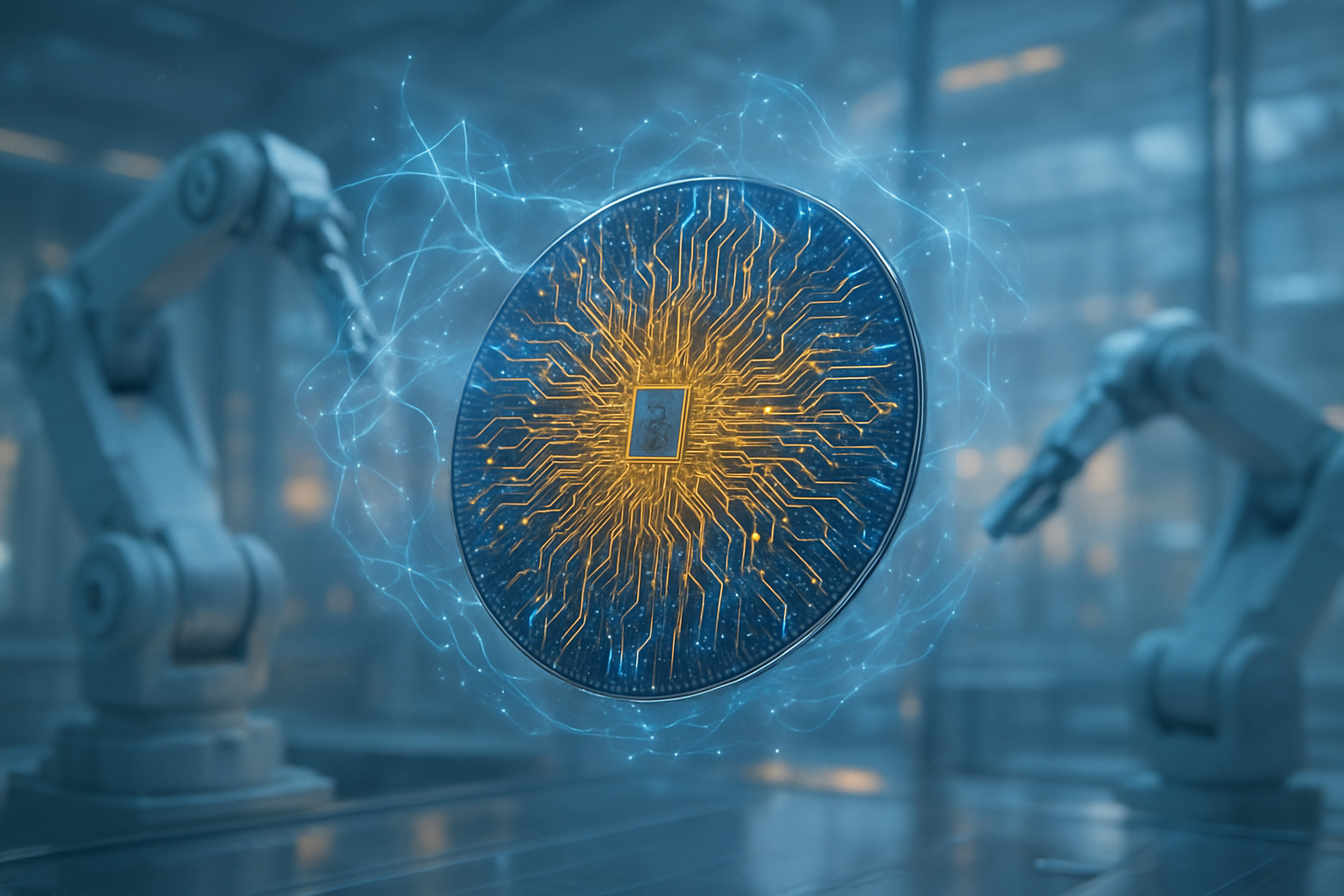
  • Intel Foundry Services: A New Era of Competition in Chip Manufacturing

    Intel Foundry Services: A New Era of Competition in Chip Manufacturing

    Intel (NASDAQ: INTC) is orchestrating one of the most ambitious turnarounds in semiconductor history with its IDM 2.0 strategy, a bold initiative designed to reclaim process technology leadership and establish Intel Foundry as a formidable competitor in the highly lucrative and strategically vital chip manufacturing market. This strategic pivot, launched by CEO Pat Gelsinger in 2021, aims to challenge the long-standing dominance of Taiwan Semiconductor Manufacturing Company (NYSE: TSM), or TSMC, and Samsung Electronics (KRX: 005930) in advanced silicon fabrication. As of late 2025, Intel Foundry is not merely a vision but a rapidly developing entity, with significant investments, an aggressive technological roadmap, and a growing roster of high-profile customers signaling a potential seismic shift in the global chip supply chain, particularly relevant for the burgeoning AI industry.

    The immediate significance of Intel's re-entry into the foundry arena cannot be overstated. With geopolitical tensions and supply chain vulnerabilities highlighting the critical need for diversified chip manufacturing capabilities, Intel Foundry offers a compelling alternative, particularly for Western nations. Its success could fundamentally reshape how AI companies, tech giants, and startups source their cutting-edge processors, fostering greater innovation, resilience, and competition in an industry that underpins virtually all technological advancement.

    The Technical Blueprint: IDM 2.0 and the "Five Nodes in Four Years" Marathon

    Intel's IDM 2.0 strategy is built on three foundational pillars: maintaining internal manufacturing for core products, expanding the use of third-party foundries for specific components, and crucially, establishing Intel Foundry as a world-class provider of foundry services to external customers. This marks a profound departure from Intel's historical integrated device manufacturing model, where it almost exclusively produced its own designs. The ambition is clear: to return Intel to "process performance leadership" by 2025 and become the world's second-largest foundry by 2030.

    Central to this audacious goal is Intel's "five nodes in four years" (5N4Y) roadmap, an accelerated development schedule designed to rapidly close the gap with competitors. This roadmap progresses through Intel 7 (formerly 10nm Enhanced SuperFin, already in high volume), Intel 4 (formerly 7nm, in production since H2 2022), and Intel 3 (leveraging EUV and enhanced FinFETs, now in high volume and monitoring). The true game-changers, however, are the "Angstrom era" nodes: Intel 20A and Intel 18A. Intel 20A, introduced in 2024, debuted RibbonFET (Intel's gate-all-around transistor) and PowerVia (backside power delivery), innovative technologies aimed at delivering significant performance and power efficiency gains. Intel 18A, refining these advancements, is slated for volume manufacturing in late 2025, with Intel confidently predicting it will regain process leadership by this timeline. Looking further ahead, Intel 14A has been unveiled for 2026, already being developed in close partnership with major external clients.

    This aggressive technological push is already attracting significant interest. Microsoft (NASDAQ: MSFT) has publicly committed to utilizing Intel's 18A process for its in-house designed chips, a monumental validation for Intel Foundry. Amazon (NASDAQ: AMZN) and the U.S. Department of Defense are also confirmed customers for the advanced 18A node. Qualcomm (NASDAQ: QCOM) was an early adopter for the Intel 20A node. Furthermore, Nvidia (NASDAQ: NVDA) has made a substantial $5 billion investment in Intel and is collaborating on custom x86 CPUs for AI infrastructure and integrated SOC solutions, expanding Intel's addressable market. Rumors also circulate about potential early-stage talks with AMD (NASDAQ: AMD) to diversify its supply chain and even Apple (NASDAQ: AAPL) for strategic partnerships, signaling a potential shift in the foundry landscape.

    Reshaping the AI Hardware Landscape: Implications for Tech Giants and Startups

    The emergence of Intel Foundry as a credible third-party option carries profound implications for AI companies, established tech giants, and innovative startups alike. For years, the advanced chip manufacturing landscape has been largely a duopoly, with TSMC and Samsung holding sway. This limited choice has led to supply chain bottlenecks, intense competition for fabrication slots, and significant pricing power for the dominant foundries. Intel Foundry offers a much-needed alternative, promoting supply chain diversification and resilience—a critical factor in an era of increasing geopolitical uncertainty.

    Companies developing cutting-edge AI accelerators, specialized data center chips, or advanced edge AI devices stand to benefit immensely from Intel Foundry's offerings. Access to Intel's leading-edge process technologies like 18A, coupled with its advanced packaging solutions such as EMIB and Foveros, could unlock new levels of performance and integration for AI hardware. Furthermore, Intel's full "systems foundry" approach, which includes IP, design services, and packaging, could streamline the development process for companies lacking extensive in-house manufacturing expertise. The potential for custom x86 CPUs, as seen with the Nvidia collaboration, also opens new avenues for AI infrastructure optimization.

    The competitive implications are significant. While TSMC and Samsung remain formidable, Intel Foundry's entry could intensify competition, potentially leading to more favorable terms and greater innovation across the board. For companies like Microsoft, Amazon, and potentially AMD, working with Intel Foundry could reduce their reliance on a single vendor, mitigating risks and enhancing their strategic flexibility. This diversification is particularly crucial for AI companies, where access to the latest silicon is a direct determinant of competitive advantage. The substantial backing from the U.S. CHIPS Act, providing Intel with up to $11.1 billion in grants and loans, further underscores the strategic importance of building a robust domestic semiconductor manufacturing base, appealing to companies prioritizing Western supply chains.

    A Wider Lens: Geopolitics, Supply Chains, and the Future of AI

    Intel Foundry's resurgence fits squarely into broader global trends concerning technological sovereignty and supply chain resilience. The COVID-19 pandemic and subsequent geopolitical tensions vividly exposed the fragility of a highly concentrated semiconductor manufacturing ecosystem. Governments worldwide, particularly in the U.S. and Europe, are actively investing billions to incentivize domestic chip production. Intel Foundry, with its massive investments in new fabrication facilities across Arizona, Ohio, Ireland, and Germany (totaling approximately $100 billion), is a direct beneficiary and a key player in this global rebalancing act.

    For the AI landscape, this means a more robust and diversified foundation for future innovation. Advanced chips are the lifeblood of AI, powering everything from large language models and autonomous systems to medical diagnostics and scientific discovery. A more competitive and resilient foundry market ensures that the pipeline for these critical components remains open and secure. However, challenges remain. Reports of Intel's 18A process yields being significantly lower than those of TSMC's 2nm (10-30% versus 60% as of summer 2025, though Intel disputes these figures) highlight the persistent difficulties in advanced manufacturing execution. While Intel is confident in its yield ramp, consistent improvement is paramount to gaining customer trust and achieving profitability.

    Financially, Intel Foundry is still in its investment phase, with operating losses expected to peak in 2024 as the company executes its aggressive roadmap. The target to achieve break-even operating margins by the end of 2030 underscores the long-term commitment and the immense capital expenditure required. This journey is a testament to the scale of the challenge but also the potential reward. Comparisons to previous AI milestones, such as the rise of specialized AI accelerators or the breakthroughs in deep learning, highlight that foundational hardware shifts often precede significant leaps in AI capabilities. A revitalized Intel Foundry could be one such foundational shift, accelerating the next generation of AI innovation.

    The Road Ahead: Scaling, Diversifying, and Sustaining Momentum

    Looking ahead, the near-term focus for Intel Foundry will be on successfully ramping up volume manufacturing of its Intel 18A process in late 2025, proving its yield capabilities, and securing additional marquee customers beyond its initial strategic wins. The successful execution of its aggressive roadmap, particularly for Intel 14A and beyond, will be crucial for sustaining momentum and achieving its long-term ambition of becoming the world's second-largest foundry by 2030.

    Potential applications on the horizon include a wider array of custom AI accelerators tailored for specific workloads, specialized chips for industries like automotive and industrial IoT, and a significant increase in domestic chip production for national security and economic stability. Challenges that need to be addressed include consistently improving manufacturing yields to match or exceed competitors, attracting a diverse customer base that includes major fabless design houses, and navigating the intense capital demands of advanced process development. Experts predict that while the path will be arduous, Intel Foundry, bolstered by government support and strategic partnerships, has a viable chance to become a significant and disruptive force in the global foundry market, offering a much-needed alternative to the existing duopoly.

    A New Dawn for Chip Manufacturing

    Intel's IDM 2.0 strategy and the establishment of Intel Foundry represent a pivotal moment not just for the company, but for the entire semiconductor industry and, by extension, the future of AI. The key takeaways are clear: Intel is making a determined, multi-faceted effort to regain its manufacturing prowess and become a leading foundry service provider. Its aggressive technological roadmap, including innovations like RibbonFET and PowerVia, positions it to offer cutting-edge process nodes. The early customer wins and strategic partnerships, especially with Microsoft and Nvidia, provide crucial validation and market traction.

    This development is immensely significant in AI history, as it addresses the critical bottleneck of advanced chip manufacturing. A more diversified and competitive foundry landscape promises greater supply chain resilience, fosters innovation by offering more options for custom AI hardware, and potentially mitigates the geopolitical risks associated with a concentrated manufacturing base. While the journey is long and fraught with challenges, particularly concerning yield maturation and financial investment, Intel's strategic foundations are strong. What to watch for in the coming weeks and months will be continued updates on Intel 18A yields, announcements of new customer engagements, and the financial performance trajectory of Intel Foundry as it strives to achieve its ambitious goals. The re-emergence of Intel as a major foundry player could very well usher in a new era of competition and innovation, fundamentally reshaping the technological landscape for decades to come.

    This content is intended for informational purposes only and represents analysis of current AI developments.

    TokenRing AI delivers enterprise-grade solutions for multi-agent AI workflow orchestration, AI-powered development tools, and seamless remote collaboration platforms.
    For more information, visit https://www.tokenring.ai/.

  • Samsung’s AI Foundry Ambitions: Challenging the Semiconductor Giants

    Samsung’s AI Foundry Ambitions: Challenging the Semiconductor Giants

    In a bold strategic maneuver, Samsung (KRX: 005930) is aggressively expanding its foundry business, setting its sights firmly on capturing a larger, more influential share of the burgeoning Artificial Intelligence (AI) chip market. This ambitious push, underpinned by multi-billion dollar investments and pioneering technological advancements, aims to position the South Korean conglomerate as a crucial "one-stop shop" solution provider for the entire AI chip development and manufacturing lifecycle. The immediate significance of this strategy lies in its potential to reshape the global semiconductor landscape, intensifying competition with established leaders like TSMC (NYSE: TSM) and Intel (NASDAQ: INTC), and accelerating the pace of AI innovation worldwide.

    Samsung's integrated approach leverages its unparalleled expertise across memory chips, foundry services, and advanced packaging technologies. By streamlining the entire production process, the company anticipates reducing manufacturing times by approximately 20%, a critical advantage in the fast-evolving AI sector where time-to-market is paramount. This holistic offering is particularly attractive to fabless AI chip designers seeking high-performance, low-power, and high-bandwidth solutions, offering them a more cohesive and efficient path from design to deployment.

    Detailed Technical Coverage

    At the heart of Samsung's AI foundry ambitions are its groundbreaking technological advancements, most notably the Gate-All-Around (GAA) transistor architecture, aggressive pursuit of sub-2nm process nodes, and the innovative Backside Power Delivery Network (BSPDN). These technologies represent a significant leap forward from previous semiconductor manufacturing paradigms, designed to meet the extreme computational and power efficiency demands of modern AI workloads.

    Samsung was an early adopter of GAA technology, initiating mass production of its 3-nanometer (nm) process with GAA (called MBCFET™) in 2022. Unlike the traditional FinFET design, where the gate controls the channel on three sides, GAAFETs completely encircle the channel on all four sides. This superior electrostatic control dramatically reduces leakage current and improves power efficiency, enabling chips to operate faster with less energy – a vital attribute for AI accelerators. Samsung's MBCFET design further enhances this by using nanosheets with adjustable widths, offering greater flexibility for optimizing power and performance compared to the fixed fin counts of FinFETs. Compared to its previous 5nm process, Samsung's 3nm GAA technology consumes 45% less power and occupies 16% less area, with the second-generation GAA further boosting performance by 30% and power efficiency by 50%.

    The company's roadmap for process node scaling is equally aggressive. Samsung plans to begin mass production of its 2nm process (SF2) for mobile applications in 2025, expanding to high-performance computing (HPC) chips in 2026 and automotive chips in 2027. An advanced variant, SF2Z, slated for mass production in 2027, will incorporate Backside Power Delivery Network (BSPDN) technology. BSPDN is a revolutionary approach that relocates power lines to the backside of the silicon wafer, separating them from the signal network on the front. This alleviates congestion, significantly reduces voltage drop (IR drop), and improves power delivery efficiency, leading to enhanced performance and area optimization. Samsung claims BSPDN can reduce the size of its 2nm chip by 17%, improve performance by 8%, and power efficiency by 15% compared to traditional front-end power delivery. Furthermore, Samsung has confirmed plans for mass production of its more advanced 1.4nm (SF1.4) chips by 2027.

    Initial reactions from the AI research community and industry experts have been largely positive, recognizing these technical breakthroughs as foundational enablers for the next wave of AI innovation. Experts emphasize that GAA and BSPDN are crucial for overcoming the physical limits of FinFETs and addressing critical bottlenecks like power density and thermal dissipation in increasingly complex AI models. Samsung itself highlights that its GAA-based advanced node technology will be "instrumental in supporting the needs of our customers using AI applications," and its integrated "one-stop AI solutions" are designed to speed up AI chip production by 20%. While historical challenges with yield rates for advanced nodes have been noted, recent reports of securing multi-billion dollar agreements for AI-focused chips on its 2nm platform suggest growing confidence in Samsung's capabilities.

    Impact on AI Companies, Tech Giants, and Startups

    Samsung's advanced foundry strategy, encompassing GAA, aggressive node scaling, and BSPDN, is poised to profoundly affect AI companies, tech giants, and startups by offering a compelling alternative in the high-stakes world of AI chip manufacturing. Its "one-stop shop" approach, integrating memory, foundry, and advanced packaging, is designed to streamline the entire chip production process, potentially cutting turnaround times significantly.

    Fabless AI chip designers, including major players like NVIDIA (NASDAQ: NVDA) and AMD (NASDAQ: AMD), which have historically relied heavily on TSMC, stand to benefit immensely from Samsung's increasingly competitive offerings. A crucial second source for advanced manufacturing can enhance supply chain resilience, foster innovation through competition, and potentially lead to more favorable pricing. A prime example of this is the monumental $16.5 billion multi-year deal with Tesla (NASDAQ: TSLA), where Samsung will produce Tesla's next-generation AI6 inference chips on its 2nm process at a dedicated fabrication plant in Taylor, Texas. This signifies a strong vote of confidence in Samsung's capabilities for AI in autonomous vehicles and robotics. Qualcomm (NASDAQ: QCOM) is also reportedly considering Samsung's 2nm foundry process. Companies requiring tightly integrated memory and logic for their AI solutions will find Samsung's vertical integration a compelling advantage.

    The competitive landscape of the foundry market is heating up considerably. TSMC remains the undisputed leader, especially in advanced nodes and packaging solutions like CoWoS, which are critical for AI accelerators. TSMC plans to introduce 2nm (N2) with GAA transistors in late 2025 and 1.6nm (A16) with BSPDN by late 2026. Intel Foundry Services (IFS) is also aggressively pursuing a "five nodes in four years" plan, with its 18A process incorporating GAA (RibbonFET) and BSPDN (PowerVia), aiming to compete with TSMC's N2 and Samsung's SF2. Samsung's advancements intensify this three-way race, potentially driving down costs, accelerating innovation, and offering more diverse options for AI chip design and manufacturing. This competition doesn't necessarily disrupt existing products as much as it enables and accelerates their capabilities, pushing the boundaries of what AI chips can achieve.

    For startups developing specialized AI-oriented processors, Samsung's Advanced Foundry Ecosystem (SAFE) program and partnerships with design solution providers aim to offer a more accessible development path. This enables smaller entities to bring innovative AI hardware to market more efficiently. Samsung is also strategically backing external AI chip startups, such as its $250 million investment in South Korean startup Rebellions (private), aiming to secure future major foundry clients. Samsung is positioning itself as a critical enabler of the AI revolution, aiming for its AI-related customer base to grow fivefold and revenue to increase ninefold by 2028. Its unique vertical integration, early GAA adoption, aggressive node roadmap, and strategic partnerships provide significant advantages in this high-stakes market.

    Wider Significance

    Samsung's intensified foray into the AI foundry business holds profound wider significance for the entire AI industry, fitting squarely into the broader trends of escalating computational demands and the pursuit of specialized hardware. The current AI landscape, dominated by the insatiable appetite for powerful and efficient chips for generative AI and large language models (LLMs), finds a crucial response in Samsung's integrated "one-stop shop" approach. This streamlining of the entire chip production process, from design to advanced packaging, is projected to cut turnaround times by approximately 20%, significantly accelerating the development and deployment of AI models.

    The impacts on the future of AI development are substantial. By providing high-performance, low-power semiconductors through advanced process nodes like 2nm and 1.4nm, coupled with GAA and BSPDN, Samsung is directly contributing to the acceleration of AI innovation. This means faster iteration cycles for AI researchers and developers, leading to quicker breakthroughs and the enablement of more sophisticated AI applications across diverse sectors such as autonomous driving, real-time video analysis, healthcare, and finance. The $16.5 billion deal with Tesla (NASDAQ: TSLA) to produce next-generation AI6 chips for autonomous driving underscores this transformative potential. Furthermore, Samsung's push, particularly with its integrated solutions, aims to attract a broader customer base, potentially leading to more diverse and customized AI hardware solutions, fostering competition and reducing reliance on a single vendor.

    However, this intensified competition and the pursuit of advanced manufacturing also bring potential concerns. The semiconductor manufacturing industry remains highly concentrated, with TSMC (NYSE: TSM) and Samsung (KRX: 005930) being the primary players for cutting-edge nodes. While Samsung's efforts can somewhat alleviate the extreme reliance on TSMC, the overall concentration of advanced chip manufacturing in a few regions (e.g., Taiwan and South Korea) remains a significant geopolitical risk. A disruption in these regions due to geopolitical conflict or natural disaster could severely impact the global AI infrastructure. The "chip war" between the US and China further complicates matters, with export controls and increased investment in domestic production by various nations entangling Samsung's operations. Samsung has also faced challenges with production delays and qualifying advanced memory chips for key partners like NVIDIA (NASDAQ: NVDA), which highlights the difficulties in scaling such cutting-edge technologies.

    Comparing this moment to previous AI milestones in hardware manufacturing reveals a recurring pattern. Just as the advent of transistors and integrated circuits in the mid-20th century revolutionized computing, and the emergence of Graphics Processing Units (GPUs) in the late 1990s (especially NVIDIA's CUDA in 2006) enabled the deep learning revolution, Samsung's current foundry push represents the latest iteration of such hardware breakthroughs. By continually pushing the boundaries of semiconductor technology with advanced nodes, GAA, advanced packaging, and integrated solutions, Samsung aims to provide the foundational hardware that will enable the next wave of AI innovation, much like its predecessors did in their respective eras.

    Future Developments

    Samsung's AI foundry ambitions are set to unfold with a clear roadmap of near-term and long-term developments, promising significant advancements in AI chip manufacturing. In the near-term (1-3 years), Samsung will focus heavily on its "one-stop shop" approach, integrating memory (especially High-Bandwidth Memory – HBM), foundry, and advanced packaging to reduce AI chip production schedules by approximately 20%. The company plans to mass-produce its second-generation 3nm process (SF3) in the latter half of 2024 and its SF4U (4nm variant) in 2025. Crucially, mass production of the 2nm GAA-based SF2 node is scheduled for 2025, with the enhanced SF2Z, featuring Backside Power Delivery Network (BSPDN), slated for 2027. Strategic partnerships, such as the deal with OpenAI (private) for advanced memory chips and the $16.5 billion contract with Tesla (NASDAQ: TSLA) for AI6 chips, will be pivotal in establishing Samsung's presence.

    Looking further ahead (3-10 years), Samsung plans to mass-produce 1.4nm (SF1.4) chips by 2027, with explorations into even more advanced nodes through material and structural innovations. The long-term vision includes a holistic approach to chip architecture, integrating advanced packaging, memory, and specialized accelerators, with AI itself playing an increasing role in optimizing chip design and improving yield management. By 2027, Samsung also aims to introduce an all-in-one, co-packaged optics (CPO) integrated AI solution for high-speed, low-power data processing. These advancements are designed to power a wide array of applications, from large-scale AI model training in data centers and high-performance computing (HPC) to real-time AI inference in edge devices like smartphones, autonomous vehicles, robotics, and smart home appliances.

    However, Samsung faces several significant challenges. A primary concern is improving yield rates for its advanced nodes, particularly for its 2nm technology, targeting 60% by late 2025 from an estimated 30% in 2024. Intense competition from TSMC (NYSE: TSM), which currently dominates the foundry market, and Intel Foundry Services (NASDAQ: INTC), which is aggressively re-entering the space, also poses a formidable hurdle. Geopolitical factors, including U.S. sanctions and the global push for diversified supply chains, add complexity but also present opportunities for Samsung. Experts predict that global chip industry revenue from AI processors could reach $778 billion by 2028, with AI chip demand outpacing traditional semiconductors. While TSMC is projected to retain a significant market share, analysts suggest Samsung could capture 10-15% of the foundry market by 2030 if it successfully addresses its yield issues and accelerates GAA adoption. The "AI infrastructure arms race," driven by initiatives like OpenAI's "Stargate" project, will lead to deeper integration between AI model developers and hardware manufacturers, making access to cutting-edge silicon paramount for future AI progress.

    Comprehensive Wrap-up

    Samsung's (KRX: 005930) "AI Foundry Ambitions" represent a bold and strategically integrated approach to capitalize on the explosive demand for AI chips. The company's unique "one-stop shop" model, combining its strengths in memory, foundry services, and advanced packaging, is a key differentiator, promising reduced production times and optimized solutions for the most demanding AI applications. This strategy is built on a foundation of pioneering technological advancements, including the widespread adoption of Gate-All-Around (GAA) transistor architecture, aggressive scaling to 2nm and 1.4nm process nodes, and the integration of Backside Power Delivery Network (BSPDN) technology. These innovations are critical for delivering the high-performance, low-power semiconductors essential for the next generation of AI.

    The significance of this development in AI history cannot be overstated. By intensifying competition in the advanced foundry market, Samsung is not only challenging the long-standing dominance of TSMC (NYSE: TSM) but also fostering an environment of accelerated innovation across the entire AI hardware ecosystem. This increased competition can lead to faster technological advancements, potentially lower costs, and more diverse manufacturing options for AI developers and companies worldwide. The integrated solutions offered by Samsung, coupled with strategic partnerships like those with Tesla (NASDAQ: TSLA) and OpenAI (private), are directly contributing to building the foundational hardware infrastructure required for the expansion of global AI capabilities, driving the "AI supercycle" forward.

    Looking ahead, the long-term impact of Samsung's strategy could be transformative, potentially reshaping the foundry landscape into a more balanced competitive environment. Success in improving yield rates for its advanced nodes and securing more major AI contracts will be crucial for Samsung to significantly alter market dynamics. The widespread adoption of more efficient AI chips will likely accelerate AI deployment across various industries, from autonomous vehicles to enterprise AI solutions. What to watch for in the coming weeks and months includes Samsung's progress on its 2nm yield rates, announcements of new major fabless customers, the successful ramp-up of its Taylor, Texas plant, and continued advancements in HBM (High-Bandwidth Memory) and advanced packaging technologies. The competitive responses from TSMC and Intel (NASDAQ: INTC) will also be key indicators of how this high-stakes race for AI hardware leadership will unfold, ultimately dictating the pace and direction of AI innovation for the foreseeable future.

    This content is intended for informational purposes only and represents analysis of current AI developments.

    TokenRing AI delivers enterprise-grade solutions for multi-agent AI workflow orchestration, AI-powered development tools, and seamless remote collaboration platforms.
    For more information, visit https://www.tokenring.ai/.