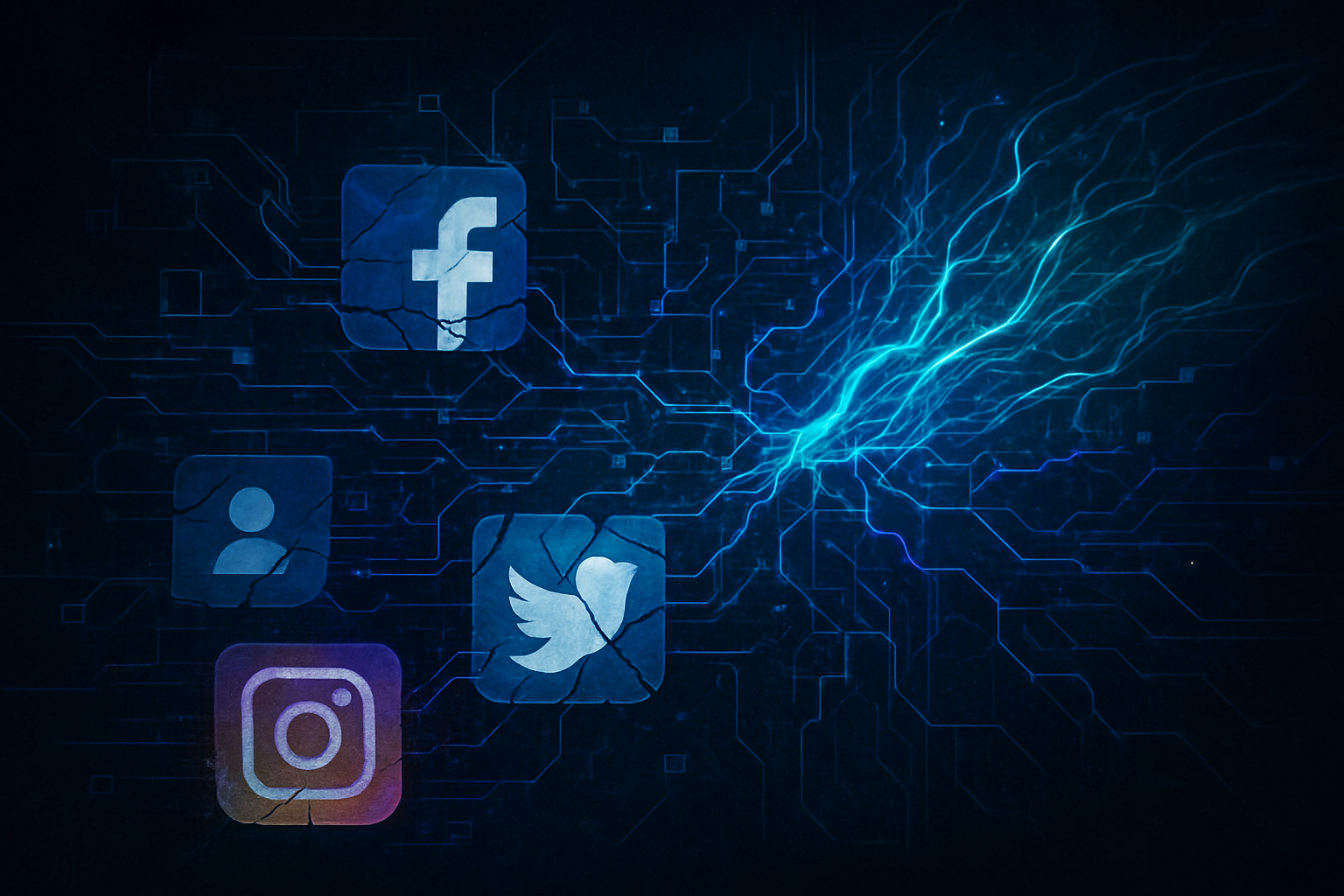
Elon Musk's social media platform, X (NYSE: X), formerly known as Twitter, has been plagued by a series of widespread technical disruptions in November 2025, culminating in significant global outages on both November 18th and November 21st. These incidents left thousands of users unable to access their feeds, post updates, or interact with content, underscoring the inherent challenges and vulnerabilities faced by major social media platforms in maintaining consistent service. The recurring nature of these outages has ignited fresh concerns among users and industry observers regarding the reliability and stability of one of the world's most influential communication channels.
The recent disruptions highlight a troubling pattern of instability, prompting a critical examination of X's infrastructure resilience and the broader implications for digital communication. As users increasingly rely on these platforms for everything from breaking news to personal connections, their intermittent failures carry significant consequences, impacting global discourse and the operational continuity of businesses and individuals alike.
Technical Disruption and Underlying Fragility
The most recent widespread outage of X occurred on Friday, November 21, 2025, with user complaints surging around 8:50 PM. Global incident reports on Downdetector.com exceeded 20,300, with users primarily reporting issues with the X app (63%) and the website (26%), alongside problems with content feeds. Common symptoms included blank screens and error messages such as "posts aren't loading right now." While X did not immediately provide an official root cause for this specific outage, industry analysts were quick to point out a potential pattern of instability, possibly linked to Cloudflare, a key web infrastructure provider.
Just three days prior, on Tuesday, November 18, 2025, X experienced another significant outage, with reports emerging around 11:00 AM UK time. This earlier disruption was largely attributed to a "significant disruption" at Cloudflare (NYSE: NET), which acknowledged a "large-scale technical problem" affecting multiple websites, including X. During this incident, users encountered "internal server error on Cloudflare's network" messages, alongside difficulties loading timelines and accessing profiles. Cloudflare confirmed it was investigating "unusual traffic" to one of its services before implementing a fix.
These incidents highlight critical differences from previous, more isolated outages. While past disruptions might have been traced to specific software bugs or server overloads, the recent events, particularly the November 18th outage, point to broader infrastructure dependencies on third-party providers like Cloudflare. The proximity of the two outages on November 18th and 21st, even if the latter's direct cause is yet unconfirmed, suggests a potential underlying systemic vulnerability or a series of cascading failures rather than isolated anomalies. Initial reactions from the tech community have focused on the increasing fragility of complex internet ecosystems and the single points of failure that can arise, even for platforms as robust as X.
Competitive Ripples and Market Realignments
The recent double outage on X has profound implications for the company (NYSE: X) itself, as well as for the broader social media landscape. For X, the most immediate consequences are a significant erosion of user trust and a direct hit to its advertising revenue. As the platform positions itself as the "town square of the internet," recurring technical failures undermine its credibility as a reliable real-time communication channel. Advertisers, already wary due to previous changes and a reported 24% drop in ad spending in the first half of 2024, are likely to further question the platform's stability, potentially leading to stalled revenue growth and migration to more dependable alternatives. Each hour of downtime can translate into hundreds of thousands of dollars in lost ad impressions and sponsorships.
Competitors, however, stand to benefit from X's instability. Meta Platforms (NASDAQ: META), with its Threads offering, has seen temporary spikes in user activity during X's disruptions, positioning Threads as a viable alternative for microblogging. Similarly, decentralized platforms like Mastodon and Bluesky have attracted millions of users seeking more stable and user-controlled environments, although Mastodon has faced challenges with user retention due to its unique interface and "anti-viral" design. These platforms experience increased interest and user migration, even if temporary, during X's downtime, challenging X's market dominance and forcing it to confront the vulnerabilities of its infrastructure.
Beyond direct competitors, the outages also highlight opportunities for other tech players. Cybersecurity companies, for instance, could see increased demand as platforms prioritize robust defenses against potential cyberattacks, which have been implicated in past X disruptions. Furthermore, cloud infrastructure providers that can demonstrate superior stability and reliability might attract platforms looking to diversify their hosting solutions and mitigate single points of failure, especially given Cloudflare's (NYSE: NET) involvement in one of the recent outages. The recurring nature of these incidents underscores a broader industry shift towards demanding greater resilience and transparency from critical online services.
Broader Significance and AI's Evolving Role
The recurring outages on X underscore a critical vulnerability in the global digital infrastructure and have profound implications for public trust in major online platforms. In an era where social media platforms serve as primary conduits for news, political discourse, and personal communication, their instability disrupts essential information flows and can foster widespread frustration and anxiety. These incidents highlight society's deep reliance on a few centralized digital services, exposing a 'cascading fragility' where a single point of failure, whether a configuration error or a third-party service disruption like that experienced with Cloudflare (NYSE: NET), can have global ramifications.
Comparing these events to past major internet disruptions, such as the 2016 Dyn DDoS attack or the 2021 Fastly CDN outage, reveals a consistent pattern: increasing centralization of critical web services makes the entire internet ecosystem more susceptible to widespread failures. The X outages, particularly those linked to infrastructure providers, echo the vulnerabilities seen in incidents affecting Amazon Web Services (AWS) or Meta Platforms (NASDAQ: META) in the past, where issues in foundational services brought down countless dependent applications. This trend raises serious questions about the resilience designed into our digital backbone and the urgent need for diversification and decentralization.
Furthermore, these disruptions significantly impact content moderation and information dissemination. During an outage, the ability of platforms to detect and remove harmful content, such as hate speech or misinformation, can be severely compromised. While AI-powered moderation tools are extensively used, their effectiveness is diminished or entirely halted when the underlying platform is inaccessible. This can create a vacuum, potentially allowing unchecked narratives to proliferate or making it difficult for users to access reliable information during critical global events. The outages serve as a stark reminder that over-reliance on a single platform for critical communications is a dangerous proposition, necessitating a broader strategy for information access and digital presence.
The role of Artificial Intelligence in maintaining platform stability and detecting issues is also brought into sharp focus. AI-driven systems are increasingly deployed for predictive maintenance, analyzing vast datasets to identify anomalies that could precede an outage, and acting as early warning systems. They monitor network traffic, server logs, and application performance in real-time to prevent failures. However, the fact that outages still occur, and that even AI-dependent services like OpenAI (which experienced its own outages linked to Cloudflare) can be affected, highlights the ongoing challenges. While AI offers powerful tools for resilience, it also introduces new layers of complexity and potential points of failure if not robustly managed, underscoring the need for continuous innovation and ethical considerations in its deployment.
Charting a Path Forward: Future Developments
In the wake of recurring outages, social media platforms like X are compelled to accelerate both near-term operational refinements and long-term architectural overhauls to enhance stability and user trust. In the immediate future, platforms are expected to prioritize more transparent and proactive communication during disruptions, providing real-time updates across multiple channels to manage user expectations. There will also be a continued investment in strengthening existing infrastructure and refining crisis management protocols to detect and resolve technical glitches more swiftly.
Looking further ahead, the industry anticipates a gradual but significant shift towards more resilient and potentially decentralized social media (DSM) architectures. Utilizing technologies like blockchain, DSMs aim to distribute control and data across a network of independent servers, thereby eliminating single points of failure and bolstering resistance to widespread outages and censorship. While challenges remain in scalability, performance, and content moderation for decentralized systems, the growing frustration with centralized platform instability could drive greater user adoption over time.
Artificial Intelligence (AI) is poised to play a transformative role in improving platform resilience. AI-driven predictive analytics and Artificial Intelligence for IT Operations (AIOps) will become indispensable, analyzing vast datasets to foresee potential incidents like server overloads or network issues and automating remedial actions before they impact users. AI systems will also enhance real-time monitoring and anomaly detection, dynamically adapting performance thresholds and identifying unusual activities that signal impending failures. Furthermore, advanced AI coding has shown promise in rapid recovery scenarios, such as quickly deploying clones of essential infrastructure components during emergencies, as demonstrated by Coursera during a Cloudflare outage.
However, significant challenges must be addressed. Concerns around data privacy and security remain paramount, as AI systems require extensive data. Algorithmic bias, if not continuously audited and adjusted, can lead to unfair content moderation or skewed user experiences. The proliferation of AI-generated misinformation, such as deepfakes, also presents a growing threat, necessitating clear disclosure policies and advanced detection mechanisms. Experts predict a hybrid model for social media's future, with a slow migration towards decentralized networks, increased scrutiny of centralized infrastructure providers, and AI streamlining operations while facing demands for greater transparency. The focus will increasingly shift from merely chasing traffic to building authentic communities and ensuring reliable, trustworthy online spaces.
Comprehensive Wrap-up: The Imperative of Reliability
The recent widespread outages on Elon Musk's X serve as a stark reminder of the critical importance of reliability and stability in the digital age. The key takeaways from these events are multifaceted: the inherent fragility of centralized digital infrastructure, the profound impact on user trust and advertising revenue for affected platforms, and the competitive opportunities created for alternative social media services. These disruptions underscore that even the most influential platforms are not immune to technical vulnerabilities, and that the interconnectedness of the internet means a single failure can have global repercussions.
In the history of AI and internet infrastructure, these outages will be viewed as significant milestones, pushing the industry further towards developing more resilient, transparent, and potentially decentralized online environments. They highlight the ongoing challenge of balancing rapid innovation with robust stability, especially as AI becomes more deeply integrated into operational systems.
In the coming weeks and months, industry observers will be watching closely for X's response, particularly regarding its infrastructure investments and communication strategies during future incidents. The broader tech landscape will likely see an accelerated push towards AI-powered predictive maintenance and more diversified cloud strategies to mitigate risks. Ultimately, the imperative for all major social media platforms will be to rebuild and maintain user trust through consistent, reliable service, ensuring that the "town square" remains open and accessible to all.
This content is intended for informational purposes only and represents analysis of current AI developments.
TokenRing AI delivers enterprise-grade solutions for multi-agent AI workflow orchestration, AI-powered development tools, and seamless remote collaboration platforms.
For more information, visit https://www.tokenring.ai/.