Tag: UCIe

  • The Silicon Lego Revolution: How 3.5D Packaging and UCIe are Building the Next Generation of AI Superchips

    The Silicon Lego Revolution: How 3.5D Packaging and UCIe are Building the Next Generation of AI Superchips

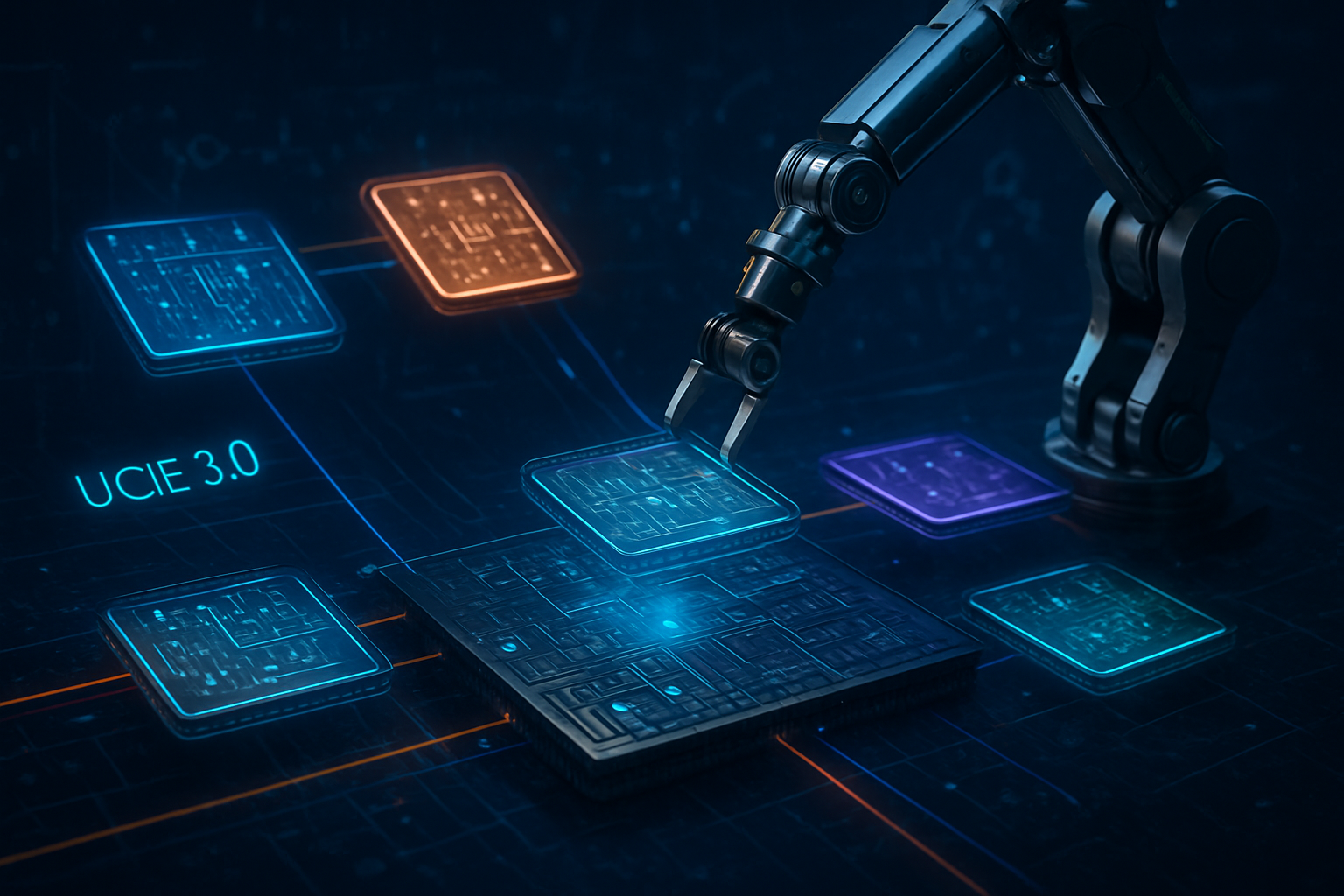
    As of early 2026, the semiconductor landscape has reached a historic turning point, moving definitively away from the monolithic chip designs that defined the last fifty years. In their place, a new architecture known as 3.5D Advanced Packaging has emerged, powered by the Universal Chiplet Interconnect Express (UCIe) 3.0 standard. This development is not merely an incremental upgrade; it represents a fundamental shift in how artificial intelligence hardware is conceived, manufactured, and scaled, effectively turning the world’s most advanced silicon into a "plug-and-play" ecosystem.

    The immediate significance of this transition is staggering. By moving away from "all-in-one" chips toward a modular "Silicon Lego" approach, the industry is overcoming the physical limits of traditional lithography. AI giants are no longer constrained by the maximum size of a single wafer exposure (the reticle limit). Instead, they are assembling massive "superchips" that combine specialized compute tiles, memory, and I/O from various sources into a single, high-performance package. This breakthrough is the engine behind the quadrillion-parameter AI models currently entering training cycles, providing the raw bandwidth and thermal efficiency necessary to sustain the next era of generative intelligence.

    The 1,000x Leap: Hybrid Bonding and 3.5D Architectures

    At the heart of this revolution is the commercialization of Copper-to-Copper (Cu-Cu) Hybrid Bonding. Traditional 2.5D packaging, which places chips side-by-side on a silicon interposer, relies on microbumps for connectivity. These bumps typically have a pitch of 40 to 50 micrometers. However, early 2026 has seen the mainstream adoption of Hybrid Bonding with pitches as low as 1 to 6 micrometers. Because interconnect density scales with the square of the pitch reduction, moving from a 50-micrometer bump to a 5-micrometer hybrid bond results in a 100x increase in area density. At the sub-micrometer level being pioneered for ultra-high-end accelerators, the industry is realizing a 1,000x increase in interconnect density compared to 2023 standards.

    This 3.5D architecture combines the lateral scalability of 2.5D with the vertical density of 3D stacking. For instance, Broadcom (NASDAQ: AVGO) recently introduced its XDSiP (Extreme Dimension System in Package) architecture, which enables over 6,000 mm² of silicon in a single package. By stacking accelerator logic dies vertically before placing them on a horizontal interposer surrounded by 16 stacks of HBM4 memory, Broadcom has managed to reduce latency by up to 60% while cutting die-to-die power consumption by a factor of ten. This gapless connection eliminates the parasitic resistance of traditional solder, allowing for bandwidth densities exceeding 10 Tbps/mm.

    The UCIe 3.0 specification, released in late 2025, serves as the "glue" for this hardware. Supporting data rates up to 64 GT/s—double that of the previous generation—UCIe 3.0 introduces a standardized Management Transport Protocol (MTP). This allows for "plug-and-play" interoperability, where an NPU tile from one vendor can be verified and initialized alongside an I/O tile from another. This standardization has been met with overwhelming support from the AI research community, as it allows for the rapid prototyping of specialized hardware configurations tailored to specific neural network architectures.

    The Business of "Systems Foundries" and Chiplet Marketplaces

    The move toward 3.5D packaging is radically altering the competitive strategies of the world’s largest tech companies. TSMC (NYSE: TSM) remains the dominant force, with its CoWoS-L and SoIC-X technologies being the primary choice for NVIDIA’s (NASDAQ: NVDA) new "Vera Rubin" architecture. However, Intel (NASDAQ: INTC) has successfully positioned itself as a "Systems Foundry" with its 18A-PT (Performance-Tuned) node and Foveros Direct 3D technology. By offering advanced packaging services to external customers like Apple (NASDAQ: AAPL) and Qualcomm (NASDAQ: QCOM), Intel is challenging the traditional foundry model, proving that packaging is now as strategically important as transistor fabrication.

    This shift also benefits specialized component makers and EDA (Electronic Design Automation) firms. Companies like Synopsys (NASDAQ: SNPS) and Siemens (ETR: SIE) have released "Digital Twin" modeling tools that allow designers to simulate UCIe 3.0 links before physical fabrication. This is critical for mitigating the risk of "known good die" (KGD) failures, where one faulty chiplet could ruin an entire expensive 3.5D assembly. For startups, this ecosystem is a godsend; a small AI chip firm can now focus on designing a single, world-class NPU chiplet and rely on a standardized ecosystem to integrate it with industry-standard I/O and memory, rather than having to design a massive, risky monolithic chip from scratch.

    Strategic advantages are also shifting toward those who control the memory supply chain. Samsung (KRX: 005930) is leveraging its unique position as both a memory manufacturer and a foundry to integrate HBM4 directly with custom logic dies using its X-Cube 3D technology. By moving logic dies to a 2nm process for tighter integration with memory stacks, Samsung is aiming to eliminate the "memory wall" that has long throttled AI performance. This vertical integration allows for a more cohesive design process, potentially offering higher yields and lower costs for high-volume AI accelerators.

    Beyond Moore’s Law: A New Era of AI Scalability

    The wider significance of 3.5D packaging and UCIe cannot be overstated; it represents the "End of the Monolithic Era." For decades, the industry followed Moore’s Law by shrinking transistors. While that continues, the primary driver of performance has shifted to interconnect architecture. By disaggregating a massive 800mm² GPU into eight smaller 100mm² chiplets, manufacturers can significantly increase wafer yields. A single defect that would have ruined a massive "superchip" now only ruins one small tile, drastically reducing waste and cost.

    Furthermore, this modularity allows for "node mixing." High-performance logic can be restricted to the most expensive 2nm or 1.4nm nodes, while less sensitive components like I/O and memory controllers can be "back-ported" to cheaper, more mature 6nm or 5nm nodes. This optimizes the total cost per transistor and ensures that leading-edge fab capacity is reserved for the most critical components. This pragmatic approach to scaling mirrors the evolution of software from monolithic applications to microservices, suggesting a permanent change in how we think about compute hardware.

    However, the rise of the chiplet ecosystem does bring concerns, particularly regarding thermal management. Stacking high-power logic dies vertically creates intense heat pockets that traditional air cooling cannot handle. This has sparked a secondary boom in liquid-cooling technologies and "rack-scale" integration, where the chip, the package, and the cooling system are designed as a single unit. As AMD (NASDAQ: AMD) prepares its Instinct MI400 for release later in 2026, the focus is as much on the liquid-cooled "CDNA 5" architecture as it is on the raw teraflops of the silicon.

    The Future: HBM5, 1.4nm, and the Chiplet Marketplace

    Looking ahead, the industry is already eyeing the transition to HBM5 and the integration of 1.4nm process nodes into 3.5D stacks. We expect to see the emergence of a true "chiplet marketplace" by 2027, where hardware designers can browse a catalog of verified UCIe-compliant dies for various functions—cryptography, video encoding, or specific AI kernels—and have them assembled into a custom ASIC in a fraction of the time it takes today. This will likely lead to a surge in "domain-specific" AI hardware, where chips are optimized for specific tasks like real-time translation or autonomous vehicle edge-processing.

    The long-term challenges remain significant. Standardizing test and assembly processes across different foundries will require unprecedented cooperation between rivals. Furthermore, the complexity of 3.5D power delivery—getting electricity into the middle of a stack of chips—remains a major engineering hurdle. Experts predict that the next few years will see the rise of "backside power delivery" (BSPD) as a standard feature in 3.5D designs to address these power and thermal constraints.

    A Fundamental Paradigm Shift

    The convergence of 3.5D packaging, Hybrid Bonding, and the UCIe 3.0 standard marks the beginning of a new epoch in computing. We have moved from the era of "scaling down" to the era of "scaling out" within the package. This development is as significant to AI history as the transition from CPUs to GPUs was a decade ago. It provides the physical infrastructure necessary to support the transition from generative AI to "Agentic AI" and beyond, where models require near-instantaneous access to massive datasets.

    In the coming weeks and months, the industry will be watching the first production yields of NVIDIA’s Rubin and AMD’s MI400. These products will serve as the litmus test for the viability of 3.5D packaging at massive scale. If successful, the "Silicon Lego" model will become the default blueprint for all high-performance computing, ensuring that the limits of AI are defined not by the size of a single piece of silicon, but by the creativity of the architects who assemble them.


    This content is intended for informational purposes only and represents analysis of current AI developments.

    TokenRing AI delivers enterprise-grade solutions for multi-agent AI workflow orchestration, AI-powered development tools, and seamless remote collaboration platforms.
    For more information, visit https://www.tokenring.ai/.
  • The End of the Monolith: How UCIe and the ‘Mix-and-Match’ Revolution are Redefining AI Performance in 2026

    The End of the Monolith: How UCIe and the ‘Mix-and-Match’ Revolution are Redefining AI Performance in 2026

    As of January 22, 2026, the semiconductor industry has reached a definitive turning point: the era of the monolithic processor—a single, massive slab of silicon—is officially coming to a close. In its place, the Universal Chiplet Interconnect Express (UCIe) standard has emerged as the architectural backbone of the next generation of artificial intelligence hardware. By providing a standardized, high-speed "language" for different chips to talk to one another, UCIe is enabling a "Silicon Lego" approach that allows technology giants to mix and match specialized components, drastically accelerating the development of AI accelerators and high-performance computing (HPC) systems.

    This shift is more than a technical upgrade; it represents a fundamental change in how the industry builds the brains of AI. As the demand for larger large language models (LLMs) and complex multi-modal AI continues to outpace the limits of traditional physics, the ability to combine a cutting-edge 2nm compute die from one vendor with a specialized networking tile or high-capacity memory stack from another has become the only viable path forward. However, this modular future is not without its growing pains, as engineers grapple with the physical limitations of "warpage" and the unprecedented complexity of integrating disparate silicon architectures into a single, cohesive package.

    Breaking the 2nm Barrier: The Technical Foundation of UCIe 2.0 and 3.0

    The technical landscape in early 2026 is dominated by the implementation of the UCIe 2.0 specification, which has successfully moved chiplet communication into the third dimension. While earlier versions focused on 2D and 2.5D integration, UCIe 2.0 was specifically designed to support "3D-native" architectures. This involves hybrid bonding with bump pitches as small as one micron, allowing chiplets to be stacked directly on top of one another with minimal signal loss. This capability is critical for the low-latency requirements of 2026’s AI workloads, which require massive data transfers between logic and memory at speeds previously impossible with traditional interconnects.

    Unlike previous proprietary links—such as early versions of NVLink or Infinity Fabric—UCIe provides a standardized protocol stack that includes a Physical Layer, a Die-to-Die Adapter, and a Protocol Layer that can map directly to CXL or PCIe. The current implementation of UCIe 2.0 facilitates unprecedented power efficiency, delivering data at a fraction of the energy cost of traditional off-chip communication. Furthermore, the industry is already seeing the first pilot designs for UCIe 3.0, which was announced in late 2025. This upcoming iteration promises to double bandwidth again to 64 GT/s per pin, incorporating "runtime recalibration" to adjust power and signal integrity on the fly as thermal conditions change within the package.

    The reaction from the industry has been one of cautious triumph. While experts at major research hubs like IMEC and the IEEE have lauded the standard for finally breaking the "reticle limit"—the physical size limit of a single silicon wafer exposure—they also warn that we are entering an era of "system-in-package" (SiP) complexity. The challenge has shifted from "how do we make a faster transistor?" to "how do we manage the traffic between twenty different transistors made by five different companies?"

    The New Power Players: How Tech Giants are Leveraging the Standard

    The adoption of UCIe has sparked a strategic realignment among the world's leading semiconductor firms. Intel Corporation (NASDAQ: INTC) has emerged as a primary beneficiary of this trend through its IDM 2.0 strategy. Intel’s upcoming Xeon 6+ "Clearwater Forest" processors are the flagship example of this new era, utilizing UCIe to connect various compute tiles and I/O dies. By opening its world-class packaging facilities to others, Intel is positioning itself not just as a chipmaker, but as the "foundry of the chiplet era," inviting rivals and partners alike to build their chips on its modular platforms.

    Meanwhile, NVIDIA Corporation (NASDAQ: NVDA) and Advanced Micro Devices, Inc. (NASDAQ: AMD) are locked in a fierce battle for AI supremacy using these modular tools. NVIDIA's newly announced "Rubin" architecture, slated for full rollout throughout 2026, utilizes UCIe 2.0 to integrate HBM4 memory directly atop GPU logic. This 3D stacking, enabled by TSMC’s (NYSE: TSM) advanced SoIC-X platform, allows NVIDIA to pack significantly more performance into a smaller footprint than the previous "Blackwell" generation. AMD, a long-time pioneer of chiplet designs, is using UCIe to allow its hyperscale customers to "drop in" their own custom AI accelerators alongside AMD's EPYC CPU cores, creating a level of hardware customization that was previously reserved for the most expensive boutique designs.

    This development is particularly disruptive for networking-focused firms like Marvell Technology, Inc. (NASDAQ: MRVL) and design-IP leaders like Arm Holdings plc (NASDAQ: ARM). These companies are now licensing "UCIe-ready" chiplet designs that can be slotted into any major cloud provider's custom silicon. This shifts the competitive advantage away from those who can build the largest chip toward those who can design the most efficient, specialized "tile" that fits into the broader UCIe ecosystem.

    The Warpage Wall: Physical Challenges and Global Implications

    Despite the promise of modularity, the industry has hit a significant physical hurdle known as the "Warpage Wall." When multiple chiplets—often manufactured using different processes or materials like Silicon and Gallium Nitride—are bonded together, they react differently to heat. This phenomenon, known as Coefficient of Thermal Expansion (CTE) mismatch, causes the substrate to bow or "warp" during the manufacturing process. As packages grow larger than 55mm to accommodate more AI power, this warpage can lead to "smiling" or "crying" bowing, which snaps the delicate microscopic connections between the chiplets and renders the entire multi-thousand-dollar processor useless.

    This physical reality has significant implications for the broader AI landscape. It has created a new bottleneck in the supply chain: advanced packaging capacity. While many companies can design a chiplet, only a handful—primarily TSMC, Intel, and Samsung Electronics (KRX: 005930)—possess the sophisticated thermal management and bonding technology required to prevent warpage at scale. This concentration of power in packaging facilities has become a geopolitical concern, as nations scramble to secure not just chip manufacturing, but the "advanced assembly" capabilities that allow these chiplets to function.

    Furthermore, the "mix and match" dream faces a legal and business hurdle: the "Known Good Die" (KGD) liability. If a system-in-package containing chiplets from four different vendors fails, the industry is still struggling to determine who is financially responsible. This has led to a market where "modular subsystems" are more common than a truly open marketplace; companies are currently preferring to work in tight-knit groups or "trusted ecosystems" rather than buying random parts off a shelf.

    Future Horizons: Glass Substrates and the Modular AI Frontier

    Looking toward the late 2020s, the next leap in overcoming these integration challenges lies in the transition from organic substrates to glass. Intel and Samsung have already begun demonstrating glass-core substrates that offer exceptional flatness and thermal stability, potentially reducing warpage by 40%. These glass substrates will allow for even larger packages, potentially reaching 100mm x 100mm, which could house entire AI supercomputers on a single interconnected board.

    We also expect to see the rise of "AI-native" chiplets—specialized tiles designed specifically for tasks like sparse matrix multiplication or transformer-specific acceleration—that can be updated independently of the main processor. This would allow a data center to upgrade its "AI engine" chiplet every 12 months without having to replace the more expensive CPU and networking infrastructure, significantly lowering the long-term cost of maintaining cutting-edge AI performance.

    However, experts predict that the biggest challenge will soon shift from hardware to software. As chiplet architectures become more heterogeneous, the industry will need "compiler-aware" hardware that can intelligently route data across the UCIe fabric to minimize latency. The next 18 to 24 months will likely see a surge in software-defined hardware tools that treat the entire SiP as a single, virtualized resource.

    A New Chapter in Silicon History

    The rise of the UCIe standard and the shift toward chiplet-based architectures mark one of the most significant transitions in the history of computing. By moving away from the "one size fits all" monolithic approach, the industry has found a way to continue the spirit of Moore’s Law even as the physical limits of silicon become harder to surmount. The "Silicon Lego" era is no longer a distant vision; it is the current reality of the AI industry as of 2026.

    The significance of this development cannot be overstated. It democratizes high-performance hardware design by allowing smaller players to contribute specialized "tiles" to a global ecosystem, while giving tech giants the tools to build ever-larger AI models. However, the path forward remains littered with physical challenges like multi-chiplet warpage and the logistical hurdles of multi-vendor integration.

    In the coming months, the industry will be watching closely as the first glass-core substrates hit mass production and the "Known Good Die" liability frameworks are tested in the courts and the market. For now, the message is clear: the future of AI is not a single, giant chip—it is a community of specialized chiplets, speaking the same language, working in unison.


    This content is intended for informational purposes only and represents analysis of current AI developments.

    TokenRing AI delivers enterprise-grade solutions for multi-agent AI workflow orchestration, AI-powered development tools, and seamless remote collaboration platforms.
    For more information, visit https://www.tokenring.ai/.
  • The 3D Revolution: How TSMC’s SoIC and the UCIe 2.0 Standard are Redefining the Limits of AI Silicon

    The 3D Revolution: How TSMC’s SoIC and the UCIe 2.0 Standard are Redefining the Limits of AI Silicon

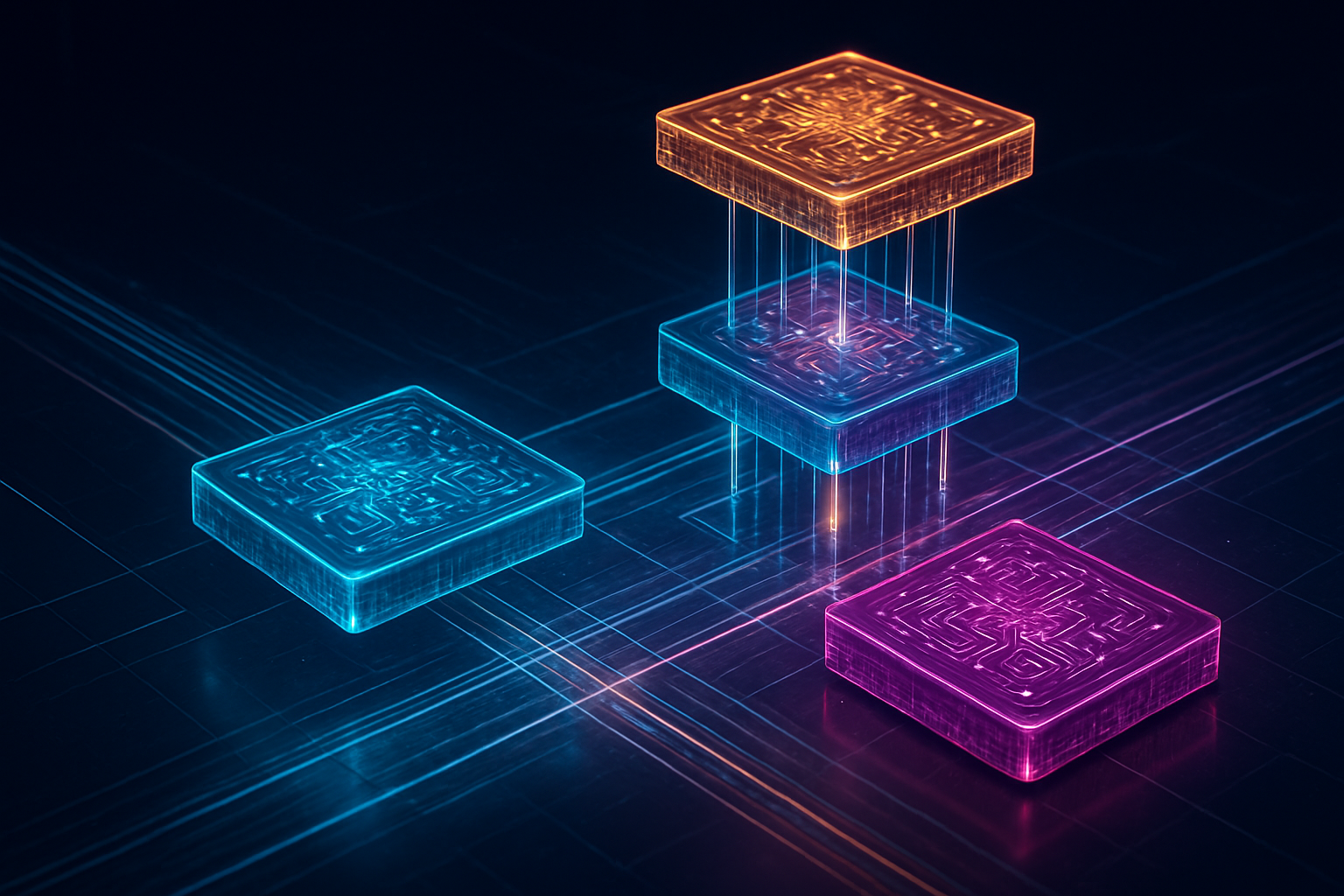
    The world of artificial intelligence has long been constrained by the "memory wall"—the bottleneck where data cannot move fast enough between processors and memory. As of January 16, 2026, a tectonic shift in semiconductor manufacturing has reached its peak. The commercialization of Advanced 3D IC (Integrated Circuit) stacking, spearheaded by Taiwan Semiconductor Manufacturing Company (TSMC: NYSE: TSM) and standardized by the Universal Chiplet Interconnect Express (UCIe) consortium, has fundamentally changed how the hardware for AI is built. No longer are processors single, monolithic slabs of silicon; they are now intricate, vertically integrated "skyscrapers" of compute logic and memory.

    This breakthrough signifies the end of the traditional 2D chip era and the dawn of "System-on-Chiplet" architectures. By "stitching" together disparate dies—such as high-speed logic, memory, and I/O—with near-zero latency, manufacturers are overcoming the physical limits of lithography. This allows for a level of AI performance that was previously impossible, enabling the training of models with trillions of parameters more efficiently than ever before.

    The Technical Foundations of the 3D Era

    The core of this breakthrough lies in TSMC's System on Integrated Chips (SoIC) technology, particularly the SoIC-X platform. By utilizing hybrid bonding—a "bumpless" process that removes the need for traditional solder bumps—TSMC has achieved a bond pitch of just 6μm in high-volume manufacturing as of early 2026. This provides an interconnect density nearly double that of the previous generation, enabling "near-zero" latency measured in low picoseconds. These connections are so dense and fast that the software treats the separate stacked dies as a single, monolithic chip. Bandwidth density has now surpassed 900 Tbps/mm², with a power efficiency of less than 0.05 pJ/bit.

    Furthermore, the UCIe 2.0 standard, released in late 2024 and fully implemented across the latest 2025 and 2026 hardware cycles, provides the industry’s first "3D-native" interconnect protocol. It allows chips from different vendors to be stacked vertically with standardized electrical and protocol layers. This means a company could theoretically stack an Intel (NASDAQ: INTC) compute tile with a specialized AI accelerator from a third party on a TSMC base die, all within a single package. This "open chiplet" ecosystem is a departure from the proprietary "black box" designs of the past, allowing for rapid innovation in AI-specific hardware.

    Initial reactions from the industry have been overwhelmingly positive. Researchers at major AI labs have noted that the elimination of the "off-chip" communication penalty allows for radically different neural network architectures. By placing High Bandwidth Memory (HBM) directly on top of the processing units, the energy cost of moving a bit of data—a major factor in AI training expenses—has been reduced by nearly 90% compared to traditional 2.5D packaging methods like CoWoS.

    Strategic Shifts for AI Titans

    Nvidia (NASDAQ: NVDA) and Advanced Micro Devices (NASDAQ: AMD) are at the forefront of this adoption, using these technologies to secure their market positions. Nvidia's newly launched "Rubin" architecture is the first to broadly utilize SoIC-X to stack HBM4 directly atop the GPU logic, eliminating the massive horizontal footprint seen in previous Blackwell designs. This has allowed Nvidia to pack even more compute power into a standard rack unit, maintaining its dominance in the AI data center market.

    AMD, meanwhile, continues to lead in aggressive chiplet adoption. Its Instinct MI400 series uses 6μm SoIC-X to stack logic-on-logic, providing unmatched throughput for Large Language Model (LLM) training. AMD has been a primary driver of the UCIe standard, leveraging its modular architecture to allow third-party hyperscalers to integrate custom AI accelerators with AMD’s EPYC CPU cores. This strategic move positions AMD as a flexible partner for cloud providers looking to differentiate their AI offerings.

    For Apple (NASDAQ: AAPL), the transition to the M5 series in late 2025 and early 2026 has utilized a variant called SoIC-mH (Molding Horizontal). This packaging allows Apple to disaggregate CPU and GPU blocks more efficiently, managing thermal hotspots by spreading them across a larger horizontal mold while maintaining 3D vertical interconnects for its unified memory. Intel (NASDAQ: INTC) has also pivoted, and while it promotes its proprietary Foveros Direct technology, its "Clearwater Forest" chips are now UCIe-compliant, allowing them to mix and match tiles produced across different foundries to optimize for cost and yield.

    Broader Significance for the AI Landscape

    This shift marks a major departure from the traditional Moore's Law, which focused primarily on shrinking transistors. In 2026, we have entered the era of "System-Level Moore's Law," where performance gains come from architectural density and 3D integration rather than just lithography. This is critical as the cost of shrinking transistors below 2nm continues to skyrocket. By stacking mature nodes with leading-edge nodes, manufacturers can achieve superior performance-per-watt without the yield risks of giant monolithic chips.

    The environmental implications are also profound. The massive energy consumption of AI data centers has become a global concern. By reducing the energy required for data movement, 3D IC stacking significantly lowers the carbon footprint of AI inference. However, this level of integration raises new concerns about supply chain concentration. Only a handful of foundries, primarily TSMC, possess the precision to execute 6μm hybrid bonding at scale, potentially creating a new bottleneck in the global AI supply chain that is even more restrictive than the current GPU shortages.

    The Future of the Silicon Skyscraper

    Looking ahead, the industry is already eyeing 3μm-pitch prototypes for the 2027 cycle, which would effectively double interconnect density yet again. To combat the immense heat generated by these vertically stacked "power towers," which now routinely exceed 1,000 Watts TDP, breakthrough cooling technologies are moving from the lab to high-end products. Microfluidic cooling—where liquid channels are etched directly into the silicon interposer—and "Diamond Scaffolding," which uses synthetic diamond layers as ultra-high-conductivity heat spreaders, are expected to become standard in high-performance AI servers by next year.

    Furthermore, we are seeing the rise of System-on-Wafer (SoW) technology. TSMC’s SoW-X allows for entire 300mm wafers to be treated as a single massive 3D-integrated AI super-processor. This technology is being explored by hyperscalers for "megascale" training clusters that can handle the next generation of multi-modal AI models. The challenge will remain in testing and yield; as more dies are stacked together, the probability of a single defect ruining an entire high-value assembly increases, necessitating the advanced "Design for Excellence" (DFx) frameworks built into the UCIe 2.0 standard.

    Summary of the 3D Breakthrough

    The maturation of TSMC’s SoIC and the standardization of UCIe 2.0 represent a milestone in AI history comparable to the introduction of the first neural-network-optimized GPUs. By "stitching" together disparate dies with near-zero latency, manufacturers have finally broken the physical constraints of two-dimensional chip design. This move toward 3D verticality ensures that the scaling of AI capabilities can continue even as traditional transistor shrinking slows down.

    As we move deeper into 2026, the success of these technologies will be measured by their ability to bring down the cost of massive-scale AI inference and the resilience of a supply chain that is now more complex than ever. The silicon skyscraper has arrived, and it is reshaping the very foundations of the digital world. Watch for the first performance benchmarks of Nvidia’s Rubin and AMD’s MI450 in the coming months, as they will likely set the baseline for AI performance for the rest of the decade.


    This content is intended for informational purposes only and represents analysis of current AI developments.

    TokenRing AI delivers enterprise-grade solutions for multi-agent AI workflow orchestration, AI-powered development tools, and seamless remote collaboration platforms.
    For more information, visit https://www.tokenring.ai/.

  • The Silicon Mosaic: How Chiplets and the UCIe Standard are Redefining the Future of AI Hardware

    The Silicon Mosaic: How Chiplets and the UCIe Standard are Redefining the Future of AI Hardware

    As the demand for artificial intelligence reaches an atmospheric peak, the semiconductor industry is undergoing its most radical transformation in decades. The era of the "monolithic" chip—a single, massive piece of silicon containing all a processor's functions—is rapidly coming to an end. In its place, a new paradigm of "chiplets" has emerged, where specialized pieces of silicon are mixed and matched like high-tech Lego bricks to create modular, hyper-efficient processors. This shift is being accelerated by the Universal Chiplet Interconnect Express (UCIe) standard, which has officially become the "universal language" of the silicon world, allowing components from different manufacturers to communicate with unprecedented speed and efficiency.

    The immediate significance of this transition cannot be overstated. By breaking the physical and economic constraints of traditional chip manufacturing, chiplets are enabling the creation of AI accelerators that are ten times more powerful than the flagship models of just two years ago. For the first time, a single processor package can house specialized logic for generative AI, massive high-bandwidth memory, and high-speed networking components—all potentially sourced from different vendors but working as a unified whole.

    The Architecture of Interoperability: Inside UCIe 3.0

    The technical backbone of this revolution is the UCIe 3.0 specification, which as of early 2026, has reached a level of maturity that makes multi-vendor silicon a commercial reality. Unlike previous proprietary interconnects, UCIe provides a standardized physical layer and protocol stack that enables data transfer at rates up to 64 GT/s. This allows for a staggering bandwidth density of up to 1.3 TB/s per shoreline millimeter in advanced packaging. Perhaps more importantly, the power efficiency of these links has plummeted to as low as 0.01 picojoules per bit (pJ/bit), meaning the energy cost of moving data between chiplets is now negligible compared to the energy used for computation.

    This modular approach differs fundamentally from the monolithic designs that dominated the last forty years. In a monolithic chip, every component must be manufactured on the same advanced (and expensive) process node, such as 2nm. With chiplets, designers can use the cutting-edge 2nm node for the critical AI compute cores while utilizing more mature, cost-effective 5nm or 7nm nodes for less sensitive components like I/O or power management. This "disaggregated" design philosophy is showcased in Intel's (NASDAQ: INTC) latest Panther Lake architecture and the Jaguar Shores AI accelerator, which utilize the company's 18A process for compute tiles while integrating third-party chiplets for specialized tasks.

    Initial reactions from the AI research community have been overwhelmingly positive, particularly regarding the ability to scale beyond the "reticle limit." Traditional chips cannot be larger than the physical mask used in lithography (roughly 800mm²). Chiplet architectures, however, use advanced packaging techniques like TSMC’s (NYSE: TSM) CoWoS (Chip-on-Wafer-on-Substrate) to "stitch" multiple dies together, effectively creating processors that are twelve times the size of any possible monolithic chip. This has paved the way for the massive GPU clusters required for training the next generation of trillion-parameter large language models (LLMs).

    Strategic Realignment: The Battle for the Modular Crown

    The rise of chiplets has fundamentally altered the competitive landscape for tech giants and startups alike. AMD (NASDAQ: AMD) has leveraged its early lead in chiplet technology to launch the Instinct MI400 series, the industry’s first GPU to utilize 2nm compute chiplets alongside HBM4 memory. By perfecting the "Venice" EPYC CPU and MI400 GPU synergy, AMD has positioned itself as the primary alternative to NVIDIA (NASDAQ: NVDA) for enterprise-scale AI. Meanwhile, NVIDIA has responded with its Rubin platform, confirming that while it still favors its proprietary NVLink-C2C for internal "superchips," it is a lead promoter of UCIe to ensure its hardware can integrate into the increasingly modular data centers of the future.

    This development is a massive boon for "Hyperscalers" like Microsoft (NASDAQ: MSFT), Alphabet (NASDAQ: GOOGL), and Amazon (NASDAQ: AMZN). These companies are now designing their own custom AI ASICs (Application-Specific Integrated Circuits) that incorporate their proprietary logic alongside off-the-shelf chiplets from ARM (NASDAQ: ARM) or specialized startups. This "mix-and-match" capability reduces their reliance on any single chip vendor and allows them to tailor hardware specifically to their proprietary AI workloads, such as Gemini or Azure AI services.

    The disruption extends to the foundry business as well. TSMC remains the dominant player due to its advanced packaging capacity, which is projected to reach 130,000 wafers per month by the end of 2026. However, Samsung (KRX: 005930) is mounting a significant challenge with its "turnkey" service, offering HBM4, foundry services, and its I-Cube packaging under one roof. This competition is driving down costs for AI startups, who can now afford to tape out smaller, specialized chiplets rather than betting their entire venture on a single, massive monolithic design.

    Beyond Moore’s Law: The Economic and Technical Significance

    The shift to chiplets represents a critical evolution in the face of the slowing of Moore’s Law. As it becomes exponentially more difficult and expensive to shrink transistors, the industry has turned to "system-level" scaling. The economic implications are profound: smaller chiplets yield significantly better than large dies. If a single defect occurs on a massive monolithic wafer, the entire chip is scrapped; if a defect occurs on a small chiplet, only that tiny piece of silicon is lost. This yield improvement is what has allowed AI hardware prices to remain relatively stable despite the soaring costs of 2nm and 1.8nm manufacturing.

    Furthermore, the "Lego-ification" of silicon is democratizing high-performance computing. Specialized firms like Ayar Labs and Lightmatter are now producing UCIe-compliant optical I/O chiplets. These can be dropped into an existing processor package to replace traditional copper wiring with light-based communication, solving the thermal and bandwidth bottlenecks that have long plagued AI clusters. This level of modular innovation was impossible when every component had to be designed and manufactured by a single entity.

    However, this new era is not without its concerns. The complexity of testing and validating a "system-in-package" (SiP) that contains silicon from four different vendors is immense. There are also rising concerns about "thermal hotspots," as stacking chiplets vertically (3D packaging) makes it harder to dissipate heat. The industry is currently racing to develop standardized liquid cooling and "through-silicon via" (TSV) technologies to address these physical limitations.

    The Horizon: 3D Stacking and Software-Defined Silicon

    Looking forward, the next frontier is true 3D integration. While current designs largely rely on 2.5D packaging (placing chiplets side-by-side on a base layer), the industry is moving toward hybrid bonding. This will allow chiplets to be stacked directly on top of one another with micron-level precision, enabling thousands of vertical connections. Experts predict that by 2027, we will see "memory-on-logic" stacks where HBM4 is bonded directly to the AI compute cores, virtually eliminating the latency that currently slows down inference tasks.

    Another emerging trend is "software-defined silicon." With the UCIe 3.0 manageability system architecture, developers can dynamically reconfigure how chiplets interact based on the specific AI model being run. A chip could, for instance, prioritize low-precision FP4 math for a fast-response chatbot in the morning and reconfigure its interconnects for high-precision FP64 scientific simulations in the afternoon.

    The primary challenge remaining is the software stack. Ensuring that compilers and operating systems can efficiently distribute workloads across a heterogeneous collection of chiplets is a monumental task. Companies like Tenstorrent are leading the way with RISC-V based modular designs, but a unified software standard to match the UCIe hardware standard is still in its infancy.

    A New Era for Computing

    The rise of chiplets and the UCIe standard marks the end of the "one-size-fits-all" era of semiconductor design. We have moved from a world of monolithic giants to a collaborative ecosystem of specialized components. This shift has not only saved Moore’s Law from obsolescence but has provided the necessary hardware foundation for the AI revolution to continue its exponential growth.

    As we move through 2026, the industry will be watching for the first truly "heterogeneous" commercial processors—chips that combine an Intel CPU, an NVIDIA-designed AI accelerator, and a third-party networking chiplet in a single package. The technical hurdles are significant, but the economic and performance incentives are now too great to ignore. The silicon mosaic is here, and it is the most important development in computer architecture since the invention of the integrated circuit itself.


    This content is intended for informational purposes only and represents analysis of current AI developments.

    TokenRing AI delivers enterprise-grade solutions for multi-agent AI workflow orchestration, AI-powered development tools, and seamless remote collaboration platforms.
    For more information, visit https://www.tokenring.ai/.
  • The Chiplet Revolution: How Advanced Packaging and UCIe are Redefining AI Hardware in 2025

    The Chiplet Revolution: How Advanced Packaging and UCIe are Redefining AI Hardware in 2025

    The semiconductor industry has reached a historic inflection point as the "Chiplet Revolution" transitions from a visionary concept into the bedrock of global compute. As of late 2025, the era of the massive, single-piece "monolithic" processor is effectively over for high-performance applications. In its place, a sophisticated ecosystem of modular silicon components—known as chiplets—is being "stitched" together using advanced packaging techniques that were once considered experimental. This shift is not merely a manufacturing preference; it is a survival strategy for a world where the demand for AI compute is doubling every few months, far outstripping the slow gains of traditional transistor scaling.

    The immediate significance of this revolution lies in the democratization of high-end silicon. With the recent ratification of the Universal Chiplet Interconnect Express (UCIe) 3.0 standard in August 2025, the industry has finally established a "lingua franca" that allows chips from different manufacturers to communicate as if they were on the same piece of silicon. This interoperability is breaking the proprietary stranglehold held by the largest chipmakers, enabling a new wave of "mix-and-match" processors where a company might combine an Intel Corporation (NASDAQ:INTC) compute tile with an NVIDIA (NASDAQ:NVDA) AI accelerator and Samsung Electronics (OTC:SSNLF) memory, all within a single, high-performance package.

    The Architecture of Interconnects: UCIe 3.0 and the 3D Frontier

    Technically, the "stitching" of these dies relies on the UCIe standard, which has seen rapid iteration over the last 18 months. The current benchmark, UCIe 3.0, offers staggering data rates of 64 GT/s per lane, doubling the bandwidth of the previous generation while maintaining ultra-low latency. This is achieved through "UCIe-3D" optimizations, which are specifically designed for hybrid bonding—a process that allows dies to be stacked vertically with copper-to-copper connections. These connections are now reaching bump pitches as small as 1 micron, effectively turning a stack of chips into a singular, three-dimensional block of logic and memory.

    This approach differs fundamentally from previous "System-on-Chip" (SoC) designs. In the past, if one part of a large chip was defective, the entire expensive component had to be discarded. Today, companies like Advanced Micro Devices (NASDAQ:AMD) and NVIDIA use "binning" at the chiplet level, significantly increasing yields and lowering costs. For instance, NVIDIA’s Blackwell architecture (B200) utilizes a dual-die "superchip" design connected via a 10 TB/s link, a feat of engineering that would have been physically impossible on a single monolithic die due to the "reticle limit"—the maximum size a chip can be printed by current lithography machines.

    However, the transition to 3D stacking has introduced a new set of manufacturing hurdles. Thermal management has become the industry’s "white whale," as stacking high-power logic dies creates concentrated hot spots that traditional air cooling cannot dissipate. In late 2025, liquid cooling and even "in-package" microfluidic channels have moved from research labs to data center floors to prevent these 3D stacks from melting. Furthermore, the industry is grappling with the yield rates of 16-layer HBM4 (High Bandwidth Memory), which currently hover around 60%, creating a significant cost barrier for mass-market adoption.

    Strategic Realignment: The Packaging Arms Race

    The shift toward chiplets has fundamentally altered the competitive landscape for tech giants and startups alike. Taiwan Semiconductor Manufacturing Company (NYSE:TSM), or TSMC, has seen its CoWoS (Chip-on-Wafer-on-Substrate) packaging technology become the most sought-after commodity in the world. With capacity reaching 80,000 wafers per month by December 2025, TSMC remains the gatekeeper of AI progress. This dominance has forced competitors and customers to seek alternatives, leading to the rise of secondary packaging providers like Powertech Technology Inc. (TWSE:6239) and the acceleration of Intel’s "IDM 2.0" strategy, which positions its Foveros packaging as a direct rival to TSMC.

    For AI labs and hyperscalers like Amazon (NASDAQ:AMZN) and Alphabet (NASDAQ:GOOGL), the chiplet revolution offers a path to sovereignty. By using the UCIe standard, these companies can design their own custom "accelerator" chiplets and pair them with industry-standard I/O and memory dies. This reduces their dependence on off-the-shelf parts and allows for hardware that is hyper-optimized for specific AI workloads, such as large language model (LLM) inference or protein folding simulations. The strategic advantage has shifted from who has the best lithography to who has the most efficient packaging and interconnect ecosystem.

    The disruption is also being felt in the consumer sector. Intel’s Arrow Lake and Lunar Lake processors represent the first mainstream desktop and mobile chips to fully embrace 3D "tiled" architectures. By outsourcing specific tiles to TSMC while performing the final assembly in-house, Intel has managed to stay competitive in power efficiency, a move that would have been unthinkable five years ago. This "fab-agnostic" approach is becoming the new standard, as even the most vertically integrated companies realize they cannot lead in every single sub-process of semiconductor manufacturing.

    Beyond Moore’s Law: The Wider Significance of Modular Silicon

    The chiplet revolution is the definitive answer to the slowing of Moore’s Law. As the physical limits of transistor shrinking are reached, the industry has pivoted to "More than Moore"—a philosophy that emphasizes system-level integration over raw transistor density. This trend fits into a broader AI landscape where the size of models is growing exponentially, requiring a corresponding leap in memory bandwidth and interconnect speed. Without the "stitching" capabilities of UCIe and advanced packaging, the hardware would have hit a performance ceiling in 2023, potentially stalling the current AI boom.

    However, this transition brings new concerns regarding supply chain security and geopolitical stability. Because a single advanced package might contain components from three different countries and four different companies, the "provenance" of silicon has become a major headache for defense and government sectors. The complexity of testing these multi-die systems also introduces potential vulnerabilities; a single compromised chiplet could theoretically act as a "Trojan horse" within a larger system. As a result, the UCIe 3.0 standard has introduced a standardized "UDA" (UCIe DFx Architecture) for better testability and security auditing.

    Compared to previous milestones, such as the introduction of FinFET transistors or EUV lithography, the chiplet revolution is more of a structural shift than a purely scientific one. It represents the "industrialization" of silicon, moving away from the artisan-like creation of single-block chips toward a modular, assembly-line approach. This maturity is necessary for the next phase of the AI era, where compute must become as ubiquitous and scalable as electricity.

    The Horizon: Glass Substrates and Optical Interconnects

    Looking ahead to 2026 and beyond, the next major breakthrough is already in pilot production: glass substrates. Led by Intel and partners like SKC Co., Ltd. (KRX:011790) through its subsidiary Absolics, glass is set to replace the organic (plastic) substrates that have been the industry standard for decades. Glass offers superior flatness and thermal stability, allowing for even denser interconnects and faster signal speeds. Experts predict that glass substrates will be the key to enabling the first "trillion-transistor" packages by 2027.

    Another area of intense development is the integration of silicon photonics directly into the chiplet stack. As copper wires struggle to carry data across 100mm distances without significant heat and signal loss, light-based interconnects are becoming a necessity. Companies are currently working on "optical I/O" chiplets that could allow different parts of a data center to communicate at the same speeds as components on the same board. This would effectively turn an entire server rack into a single, giant, distributed computer.

    A New Era of Computing

    The "Chiplet Revolution" of 2025 has fundamentally rewritten the rules of the semiconductor industry. By moving from a monolithic to a modular philosophy, the industry has found a way to sustain the breakneck pace of AI development despite the mounting physical challenges of silicon manufacturing. The UCIe standard has acted as the crucial glue, allowing a diverse ecosystem of manufacturers to collaborate on a single piece of hardware, while advanced packaging has become the new frontier of competitive advantage.

    As we look toward 2026, the focus will remain on scaling these technologies to meet the insatiable demands of the "Blackwell-class" and "Rubin-class" AI architectures. The transition to glass substrates and the maturation of 3D stacking yields will be the primary metrics of success. For now, the "Silicon Stitch" has successfully extended the life of Moore's Law, ensuring that the AI revolution has the hardware it needs to continue its transformative journey.


    This content is intended for informational purposes only and represents analysis of current AI developments.

    TokenRing AI delivers enterprise-grade solutions for multi-agent AI workflow orchestration, AI-powered development tools, and seamless remote collaboration platforms.
    For more information, visit https://www.tokenring.ai/.

  • The Great Unbundling of Silicon: How UCIe 3.0 is Powering a New Era of ‘Mix-and-Match’ AI Hardware

    The Great Unbundling of Silicon: How UCIe 3.0 is Powering a New Era of ‘Mix-and-Match’ AI Hardware

    The semiconductor industry has reached a pivotal turning point as the Universal Chiplet Interconnect Express (UCIe) standard enters full commercial maturity. As of late 2025, the release of the UCIe 3.0 specification has effectively dismantled the era of monolithic, "black box" processors, replacing it with a modular "mix and match" ecosystem. This development allows specialized silicon components—known as chiplets—from different manufacturers to be housed within a single package, communicating at speeds that were previously only possible within a single piece of silicon. For the artificial intelligence sector, this represents a massive leap forward, enabling the construction of hyper-specialized AI accelerators that can scale to meet the insatiable compute demands of next-generation large language models (LLMs).

    The immediate significance of this transition cannot be overstated. By standardizing how these chiplets communicate, the industry is moving away from proprietary, vendor-locked architectures toward an open marketplace. This shift is expected to slash development costs for custom AI silicon by up to 40% and reduce time-to-market by nearly a year for many fabless design firms. As the AI hardware race intensifies, UCIe 3.0 provides the "lingua franca" that ensures an I/O die from one vendor can work seamlessly with a compute engine from another, all while maintaining the ultra-low latency required for real-time AI inference and training.

    The Technical Backbone: From UCIe 1.1 to the 64 GT/s Breakthrough

    The technical evolution of the UCIe standard has been rapid, culminating in the August 2025 release of the UCIe 3.0 specification. While UCIe 1.1 focused on basic reliability and health monitoring for automotive and data center applications, and UCIe 2.0 introduced standardized manageability and 3D packaging support, the 3.0 update is a game-changer for high-performance computing. It doubles the data rate to 64 GT/s per lane, providing the massive throughput necessary for the "XPU-to-memory" bottlenecks that have plagued AI clusters. A key innovation in the 3.0 spec is "Runtime Recalibration," which allows links to dynamically adjust power and performance without requiring a system reboot—a critical feature for massive AI data centers that must remain operational 24/7.

    This new standard differs fundamentally from previous approaches like Intel Corporation (NASDAQ: INTC)’s proprietary Advanced Interface Bus (AIB) or Advanced Micro Devices, Inc. (NASDAQ: AMD)’s early Infinity Fabric. While those technologies proved the viability of chiplets, they were "closed loops" that prevented cross-vendor interoperability. UCIe 3.0, by contrast, defines everything from the physical layer (the actual wires and bumps) to the protocol layer, ensuring that a chiplet designed by a startup can be integrated into a larger system-on-chip (SoC) manufactured by a giant like NVIDIA Corporation (NASDAQ: NVDA). Initial reactions from the research community have been overwhelmingly positive, with engineers at the Open Compute Project (OCP) hailing it as the "PCIe moment" for internal chip communication.

    The Competitive Landscape: Giants and Challengers Align

    The shift toward a standardized chiplet ecosystem is creating a new hierarchy among tech giants. Intel Corporation (NASDAQ: INTC) has been the most aggressive proponent, having donated the initial specification to the consortium. Their recent launch of the Granite Rapids-D (Xeon 6 SoC) in early 2025 stands as one of the first high-volume products to fully leverage UCIe for modularity at the edge. Meanwhile, NVIDIA Corporation (NASDAQ: NVDA) has adapted its strategy; while it still champions its proprietary NVLink for high-end GPU clusters, it recently released "UCIe-ready" silicon bridges. These bridges allow customers to build custom AI accelerators that can talk directly to NVIDIA’s Blackwell and upcoming Rubin architectures, effectively turning NVIDIA’s hardware into a platform for third-party innovation.

    Taiwan Semiconductor Manufacturing Company (NYSE: TSM) and Samsung Electronics (KRX: 005930) are currently locked in a "foundry race" to provide the packaging technology that makes UCIe possible. TSMC’s 3DFabric and Samsung’s I-Cube/X-Cube technologies are the physical stages where these mix-and-match chiplets perform. In mid-2025, Samsung successfully demonstrated a 4nm chiplet prototype using IP from Synopsys, Inc. (NASDAQ: SNPS), proving that the "mix and match" dream is now a physical reality. This benefits smaller AI startups and fabless companies, who can now purchase "silicon-proven" UCIe blocks from providers like Cadence Design Systems, Inc. (NASDAQ: CDNS) instead of spending millions to design proprietary interconnect logic from scratch.

    Scaling AI: Efficiency, Cost, and the End of the "Reticle Limit"

    The broader significance of UCIe 3.0 lies in its ability to bypass the "reticle limit"—the physical size limit of a single silicon wafer die. As AI models grow, the chips needed to train them have become so large they are physically impossible to manufacture as a single piece of silicon without massive defects. By breaking the processor into smaller chiplets, manufacturers can achieve much higher yields and lower costs. This fits into the broader AI trend of "heterogeneous computing," where different parts of an AI task are handled by specialized hardware—such as a dedicated matrix multiplication die paired with a high-bandwidth memory (HBM) die and a low-power I/O die.

    However, this transition is not without concerns. The primary challenge remains "Standardized Manageability"—the difficulty of debugging a system when the components come from five different companies. If an AI server fails, determining which vendor’s chiplet caused the error becomes a complex legal and technical nightmare. Furthermore, while UCIe 3.0 provides the physical connection, the software stack required to manage these disparate components is still in its infancy. Despite these hurdles, the move toward UCIe is being compared to the transition from mainframe computers to modular PCs; it is an "unbundling" that democratizes high-performance silicon.

    The Horizon: Optical I/O and the 'Chiplet Store'

    Looking ahead, the near-term focus will be on the integration of Optical Compute Interconnects (OCI). Intel has already demonstrated a fully integrated optical I/O chiplet using UCIe that allows chiplets to communicate via fiber optics at 4TBps over distances up to 100 meters. This effectively turns an entire data center rack into a single, giant "virtual chip." In the long term, experts predict the rise of the "Chiplet Store"—a commercial marketplace where companies can buy pre-manufactured, specialized AI chiplets (like a dedicated "Transformer Engine" or a "Security Enclave") and have them assembled by a third-party packaging house.

    The challenges that remain are primarily thermal and structural. Stacking chiplets in 3D (as supported by UCIe 2.0 and 3.0) creates intense heat pockets that require advanced liquid cooling or new materials like glass substrates. Industry analysts predict that by 2027, more than 80% of all high-end AI processors will be UCIe-compliant, as the cost of maintaining proprietary interconnects becomes unsustainable even for the largest tech companies.

    A New Blueprint for the AI Age

    The maturation of the UCIe standard represents one of the most significant architectural shifts in the history of computing. By providing a standardized, high-speed interface for chiplets, the industry has unlocked a modular future that balances the need for extreme performance with the economic realities of semiconductor manufacturing. The "mix and match" ecosystem is no longer a theoretical concept; it is the foundation upon which the next decade of AI progress will be built.

    As we move into 2026, the industry will be watching for the first "multi-vendor" AI chips to hit the market—processors where the compute, memory, and I/O are sourced from entirely different companies. This development marks the end of the monolithic era and the beginning of a more collaborative, efficient, and innovative period in silicon design. For AI companies and investors alike, the message is clear: the future of hardware is no longer about who can build the biggest chip, but who can best orchestrate the most efficient ecosystem of chiplets.


    This content is intended for informational purposes only and represents analysis of current AI developments.

    TokenRing AI delivers enterprise-grade solutions for multi-agent AI workflow orchestration, AI-powered development tools, and seamless remote collaboration platforms.
    For more information, visit https://www.tokenring.ai/.