
Tag: US-China

  • Geopolitics Forges a New Era for Semiconductors: US-China Rivalry Fractures Global Supply Chains

    Geopolitics Forges a New Era for Semiconductors: US-China Rivalry Fractures Global Supply Chains

    The global semiconductor industry, the bedrock of modern technology and the engine of artificial intelligence, is undergoing a profound and unprecedented transformation driven by escalating geopolitical tensions between the United States and China. As of late 2025, a "chip war" rooted in national security, economic dominance, and technological supremacy is fundamentally redrawing the industry's map, forcing a shift from an efficiency-first globalized model to one prioritized by resilience and regionalized control. This strategic realignment has immediate and far-reaching implications, creating bifurcated markets and signaling the advent of "techno-nationalism" where geopolitical alignment increasingly dictates technological access and economic viability.

    The immediate significance of this tectonic shift is a global scramble for technological self-sufficiency and supply chain de-risking. Nations are actively seeking to secure critical chip manufacturing capabilities within their borders or among trusted allies, leading to massive investments in domestic production and a re-evaluation of international partnerships. This geopolitical chess match is not merely about trade; it's about controlling the very infrastructure of the digital age, with profound consequences for innovation, economic growth, and the future trajectory of AI development worldwide.

    The Silicon Curtain Descends: Technical Specifications and Strategic Shifts

    The core of the US-China semiconductor struggle manifests through a complex web of export controls, investment restrictions, and retaliatory measures designed to either constrain or bolster national technological capabilities. The United States has aggressively deployed tools such as the CHIPS and Science Act of 2022, allocating over $52 billion to incentivize domestic manufacturing and R&D. This has spurred major semiconductor players like Taiwan Semiconductor Manufacturing Company (TSMC) (NYSE: TSM), Intel (NASDAQ: INTC), and Micron Technology (NASDAQ: MU) to expand operations in the US, notably with TSMC's commitment to building two advanced 2nm chip manufacturing plants in Arizona by 2030, representing a $65 billion investment. Furthermore, recent legislative efforts like the bipartisan Semiconductor Technology Resilience, Integrity, and Defense Enhancement (STRIDE) Act, introduced in November 2025, aim to bar CHIPS Act recipients from purchasing Chinese chipmaking equipment for a decade, tightening the noose on China's access to crucial technology.

    These US-led restrictions specifically target China's ability to produce or acquire advanced semiconductors (7nm or below) and the sophisticated equipment and software required for their fabrication. Expanded controls in December 2024 on 24 types of chip-making equipment and three critical software tools underscore the technical specificity of these measures. In response, China, under its "Made in China 2025" policy and backed by substantial state funding through "The Big Fund," is relentlessly pursuing self-sufficiency, particularly in logic chip production (targeting 10-22nm and >28nm nodes) and semiconductor equipment. By late 2025, China projects a significant rise in domestic chip self-sufficiency, with an ambitious goal of 50% for semiconductor equipment.

    This current geopolitical landscape starkly contrasts with the previous era of hyper-globalization, where efficiency and cost-effectiveness drove a highly interconnected and interdependent supply chain. The new paradigm emphasizes "friend-shoring" and "reshoring," prioritizing national security and resilience over pure economic optimization. Initial reactions from the AI research community and industry experts reveal a mix of concern and adaptation. While some acknowledge the necessity of securing critical technologies, there are widespread worries about increased costs, potential delays in innovation due to reduced global collaboration, and the risk of market fragmentation. Executives from companies like TSMC and Nvidia (NASDAQ: NVDA) have navigated these complex restrictions, with Nvidia notably developing specialized AI chips (like the H200) for the Chinese market, though even these face potential US export restrictions, highlighting the tightrope walk companies must perform. The rare "tech truce" observed in late 2025, where the Trump administration reportedly considered easing some Nvidia H200 restrictions in exchange for China's relaxation of rare earth export limits, signals the dynamic and often unpredictable nature of this ongoing geopolitical saga.

    Geopolitical Fault Lines Reshape the Tech Industry: Impact on Companies

    The escalating US-China semiconductor tensions have profoundly reshaped the landscape for AI companies, tech giants, and startups as of late 2025, leading to significant challenges, strategic realignments, and competitive shifts across the global technology ecosystem. For American semiconductor giants, the impact has been immediate and substantial. Companies like Nvidia (NASDAQ: NVDA) have seen their market share in China, a once-booming region for AI chip demand, plummet from 95% to 50%, with CEO Jensen Huang forecasting potential zero sales if restrictions persist, representing a staggering $15 billion potential revenue loss from the H20 export ban alone. Other major players such as Micron Technology (NASDAQ: MU), Intel (NASDAQ: INTC), and QUALCOMM Incorporated (NASDAQ: QCOM) also face considerable revenue and market access challenges due to stringent export controls and China's retaliatory measures, with Qualcomm, in particular, seeing export licenses for certain technologies to Huawei revoked.

    Conversely, these restrictions have inadvertently catalyzed an aggressive push for self-reliance within China. Chinese AI companies, while initially forced to innovate with older technologies or seek less advanced domestic solutions, are now beneficiaries of massive state-backed investments through initiatives like "Made in China 2025." This has led to rapid advancements in domestic chip production, with companies like ChangXin Memory Technologies (CXMT) and Yangtze Memory Technologies Corp (YMTC) making significant strides in commercializing DDR5 and pushing into high-bandwidth memory (HBM3), directly challenging global leaders. Huawei, with its Ascend 910C chip, is increasingly rivaling Nvidia's offerings for AI inference tasks within China, demonstrating the potent effect of national industrial policy under duress.

    The competitive implications are leading to a "Great Chip Divide," fostering the emergence of two parallel AI systems globally, each with potentially different technical standards, supply chains, and software stacks. This bifurcation hinders global interoperability and collaboration, creating a more fragmented and complex market. While the US aims to maintain its technological lead, its export controls have inadvertently spurred China's drive for technological independence, accelerating its ambition for a complete, vertically integrated semiconductor supply chain. This strategic pivot has resulted in projections that Chinese domestic AI chips could capture 55% of their market by 2027, eroding the market share of American chipmakers and disrupting their scale-driven business models, which could, in turn, reduce their capacity for reinvestment in R&D and weaken long-term competitiveness.

    The volatility extends beyond direct sales, impacting the broader investment landscape. The increasing cost of reshoring and nearshoring semiconductor manufacturing, coupled with tightened export controls, creates funding challenges for tech startups, particularly those in the US. This could stifle the emergence of groundbreaking technologies from smaller, less capitalized players, potentially leading to an innovation bottleneck. Meanwhile, countries like Saudi Arabia and the UAE are strategically positioning themselves as neutral AI hubs, gaining access to advanced American AI systems like Nvidia's Blackwell chips while also cultivating tech ties with Chinese firms, diversifying their access and potentially cushioning the impact of US-China tech tensions.

    Wider Significance: A Bifurcated Future for Global AI

    The US-China semiconductor tensions, often dubbed the "chip war," have far-reaching implications that extend beyond mere trade disputes, fundamentally reshaping the global technological and geopolitical landscape as of late 2025. This conflict is rooted in the recognition by both nations that semiconductors are critical assets in a global tech arms race, essential for everything from consumer electronics to advanced military systems and, crucially, artificial intelligence. The US strategy, focused on restricting China's access to advanced chip technologies, particularly high-performance GPUs vital for training sophisticated AI systems, reflects a "technology defense logic" where national security imperatives now supersede market access concerns.

    This has led to a profound transformation in the broader AI landscape, creating a bifurcated global ecosystem. The world is increasingly splitting into separate tech stacks, with different countries developing their own standards, supply chains, and software ecosystems. While this could lead to a less efficient system, proponents argue it fosters greater resilience. The US aims to maintain its lead in sub-3nm high-end chips and the CUDA-based ecosystem, while China is pouring massive state funding into its domestic semiconductor industry to achieve self-reliance. This drive has led to remarkable advancements, with Semiconductor Manufacturing International Corporation (SMIC) (HKG: 0981) reportedly achieving 7-nanometer process technology using existing Deep Ultraviolet (DUV) lithography equipment and even trialing 5-nanometer-class chips, showcasing China's "ingenuity under pressure."

    The impacts on innovation and costs are complex and often contradictory. On one hand, the fragmentation of traditional global collaboration threatens to slow overall technological progress due to duplication of efforts and loss of scale. Broad market access barriers and restrictions on technology transfers could disrupt beneficial feedback loops that have driven innovation for decades. On the other hand, US restrictions have paradoxically galvanized China's efforts to innovate domestically, pushing it to develop new AI approaches, optimize software for existing hardware, and accelerate research in AI and quantum computing. However, this comes at a significant financial cost, with companies worldwide facing higher production expenses due to disrupted supply chains and the increased price of diversifying manufacturing. A full US-China semiconductor split could cost US companies billions in lost revenues and R&D annually, with these increased costs ultimately likely to be passed on to global consumers.

    The potential concerns arising from this "chip war" are substantial, ranging from increased geopolitical instability and the risk of an "AI Cold War" to deeper economic decoupling and deglobalization. Taiwan, home to TSMC, remains a crucial geopolitical flashpoint. The accelerating AI race, fueled by demand for powerful chips and data centers, also poses significant environmental risks, as energy-hungry data centers and water-intensive cooling outpace environmental safeguards. This techno-economic rivalry is often compared to a modern-day arms race, akin to the space race during the Cold War, where technological superiority directly translates into military and economic power. The focus on controlling "compute"—the raw amount of digital information a country can process—is now a key ingredient for powering AI, making this conflict a defining moment in the history of technology and international relations.

    Future Developments: An Accelerating Tech War and Bifurcated Ecosystems

    The US-China semiconductor tensions are expected to intensify in the near term and continue to fundamentally reshape the global technology landscape, with significant implications for both nations and the broader international community. As of late 2025, these tensions are characterized by escalating restrictions, retaliatory measures, and a determined push by China for self-sufficiency. In the immediate future (late 2025 – 2026), the United States is poised to further expand its export controls on advanced semiconductors, manufacturing equipment, and design software directed at China. Proposed legislation like the Semiconductor Technology Resilience, Integrity, and Defense Enhancement (STRIDE) Act, introduced in November 2025, aims to prevent CHIPS Act recipients from acquiring Chinese chipmaking equipment for a decade, signaling a tightening of controls on advanced AI chips and high-bandwidth memory (HBM) technologies.

    In response, China will undoubtedly accelerate its ambition for technological self-reliance across the entire semiconductor supply chain. Beijing's "Made in China 2025" and subsequent strategic plans emphasize domestic development, backed by substantial government investments through initiatives like the "Big Fund," to bolster indigenous capabilities in chip design software, manufacturing processes, and advanced packaging. This dynamic is also driving a global realignment of semiconductor supply chains, with companies increasingly adopting "friend-shoring" strategies and diversifying manufacturing bases to countries like Vietnam, India, and Mexico. Major players such as Intel (NASDAQ: INTC) and TSMC (NYSE: TSM) are expanding operations in the US and Europe to mitigate geopolitical risks, while China has already demonstrated its capacity for retaliation by restricting exports of critical rare earth metals like gallium and germanium.

    Looking further ahead (beyond 2026), the rivalry is predicted to foster the development of increasingly bifurcated and parallel technological ecosystems. China aims to establish a largely self-sufficient semiconductor industry for strategic sectors like autonomous vehicles and smart devices, particularly in mature-node (28nm and above) chips. This intense competition is expected to fuel significant R&D investment and innovation in both countries, especially in emerging fields like AI and quantum computing. China's 15th five-year plan (2026-2030) specifically targets increased self-reliance and strength in science and technology, with a strong focus on semiconductors and AI. The US will continue to strengthen alliances like the "Chip-4 alliance" (comprising Japan, South Korea, and Taiwan) to build a "democratic semiconductor supply chain," although stringent US controls could strain relationships with allies, potentially prompting them to seek alternatives and inadvertently bolstering Chinese competitors. Despite China's significant strides, achieving full self-sufficiency in cutting-edge logic foundry processes (below 7nm) is expected to remain a substantial long-term challenge due to its reliance on international expertise, advanced manufacturing equipment (like ASML's EUV lithography machines), and specialized materials.

    The primary application of these US policies is national security, aiming to curb China's ability to leverage advanced semiconductors for military modernization and to preserve US leadership in critical technologies like AI and advanced computing. Restrictions on high-performance chips directly hinder China's ability to develop and scale advanced AI applications and train large language models, impacting AI development in military, surveillance, and other strategic sectors. However, both nations face significant challenges. US chip companies risk substantial revenue losses due to diminished access to the large Chinese market, impacting R&D and job creation. China, despite massive investment, continues to face a technological lag in cutting-edge chip design and manufacturing, coupled with talent shortages and the high costs of self-sufficiency. Experts widely predict a sustained and accelerating tech war, defining the geopolitical and economic landscape of the next decade, with no easy resolution in sight.

    The Silicon Curtain: A Defining Moment in AI History

    The US-China semiconductor tensions have dramatically reshaped the global technological and geopolitical landscape, evolving into a high-stakes competition for dominance over the foundational technology powering modern economies and future innovations like Artificial Intelligence (AI). As of late 2025, this rivalry is characterized by a complex interplay of export controls, retaliatory measures, and strategic reorientations, marking a pivotal moment in AI history.

    The key takeaway is that the United States' sustained efforts to restrict China's access to advanced semiconductor technology, particularly those critical for cutting-edge AI and military applications, have led to a significant "technological decoupling." This strategy, which began escalating in 2022 with sweeping export controls and has seen multiple expansions through 2023, 2024, and 2025, aims to limit China's ability to develop advanced computing technologies. In response, China has weaponized its supply chains, notably restricting exports of critical minerals like gallium and germanium, forcing countries and companies globally to reassess their strategies and align with one of the two emerging technological ecosystems. This has fundamentally altered the trajectory of AI development, creating two parallel AI paradigms and potentially leading to divergent technological standards and reduced global collaboration.

    The long-term impacts are profound and multifaceted. We are witnessing an acceleration towards technological decoupling and fragmentation, which could lead to inefficiencies, increased costs, and a slowdown in overall technological progress due to reduced international collaboration. China is relentlessly pursuing technological sovereignty, significantly expanding its foundational chipmaking capabilities and aiming to achieve breakthroughs in advanced nodes and dominate mature-node production by 2030. Chinese firms like Semiconductor Manufacturing International Corporation (SMIC) (HKG: 0981) are actively adding advanced node capacity, suggesting that US export controls have been "less than effective" in fully thwarting China's progress. This has also triggered a global restructuring of supply chains, with companies diversifying manufacturing to mitigate risks, albeit at increased production costs that will likely translate to higher prices for electronic products worldwide.

    In the coming weeks and months of late 2025, several critical developments bear close watching. There are ongoing discussions within the US government regarding the potential easing of export controls on advanced Nvidia (NASDAQ: NVDA) AI chips, such as the H200, to China. This potential loosening of restrictions, reportedly influenced by a "Busan Declaration" diplomatic truce, could signal a thaw in trade disputes, though a final decision remains uncertain. Concurrently, the Trump administration is reportedly considering delaying promised tariffs on semiconductor imports to avoid further escalating tensions and disrupting critical mineral flows. China, in a reciprocal move, recently deferred its October 2025 export controls on critical minerals for one year, hinting at a transactional approach to the ongoing conflict. Furthermore, new US legislation seeking to prohibit CHIPS Act grant recipients from purchasing Chinese chipmaking equipment for a decade will significantly impact the domestic semiconductor industry. Simultaneously, China's domestic semiconductor industry progress, including an upcoming upgraded "Made in China" plan expected around March 2026 and recent advancements in photonic quantum chips, will be key indicators of the effectiveness of these geopolitical maneuvers. The debate continues among experts: are US controls crippling China's ambitions or merely accelerating its indigenous innovation? The coming months will reveal whether conciliatory gestures lead to a more stable, albeit still competitive, relationship, or if they are temporary pauses in an escalating "chip war."


    This content is intended for informational purposes only and represents analysis of current AI developments.

    TokenRing AI delivers enterprise-grade solutions for multi-agent AI workflow orchestration, AI-powered development tools, and seamless remote collaboration platforms.
    For more information, visit https://www.tokenring.ai/.

  • The Silicon Curtain Descends: US and China Battle for AI Supremacy

    The Silicon Curtain Descends: US and China Battle for AI Supremacy

    November 7, 2025 – The global technological landscape is being irrevocably reshaped by an escalating, high-stakes competition between the United States and China for dominance in the semiconductor industry. This intense rivalry, now reaching a critical juncture in late 2025, has profound and immediate implications for the future of artificial intelligence development and global technological supremacy. As both nations double down on strategic industrial policies—the US with stringent export controls and China with aggressive self-sufficiency drives—the world is witnessing the rapid formation of a "silicon curtain" that threatens to bifurcate the global AI ecosystem.

    The current state of play is characterized by a tit-for-tat escalation of restrictions and countermeasures. The United States is actively working to choke off China's access to advanced semiconductor technology, particularly those crucial for training and deploying cutting-edge AI models. In response, Beijing is pouring colossal investments into its domestic chip industry, aiming for complete independence from foreign technology. This geopolitical chess match is not merely about microchips; it's a battle for the very foundation of future innovation, economic power, and national security, with AI at its core.

    The Technical Crucible: Export Controls, Indigenous Innovation, and the Quest for Advanced Nodes

    The technical battleground in the US-China semiconductor race is defined by control over advanced chip manufacturing processes and the specialized equipment required to produce them. The United States has progressively tightened its grip on technology exports, culminating in significant restrictions around November 2025. The White House has explicitly blocked American chip giant NVIDIA (NASDAQ: NVDA) from selling its latest cutting-edge Blackwell series AI chips, including even scaled-down variants like the B30A, to the Chinese market. This move, reported by The Information, specifically targets chips essential for training large language models, reinforcing the US's determination to impede China's advanced AI capabilities. These restrictions build upon earlier measures from October 2023 and December 2024, which curtailed exports of advanced computing chips and chip-making equipment capable of producing 7-nanometer (nm) or smaller nodes, and added numerous Chinese entities to the Entity List. The US has also advised government agencies to block sales of reconfigured AI accelerator chips to China, closing potential loopholes.

    In stark contrast, China is aggressively pursuing self-sufficiency. Its largest foundry, Semiconductor Manufacturing International Corporation (SMIC), has made notable progress, achieving milestones in 7nm chip production. This has been accomplished by leveraging deep ultraviolet (DUV) lithography, a generation older than the most advanced extreme ultraviolet (EUV) machines, access to which is largely restricted by Western allies like the Netherlands (home to ASML Holding N.V. (NASDAQ: ASML)). This ingenuity allows Chinese firms like Huawei Technologies Co., Ltd. to scale their Ascend series chips for AI inference tasks. For instance, the Huawei Ascend 910C is reportedly demonstrating performance nearing that of NVIDIA's H100 for AI inference, with plans to produce 1.4 million units by December 2025. SMIC is projected to expand its advanced node capacity to nearly 50,000 wafers per month by the end of 2025.

    This current scenario differs significantly from previous tech rivalries. Historically, technological competition often involved a race to innovate and capture market share. Today, it's increasingly defined by strategic denial and forced decoupling. The US CHIPS and Science Act, allocating substantial federal subsidies and tax credits, aims to boost domestic chip production and R&D, having spurred over $540 billion in private investments across 28 states by July 2025. This initiative seeks to significantly increase the US share of global semiconductor production, reducing reliance on foreign manufacturing, particularly from Taiwan Semiconductor Manufacturing Company Limited (NYSE: TSM). Initial reactions from the AI research community and industry experts are mixed; while some acknowledge the national security imperatives, others express concern that overly aggressive controls could stifle global innovation and lead to a less efficient, fragmented technological landscape.

    Corporate Crossroads: Navigating a Fragmented AI Landscape

    The intensifying US-China semiconductor race is creating a seismic shift for AI companies, tech giants, and startups worldwide, forcing them to re-evaluate supply chains, market strategies, and R&D priorities. Companies like NVIDIA (NASDAQ: NVDA), a leader in AI accelerators, face significant headwinds. CEO Jensen Huang has openly acknowledged the severe impact of US restrictions, stating that the company now has "zero share in China's highly competitive market for datacenter compute" and is not actively discussing selling its advanced Blackwell AI chips to China. While NVIDIA had previously developed lower-performance variants like the H20 and B30A to comply with earlier export controls, even these have now been targeted, highlighting the tightening blockade. This situation compels NVIDIA to seek growth in other markets and diversify its product offerings, potentially accelerating its push into software and other AI services.

    On the other side, Chinese tech giants like Huawei Technologies Co., Ltd. and their domestic chip partners, such as Semiconductor Manufacturing International Corporation (SMIC), stand to benefit from Beijing's aggressive self-sufficiency drive. In a significant move in early November 2025, the Chinese government announced guidelines mandating the exclusive use of domestically produced AI chips in new state-funded AI data centers. This retroactive policy requires data centers with less than 30% completion to replace foreign AI chips with Chinese alternatives and cancel any plans to purchase US-made chips. This effectively aims for 100% self-sufficiency in state-funded AI infrastructure, up from a previous requirement of at least 50%. This creates a guaranteed, massive domestic market for Chinese AI chip designers and manufacturers, fostering rapid growth and technological maturation within China's borders.

    The competitive implications for major AI labs and tech companies are profound. US-based companies may find their market access to China—a vast and rapidly growing AI market—increasingly constrained, potentially impacting their revenue streams and R&D budgets. Conversely, Chinese AI startups and established players are being incentivized to innovate rapidly with domestic hardware, potentially creating unique AI architectures and software stacks optimized for their homegrown chips. This could lead to a bifurcation of AI development, where distinct ecosystems emerge, each with its own hardware, software, and talent pools. For companies like Intel (NASDAQ: INTC), which is heavily investing in foundry services and AI chip development, the geopolitical tensions present both challenges and opportunities: a chance to capture market share in a "friend-shored" supply chain but also the risk of alienating a significant portion of the global market. This market positioning demands strategic agility, with companies needing to navigate complex regulatory environments while maintaining technological leadership.

    Broader Ripples: Decoupling, Supply Chains, and the AI Arms Race

    The US-China semiconductor race is not merely a commercial or technological competition; it is a geopolitical struggle with far-reaching implications for the broader AI landscape and global trends. This escalating rivalry is accelerating a "decoupling" or "bifurcation" of the global technological ecosystem, leading to the potential emergence of two distinct AI development pathways and standards. One pathway, led by the US and its allies, would prioritize advanced Western technology and supply chains, while the other, led by China, would focus on indigenous innovation and self-sufficiency. This fragmentation could severely hinder global collaboration in AI research, limit interoperability, and potentially slow down the overall pace of AI advancement by duplicating efforts and creating incompatible systems.

    The impacts extend deeply into global supply chains. The push for "friend-shoring" and domestic manufacturing, while aiming to bolster resilience and national security, introduces significant inefficiencies and higher production costs. The historical model of globally optimized, cost-effective supply chains is being fundamentally altered as nations prioritize technological sovereignty over purely economic efficiencies. This shift affects every stage of the semiconductor value chain, from raw materials (like gallium and germanium, on which China has imposed export controls) to design, manufacturing, and assembly. Potential concerns abound, including the risk of a full-blown "chip war" that could destabilize international trade, create economic friction, and even spill over into broader geopolitical conflicts.

    Comparisons to previous AI milestones and breakthroughs highlight the unique nature of this challenge. Past AI advancements, such as the development of deep learning or the rise of large language models, were largely driven by open collaboration and the free flow of ideas and hardware. Today, the very foundational hardware for these advancements is becoming a tool of statecraft. Both the US and China view control over advanced AI chip design and production as a top national security priority and a determinant of global power, triggering what many are calling an "AI arms race." This struggle extends beyond military applications to economic leadership, innovation, and even the values underpinning the digital economy. The ideological divide is increasingly manifesting in technological policies, shaping the future of AI in ways that transcend purely scientific or commercial considerations.

    The Road Ahead: Self-Sufficiency, Specialization, and Strategic Maneuvers

    Looking ahead, the US-China semiconductor race promises continued dynamic shifts, marked by both nations intensifying their efforts in distinct directions. In the near term, we can expect China to further accelerate its drive for indigenous AI chip development and manufacturing. The recent mandate for exclusive use of domestic AI chips in state-funded data centers signals a clear strategic pivot towards 100% self-sufficiency in critical AI infrastructure. This will likely lead to rapid advancements in Chinese AI chip design, with a focus on optimizing performance for specific AI workloads and leveraging open-source AI frameworks to compensate for any lingering hardware limitations. Experts predict China's AI chip self-sufficiency rate will rise significantly by 2027, with some suggesting that China is only "nanoseconds" or "a mere split second" behind the US in AI, particularly in certain specialized domains.

    On the US side, expected near-term developments include continued investment through the CHIPS Act, aiming to bring more advanced manufacturing capacity onshore or to allied nations. There will likely be ongoing efforts to refine export control regimes, closing loopholes and expanding the scope of restricted technologies to maintain a technological lead. The US will also focus on fostering innovation in AI software and algorithms, leveraging its existing strengths in these areas. Potential applications and use cases on the horizon will diverge: US-led AI development may continue to push the boundaries of foundational models and general-purpose AI, while China's AI development might see greater specialization in vertical domains, such as smart manufacturing, autonomous systems, and surveillance, tailored to its domestic hardware capabilities.

    The primary challenges that need to be addressed include preventing a complete technological balkanization that could stifle global innovation and establishing clearer international norms for AI development and governance. Experts predict that the competition will intensify, with both nations seeking to build comprehensive, independent AI ecosystems. What will happen next is a continued "cat and mouse" game of technological advancement and restriction. The US will likely continue to target advanced manufacturing capabilities and cutting-edge design tools, while China will focus on mastering existing technologies and developing innovative workarounds. This strategic dance will define the global AI landscape for the foreseeable future, pushing both sides towards greater self-reliance while simultaneously creating complex interdependencies with other nations.

    The Silicon Divide: A New Era for AI

    The US-China semiconductor race represents a pivotal moment in AI history, fundamentally altering the trajectory of global technological development. The key takeaway is the acceleration of technological decoupling, creating a "silicon divide" that is forcing nations and companies to choose sides or build independent capabilities. This development is not merely a trade dispute; it's a strategic competition for the foundational technologies that will power the next generation of artificial intelligence, with profound implications for economic power, national security, and societal advancement. The significance of this development in AI history cannot be overstated, as it marks a departure from an era of relatively free global technological exchange towards one characterized by strategic competition and nationalistic industrial policies.

    This escalating rivalry underscores AI's growing importance as a geopolitical tool. Control over advanced AI chips is now seen as synonymous with future global leadership, transforming the pursuit of AI supremacy into a zero-sum game for some. The long-term impact will likely be a more fragmented global AI ecosystem, potentially leading to divergent technological standards, reduced interoperability, and perhaps even different ethical frameworks for AI development in the East and West. While this could foster innovation within each bloc, it also carries the risk of slowing overall global progress and exacerbating international tensions.

    In the coming weeks and months, the world will be watching for further refinements in export controls from the US, particularly regarding the types of AI chips and manufacturing equipment targeted. Simultaneously, observers will be closely monitoring the progress of China's domestic semiconductor industry, looking for signs of breakthroughs in advanced manufacturing nodes and the widespread deployment of indigenous AI chips in its data centers. The reactions of other major tech players, particularly those in Europe and Asia, and their strategic alignment in this intensifying competition will also be crucial indicators of the future direction of the global AI landscape.


    This content is intended for informational purposes only and represents analysis of current AI developments.

    TokenRing AI delivers enterprise-grade solutions for multi-agent AI workflow orchestration, AI-powered development tools, and seamless remote collaboration platforms.
    For more information, visit https://www.tokenring.ai/.

  • The New Silicon Curtain: Geopolitics Reshaping the Future of AI Hardware

    The New Silicon Curtain: Geopolitics Reshaping the Future of AI Hardware

    The global landscape of artificial intelligence is increasingly being shaped not just by algorithms and data, but by the intricate and volatile geopolitics of semiconductor supply chains. As nations race for technological supremacy, the once-seamless flow of critical microchips is being fractured by export controls, nationalistic industrial policies, and strategic alliances, creating a "New Silicon Curtain" that profoundly impacts the accessibility and development of cutting-edge AI hardware. This intense competition, particularly between the United States and China, alongside burgeoning international collaborations and disputes, is ushering in an era where technological sovereignty is paramount, and the very foundation of AI innovation hangs in the balance.

    The immediate significance of these developments cannot be overstated. Advanced semiconductors are the lifeblood of modern AI, powering everything from sophisticated large language models to autonomous systems and critical defense applications. Disruptions or restrictions in their supply directly translate into bottlenecks for AI research, development, and deployment. Nations are now viewing chip manufacturing capabilities and access to high-performance AI accelerators as critical national security assets, leading to a global scramble to secure these vital components and reshape a supply chain once optimized purely for efficiency into one driven by resilience and strategic control.

    The Microchip Maze: Unpacking Global Tensions and Strategic Alliances

    The core of this geopolitical reshaping lies in the escalating tensions between the United States and China. The U.S. has implemented sweeping export controls aimed at crippling China's ability to develop advanced computing and semiconductor manufacturing capabilities, citing national security concerns. These restrictions specifically target high-performance AI chips, such as those from NVIDIA (NASDAQ: NVDA), and crucial semiconductor manufacturing equipment, alongside limiting U.S. persons from working at PRC-located semiconductor facilities. The explicit goal is to maintain and maximize the U.S.'s AI compute advantage and to halt China's domestic expansion of AI chipmaking, particularly for "dual-use" technologies that have both commercial and military applications.

    In retaliation, China has responded with its own export restrictions on critical minerals like gallium and germanium, essential for chip manufacturing. Beijing's "Made in China 2025" initiative underscores its long-term ambition to achieve self-sufficiency in key technologies, including semiconductors. Despite massive investments, China still lags significantly in producing cutting-edge chips, largely due to U.S. sanctions and its lack of access to extreme ultraviolet (EUV) lithography machines, a monopoly held by the Dutch company ASML. The global semiconductor market, projected to reach USD 1,000 billion by the end of the decade, hinges on such specialized technologies and the concentrated expertise found in places like Taiwan. Taiwan Semiconductor Manufacturing Company (TSMC) (NYSE: TSM) alone produces over 90% of the world's most advanced chips, making the island a critical "silicon shield" in geopolitical calculus.

    Beyond the US-China rivalry, the landscape is defined by a web of international collaborations and strategic investments. The U.S. is actively forging alliances with "like-minded" partners such as Japan, Taiwan, and South Korea to secure supply chains. The U.S. CHIPS Act, allocating $39 billion for manufacturing facilities, incentivizes domestic production, with TSMC (NYSE: TSM) announcing significant investments in Arizona fabs. Similarly, the European Union's European Chips Act aims to boost its global semiconductor output to 20% by 2030, attracting investments from companies like Intel (NASDAQ: INTC) in Germany and Ireland. Japan, through its Rapidus Corporation, is collaborating with IBM and imec to produce 2nm chips by 2027, while South Korea's "K-Semiconductor strategy" involves a $450 billion investment plan through 2030, focusing on 2nm chips, High-Bandwidth Memory (HBM), and AI semiconductors, with companies like Samsung (KRX: 005930) expanding foundry capabilities. These concerted efforts highlight a global pivot towards techno-nationalism, where nations prioritize controlling the entire semiconductor value chain, from intellectual property to manufacturing.

    AI Companies Navigate a Fractured Future

    The geopolitical tremors in the semiconductor industry are sending shockwaves through the AI sector, forcing companies to re-evaluate strategies and diversify operations. Chinese AI companies, for instance, face severe limitations in accessing the latest generation of high-performance GPUs from NVIDIA (NASDAQ: NVDA), a critical component for training large-scale AI models. This forces them to either rely on less powerful, older generation chips or invest heavily in developing their own domestic alternatives, significantly slowing their AI advancement compared to their global counterparts. The increased production costs due to supply chain disruptions and the drive for localized manufacturing are leading to higher prices for AI hardware globally, impacting the bottom line for both established tech giants and nascent startups.

    Major AI labs and tech companies like Google (NASDAQ: GOOGL), Microsoft (NASDAQ: MSFT), and OpenAI, while less directly impacted by export controls than their Chinese counterparts, are still feeling the ripple effects. The extreme concentration of advanced chip manufacturing in Taiwan presents a significant vulnerability; any disruption there could have catastrophic global consequences, crippling AI development worldwide. These companies are actively engaged in diversifying their supply chains, exploring partnerships, and even investing in custom AI accelerators (e.g., Google's TPUs) to reduce reliance on external suppliers and mitigate risks. NVIDIA (NASDAQ: NVDA), for example, is strategically expanding partnerships with South Korean companies like Samsung (KRX: 005930), Hyundai, and SK Group to secure supply chains and bolster AI infrastructure, partially diversifying away from China.

    For startups, the challenges are even more acute. Increased hardware costs, longer lead times, and the potential for a fragmented technology ecosystem can stifle innovation and raise barriers to entry. Access to powerful AI compute resources, once a relatively straightforward procurement, is becoming a strategic hurdle. Companies are being compelled to consider the geopolitical implications of their manufacturing locations and supplier relationships, adding a layer of complexity to business planning. This shift is disrupting existing product roadmaps, forcing companies to adapt to a landscape where resilience and strategic access to hardware are as crucial as software innovation.

    A New Era of AI Sovereignty and Strategic Competition

    The current geopolitical landscape of semiconductor supply chains is more than just a trade dispute; it's a fundamental reordering of global technology power, with profound implications for the broader AI landscape. This intense focus on "techno-nationalism" and "technological sovereignty" means that nations are increasingly prioritizing control over their critical technology infrastructure, viewing AI as a strategic asset for economic growth, national security, and global influence. The fragmentation of the global technology ecosystem, driven by these policies, threatens to slow down the pace of innovation that has historically thrived on open collaboration and global supply chains.

    The "silicon shield" concept surrounding Taiwan, where its indispensable role in advanced chip manufacturing acts as a deterrent against geopolitical aggression, highlights the intertwined nature of technology and security. The strategic importance of data centers, once considered mere infrastructure, has been elevated to a foreground of global security concerns, as access to the latest processors required for AI development and deployment can be choked off by export controls. This era marks a significant departure from previous AI milestones, where breakthroughs were primarily driven by algorithmic advancements and data availability. Now, hardware accessibility and national control over its production are becoming equally, if not more, critical factors.

    Concerns are mounting about the potential for a "digital iron curtain," where different regions develop distinct, incompatible technological ecosystems. This could lead to a less efficient, more costly, and ultimately slower global progression of AI. Comparisons can be drawn to historical periods of technological rivalry, but the sheer speed and transformative power of AI make the stakes exceptionally high. The current environment is forcing a global re-evaluation of how technology is developed, traded, and secured, pushing nations and companies towards strategies of self-reliance and strategic alliances.

    The Road Ahead: Diversification, Innovation, and Enduring Challenges

    Looking ahead, the geopolitical landscape of semiconductor supply chains is expected to remain highly dynamic, characterized by continued diversification efforts and intense strategic competition. Near-term developments will likely include further government investments in domestic chip manufacturing, such as the ongoing implementation of the US CHIPS Act, EU Chips Act, Japan's Rapidus initiatives, and South Korea's K-Semiconductor strategy. We can anticipate more announcements of new fabrication plants in various regions, driven by subsidies and national security imperatives. The race for advanced nodes, particularly 2nm chips, will intensify, with nations vying for leadership in next-generation manufacturing capabilities.

    In the long term, these efforts aim to create more resilient, albeit potentially more expensive, regional supply chains. However, significant challenges remain. The sheer cost of building and operating advanced fabs is astronomical, requiring sustained government support and private investment. Technological gaps in various parts of the supply chain, from design software to specialized materials and equipment, cannot be closed overnight. Securing critical raw materials and rare earth elements, often sourced from geopolitically sensitive regions, will continue to be a challenge. Experts predict a continued trend of "friend-shoring" or "ally-shoring," where supply chains are concentrated among trusted geopolitical partners, rather than a full-scale return to complete national self-sufficiency.

    Potential applications and use cases on the horizon include AI-powered solutions for supply chain optimization and resilience, helping companies navigate the complexities of this new environment. However, the overarching challenge will be to balance national security interests with the benefits of global collaboration and open innovation that have historically propelled technological progress. What experts predict is a sustained period of geopolitical competition for technological leadership, with the semiconductor industry at its very heart, directly influencing the trajectory of AI development for decades to come.

    Navigating the Geopolitical Currents of AI's Future

    The reshaping of the semiconductor supply chain represents a pivotal moment in the history of artificial intelligence. The key takeaway is clear: the future of AI hardware accessibility is inextricably linked to geopolitical realities. What was once a purely economic and technological endeavor has transformed into a strategic imperative, driven by national security and the race for technological sovereignty. This development's significance in AI history is profound, marking a shift from a purely innovation-driven narrative to one where hardware control and geopolitical alliances play an equally critical role in determining who leads the AI revolution.

    As we move forward, the long-term impact will likely manifest in a more fragmented, yet potentially more resilient, global AI ecosystem. Companies and nations will continue to invest heavily in diversifying their supply chains, fostering domestic talent, and forging strategic partnerships. The coming weeks and months will be crucial for observing how new trade agreements are negotiated, how existing export controls are enforced or modified, and how technological breakthroughs either exacerbate or alleviate current dependencies. The ongoing saga of semiconductor geopolitics will undoubtedly be a defining factor in shaping the next generation of AI advancements and their global distribution. The "New Silicon Curtain" is not merely a metaphor; it is a tangible barrier that will define the contours of AI development for the foreseeable future.


    This content is intended for informational purposes only and represents analysis of current AI developments.

    TokenRing AI delivers enterprise-grade solutions for multi-agent AI workflow orchestration, AI-powered development tools, and seamless remote collaboration platforms.
    For more information, visit https://www.tokenring.ai/.
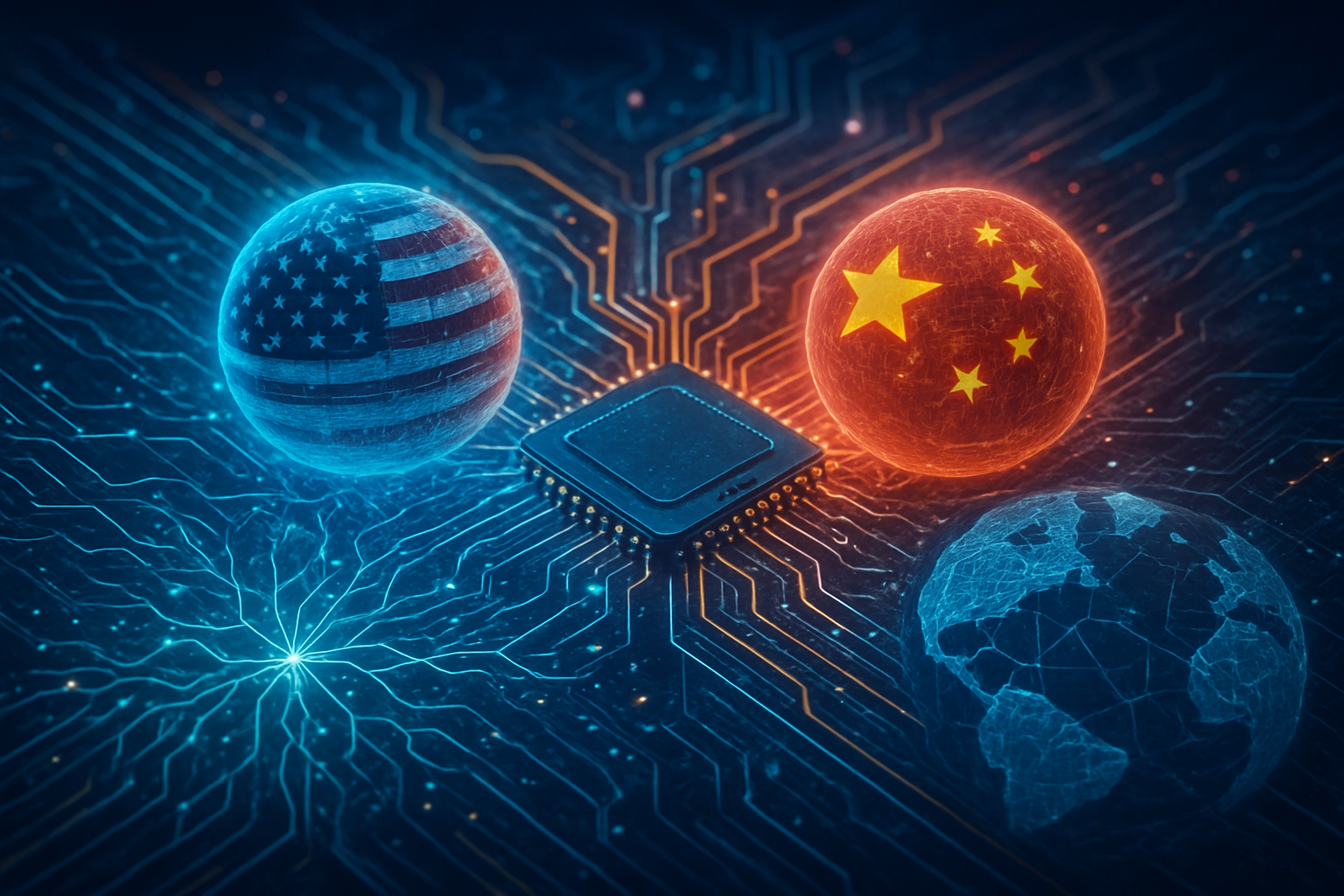
  • The Silicon Schism: US-China Chip Rivalry Ignites a New Global Tech Order

    The Silicon Schism: US-China Chip Rivalry Ignites a New Global Tech Order

    The United States and China are locked in an escalating semiconductor showdown, a geopolitical struggle that by late 2025 has profoundly reshaped global technology and supply chains. This intense competition, often dubbed an "AI Cold War," frames advanced semiconductors as the foundational assets for national security, economic dominance, and the future of artificial intelligence. The rivalry is accelerating technological decoupling, pushing nations towards self-sufficiency and creating a bifurcated global technology market where strategic resilience often trumps economic efficiency.

    This high-stakes contest is characterized by meticulously targeted US export controls designed to impede China's access to cutting-edge computing capabilities and sophisticated manufacturing equipment. Beijing, in turn, is responding with massive state-led investments and an aggressive drive for indigenous innovation, leveraging its own strategic advantages, such as dominance in rare earth elements. The immediate significance lies in the pronounced fragmentation of the global semiconductor ecosystem, leading to increased costs, supply chain vulnerabilities, and a fundamental reorientation of the tech industry worldwide.

    The Technical Frontline: Export Controls, Indigenous Innovation, and the Quest for Nano-Supremacy

    The US-China chip rivalry is a deeply technical battleground, where advancements and restrictions are measured in nanometers and teraFLOPS. As of late 2025, the United States has progressively tightened its export controls on advanced AI chips and manufacturing equipment, aiming to limit China's ability to develop cutting-edge AI applications and military technologies. The US Department of Commerce's Bureau of Industry and Security (BIS) has established specific technical thresholds for these restrictions, targeting logic chips below 16/14nm, DRAM memory chips below 18nm half-pitch, and NAND flash memory chips with 128 layers or more. Crucially, AI chips with a Total Processing Performance (TPP) exceeding 4800, or a TPP over 2400 and a performance density greater than 1.6, are blocked, directly impacting advanced AI accelerators like Nvidia Corporation (NASDAQ: NVDA)'s H100/H200. These regulations also encompass 24 types of chip manufacturing equipment and three software programs, with the Foreign Direct Product Rule (FDP) now applying regardless of the percentage of US components, potentially halting expansion and operations at Chinese chip factories. In January 2025, a global AI Diffusion Rule was introduced to prevent China from accessing advanced AI chips and computing power via third countries.

    China, viewing restricted access as a vulnerability, is aggressively pursuing an all-Chinese supply chain under initiatives like "Made in China 2025." Huawei's HiSilicon division has emerged as a significant player with its Ascend series of AI accelerators. The Ascend 910C, fabricated using SMIC (HKEX: 0981)'s 7nm N+2 process, reportedly achieves around 800 TFLOP/s at FP16 and delivers approximately 60% of Nvidia H100's inference performance, especially with manual optimizations. It features 128GB of HBM3 memory with about 3.2 TB/s bandwidth. Huawei is also reportedly trialing its newest Ascend 910D chip, expected in late 2025, aiming to rival Nvidia's H100 with an anticipated 1200 TFLOPS. China plans to triple AI chip output, with Huawei-dedicated fabrication facilities beginning production by year-end 2025.

    The gold standard for advanced chip manufacturing remains Extreme Ultraviolet (EUV) lithography, monopolized by Dutch firm ASML Holding N.V. (NASDAQ: ASML), which has been banned from selling these machines to China since 2019. China is investing heavily in indigenous EUV development through companies like Shanghai Micro Electronics Equipment (SMEE), reportedly building its first EUV tool, "Hyperion-1," for trial use by Q3 2025, though with significantly lower throughput than ASML's machines. Chinese researchers are also exploring Laser-induced Discharge Plasma (LDP) as an alternative to ASML's light source. Furthermore, SiCarrier, a Huawei-linked startup, has developed Deep Ultraviolet (DUV)-based techniques like self-aligned quadruple patterning (SAQP) to extend older DUV machines into the 7nm range, a method validated by the domestically manufactured 7nm chip in Huawei's Mate 60 Pro smartphone in 2023. This ingenuity, while impressive, generally results in lower yields and higher costs compared to EUV.

    This current rivalry differs from previous tech competitions in its strategic focus on semiconductors as a "choke point" for national security and AI leadership, leading to a "weaponization" of technology. The comprehensive nature of US controls, targeting not just products but also equipment, software, and human capital, is unprecedented. Initial reactions from the AI research community and industry experts, as of late 2025, are mixed, with concerns about market fragmentation, increased costs, and potential slowdowns in global innovation. However, there is also an acknowledgment of China's rapid progress in domestic chip production and AI accelerators, with companies already developing "China-compliant" versions of AI chips, further fragmenting the market.

    Corporate Crossroads: Navigating a Bifurcated Tech Landscape

    The US-China chip rivalry has created a complex and often contradictory landscape for AI companies, tech giants, and startups globally, forcing strategic re-evaluations and significant market adjustments by late 2025.

    On the Chinese side, domestic firms are clear beneficiaries of Beijing's aggressive self-sufficiency drive. AI chipmakers like Huawei Technologies Co., Ltd. (SHE: 002502) (through its HiSilicon division), Semiconductor Manufacturing International Corporation (HKEX: 0981), Cambricon Technology Corporation (SSE: 688256), and startups like DeepSeek and Moore Threads are receiving substantial government support and experiencing surging demand. Huawei, for instance, aims to double its computing power each year through its Ascend chips, with targets of 1.6 million dies by 2026. Chinese tech giants such as Tencent Holdings Ltd. (HKEX: 0700), Alibaba Group Holding Limited (NYSE: BABA), and Baidu, Inc. (NASDAQ: BIDU) are actively integrating these domestically produced chips into their AI infrastructure, fostering a burgeoning local ecosystem around platforms like Huawei's CANN.

    Conversely, US and allied semiconductor companies face a dual challenge. While they dominate outside China, they grapple with restricted access to the lucrative Chinese market. Nvidia Corporation (NASDAQ: NVDA), despite its global leadership in AI accelerators, has seen its market share in China drop from 95% to 50% due to export controls. Advanced Micro Devices, Inc. (NASDAQ: AMD) is gaining traction with AI accelerator orders, and Broadcom Inc. (NASDAQ: AVGO) benefits from AI-driven networking demand and custom ASICs. Major US tech players like OpenAI, Microsoft Corporation (NASDAQ: MSFT), Google (NASDAQ: GOOGL), and Amazon.com, Inc. (NASDAQ: AMZN) are making massive capital expenditures on AI infrastructure, driving immense demand for advanced chips. Foundries like Taiwan Semiconductor Manufacturing Company Limited (NYSE: TSM) remain critical, expanding globally to meet demand and de-risk operations, while Intel Corporation (NASDAQ: INTC) is re-emerging as a foundry player, leveraging CHIPS Act funding.

    The competitive implications are stark. US AI labs and tech giants maintain a lead in breakthrough AI model innovation, backed by private AI investment reaching $109.1 billion in the US in 2025, far outstripping China's. However, scaling AI infrastructure can face delays and higher costs. Chinese AI labs, while facing hardware limitations, have demonstrated remarkable "innovation under pressure," optimizing algorithms for less powerful chips and developing advanced AI models with lower computational costs, such as DeepSeek's R1 model, which rivaled top US open-source models at a fraction of the training cost.

    The rivalry disrupts existing products and services through increased costs, supply chain inefficiencies, and potential performance compromises for Chinese companies forced to use less advanced solutions. US chip designers face significant revenue losses, and even when allowed to sell modified chips (like Nvidia's H20), Chinese officials discourage their procurement. The weaponization of critical technologies and rare earth elements, as seen with China's October 2025 export restrictions, introduces significant vulnerabilities and delays in global supply chains.

    Strategically, US firms leverage technological leadership, private sector dynamism, and government support like the CHIPS Act. Chinese firms benefit from state-backed self-sufficiency initiatives, a focus on "AI sovereignty" with domestically trained models, and algorithm optimization. Global players like TSMC and Samsung Electronics Co., Ltd. (KRX: 005930) are strategically diversifying their manufacturing footprint, navigating the complex challenge of operating in two increasingly distinct technological ecosystems. The outcome is a fragmented global technology landscape, characterized by increased costs and a strategic reorientation for companies worldwide.

    A New Global Order: Beyond Bits and Bytes

    The US-China chip rivalry transcends mere technological competition, evolving by late 2025 into a full-spectrum geopolitical struggle that fundamentally reorders the global landscape. This "AI Cold War" is not just about microchips; it's about control over the very infrastructure that powers the 21st-century economy, defense, and future industries.

    This contest defines the broader AI landscape, where control over computing power is the new strategic oil. The US aims to maintain its lead in advanced AI chip design and manufacturing, while China aggressively pursues technological self-sufficiency, making significant strides in indigenous AI accelerators and optimizing algorithms for less powerful hardware. The increasing demand for computational power to train ever-larger AI models makes access to high-performance chips a critical determinant of AI leadership. US export controls are designed to keep China behind in high-end chip production, impacting its ability to keep pace in future AI development, despite China's rapid progress in model development.

    The impacts on global supply chains are profound, leading to accelerated "decoupling" and "technonationalism." Companies are implementing "China +1" strategies, diversifying sourcing away from China to countries like Vietnam and India. Both nations are weaponizing their strategic advantages: the US with sanctions and export bans, and China with its dominance in rare earth elements, critical for semiconductors. China's expanded export controls on rare earths in October 2025 underscore its willingness to disrupt global supply chains, leading to higher costs and potential production slowdowns for chipmakers. Europe, dependent on US chips and Chinese rare earths, faces significant vulnerabilities in its own AI ambitions.

    Concerns span security, economics, and ethics. National security drives US export controls, aiming to curb China's military modernization. China, in turn, harbors security concerns about US chips potentially containing tracking systems, reinforcing its push for indigenous alternatives. Economically, US sanctions have caused revenue losses for American chipmakers, while the bifurcated market leads to increased costs and inefficiencies globally. The controversial 15% revenue cut for the US government on certain AI chip sales to China, allowed in August 2025, raises legal and ethical questions about national security versus financial gain. Ethically, the underlying AI competition raises concerns about the potential for AI to be used for surveillance, repression, and autonomous weapons.

    This rivalry is viewed in "epochal terms," akin to a new Sputnik moment, but focused on silicon and algorithms rather than nuclear arms. It's a pivotal moment where critical technologies are explicitly weaponized as instruments of national power. Geopolitically, the competition for AI sovereignty is a battle for the future of innovation and global influence. Taiwan, home to TSMC (NYSE: TSM), remains a critical flashpoint, manufacturing 90% of advanced AI chips, making its stability paramount. The rivalry reshapes alliances, with nations aligning with one tech bloc, and China's "Made in China 2025" initiative aiming to reshape the international order. The long-term impact is a deeply fragmented global semiconductor market, where strategic resilience and national security override economic efficiency, leading to higher costs and profound challenges for global companies.

    The Road Ahead: Forecasts for a Fractured Future

    Looking ahead, the US-China chip rivalry is set to intensify further, with both nations continuing to pursue aggressive strategies that will profoundly shape the future of technology and global relations. As of late 2025, the trajectory points towards a sustained period of competition and strategic maneuvering.

    In the near term, the US is expected to continue refining and expanding its export controls, aiming to close loopholes and broaden the scope of restricted technologies and entities. This could include targeting new categories of chips, manufacturing equipment, or even considering tariffs on imported semiconductors. The controversial revenue-sharing model for certain AI chip sales to China, introduced in August 2025, may be further refined or challenged. Simultaneously, China will undoubtedly redouble its efforts to bolster its domestic semiconductor industry through massive state investments, talent development, and incentivizing the adoption of indigenous hardware and software. We can expect continued progress from Chinese firms like Huawei and SMIC in their respective areas of AI accelerators and advanced fabrication processes, even if they lag the absolute cutting edge. China's use of export controls on critical minerals, like rare earth elements, will likely continue as a retaliatory and strategic measure.

    Long-term developments foresee the clear emergence of parallel technology ecosystems. China is committed to building a fully self-reliant tech stack, from materials and equipment to design and applications, aiming to reduce its dependency on imports significantly. While US restrictions will slow China's progress in the short to medium term, they are widely predicted to accelerate its long-term drive towards technological independence. For US firms, the long-term risk is that Chinese companies will eventually "design out" US technology entirely, leading to diminished market share. The US, through initiatives like the CHIPS Act, aims to control nearly 30% of the overall chip market by 2032.

    Potential applications and use cases will be heavily influenced by this rivalry. Both nations are vying for AI supremacy, with high-performance chips being crucial for training and deploying complex AI models. The competition will extend to quantum computing, next-generation AI chips, and 5G/6G technologies, with China pushing for global agreement on 6G standards to gain a strategic advantage. Advanced semiconductors are also critical for military applications, digital infrastructure, and edge computing, making these areas key battlegrounds.

    Challenges abound for both sides. The US must maintain its technological edge while managing economic fallout on its companies and preventing Chinese retaliation. China faces immense technical hurdles in advanced chip manufacturing without access to critical Western tools and IP. Globally, the rivalry disrupts supply chains, increases costs, and pressures allied nations to balance competing demands. Experts predict a continued technological decoupling, intensified competition, and a relentless pursuit of self-sufficiency. While China will likely lag the absolute cutting edge for several years, its capacity for rapid advancement under pressure should not be underestimated. The "chip war" is embedded in a broader techno-economic rivalry, with 2027 often cited as a pivotal year for potential increased tensions, particularly concerning Taiwan.

    The Unfolding Narrative: A Summary and Forward Look

    As of late October 2025, the US-China chip rivalry stands as a monumental force reshaping the global technological and geopolitical landscape. The key takeaway is a fundamental shift from a globally integrated, efficiency-driven semiconductor industry to one increasingly fragmented by national security imperatives and strategic competition. The US has weaponized export controls, while China has responded with a relentless, state-backed pursuit of technological self-reliance, demonstrating remarkable ingenuity in developing indigenous AI accelerators and optimizing existing hardware.

    This development is of paramount significance in AI history, defining the contours of an "AI Cold War." It directly impacts which nation will lead in the next generation of AI innovation, influencing everything from economic prosperity to military capabilities. The long-term impact points towards a bifurcated global technology ecosystem, where resilience and strategic control supersede pure economic efficiency, leading to higher costs and duplicated efforts. This means that for the foreseeable future, companies and nations worldwide will navigate two distinct, and potentially incompatible, technological stacks.

    In the coming weeks and months, several critical indicators bear watching. Any new US policy directives on chip exports, particularly concerning advanced AI chips and potentially new tariffs, will be closely scrutinized. China's progress in scaling its domestic AI accelerator production and achieving breakthroughs in advanced chip manufacturing (e.g., SMIC's 5nm-class chips) will be vital benchmarks. The ongoing impact of China's rare earth export controls on global supply chains and the continued adjustments by multinational companies to de-risk their operations will also provide insights into the evolving dynamics. Finally, the degree of cooperation and alignment among US allies in semiconductor policy will be crucial in determining the future trajectory of this enduring strategic competition. The silicon schism is far from over, and its reverberations will continue to shape the global order for years to come.


    This content is intended for informational purposes only and represents analysis of current AI developments.

    TokenRing AI delivers enterprise-grade solutions for multi-agent AI workflow orchestration, AI-powered development tools, and seamless remote collaboration platforms.
    For more information, visit https://www.tokenring.ai/.
  • US Escalates Chip War: New Restrictions Threaten Global Tech Landscape and Accelerate China’s Self-Sufficiency Drive

    US Escalates Chip War: New Restrictions Threaten Global Tech Landscape and Accelerate China’s Self-Sufficiency Drive

    The ongoing technological rivalry between the United States and China has reached a fever pitch, with Washington implementing a series of increasingly stringent export restrictions aimed at curbing Beijing's access to advanced semiconductor technology. These measures, primarily driven by U.S. national security concerns, seek to impede China's military modernization and maintain American technological superiority in critical areas like advanced computing and artificial intelligence. The immediate fallout includes significant disruptions to global supply chains, financial pressures on leading U.S. chipmakers, and a forceful push for technological self-reliance within China's burgeoning tech sector.

    The latest wave of restrictions, culminating in actions through late September and October 2025, has dramatically reshaped the landscape for global chip manufacturing and trade. From adjusting performance density thresholds to blacklisting hundreds of Chinese entities and even introducing controversial revenue-sharing conditions for certain chip sales, the U.S. strategy signals a determined effort to create a "chokehold" on China's high-tech ambitions. While intended to slow China's progress, these aggressive policies are also inadvertently accelerating Beijing's resolve to develop its own indigenous semiconductor ecosystem, setting the stage for a more fragmented and competitive global technology arena.

    Unpacking the Technical Tightening: A Closer Look at the New Controls

    The U.S. Bureau of Industry and Security (BIS) has systematically tightened its grip on China's access to advanced semiconductors and manufacturing equipment, building upon the foundational controls introduced in October 2022. A significant update in October 2023 revised the original rules, introducing a "performance density" parameter for chips. This technical adjustment was crucial, as it aimed to capture a broader array of chips, including those specifically designed to circumvent earlier restrictions, such as Nvidia's (NASDAQ: NVDA) A800/H800 and Intel's (NASDAQ: INTC) Gaudi2 chips. Furthermore, these restrictions extended to companies headquartered in China, Macau, and other countries under U.S. arms embargoes, affecting an additional 43 nations.

    The escalation continued into December 2024, when the BIS further expanded its restricted list to include 24 types of semiconductor manufacturing equipment and three types of software tools, effectively targeting the very foundations of advanced chip production. A controversial "AI Diffusion Rule" was introduced in January 2025 by the outgoing Biden administration, mandating a worldwide license for the export of advanced integrated circuits. However, the incoming Trump administration quickly announced plans to rescind this rule, citing bureaucratic burdens. Despite this, the Trump administration intensified measures by March 2025, blacklisting over 40 Chinese entities and adding another 140 to the Entity List, severely curtailing trade in semiconductors and other strategic technologies.

    The most recent and impactful developments occurred in late September and October 2025. The U.S. widened its trade blacklists, broadening export rules to encompass not only direct dealings with listed entities but also with thousands of Chinese companies connected through ownership. This move, described by Goldman Sachs analysts as a "large expansion of sanctions," drastically increased the scope of affected businesses. Concurrently, in October 2025, the U.S. controversially permitted Nvidia (NASDAQ: NVDA) and AMD (NASDAQ: AMD) to sell certain AI chips, like Nvidia's H20, to China, but with a contentious condition: these companies would pay the U.S. government 15 percent of their revenues from these sales. This unprecedented revenue-sharing model marks a novel and highly debated approach to export control, drawing mixed reactions from the industry and policymakers alike.

    Corporate Crossroads: Winners, Losers, and Strategic Shifts

    The escalating chip war has sent ripples through the global technology sector, creating a complex landscape of challenges and opportunities for various companies. U.S. chip giants, while initially facing significant revenue losses from restricted access to the lucrative Chinese market, are now navigating a new reality. Companies like Nvidia (NASDAQ: NVDA) and AMD (NASDAQ: AMD) have been compelled to design "de-tuned" chips specifically for the Chinese market to comply with export controls. While the recent conditional approval for sales like Nvidia's H20 offers a partial lifeline, the 15% revenue-sharing requirement is a novel imposition that could set a precedent and impact future profitability. Analysts had previously projected annual losses of $83 billion in sales and 124,000 jobs for U.S. firms due to the restrictions, highlighting the substantial financial risks involved.

    On the Chinese front, the restrictions have created immense pressure but also spurred an unprecedented drive for domestic innovation. Companies like Huawei (SHE: 002502) have emerged as central players in China's self-sufficiency push. Despite being on the U.S. Entity List, Huawei, in partnership with SMIC (HKG: 0981), successfully developed an advanced 7nm chip, a capability the U.S. controls aimed to prohibit. This breakthrough underscored China's resilience and capacity for indigenous advancement. Beijing is now actively urging major Chinese tech giants such as ByteDance and Alibaba (NYSE: BABA) to prioritize domestic suppliers, particularly Huawei's Ascend chips, over foreign alternatives. Huawei's unveiling of new supercomputing systems powered by its Ascend chips further solidifies its position as a viable domestic alternative to Nvidia and Intel in the critical AI computing space.

    The competitive landscape is rapidly fragmenting. While U.S. companies face reduced market access, they also benefit from government support aimed at bolstering domestic manufacturing through initiatives like the CHIPS Act. However, the long-term risk for U.S. firms is the potential for Chinese companies to "design out" U.S. technology entirely, leading to a diminished market share and destabilizing the U.S. semiconductor ecosystem. For European and Japanese equipment manufacturers like ASML (AMS: ASML), the pressure from the U.S. to align with export controls has created a delicate balancing act between maintaining access to the Chinese market and adhering to allied policies. The recent Dutch government seizure of Nexperia, a Dutch chipmaker with Chinese ownership, exemplifies the intensifying geopolitical pressures affecting global supply chains and threatening production halts in industries like automotive across Europe and North America.

    Global Reverberations: The Broader Significance of the Chip War

    The escalating US-China chip war is far more than a trade dispute; it is a pivotal moment that is profoundly reshaping the global technological landscape and geopolitical order. These restrictions fit into a broader trend of technological decoupling, where nations are increasingly prioritizing national security and economic sovereignty over unfettered globalization. The U.S. aims to maintain its technological leadership, particularly in foundational areas like AI and advanced computing, viewing China's rapid advancements as a direct challenge to its strategic interests. This struggle is not merely about chips but about who controls the future of innovation and military capabilities.

    The impacts on global trade are significant and multifaceted. The restrictions have introduced considerable volatility into semiconductor supply chains, leading to shortages and price increases across various industries, from consumer electronics to automotive. Companies worldwide, reliant on complex global networks for components, are facing increased production costs and delays. This has prompted a strategic rethinking of supply chain resilience, with many firms looking to diversify their sourcing away from single points of failure. The pressure on U.S. allies, such as the Netherlands and Japan, to implement similar export controls further fragments the global supply chain, compelling companies to navigate a more balkanized technological world.

    Concerns extend beyond economic disruption to potential geopolitical instability. China's retaliatory measures, such as weaponizing its dominance in rare earth elements—critical for semiconductors and other high-tech products—signal Beijing's willingness to leverage its own strategic advantages. The expansion of China's rare earth export controls in early October 2025, requiring government approval for designated rare earths, prompted threats of 100% tariffs on all Chinese goods from U.S. President Donald Trump, illustrating the potential for rapid escalation. This tit-for-tat dynamic risks pushing the world towards a more protectionist and confrontational trade environment, reminiscent of Cold War-era technological competition. This current phase of the chip war dwarfs previous AI milestones, not in terms of a specific breakthrough, but in its systemic impact on global innovation, supply chain architecture, and international relations.

    The Road Ahead: Future Developments and Expert Predictions

    The trajectory of the US-China chip war suggests a future characterized by continued technological decoupling, intensified competition, and a relentless pursuit of self-sufficiency by both nations. In the near term, we can expect further refinements and expansions of export controls from the U.S. as it seeks to close any remaining loopholes and broaden the scope of restricted technologies and entities. Conversely, China will undoubtedly redouble its efforts to bolster its domestic semiconductor industry, channeling massive state investments into research and development, fostering local talent, and incentivizing the adoption of indigenous hardware and software solutions. The success of Huawei (SHE: 002502) and SMIC (HKG: 0981) in producing a 7nm chip demonstrates China's capacity for rapid advancement under pressure, suggesting that future breakthroughs in domestic chip manufacturing and design are highly probable.

    Long-term developments will likely see the emergence of parallel technology ecosystems. China aims to create a fully self-reliant tech stack, from foundational materials and manufacturing equipment to advanced chip design and AI applications. This could lead to a scenario where global technology standards and supply chains diverge significantly, forcing multinational corporations to operate distinct product lines and supply chains for different markets. Potential applications and use cases on the horizon include advancements in China's AI capabilities, albeit potentially at a slower pace initially, as domestic alternatives to high-end foreign chips become more robust. We might also see increased collaboration among U.S. allies to fortify their own semiconductor supply chains and reduce reliance on both Chinese and potentially over-concentrated U.S. production.

    However, significant challenges remain. For the U.S., maintaining its technological edge while managing the economic fallout on its own companies and preventing Chinese retaliation will be a delicate balancing act. For China, the challenge lies in overcoming the immense technical hurdles of advanced chip manufacturing without access to critical Western tools and intellectual property. Experts predict that while the restrictions will undoubtedly slow China's progress in the short to medium term, they will ultimately accelerate its long-term drive towards technological independence. This could inadvertently strengthen China's domestic industry and potentially lead to a "designing out" of U.S. technology from Chinese products, eventually destabilizing the U.S. semiconductor ecosystem. The coming years will be a test of strategic endurance and innovative capacity for both global superpowers.

    Concluding Thoughts: A New Era of Tech Geopolitics

    The escalating US-China chip war, marked by increasingly stringent export restrictions and retaliatory measures, represents a watershed moment in global technology and geopolitics. The key takeaway is the irreversible shift towards technological decoupling, driven by national security imperatives. While the U.S. aims to slow China's military and AI advancements by creating a "chokehold" on its access to advanced semiconductors and manufacturing equipment, these actions are simultaneously catalyzing China's fervent pursuit of technological self-sufficiency. This dynamic is leading to a more fragmented global tech landscape, where parallel ecosystems may ultimately emerge.

    This development holds immense significance in AI history, not for a specific algorithmic breakthrough, but for fundamentally altering the infrastructure upon which future AI advancements will be built. The ability of nations to access, design, and manufacture advanced chips directly correlates with their capacity for leading-edge AI research and deployment. The current conflict ensures that the future of AI will be shaped not just by scientific progress, but by geopolitical competition and strategic industrial policy. The long-term impact is likely a bifurcated global technology market, increased innovation in domestic industries on both sides, and potentially higher costs for consumers due to less efficient, duplicated supply chains.

    In the coming weeks and months, observers should closely watch several key indicators. These include any further expansions or modifications to U.S. export controls, particularly regarding the contentious revenue-sharing model for chip sales to China. On China's side, monitoring advancements from companies like Huawei (SHE: 002502) and SMIC (HKG: 0981) in domestic chip production and AI hardware will be crucial. The responses from U.S. allies, particularly in Europe and Asia, regarding their alignment with U.S. policies and their own strategies for supply chain resilience, will also provide insights into the future shape of global tech trade. Finally, any further retaliatory measures from China, especially concerning critical raw materials or market access, will be a significant barometer of the ongoing escalation.


    This content is intended for informational purposes only and represents analysis of current AI developments.

    TokenRing AI delivers enterprise-grade solutions for multi-agent AI workflow orchestration, AI-powered development tools, and seamless remote collaboration platforms.
    For more information, visit https://www.tokenring.ai/.

  • The New Silicon Curtain: Geopolitics Reshapes the Global Semiconductor Landscape

    The New Silicon Curtain: Geopolitics Reshapes the Global Semiconductor Landscape

    The global semiconductor industry, the bedrock of modern technology and the engine of the AI revolution, finds itself at the epicenter of an escalating geopolitical maelstrom. Driven primarily by intensifying US-China tensions, the once seamlessly interconnected supply chain is rapidly fracturing, ushering in an era of technological nationalism, restricted access, and a fervent race for self-sufficiency. This "chip war" is not merely a trade dispute; it's a fundamental realignment of power dynamics, with profound implications for innovation, economic stability, and the future trajectory of artificial intelligence.

    The immediate significance of this geopolitical tug-of-war is a profound restructuring of global supply chains, marked by increased costs, delays, and a concerted push towards diversification and reshoring. Nations and corporations alike are grappling with the imperative to mitigate risks associated with over-reliance on specific regions, particularly China. Concurrently, stringent export controls imposed by the United States aim to throttle China's access to advanced chip technologies, manufacturing equipment, and software, directly impacting its ambitions in cutting-edge AI and military applications. In response, Beijing is accelerating its drive for domestic technological independence, pouring vast resources into indigenous research and development, setting the stage for a bifurcated technological ecosystem.

    The Geopolitical Chessboard: Policies, Restrictions, and the Race for Independence

    The current geopolitical climate has spurred a flurry of policy actions and strategic maneuvers, fundamentally altering the landscape of semiconductor production and access. At the heart of the matter are the US export controls, designed to limit China's ability to develop advanced AI and military capabilities by denying access to critical semiconductor technologies. These measures include bans on the sale of cutting-edge Graphics Processing Units (GPUs) from companies like Nvidia (NASDAQ: NVDA) and Advanced Micro Devices (NASDAQ: AMD), crucial for AI training, as well as equipment necessary for producing chips smaller than 14 or 16 nanometers. The US has also expanded its Entity List, adding numerous Chinese tech firms and prohibiting US persons from supporting advanced Chinese chip facilities.

    These actions represent a significant departure from previous approaches, which largely favored an open, globally integrated semiconductor market. Historically, the industry thrived on international collaboration, with specialized firms across different nations contributing to various stages of chip design, manufacturing, and assembly. The new paradigm, however, emphasizes national security and technological decoupling, prioritizing strategic control over economic efficiency. This shift has ignited a vigorous debate within the AI research community and industry, with some experts warning of stifled innovation due to reduced collaboration and market fragmentation, while others argue for the necessity of securing critical supply chains and preventing technology transfer that could be used for adversarial purposes.

    China's response has been equally assertive, focusing on accelerating its "Made in China 2025" initiative, with an intensified focus on achieving self-sufficiency in advanced semiconductors. Billions of dollars in government subsidies and incentives are being channeled into domestic research, development, and manufacturing capabilities. This includes mandates for domestic companies to prioritize local AI chips over foreign alternatives, even reportedly instructing major tech companies to halt purchases of Nvidia's China-tailored GPUs. This aggressive pursuit of indigenous capacity aims to insulate China from foreign restrictions and establish its own robust, self-reliant semiconductor ecosystem, effectively creating a parallel technological sphere. The long-term implications of this bifurcated development path—one driven by Western alliances and the other by Chinese national imperatives—are expected to manifest in divergent technological standards, incompatible hardware, and a potential slowdown in global AI progress as innovation becomes increasingly siloed.

    Corporate Crossroads: Navigating the New Semiconductor Order

    The escalating geopolitical tensions are creating a complex and often challenging environment for AI companies, tech giants, and startups alike. Major semiconductor manufacturers such as Taiwan Semiconductor Manufacturing Company (NYSE: TSM) and Intel (NASDAQ: INTC) are at the forefront of this transformation. TSMC, a critical foundry for many of the world's leading chip designers, is investing heavily in new fabrication plants in the United States and Europe, driven by government incentives and the imperative to diversify its manufacturing footprint away from Taiwan, a geopolitical flashpoint. Similarly, Intel is aggressively pursuing its IDM 2.0 strategy, aiming to re-establish its leadership in foundry services and boost domestic production in the US and Europe, thereby benefiting from significant government subsidies like the CHIPS Act.

    For American AI companies, particularly those specializing in advanced AI accelerators and data center solutions, the US export controls present a double-edged sword. While the intent is to protect national security interests, companies like Nvidia (NASDAQ: NVDA) and AMD (NASDAQ: AMD) have faced significant revenue losses from restricted sales to the lucrative Chinese market. These companies are now forced to develop modified, less powerful versions of their chips for China, or explore alternative markets, impacting their competitive positioning and potentially slowing their overall R&D investment in the most advanced technologies. Conversely, Chinese AI chip startups, backed by substantial government funding, stand to benefit from the domestic push, gaining preferential access to the vast Chinese market and accelerating their development cycles in a protected environment.

    The competitive implications are profound. Major AI labs and tech companies globally are reassessing their supply chains, seeking resilience over pure cost efficiency. This involves exploring multiple suppliers, investing in proprietary chip design capabilities, and even co-investing in new fabrication facilities. For instance, hyperscalers like Google (NASDAQ: GOOGL), Amazon (NASDAQ: AMZN), and Microsoft (NASDAQ: MSFT) are increasingly designing their own custom AI chips (TPUs, Inferentia, Azure Maia AI Accelerator, respectively) to reduce reliance on external vendors and gain strategic control over their AI infrastructure. This trend could disrupt traditional chip vendor relationships and create new strategic advantages for companies with robust in-house silicon expertise. Startups, on the other hand, might face increased barriers to entry due to higher component costs and fragmented supply chains, making it more challenging to compete with established players who can leverage economies of scale and direct government support.

    The Broader Canvas: AI's Geopolitical Reckoning

    The geopolitical reshaping of the semiconductor industry fits squarely into a broader trend of technological nationalism and strategic competition, often dubbed an "AI Cold War." Control over advanced chips is no longer just an economic advantage; it is now explicitly viewed as a critical national security asset, essential for both military superiority and economic dominance in the age of AI. This shift underscores a fundamental re-evaluation of globalization, where the pursuit of interconnectedness is giving way to the imperative of technological sovereignty. The impacts are far-reaching, influencing everything from the pace of AI innovation to the very architecture of future digital economies.

    One of the most significant impacts is the potential for a divergence in AI development pathways. As the US and China develop increasingly independent semiconductor ecosystems, their respective AI industries may evolve along distinct technical standards, hardware platforms, and even ethical frameworks. This could lead to interoperability challenges and a fragmentation of the global AI research landscape, potentially slowing down universal advancements. Concerns also abound regarding the equitable distribution of AI benefits, as nations with less advanced domestic chipmaking capabilities could fall further behind, exacerbating the digital divide. The risk of technology weaponization also looms large, with advanced AI chips being central to autonomous weapons systems and sophisticated surveillance technologies.

    Comparing this to previous AI milestones, such as the rise of deep learning or the development of large language models, the current situation represents a different kind of inflection point. While past milestones were primarily driven by scientific breakthroughs and computational advancements, this moment is defined by geopolitical forces dictating the very infrastructure upon which AI is built. It's less about a new algorithm and more about who gets to build and control the engines that run those algorithms. The emphasis has shifted from pure innovation to strategic resilience and national security, making the semiconductor supply chain a critical battleground in the global race for AI supremacy. The implications extend beyond technology, touching on international relations, economic policy, and the very fabric of global cooperation.

    The Road Ahead: Future Developments and Uncharted Territory

    Looking ahead, the geopolitical impact on the semiconductor industry is expected to intensify, with several key developments on the horizon. In the near term, we can anticipate continued aggressive investment in domestic chip manufacturing capabilities by both the US and its allies, as well as China. The US CHIPS Act, along with similar initiatives in Europe and Japan, will likely fuel the construction of new fabs, though bringing these online and achieving significant production volumes will take years. Concurrently, China will likely double down on its indigenous R&D efforts, potentially achieving breakthroughs in less advanced but strategically vital chip technologies, and focusing on improving its domestic equipment manufacturing capabilities.

    Longer-term developments include the potential for a more deeply bifurcated global semiconductor market, where distinct ecosystems cater to different geopolitical blocs. This could lead to the emergence of two separate sets of standards and supply chains, impacting everything from consumer electronics to advanced AI infrastructure. Potential applications on the horizon include a greater emphasis on "trusted" supply chains, where the origin and integrity of every component are meticulously tracked, particularly for critical infrastructure and defense applications. We might also see a surge in innovative packaging technologies and chiplet architectures as a way to circumvent some manufacturing bottlenecks and achieve performance gains without relying solely on leading-edge fabrication.

    However, significant challenges need to be addressed. The enormous capital expenditure and technical expertise required to build and operate advanced fabs mean that true technological independence is a monumental task for any single nation. Talent acquisition and retention will be critical, as will fostering vibrant domestic innovation ecosystems. Experts predict a protracted period of strategic competition, with continued export controls, subsidies, and retaliatory measures. The possibility of unintended consequences, such as global chip oversupply in certain segments or a slowdown in the pace of overall technological advancement due to reduced collaboration, remains a significant concern. The coming years will be crucial in determining whether the world moves towards a more resilient, diversified, albeit fragmented, semiconductor industry, or if the current tensions escalate into a full-blown technological decoupling with far-reaching implications.

    A New Dawn for Silicon: Resilience in a Fragmented World

    In summary, the geopolitical landscape has irrevocably reshaped the semiconductor industry, transforming it from a globally integrated network into a battleground for technological supremacy. Key takeaways include the rapid fragmentation of supply chains, driven by US export controls and China's relentless pursuit of self-sufficiency. This has led to massive investments in domestic chipmaking by the US and its allies, while simultaneously spurring China to accelerate its indigenous R&D. The immediate significance lies in increased costs, supply chain disruptions, and a shift towards strategic resilience over pure economic efficiency.

    This development marks a pivotal moment in AI history, underscoring that the future of artificial intelligence is not solely dependent on algorithmic breakthroughs but also on the geopolitical control of its foundational hardware. It represents a departure from the idealized vision of a seamlessly globalized tech industry towards a more nationalistically driven, and potentially fragmented, future. The long-term impact could be a bifurcated technological world, with distinct AI ecosystems and standards emerging, posing challenges for global interoperability and collaborative innovation.

    In the coming weeks and months, observers should closely watch for further policy announcements from major governments, particularly regarding export controls and investment incentives. The progress of new fab constructions in the US and Europe, as well as China's advancements in domestic chip production, will be critical indicators of how this new silicon curtain continues to unfold. The reactions of major semiconductor players and their strategic adjustments will also offer valuable insights into the industry's ability to adapt and innovate amidst unprecedented geopolitical pressures.

    This content is intended for informational purposes only and represents analysis of current AI developments.

    TokenRing AI delivers enterprise-grade solutions for multi-agent AI workflow orchestration, AI-powered development tools, and seamless remote collaboration platforms.
    For more information, visit https://www.tokenring.ai/.