Tag: US Government

  • Silicon Sovereignty: How a Rumored TSMC Takeover Birthed the U.S. Government’s Equity Stake in Intel

    Silicon Sovereignty: How a Rumored TSMC Takeover Birthed the U.S. Government’s Equity Stake in Intel

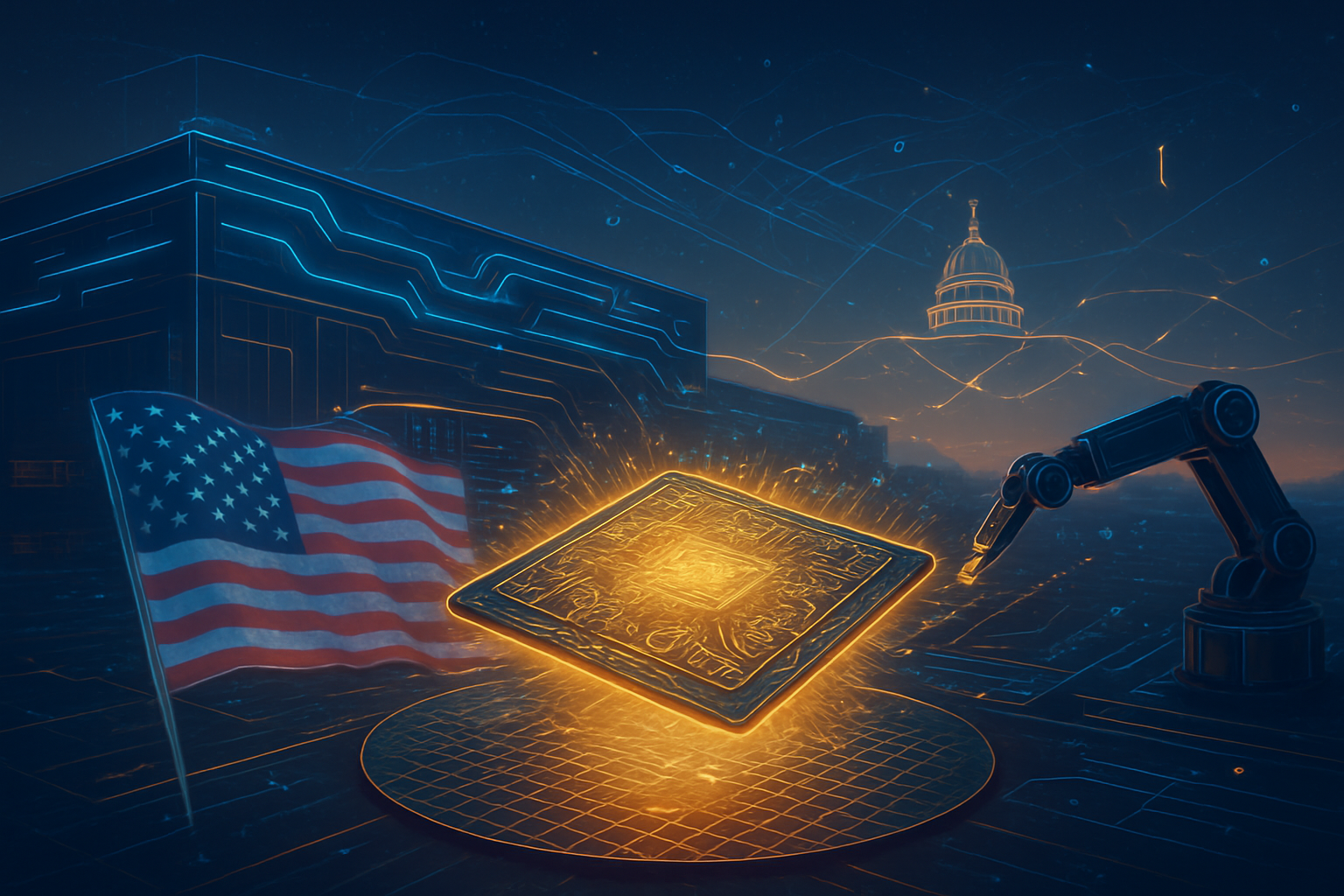
    The global semiconductor landscape has undergone a transformation that few would have predicted eighteen months ago. What began as frantic rumors of a Taiwan Semiconductor Manufacturing Company (NYSE: TSM)-led consortium to rescue the struggling foundry assets of Intel Corporation (NASDAQ: INTC) has culminated in a landmark "Silicon Sovereignty" deal. This shift has effectively nationalized a portion of America’s leading chipmaker, with the U.S. government now holding a 9.9% non-voting equity stake in the company to ensure the goals of the CHIPS Act are not just met, but secured against geopolitical volatility.

    The rumors, which reached a fever pitch in the spring of 2025, suggested that TSMC was being courted by a "consortium of customers"—including NVIDIA (NASDAQ: NVDA), Advanced Micro Devices (NASDAQ: AMD), and Broadcom (NASDAQ: AVGO)—to take over the operational management of Intel’s manufacturing plants. While the joint venture never materialized in its rumored form, the threat of a foreign entity managing America’s most critical industrial assets forced a radical rethink of U.S. industrial policy. Today, on December 22, 2025, Intel stands as a stabilized "National Strategic Asset," having successfully entered high-volume manufacturing (HVM) for its 18A process node, a feat that marks the first time 2nm-class chips have been mass-produced on American soil.

    The Technical Turnaround: From 18A Rumors to High-Volume Reality

    The technical centerpiece of this saga is Intel’s 18A (1.8nm) process node. Throughout late 2024 and early 2025, the industry was rife with skepticism regarding Intel’s ability to deliver on its "five nodes in four years" roadmap. Critics argued that the complexity of RibbonFET gate-all-around (GAA) transistors and PowerVia backside power delivery—technologies essential for the 18A node—were beyond Intel’s reach without external intervention. The rumored TSMC-led joint venture was seen as a way to inject "Taiwanese operational discipline" into Intel’s fabs to save these technologies from failure.

    However, under the leadership of CEO Lip-Bu Tan, who took the helm in March 2025 following the ousting of Pat Gelsinger, Intel focused its depleted resources exclusively on the 18A ramp-up. The technical specifications of 18A are formidable: it offers a 10% improvement in performance-per-watt over its predecessor and introduces a level of transistor density that rivals TSMC’s N2 node. By December 19, 2025, Intel’s Arizona and Ohio fabs officially moved into HVM, supported by the first commercial installations of High-NA EUV lithography machines.

    This achievement differs from previous Intel efforts by decoupling the design and manufacturing arms more aggressively. The initial reactions from the research community have been cautiously optimistic. Experts note that while Intel 18A is technically competitive, the real breakthrough was the implementation of a "copy-exactly" manufacturing philosophy—a hallmark of TSMC—which Intel finally adopted at scale in 2025. This move was facilitated by a $3.2 billion "Secure Enclave" grant from the Department of Defense, which provided the financial buffer necessary to perfect the 18A yields.

    A Consortium of Necessity: Impact on Tech Giants and Competitors

    The rumored involvement of NVIDIA, AMD, and Broadcom in a potential Intel Foundry takeover was driven by a desperate need for supply chain diversification. Throughout 2024, these companies were almost entirely dependent on TSMC’s facilities in Taiwan, creating a "single point of failure" for the AI revolution. While the TSMC-led joint venture was officially denied by CEO C.C. Wei in September 2025, the underlying pressure led to a different kind of alliance: the "Equity for Subsidies" model.

    NVIDIA and SoftBank (OTC: SFTBY) have since emerged as major strategic investors, contributing $5 billion and $2 billion respectively to Intel’s foundry expansion. For NVIDIA, this investment serves as an insurance policy. By helping Intel succeed, NVIDIA ensures it has a secondary source for its next-generation Blackwell and Rubin GPUs, reducing its reliance on the Taiwan Strait. AMD and Broadcom, while not direct equity investors, have signed multi-year "anchor customer" agreements, committing to shift a portion of their sub-5nm production to Intel’s U.S.-based fabs by 2027.

    This development has disrupted the market positioning of pure-play foundries. Samsung’s foundry division has struggled to keep pace, leaving Intel as the only viable domestic alternative to TSMC. The strategic advantage for U.S. tech giants is clear: they now have a "home court" advantage in manufacturing, which mitigates the risk of export controls or regional conflicts disrupting their hardware pipelines.

    De-risking the CHIPS Act and the Rise of Silicon Sovereignty

    The broader significance of the Intel rescue cannot be overstated. It represents the end of the "hands-off" era of American industrial policy. The U.S. government’s decision to convert $8.9 billion in CHIPS Act grants into a 9.9% equity stake—a move dubbed "Silicon Sovereignty"—was a direct response to the risk that Intel might be broken up or sold to foreign interests. This "Golden Share" gives the White House veto power over any future sale or spin-off of Intel’s foundry business for the next five years.

    This fits into a global trend of "de-risking" where nations are treating semiconductor manufacturing with the same strategic gravity as oil reserves or nuclear energy. By taking an equity stake, the U.S. government has effectively "de-risked" the massive capital expenditure required for Intel’s $89.6 billion fab expansion. This model is being compared to the 2009 automotive bailouts, but with a futuristic twist: the government is not just saving jobs, it is securing the foundational technology of the AI era.

    However, this intervention has raised concerns about market competition and the potential for political interference in corporate strategy. Critics argue that by picking a "national champion," the U.S. may stifle smaller innovators. Yet, compared to previous milestones like the invention of the transistor or the rise of the PC, the 2025 stabilization of Intel marks a shift from a globalized, borderless tech industry to one defined by regional blocs and national security imperatives.

    The Horizon: 14A, High-NA EUV, and the Next Frontier

    Looking ahead, the next 24 months will be defined by Intel’s transition to the 14A (1.4nm) node. Expected to enter risk production in late 2026, 14A will be the first node to fully utilize High-NA EUV at scale across multiple layers. The challenge remains daunting: Intel must prove that it can not only manufacture these chips but do so profitably. The foundry division remains loss-making as of December 2025, though the losses have stabilized significantly compared to the disastrous 2024 fiscal year.

    Future applications for this domestic capacity include a new generation of "Sovereign AI" chips—hardware designed specifically for government and defense applications that never leaves U.S. soil during the fabrication process. Experts predict that if Intel can maintain its 18A yields through 2026, it will begin to win back significant market share from TSMC, particularly for high-performance computing (HPC) and automotive applications where supply chain security is paramount.

    Conclusion: A New Chapter for American Silicon

    The saga of the TSMC-Intel rumors and the subsequent government intervention marks a turning point in the history of technology. The key takeaway is that the "too big to fail" doctrine has officially arrived in Silicon Valley. Intel’s survival was deemed so critical to the U.S. economy and national security that the government was willing to abandon decades of neoliberal economic policy to become a shareholder.

    As we move into 2026, the significance of this development will be measured by the stability of the AI supply chain. The "Silicon Sovereignty" deal has provided a roadmap for how other Western nations might protect their own critical tech sectors. For now, the industry will be watching Intel’s quarterly yield reports and the progress of its Ohio "mega-fab" with intense scrutiny. The rumors of a TSMC takeover may have faded, but the transformation they sparked has permanently altered the geography of the digital world.


    This content is intended for informational purposes only and represents analysis of current AI developments.

    TokenRing AI delivers enterprise-grade solutions for multi-agent AI workflow orchestration, AI-powered development tools, and seamless remote collaboration platforms.
    For more information, visit https://www.tokenring.ai/.
  • Uncle Sam Wants Your Algorithms: US Launches ‘Tech Force’ to Bridge AI Talent Chasm

    Uncle Sam Wants Your Algorithms: US Launches ‘Tech Force’ to Bridge AI Talent Chasm

    The launch of the Tech Force comes at a critical juncture as the federal government pivots its AI strategy from a focus on safety and ethics to a mandate of "innovation and dominance." With the global landscape shifting toward rapid AI deployment in both civilian and military sectors, the U.S. government is signaling that it will no longer settle for being a secondary player in the development of frontier models. The significance of this announcement lies not just in the numbers, but in the structural integration of private-sector expertise directly into the highest levels of federal policy and infrastructure.

    A New Blueprint for Federal Tech Recruitment

    The U.S. Tech Force is structured to hire an initial cohort of 1,000 technologists, including software engineers, data scientists, and AI researchers, for fixed two-year service terms. To address the persistent wage gap between Washington and Silicon Valley, the program offers salaries ranging from $150,000 to $200,000—a significant departure from the traditional General Schedule (GS) pay scales that often capped early-to-mid-career technical roles at much lower levels. This financial incentive is paired with a groundbreaking "Return-to-Industry" model, where more than 30 tech giants, including Microsoft (NASDAQ: MSFT), NVIDIA (NASDAQ: NVDA), Apple (NASDAQ: AAPL), and Meta (NASDAQ: META), have pledged to allow employees to take a leave of absence for government service.

    Technically, the Tech Force differs from its predecessor, the "AI Talent Surge" of 2023-2024, by moving away from a decentralized hiring model. While the previous surge successfully brought in roughly 200 professionals, it was plagued by retention issues and bureaucratic friction. The new Tech Force is managed centrally by the Office of Personnel Management (OPM) and focuses on "mission-critical" technical stacks. These include the development of the "Trump Accounts" platform—a high-scale financial system for tax-advantaged savings—and the integration of predictive logistics and autonomous systems within the newly rebranded Department of War. Initial reactions from the AI research community have been cautiously optimistic, with many praising the removal of "red tape," though some express concern over the speed of security clearances for such short-term rotations.

    Strategic Implications for the Tech Giants

    The Tech Force initiative creates a unique symbiotic relationship between the federal government and major AI labs. Companies like Microsoft (NASDAQ: MSFT) and NVIDIA (NASDAQ: NVDA) stand to benefit significantly, as their employees will gain firsthand experience in implementing AI at the massive scale of federal operations, potentially influencing government standards to align with their proprietary technologies. This "revolving door" model provides these companies with a strategic advantage, ensuring that the next generation of federal AI infrastructure is built by individuals familiar with their specific hardware and software ecosystems.

    However, the initiative also introduces potential disruptions for smaller startups and specialized AI firms. While tech giants can afford to lose a dozen engineers to a two-year government stint, smaller players may find it harder to compete for the remaining domestic talent pool, especially following the recent $100,000 fee imposed on new H-1B visas. Furthermore, the focus on "innovation and dominance" suggests a move toward preempting state-level AI regulations, which could streamline the market for major players but potentially stifle the niche regulatory-compliance startups that had emerged under previous, more restrictive safety frameworks.

    From Safety to Dominance: A Shift in the National AI Landscape

    The emergence of the Tech Force reflects a broader shift in the national AI landscape. The Biden-era U.S. AI Safety Institute has been reformed into the Center for AI Standards and Innovation (CAISI), with a new mandate to accelerate commercial testing and remove regulatory hurdles. This transition mirrors the rebranding of the Department of Defense to the Department of War, emphasizing a "warrior ethos" in AI development. The goal is no longer just to ensure AI is safe, but to ensure it is the most lethal and efficient in the world, specifically focusing on autonomous drones and intelligence synthesis.

    This shift has sparked a debate within the tech community regarding the ethical implications of such a rapid pivot. Critics point to the potential for "regulatory capture," where the very individuals building federal AI systems are the ones who will return to the private companies that benefit from those systems. Comparisons are being drawn to the Manhattan Project and the Apollo program, but with a modern twist: the government is no longer building the technology in a vacuum but is instead deeply intertwined with the commercial interests of Silicon Valley. This milestone marks the end of the "wait and see" era of federal AI policy and the beginning of a period of state-driven technological acceleration.

    The Horizon: The Genesis Mission and Beyond

    Looking ahead, the Tech Force is expected to be the primary engine behind the "Genesis Mission," an ambitious "Apollo program for AI" aimed at building a sovereign American Science and Security Platform. This initiative seeks to marshal federal resources to create a unified AI architecture for breakthroughs in biotechnology, nuclear energy, and materials science. In the near term, we can expect the first cohort of Tech Force recruits to begin work on streamlining the state department’s intelligence analysis tools, which are currently bogged down by legacy systems and fragmented data silos.

    The long-term success of the Tech Force will depend on the government's ability to solve the "clearance bottleneck." Even with high salaries and industry partnerships, the months-long process of obtaining high-level security clearances remains a significant deterrent for technologists used to the rapid pace of the private sector. Experts predict that if the Tech Force can successfully integrate even 50% of its initial 1,000-person goal by mid-2026, it will set a new standard for how modern governments operate in the digital age, potentially leading to a permanent "Technical Service" branch of the U.S. military or civil service.

    A New Era of Public-Private Synergy

    The launch of the U.S. Tech Force represents a watershed moment in the history of artificial intelligence and federal governance. By acknowledging that it cannot compete with the private sector on traditional terms, the U.S. government has instead chosen to integrate the private sector into its very fabric. The key takeaways from this initiative are clear: the federal government is prioritizing speed and technical superiority over cautious regulation, and it is willing to pay a premium to ensure that the brightest minds in AI are working on national priorities.

    As we move into 2026, the tech industry will be watching closely to see how the first "return-to-industry" transitions are handled and whether the Tech Force can truly deliver on its promise of modernizing the federal machine. The significance of this development cannot be overstated; it is a fundamental restructuring of how the world’s most powerful government interacts with the world’s most transformative technology. For now, the message from Washington is loud and clear: the AI race is on, and the U.S. is playing to win.


    This content is intended for informational purposes only and represents analysis of current AI developments.

    TokenRing AI delivers enterprise-grade solutions for multi-agent AI workflow orchestration, AI-powered development tools, and seamless remote collaboration platforms.
    For more information, visit https://www.tokenring.ai/.
  • America’s AI Gambit: Trump’s ‘Tech Force’ and Federal Supremacy Drive New Era of Innovation

    America’s AI Gambit: Trump’s ‘Tech Force’ and Federal Supremacy Drive New Era of Innovation

    Washington D.C., December 16, 2025 – The United States, under the Trump administration, is embarking on an aggressive and multi-faceted strategy to cement its leadership in artificial intelligence (AI), viewing it as the linchpin of national security, economic prosperity, and global technological dominance. Spearheaded by initiatives like the newly launched "United States Tech Force," a sweeping executive order to preempt state AI regulations, and the ambitious "Genesis Mission" for scientific discovery, these policies aim to rapidly accelerate AI development and integration across federal agencies and the broader economy. This bold pivot signals a clear intent to outpace international rivals and reshape the domestic AI landscape, prioritizing innovation and a "minimally burdensome" regulatory framework.

    The immediate significance of these developments, particularly as the "Tech Force" begins active recruitment and the regulatory executive order takes effect, is a profound shift in how the US government will acquire, deploy, and govern AI. The administration's approach is a direct response to perceived skill gaps within the federal workforce and a fragmented regulatory environment, seeking to streamline progress and unleash the full potential of American AI ingenuity.

    Unpacking the Architecture of America's AI Ascent

    The core of the Trump administration's AI strategy is built upon several key pillars, each designed to address specific challenges and propel the nation forward in the AI race.

    The "United States Tech Force" (US Tech Force), announced in mid-December 2025 by the Office of Personnel Management (OPM), is a groundbreaking program designed to inject top-tier technical talent into the federal government. Targeting an initial cohort of approximately 1,000 technologists, including early-career software engineers, data scientists, and AI specialists, as well as experienced engineering managers, the program offers competitive annual salaries ranging from $150,000 to $200,000 for two-year service terms. Participants are expected to possess expertise in machine learning engineering, natural language processing, computer vision, data architecture, and cloud computing. They will be deployed across critical federal agencies like the Treasury Department and the Department of Defense, working on "high-stakes missions" to develop and deploy AI systems for predictive analytics, cybersecurity, and modernizing legacy IT infrastructure. This initiative dramatically differs from previous federal tech recruitment efforts, such as the Presidential Innovation Fellows program, by its sheer scale, direct industry partnerships with over 25 major tech companies (including Amazon Web Services (NASDAQ: AMZN), Apple (NASDAQ: AAPL), Google (NASDAQ: GOOGL), Meta (NASDAQ: META), Microsoft (NASDAQ: MSFT), Nvidia (NASDAQ: NVDA), OpenAI, Oracle (NYSE: ORCL), Palantir (NYSE: PLTR), Salesforce (NYSE: CRM), Uber (NYSE: UBER), xAI, and Adobe (NASDAQ: ADBE)), and a clear mandate to address the AI skills gap. Initial reactions from the AI research community have been largely positive, acknowledging the critical need for government AI talent, though some express cautious optimism about long-term retention and integration within existing bureaucratic structures.

    Complementing this talent push is the "Ensuring a National Policy Framework for Artificial Intelligence" Executive Order (EO), signed by President Trump on December 11, 2025. This EO aims to establish federal supremacy in AI regulation, preempting what the administration views as a "patchwork of 50 different state regulatory regimes" that stifle innovation. Key directives include the establishment of an "AI Litigation Task Force" within 30 days by the Attorney General to challenge state AI laws deemed inconsistent with federal policy or unconstitutionally regulating interstate commerce. The Commerce Department is also tasked with identifying "onerous" state AI laws, particularly those requiring AI models to "alter their truthful outputs." From a technical perspective, this order seeks to standardize technical requirements and ethical guidelines across the nation, reducing compliance fragmentation for developers. Critics, however, raise concerns about potential constitutional challenges from states and the impact on efforts to mitigate algorithmic bias, which many state-level regulations prioritize.

    Finally, "The Genesis Mission", launched by Executive Order 14363 on November 24, 2025, is a Department of Energy-led initiative designed to leverage federal scientific data and high-performance computing to accelerate AI-driven scientific discovery. Likened to the Manhattan Project and Apollo missions, its ambitious goal is to double US scientific productivity within a decade. The mission's centerpiece is the "American Science and Security Platform," an integrated IT infrastructure combining supercomputing, secure cloud-based AI environments, and vast federal scientific datasets. This platform will enable the development of scientific foundation models, AI agents, and automated research systems across critical technology domains like advanced manufacturing, biotechnology, and quantum information science. Technically, this implies a massive investment in secure data platforms, high-performance computing, and specialized AI hardware, fostering an environment for large-scale AI model training and ethical AI development.

    Corporate Crossroads: AI Policy's Rippling Effects on Industry

    The US government's assertive AI policy is poised to significantly impact AI companies, tech giants, and startups, creating both opportunities and potential disruptions.

    Tech giants whose employees participate in the "Tech Force" stand to benefit from closer ties with the federal government, gaining invaluable insights into government AI needs and potentially influencing future procurement and policy. Companies already deeply involved in government contracts, such as Palantir (NYSE: PLTR) and Anduril, are explicitly mentioned as partners, further solidifying their market positioning in the federal sector. The push for a "minimally burdensome" national regulatory framework, as outlined in the AI National Framework EO, largely aligns with the lobbying efforts of major tech firms, promising reduced compliance costs across multiple states. These large corporations, with their robust legal teams and vast resources, are also better equipped to navigate the anticipated legal challenges arising from federal preemption efforts and to provide the necessary infrastructure for initiatives like "The Genesis Mission."

    For startups, the impact is more nuanced. While a uniform national standard, if successfully implemented, could ease scaling for startups operating nationally, the immediate legal uncertainty caused by federal challenges to existing state laws could be disruptive, especially for those that have already adapted to specific state frameworks. However, "The Genesis Mission" presents significant opportunities for specialized AI startups in scientific and defense-related fields, particularly those focused on secure AI solutions and specific technological domains. Federal contracts and collaboration opportunities could provide crucial funding and validation. Conversely, startups in states with progressive AI regulations (e.g., California, Colorado, New York) might face short-term hurdles but could gain long-term advantages by pioneering ethical AI solutions if public sentiment and future regulatory demands increasingly value responsible AI.

    The competitive landscape is being reshaped by this federal intervention. The "Tech Force" fosters a "revolving door" of talent and expertise, potentially allowing participating companies to better understand and respond to federal priorities, setting de facto standards for AI deployment within government. The preemption EO aims to level the playing field across states, preventing a fragmented regulatory landscape that could impede national growth. However, the most significant disruption stems from the anticipated legal battles between the federal government and states over AI regulation, creating an environment of regulatory flux that demands an agile compliance posture from all companies.

    A New Chapter in the AI Saga: Wider Implications

    These US AI policy initiatives mark a pivotal moment in the broader AI landscape, signaling a clear shift in national strategy and drawing parallels to historical technological races.

    The explicit comparison of "The Genesis Mission" to endeavors like the Manhattan Project and the Apollo missions underscores a national recognition of AI's transformative potential and strategic imperative on par with the nuclear and space races of the 20th century. This frames AI not merely as a technological advancement but as a foundational element of national power and scientific leadership in an era of intensified geopolitical competition, particularly with China.

    The "Ensuring a National Policy Framework for Artificial Intelligence" Executive Order represents a significant departure from previous approaches, including the Biden administration's focus on risk mitigation and responsible AI development. The Trump administration's deregulatory, innovation-first stance aims to unleash private sector innovation by removing perceived "cumbersome regulation." While this could catalyze rapid advancements, it also raises concerns about unchecked AI development, particularly regarding issues like algorithmic bias, privacy, and safety, which were central to many state-level regulations now targeted for preemption. The immediate impact will likely be a "fluctuating and unstable regulatory landscape" as federal agencies implement directives and states potentially challenge federal preemption efforts, leading to legal and constitutional disputes.

    The collective impact of "The Genesis Mission" and "Tech Force" signifies a deeper integration of AI into core government functions—from scientific research and defense to general public service. This aims to enhance efficiency, drive breakthroughs, and ensure the federal government possesses the necessary talent to navigate the AI revolution. Economically, the emphasis on accelerating AI innovation, building infrastructure (data centers, semiconductors), and fostering a skilled workforce is intended to drive growth across various sectors. However, ethical and societal debates, particularly concerning job displacement, misinformation, and the implications of the federal policy's stance on "truthful outputs" versus bias mitigation, will remain at the forefront.

    The Horizon of AI: Anticipating Future Trajectories

    The aggressive stance of the US government's AI policy sets the stage for several expected near-term and long-term developments, alongside significant challenges.

    In the near term, the "US Tech Force" is expected to onboard its first cohort by March 2026, rapidly embedding AI expertise into federal agencies to tackle immediate modernization needs. Concurrently, the "AI Litigation Task Force" will begin challenging state AI laws, initiating a period of legal contention and regulatory uncertainty. "The Genesis Mission" will proceed with identifying critical national science and technology challenges and inventorying federal computing resources, laying the groundwork for its ambitious scientific platform.

    Long-term developments will likely see the "Tech Force" fostering a continuous pipeline of AI talent within the government, potentially establishing a permanent cadre of federal technologists. The legal battles over federal preemption are predicted to culminate in a more unified, albeit potentially contested, national AI regulatory framework, which the administration aims to be "minimally burdensome." "The Genesis Mission" is poised to radically expand America's scientific capabilities, with AI-driven breakthroughs in energy, biotechnology, materials science, and national security becoming more frequent and impactful. Experts predict the creation of a "closed-loop AI experimentation platform" that automates research, compressing years of progress into months.

    Potential applications and use cases on the horizon include AI-powered predictive analytics for economic forecasting and disaster response, advanced AI for cybersecurity defenses, autonomous systems for defense and logistics, and accelerated drug discovery and personalized medicine through AI-enabled scientific research. The integration of AI into core government functions will streamline public services and enhance operational efficiency across the board.

    However, several challenges must be addressed. The most pressing is the state-federal conflict over AI regulation, which could create prolonged legal uncertainty and hinder nationwide AI adoption. Persistent workforce gaps in AI, cybersecurity, and data science within the federal government, despite the "Tech Force," will require sustained effort. Data governance, quality, and privacy remain critical barriers, especially for scaling AI applications across diverse federal datasets. Furthermore, ensuring the cybersecurity and safety of increasingly complex AI systems, and navigating intricate acquisition processes and intellectual property issues in public-private partnerships, will be paramount.

    Experts predict a shift towards specialized AI solutions over massive, general-purpose models, driven by the unsustainable costs of large language models. Data security and observability will become foundational for AI, and partner ecosystems will be crucial due to the complexity and talent scarcity in AI operations. AI capabilities are expected to be seamlessly woven into core business applications, moving beyond siloed projects. There is also growing speculation about an "AI bubble," leading to a focus on profitability and realized business value over broad experimentation.

    A Defining Moment for American AI

    In summary, the Trump administration's AI initiatives in late 2025 represent a forceful and comprehensive effort to cement US leadership in artificial intelligence. By emphasizing deregulation, strategic investment in scientific discovery through "The Genesis Mission," and a centralized federal approach to governance via the preemption Executive Order, these policies aim to unleash rapid innovation and secure geopolitical advantage. The "US Tech Force" is a direct and ambitious attempt to address the human capital aspect, infusing critical AI talent into the federal government.

    This is a defining moment in AI history, marking a significant shift towards a national strategy that prioritizes speed, innovation, and federal control to achieve "unquestioned and unchallenged global technological dominance." The long-term impact could be transformative, accelerating scientific breakthroughs, enhancing national security, and fundamentally reshaping the American economy. However, the path forward will be marked by ongoing legal and political conflicts, especially concerning the balance of power between federal and state governments in AI regulation, and persistent debates over the ethical implications of rapid AI advancement.

    What to watch for in the coming weeks and months are the initial actions of the AI Litigation Task Force, the Commerce Department's evaluation of state AI laws, and the first deployments of the "US Tech Force" members. These early steps will provide crucial insights into the practical implementation and immediate consequences of this ambitious national AI strategy.


    This content is intended for informational purposes only and represents analysis of current AI developments.

    TokenRing AI delivers enterprise-grade solutions for multi-agent AI workflow orchestration, AI-powered development tools, and seamless remote collaboration platforms.
    For more information, visit https://www.tokenring.ai/.

  • Quantum Leap: U.S. Government Fuels Quantum Computing Race Amidst Breakthroughs and Emerging Investment Avenues

    Quantum Leap: U.S. Government Fuels Quantum Computing Race Amidst Breakthroughs and Emerging Investment Avenues

    October 23, 2025 – The world of computing is experiencing a seismic shift, as quantum technology rapidly accelerates from theoretical promise to tangible reality. Late 2025 marks a pivotal moment, characterized by groundbreaking advancements in quantum hardware and software, a fervent push for practical applications, and an unprecedented surge in U.S. government interest, including potential direct equity investments in leading quantum firms. This confluence of innovation and strategic backing is not only redefining the computational landscape but also opening new, diversified avenues for investors to participate in the burgeoning quantum economy.

    The immediate significance of these developments cannot be overstated. With quantum computers demonstrating verifiable advantages over classical supercomputers in specific tasks, the race for quantum supremacy has intensified, becoming a critical battleground for national security and economic leadership. The U.S. government's proactive stance, moving beyond traditional grants to consider direct stakes in private companies, underscores the strategic importance of this technology, signaling a robust commitment to securing a dominant position in the global quantum arms race.

    The Dawn of Practical Quantum Advantage: A Technical Deep Dive

    The technical advancements in quantum computing as of late 2025 are nothing short of revolutionary, pushing the boundaries of what was once considered science fiction. A key highlight is Google Quantum AI's demonstration of "verifiable quantum advantage" with its 65-qubit Willow chip. This was achieved by running a specialized "Quantum Echoes" algorithm, which models atomic interactions, an astonishing 13,000 times faster than the Frontier supercomputer. Unlike previous demonstrations, the verifiability of these results signifies a critical step towards practical, real-world applications, offering a blueprint for solving problems in fields like medicine and materials science that are currently intractable for classical machines.

    Processor architectures are evolving at an unprecedented pace. IBM (NYSE: IBM) has deployed upgraded Heron processors within its modular Quantum System Two, designed for scalable quantum computation, while its 1,121-qubit Condor processor, launched in late 2024, incorporates advanced error correction. Microsoft (NASDAQ: MSFT) made waves with its "Majorana 1" quantum processing unit in February 2025, leveraging topological qubits for inherent stability and a potential path to scale to millions of qubits on a single chip. Rigetti Computing (NASDAQ: RGTI) has made its 36-qubit multi-chip quantum computer generally available and aims for a 100-qubit system with 99.5% fidelity by year-end. These innovations represent a departure from earlier efforts, focusing not just on raw qubit count but on stability, error reduction, and modularity.

    Hybrid quantum-classical systems are emerging as the pragmatic bridge to near-term utility. NVIDIA (NASDAQ: NVDA) and Quantum Machines debuted DGX Quantum in March 2025, a tightly integrated system combining NVIDIA's Grace Hopper Superchip with Quantum Machines' OPX1000, achieving sub-4-microsecond latency between GPU and QPU. This ultra-fast communication is crucial for real-time quantum error correction and advanced adaptive circuits, making complex hybrid algorithms feasible within the fleeting coherence times of qubits. Amazon (NASDAQ: AMZN) has also deepened its integration between its Braket quantum cloud and NVIDIA's CUDA-Q tools, streamlining classical-quantum interaction.

    Crucially, significant progress has been made in quantum error correction and qubit stability. Google's Willow chip demonstrated that logical qubits could last more than twice as long as individual ones, with a significantly reduced error rate, a foundational step toward fault-tolerant quantum computing. The Defense Advanced Research Projects Agency (DARPA) launched the US2QC program, with Microsoft and SCI Quantum developing architectures for automatic detection and correction of quantum errors. These advancements address the inherent fragility of qubits, a major hurdle in scaling quantum systems, and are met with considerable optimism by the quantum research community, who see the shift to logical qubits as a "game-changer" on the path to practical, large-scale quantum computers.

    Corporate Beneficiaries and Competitive Implications

    The accelerating pace of quantum computing and robust government backing are creating a dynamic environment for quantum companies, tech giants, and startups, shaping new competitive landscapes and market positioning. Companies poised to benefit significantly include dedicated quantum computing firms, as well as established tech giants with substantial R&D investments.

    Among the pure-play quantum companies, IonQ (NYSE: IONQ) stands out as a leader in trapped-ion quantum computers, actively pursuing federal government contracts and achieving new performance milestones. Its integration with major cloud services like Amazon Braket and its own IonQ Quantum Cloud positions it strongly. Rigetti Computing (NASDAQ: RGTI), a full-stack quantum computing company, continues to advance its superconducting processors and has secured deals with the U.S. Air Force, highlighting its strategic importance. D-Wave Quantum (NYSE: QBTS), a pioneer in quantum annealing, is expanding its market reach, including a partnership for U.S. government IT distribution. These companies are not only benefiting from technological breakthroughs but also from the "seal of approval" and risk mitigation offered by potential government investment, leading to increased investor confidence and surging stock prices despite current unprofitability.

    Tech giants are strategically positioning themselves through vertical integration and ecosystem development. IBM (NYSE: IBM), with its ambitious roadmap to over 4,000 qubits by 2025 and a focus on quantum-centric supercomputing, aims to make quantum performance measurable in real-world problems across various industries. Google (NASDAQ: GOOGL), through Google Quantum AI, is doubling down on quantum-classical hybrid systems for "utterly impossible" problems in drug design and clean energy, leveraging its verifiable quantum advantage. Microsoft (NASDAQ: MSFT) is heavily invested in the high-risk, high-reward path of topological qubits with its Majorana 1 chip, while its Azure Quantum platform integrates hardware from partners like Quantinuum and Atom Computing. Amazon (NASDAQ: AMZN), via AWS Braket, provides on-demand access to diverse quantum hardware, lowering entry barriers for enterprises and recently unveiled Ocelot, its first proprietary quantum chip.

    The competitive implications are profound. The U.S. government's direct investment signals an intensifying global race for quantum supremacy, compelling increased R&D spending and faster innovation. Hybridization and ecosystem development are becoming crucial differentiators, with companies that can effectively bridge the quantum-classical divide gaining a significant competitive edge. This intense competition also extends to talent acquisition, with a growing demand for specialized quantum physicists and engineers. Potential disruptions to existing products and services span cybersecurity, drug discovery, financial modeling, logistics, and AI/ML, as quantum computers promise to revolutionize these fields with unprecedented computational power. Market positioning is increasingly defined by early adoption, strategic partnerships, and a focus on demonstrating "practical advantage" in near-term applications, rather than solely long-term fault-tolerant systems.

    Wider Significance: A Paradigm Shift in the AI Landscape

    The advancements in quantum computing and the U.S. government's robust interest in late 2025 represent a profound shift with wider significance across the technological landscape, particularly for artificial intelligence. This is not merely an incremental improvement but a potential paradigm shift, akin to previous monumental breakthroughs in computing.

    Quantum computing is poised to become a strategic accelerator for AI, creating a powerful synergy. Quantum computers can significantly accelerate the training of large AI models, reducing training times from months to days by processing exponentially larger datasets and solving optimization problems faster. This capability extends to enhancing generative AI for tasks like molecule design and synthetic data generation, and addressing complex problem-solving in logistics and drug discovery. The relationship is bidirectional, with AI techniques being applied to optimize quantum circuit design and mitigate errors in noisy quantum systems, thereby improving the reliability and scalability of quantum technologies. This means quantum machine learning (QML) is emerging as a field that could handle high-dimensional or uncertain problems more effectively than classical systems, potentially leading to breakthroughs in optimization, image recognition, and cybersecurity.

    However, this transformative potential comes with significant concerns. The most pressing is the cybersecurity threat posed by fault-tolerant quantum computers, which could break widely used cryptographic systems through algorithms like Shor's. This necessitates an urgent and complex transition to post-quantum cryptography (PQC) to safeguard sensitive government information, financial transactions, and personal data. Ethical dilemmas and governance challenges also loom large, as the immense processing power could be misused for intrusive surveillance or manipulation. The high cost and specialized nature of quantum computing also raise concerns about exacerbating the digital divide and job displacement in certain sectors.

    Compared to previous AI milestones, quantum computing represents a fundamental shift in how computers process information, rather than just an advancement in what classical computers can do. While past AI breakthroughs, such as deep learning, pushed the boundaries within classical computing frameworks, quantum computing can tackle problems inherently suited to quantum mechanics, unlocking capabilities that classical AI simply cannot achieve on its own. It's a new computational paradigm that promises to accelerate and enhance existing AI, while also opening entirely new frontiers for scientific discovery and technological innovation. The verifiable quantum advantage demonstrations in late 2025 mark the beginning of quantum computers solving problems genuinely beyond classical means, a turning point in tech history.

    The Horizon: Future Developments and Challenges

    Looking ahead, the trajectory of quantum computing is marked by accelerating developments, with both near-term and long-term milestones on the horizon. Experts predict a future where quantum technology becomes an indispensable tool for solving humanity's most complex challenges.

    In the near-term (1-3 years), the focus will be on refining existing technologies and scaling hybrid quantum-classical systems. We can expect to see further advancements in quantum error mitigation, with logical qubits increasingly demonstrating superior error rates compared to physical qubits. Hardware will continue to evolve, with companies like Pasqal aiming for 10,000-qubit systems with scalable logical qubits by 2026. Early commercial applications will emerge at scale in sectors like pharmaceuticals, logistics, and financial services, demonstrating tangible returns on investment from specialized "Noisy Intermediate-Scale Quantum" (NISQ) devices. The emergence of diverse qubit technologies, including diamond-based systems for room-temperature operation, will also gain traction.

    The long-term (5-10+ years) vision centers on achieving Fault-Tolerant Quantum Computing (FTQC) and widespread practical applications. This will require millions of high-quality physical qubits to create stable logical qubits capable of running complex, error-free computations. IBM targets a fault-tolerant quantum computer by 2029 and useful scale by 2033. Google aims for a useful, error-corrected quantum computer by 2029. Beyond individual machines, the development of a quantum internet is anticipated to become a significant industry by 2030, enabling ultra-secure communications. Potential applications will revolutionize drug discovery, materials science, finance, logistics, and AI, by simulating molecular structures with unprecedented accuracy, optimizing complex processes, and supercharging AI algorithms.

    Despite the immense promise, significant challenges remain. Qubit fragility and decoherence continue to be a primary technical obstacle, requiring sophisticated error correction techniques. Scalability to hundreds or thousands of qubits while maintaining high coherence and low error rates is crucial. Hardware development faces hurdles in creating stable, high-quality qubits and control electronics, especially for systems that can operate outside extreme cryogenic environments. The software maturity and algorithm development still lag, and there's a significant skills gap in professionals trained in quantum mechanics. Addressing these challenges will require continued R&D investment, international collaboration, and a concerted effort to build a robust quantum workforce.

    Wrap-Up: A New Era of Computational Power

    The late 2025 landscape of quantum computing signifies a momentous turning point in technological history. The verifiable quantum advantage demonstrated by Google, coupled with the U.S. government's unprecedented interest and potential direct investments, underscores the strategic importance and accelerating maturity of this field. This era is characterized by a shift from purely theoretical exploration to tangible breakthroughs, particularly in hybrid quantum-classical systems and advancements in error correction and logical qubits.

    This development holds immense significance, comparable to the advent of the classical computer or the internet. It promises to unlock new frontiers in scientific research, reshape global economies through unprecedented optimization capabilities, and supercharge artificial intelligence. While the immediate threat to current encryption standards necessitates a rapid transition to post-quantum cryptography, quantum computing also offers the promise of ultra-secure communications. The long-term impact will be transformative, with quantum computers working in tandem with classical systems to solve problems currently beyond human reach, driving innovation across every sector.

    In the coming weeks and months, key areas to watch include the legislative progress on the reauthorization of the National Quantum Initiative Act, further details on U.S. government direct equity investments in quantum companies, and additional verifiable demonstrations of quantum advantage in commercially relevant problems. Continued advancements in error correction and logical qubits will be critical, as will the evolution of hybrid system architectures and the adoption of post-quantum cryptography standards.

    Investment Opportunities through ETFs

    For investors seeking exposure to this burgeoning sector, Exchange-Traded Funds (ETFs) offer a diversified approach to mitigate the risks associated with individual, often volatile, pure-play quantum stocks. As of late 2025, several ETFs provide access to the quantum computing theme:

    • Defiance Quantum ETF (NASDAQ: QTUM): This ETF provides diversified exposure to companies involved in quantum computing and machine learning, holding a basket of approximately 80 stocks, including tech giants like IBM, Alphabet (NASDAQ: GOOGL), and Microsoft (NASDAQ: MSFT), alongside pure-play quantum startups such as IonQ (NYSE: IONQ). It boasts nearly $2 billion in assets under management and an expense ratio of 0.40%.
    • VanEck Quantum Computing UCITS ETF (Europe – IE0007Y8Y157 / Ticker QNTM): Launched in May 2025, this is Europe's first and only ETF exclusively dedicated to quantum computing, tracking the MarketVector Global Quantum Leaders index. It has approximately €250 million in AUM and an expense ratio of 0.49% to 0.55%.
    • Spear Alpha ETF (NASDAQ: SPRX): An actively managed ETF with a concentrated portfolio, SPRX includes companies poised to benefit from quantum tech developments in related areas like AI. It has made significant allocations to pure-play quantum companies like Rigetti Computing (NASDAQ: RGTI) and IonQ (NYSE: IONQ), with an expense ratio of 0.75%.
    • Invesco Dorsey Wright Technology Momentum ETF (NASDAQ: PTF): This ETF offers indirect exposure by focusing on momentum-driven stocks within the broader information technology sector, including quantum companies if they exhibit strong price momentum. As of mid-September 2025, it held a position in Quantum Computing Inc. (NASDAQ: QUBT).

    Additionally, BlackRock is reportedly preparing an iShares Quantum Computing UCITS ETF in Europe, signaling increasing interest from major asset managers. These ETFs allow investors to participate in the "quantum gold rush" with a diversified portfolio, capitalizing on the long-term growth potential of this transformative technology.


    This content is intended for informational purposes only and represents analysis of current AI developments.

    TokenRing AI delivers enterprise-grade solutions for multi-agent AI workflow orchestration, AI-powered development tools, and seamless remote collaboration platforms.
    For more information, visit https://www.tokenring.ai/.
  • ARPA-H Taps Former DARPA Innovator to Ignite High-Risk, High-Reward Health Tech Revolution

    ARPA-H Taps Former DARPA Innovator to Ignite High-Risk, High-Reward Health Tech Revolution

    In a move poised to reshape the landscape of biomedical innovation, the United States government officially appointed Dr. Renee Wegrzyn, a distinguished former official from the Defense Advanced Research Projects Agency (DARPA), as the inaugural director of the Advanced Research Projects Agency for Health (ARPA-H). Announced by President Joe Biden with her official appointment on October 11, 2022, this strategic leadership choice signals a profound commitment to accelerating breakthroughs in health technology, particularly those deemed too ambitious or high-risk for conventional funding avenues. ARPA-H, modeled after its successful defense counterpart, is now fully positioned to spearhead transformative programs aimed at preventing, detecting, and treating some of humanity's most intractable diseases.

    Dr. Wegrzyn's appointment is a clear declaration of intent: to infuse the health sector with the same audacious, "moonshot" mentality that has historically driven significant advancements in defense and technology. Her proven track record at DARPA, where she managed groundbreaking biological technology programs, makes her uniquely suited to guide ARPA-H in its mission to tackle grand challenges in health. This initiative comes at a critical juncture, as the rapid pace of AI and biotechnological advancements offers unprecedented opportunities to address complex health issues, from cancer to neurodegenerative diseases, demanding a nimble and visionary approach to research and development.

    A DARPA-Inspired Blueprint for Biomedical Innovation

    ARPA-H is explicitly designed to operate with the agility and risk tolerance characteristic of DARPA, aiming to bridge the gap between fundamental research and practical application. Unlike traditional grant-making bodies, ARPA-H focuses on specific "program managers" who are empowered to identify critical health challenges, solicit high-risk, high-reward proposals, and aggressively manage projects towards defined, ambitious goals. Dr. Wegrzyn's experience from 2016 to 2020 as a program manager in DARPA's Biological Technologies Office provides direct insight into this operational model, making her an ideal leader to translate its success to the health domain. The agency's mandate is to drive biomedical innovation that supports the health of all Americans, with a particular emphasis on developing capabilities to prevent, detect, and treat intractable diseases, including cancer, Alzheimer's, and infectious diseases.

    This approach diverges significantly from previous health research funding models, which often prioritize incremental advancements or rely on established research paradigms. ARPA-H is explicitly tasked with funding projects that might otherwise be overlooked due to their speculative nature or long-term payoff, but which possess the potential for truly paradigm-shifting outcomes. For example, ARPA-H could fund projects exploring novel AI-driven diagnostic tools that leverage massive, disparate datasets, or develop entirely new therapeutic modalities based on advanced genetic engineering or synthetic biology. Initial reactions from the scientific community and industry experts have been overwhelmingly positive, citing the urgent need for an agency willing to take on significant scientific and technological risks for the sake of public health. Many see this as an essential mechanism to accelerate the translation of cutting-edge AI and biotechnological research from the lab to clinical impact, bypassing the often slow and risk-averse processes of traditional pharmaceutical development.

    Competitive Implications for the AI and Biotech Ecosystem

    The establishment and leadership of ARPA-H under Dr. Wegrzyn are set to have profound competitive implications across the AI, biotech, and pharmaceutical sectors. Companies specializing in advanced AI for drug discovery, personalized medicine, diagnostics, and synthetic biology are poised to be significant beneficiaries. Startups and small to medium-sized enterprises (SMEs) with innovative, high-risk ideas, which often struggle to secure traditional venture capital or government grants, could find a crucial lifeline in ARPA-H's funding model. This creates a new competitive arena where agile, research-intensive companies can thrive by pursuing ambitious projects that align with ARPA-H's mission.

    Major pharmaceutical companies (NYSE: PFE), biotech giants (NASDAQ: BIIB), and tech titans like Alphabet (NASDAQ: GOOGL) and Microsoft (NASDAQ: MSFT) with significant AI and life sciences divisions will also be closely watching, and potentially collaborating with, ARPA-H. While ARPA-H aims to fund projects too risky for immediate commercialization, successful programs could generate intellectual property and foundational technologies that these larger entities could then license, acquire, or build upon. This could disrupt existing product pipelines by accelerating the development of novel therapies and diagnostics, forcing companies to adapt their R&D strategies to remain competitive. Furthermore, ARPA-H's focus on "use-inspired research" means that its projects will likely have clearer paths to real-world application, potentially creating entirely new markets or significantly expanding existing ones for health technologies.

    A New Frontier in the Broader AI and Health Landscape

    ARPA-H's creation and its DARPA-inspired mandate represent a significant evolution in the broader landscape of AI and health innovation. It signals a governmental recognition that traditional funding mechanisms are insufficient to harness the full potential of rapidly advancing technologies, particularly AI, in addressing complex health challenges. This initiative aligns with a global trend of increased investment in moonshot projects and public-private partnerships aimed at accelerating scientific discovery and technological deployment. The agency's emphasis on high-risk, high-reward projects could foster a culture of bold experimentation, pushing the boundaries of what's considered possible in areas like precision medicine, gene editing, and advanced neuroprosthetics.

    However, the ambitious nature of ARPA-H also brings potential concerns. The agency's success will depend heavily on its ability to maintain independence from political pressures, recruit top-tier program managers, and effectively manage a portfolio of inherently risky projects. There are also questions regarding the balance between rapid innovation and ethical considerations, especially in areas like AI-driven healthcare and genetic technologies. Comparisons to previous AI milestones, such as the development of deep learning or the human genome project, highlight the potential for ARPA-H to serve as a similar catalyst for transformative change, but also underscore the importance of robust oversight and public engagement. If successful, ARPA-H could become a global exemplar for how governments can effectively catalyze groundbreaking health technologies.

    Charting the Course for Future Health Innovations

    Looking ahead, the immediate focus for ARPA-H under Dr. Wegrzyn's leadership will be to define its initial program areas, recruit a diverse and expert team of program managers, and launch its first wave of ambitious projects. We can expect near-term developments to include announcements of specific "grand challenges" that ARPA-H aims to tackle, potentially spanning areas like accelerating cancer cures, developing advanced pandemic preparedness tools, or creating novel treatments for rare diseases. In the long term, the agency is expected to foster an ecosystem where high-risk, high-reward health technologies, particularly those leveraging advanced AI and biotechnologies, can move from conceptualization to clinical validation at an unprecedented pace.

    Potential applications on the horizon are vast, ranging from AI-powered diagnostic platforms that can detect diseases earlier and more accurately than current methods, to personalized therapies guided by an individual's unique genetic and physiological data, and even advanced regenerative medicine techniques. Challenges that need to be addressed include securing sustained bipartisan funding, navigating complex regulatory landscapes, and ensuring equitable access to the innovations it produces. Experts predict that ARPA-H will not only accelerate the development of specific health technologies but also fundamentally alter the way biomedical research is conducted and funded globally, pushing the boundaries of what is achievable in human health.

    A New Dawn for Health Innovation

    Dr. Renee Wegrzyn's appointment to lead ARPA-H marks a pivotal moment in the quest for advanced health solutions. By adopting a DARPA-inspired model, the US government is making a clear statement: it is ready to embrace high-risk, high-reward ventures to tackle the most pressing health challenges of our time. This initiative holds the promise of accelerating breakthroughs in AI-driven diagnostics, personalized therapies, and preventative medicine, with the potential to profoundly impact global public health.

    The coming weeks and months will be crucial as ARPA-H solidifies its strategic priorities and begins to deploy its unique funding model. Watch for announcements regarding its inaugural programs and the initial teams assembled to drive this ambitious agenda. The success of ARPA-H could not only deliver transformative health technologies but also serve as a blueprint for future government-led innovation initiatives across other critical sectors, cementing its place as a significant development in the history of AI and biomedical progress.


    This content is intended for informational purposes only and represents analysis of current AI developments.

    TokenRing AI delivers enterprise-grade solutions for multi-agent AI workflow orchestration, AI-powered development tools, and seamless remote collaboration platforms.
    For more information, visit https://www.tokenring.ai/.