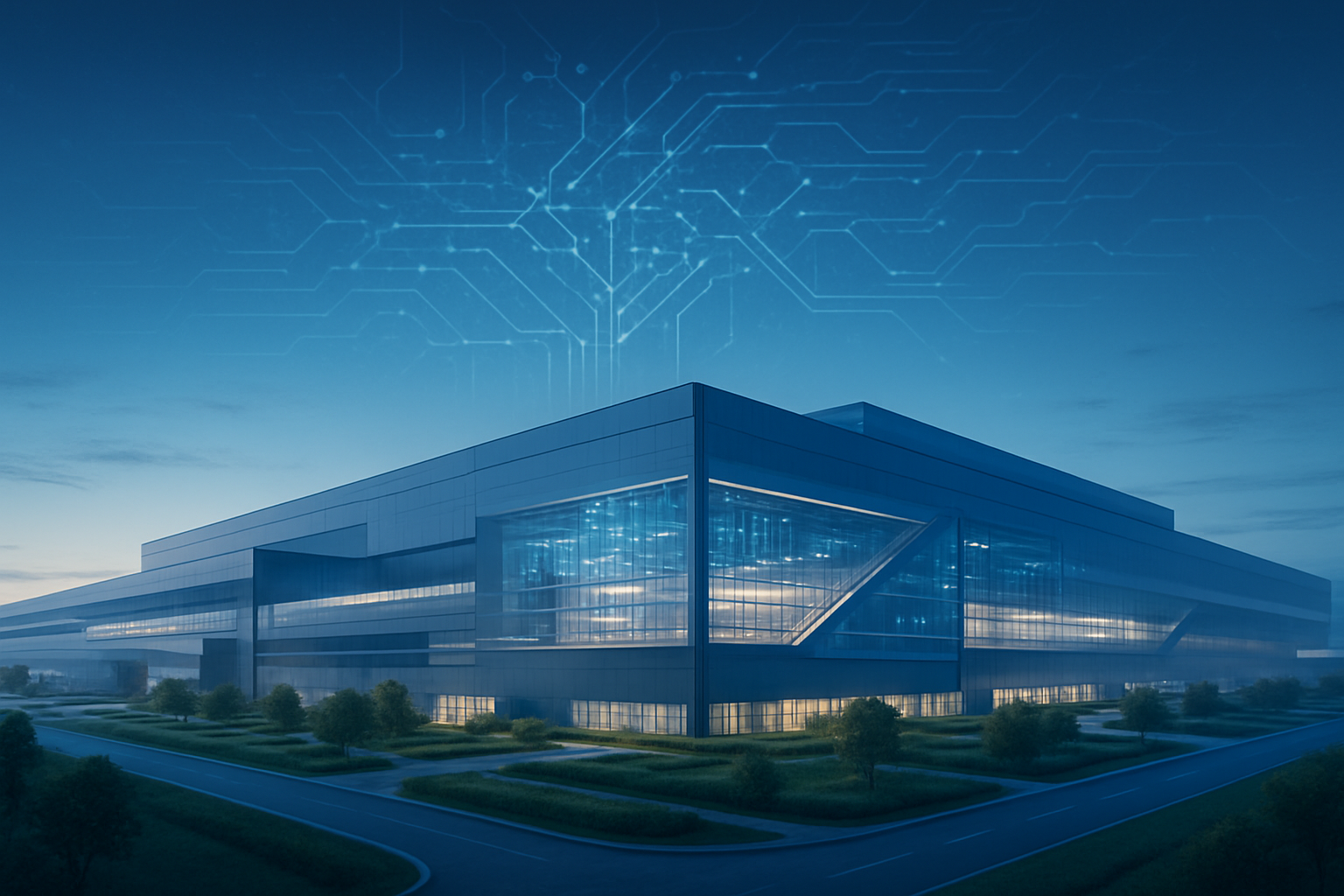
In a landmark announcement poised to significantly bolster the "Made in America" initiative and the nation's high-end manufacturing capabilities, ZJK Industrial Co., Ltd. (NASDAQ: ZJK) and Chaince Digital Holdings Inc. (NASDAQ: CD) have unveiled a strategic partnership. This collaboration, revealed today, November 24, 2025, centers on establishing a state-of-the-art, U.S.-based Gigafactory dedicated to the research, development, and manufacturing of precision components crucial for the burgeoning AI and semiconductor industries. With an anticipated investment of up to US$200 million, this venture signals a robust commitment to localizing critical supply chains and meeting the escalating demand for advanced hardware in an AI-driven world.
The immediate significance of this partnership lies in its direct response to global supply chain vulnerabilities and the strategic imperative to secure domestic production of high-value components. By focusing on precision parts for AI hardware, semiconductor equipment, electric vehicles (EVs), and consumer electronics, the joint venture aims to create a resilient ecosystem capable of supporting next-generation technological advancements. This move is expected to have a ripple effect, strengthening the U.S. manufacturing landscape and fostering innovation in sectors vital to economic growth and national security.
Precision Engineering Meets Digital Acumen: A Deep Dive into the Gigafactory's Technical Vision
The newly announced Gigafactory will be operated by a Delaware-based joint venture, bringing together ZJK Industrial's formidable expertise in precision metal parts and advanced manufacturing with Chaince Digital's strengths in capital markets, digital technologies, and industrial networks. The facility's technical focus will be on producing high-value precision and hardware components essential for the AI and semiconductor industries. This includes, but is not limited to, AI end-device and intelligent hardware components, critical semiconductor equipment parts, and structural/thermal components. Notably, the partnership will strategically exclude restricted semiconductor segments such as wafer fabrication, chip design, or advanced packaging, aligning with broader industry trends towards specialized manufacturing.
ZJK Industrial, a recognized leader in precision fasteners and metal parts, brings to the table a wealth of experience in producing components for intelligent electronic equipment, new energy vehicles, aerospace, energy storage systems, medical devices, and, crucially, liquid cooling systems used in artificial intelligence supercomputers. The company has already been scaling up production for components directly related to AI accelerator chips, such as Nvidia's B40, demonstrating its readiness for the demands of advanced AI hardware. Their existing capabilities in liquid cooling and advanced chuck technology for machining irregular components for AI servers and robotics will be pivotal in the Gigafactory's offerings, addressing the intense thermal management requirements of modern AI systems.
This collaborative approach differs significantly from previous manufacturing strategies that often relied heavily on fragmented global supply chains. By establishing an integrated R&D and manufacturing hub in the U.S., the partners aim to achieve greater control over quality, accelerate innovation cycles, and enhance supply chain resilience. Initial reactions from the AI research community and industry experts have been largely positive, viewing the partnership as a strategic step towards de-risking critical technology supply chains and fostering domestic innovation in a highly competitive global arena. The emphasis on precision components rather than core chip fabrication allows the venture to carve out a vital niche, supporting the broader semiconductor ecosystem.
Reshaping the Competitive Landscape for AI and Tech Giants
This strategic partnership is poised to significantly impact a wide array of AI companies, tech giants, and startups by providing a localized, high-quality source for essential precision components. Companies heavily invested in AI hardware development, such as those building AI servers, edge AI devices, and advanced robotics, stand to benefit immensely from a more reliable and geographically proximate supply chain. Tech giants like NVIDIA, Intel, and AMD, which rely on a vast network of suppliers for their AI accelerator platforms, could see improved component availability and potentially faster iteration cycles for their next-generation products.
The competitive implications for major AI labs and tech companies are substantial. While the Gigafactory won't produce the chips themselves, its focus on precision components – from advanced thermal management solutions to intricate structural parts for semiconductor manufacturing equipment – addresses a critical bottleneck in the AI hardware pipeline. This could lead to a competitive advantage for companies that leverage these domestically produced components, potentially enabling faster time-to-market for new AI products and systems. For startups in the AI hardware space, access to a U.S.-based precision manufacturing partner could lower entry barriers and accelerate their development timelines.
Potential disruption to existing products or services could arise from a shift in supply chain dynamics. Companies currently reliant on overseas suppliers for similar components might face pressure to diversify their sourcing to include domestic options, especially given the ongoing geopolitical uncertainties surrounding semiconductor supply. The partnership's market positioning is strong, capitalizing on the "Made in America" trend and the urgent need for supply chain localization. By specializing in high-value, precision components, ZJK Industrial and Chaince Digital are carving out a strategic advantage, positioning themselves as key enablers for the next wave of AI innovation within the U.S.
Broader Implications: A Cornerstone in the Evolving AI Landscape
This partnership fits squarely into the broader AI landscape and current trends emphasizing supply chain resilience, domestic manufacturing, and the exponential growth of AI hardware demand. As of November 2025, the semiconductor industry is experiencing a transformative phase, with AI and cloud computing driving unprecedented demand for advanced chips. The global semiconductor market is projected to grow by 15% in 2025, fueled significantly by AI, with high-bandwidth memory (HBM) revenue alone expected to surge by up to 70%. This Gigafactory directly addresses the need for the foundational components that enable such advanced chips and the systems they power.
The impacts of this collaboration extend beyond mere component production; it represents a significant step towards strengthening the entire U.S. high-end manufacturing ecosystem. It will foster job creation, stimulate local economies, and cultivate a skilled workforce in advanced manufacturing techniques. While the partnership wisely avoids restricted semiconductor segments, potential concerns could include the scale of the initial investment relative to the vast needs of the industry and the speed at which the Gigafactory can become fully operational and meet the immense demand. However, the focused approach on precision components minimizes some of the capital-intensive risks associated with full-scale chip fabrication.
Comparisons to previous AI milestones and breakthroughs highlight the shift from purely software-centric advancements to a recognition of the critical importance of underlying hardware infrastructure. Just as early AI advancements were limited by computational power, today's sophisticated AI models demand increasingly powerful and efficiently cooled hardware. This partnership, by focusing on the "nuts and bolts" of AI infrastructure, is a testament to the industry's maturation, where physical manufacturing capabilities are becoming as crucial as algorithmic innovations. It echoes broader global trends, with nations like Japan also making significant investments to revitalize their domestic semiconductor industries.
The Road Ahead: Anticipated Developments and Future Applications
Looking ahead, the ZJK Industrial and Chaince Digital partnership is expected to drive several key developments in the near and long term. In the immediate future, the focus will be on the swift establishment of the Delaware-based joint venture, the deployment of the initial US$200 million investment, and the commencement of Gigafactory construction. The appointment of a U.S.-based management team with a five-year localization goal signals a commitment to embedding the operation deeply within the domestic industrial fabric. Chaince Securities' role as a five-year capital markets strategic advisor will be crucial in securing further financing and supporting ZJK's U.S. operational growth.
Potential applications and use cases on the horizon are vast. Beyond current AI hardware and semiconductor equipment, the Gigafactory's precision components could become integral to emerging technologies such as advanced robotics, autonomous systems, quantum computing hardware, and next-generation medical devices that increasingly leverage AI at the edge. The expertise in liquid cooling systems, in particular, will be critical as AI supercomputers continue to push the boundaries of power consumption and heat generation. Experts predict that as AI models grow in complexity, the demand for highly specialized and efficient cooling and structural components will only intensify, positioning this Gigafactory at the forefront of future innovation.
However, challenges will undoubtedly need to be addressed. Scaling production to meet the aggressive growth projections of the AI and semiconductor markets will require continuous innovation in manufacturing processes and a steady supply of skilled labor. Navigating potential supply chain imbalances and geopolitical shifts will also remain a constant consideration. Experts predict that the success of this venture will not only depend on its technical capabilities but also on its ability to adapt rapidly to evolving market demands and technological shifts, making strategic resource allocation and adaptive production planning paramount.
A New Chapter for U.S. High-End Manufacturing
The strategic partnership between ZJK Industrial and Chaince Digital marks a significant chapter in the ongoing narrative of U.S. high-end manufacturing and its critical role in the global AI revolution. The establishment of a U.S.-based Gigafactory for precision components represents a powerful summary of key takeaways: a proactive response to supply chain vulnerabilities, a deep commitment to domestic innovation, and a strategic investment in the foundational hardware that underpins the future of artificial intelligence.
This development's significance in AI history cannot be overstated. It underscores the realization that true AI leadership requires not only groundbreaking algorithms and software but also robust, resilient, and localized manufacturing capabilities for the physical infrastructure. It represents a tangible step towards securing the technological sovereignty of the U.S. in critical sectors. The long-term impact is expected to be profound, fostering a more integrated and self-reliant domestic technology ecosystem, attracting further investment, and creating a new benchmark for strategic partnerships in the advanced manufacturing space.
In the coming weeks and months, all eyes will be on the progress of the joint venture: the finalization of the Gigafactory's location, the initial stages of construction, and the formation of the U.S. management team. The ability of ZJK Industrial and Chaince Digital to execute on this ambitious vision will serve as a crucial indicator of the future trajectory of "Made in America" in the high-tech arena. This collaboration is more than just a business deal; it's a strategic imperative that could redefine the landscape of AI and semiconductor manufacturing for decades to come.
This content is intended for informational purposes only and represents analysis of current AI developments.
TokenRing AI delivers enterprise-grade solutions for multi-agent AI workflow orchestration, AI-powered development tools, and seamless remote collaboration platforms.
For more information, visit https://www.tokenring.ai/.