Tag: Vera CPU

  • NVIDIA Rubin Architecture Unleashed: The Dawn of the $0.01 Inference Era

    NVIDIA Rubin Architecture Unleashed: The Dawn of the $0.01 Inference Era

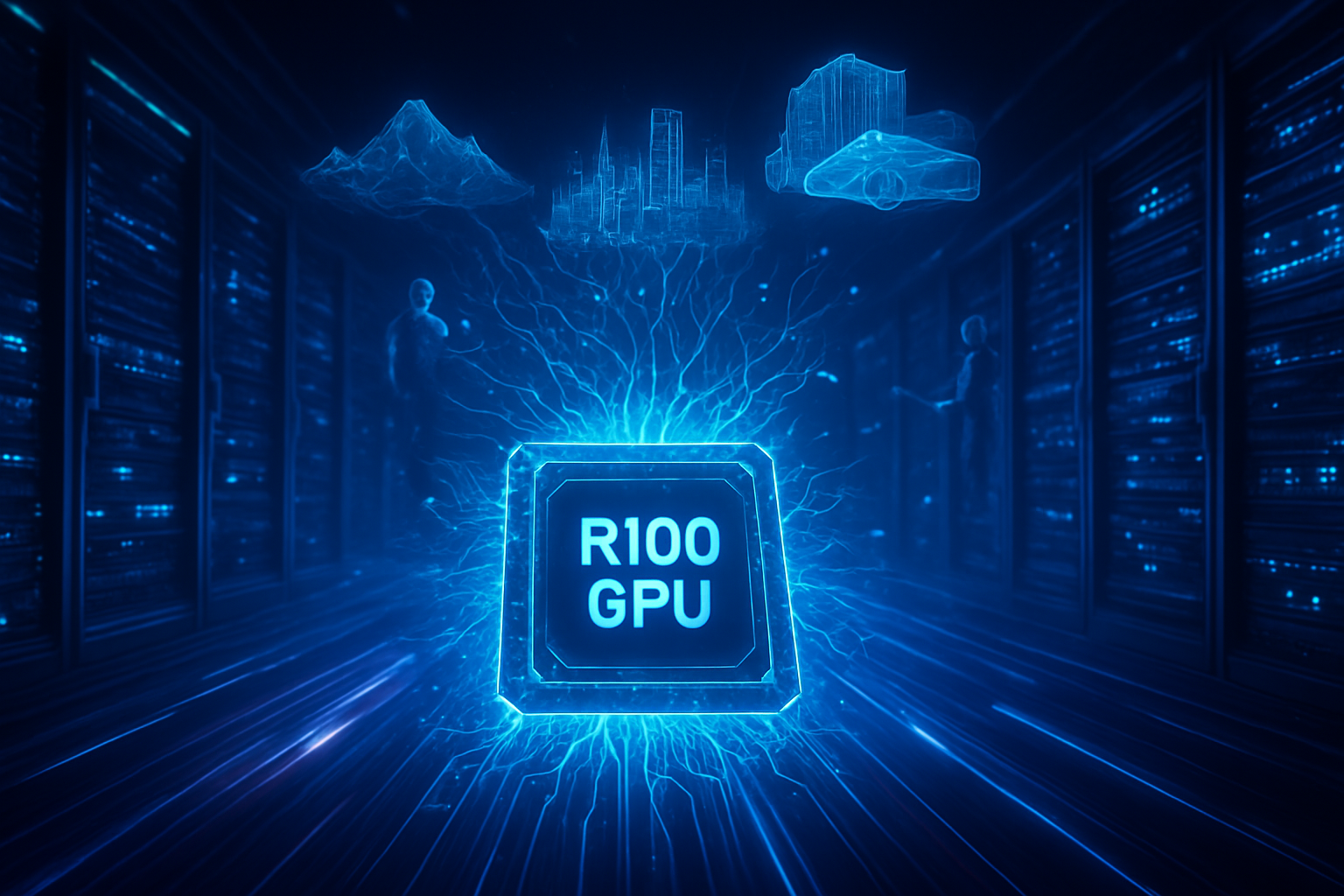
    LAS VEGAS — Just weeks after the conclusion of CES 2026, the global technology landscape is still reeling from NVIDIA’s (NASDAQ: NVDA) definitive unveil of the Rubin platform. Positioned as the successor to the already-formidable Blackwell architecture, Rubin is not merely an incremental hardware update; it is a fundamental reconfiguration of the AI factory. By integrating the new Vera CPU and R100 GPUs, NVIDIA has promised a staggering 10x reduction in inference costs, effectively signaling the end of the "expensive AI" era and the beginning of the age of autonomous, agentic systems.

    The significance of this launch cannot be overstated. As large language models (LLMs) transition from passive text generators to active "Agentic AI"—systems capable of multi-step reasoning, tool use, and autonomous decision-making—the demand for efficient, high-frequency compute has skyrocketed. NVIDIA’s Rubin platform addresses this by collapsing the traditional barriers between memory and processing, providing the infrastructure necessary for "swarms" of AI agents to operate at a fraction of today's operational expenditure.

    The Technical Leap: R100, Vera, and the End of the Memory Wall

    At the heart of the Rubin platform lies the R100 GPU, a marvel of engineering fabricated on TSMC's (NYSE: TSM) enhanced 3nm (N3P) process. The R100 utilizes a sophisticated chiplet-based design, packing 336 billion transistors into a single package—a 1.6x density increase over the Blackwell generation. Most critically, the R100 marks the industry’s first wide-scale adoption of HBM4 memory. With eight stacks of HBM4 delivering 22 TB/s of bandwidth, NVIDIA has effectively shattered the "memory wall" that has long throttled the performance of complex AI reasoning tasks.

    Complementing the R100 is the Vera CPU, NVIDIA's first dedicated high-performance processor designed specifically for the orchestration of AI workloads. Featuring 88 custom "Olympus" ARM cores (v9.2-A architecture), the Vera CPU replaces the previous Grace architecture. Vera is engineered to handle the massive data movement and logic orchestration required by agentic AI, providing 1.2 TB/s of LPDDR5X memory bandwidth. This "Superchip" pairing is then scaled into the Vera Rubin NVL72, a liquid-cooled rack-scale system that offers 260 TB/s of aggregate bandwidth—a figure NVIDIA CEO Jensen Huang famously claimed is "more than the throughput of the entire internet."

    The jump in efficiency is largely attributed to the third-generation Transformer Engine and the introduction of the NVFP4 format. These advancements allow for hardware-accelerated adaptive compression, enabling the Rubin platform to achieve a 10x reduction in the cost per inference token compared to Blackwell. Initial reactions from the research community have been electric, with experts noting that the ability to run multi-million token context windows with negligible latency will fundamentally change how AI models are designed and deployed.

    The Battle for the AI Factory: Hyperscalers and Competitors

    The launch has drawn immediate and vocal support from the world's largest cloud providers. Microsoft (NASDAQ: MSFT), Amazon (NASDAQ: AMZN), and Alphabet (NASDAQ: GOOGL) have already announced massive procurement orders for Rubin-class hardware. Microsoft’s Azure division confirmed that its upcoming "Fairwater" superfactories were pre-engineered to support the 132kW power density of the Rubin NVL72 racks. Google Cloud’s CEO Sundar Pichai emphasized that the Rubin platform is essential for the next generation of Gemini models, which are expected to function as fully autonomous research and coding agents.

    However, the Rubin launch has also intensified the competitive pressure on AMD (NASDAQ: AMD) and Intel (NASDAQ: INTC). At CES, AMD attempted to preempt NVIDIA’s announcement with its own Instinct MI455X and the "Helios" platform. While AMD’s offering boasts more HBM4 capacity (432GB per GPU), it lacks the tightly integrated CPU-GPU-Networking ecosystem that NVIDIA has cultivated with Vera and NVLink 6. Intel, meanwhile, is pivoting toward the "Sovereign AI" market, positioning its Gaudi 4 and Falcon Shores chips as price-to-performance alternatives for enterprises that do not require the bleeding-edge scale of the Rubin architecture.

    For the startup ecosystem, Rubin represents an "Inference Reckoning." The 90% drop in token costs means that the "LLM wrapper" business model is effectively dead. To survive, AI startups are now shifting their focus toward proprietary data flywheels and specialized agentic workflows. The barrier to entry for building complex, multi-agent systems has dropped, but the bar for providing actual, measurable ROI to enterprise clients has never been higher.

    Beyond the Chatbot: The Era of Agentic Significance

    The Rubin platform represents a philosophical shift in the AI landscape. Until now, the industry focus has been on training larger and more capable models. With Rubin, NVIDIA is signaling that the frontier has shifted to inference. The platform’s architecture is uniquely optimized for "Agentic AI"—systems that don't just answer questions, but execute tasks. Features like Inference Context Memory Storage (ICMS) offload the "KV cache" (the short-term memory of an AI agent) to dedicated storage tiers, allowing agents to maintain context over thousands of interactions without slowing down.

    This shift does not come without concerns, however. The power requirements for the Rubin platform are unprecedented. A single Rubin NVL72 rack consumes approximately 132kW, with "Ultra" configurations projected to hit 600kW per rack. This has sparked a "power-grid arms race," leading hyperscalers like Microsoft and Amazon to invest heavily in carbon-free energy solutions, including the restart of nuclear reactors. The environmental impact of these "AI mega-factories" remains a central point of debate among policymakers and environmental advocates.

    Comparatively, the Rubin launch is being viewed as the "GPT-4 moment" for hardware. Just as GPT-4 proved the viability of massive LLMs, Rubin is proving the viability of massive, low-cost inference. This breakthrough is expected to accelerate the deployment of AI in high-stakes fields like medicine, where autonomous agents can now perform real-time diagnostic reasoning, and legal services, where AI can navigate massive case-law databases with perfect memory and reasoning capabilities.

    The Horizon: What Comes After Rubin?

    Looking ahead, NVIDIA has already hinted at its post-Rubin roadmap, which includes an annual cadence of "Ultra" and "Super" refreshes. In the near term, we expect to see the rollout of the Rubin-Ultra in early 2027, which will likely push HBM4 capacity even further. The long-term development of "Sovereign AI" clouds—where nations build their own Rubin-powered data centers—is also gaining momentum, with significant interest from the EU and Middle Eastern sovereign wealth funds.

    The next major challenge for the industry will be the "data center bottleneck." While NVIDIA can produce chips at an aggressive pace, the physical infrastructure—the cooling systems, the power transformers, and the land—cannot be scaled as quickly. Experts predict that the next two years will be defined by how well companies can navigate these physical constraints. We are also likely to see a surge in demand for liquid-cooling technology, as the 2300W TDP of individual Rubin GPUs makes traditional air cooling obsolete.

    Conclusion: A New Chapter in AI History

    The launch of the NVIDIA Rubin platform at CES 2026 marks a watershed moment in the history of computing. By delivering a 10x reduction in inference costs and a dedicated architecture for agentic AI, NVIDIA has moved the industry closer to the goal of true autonomous intelligence. The platform’s combination of the R100 GPU, Vera CPU, and HBM4 memory sets a new benchmark that will take years for competitors to match.

    As we move into the second half of 2026, the focus will shift from the specs of the chips to the applications they enable. The success of the Rubin era will be measured not by teraflops or transistors, but by the reliability and utility of the AI agents that now have the compute they need to think, learn, and act. For now, one thing is certain: the cost of intelligence has just plummeted, and the world is about to change because of it.


    This content is intended for informational purposes only and represents analysis of current AI developments.

    TokenRing AI delivers enterprise-grade solutions for multi-agent AI workflow orchestration, AI-powered development tools, and seamless remote collaboration platforms.
    For more information, visit https://www.tokenring.ai/.
  • The Rubin Revolution: NVIDIA Resets the Ceiling for Agentic AI and Extreme Inference in 2026

    The Rubin Revolution: NVIDIA Resets the Ceiling for Agentic AI and Extreme Inference in 2026

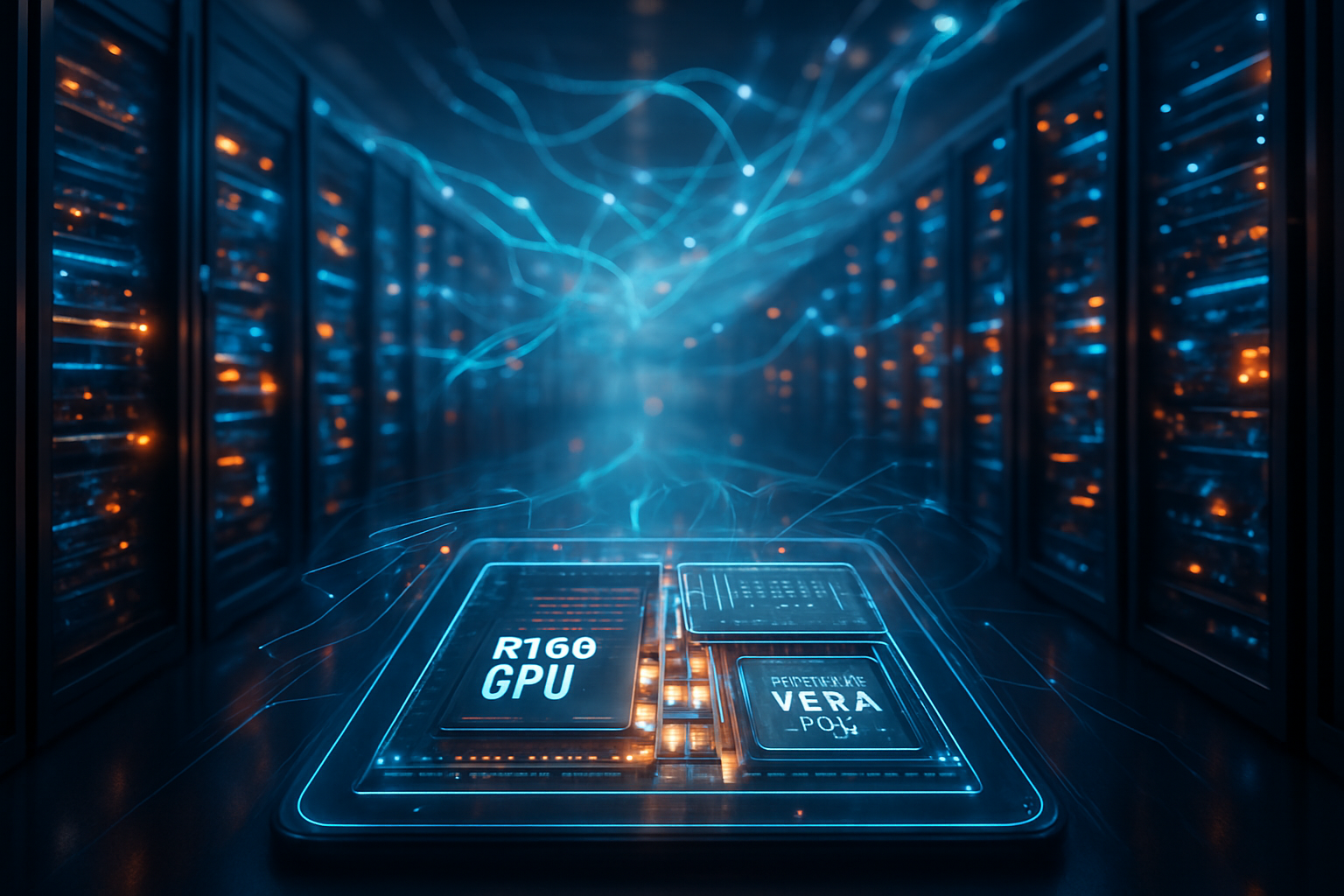
    As the world rings in early 2026, the artificial intelligence landscape has reached a definitive turning point. NVIDIA (NASDAQ: NVDA) has officially signaled the end of the "Generative Era" and the beginning of the "Agentic Era" with the full-scale transition to its Rubin platform. Unveiled in detail at CES 2026, the Rubin architecture is not merely an incremental update to the record-breaking Blackwell chips of 2025; it is a fundamental redesign of the AI supercomputer. By moving to a six-chip extreme-codesigned architecture, NVIDIA is attempting to solve the most pressing bottleneck of 2026: the cost and complexity of deploying autonomous AI agents at global scale.

    The immediate significance of the Rubin launch lies in its promise to reduce the cost of AI inference by nearly tenfold. While the industry spent 2023 through 2025 focused on the raw horsepower needed to train massive Large Language Models (LLMs), the priority has shifted toward "Agentic AI"—systems capable of multi-step reasoning, tool use, and autonomous execution. These workloads require a different kind of compute density and memory bandwidth, which the Rubin platform aims to provide. With the first Rubin-powered racks slated for deployment by major hyperscalers in the second half of 2026, the platform is already resetting expectations for what enterprise AI can achieve.

    The Six-Chip Symphony: Inside the Rubin Architecture

    The technical cornerstone of Rubin is its transition to an "extreme-codesigned" architecture. Rather than treating the GPU, CPU, and networking components as separate entities, NVIDIA (NASDAQ: NVDA) has engineered six core silicon elements to function as a single logical unit. This "system-on-rack" approach includes the Rubin GPU, the new Vera CPU, NVLink 6, the ConnectX-9 SuperNIC, the BlueField-4 DPU, and the Spectrum-6 Ethernet Switch. The flagship Rubin GPU features the groundbreaking HBM4 memory standard, doubling the interface width and delivering a staggering 22 TB/s of bandwidth—nearly triple that of the Blackwell generation.

    At the heart of the platform sits the Vera CPU, NVIDIA's most ambitious foray into custom silicon. Replacing the Grace architecture, Vera is built on a custom Arm-based "Olympus" core design specifically optimized for the data-orchestration needs of agentic AI. Featuring 88 cores and 176 concurrent threads, Vera is designed to eliminate the "jitter" and latency spikes that can derail real-time autonomous reasoning. When paired with the Rubin GPU via the 1.8 TB/s NVLink-C2C interconnect, the system achieves a level of hardware-software synergy that previously required massive software overhead to manage.

    Initial reactions from the AI research community have been centered on Rubin’s "Test-Time Scaling" capabilities. Modern agents often need to "think" longer before answering, generating thousands of internal reasoning tokens to verify a plan. The Rubin platform supports this through the BlueField-4 DPU, which manages up to 150 TB of "Context Memory" per rack. By offloading the Key-Value (KV) cache from the GPU to a dedicated storage layer, Rubin allows agents to maintain multi-million token contexts without starving the compute engine. Industry experts suggest this architecture is the first to truly treat AI memory as a tiered, scalable resource rather than a static buffer.

    A New Arms Race: Competitive Fallout and the Hyperscale Response

    The launch of Rubin has forced competitors to refine their strategies. Advanced Micro Devices (NASDAQ: AMD) is countering with its Instinct MI400 series, which focuses on a "high-capacity" play. AMD’s MI455X boasts up to 432GB of HBM4 memory—significantly more than the base Rubin GPU—making it a preferred choice for researchers working on massive, non-compressed models. However, AMD is fighting an uphill battle against NVIDIA’s vertically integrated stack. To compensate, AMD is championing the "UALink" and "Ultra Ethernet" open standards, positioning itself as the flexible alternative to NVIDIA’s proprietary ecosystem.

    Meanwhile, Intel (NASDAQ: INTC) has pivoted its data center strategy toward "Jaguar Shores," a rack-scale system that mirrors NVIDIA’s integrated approach but focuses on a "unified memory" architecture using Intel’s 18A manufacturing process. While Intel remains behind in the raw performance race as of January 2026, its focus on "Edge AI" and sovereign compute clusters has allowed it to secure a foothold in the European and Asian markets, where data residency and manufacturing independence are paramount.

    The major hyperscalers—Microsoft (NASDAQ: MSFT), Alphabet (NASDAQ: GOOGL), Amazon (NASDAQ: AMZN), and Meta Platforms (NASDAQ: META)—are navigating a complex relationship with NVIDIA. Microsoft remains the largest adopter, building its "Fairwater" superfactories specifically to house Rubin NVL72 racks. However, the "NVIDIA Tax" continues to drive these giants to develop their own silicon. Amazon’s Trainium3 and Google’s TPU v7 are now handling a significant portion of their internal, well-defined inference workloads. The Rubin platform’s strategic advantage is its versatility; while custom ASICs are excellent for specific tasks, Rubin is the "Swiss Army Knife" for the unpredictable, reasoning-heavy workloads that define the new agentic frontier.

    Beyond the Chips: Sovereignty, Energy, and the Physical AI Shift

    The Rubin transition is unfolding against a broader backdrop of "Physical AI" and a global energy crisis. By early 2026, the focus of the AI world has moved from digital chat into the physical environment. Humanoid robots and autonomous industrial systems now rely on the same high-performance inference that Rubin provides. The ability to process "world models"—AI that understands physics and 3D space—requires the extreme memory bandwidth that HBM4 and Rubin provide. This shift has turned the "compute-to-population" ratio into a new metric of national power, leading to the rise of "Sovereign AI" clusters in regions like France, the UAE, and India.

    However, the power demands of these systems have reached a fever pitch. A single Rubin-powered data center can consume as much electricity as a small city. This has led to a pivot toward modular nuclear reactors (SMRs) and advanced liquid cooling technologies. NVIDIA’s NVL72 and NVL144 systems are now designed for "warm-water cooling," allowing data centers to operate without the energy-intensive chillers used in previous decades. The broader significance of Rubin is thus as much about thermal efficiency as it is about FLOPS; it is an architecture designed for a world where power is the ultimate constraint.

    Concerns remain regarding vendor lock-in and the potential for a "demand air pocket" if the ROI on agentic AI does not materialize as quickly as the infrastructure is built. Critics argue that by controlling the CPU, GPU, and networking, NVIDIA is creating a "walled garden" that could stifle innovation in alternative architectures. Nonetheless, the sheer performance leap—delivering 50 PetaFLOPS of FP4 inference—has, for now, silenced most skeptics who were predicting an end to the AI boom.

    Looking Ahead: The Road to Rubin Ultra and Feynman

    NVIDIA’s roadmap suggests that the Rubin era is just the beginning. The company has already teased "Rubin Ultra" for 2027, which will transition to HBM4e memory and an even denser NVL576 rack configuration. Beyond that, the "Feynman" architecture planned for 2028 is rumored to target a 30x performance increase over the Blackwell generation, specifically aiming for the thresholds required for Artificial Superintelligence (ASI).

    In the near term, the industry will be watching the second-half 2026 rollout of Rubin systems very closely. The primary challenge will be the supply chain; securing enough HBM4 capacity and advanced packaging space at TSMC remains a bottleneck. Furthermore, as AI agents become more autonomous, the industry will face new regulatory and safety hurdles. The ability of Rubin’s hardware-level security features, built into the BlueField-4 DPU, to manage "agentic drift" will be a key area of study for researchers.

    A Legacy of Integration: Final Thoughts on the Rubin Transition

    The transition to the Rubin platform marks a historical moment in computing history. It is the moment when the GPU transitioned from being a "coprocessor" to becoming the core of a unified, heterogeneous supercomputing system. By codesigning every aspect of the stack, NVIDIA (NASDAQ: NVDA) has effectively reset the ceiling for what is possible in AI inference and autonomous reasoning.

    As we move deeper into 2026, the key takeaways are clear: the cost of intelligence is falling, the complexity of AI tasks is rising, and the infrastructure is becoming more integrated. Whether this leads to a sustainable new era of productivity or further consolidates power in the hands of a few tech giants remains the central question of the year. For now, the "Rubin Revolution" is in full swing, and the rest of the industry is once again racing to catch up.


    This content is intended for informational purposes only and represents analysis of current AI developments.

    TokenRing AI delivers enterprise-grade solutions for multi-agent AI workflow orchestration, AI-powered development tools, and seamless remote collaboration platforms.
    For more information, visit https://www.tokenring.ai/.
  • NVIDIA Unveils “Vera Rubin” AI Platform at CES 2026: A 50-Petaflop Leap into the Era of Agentic Intelligence

    NVIDIA Unveils “Vera Rubin” AI Platform at CES 2026: A 50-Petaflop Leap into the Era of Agentic Intelligence

    In a landmark keynote at CES 2026, NVIDIA (NASDAQ:NVDA) CEO Jensen Huang officially introduced the "Vera Rubin" AI platform, a comprehensive architectural overhaul designed to power the next generation of reasoning-capable, autonomous AI agents. Named after the pioneering astronomer who provided evidence for dark matter, the Rubin architecture succeeds the Blackwell generation, moving beyond individual chips to a "six-chip" unified system-on-a-rack designed to eliminate the data bottlenecks currently stifling trillion-parameter models.

    The announcement marks a pivotal moment for the industry, as NVIDIA transitions from being a supplier of high-performance accelerators to a provider of "AI Factories." By integrating the new Vera CPU, Rubin GPU, and HBM4 memory into a single, liquid-cooled rack-scale entity, NVIDIA is positioning itself as the indispensable backbone for "Sovereign AI" initiatives and frontier research labs. However, this leap forward comes at a cost to the consumer market; NVIDIA confirmed that a global memory shortage is forcing a significant production pivot, prioritizing enterprise AI systems over the newly launched GeForce RTX 50 series.

    Technical Specifications: The Rubin GPU and Vera CPU

    The technical specifications of the Rubin GPU are nothing short of staggering, representing a 1.6x increase in transistor density over Blackwell with a total of 336 billion transistors. Each Rubin GPU is capable of delivering 50 petaflops of NVFP4 inference performance—a five-fold increase over the previous generation. This is achieved through a third-generation Transformer Engine that utilizes hardware-accelerated adaptive compression, allowing the system to dynamically adjust precision across transformer layers to maximize throughput without compromising the "reasoning" accuracy required by modern LLMs.

    Central to this performance jump is the integration of HBM4 memory, sourced from partners like Micron (NASDAQ:MU) and SK Hynix (KRX:000660). The Rubin GPU features 288GB of HBM4, providing an unprecedented 22 TB/s of memory bandwidth. To manage this massive data flow, NVIDIA introduced the Vera CPU, an Arm-based (NASDAQ:ARM) processor featuring 88 custom "Olympus" cores. The Vera CPU and Rubin GPU are linked via NVLink-C2C, a coherent interconnect that allows the CPU’s 1.5 TB of LPDDR5X memory and the GPU’s HBM4 to function as a single, unified memory pool. This "Superchip" configuration is specifically optimized for Agentic AI, where the system must maintain vast "Inference Context Memory" to reason through complex, multi-step tasks.

    Industry experts have reacted with a mix of awe and strategic concern. Researchers at frontier labs like Anthropic and OpenAI have noted that the Rubin architecture could allow for the training of Mixture-of-Experts (MoE) models with four times fewer GPUs than the Blackwell generation. However, the move toward a proprietary, tightly integrated "six-chip" stack—including the ConnectX-9 SuperNIC and BlueField-4 DPU—has raised questions about hardware lock-in, as the platform is increasingly designed to function only as a complete, NVIDIA-validated ecosystem.

    Strategic Pivot: The Rise of the AI Factory

    The strategic implications of the Vera Rubin launch are felt most acutely in the competitive landscape of data center infrastructure. By shifting the "unit of sale" from a single GPU to the NVL72 rack—a system combining 72 Rubin GPUs and 36 Vera CPUs—NVIDIA is effectively raising the barrier to entry for competitors. This "rack-scale" approach allows NVIDIA to capture the entire value chain of the AI data center, from the silicon and networking to the cooling and software orchestration.

    This move directly challenges AMD (NASDAQ:AMD), which recently unveiled its Instinct MI400 series and the "Helios" rack. While AMD’s MI400 offers higher raw HBM4 capacity (432GB), NVIDIA’s advantage lies in its vertical integration and the "Inference Context Memory" feature, which allows different GPUs in a rack to share and reuse Key-Value (KV) cache data. This is a critical advantage for long-context reasoning models. Meanwhile, Intel (NASDAQ:INTC) is attempting to pivot with its "Jaguar Shores" platform, focusing on cost-effective enterprise inference to capture the market that finds the premium price of the Rubin NVL72 prohibitive.

    However, the most immediate impact on the broader tech sector is the supply chain fallout. NVIDIA confirmed that the acute shortage of HBM4 and GDDR7 memory has led to a 30–40% production cut for the consumer GeForce RTX 50 series. By reallocating limited wafer and memory capacity to the high-margin Rubin systems, NVIDIA is signaling that the "AI Factory" is now its primary business, leaving gamers and creative professionals to face persistent supply constraints and elevated retail prices for the foreseeable future.

    Broader Significance: From Generative to Agentic AI

    The Vera Rubin platform represents more than just a hardware upgrade; it reflects a fundamental shift in the AI landscape from "generative" to "agentic" intelligence. While previous architectures focused on the raw throughput needed to generate text or images, Rubin is built for systems that can reason, plan, and execute actions autonomously. The inclusion of the Vera CPU, specifically designed for code compilation and data orchestration, underscores the industry's move toward AI that can write its own software and manage its own workflows in real-time.

    This development also accelerates the trend of "Sovereign AI," where nations seek to build their own domestic AI infrastructure. The Rubin NVL72’s ability to deliver 3.6 exaflops of inference in a single rack makes it an attractive "turnkey" solution for governments looking to establish national AI clouds. However, this concentration of power within a single proprietary stack has sparked a renewed debate over the "CUDA Moat." As NVIDIA moves the moat from software into the physical architecture of the data center, the open-source community faces a growing challenge in maintaining hardware-agnostic AI development.

    Comparisons are already being drawn to the "System/360" moment in computing history—where IBM (NYSE:IBM) unified its disparate computing lines into a single, scalable architecture. NVIDIA is attempting a similar feat, aiming to define the standard for the "AI era" by making the rack, rather than the chip, the fundamental building block of modern civilization’s digital infrastructure.

    Future Outlook: The Road to Reasoning-as-a-Service

    Looking ahead, the deployment of the Vera Rubin platform in the second half of 2026 is expected to trigger a new wave of "Reasoning-as-a-Service" offerings from major cloud providers. We can expect to see the first trillion-parameter models that can operate with near-instantaneous latency, enabling real-time robotic control and complex autonomous scientific discovery. The "Inference Context Memory" technology will likely be the next major battleground, as AI labs race to build models that can "remember" and learn from interactions across massive, multi-hour sessions.

    However, significant challenges remain. The reliance on liquid cooling for the NVL72 racks will require a massive retrofit of existing data center infrastructure, potentially slowing the adoption rate for all but the largest hyperscalers. Furthermore, the ongoing memory shortage is a "hard ceiling" on the industry’s growth. If SK Hynix and Micron cannot scale HBM4 production faster than currently projected, the ambitious roadmaps of NVIDIA and its rivals may face delays by 2027. Experts predict that the next frontier will involve "optical interconnects" integrated directly onto the Rubin successors, as even the 3.6 TB/s of NVLink 6 may eventually become a bottleneck.

    Conclusion: A New Era of Computing

    The unveiling of the Vera Rubin platform at CES 2026 cements NVIDIA's position as the architect of the AI age. By delivering 50 petaflops of inference per GPU and pioneering a rack-scale system that treats 72 GPUs as a single machine, NVIDIA has effectively redefined the limits of what is computationally possible. The integration of the Vera CPU and HBM4 memory marks a decisive end to the era of "bottlenecked" AI, clearing the path for truly autonomous agentic systems.

    Yet, this progress is bittersweet for the broader tech ecosystem. The strategic prioritization of AI silicon over consumer GPUs highlights a growing divide between the enterprise "AI Factories" and the general public. As we move into the latter half of 2026, the industry will be watching closely to see if NVIDIA can maintain its supply chain and if the promise of 100-petaflop "Superchips" can finally bridge the gap between digital intelligence and real-world autonomous action.


    This content is intended for informational purposes only and represents analysis of current AI developments.

    TokenRing AI delivers enterprise-grade solutions for multi-agent AI workflow orchestration, AI-powered development tools, and seamless remote collaboration platforms.
    For more information, visit https://www.tokenring.ai/.
  • Beyond Blackwell: NVIDIA Unleashes Rubin Architecture to Power the Era of Trillion-Parameter World Models

    Beyond Blackwell: NVIDIA Unleashes Rubin Architecture to Power the Era of Trillion-Parameter World Models

    As of January 2, 2026, the artificial intelligence landscape has reached a pivotal turning point with the formal rollout of NVIDIA's (NASDAQ:NVDA) next-generation "Rubin" architecture. Following the unprecedented success of the Blackwell series, which dominated the data center market throughout 2024 and 2025, the Rubin platform represents more than just a seasonal upgrade; it is a fundamental architectural shift designed to move the industry from static large language models (LLMs) toward dynamic, autonomous "World Models" and reasoning agents.

    The immediate significance of the Rubin launch lies in its ability to break the "memory wall" that has long throttled AI performance. By integrating the first-ever HBM4 memory stacks and a custom-designed Vera CPU, NVIDIA has effectively doubled the throughput available for the world’s most demanding AI workloads. This transition signals the start of the "AI Factory" era, where trillion-parameter models are no longer experimental novelties but the standard engine for global enterprise automation and physical robotics.

    The Engineering Marvel of the R100: 3nm Precision and HBM4 Power

    At the heart of the Rubin platform is the R100 GPU, a powerhouse fabricated on Taiwan Semiconductor Manufacturing Company’s (NYSE:TSM) enhanced 3nm (N3P) process. This move to the 3nm node allows for a 20% increase in transistor density and a 30% reduction in power consumption compared to the 4nm Blackwell chips. For the first time, NVIDIA has fully embraced a chiplet-based design for its flagship data center GPU, utilizing CoWoS-L (Chip-on-Wafer-on-Substrate with Local Interconnect) packaging. This modular approach enables the R100 to feature a massive 100x100mm substrate, housing multiple compute dies and high-bandwidth memory stacks with near-zero latency.

    The most striking technical specification of the R100 is its memory subsystem. By utilizing the new HBM4 standard, the R100 delivers a staggering 13 to 15 TB/s of memory bandwidth—a nearly twofold increase over the Blackwell Ultra. This bandwidth is supported by a 2,048-bit interface and 288GB of HBM4 memory across eight 12-high stacks, sourced through strategic partnerships with SK Hynix (KRX:000660), Micron (NASDAQ:MU), and Samsung (KRX:005930). This massive pipeline is essential for the "Million-GPU" clusters that hyperscalers are currently constructing to train the next generation of multimodal AI.

    Complementing the R100 is the Vera CPU, the successor to the Arm-based Grace CPU. The Vera CPU features 88 custom "Olympus" Arm-compatible cores, supporting 176 logical threads via simultaneous multithreading (SMT). The Vera-Rubin superchip is linked via an NVLink-C2C (Chip-to-Chip) interconnect, boasting a bidirectional bandwidth of 1.8 TB/s. This tight coherency allows the CPU to handle complex data pre-processing and real-time shuffling, ensuring that the R100 is never "starved" for data during the training of trillion-parameter models.

    Industry experts have reacted with awe at the platform's FP4 (4-bit floating point) compute performance. A single R100 GPU delivers approximately 50 Petaflops of FP4 compute. When scaled to a rack-level configuration, such as the Vera Rubin NVL144, the platform achieves 3.6 Exaflops of FP4 inference. This represents a 2.5x to 3.3x performance leap over the previous Blackwell-based systems, making the deployment of massive reasoning models economically viable for the first time in history.

    Market Dominance and the Competitive Moat

    The transition to Rubin solidifies NVIDIA's position at the top of the AI value chain, creating significant implications for hyperscale customers and competitors alike. Major cloud providers, including Microsoft (NASDAQ:MSFT), Alphabet (NASDAQ:GOOGL), and Amazon (NASDAQ:AMZN), are already racing to secure the first shipments of Rubin-based systems. For these companies, the 3.3x performance uplift in FP4 compute translates directly into lower "cost-per-token," allowing them to offer more sophisticated AI services at more competitive price points.

    For competitors like Advanced Micro Devices (NASDAQ:AMD) and Intel (NASDAQ:INTC), the Rubin architecture sets a high bar for 2026. While AMD’s MI300 and MI400 series have made inroads in the inference market, NVIDIA’s integration of the Vera CPU and R100 GPU into a single, cohesive superchip provides a "full-stack" advantage that is difficult to replicate. The deep integration of HBM4 and the move to 3nm chiplets suggest that NVIDIA is leveraging its massive R&D budget to stay at least one full generation ahead of the rest of the industry.

    Startups specializing in "Agentic AI" are perhaps the biggest winners of this development. Companies that previously struggled with the latency of "Chain-of-Thought" reasoning can now run multiple hidden reasoning steps in real-time. This capability is expected to disrupt the software-as-a-service (SaaS) industry, as autonomous agents begin to replace traditional static software interfaces. NVIDIA’s market positioning has shifted from being a "chip maker" to becoming the primary infrastructure provider for the "Reasoning Economy."

    Scaling Toward World Models and Physical AI

    The Rubin architecture is specifically tuned for the rise of "World Models"—AI systems that build internal representations of physical reality. Unlike traditional LLMs that predict the next word in a sentence, World Models predict the next state of a physical environment, understanding concepts like gravity, spatial relationships, and temporal continuity. The 15 TB/s bandwidth of the R100 is the key to this breakthrough, allowing AI to process massive streams of high-resolution video and sensor data in real-time.

    This shift has profound implications for the field of robotics and "Physical AI." NVIDIA’s Project GR00T, which focuses on humanoid robot foundations, is expected to be the primary beneficiary of the Rubin platform. With the Vera-Rubin superchip, robots can now perform "on-device" reasoning, planning their movements and predicting the outcomes of their actions before they even move a limb. This move toward autonomous reasoning agents marks a transition from "System 1" AI (fast, intuitive, but prone to error) to "System 2" AI (slow, deliberate, and capable of complex planning).

    However, this massive leap in compute power also brings concerns regarding energy consumption and the environmental impact of AI factories. While the 3nm process is more efficient on a per-transistor basis, the sheer scale of the Rubin deployments—often involving hundreds of thousands of GPUs in a single cluster—requires unprecedented levels of power and liquid cooling infrastructure. Critics argue that the race for AGI (Artificial General Intelligence) is becoming a race for energy dominance, potentially straining national power grids.

    The Roadmap Ahead: Toward Rubin Ultra and Beyond

    Looking forward, NVIDIA has already teased a "Rubin Ultra" variant slated for 2027, which is expected to feature a 1TB HBM4 configuration and bandwidth reaching 25 TB/s. In the near term, the focus will be on the software ecosystem. NVIDIA has paired the Rubin hardware with the Llama Nemotron family of reasoning models and the AI-Q Blueprint, tools that allow developers to build "Agentic AI Workforces" that can autonomously manage complex business workflows.

    The next two years will likely see the emergence of "Physical AI" applications that were previously thought to be decades away. We can expect to see Rubin-powered autonomous vehicles that can navigate complex, unmapped environments by reasoning about their surroundings rather than relying on pre-programmed rules. Similarly, in the medical field, Rubin-powered systems could simulate the physical interactions of new drug compounds at a molecular level with unprecedented speed and accuracy.

    Challenges remain, particularly in the global supply chain. The reliance on TSMC’s 3nm capacity and the high demand for HBM4 memory could lead to supply bottlenecks throughout 2026. Experts predict that while NVIDIA will maintain its lead, the "scarcity" of Rubin chips will create a secondary market for Blackwell and older architectures, potentially leading to a bifurcated AI landscape where only the wealthiest labs have access to true "World Model" capabilities.

    A New Chapter in AI History

    The transition from Blackwell to Rubin marks the end of the "Chatbot Era" and the beginning of the "Agentic Era." By delivering a 3.3x performance leap and breaking the memory bandwidth barrier with HBM4, NVIDIA has provided the hardware foundation necessary for AI to interact with and understand the physical world. The R100 GPU and Vera CPU represent the pinnacle of current semiconductor engineering, merging chiplet architecture with high-performance Arm cores to create a truly unified AI superchip.

    Key takeaways from this launch include the industry's decisive move toward FP4 precision for efficiency, the critical role of HBM4 in overcoming the memory wall, and the strategic focus on World Models. As we move through 2026, the success of the Rubin architecture will be measured not just by NVIDIA's stock price, but by the tangible presence of autonomous agents and reasoning systems in our daily lives.

    In the coming months, all eyes will be on the first benchmark results from the "Million-GPU" clusters being built by the tech giants. If the Rubin platform delivers on its promise of enabling real-time, trillion-parameter reasoning, the path to AGI may be shorter than many dared to imagine.


    This content is intended for informational purposes only and represents analysis of current AI developments.

    TokenRing AI delivers enterprise-grade solutions for multi-agent AI workflow orchestration, AI-powered development tools, and seamless remote collaboration platforms.
    For more information, visit https://www.tokenring.ai/.