Tag: Vera Rubin

  • Nvidia Shatters Records: AI Powerhouse Hits $5 Trillion Market Cap, Reshaping Global Economy

    Nvidia Shatters Records: AI Powerhouse Hits $5 Trillion Market Cap, Reshaping Global Economy

    In a historic moment for the technology and financial worlds, Nvidia Corporation (NASDAQ: NVDA) officially achieved an unprecedented $5 trillion market capitalization on Wednesday, October 29, 2025. This landmark valuation, reached during early market trading as shares surged, solidifies Nvidia's position as the world's most valuable company and underscores the profound and accelerating dominance of artificial intelligence in the global stock market. The milestone comes less than four months after the Silicon Valley chipmaker first breached the $4 trillion mark in July 2025, reflecting an extraordinary period of growth fueled by insatiable demand for its AI hardware and software.

    The immediate reaction to Nvidia's record-breaking valuation was a significant rally in its stock, with shares climbing 4.5% to 5% in early trading. This surge was driven by a confluence of factors, including overwhelming demand for Nvidia's cutting-edge Graphics Processing Units (GPUs) – considered the indispensable engine for modern AI applications – and strategic announcements made during its recent GTC DC event. CEO Jensen Huang's revelation of "visibility into half a trillion in sales for Grace Blackwell and Vera Rubin through 2026," alongside his projection of a potential $3-$4 trillion annual infrastructure spending in AI by 2030, further bolstered investor confidence, cementing Nvidia's role as the foundational infrastructure provider for the burgeoning AI revolution.

    The Unseen Architecture: Nvidia's Technical Prowess Driving the AI Era

    Nvidia's meteoric rise to a $5 trillion market capitalization is not merely a financial anomaly but a direct reflection of its unparalleled technological leadership and vertically integrated strategy in artificial intelligence. The company's comprehensive ecosystem, spanning groundbreaking GPU architectures, the ubiquitous CUDA software platform, and continuous innovations across its AI software stack, has created a formidable moat that differentiates it significantly from competitors.

    At the heart of Nvidia's AI prowess are its revolutionary GPU architectures, meticulously designed for unparalleled performance in AI training and inference. The Blackwell architecture, unveiled in March 2024, represents a monumental leap forward. Chips like the B100, B200, Blackwell Ultra, and the GB200 Grace Blackwell Superchip pack an astounding 208 billion transistors, manufactured using a custom TSMC 4NP process. Blackwell GPUs are engineered for extraordinary efficiency in content generation and inference workloads, with the GB200 combining ultra-efficient CPU and GPU designs to deliver unprecedented performance for complex simulations, deep learning models, and large language applications. Its second-generation Transformer Engine, custom Blackwell Tensor Core technology, and new micro-scaling precision formats accelerate both inference and training for large language models (LLMs) and Mixture-of-Experts (MoE) models. Nvidia has already shipped 6 million Blackwell chips and anticipates $500 billion in cumulative revenue from Blackwell and the upcoming Rubin products through 2026. Furthermore, Blackwell integrates NVIDIA Confidential Computing, providing hardware-based security for sensitive data and AI models.

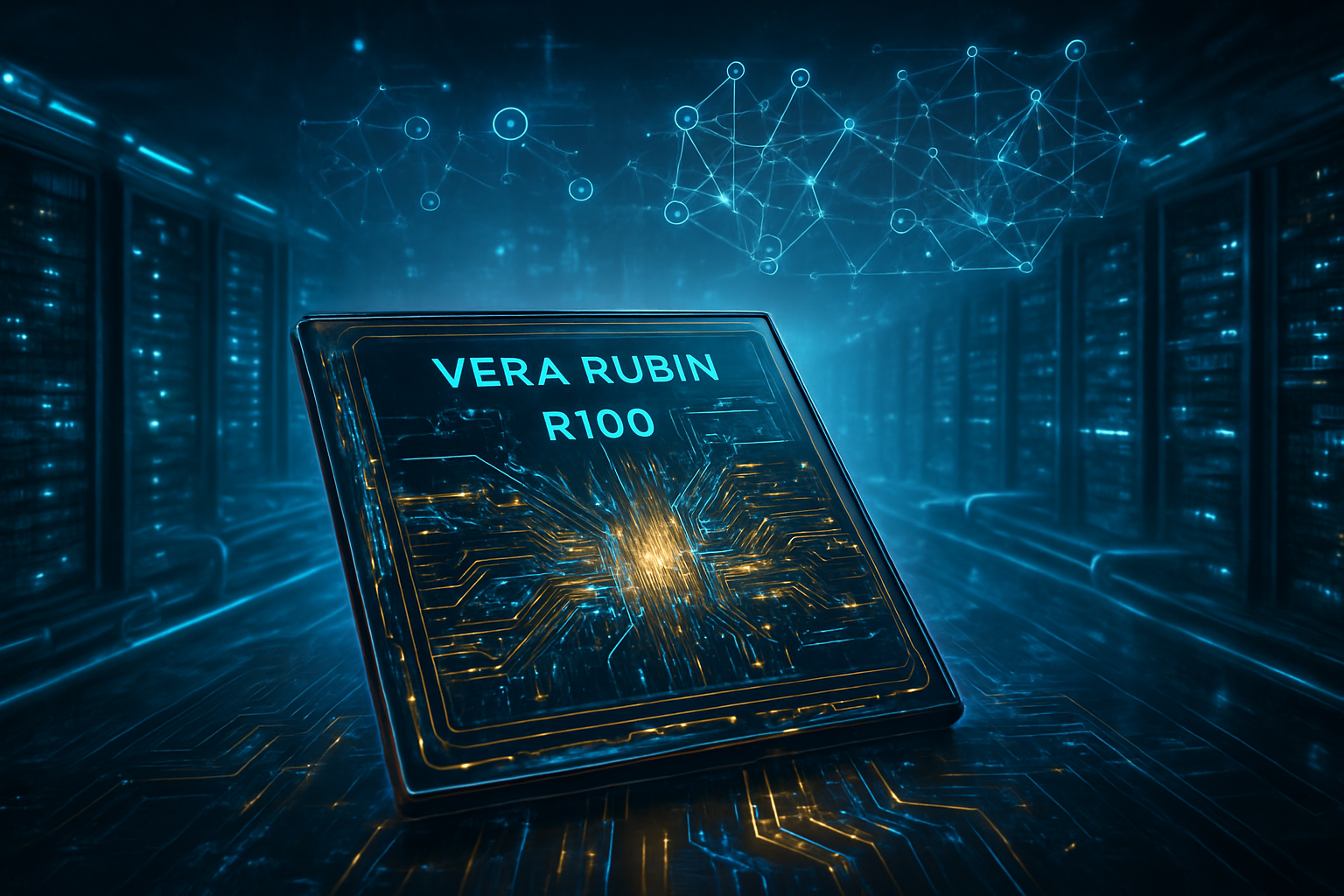
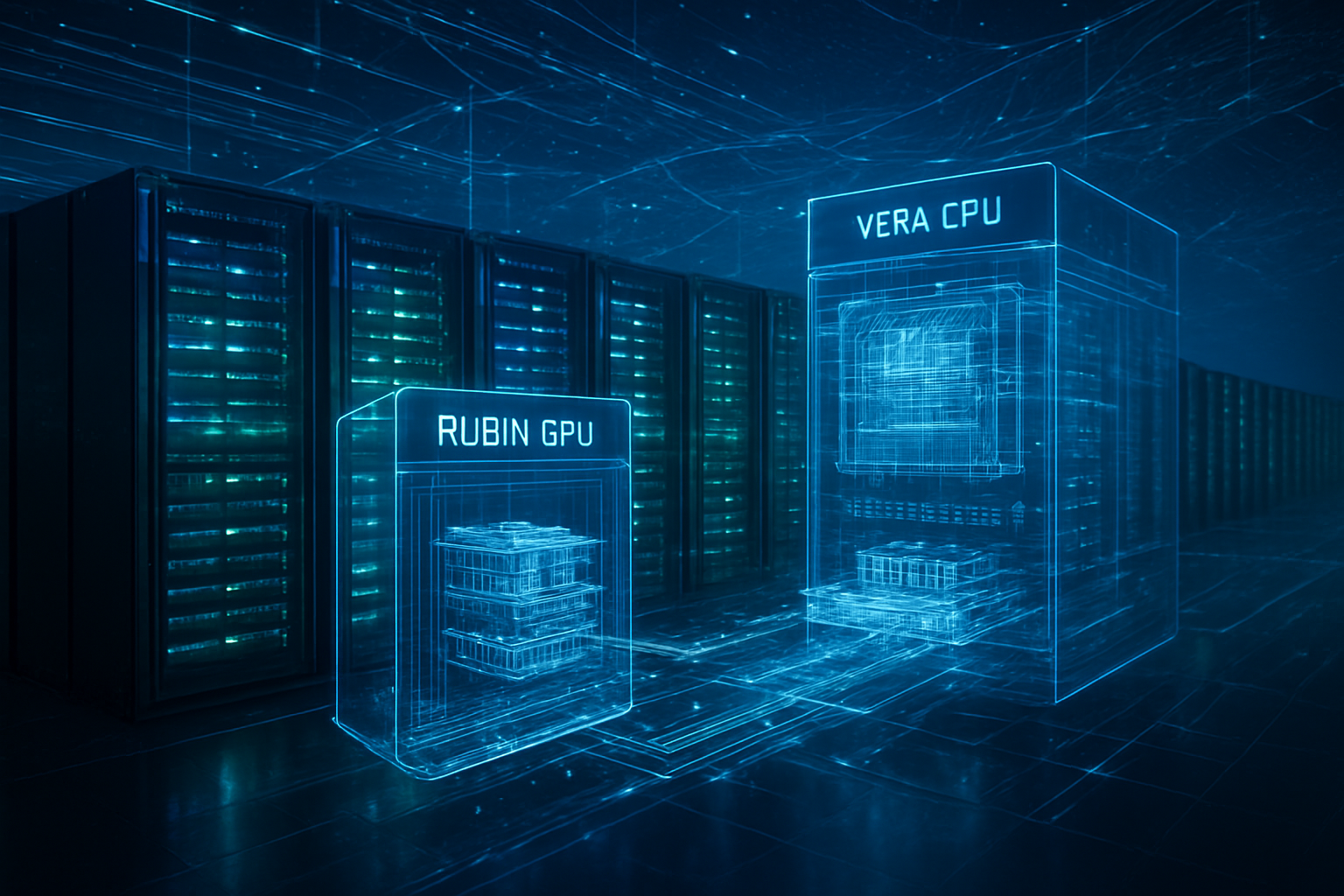
    Building on this, Nvidia introduced the Vera Rubin next-generation GPU family, with systems slated to ship in the second half of 2026. The Vera Rubin platform, comprising a Rubin GPU and a Vera CPU (Nvidia's first custom-designed processor based on an Olympus core architecture), promises even greater capabilities. When paired, the Vera CPU and Rubin GPU system can achieve inference performance of up to 50 petaflops, more than double that of the Blackwell generation, and boast up to 288 gigabytes of fast memory. The Rubin architecture, particularly the Rubin CPX GPU, is purpose-built for "massive-context AI," enabling models to reason across millions of tokens of knowledge simultaneously, thereby reducing inference costs and unlocking advanced developer capabilities. The Vera Rubin NVL144 CPX platform is projected to deliver 8 exaflops of AI performance and 100TB of fast memory in a single rack, necessitating increased adoption of liquid cooling solutions due to its immense performance demands.

    Beyond hardware, the Compute Unified Device Architecture (CUDA) platform is arguably Nvidia's most significant competitive advantage. This proprietary parallel computing platform and programming model allows software to leverage Nvidia GPUs for accelerated general-purpose processing, transforming GPUs from mere graphics tools into powerful AI engines. CUDA's nearly two-decade head start has fostered a vast developer base (over 4 million global developers) and an optimized software stack that is deeply embedded in major AI frameworks like TensorFlow and PyTorch. This robust ecosystem creates substantial "vendor lock-in," making it challenging and costly for developers and companies to switch to alternative platforms offered by competitors like Advanced Micro Devices, Inc. (NASDAQ: AMD) (ROCm) or Intel Corporation (NASDAQ: INTC) (oneAPI).

    Nvidia's software innovations extend to the CUDA-X Suite of libraries, the enterprise-grade NVIDIA AI Enterprise software suite for AI development and deployment, and the NGC Catalog for GPU-optimized software. Its Omniverse platform for virtual simulations has gained traction in AI-driven sectors, combining virtual environments with generative AI to train robots. Initial reactions from the AI research community and industry experts have been overwhelmingly positive, recognizing Nvidia's critical role in the "AI Supercycle." Experts emphasize Nvidia's "strategic moat," largely attributed to CUDA, and its continuous technological leadership, which promises significant leaps in deep learning performance, memory, and networking efficiency. The market's exceptional response, culminating in the $5 trillion valuation, reflects profound investor confidence in Nvidia's sustained exponential growth.

    Reshaping the AI Battleground: Impact on Tech Giants and Startups

    Nvidia's unprecedented market capitalization and its entrenched dominance in AI hardware and software are sending ripple effects throughout the entire technology ecosystem, profoundly impacting other AI companies, established tech giants, and nascent startups. Its strategic advantages, built on technological superiority and a robust ecosystem, are reshaping competitive dynamics and investment trends.

    Several entities stand to benefit directly from Nvidia's ascendancy. Taiwan Semiconductor Manufacturing Company (NYSE: TSM), as Nvidia's primary foundry, is a major beneficiary, dedicating substantial capacity to GPU production. Similarly, SK Hynix Inc. (KRX: 000660), a key supplier of high-bandwidth memory (HBM), has reportedly sold out its entire 2025 memory chip supply due to Nvidia's demand. Cloud Service Providers (CSPs) like Microsoft Corporation (NASDAQ: MSFT) Azure, Amazon.com, Inc. (NASDAQ: AMZN) Web Services (AWS), Alphabet Inc. (NASDAQ: GOOGL) Cloud, and Oracle Corporation (NYSE: ORCL) Cloud Infrastructure are significant consumers of Nvidia's GPUs, integrating them into their AI-as-a-service offerings to meet surging demand. Companies that build their AI solutions on Nvidia's CUDA ecosystem, such as Palantir Technologies Inc. (NYSE: PLTR) and Zoom Video Communications, Inc. (NASDAQ: ZM), also benefit from superior performance and widespread adoption. Furthermore, industry-specific integrators like Eli Lilly and Company (NYSE: LLY) in drug discovery and Nokia Corporation (NYSE: NOK) in 5G/6G AI-RAN are leveraging Nvidia's technology to accelerate innovation within their fields.

    However, Nvidia's dominance presents significant competitive challenges for its rivals. AMD and Intel, while making strides with their Instinct MI300X/MI350 series and Gaudi 3 chips, respectively, struggle to match Nvidia's comprehensive CUDA ecosystem and entrenched developer base. AMD, holding a smaller market share, is advocating for open alternatives to Nvidia's "walled garden," and has secured deals with OpenAI and Oracle for AI processors. Intel's Gaudi chips, aiming for cost-effectiveness, have yet to gain substantial traction. More critically, Nvidia's largest customers—the hyperscalers Google, Microsoft, and Amazon—are heavily investing in developing their own custom AI silicon (e.g., Google's TPUs, Amazon's Trainium, Microsoft's Maia) to reduce dependency and optimize for specific workloads. This strategic pivot, particularly in inference tasks, represents a long-term challenge to Nvidia's market share and pricing power. Qualcomm Incorporated (NASDAQ: QCOM) is also entering the data center AI chip market with its AI200 and AI250 processors, focusing on performance per watt and cost efficiency for inference. Chinese chipmakers like Huawei and Cambricon are actively challenging Nvidia within China, a situation exacerbated by U.S. export restrictions on advanced AI chips.

    The pervasive influence of Nvidia's technology also introduces potential disruptions. The high demand and pricing for Nvidia's GPUs mean that businesses investing in AI face rising hardware costs, potentially impacting the profitability and scalability of their AI initiatives. The deep integration of Nvidia's chips into customer software and hardware ecosystems creates significant switching costs, limiting flexibility and potentially stifling innovation outside the Nvidia ecosystem. Furthermore, Nvidia's reliance on TSMC (NYSE: TSM) for manufacturing exposes the industry to supply chain vulnerabilities. Nvidia's near-monopoly in certain high-performance AI chip segments has also attracted antitrust scrutiny from global regulators, including the U.S. Department of Justice (DOJ), raising concerns about market concentration and potential anti-competitive practices. Despite these challenges, Nvidia's market positioning is defined by its comprehensive AI platform, continuous innovation, strategic partnerships, and diversification into autonomous vehicles, industrial AI, robotics, and sovereign AI, solidifying its role as the foundational infrastructure provider for the global AI industry.

    The Broader Canvas: AI's Reshaping of Society and Economy

    Nvidia's ascent to a $5 trillion market capitalization on October 29, 2025, is far more than a financial headline; it is a powerful barometer of the profound shifts occurring in the global AI landscape and a clear signal of AI's transformative impact on society and the economy. This valuation, now surpassing the GDP of many nations, including India, and roughly equaling Germany's projected nominal GDP for 2025, underscores a fundamental re-evaluation by financial markets of companies at the epicenter of technological change.

    Nvidia's dominance is deeply intertwined with the broader AI landscape and emerging trends. Its GPUs form the essential backbone of AI development and deployment, driving an unprecedented global investment in data centers and AI infrastructure. The company is strategically moving beyond being solely a GPU vendor to becoming a global AI infrastructure leader, enabling "AI factories" for hyperscalers and governments (sovereign AI), and potentially expanding into its own "AI cloud" services. This full-stack approach encompasses compute, connectivity, and applications, with advancements like the Blackwell GPU architecture, Project Digits for democratizing AI, and the NeMo framework for managing AI agents. Nvidia is also deeply embedding its technology across various industries through strategic alliances, including building seven new AI supercomputers for the U.S. Department of Energy, a $1 billion investment in Nokia for AI-native 6G networks, and partnerships with Palantir for data analytics and CrowdStrike for AI-driven cybersecurity. Its work in autonomous vehicles (with Uber) and robotics (through NVIDIA Cosmos and Omniverse) further illustrates its pervasive influence. Moreover, Nvidia's advanced chips have become a flashpoint in the geopolitical tech rivalry between the U.S. and China, with export controls significantly impacting its market access in China, highlighting its strategic importance in national infrastructure.

    The societal and economic impacts are far-reaching. AI is projected to contribute a staggering $15.7 trillion to the global economy by 2030, with AI-related capital expenditures already surpassing the U.S. consumer as the primary driver of economic growth in the first half of 2025. Nvidia's performance is a primary catalyst for this surge, solidifying AI as the central investment theme of the decade. CEO Jensen Huang envisions "AI factories" driving a new industrial revolution, reshaping industries from semiconductors and cloud computing to healthcare and robotics. However, this transformation also raises concerns about job market disruption, with projections suggesting up to 100 million jobs could be lost in the next decade due to AI, raising risks of increased unemployment and social strife. Furthermore, the exponential demand for AI computing power is fueling a massive increase in energy-intensive data centers, which could account for a substantial percentage of national electricity demand, raising significant environmental concerns regarding carbon emissions and water usage.

    Nvidia's meteoric rise also brings forth significant concerns, particularly regarding market bubbles and monopolies. The rapid ascent and frothy valuations of AI-linked tech stocks have ignited a debate about whether this constitutes a market bubble, reminiscent of the dot-com era. Institutions like the Bank of England and the IMF have cautioned about potential market overheating and the risk of a sharp repricing if the AI boom's momentum falters. Nvidia's near-monopolistic share of the AI chip market (estimated 75% to 92%) has also attracted scrutiny from global regulators over potential antitrust violations, raising concerns about stifled innovation, increased prices, and a harmful dependency on a single provider that could create systemic risks. Regulators are investigating concerns that Nvidia might be implementing illegal tying agreements by promoting exclusive use of its chips and complementary AI services.

    Comparing Nvidia's current market trajectory to previous AI milestones and tech booms reveals both parallels and distinctions. While other tech giants like Apple Inc. (NASDAQ: AAPL) and Microsoft Corporation (NASDAQ: MSFT) have recently surpassed multi-trillion-dollar valuations, Nvidia's rapid ascent to $5 trillion is unique in its speed, adding a trillion dollars in mere months. This mirrors the infrastructure build-out of the internet boom, which required massive investments in fiber optics and servers, with AI now necessitating an equivalent build-out of data centers and powerful GPUs. Just as the internet spawned new business models, AI is creating opportunities in autonomous systems, personalized medicine, and advanced analytics. While some draw parallels to the dot-com bubble, many analysts distinguish Nvidia's rise by the tangible demand for its products and its foundational role in a transformative technology. However, the concentration of deals among a few major AI players and the dependence within this ecosystem do raise concerns about systemic risk and a potential "contagion" effect if AI promises fall short.

    The Road Ahead: Navigating AI's Future Frontier

    Nvidia's historic $5 trillion market capitalization positions it at the vanguard of the AI revolution, but the road ahead is dynamic, filled with both immense opportunities and significant challenges. The company's future trajectory, and by extension, much of the AI market's evolution, will be shaped by its continued innovation, strategic responses to competition, and the broader geopolitical and economic landscape.

    In the near term (next 1-2 years), Nvidia is poised for continued robust financial performance. Demand for its Blackwell and Hopper GPUs is expected to remain exceptionally strong, with Data Center revenue projected to reach around $110.5 billion for fiscal year 2025 and $170.8 billion for fiscal year 2026. The full-scale production of Blackwell, coupled with the anticipated commercialization of the next-generation Rubin architecture in late 2026, will maintain Nvidia's leadership in high-end AI training. Strategic partnerships, including a $1 billion investment in Nokia for AI-RAN innovation, a $100 billion agreement with OpenAI, and collaborations with Intel and Dell, will deepen its market penetration. Nvidia has disclosed visibility into $0.5 trillion of cumulative revenue for its Blackwell and Rubin products in calendar 2025 and 2026, signaling sustained demand.

    Looking further ahead (beyond 2 years), Nvidia's long-term strategy involves a significant pivot from solely being a GPU vendor to becoming a global AI infrastructure leader. This includes enabling "AI factories" for hyperscalers and governments (sovereign AI) and potentially expanding into its own "AI cloud" services. The introduction of NVLink Fusion, designed to allow custom CPUs and accelerators from other companies to connect directly to Nvidia GPUs, signals a strategic move towards a more open, ecosystem-driven AI infrastructure model. Nvidia is aggressively expanding into new revenue streams such as physical AI, robotics (e.g., Isaac GRZ N1 model for humanoid robots), and the industrial metaverse (Omniverse), representing multi-billion dollar opportunities. Further investment in software platforms like Mission Control and CUDA-X libraries, alongside its commitment to 6G technology, underscores its holistic approach to the AI stack. Experts predict AI opportunities will become a multi-trillion-dollar market within the next five years, with AI infrastructure spending potentially reaching $3 trillion-$4 trillion per year by 2030.

    Potential applications and use cases on the horizon are vast. Nvidia's AI technologies are set to revolutionize generative AI and LLMs, robotics and autonomous systems (humanoid robots, robotaxis), healthcare and life sciences (genomics, AI agents for healthcare, biomolecular foundation models), the industrial metaverse (digital twins), telecommunications (AI-native 6G networks), and scientific discovery (climate modeling, quantum simulations). Its push into enterprise AI, including partnerships with Palantir for data analytics and CrowdStrike for AI-driven cybersecurity, highlights the pervasive integration of AI across industries.

    However, Nvidia faces several significant challenges. Intensifying competition from hyperscale cloud providers developing their own custom AI silicon (Google's TPUs, Amazon's Trainium, Microsoft's Maia) could erode Nvidia's market share, particularly in inference workloads. Rival chipmakers such as AMD, Intel, Qualcomm, and Chinese companies like Huawei and Cambricon are also making concerted efforts to capture parts of the data center and edge AI markets. Geopolitical tensions and U.S. export controls on advanced AI technology remain a major risk, potentially impacting 10-15% of Nvidia's revenue from China and causing its market share there to drop significantly. Market concentration and antitrust scrutiny are also growing concerns. Some analysts also point to the possibility of "double-ordering" by some top customers and a potential tapering off of AI training needs within the next 18 months, leading to a cyclical downturn in revenue beginning in 2026.

    Despite these challenges, experts generally predict that Nvidia will maintain its leadership in high-end AI training and accelerated computing through continuous innovation and the formidable strength of its CUDA ecosystem. While its dominant market share may gradually erode due to intensifying competition, Nvidia's overall revenue is expected to continue growing as the total addressable market for AI expands. Analysts forecast continued stock growth for Nvidia, with some predicting a price target of $206-$288 by the end of 2025 and potentially a $6 trillion market capitalization by late 2026. However, skeptical buy-side analysts caution that the market might be "priced for elevated expectations," and a pullback could occur if AI enthusiasm fades or if competitors gain more significant traction.

    A New Era: Nvidia's Legacy and the Future of AI

    Nvidia's achievement of a $5 trillion market capitalization on October 29, 2025, is more than just a financial record; it is a defining moment in the history of artificial intelligence and a testament to the company's transformative impact on the global economy. This unprecedented valuation solidifies Nvidia's role as the indispensable backbone of the AI revolution, a position it has meticulously built through relentless innovation in hardware and software.

    The key takeaways from this milestone are clear: Nvidia's dominance in AI hardware, driven by its cutting-edge GPUs like Blackwell and the upcoming Rubin architectures, is unparalleled. Its robust CUDA software ecosystem creates a powerful network effect, fostering a loyal developer community and high switching costs. This technological superiority, coupled with exceptional financial performance and strategic diversification into critical sectors like data centers, robotics, autonomous vehicles, and 6G technology, underpins its explosive and sustained growth.

    In the annals of AI history, Nvidia is no longer merely a chipmaker; it has become the foundational infrastructure provider, empowering everything from generative AI models and large language models (LLMs) to advanced robotics and autonomous systems. This achievement sets a new benchmark for corporate value, demonstrating the immense economic potential of companies at the forefront of transformative technological shifts. By providing powerful and accessible AI computing tools, Nvidia is accelerating global AI innovation and adoption, effectively democratizing access to this revolutionary technology.

    The long-term impact of Nvidia's dominance is expected to be profound and far-reaching. Its sustained innovation in accelerated computing will continue to drive the rapid advancement and deployment of AI across virtually every industry, shaping the future digital economy. However, this future will also be marked by an intensified competitive landscape, with rivals and hyperscalers developing their own AI chips to challenge Nvidia's market share. Geopolitical tensions, particularly regarding U.S. export controls to China, will remain a significant factor influencing Nvidia's market opportunities and strategies.

    In the coming weeks and months, industry observers will be closely watching several key areas. Geopolitical developments, especially any further discussions between the U.S. and China regarding advanced AI chip exports, will be critical. Nvidia's upcoming earnings reports and forward guidance will provide crucial insights into its financial health and future projections. The introduction of new hardware generations and continuous advancements in its CUDA software platform will indicate its ability to maintain its technological edge. The progress of competitors in developing viable alternative AI hardware and software solutions, as well as the success of hyperscalers' in-house chip efforts, will shape future market dynamics. Finally, the broader AI market adoption trends and ongoing debates about potential "AI bubbles" will continue to influence investor sentiment and market stability. Nvidia's journey is a testament to the power of focused innovation, and its future will largely dictate the pace and direction of the global AI revolution.

  • Nvidia Fuels America’s AI Ascent: DOE Taps for Next-Gen Supercomputers, Bookings Soar to $500 Billion

    Nvidia Fuels America’s AI Ascent: DOE Taps for Next-Gen Supercomputers, Bookings Soar to $500 Billion

    Washington D.C., October 28, 2025 – In a monumental stride towards securing America's dominance in the artificial intelligence era, Nvidia (NASDAQ: NVDA) has announced a landmark partnership with the U.S. Department of Energy (DOE) to construct seven cutting-edge AI supercomputers. This initiative, unveiled by CEO Jensen Huang during his keynote at GTC Washington, D.C., represents a strategic national investment to accelerate scientific discovery, bolster national security, and drive unprecedented economic growth. The announcement, which Huang dubbed "our generation's Apollo moment," underscores the critical role of advanced computing infrastructure in the global AI race.

    The collaboration will see Nvidia’s most advanced hardware and software deployed across key national laboratories, including Argonne and Los Alamos, establishing a formidable "AI factory" ecosystem. This move not only solidifies Nvidia's position as the indispensable architect of the AI industrial revolution but also comes amidst a backdrop of staggering financial success, with the company revealing a colossal $500 billion in total bookings for its AI chips over the next six quarters, signaling an insatiable global demand for its technology.

    Unprecedented Power: Blackwell and Vera Rubin Architectures Lead the Charge

    The core of Nvidia's collaboration with the DOE lies in the deployment of its next-generation GPU architectures and high-speed networking, designed to handle the most complex AI and scientific workloads. At Argonne National Laboratory, two flagship systems are taking shape: Solstice, poised to be the DOE's largest AI supercomputer for scientific discovery, will feature an astounding 100,000 Nvidia Blackwell GPUs. Alongside it, Equinox will incorporate 10,000 Blackwell GPUs, with both systems, interconnected by Nvidia networking, projected to deliver a combined 2,200 exaflops of AI performance. This level of computational power, measured in quintillions of calculations per second, dwarfs previous supercomputing capabilities, with the world's fastest systems just five years ago barely cracking one exaflop. Argonne will also host three additional Nvidia-based systems: Tara, Minerva, and Janus.

    Meanwhile, Los Alamos National Laboratory (LANL) will deploy the Mission and Vision supercomputers, built by Hewlett Packard Enterprise (NYSE: HPE), leveraging Nvidia's upcoming Vera Rubin platform and the ultra-fast NVIDIA Quantum-X800 InfiniBand networking fabric. The Mission system, operational in late 2027, is earmarked for classified national security applications, including the maintenance of the U.S. nuclear stockpile, and is expected to be four times faster than LANL's previous Crossroads system. Vision will support unclassified AI and open science research. The Vera Rubin architecture, the successor to Blackwell, is slated for a 2026 launch and promises even greater performance, with Rubin GPUs projected to achieve 50 petaflops in FP4 performance, and a "Rubin Ultra" variant doubling that to 100 petaflops by 2027.

    These systems represent a profound leap over previous approaches. The Blackwell architecture, purpose-built for generative AI, boasts 208 billion transistors—more than 2.5 times that of its predecessor, Hopper—and introduces a second-generation Transformer Engine for accelerated LLM training and inference. The Quantum-X800 InfiniBand, the world's first end-to-end 800Gb/s networking platform, provides an intelligent interconnect layer crucial for scaling trillion-parameter AI models by minimizing data bottlenecks. Furthermore, Nvidia's introduction of NVQLink, an open architecture for tightly coupling GPU supercomputing with quantum processors, signals a groundbreaking move towards hybrid quantum-classical computing, a capability largely absent in prior supercomputing paradigms. Initial reactions from the AI research community and industry experts have been overwhelmingly positive, echoing Huang's "Apollo moment" sentiment and recognizing these systems as a pivotal step in advancing the nation's AI and computing infrastructure.

    Reshaping the AI Landscape: Winners, Challengers, and Strategic Shifts

    Nvidia's deep integration into the DOE's supercomputing initiatives unequivocally solidifies its market dominance as the leading provider of AI infrastructure. The deployment of 100,000 Blackwell GPUs in Solstice alone underscores the pervasive reach of Nvidia's hardware and software ecosystem (CUDA, Megatron-Core, TensorRT) into critical national projects. This ensures sustained, massive demand for its full stack of AI hardware, software, and networking solutions, reinforcing its role as the linchpin of the global AI rollout.

    However, the competitive landscape is also seeing significant shifts. Advanced Micro Devices (NASDAQ: AMD) stands to gain substantial prestige and market share through its own strategic partnership with the DOE. AMD, Hewlett Packard Enterprise (NYSE: HPE), and Oracle (NYSE: ORCL) are collaborating on the "Lux" and "Discovery" AI supercomputers at Oak Ridge National Laboratory (ORNL). Lux, deploying in early 2026, will utilize AMD's Instinct™ MI355X GPUs and EPYC™ CPUs, showcasing AMD's growing competitiveness in AI accelerators. This $1 billion partnership demonstrates AMD's capability to deliver leadership compute systems, intensifying competition in the high-performance computing (HPC) and AI supercomputer space. HPE, as the primary system builder for these projects, also strengthens its position as a leading integrator of complex AI infrastructure. Oracle, through its Oracle Cloud Infrastructure (OCI), expands its footprint in the public sector AI market, positioning OCI as a robust platform for sovereign, high-performance AI.

    Intel (NASDAQ: INTC), traditionally dominant in CPUs, faces a significant challenge in the GPU-centric AI supercomputing arena. While Intel has its own exascale system, Aurora, at Argonne National Laboratory in partnership with HPE, its absence from the core AI acceleration contracts for these new DOE systems highlights the uphill battle against Nvidia's and AMD's GPU dominance. The immense demand for advanced AI chips has also strained global supply chains, leading to reports of potential delays in Nvidia's Blackwell chips, which could disrupt the rollout of AI products for major customers and data centers. This "AI gold rush" for foundational infrastructure providers is setting new standards for AI deployment and management, potentially disrupting traditional data center designs and fostering a shift towards highly optimized, vertically integrated AI infrastructure.

    A New "Apollo Moment": Broader Implications and Looming Concerns

    Nvidia CEO Jensen Huang's comparison of this initiative to "our generation's Apollo moment" is not hyperbole; it underscores the profound, multifaceted significance of these AI supercomputers for the U.S. and the broader AI landscape. This collaboration fits squarely into a global trend of integrating AI deeply into HPC infrastructure, recognizing AI as the critical driver for future technological and economic leadership. The computational performance of leading AI supercomputers is doubling approximately every nine months, a pace far exceeding traditional supercomputers, driven by massive investments in AI-specific hardware and the creation of comprehensive "AI factory" ecosystems.

    The impacts are far-reaching. These systems will dramatically accelerate scientific discovery across diverse fields, from fusion energy and climate modeling to drug discovery and materials science. They are expected to drive economic growth by powering innovation across every industry, fostering new opportunities, and potentially leading to the development of "agentic scientists" that could revolutionize research and development productivity. Crucially, they will enhance national security by supporting classified applications and ensuring the safety and reliability of the American nuclear stockpile. This initiative is a strategic imperative for the U.S. to maintain technological leadership amidst intense global competition, particularly from China's aggressive AI investments.

    However, such monumental undertakings come with significant concerns. The sheer cost and exorbitant power consumption of building and operating these exascale AI supercomputers raise questions about long-term sustainability and environmental impact. For instance, some private AI supercomputers have hardware costs in the billions and consume power comparable to small cities. The "global AI arms race" itself can lead to escalating costs and potential security risks. Furthermore, Nvidia's dominant position in GPU technology for AI could create a single-vendor dependency for critical national infrastructure, a concern some nations are addressing by investing in their own sovereign AI capabilities. Despite these challenges, the initiative aligns with broader U.S. efforts to maintain AI leadership, including other significant supercomputer projects involving AMD and Intel, making it a cornerstone of America's strategic investment in the AI era.

    The Horizon of Innovation: Hybrid Computing and Agentic AI

    Looking ahead, the deployment of Nvidia's AI supercomputers for the DOE portends a future shaped by hybrid computing paradigms and increasingly autonomous AI models. In the near term, the operational status of the Equinox system in 2026 and the Mission system at Los Alamos in late 2027 will mark significant milestones. The AI Factory Research Center in Virginia, powered by the Vera Rubin platform, will serve as a crucial testing ground for Nvidia's Omniverse DSX blueprint—a vision for multi-generation, gigawatt-scale AI infrastructure deployments that will standardize and scale intelligent infrastructure across the country. Nvidia's BlueField-4 Data Processing Units (DPUs), expected in 2026, will be vital for managing the immense data movement and security needs of these AI factories.

    Longer term, the "Discovery" system at Oak Ridge National Laboratory, anticipated for delivery in 2028, will further push the boundaries of combined traditional supercomputing, AI, and quantum computing research. Experts, including Jensen Huang, predict that "in the near future, every NVIDIA GPU scientific supercomputer will be hybrid, tightly coupled with quantum processors." This vision, facilitated by NVQLink, aims to overcome the inherent error-proneness of qubits by offloading complex error correction to powerful GPUs, accelerating the path to viable quantum applications. The development of "agentic scientists" – AI models capable of significantly boosting R&D productivity – is a key objective, promising to revolutionize scientific discovery within the next decade. Nvidia is also actively developing an AI-based wireless stack for 6G internet connectivity, partnering with telecommunications giants to ensure the deployment of U.S.-built 6G networks. Challenges remain, particularly in scaling infrastructure for trillion-token workloads, effective quantum error correction, and managing the immense power consumption, but the trajectory points towards an integrated, intelligent, and autonomous computational future.

    A Defining Moment for AI: Charting the Path Forward

    Nvidia's partnership with the U.S. Department of Energy to build a fleet of advanced AI supercomputers marks a defining moment in the history of artificial intelligence. The key takeaways are clear: America is making an unprecedented national investment in AI infrastructure, leveraging Nvidia's cutting-edge Blackwell and Vera Rubin architectures, high-speed InfiniBand networking, and innovative hybrid quantum-classical computing initiatives. This strategic move, underscored by Nvidia's staggering $500 billion in total bookings, solidifies the company's position at the epicenter of the global AI revolution.

    This development's significance in AI history is comparable to major scientific endeavors like the Apollo program or the Manhattan Project, signaling a national commitment to harness AI for scientific advancement, economic prosperity, and national security. The long-term impact will be transformative, accelerating discovery across every scientific domain, fostering the rise of "agentic scientists," and cementing the U.S.'s technological leadership for decades to come. The emphasis on "sovereign AI" and the development of "AI factories" indicates a fundamental shift towards building robust, domestically controlled AI infrastructure.

    In the coming weeks and months, the tech world will keenly watch the rollout of the Equinox system, the progress at the AI Factory Research Center in Virginia, and the broader expansion of AI supercomputer manufacturing in the U.S. The evolving competitive dynamics, particularly the interplay between Nvidia's partnerships with Intel and the continued advancements from AMD and its collaborations, will also be a critical area of observation. This comprehensive national strategy, combining governmental impetus with private sector innovation, is poised to reshape the global technological landscape and usher in a new era of AI-driven progress.


    This content is intended for informational purposes only and represents analysis of current AI developments.

    TokenRing AI delivers enterprise-grade solutions for multi-agent AI workflow orchestration, AI-powered development tools, and seamless remote collaboration platforms.
    For more information, visit https://www.tokenring.ai/.