
Tag: Washington State

  • Microsoft Elevate Washington: Bridging the AI Divide in Public Education

    Microsoft Elevate Washington: Bridging the AI Divide in Public Education

    REDMOND, WA – October 15, 2025 – In a landmark move poised to redefine public education, Microsoft (NASDAQ: MSFT) has launched "Microsoft Elevate Washington," an ambitious initiative to integrate cutting-edge artificial intelligence (AI) technology into every public school district and community college across Washington state. Announced in October 2025, this comprehensive program aims to democratize access to AI tools and training, addressing a critical "AI divide" and equipping students and educators with the skills essential for an increasingly AI-driven future. The initiative underscores a significant commitment to ensuring Washington students are at the forefront of AI literacy and innovation, regardless of their geographic or socioeconomic background.

    This strategic investment by Microsoft is set to have an immediate and profound impact, transforming learning environments, streamlining administrative processes, and fostering a new generation of AI-fluent individuals. By providing free access to powerful AI platforms and extensive professional development, Elevate Washington is not just introducing technology; it's cultivating a statewide ecosystem designed to leverage AI for equitable educational outcomes and to solidify Washington's position as a national leader in AI adoption within the public sector.

    The Technical Blueprint of an Educational Revolution

    Microsoft Elevate Washington is structured as a multi-phased rollout, strategically designed to permeate all levels of public education. The initial phase, commencing January 2026, will grant all 295 public school districts and 34 community colleges free access to Copilot Studio for up to three years. This no-code platform empowers administrators and staff to build custom AI agents, revolutionizing tasks from scheduling and data analysis to school year planning and teacher lesson preparation, significantly boosting operational efficiencies. Following this, by July 2026, high school students (grades 9-12) will receive free, three-year access to Copilot Chat, Microsoft 365 desktop apps integrated with Copilot, Learning Accelerators, and Teams for Education. These tools are engineered to enhance digital literacy, foster AI fluency, and improve learning outcomes through personalized, AI-powered experiences. Currently, through November 15, 2025, community college students are already benefiting from 12 months of free usage of Microsoft 365 Personal, which includes Copilot integration across core applications like Word, Excel, PowerPoint, Outlook, and OneNote, alongside Microsoft Designer for creative tasks and Microsoft Defender for security.

    The initiative differentiates itself from previous tech rollouts by its sheer scale, equitable statewide reach, and the depth of its AI integration. Unlike piecemeal software adoptions, Elevate Washington provides a unified, sophisticated AI ecosystem designed for both administrative and pedagogical transformation. Beyond software, Microsoft is committing up to $25,000 in dedicated technology consulting for 10 school districts and 10 community colleges, alongside widespread AI professional development for all 100,000 certificated teachers, instructional assistants, and administrative staff. This comprehensive training extends to role-based generative AI training across all 34 community and technical colleges. This approach moves beyond mere tool provision to ensure robust implementation and capability building. Initial reactions from state education agencies, including Washington's Office of Superintendent of Public Instruction (OSPI), the Washington Education Association (WEA), and the National Education Association (NEA), have been largely positive, highlighting strong collaboration in delivering AI training programs. Microsoft is also supporting a K-12 AI Innovation Summit for over 1,000 educators and administrators and partnering with nonprofits like Code.org to expand "Hour of AI" programs, further solidifying community engagement. While the initiative is lauded for its potential, some observers have voiced concerns regarding data privacy, corporate influence on curriculum, and the potential for stifled creativity, aspects Microsoft has pledged to address with robust safeguards.

    Reshaping the AI Industry Landscape

    Microsoft's Elevate Washington initiative is a powerful strategic play that stands to significantly impact the competitive dynamics within the AI and education technology sectors. Primarily, Microsoft (NASDAQ: MSFT) itself is the chief beneficiary, solidifying its dominant position in the rapidly expanding AI-in-education market. By embedding its Copilot ecosystem and Microsoft 365 tools into the foundational fabric of Washington's public education system, Microsoft creates a generation of users familiar and proficient with its AI offerings, fostering long-term brand loyalty and ecosystem lock-in. This move serves as a powerful case study for future statewide or national AI education initiatives, potentially influencing procurement decisions globally.

    The initiative presents competitive implications for other major AI labs and tech giants. While companies like Google (NASDAQ: GOOGL) offer their own suite of educational tools and AI services, Microsoft's comprehensive, free, and statewide rollout in Washington sets a high bar. It creates a significant first-mover advantage in a crucial public sector market, potentially making it harder for competitors to gain similar traction without equally substantial commitments. For smaller AI education startups, this could be a mixed bag; some might find opportunities to build niche applications or services that integrate with Microsoft's platforms, while others offering competing general-purpose AI tools could face immense pressure from the free and deeply integrated Microsoft offerings.

    This development could disrupt existing products and services from traditional educational software providers. Many companies that charge for learning management systems, productivity tools, or specialized educational AI solutions might find their market share eroded by Microsoft's free, AI-enhanced alternatives. The strategic advantage for Microsoft lies in its ability to leverage its existing enterprise relationships, vast R&D capabilities, and commitment to public good, positioning itself not just as a technology vendor but as a strategic partner in educational transformation. This reinforces Microsoft's market positioning as a leader in responsible and accessible AI, extending its influence from the enterprise to the classroom.

    Broader Significance and Societal Implications

    Microsoft Elevate Washington fits squarely into the broader global AI landscape, reflecting a growing trend towards AI democratization and the urgent need for future-ready workforces. It aligns with national strategies aiming to accelerate AI adoption and ensure competitive advantage in the global technological race. The initiative's most profound impact lies in its direct attack on the urban-rural tech divide, a persistent challenge highlighted by Microsoft's own "AI for Good Lab." Research revealed a stark disparity in AI usage across Washington, with urban counties seeing over 30% adoption compared to less than 10% in some rural areas. By providing universal access to AI tools and training, Microsoft aims to transform this "opportunity gap" into a bridge, ensuring that every student, regardless of their zip code, is equipped for the AI-powered economy.

    Beyond equitable access, the initiative is a critical step in fostering future skills development. Early and widespread exposure to generative AI and other intelligent tools will cultivate critical thinking, digital literacy, and problem-solving abilities vital for a workforce increasingly augmented by AI. This proactive approach aims to position Washington students as among the most prepared globally for evolving job markets. However, this transformative potential also brings potential concerns. Discussions around data privacy, especially with student data, are paramount, as is the potential for corporate influence on curriculum content. Critics also raise questions about the potential for over-reliance on AI, which might stifle human creativity or critical analysis if not carefully managed. Comparisons to previous technological milestones, such as the introduction of personal computers or the internet into schools, suggest that while initial challenges exist, the long-term benefits of embracing transformative technology can be immense, provided ethical considerations and thoughtful implementation are prioritized.

    The Road Ahead: Anticipating Future Developments

    The coming months and years will be crucial for the Microsoft Elevate Washington initiative as it moves from announcement to widespread implementation. Near-term developments will focus on the successful rollout of Copilot Studio to educators and administrators in January 2026, followed by the integration of Copilot Chat and other AI-enhanced Microsoft 365 tools for high school students by July 2026. Continuous professional development for the state's 100,000 educators and staff will be a key metric of success, alongside the K-12 AI Innovation Summit, which will serve as a vital forum for sharing best practices and addressing initial challenges. We can expect to see early case studies emerge from the 10 school districts and community colleges receiving dedicated technology consulting, showcasing tailored AI agent deployments.

    In the long term, experts predict that Washington could indeed become a national model for equitable AI adoption in education. The initiative has the potential to fundamentally shift pedagogical approaches, moving towards more personalized learning experiences, AI-assisted content creation, and data-driven instructional strategies. Expected applications on the horizon include AI-powered tutoring systems that adapt to individual student needs, intelligent assessment tools, and AI assistants that help teachers manage classroom logistics, freeing them to focus on higher-order teaching. However, significant challenges remain, including ensuring sustained funding beyond Microsoft's initial commitment, continuously updating teacher training to keep pace with rapid AI advancements, establishing robust ethical AI guidelines, and effectively addressing potential job displacement concerns as AI tools become more sophisticated. Experts also predict that the initiative's success will be measured not just by tool adoption, but by tangible improvements in student outcomes, particularly in critical thinking and problem-solving skills, and the state's ability to produce a workforce highly adept at collaborating with AI.

    A New Chapter in AI and Education

    Microsoft Elevate Washington marks a pivotal moment in the intersection of artificial intelligence and public education. The key takeaways are clear: a massive, equitable infusion of advanced AI tools and training into all Washington public schools and community colleges, a direct assault on the urban-rural tech divide, and a proactive strategy to equip an entire generation with future-ready AI skills. This initiative is more than a technology deployment; it's a bold vision for educational transformation, positioning Washington as a trailblazer in the responsible and widespread adoption of AI in learning environments.

    Its significance in AI history cannot be overstated. This public-private partnership represents one of the most comprehensive statewide efforts to integrate generative AI into education, setting a precedent for how future governments and corporations might collaborate to address critical skill gaps. The long-term impact could be profound, shaping educational methodologies, curriculum development, and ultimately, the career trajectories of millions of students for decades to come. As the initial phases roll out, what to watch for in the coming weeks and months will be the early feedback from educators and students, the effectiveness of the professional development programs, and how the state navigates the inherent challenges of integrating such powerful technology responsibly. The world will be watching Washington as it embarks on this ambitious journey to elevate its educational system into the AI age.


    This content is intended for informational purposes only and represents analysis of current AI developments.

    TokenRing AI delivers enterprise-grade solutions for multi-agent AI workflow orchestration, AI-powered development tools, and seamless remote collaboration platforms.
    For more information, visit https://www.tokenring.ai/.
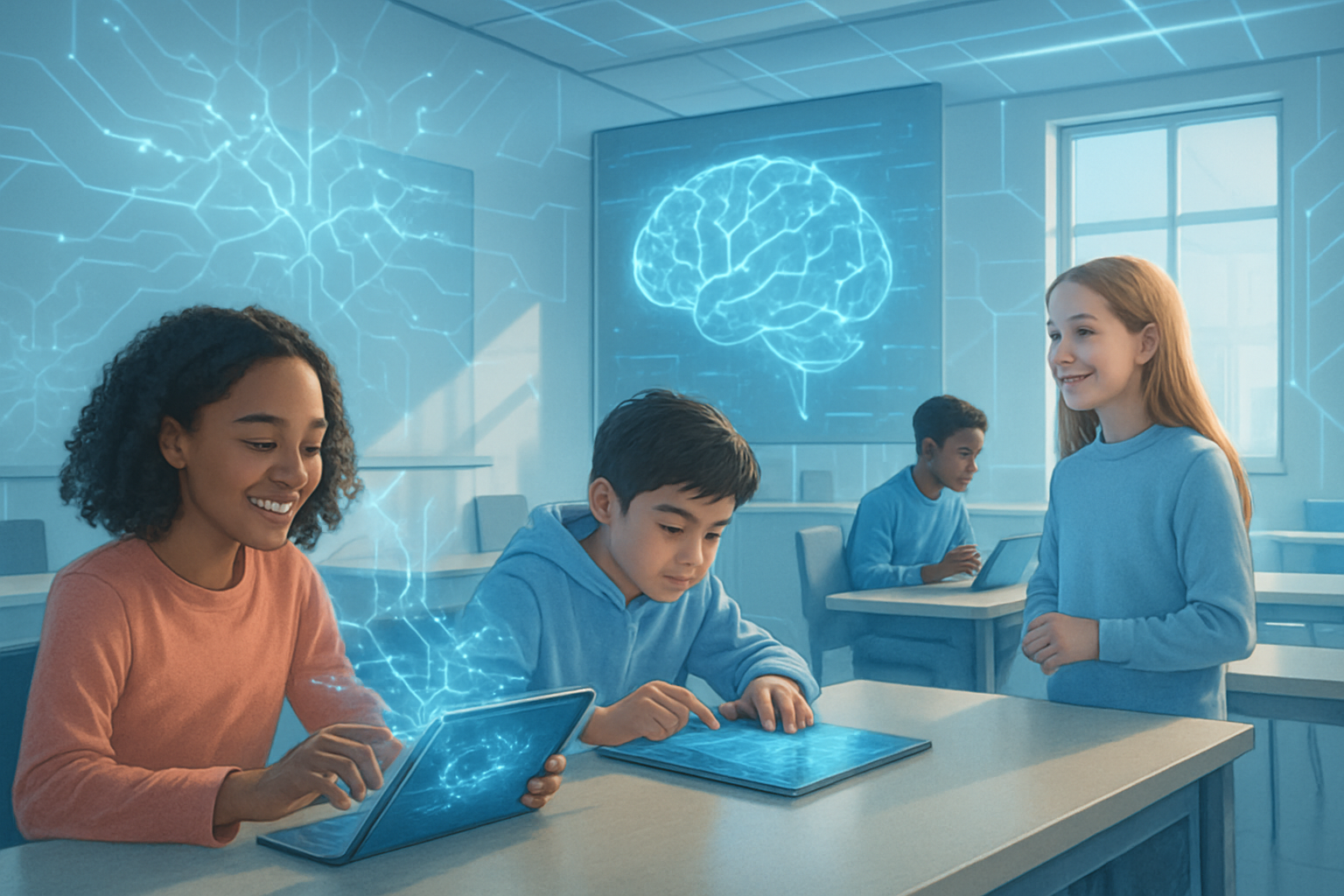
  • Microsoft Ignites Washington’s Classrooms with Sweeping AI Education Initiative

    Microsoft Ignites Washington’s Classrooms with Sweeping AI Education Initiative

    Redmond, WA – In a move set to redefine educational technology, Microsoft (NASDAQ: MSFT) has just unveiled a landmark program, "Microsoft Elevate Washington," aimed at democratizing access to artificial intelligence tools and education across K-12 schools and community colleges throughout its home state. Announced on October 9, 2025, just four days prior to this report, the initiative marks a pivotal moment in the effort to bridge the burgeoning "AI divide" and prepare an entire generation for an AI-powered future. This ambitious undertaking positions Washington as a potential national leader in equitable AI adoption within the educational sphere.

    The program's immediate significance lies in its comprehensive approach, offering free access to advanced AI tools and extensive professional development for educators. By integrating AI into daily learning and administrative tasks, Microsoft seeks to not only enhance digital literacy and critical thinking among students but also to empower teachers, ultimately transforming the educational landscape of Washington State. Microsoft President Brad Smith articulated the company's vision, stating the ambition to make Washington "a national model for equitable AI adoption in education."

    Technical Deep Dive: Tools for a New Era of Learning

    Microsoft Elevate Washington is not merely an aspirational promise but a concrete deployment of cutting-edge AI technologies directly into the hands of students and educators. The initiative provides free, multi-year access to several key Microsoft AI and productivity tools, representing a significant upgrade from conventional educational software and a bold step into the generative AI era.

    Starting in January 2026, school districts and community colleges will receive up to three years of free access to Copilot Studio. This powerful tool allows administrators and staff to create custom AI agents without requiring extensive coding knowledge. These tailored AI assistants can streamline a myriad of administrative tasks, from optimizing scheduling and assisting with data analysis to planning school year activities and even helping educators prepare lesson plans. This capability differs significantly from previous approaches, which often relied on generic productivity suites or required specialized IT expertise for custom solutions. Copilot Studio empowers non-technical staff to leverage AI for specific, localized needs, fostering a new level of operational efficiency and personalized support within educational institutions.

    Furthermore, from July 2026, high school students will gain free access to a suite of tools including Copilot Chat, Microsoft 365 desktop apps, Learning Accelerators, and Teams for Education for up to three years. Copilot Chat, integrated across Microsoft 365 applications like Word, Excel, and PowerPoint, will function as an intelligent assistant, helping students with research, drafting, data analysis, and creative tasks, thereby fostering AI fluency and boosting productivity. Learning Accelerators offer AI-powered feedback and personalized learning paths, a significant advancement over traditional static learning materials. Teams for Education, already a staple in many classrooms, will see enhanced AI capabilities for collaboration and communication. For community college students, a special offer available until November 15, 2025, provides 12 months of free usage of Microsoft 365 Personal with Copilot integration, ensuring they too are equipped with AI tools for workforce preparation. Initial reactions from educators and technology experts highlight the potential for these tools to dramatically reduce administrative burdens and personalize learning experiences on an unprecedented scale.

    Competitive Implications and Market Positioning

    Microsoft Elevate Washington carries substantial implications for the broader AI industry, particularly for tech giants and educational technology providers. For Microsoft (NASDAQ: MSFT) itself, this initiative is a strategic masterstroke, cementing its position as a leading provider of AI solutions in the crucial education sector. By embedding its Copilot technology and Microsoft 365 ecosystem into the foundational learning environment of an entire state, Microsoft is cultivating a new generation of users deeply familiar and reliant on its AI-powered platforms. This early adoption could translate into long-term market share and brand loyalty, creating a significant competitive moat.

    The move also intensifies the competitive landscape with other major tech players like Google (NASDAQ: GOOGL) and Apple (NASDAQ: AAPL). Google, with its extensive suite of educational tools (Google Workspace for Education) and AI advancements, is a direct competitor in this space. Microsoft's aggressive push with free, advanced AI access could pressure Google to accelerate its own AI integration and outreach programs in education. Apple, while strong in hardware, also offers educational software and services, but Microsoft's AI-first approach directly challenges the existing paradigms. This initiative could disrupt smaller EdTech startups that offer niche AI tools, as Microsoft’s comprehensive, integrated, and free offerings might overshadow standalone solutions.

    Beyond direct competition, this program positions Microsoft as a responsible leader in AI deployment, particularly in addressing societal challenges like the "AI divide." This strategic advantage in corporate social responsibility not only enhances its public image but also creates a powerful narrative for advocating for its technologies in other states and countries. The investment in Washington State schools is a tangible demonstration of Microsoft's commitment to equitable AI access, potentially setting a precedent for how large tech companies engage with public education systems globally.

    Wider Significance: Bridging the Divide and Shaping the Future Workforce

    Microsoft Elevate Washington represents more than just a technology rollout; it's a significant stride towards democratizing AI access and addressing critical societal challenges. The initiative directly confronts the emerging "AI divide," ensuring that students from diverse socio-economic backgrounds across Washington State have equal opportunities to engage with and understand artificial intelligence. In an increasingly AI-driven world, early exposure and literacy are paramount for future success, and this program aims to prevent a scenario where only privileged communities have access to the tools shaping the modern workforce.

    This effort fits squarely within the broader AI landscape trend of moving AI from specialized research labs into everyday applications and user-friendly interfaces. By providing Copilot Studio for custom AI agent creation and Copilot Chat for daily productivity, Microsoft is demystifying AI and making it a practical, accessible tool rather than an abstract concept. This move is comparable to previous milestones like the widespread adoption of personal computers or the internet in schools, fundamentally altering how students learn and interact with information. The impacts are expected to be far-reaching, from fostering a more digitally literate populace to equipping students with critical thinking skills necessary to navigate an AI-saturated information environment.

    However, the initiative also raises important considerations. Concerns about data privacy, the ethical use of AI in education, and the potential for over-reliance on AI tools are valid and will require ongoing attention. Microsoft's partnerships with educational associations like the Washington Education Association (WEA) and the National Education Association (NEA) for professional development are crucial in mitigating these concerns, ensuring educators are well-equipped to guide students responsibly. The program also highlights the urgent need for robust digital infrastructure in all schools, as equitable access to AI tools is moot without reliable internet and computing resources. This initiative sets a high bar for what equitable AI adoption in education should look like, challenging other regions and tech companies to follow suit.

    Future Developments on the Horizon

    The launch of Microsoft Elevate Washington is just the beginning of a multi-faceted journey towards comprehensive AI integration in education. Near-term developments will focus on the phased rollout of the announced technologies. The commencement of free Copilot Studio access in January 2026 for districts and colleges, followed by high school student access to Copilot Chat and Microsoft 365 tools in July 2026, will be critical milestones. The success of these initial deployments will heavily influence the program's long-term trajectory and potential expansion.

    Beyond technology deployment, significant emphasis will be placed on professional development. Microsoft, in collaboration with the WEA, NEA, and Code.org, plans extensive training programs and bootcamps for educators. These initiatives are designed to equip teachers with the pedagogical skills necessary to effectively integrate AI into their curricula, moving beyond mere tool usage to fostering deeper AI literacy and critical engagement. Looking further ahead, Microsoft plans to host an AI Innovation Summit specifically for K-12 educators next year, providing a platform for sharing best practices and exploring new applications.

    Experts predict that this initiative will spur the development of new AI-powered educational applications and content tailored to specific learning needs. The availability of Copilot Studio, in particular, could lead to a proliferation of custom AI agents designed by educators for their unique classroom challenges, fostering a bottom-up innovation ecosystem. Challenges that need to be addressed include ensuring equitable internet access in rural areas, continually updating AI tools to keep pace with rapid technological advancements, and developing robust frameworks for AI ethics in student data privacy. The program's success will likely serve as a blueprint, inspiring similar initiatives globally and accelerating the integration of AI into educational systems worldwide.

    Comprehensive Wrap-Up: A New Chapter in AI Education

    Microsoft Elevate Washington marks a significant and timely intervention in the evolving landscape of artificial intelligence and education. The key takeaways from this announcement are clear: Microsoft (NASDAQ: MSFT) is making a substantial, multi-year commitment to democratize AI access in its home state, providing free, advanced tools like Copilot Studio and Copilot Chat to students and educators. This initiative directly aims to bridge the "AI divide," ensuring that all students, regardless of their background, are prepared for an AI-powered future workforce.

    This development holds profound significance in AI history, potentially setting a new standard for how large technology companies partner with public education systems to foster digital literacy and innovation. It underscores a shift from AI being a specialized domain to becoming an integral part of everyday learning and administrative functions. The long-term impact could be transformative, creating a more equitable, efficient, and engaging educational experience for millions of students and educators. By fostering early AI literacy and critical thinking, Washington State is positioning its future workforce at the forefront of the global AI economy.

    In the coming weeks and months, watch for the initial uptake of the community college student offer for Microsoft 365 Personal with Copilot integration, which expires on November 15, 2025. Beyond that, the focus will shift to the phased rollouts of Copilot Studio in January 2026 and the full suite of student tools in July 2026. The success of the educator training programs and the insights from the planned AI Innovation Summit will be crucial indicators of the initiative's effectiveness. Microsoft Elevate Washington is not just a program; it's a bold vision for an AI-empowered educational future, and its unfolding will be closely watched by the tech and education sectors worldwide.


    This content is intended for informational purposes only and represents analysis of current AI developments.

    TokenRing AI delivers enterprise-grade solutions for multi-agent AI workflow orchestration, AI-powered development tools, and seamless remote collaboration platforms.
    For more information, visit https://www.tokenring.ai/.