Tag: Wealth Management

  • AI and Fintech Unleash a New Era in Wealth Management: Hyper-Personalization, Efficiency, and Unprecedented Access

    AI and Fintech Unleash a New Era in Wealth Management: Hyper-Personalization, Efficiency, and Unprecedented Access

    The convergence of Artificial Intelligence (AI) and financial technology (fintech) is rapidly redefining the landscape of wealth management and private banking, ushering in an era of unprecedented digital innovation. This powerful synergy is not merely enhancing existing services but fundamentally reshaping how financial advice is delivered, investment portfolios are managed, and client relationships are cultivated. From sophisticated algorithms driving personalized investment strategies to AI-powered platforms democratizing access to high-end financial planning, these advancements are poised to revolutionize an industry traditionally characterized by exclusivity and human-centric service.

    The immediate significance of this transformation lies in its ability to offer hyper-personalized financial solutions at scale, improve operational efficiencies, and broaden the accessibility of sophisticated wealth management tools to a wider demographic. As AI delves deeper into analyzing complex financial data and predicting market trends, and fintech platforms streamline client interactions and transaction processes, the traditional model of wealth management is evolving into a more agile, data-driven, and client-centric ecosystem. This shift promises to empower both advisors with enhanced capabilities and clients with more informed, tailored, and accessible financial guidance.

    The Technical Core: AI's Deep Dive into Financial Intelligence

    The technical advancements propelling AI in wealth management are rooted in several sophisticated technologies, moving far beyond rudimentary automation to intelligent, adaptive systems. Machine Learning (ML) algorithms, including deep learning, are at the forefront, processing vast historical financial data, real-time market trends, and individual client behaviors to identify complex patterns. These algorithms enable dynamic portfolio optimization, risk assessment, and predictive models that continuously learn and adapt, offering up to a 30% improvement in precision compared to static, human-led analyses. Unlike traditional methods that relied on historical data and expert intuition, ML provides continuous learning and the ability to process significantly larger and more complex datasets at speed, removing emotional biases from investment decisions.

    Natural Language Processing (NLP) is another critical component, allowing AI systems to understand and interpret unstructured data from client communications, market commentaries, and news sentiment. This powers sophisticated chatbots and virtual assistants that offer 24/7 client support and can answer complex queries, dramatically reducing the workload on human advisors and providing instant, personalized responses. Generative AI (GenAI), a recent breakthrough, further enhances this by crafting customized investment plans, explaining market trends, and even simulating various market scenarios to provide insights where historical data might be scarce. These capabilities move beyond mere analysis to creation of new, tailored financial outputs, enhancing the precision of financial planning and strategy optimization.

    Furthermore, predictive analytics, built upon ML and statistical algorithms, forecasts market trends and assesses investment risks with unprecedented accuracy. For instance, JPMorgan Chase (NYSE: JPM) utilizes AI systems like LOXM for efficient trade execution, analyzing historical trading data to optimize strategies. Robotic Process Automation (RPA) and computer vision streamline back-office operations, automating tasks like data entry, document verification, and compliance reporting, reducing errors and freeing up human capital for higher-value activities. The financial advisory profession is seeing a shift where AI handles routine tasks, allowing advisors to focus on nuanced client interactions, complex problem-solving, and relationship building. Initial reactions from the AI research community and industry experts highlight significant efficiency gains (20-30%), enhanced personalization (78% of investors favor AI-driven advice), and improved decision-making, though concerns remain about data quality, algorithmic bias, and the "black box" nature of some AI models. The consensus points to a hybrid model where AI augments human expertise, rather than replacing it.

    Reshaping the Corporate Landscape: Winners, Disruptors, and Strategic Plays

    The infusion of AI and fintech is creating a dynamic competitive environment within wealth management, benefiting some players while disrupting others. Established wealth management firms such as Morgan Stanley (NYSE: MS), Fidelity (NYSE: FNF), and BlackRock (NYSE: BLK), alongside traditional banks like DBS Private Bank (SGX: D05), are making substantial investments in AI and digitalization. These incumbents leverage AI to automate portfolio rebalancing, enhance client meetings, improve risk monitoring, and offer personalized services, aiming to gain a competitive edge by combining their extensive client base and regulatory experience with cutting-edge technology.

    Fintech startups, characterized by their agility and innovation, are aggressively developing AI-powered applications that challenge traditional models. Companies like Arta Finance and Moomoo are examples of firms directly targeting high-net-worth clients with technology-first platforms, often offering more cost-effective and personalized investment products that appeal to younger, digital-native investors. The significant surge in investment in wealth management startups underscores investor confidence in their disruptive potential. Major AI labs and tech giants, including Google (NASDAQ: GOOGL), Amazon (NASDAQ: AMZN), and Apple (NASDAQ: AAPL), possess vast data analytics capabilities, AI expertise, and extensive customer bases, positioning them to potentially dominate the WealthTech space. They can integrate financial services into their existing ecosystems, offering embedded finance solutions and providing the underlying AI infrastructure that other financial institutions adopt. Their data advantage and ability to attract top AI talent give them a significant competitive edge, though they must navigate the complex regulatory landscape of the financial industry.

    The disruption is palpable across several traditional services. Human-only advisory services are evolving, with AI automating many routine tasks, shifting the advisor's role towards higher-value activities. Manual portfolio management and generic financial planning are giving way to AI-driven platforms that manage portfolios, rebalance assets, and execute trades more efficiently and cost-effectively, while offering hyper-personalized plans that adapt in real-time. Market research and analysis are being revolutionized, as AI can process and interpret vast amounts of data, news, and sentiment in milliseconds, providing data-driven investment decisions previously impossible for human analysts alone. Companies are strategically positioning themselves through hybrid advisory models, cost leadership, hyper-personalization, and operational efficiency, all driven by AI. The democratization of wealth management, driven by AI-native fintech platforms, is expanding access to sophisticated financial services beyond high-net-worth individuals, tapping into previously underserved markets and creating new revenue streams.

    A Broader Canvas: AI's Impact on Society and the Global Financial Fabric

    The integration of AI and fintech into wealth management is not merely an industry-specific shift but a significant development within the broader AI landscape, reflecting wider trends towards intelligent and autonomous systems. This evolution fits squarely into the current era of generative AI and agentic AI, moving beyond simple automation to sophisticated problem-solving and proactive decision-making. The societal and economic impacts are profound. On a societal level, AI promises increased financial inclusion by democratizing access to sophisticated financial advice and investment tools, benefiting individuals traditionally excluded due to high minimums. This can lead to better financial outcomes for more people and foster greater financial literacy.

    Economically, AI is driving significant efficiency gains and cost reductions, with financial institutions potentially reducing operational costs by 25% to 40%. This efficiency can translate into lower fees for consumers and enhanced profitability for firms. AI also contributes to enhanced market dynamics through algorithmic trading systems, providing better visibility into business performance and allowing for quicker, more confident resource allocation. However, these advancements come with potential concerns. Ethical AI is paramount, as algorithmic bias, if present in training data, can lead to discriminatory outcomes in investment recommendations or access to services. The "black box" nature of some complex AI models raises concerns about transparency and accountability, making it difficult to understand how decisions are made.

    Job displacement is another significant concern, as AI automates routine tasks, potentially impacting roles like financial advisors, accountants, and credit analysts. While many advocate for a hybrid model where AI augments human capabilities, the workforce will need to adapt. Data privacy and security are critical, given the sensitive nature of financial data. Robust data governance frameworks and compliance with regulations like GDPR and CCPA are essential to prevent breaches and maintain client trust. The interconnectedness and complexity of AI models also introduce potential systemic risks to the global financial system. Comparing this to previous AI milestones, such as early expert systems for credit scoring in the 1980s or the rise of rule-based robo-advisors in the 2010s, the current era of generative and agentic AI represents a significant leap. AI is now capable of not just recognizing patterns but generating insights, tailoring financial plans, and managing portfolios with increasing autonomy, moving from mere automation to true intelligence.

    The Horizon: Future Developments and Emerging Challenges

    The future of AI and fintech in wealth management is poised for rapid and transformative developments, extending from enhanced co-piloting for advisors in the near term to potentially fully autonomous AI portfolio management in the long run. In the next 1-3 years, AI will primarily function as a "co-pilot," hyper-personalizing advice at scale by continuously analyzing vast client data, including behavioral tendencies and life goals, to offer "segment-of-one" strategies. Robo-advisors will evolve with more sophisticated AI, offering customized, data-driven investment advice and automatic portfolio rebalancing, often integrated into hybrid models that blend automated efficiency with human expertise. Generative AI will increasingly assist advisors with real-time research synthesis, report generation, and crafting personalized client communications, significantly boosting efficiency.

    Looking beyond 3-5 years, the industry may witness the rise of fully autonomous AI systems managing portfolios without direct human intervention, tracking global events, and making real-time investment decisions with unparalleled precision. The integration of generative AI with quantum computing could lead to "super generative intelligence," accelerating the pace of change and potentially achieving human-level intelligence by 2028-2029, according to some predictions. Agentic AI, capable of autonomously executing multi-step tasks and reasoning across diverse data sources, will enable proactive digital advisors who continuously monitor portfolios, identify market opportunities, and propose personalized strategies with human oversight. Blockchain technology is also expected to integrate further with AI, enhancing security, transparency, and settlement speeds.

    Despite this immense potential, several challenges need to be addressed. Ethical concerns surrounding algorithmic bias and the "black box" nature of some AI models demand greater transparency and explainability. Regulatory and compliance pressures are intensifying, with evolving frameworks (e.g., EU AI Act, DORA, SEC guidance) requiring firms to adapt swiftly to ensure data privacy and ethical AI practices. Data integrity and quality remain paramount, as AI's effectiveness hinges on clean, unbiased data. Operational risks, such as faulty algorithms and cybersecurity vulnerabilities, necessitate rigorous testing and monitoring. Crucially, maintaining client trust and the "human element" in a digital world requires advisors to upskill and focus on empathy, complex problem-solving, and relationship building, as AI cannot yet replicate these nuances. Experts largely predict a hybrid model where AI empowers human advisors, with AI-driven investment tools becoming the primary source of advice for retail investors by 2027, managing over $10 trillion in assets by 2030. The focus will be on client relationships, differentiation through responsible AI, and hyper-personalization as a mandate.

    The AI Revolution in Wealth Management: A Definitive Shift

    The fusion of Artificial Intelligence and financial technology marks a definitive and transformative shift in wealth management, fundamentally altering how financial advice is delivered, consumed, and regulated. The key takeaways from this revolution are clear: hyper-personalization at scale, unprecedented operational efficiencies, enhanced decision-making through advanced analytics, and the democratization of sophisticated financial services to a wider populace. While challenges surrounding ethical AI, data privacy, and potential job displacement remain, the overwhelming consensus points to a future where AI augments human expertise, rather than replacing it.

    This development holds significant historical weight in the broader context of AI. Moving beyond the rule-based systems of early robo-advisors, the current wave of generative and agentic AI represents a leap towards more intelligent, adaptive, and proactive systems capable of complex problem-solving and personalized engagement. This evolution solidifies AI's role as a strategic partner in traditionally human-centric services, pushing the boundaries of what machines can achieve. The long-term impact will be a more inclusive, efficient, and client-centric financial landscape, where human advisors evolve into strategic guides, leveraging AI to deepen relationships and navigate complex financial journeys.

    In the coming weeks and months, the industry should closely watch for the emergence of more sophisticated AI assistants and co-pilots embedded within financial planning and research software. Expect a continued focus on comprehensive platform integration, as firms strive to offer seamless, holistic wealth management solutions. New regulatory developments concerning AI in financial services, particularly around data governance and ethical AI, will be crucial. Furthermore, the practical applications of generative AI and Large Language Models (LLMs) will move beyond theoretical potential to deliver tangible productivity gains in client interactions and internal processes. Strategic partnerships between traditional firms, fintech startups, and technology providers will accelerate this integration. Ultimately, the successful blending of digital tools with personalized human interaction, fostering transparency and trust, will be the key differentiator in this evolving financial frontier.


    This content is intended for informational purposes only and represents analysis of current AI developments.

    TokenRing AI delivers enterprise-grade solutions for multi-agent AI workflow orchestration, AI-powered development tools, and seamless remote collaboration platforms.
    For more information, visit https://www.tokenring.ai/.

  • Intellebox.ai Spins Out, Unifying AI for Financial Advisory’s Future

    Intellebox.ai Spins Out, Unifying AI for Financial Advisory’s Future

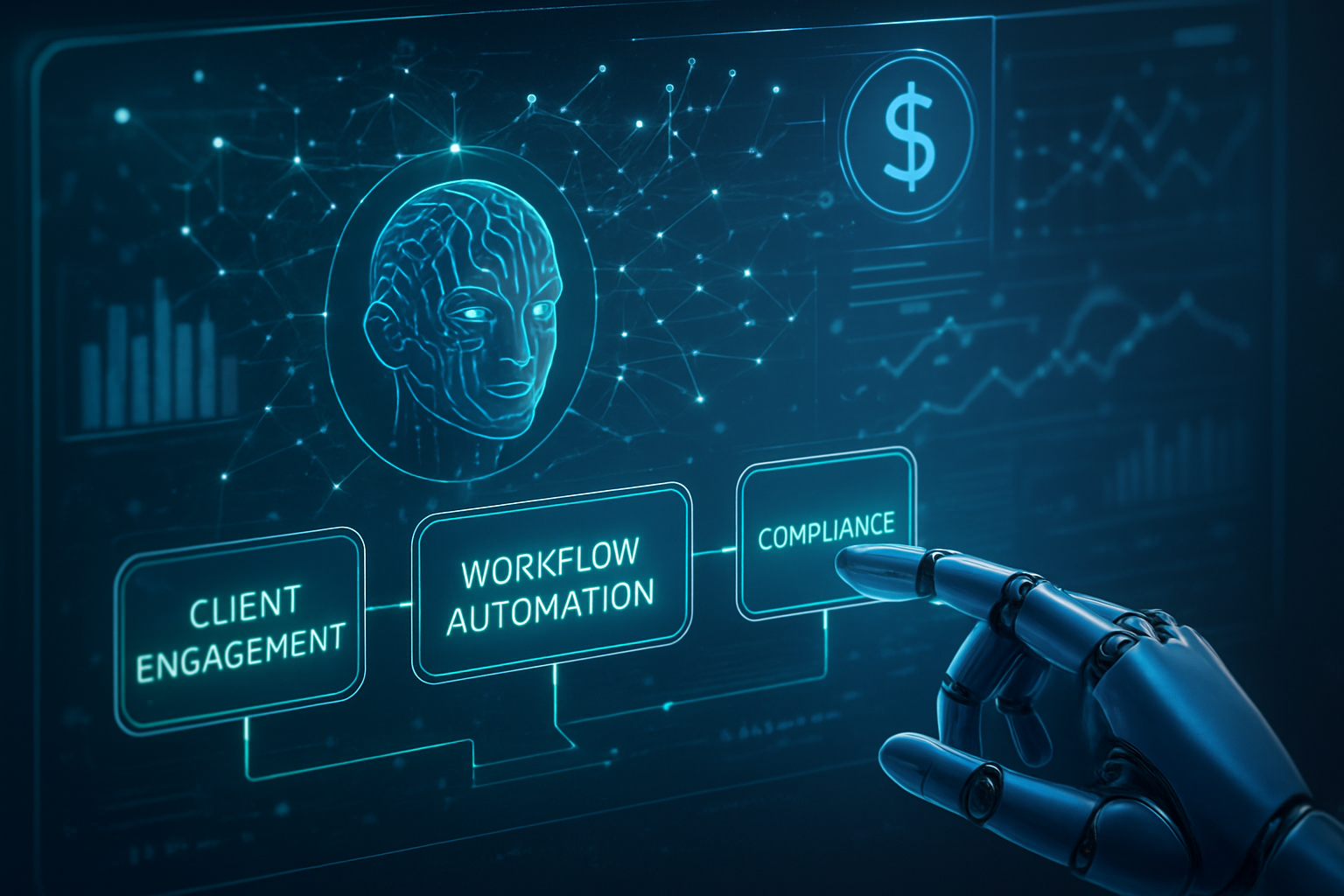
    November 17, 2025 – In a significant move poised to redefine the landscape of financial advisory, Intellebox.ai has officially spun out as an independent company from Intellectus Partners, an independent registered investment adviser. This strategic transition, effective October 1, 2025, with the appointment of AJ De Rosa as CEO, heralds the arrival of a full-stack artificial intelligence platform dedicated to empowering investor success by unifying client engagement, workflow automation, and compliance for financial advisory firms.

    Intellebox.ai's emergence as a standalone entity marks a pivotal moment, transforming an internal innovation into a venture-scalable solution for the broader advisory and wealth management industry. Its core mission is to serve as the "Advisor's Intelligence Operating System," integrating human expertise with advanced AI to tackle critical challenges such as fragmented client interactions, inefficient workflows, and complex regulatory compliance. The platform promises to deliver valuable intelligence to clients at scale, automate a substantial portion of advisory functions, and strengthen compliance oversight, thereby enhancing efficiency, improving communication, and fortifying operational integrity across the sector.

    The Technical Core: Agentic AI Redefining Financial Operations

    Intellebox.ai distinguishes itself through an "AI-native advisory" approach, built on a proprietary infrastructure designed for enterprise-grade security and full data control. At its heart lies the INTLX Agentic AI Ecosystem, a sophisticated framework that deploys personalized AI agents for wealth management. These agents, unlike conventional AI tools, are designed to operate autonomously, reason, plan, remember, and adapt to clients' unique preferences, behaviors, and real-time activities.

    The platform leverages advanced machine learning (ML) models and proprietary Large Language Models (LLMs) specifically engineered for "human-like understanding" in client communications. These LLMs craft personalized messages, market commentaries, and educational content with unprecedented efficiency. Furthermore, Intellebox.ai is developing patented AI Virtual Advisors (AVAs), intelligent avatars trained on a firm’s specific investment philosophy and expertise, capable of continuous learning through deep neural networks to handle both routine inquiries and advanced services. A Predictive AI Analytics Lab, employing proprietary deep learning algorithms, identifies investment opportunities, predicts client needs, and surfaces actionable intelligence.

    This agentic approach significantly differs from previous technologies, which often provided siloed AI solutions or basic automation. While many existing platforms offer AI for specific tasks like note-taking or CRM updates, Intellebox.ai presents a holistic, unified operating system that integrates client engagement, workflow automation, and compliance into a seamless experience. For instance, its AI agents automate up to 80% of advisory functions, including portfolio management, tax optimization, and compliance-related activities, a capability far exceeding traditional rule-based automation. The platform's compliance mechanisms are particularly noteworthy, featuring compliance-trained AI models that understand financial regulations deeply, akin to an experienced compliance team, and conduct automated regulatory checks on every client interaction.

    Initial reactions from the AI research community and industry experts are largely positive, viewing agentic AI as the "next killer application for AI" in wealth management. The spin-out itself is seen as a strategic evolution from "stealth stage innovation to a venture scalable company," underscoring confidence in its commercial potential. Early customer adoption, including its rollout to "The Bear Traps Institutional and Retail Research Platform," further validates its market relevance and technological maturity.

    Analyzing the Industry Impact: A New Competitive Frontier

    The emergence of Intellebox.ai and its agentic AI platform is set to profoundly reshape the competitive landscape for AI companies, tech giants, and startups within the financial technology and wealth management sectors. Intellebox.ai positions itself as a critical "Advisor's Intelligence Operating System," offering a full-stack AI solution that scales personalized engagement tenfold and automates 80% of advisory functions.

    Companies standing to benefit significantly include early-adopting financial advisory and wealth management firms. These firms can gain a substantial competitive edge through dramatically increased operational efficiency, reduced human error, and enhanced client satisfaction via hyper-personalization. Integrators and consulting firms specializing in AI implementation and data integration will also see increased demand. Furthermore, major cloud infrastructure providers such as Amazon (NASDAQ: AMZN), Google (NASDAQ: GOOGL), and Microsoft (NASDAQ: MSFT) stand to benefit from the increased demand for robust computational power and data storage required by sophisticated agentic AI platforms. Intellebox.ai itself leverages Google's Vertex AI Search platform for its search capabilities, highlighting this symbiotic relationship.

    Conversely, companies facing disruption include traditional wealth management firms still reliant on manual processes or legacy systems, which will struggle to match the efficiency and personalization offered by agentic AI. Basic robo-advisor platforms, while offering automated investment management, may find themselves outmaneuvered by Intellebox.ai's "human-like understanding" in client communications, proactive strategies, and comprehensive compliance, which goes beyond algorithmic portfolio management. Fintech startups with limited AI capabilities or those offering niche solutions without a comprehensive agentic AI strategy may also struggle to compete with full-stack platforms. Legacy software providers whose products do not easily integrate with or support agentic AI architectures risk market share erosion.

    Competitive implications for major AI labs and tech companies are significant, even if they don't directly compete in Intellebox.ai's niche. These giants provide the foundational LLMs, cloud infrastructure, and AI-as-a-Service (AIaaS) offerings that power agentic platforms. Their continuous advancements in LLMs (e.g., Google's Gemini, OpenAI's GPT-4o, Meta's Llama, Anthropic's Claude) directly enhance the capabilities of systems like Intellebox.ai. Tech giants with existing enterprise footprints like Salesforce (NYSE: CRM) and SAP (NYSE: SAP) are actively integrating agentic AI into their platforms, transforming static systems into dynamic ecosystems that could eventually offer integrated financial capabilities.

    Potential disruption to existing products and services is widespread. Client communication will shift from one-way reporting to smart, two-way, context-powered conversations. Manual workflows across advisory firms will be largely automated, leading to significant reductions in low-value human work. Portfolio management, tax optimization, and compliance services will see enhanced automation and personalization. Even the role of the financial advisor will evolve, shifting from performing routine tasks to orchestrating AI agents and focusing on complex problem-solving and strategic guidance, aiming to build "10x Advisors" rather than replacing them.

    Examining the Wider Significance: AI's March Towards Autonomy in Finance

    Intellebox.ai's spin-out and its agentic AI platform represent a crucial step in the broader AI landscape, signaling a significant trend toward more autonomous and intelligent systems in sensitive sectors like finance. This development aligns with expert predictions that agentic AI will be the "next big thing," moving beyond generative AI to systems capable of taking autonomous actions, planning multi-step workflows, and dynamically interacting across various systems. Gartner predicts that by 2028, one-third of enterprise software solutions will incorporate agentic AI, with up to 15% of daily decisions becoming autonomous.

    The societal and economic impacts are substantial. Intellebox.ai promises enhanced efficiency and cost reduction for financial institutions, improved risk management, and more personalized financial services, potentially facilitating financial inclusion by making sophisticated advice accessible to a broader demographic. The burgeoning AI agents market, projected to grow significantly, is expected to add trillions to the global economy, driven by increased AI spending from financial services firms.

    However, the increasing autonomy of AI in finance also raises significant concerns. Job displacement is a primary worry, as AI automates complex tasks traditionally performed by humans, potentially impacting a vast number of white-collar roles. Ethical AI and algorithmic bias are critical considerations; AI systems trained on historical data risk perpetuating or amplifying discrimination in financial decisions, necessitating robust responsible AI frameworks that prioritize fairness, accountability, privacy, and safety. The lack of transparency and explainability in "black box" AI models poses challenges for compliance and trust, making it difficult to understand the rationale behind AI-driven decisions. Furthermore, the processing of vast amounts of sensitive financial data by autonomous AI agents heightens data privacy and cybersecurity risks, demanding stringent security measures and compliance with regulations like GDPR. The complex question of accountability and human oversight for errors or harmful outcomes from autonomous AI decisions also remains a pressing issue.

    Comparing this to previous AI milestones, Intellebox.ai marks an evolution from early algorithmic trading systems and neural networks of the past, and even beyond the machine learning and natural language processing breakthroughs of the 2000s and 2010s. While previous advancements focused on data analysis, prediction, or content generation, agentic AI allows systems to proactively take goal-oriented actions and adapt independently. This represents a shift from AI assisting with decision-making to AI initiating and executing decisions autonomously, making Intellebox.ai a harbinger of a new era where AI plays a more active and integrated role in financial operations. The implications of AI becoming more autonomous in finance include potential risks to financial stability, as interconnected AI systems could amplify market volatility, and significant regulatory challenges as current frameworks struggle to keep pace with rapid innovation.

    Future Developments: The Road Ahead for Agentic AI in Finance

    The next 1-5 years promise rapid advancements for Intellebox.ai and the broader agentic AI landscape within financial advisory. Intellebox.ai's near-term focus will be on scaling its platform to enable advisors to achieve tenfold personalized client engagement and 80% automation of advisory functions. This includes the continued development of its compliance-trained AI models and the deployment of AI Virtual Advisors (AVAs) to deliver consistent, branded client experiences. The platform's ongoing market penetration, as evidenced by its rollout to firms like The Bear Traps Institutional and Retail Research Platform, underscores its immediate growth trajectory.

    For agentic AI in general, the market is projected for explosive growth, with the global agentic AI tools market expected to reach $10.41 billion in 2025. Experts predict that by 2028, a significant portion of enterprise software and daily business decisions will incorporate agentic AI, fundamentally altering how financial institutions operate. Financial advisors will increasingly rely on AI copilots for real-time insights, risk management, and hyper-personalized client solutions, leading to scalable efficiency. Long-term, the vision extends to fully autonomous wealth ecosystems, "self-driving portfolios" that continuously rebalance, and the democratization of sophisticated wealth management strategies for retail investors.

    Potential new applications and use cases on the horizon are vast. These include hyper-personalized financial planning that offers constantly evolving recommendations, proactive portfolio management with automated rebalancing and tax optimization, real-time regulatory compliance and risk mitigation with autonomous fraud detection, and advanced customer engagement through dynamic financial coaching. Agentic AI will also streamline client onboarding, automate loan underwriting, and enhance financial education through personalized, interactive experiences.

    However, several key challenges must be addressed for widespread adoption. Data quality and governance remain paramount, as inaccurate or siloed data can compromise AI effectiveness. Regulatory uncertainty and compliance pose a significant hurdle, as the pace of AI innovation outstrips existing frameworks, necessitating clear guidelines for "high-risk" AI systems in finance. Algorithmic bias and ethical concerns demand continuous vigilance to prevent discriminatory outcomes, while the lack of transparency (Explainable AI) must be overcome to build trust among advisors, clients, and regulators. Cybersecurity and data privacy risks will require robust protections for sensitive financial information. Furthermore, addressing the talent shortage and skills gap in AI and finance, along with the high development and integration costs, will be crucial.

    Experts predict that AI will augment, rather than entirely replace, human financial advisors, shifting their roles to more strategic functions. Agentic AI is expected to deliver substantial efficiency gains (30-80% in advice processes) and productivity improvements (22-30%), potentially leading to significant revenue growth for financial institutions. The workforce will undergo a transformation, requiring massive reskilling efforts to adapt to new roles created by AI. Ultimately, agentic AI is becoming a strategic necessity for wealth management firms to remain competitive, scale operations, and deliver enhanced client value.

    Comprehensive Wrap-Up: A Defining Moment for Financial AI

    The spin-out of Intellebox.ai marks a defining moment in the history of artificial intelligence, particularly within the financial advisory sector. It represents a significant leap towards an "AI-native" era, where intelligent agents move beyond mere assistance to autonomous action, fundamentally transforming how financial services are delivered and consumed. The platform's ability to unify client engagement, workflow automation, and compliance through sophisticated agentic AI offers unprecedented opportunities for efficiency, personalization, and operational integrity.

    This development underscores a broader trend in AI – the shift from analytical and generative capabilities to proactive, goal-oriented autonomy. Intellebox.ai's emphasis on proprietary infrastructure, enterprise-grade security, and compliance-trained AI models positions it as a leader in responsible AI adoption within a highly regulated industry.

    In the coming weeks and months, the industry will be watching closely for Intellebox.ai's continued market penetration, the evolution of its AI Virtual Advisors, and how financial advisory firms leverage its platform to gain a competitive edge. The long-term impact will depend on how effectively the industry addresses the accompanying challenges of ethical AI, data governance, regulatory adaptation, and workforce reskilling. Intellebox.ai is not just a new company; it is a blueprint for the future of intelligent, autonomous finance, promising a future where financial advice is more accessible, personalized, and efficient than ever before.


    This content is intended for informational purposes only and represents analysis of current AI developments.

    TokenRing AI delivers enterprise-grade solutions for multi-agent AI workflow orchestration, AI-powered development tools, and seamless remote collaboration platforms.
    For more information, visit https://www.tokenring.ai/.