Tag: Western Digital

  • Black Friday 2025: A Strategic Window for PC Hardware Amidst Rising AI Demands

    Black Friday 2025: A Strategic Window for PC Hardware Amidst Rising AI Demands

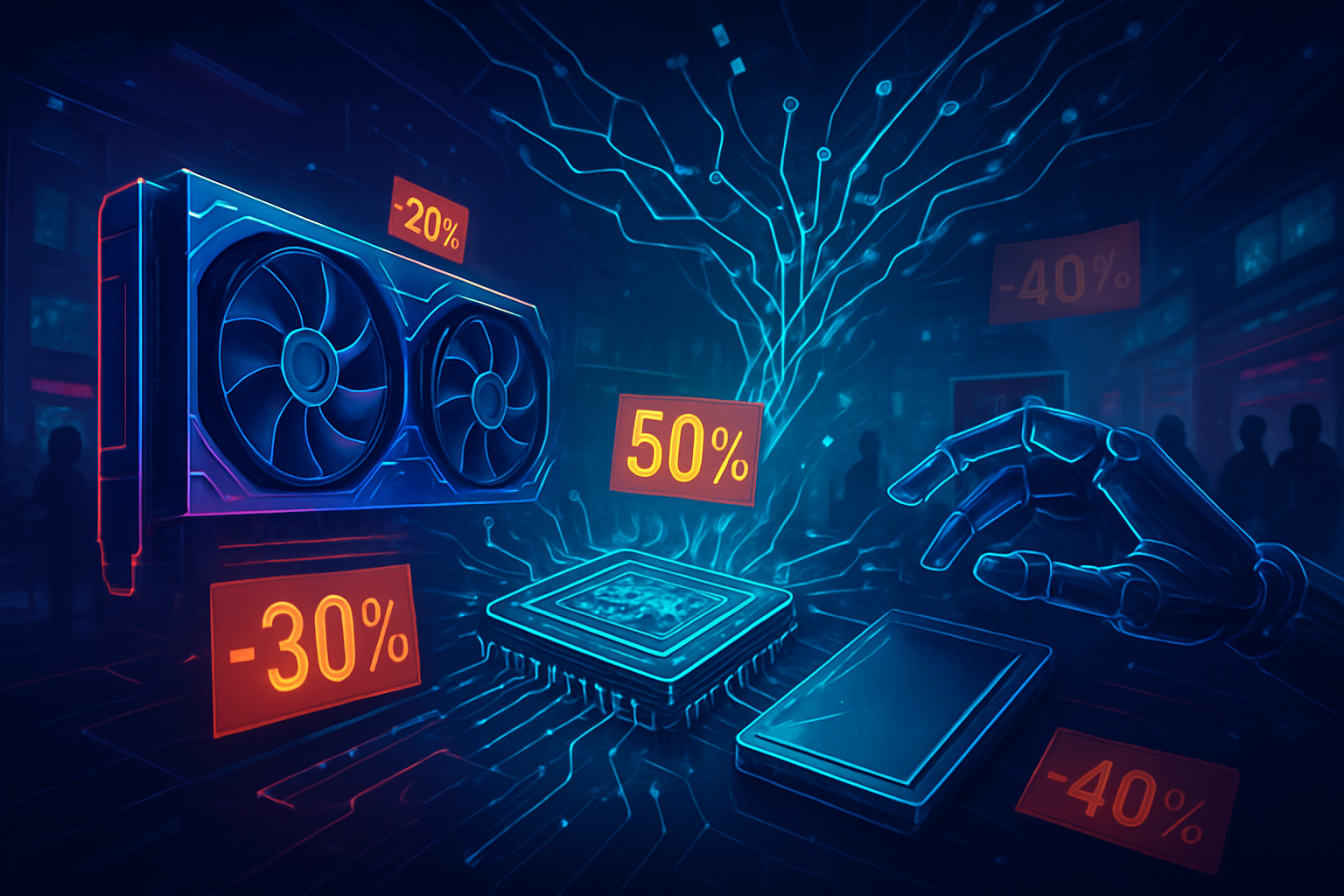
    Black Friday 2025 has unfolded as a critical period for PC hardware enthusiasts, offering a complex tapestry of aggressive discounts on GPUs, CPUs, and SSDs, set against a backdrop of escalating demand from the artificial intelligence (AI) sector and looming memory price hikes. As consumers navigated a landscape of compelling deals, particularly in the mid-range and previous-generation categories, industry analysts cautioned that this holiday shopping spree might represent one of the last opportunities to acquire certain components, especially memory, at relatively favorable prices before a significant market recalibration driven by AI data center needs.

    The current market sentiment is a paradoxical blend of consumer opportunity and underlying industry anxiety. While retailers have pushed forth with robust promotions to clear existing inventory, the shadow of anticipated price increases for DRAM and NAND memory, projected to extend well into 2026, has added a strategic urgency to Black Friday purchases. The PC market itself is undergoing a transformation, with AI PCs featuring Neural Processing Units (NPUs) rapidly gaining traction, expected to constitute a substantial portion of all PC shipments by the end of 2025. This evolving landscape, coupled with the impending end-of-life for Windows 10 in October 2025, is driving a global refresh cycle, but also introduces volatility due to rising component costs and broader macroeconomic uncertainties.

    Unpacking the Deals: GPUs, CPUs, and SSDs Under the AI Lens

    Black Friday 2025 has proven to be one of the more generous years for PC hardware deals, particularly for graphics cards, processors, and storage, though with distinct nuances across each category.

    In the GPU market, NVIDIA (NASDAQ: NVDA) has strategically offered attractive deals on its new RTX 50-series cards, with models like the RTX 5060 Ti, RTX 5070, and RTX 5070 Ti frequently available below their Manufacturer’s Suggested Retail Price (MSRP) in the mid-range and mainstream segments. AMD (NASDAQ: AMD) has countered with aggressive pricing on its Radeon RX 9000 series, including the RX 9070 XT and RX 9060 XT, presenting strong performance alternatives for gamers. Intel's (NASDAQ: INTC) Arc B580 and B570 GPUs also emerged as budget-friendly options for 1080p gaming. However, the top-tier, newly released GPUs, especially NVIDIA's RTX 5090, have largely remained insulated from deep discounts, a direct consequence of overwhelming demand from the AI sector, which is voraciously consuming high-performance chips. This selective discounting underscores the dual nature of the GPU market, serving both gaming enthusiasts and the burgeoning AI industry.

    The CPU market has also presented favorable conditions for consumers, particularly for mid-range processors. CPU prices had already seen a roughly 20% reduction earlier in 2025 and have maintained stability, with Black Friday sales adding further savings. Notable deals included AMD’s Ryzen 7 9800X3D, Ryzen 7 9700X, and Ryzen 5 9600X, alongside Intel’s Core Ultra 7 265K and Core i7-14700K. A significant trend emerging is Intel's reported de-prioritization of low-end PC microprocessors, signaling a strategic shift towards higher-margin server parts. This could lead to potential shortages in the budget segment in 2026 and may prompt Original Equipment Manufacturers (OEMs) to increasingly turn to AMD and Qualcomm (NASDAQ: QCOM) for their PC offerings.

    Perhaps the most critical purchasing opportunity of Black Friday 2025 has been in the SSD market. Experts have issued strong warnings of an "impending NAND apocalypse," predicting drastic price increases for both RAM and SSDs in the coming months due to overwhelming demand from AI data centers. Consequently, retailers have offered substantial discounts on both PCIe Gen4 and the newer, ultra-fast PCIe Gen5 NVMe SSDs. Prominent brands like Samsung (KRX: 005930) (e.g., 990 Pro, 9100 Pro), Crucial (a brand of Micron Technology, NASDAQ: MU) (T705, T710, P510), and Western Digital (NASDAQ: WDC) (WD Black SN850X) have featured heavily in these sales, with some high-capacity drives seeing significant percentage reductions. This makes current SSD deals a strategic "buy now" opportunity, potentially the last chance to acquire these components at present price levels before the anticipated market surge takes full effect. In contrast, older 2.5-inch SATA SSDs have seen fewer dramatic deals, reflecting their diminishing market relevance in an era of high-speed NVMe.

    Corporate Chessboard: Beneficiaries and Competitive Shifts

    Black Friday 2025 has not merely been a boon for consumers; it has also significantly influenced the competitive landscape for PC hardware companies, with clear beneficiaries emerging across the GPU, CPU, and SSD segments.

    In the GPU market, NVIDIA (NASDAQ: NVDA) continues to reap substantial benefits from its dominant position, particularly in the high-end and AI-focused segments. Its robust CUDA software platform further entrenches its ecosystem, creating high switching costs for users and developers. While NVIDIA strategically offers deals on its mid-range and previous-generation cards to maintain market presence, the insatiable demand for its high-performance GPUs from the AI sector means its top-tier products command premium prices and are less susceptible to deep discounts. This allows NVIDIA to sustain high Average Selling Prices (ASPs) and overall revenue. AMD (NASDAQ: AMD), meanwhile, is leveraging aggressive Black Friday pricing on its current-generation Radeon RX 9000 series to clear inventory and gain market share in the consumer gaming segment, aiming to challenge NVIDIA's dominance where possible. Intel (NASDAQ: INTC), with its nascent Arc series, utilizes Black Friday to build brand recognition and gain initial adoption through competitive pricing and bundling.

    The CPU market sees AMD (NASDAQ: AMD) strongly positioned to continue its trend of gaining market share from Intel (NASDAQ: INTC). AMD's Ryzen 7000 and 9000 series processors, especially the X3D gaming CPUs, have been highly successful, and Black Friday deals on these models are expected to drive significant unit sales. AMD's robust AM5 platform adoption further indicates consumer confidence. Intel, while still holding the largest overall CPU market share, faces pressure. Its reported strategic shift to de-prioritize low-end PC microprocessors, focusing instead on higher-margin server and mobile segments, could inadvertently cede ground to AMD in the consumer desktop space, especially if AMD's Black Friday deals are more compelling. This competitive dynamic could lead to further market share shifts in the coming months.

    The SSD market, characterized by impending price hikes, has turned Black Friday into a crucial battleground for market share. Companies offering aggressive discounts stand to benefit most from the "buy now" sentiment among consumers. Samsung (KRX: 005930), a leader in memory technology, along with Micron Technology's (NASDAQ: MU) Crucial brand, Western Digital (NASDAQ: WDC), and SK Hynix (KRX: 000660), are all highly competitive. Micron/Crucial, in particular, has indicated "unprecedented" discounts on high-performance SSDs, signaling a strong push to capture market share and provide value amidst rising component costs. Any company able to offer compelling price-to-performance ratios during this period will likely see robust sales volumes, driven by both consumer upgrades and the underlying anxiety about future price escalations. This competitive scramble is poised to benefit consumers in the short term, but the long-term implications of AI-driven demand will continue to shape pricing and supply.

    Broader Implications: AI's Shadow and Economic Undercurrents

    Black Friday 2025 is more than just a seasonal sales event; it serves as a crucial barometer for the broader PC hardware market, reflecting significant trends driven by the pervasive influence of AI, evolving consumer spending habits, and an uncertain economic climate. The aggressive deals observed across GPUs, CPUs, and SSDs are not merely a celebration of holiday shopping but a strategic maneuver by the industry to navigate a transitional period.

    The most profound implication stems from the insatiable demand for memory (DRAM and NAND/SSDs) by AI data centers. This demand is creating a supply crunch that is fundamentally reshaping pricing dynamics. While Black Friday offers a temporary reprieve with discounts, experts widely predict that memory prices will escalate dramatically well into 2026. This "NAND apocalypse" and corresponding DRAM price surges are expected to increase laptop prices by 5-15% and could even lead to a contraction in overall PC and smartphone unit sales in 2026. This trend marks a significant shift, where the enterprise AI market's needs directly impact consumer affordability and product availability.

    The overall health of the PC market, however, remains robust in 2025, primarily propelled by two major forces: the impending end-of-life for Windows 10 in October 2025, necessitating a global refresh cycle, and the rapid integration of AI. AI PCs, equipped with NPUs, are becoming a dominant segment, projected to account for a significant portion of all PC shipments by year-end. This signifies a fundamental shift in computing, where AI capabilities are no longer niche but are becoming a standard expectation. The global PC market is forecasted for substantial growth through 2030, underpinned by strong commercial demand for AI-capable systems. However, this positive outlook is tempered by potential new US tariffs on Chinese imports, implemented in April 2025, which could increase PC costs by 5-10% and impact demand, adding another layer of complexity to the supply chain and pricing.

    Consumer spending habits during this Black Friday reflect a cautious yet value-driven approach. Shoppers are actively seeking deeper discounts and comparing prices, with online channels remaining dominant. The rise of "Buy Now, Pay Later" (BNPL) options also highlights a consumer base that is both eager for deals and financially prudent. Interestingly, younger demographics like Gen Z, while reducing overall electronics spending, are still significant buyers, often utilizing AI tools to find the best deals. This indicates a consumer market that is increasingly savvy and responsive to perceived value, even amidst broader economic uncertainties like inflation.

    Compared to previous years, Black Friday 2025 continues the trend of strong online sales and significant discounts. However, the underlying drivers have evolved. While past years saw demand spurred by pandemic-induced work-from-home setups, the current surge is distinctly AI-driven, fundamentally altering component demand and pricing structures. The long-term impact points towards a premiumization of the PC market, with a focus on higher-margin, AI-capable devices, likely leading to increased Average Selling Prices (ASPs) across the board, even as unit sales might face challenges due to rising memory costs. This period marks a transition where the PC is increasingly defined by its AI capabilities, and the cost of enabling those capabilities will be a defining factor in its future.

    The Road Ahead: AI, Innovation, and Price Volatility

    The PC hardware market, post-Black Friday 2025, is poised for a period of dynamic evolution, characterized by aggressive technological innovation, the pervasive influence of AI, and significant shifts in pricing and consumer demand. Experts predict a landscape of both exciting new releases and considerable challenges, particularly concerning memory components.

    In the near-term (post-Black Friday 2025 into 2026), the most critical development will be the escalating prices of DRAM and NAND memory. DRAM prices have already doubled in a short period, and further increases are predicted well into 2026 due to the immense demand from AI hyperscalers. This surge in memory costs is expected to drive up laptop prices by 5-15% and contribute to a contraction in overall PC and smartphone unit sales throughout 2026. This underscores why Black Friday 2025 has been highlighted as a strategic purchasing window for memory components. Despite these price pressures, the global computer hardware market is still forecast for long-term growth, primarily fueled by enterprise-grade AI integration, the discontinuation of Windows 10 support, and the enduring relevance of hybrid work models.

    Looking at long-term developments (2026 and beyond), the PC hardware market will see a wave of new product releases and technological advancements:

    • GPUs: NVIDIA (NASDAQ: NVDA) is expected to release its Rubin GPU architecture in early 2026, featuring a chiplet-based design with TSMC's 3nm process and HBM4 memory, promising significant advancements in AI and gaming. AMD (NASDAQ: AMD) is developing its UDNA (Unified Data Center and Gaming) or RDNA 5 GPU architecture, aiming for enhanced efficiency across gaming and data center GPUs, with mass production forecast for Q2 2026.
    • CPUs: Intel (NASDAQ: INTC) plans a refresh of its Arrow Lake processors in 2026, followed by its next-generation Nova Lake designs by late 2026 or early 2027, potentially featuring up to 52 cores and utilizing advanced 2nm and 1.8nm process nodes. AMD's (NASDAQ: AMD) Zen 6 architecture is confirmed for 2026, leveraging TSMC's 2nm (N2) process nodes, bringing IPC improvements and more AI features across its Ryzen and EPYC lines.
    • SSDs: Enterprise-grade SSDs with capacities up to 300 TB are predicted to arrive by 2026, driven by advancements in 3D NAND technology. Samsung (KRX: 005930) is also scheduled to unveil its AI-optimized Gen5 SSD at CES 2026.
    • Memory (RAM): GDDR7 memory is expected to improve bandwidth and efficiency for next-gen GPUs, while DDR6 RAM is anticipated to launch in niche gaming systems by mid-2026, offering double the bandwidth of DDR5. Samsung (KRX: 005930) will also showcase LPDDR6 RAM at CES 2026.
    • Other Developments: PCIe 5.0 motherboards are projected to become standard in 2026, and the expansion of on-device AI will see both integrated and discrete NPUs handling AI workloads. Third-generation Neuromorphic Processing Units (NPUs) are set for a mainstream debut in 2026, and alternative processor architectures like ARM from Qualcomm (NASDAQ: QCOM) and Apple (NASDAQ: AAPL) are expected to challenge x86 dominance.

    Evolving consumer demands will be heavily influenced by AI integration, with businesses prioritizing AI PCs for future-proofing. The gaming and esports sectors will continue to drive demand for high-performance hardware, and the Windows 10 end-of-life will necessitate widespread PC upgrades. However, pricing trends remain a significant concern. Escalating memory prices are expected to persist, leading to higher overall PC and smartphone prices. New U.S. tariffs on Chinese imports, implemented in April 2025, are also projected to increase PC costs by 5-10% in the latter half of 2025. This dynamic suggests a shift towards premium, AI-enabled devices while potentially contracting the lower and mid-range market segments.

    The Black Friday 2025 Verdict: A Crossroads for PC Hardware

    Black Friday 2025 has concluded as a truly pivotal moment for the PC hardware market, simultaneously offering a bounty of aggressive deals for discerning consumers and foreshadowing a significant transformation driven by the burgeoning demands of artificial intelligence. This period has been a strategic crossroads, where retailers cleared current inventory amidst a market bracing for a future defined by escalating memory costs and a fundamental shift towards AI-centric computing.

    The key takeaways from this Black Friday are clear: consumers who capitalized on deals for GPUs, particularly mid-range and previous-generation models, and strategically acquired SSDs, are likely to have made prudent investments. The CPU market also presented robust opportunities, especially for mid-range processors. However, the overarching message from industry experts is a stark warning about the "impending NAND apocalypse" and soaring DRAM prices, which will inevitably translate to higher costs for PCs and related devices well into 2026. This dynamic makes the Black Friday 2025 deals on memory components exceptionally significant, potentially representing the last chance for some time to purchase at current price levels.

    This development's significance in AI history is profound. The insatiable demand for high-performance memory and compute from AI data centers is not merely influencing supply chains; it is fundamentally reshaping the consumer PC market. The rapid rise of AI PCs with NPUs is a testament to this, signaling a future where AI capabilities are not an add-on but a core expectation. The long-term impact will see a premiumization of the PC market, with a focus on higher-margin, AI-capable devices, potentially at the expense of budget-friendly options.

    In the coming weeks and months, all eyes will be on the escalation of DRAM and NAND memory prices. The impact of Intel's (NASDAQ: INTC) strategic shift away from low-end desktop CPUs will also be closely watched, as it could foster greater competition from AMD (NASDAQ: AMD) and Qualcomm (NASDAQ: QCOM) in those segments. Furthermore, the full effects of new US tariffs on Chinese imports, implemented in April 2025, will likely contribute to increased PC costs throughout the second half of the year. The Black Friday 2025 period, therefore, marks not an end, but a crucial inflection point in the ongoing evolution of the PC hardware industry, where AI's influence is now an undeniable and dominant force.


    This content is intended for informational purposes only and represents analysis of current AI developments.

    TokenRing AI delivers enterprise-grade solutions for multi-agent AI workflow orchestration, AI-powered development tools, and seamless remote collaboration platforms.
    For more information, visit https://www.tokenring.ai/.

  • The Silicon Supercycle: AI Fuels Unprecedented Growth and Reshapes Semiconductor Giants

    The Silicon Supercycle: AI Fuels Unprecedented Growth and Reshapes Semiconductor Giants

    November 13, 2025 – The global semiconductor industry is in the midst of an unprecedented boom, driven by the insatiable demand for Artificial Intelligence (AI) and high-performance computing. As of November 2025, the sector is experiencing a robust recovery and is projected to reach approximately $697 billion in sales this year, an impressive 11% year-over-year increase, with analysts confidently forecasting a trajectory towards a staggering $1 trillion by 2030. This surge is not merely a cyclical upturn but a fundamental reshaping of the industry, as companies like Micron Technology (NASDAQ: MU), Seagate Technology (NASDAQ: STX), Western Digital (NASDAQ: WDC), Broadcom (NASDAQ: AVGO), and Intel (NASDAQ: INTC) leverage cutting-edge innovations to power the AI revolution. Their recent stock performances reflect this transformative period, with significant gains underscoring the critical role semiconductors play in the evolving AI landscape.

    The immediate significance of this silicon supercycle lies in its pervasive impact across the tech ecosystem. From hyperscale data centers training colossal AI models to edge devices performing real-time inference, advanced semiconductors are the bedrock. The escalating demand for high-bandwidth memory (HBM), specialized AI accelerators, and high-capacity storage solutions is creating both immense opportunities and intense competition, forcing companies to innovate at an unprecedented pace to maintain relevance and capture market share in this rapidly expanding AI-driven economy.

    Technical Prowess: Powering the AI Frontier

    The technical advancements driving this semiconductor surge are both profound and diverse, spanning memory, storage, networking, and processing. Each major player is carving out its niche, pushing the boundaries of what's possible to meet AI's escalating computational and data demands.

    Micron Technology (NASDAQ: MU) is at the vanguard of high-bandwidth memory (HBM) and next-generation DRAM. As of October 2025, Micron has begun sampling its HBM4 products, aiming to deliver unparalleled performance and power efficiency for future AI processors. Earlier in the year, its HBM3E 36GB 12-high solution was integrated into AMD Instinct MI350 Series GPU platforms, offering up to 8 TB/s bandwidth and supporting AI models with up to 520 billion parameters. Micron's GDDR7 memory is also pushing beyond 40 Gbps, leveraging its 1β (1-beta) DRAM process node for over 50% better power efficiency than GDDR6. The company's 1-gamma DRAM node promises a 30% improvement in bit density. Initial reactions from the AI research community have been largely positive, recognizing Micron's HBM advancements as crucial for alleviating memory bottlenecks, though reports of HBM4 redesigns due to yield issues could pose future challenges.

    Seagate Technology (NASDAQ: STX) is addressing the escalating demand for mass-capacity storage essential for AI infrastructure. Their Heat-Assisted Magnetic Recording (HAMR)-based Mozaic 3+ platform is now in volume production, enabling 30 TB Exos M and IronWolf Pro hard drives. These drives are specifically designed for energy efficiency and cost-effectiveness in data centers handling petabyte-scale AI/ML workflows. Seagate has already shipped over one million HAMR drives, validating the technology, and anticipates future Mozaic 4+ and 5+ platforms to reach 4TB and 5TB per platter, respectively. Their new Exos 4U100 and 4U74 JBOD platforms, leveraging Mozaic HAMR, deliver up to 3.2 petabytes in a single enclosure, offering up to 70% more efficient cooling and 30% less power consumption. Industry analysts highlight the relevance of these high-capacity, energy-efficient solutions as data volumes continue to explode.

    Western Digital (NASDAQ: WDC) is similarly focused on a comprehensive storage portfolio aligned with the AI Data Cycle. Their PCIe Gen5 DC SN861 E1.S enterprise-class NVMe SSDs, certified for NVIDIA GB200 NVL72 rack-scale systems, offer read speeds up to 6.9 GB/s and capacities up to 16TB, providing up to 3x random read performance for LLM training and inference. For massive data storage, Western Digital is sampling the industry's highest-capacity, 32TB ePMR enterprise-class HDD (Ultrastar DC HC690 UltraSMR HDD). Their approach differentiates by integrating both flash and HDD roadmaps, offering balanced solutions for diverse AI storage needs. The accelerating demand for enterprise SSDs, driven by big tech's shift from HDDs to faster, lower-power, and more durable eSSDs for AI data, underscores Western Digital's strategic positioning.

    Broadcom (NASDAQ: AVGO) is a key enabler of AI infrastructure through its custom AI accelerators and high-speed networking solutions. In October 2025, a landmark collaboration was announced with OpenAI to co-develop and deploy 10 gigawatts of custom AI accelerators, a multi-billion dollar, multi-year partnership with deployments starting in late 2026. Broadcom's Ethernet solutions, including Tomahawk and Jericho switches, are crucial for scale-up and scale-out networking in AI data centers, driving significant AI revenue growth. Their third-generation TH6-Davisson Co-packaged Optics (CPO) offer a 70% power reduction compared to pluggable optics. This custom silicon approach allows hyperscalers to optimize hardware for their specific Large Language Models, potentially offering superior performance-per-watt and cost efficiency compared to merchant GPUs.

    Intel (NASDAQ: INTC) is advancing its Xeon processors, AI accelerators, and software stack to cater to diverse AI workloads. Its new Intel Xeon 6 series with Performance-cores (P-cores), unveiled in May 2025, are designed to manage advanced GPU-powered AI systems, integrating AI acceleration in every core and offering up to 2.4x more Radio Access Network (RAN) capacity. Intel's Gaudi 3 accelerators claim up to 20% more throughput and twice the compute value compared to NVIDIA's H100 GPU. The OpenVINO toolkit continues to evolve, with recent releases expanding support for various LLMs and enhancing NPU support for improved LLM performance on AI PCs. Intel Foundry Services (IFS) also represents a strategic initiative to offer advanced process nodes for AI chip manufacturing, aiming to compete directly with TSMC.

    AI Industry Implications: Beneficiaries, Battles, and Breakthroughs

    The current semiconductor trends are profoundly reshaping the competitive landscape for AI companies, tech giants, and startups, creating clear beneficiaries and intense strategic battles.

    Beneficiaries: All the mentioned semiconductor manufacturers—Micron, Seagate, Western Digital, Broadcom, and Intel—stand to gain directly from the surging demand for AI hardware. Micron's dominance in HBM, Seagate and Western Digital's high-capacity/performance storage solutions, and Broadcom's expertise in AI networking and custom silicon place them in strong positions. Hyperscale cloud providers like Google, Amazon, and Microsoft are both major beneficiaries and drivers of these trends, as they are the primary customers for advanced components and increasingly design their own custom AI silicon, often in partnership with companies like Broadcom. Major AI labs, such as OpenAI, directly benefit from tailored hardware that can accelerate their specific model training and inference requirements, reducing reliance on general-purpose GPUs. AI startups also benefit from a broader and more diverse ecosystem of AI hardware, offering potentially more accessible and cost-effective solutions.

    Competitive Implications: The ability to access or design leading-edge semiconductor technology is now a key differentiator, intensifying the race for AI dominance. Hyperscalers developing custom silicon aim to reduce dependency on NVIDIA (NASDAQ: NVDA) and gain a competitive edge in AI services. This move towards custom silicon and specialized accelerators creates a more competitive landscape beyond general-purpose GPUs, fostering innovation and potentially lowering costs in the long run. The importance of comprehensive software ecosystems, like NVIDIA's CUDA or Intel's OpenVINO, remains a critical battleground. Geopolitical factors and the "silicon squeeze" mean that securing stable access to advanced chips is paramount, giving companies with strong foundry partnerships or in-house manufacturing capabilities (like Intel) strategic advantages.

    Potential Disruption: The shift from general-purpose GPUs to more cost-effective and power-efficient custom AI silicon or inference-optimized GPUs could disrupt existing products and services. Traditional memory and storage hierarchies are being challenged by technologies like Compute Express Link (CXL), which allows for disaggregated and composable memory, potentially disrupting vendors focused solely on traditional DIMMs. The rapid adoption of Ethernet over InfiniBand for AI fabrics, driven by Broadcom and others, will disrupt companies entrenched in older networking technologies. Furthermore, the emergence of "AI PCs," driven by Intel's focus, suggests a disruption in the traditional PC market with new hardware and software requirements for on-device AI inference.

    Market Positioning and Strategic Advantages: Micron's strong market position in high-demand HBM3E makes it a crucial supplier for leading AI accelerator vendors. Seagate and Western Digital are strongly positioned in the mass-capacity storage market for AI, with advancements in HAMR and UltraSMR enabling higher densities and lower Total Cost of Ownership (TCO). Broadcom's leadership in AI networking with 800G Ethernet and co-packaged optics, combined with its partnerships in custom silicon design, solidifies its role as a key enabler for scalable AI infrastructure. Intel, leveraging its foundational role in CPUs, aims for a stronger position in AI inference with specialized GPUs and an open software ecosystem, with the success of Intel Foundry in delivering advanced process nodes being a critical long-term strategic advantage.

    Wider Significance: A New Era for AI and Beyond

    The wider significance of these semiconductor trends in AI extends far beyond corporate balance sheets, touching upon economic, geopolitical, technological, and societal domains. This current wave is fundamentally different from previous AI milestones, marking a new era where hardware is the primary enabler of AI's unprecedented adoption and impact.

    Broader AI Landscape: The semiconductor industry is not merely reacting to AI; it is actively driving its rapid evolution. The projected growth to a trillion-dollar market by 2030, largely fueled by AI, underscores the deep intertwining of these two sectors. Generative AI, in particular, is a primary catalyst, driving demand for advanced cloud Systems-on-Chips (SoCs) for training and inference, with its adoption rate far surpassing previous technological breakthroughs like PCs and smartphones. This signifies a technological shift of unparalleled speed and impact.

    Impacts: Economically, the massive investments and rapid growth reflect AI's transformative power, but concerns about stretched valuations and potential market volatility (an "AI bubble") are emerging. Geopolitically, semiconductors are at the heart of a global "tech race," with nations investing in sovereign AI initiatives and export controls influencing global AI development. Technologically, the exponential growth of AI workloads is placing immense pressure on existing data center infrastructure, leading to a six-fold increase in power demand over the next decade, necessitating continuous innovation in energy efficiency and cooling.

    Potential Concerns: Beyond the economic and geopolitical, significant technical challenges remain, such as managing heat dissipation in high-power chips and ensuring reliability at atomic-level precision. The high costs of advanced manufacturing and maintaining high yield rates for advanced nodes will persist. Supply chain resilience will continue to be a critical concern due to geopolitical tensions and the dominance of specific manufacturing regions. Memory bandwidth and capacity will remain persistent bottlenecks for AI models. The talent gap for AI-skilled professionals and the ethical considerations of AI development will also require continuous attention.

    Comparison to Previous AI Milestones: Unlike past periods where computational limitations hindered progress, the availability of specialized, high-performance semiconductors is now the primary enabler of the current AI boom. This shift has propelled AI from an experimental phase to a practical and pervasive technology. The unprecedented pace of adoption for Generative AI, achieved in just two years, highlights a profound transformation. Earlier AI adoption faced strategic obstacles like a lack of validation strategies; today, the primary challenges have shifted to more technical and ethical concerns, such as integration complexity, data privacy risks, and addressing AI "hallucinations." This current boom is a "second wave" of transformation in the semiconductor industry, even more profound than the demand surge experienced during the COVID-19 pandemic.

    Future Horizons: What Lies Ahead for Silicon and AI

    The future of the semiconductor market, inextricably linked to the trajectory of AI, promises continued rapid innovation, new applications, and persistent challenges.

    Near-Term Developments (Next 1-3 Years): The immediate future will see further advancements in advanced packaging techniques and HBM customization to address memory bottlenecks. The industry will aggressively move towards smaller manufacturing nodes like 3nm and 2nm, yielding quicker, smaller, and more energy-efficient processors. The development of AI-specific architectures—GPUs, ASICs, and NPUs—will accelerate, tailored for deep learning, natural language processing, and computer vision. Edge AI expansion will also be prominent, integrating AI capabilities into a broader array of devices from PCs to autonomous vehicles, demanding high-performance, low-power chips for local data processing.

    Long-Term Developments (3-10+ Years): Looking further ahead, Generative AI itself is poised to revolutionize the semiconductor product lifecycle. AI-driven Electronic Design Automation (EDA) tools will automate chip design, reducing timelines from months to weeks, while AI will optimize manufacturing through predictive maintenance and real-time process optimization. Neuromorphic and quantum computing represent the next frontier, promising ultra-energy-efficient processing and the ability to solve problems beyond classical computers. The push for sustainable AI infrastructure will intensify, with more energy-efficient chip designs, advanced cooling solutions, and optimized data center architectures becoming paramount.

    Potential Applications: These advancements will unlock a vast array of applications, including personalized medicine, advanced diagnostics, and AI-powered drug discovery in healthcare. Autonomous vehicles will rely heavily on edge AI semiconductors for real-time decision-making. Smart cities and industrial automation will benefit from intelligent infrastructure and predictive maintenance. A significant PC refresh cycle is anticipated, integrating AI capabilities directly into consumer devices.

    Challenges: Technical complexities in optimizing performance while reducing power consumption and managing heat dissipation will persist. Manufacturing costs and maintaining high yield rates for advanced nodes will remain significant hurdles. Supply chain resilience will continue to be a critical concern due to geopolitical tensions and the dominance of specific manufacturing regions. Memory bandwidth and capacity will remain persistent bottlenecks for AI models. The talent gap for AI-skilled professionals and the ethical considerations of AI development will also require continuous attention.

    Expert Predictions & Company Outlook: Experts predict AI will remain the central driver of semiconductor growth, with AI-exposed companies seeing strong Compound Annual Growth Rates (CAGR) of 18% to 29% through 2030. Micron is expected to maintain its leadership in HBM, with HBM revenue projected to exceed $8 billion for 2025. Seagate and Western Digital, forming a duopoly in mass-capacity storage, will continue to benefit from AI-driven data growth, with roadmaps extending to 100TB drives. Broadcom's partnerships in custom AI chip design and networking solutions are expected to drive significant AI revenue, with its collaboration with OpenAI being a landmark development. Intel continues to invest heavily in AI through its Xeon processors, Gaudi accelerators, and foundry services, aiming for a broader portfolio to capture the diverse AI market.

    Comprehensive Wrap-up: A Transformative Era

    The semiconductor market, as of November 2025, is in a transformative era, propelled by the relentless demands of Artificial Intelligence. This is not merely a period of growth but a fundamental re-architecture of computing, with implications that will resonate across industries and societies for decades to come.

    Key Takeaways: AI is the dominant force driving unprecedented growth, pushing the industry towards a trillion-dollar valuation. Companies focused on memory (HBM, DRAM) and high-capacity storage are experiencing significant demand and stock appreciation. Strategic investments in R&D and advanced manufacturing are critical, while geopolitical factors and supply chain resilience remain paramount.

    Significance in AI History: This period marks a pivotal moment where hardware is actively shaping AI's trajectory. The symbiotic relationship—AI driving chip innovation, and chips enabling more advanced AI—is creating a powerful feedback loop. The shift towards neuromorphic chips and heterogeneous integration signals a fundamental re-architecture of computing tailored for AI workloads, promising drastic improvements in energy efficiency and performance. This era will be remembered for the semiconductor industry's critical role in transforming AI from a theoretical concept into a pervasive, real-world force.

    Long-Term Impact: The long-term impact is profound, transitioning the semiconductor industry from cyclical demand patterns to a more sustained, multi-year "supercycle" driven by AI. This suggests a more stable and higher growth trajectory as AI integrates into virtually every sector. Competition will intensify, necessitating continuous, massive investments in R&D and manufacturing. Geopolitical strategies will continue to shape regional manufacturing capabilities, and the emphasis on energy efficiency and new materials will grow as AI hardware's power consumption becomes a significant concern.

    What to Watch For: In the coming weeks and months, monitor geopolitical developments, particularly regarding export controls and trade policies, which can significantly impact market access and supply chain stability. Upcoming earnings reports from major tech and semiconductor companies will provide crucial insights into demand trends and capital allocation for AI-related hardware. Keep an eye on announcements regarding new fab constructions, capacity expansions for advanced nodes (e.g., 2nm, 3nm), and the wider adoption of AI in chip design and manufacturing processes. Finally, macroeconomic factors and potential "risk-off" sentiment due to stretched valuations in AI-related stocks will continue to influence market dynamics.


    This content is intended for informational purposes only and represents analysis of current AI developments.

    TokenRing AI delivers enterprise-grade solutions for multi-agent AI workflow orchestration, AI-powered development tools, and seamless remote collaboration platforms.
    For more information, visit https://www.tokenring.ai/.