Tag: Yann LeCun

  • Beyond Pixels: The Rise of 3D World Models and the Quest for Spatial Intelligence

    Beyond Pixels: The Rise of 3D World Models and the Quest for Spatial Intelligence

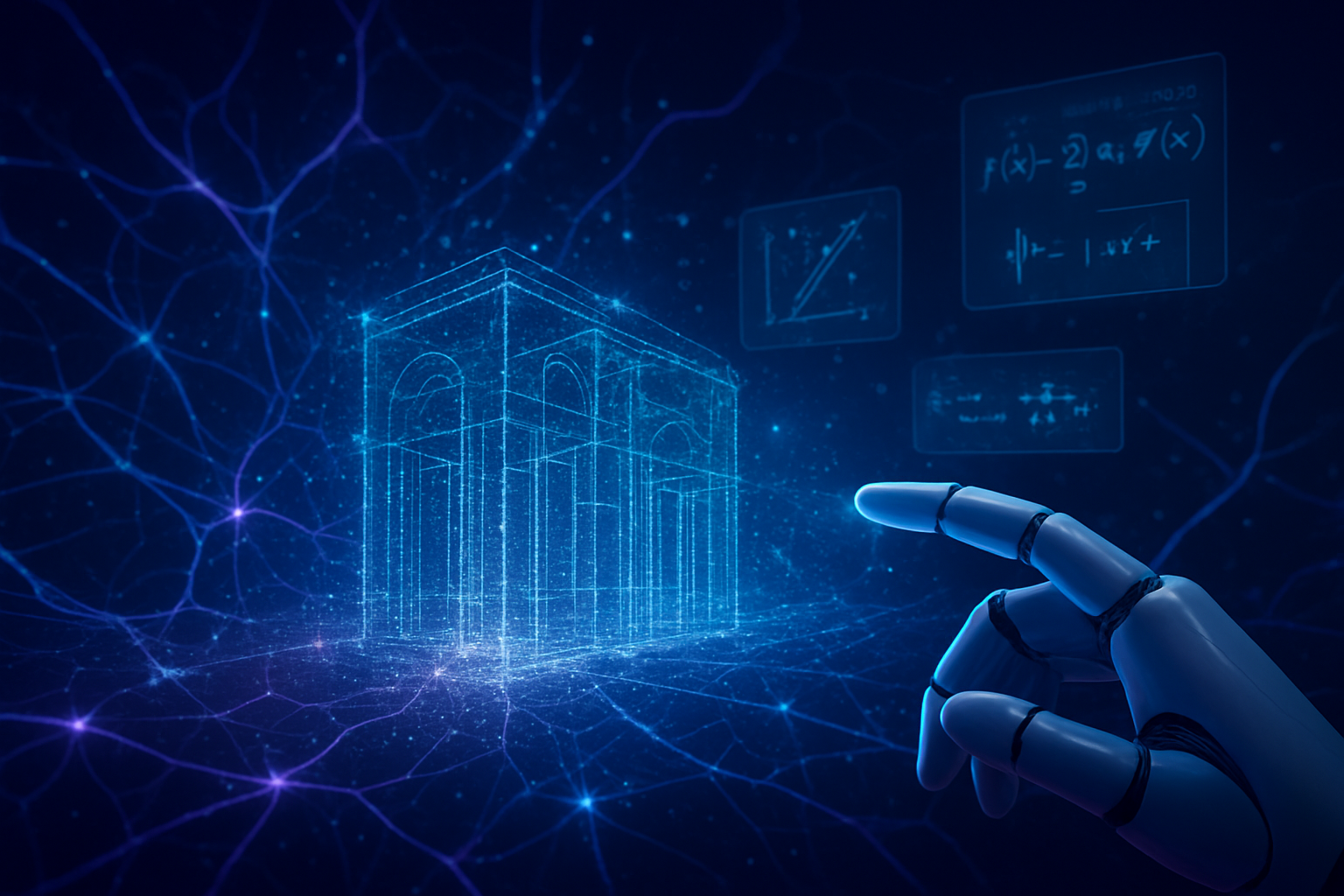
    The era of Large Language Models (LLMs) is undergoing its most significant evolution to date, transitioning from digital "stochastic parrots" to AI agents that possess a fundamental understanding of the physical world. As of January 2026, the industry focus has pivoted toward "World Models"—AI architectures designed to perceive, reason about, and navigate three-dimensional space. This shift is being spearheaded by two of the most prominent figures in AI history: Dr. Fei-Fei Li, whose startup World Labs has recently emerged from stealth with groundbreaking spatial intelligence models, and Yann LeCun, Meta’s Chief AI Scientist, who has co-founded a new venture to implement his vision of "predictive" machine intelligence.

    The immediate significance of this development cannot be overstated. While previous generative models like OpenAI’s Sora could create visually stunning videos, they often lacked "physical common sense," leading to visual glitches where objects would spontaneously morph or disappear. The new generation of 3D World Models, such as World Labs’ "Marble" and Meta’s "VL-JEPA," solve this by building internal, persistent representations of 3D environments. This transition marks the beginning of the "Embodied AI" era, where artificial intelligence moves beyond the chat box and into the physical reality of robotics, autonomous systems, and augmented reality.

    The Technical Leap: From Pixel Prediction to Spatial Reasoning

    The technical core of this advancement lies in a move away from "autoregressive pixel prediction." Traditional video generators create the next frame by guessing what the next set of pixels should look like based on patterns. In contrast, World Labs’ flagship model, Marble, utilizes a technique known as 3D Gaussian Splatting combined with a hybrid neural renderer. Instead of just drawing a picture, Marble generates a persistent 3D volume that maintains geometric consistency. If a user "moves" a virtual camera through a generated room, the objects remain fixed in space, allowing for true navigation and interaction. This "spatial memory" ensures that if an AI agent turns away from a table and looks back, the objects on that table have not changed shape or position—a feat that was previously impossible for generative video.

    Parallel to this, Yann LeCun’s work at Meta Platforms Inc. (NASDAQ: META) and his newly co-founded Advanced Machine Intelligence Labs (AMI Labs) focuses on the Joint Embedding Predictive Architecture (JEPA). Unlike LLMs that predict the next word, JEPA models predict "latent embeddings"—abstract representations of what will happen next in a physical scene. By ignoring irrelevant visual noise (like the specific way a leaf flickers in the wind) and focusing on high-level causal relationships (like the trajectory of a falling glass), these models develop a "world model" that mimics human intuition. The latest iteration, VL-JEPA, has demonstrated the ability to train robotic arms to perform complex tasks with 90% less data than previous methods, simply by "watching" and predicting physical outcomes.

    The AI research community has hailed these developments as the "missing piece" of the AGI puzzle. Industry experts note that while LLMs are masters of syntax, they are "disembodied," lacking the grounding in reality required for high-stakes decision-making. By contrast, World Models provide a "physics engine" for the mind, allowing AI to simulate the consequences of an action before it is taken. This differs fundamentally from existing technology by prioritizing "depth and volume" over "surface-level patterns," effectively giving AI a sense of touch and spatial awareness that was previously absent.

    Industry Disruption: The Battle for the Physical Map

    This shift has created a new competitive frontier for tech giants and startups alike. World Labs, backed by over $230 million in funding, is positioning itself as the primary provider of "spatial intelligence" for the gaming and entertainment industries. By allowing developers to generate fully interactive, editable 3D worlds from text prompts, World Labs threatens to disrupt traditional 3D modeling pipelines used by companies like Unity Software Inc. (NYSE: U) and Epic Games. Meanwhile, the specialized focus of AMI Labs on "deterministic" world models for industrial and medical applications suggests a move toward AI agents that are auditable and safe for use in physical infrastructure.

    Major tech players are responding rapidly to protect their market positions. Alphabet Inc. (NASDAQ: GOOGL), through its Google DeepMind division, has accelerated the integration of its "Genie" world-building technology into its robotics programs. Microsoft Corp. (NASDAQ: MSFT) is reportedly pivoting its Azure AI services to include "Spatial Compute" APIs, leveraging its relationship with OpenAI to bring 3D awareness to the next generation of Copilots. NVIDIA Corp. (NASDAQ: NVDA) remains a primary benefactor of this trend, as the complex rendering and latent prediction required for 3D world models demand even greater computational power than text-based LLMs, further cementing their dominance in the AI hardware market.

    The strategic advantage in this new era belongs to companies that can bridge the gap between "seeing" and "doing." Startups focusing on autonomous delivery, warehouse automation, and personalized robotics are now moving away from brittle, rule-based systems toward these flexible world models. This transition is expected to devalue companies that rely solely on "wrapper" applications for 2D text and image generation, as the market value shifts toward AI that can interact with and manipulate the physical world.

    The Wider Significance: Grounding AI in Reality

    The emergence of 3D World Models represents a significant milestone in the broader AI landscape, moving the industry past the "hallucination" phase of generative AI. For years, the primary criticism of AI was its lack of "common sense"—the basic understanding that objects have mass, gravity exists, and two things cannot occupy the same space. By grounding AI in 3D physics, researchers are creating models that are inherently more reliable and less prone to the nonsensical errors that plagued earlier iterations of GPT and Llama.

    However, this advancement brings new concerns. The ability to generate persistent, hyper-realistic 3D environments raises the stakes for digital misinformation and "deepfake" realities. If an AI can create a perfectly consistent 3D world that is indistinguishable from reality, the potential for psychological manipulation or the creation of "digital traps" becomes a real policy challenge. Furthermore, the massive data requirements for training these models—often involving millions of hours of first-person video—raise significant privacy questions regarding the collection of visual data from the real world.

    Comparatively, this breakthrough is being viewed as the "ImageNet moment" for robotics. Just as Fei-Fei Li’s ImageNet dataset catalyzed the deep learning revolution in 2012, her work at World Labs is providing the spatial foundation necessary for AI to finally leave the screen. This is a departure from the "scaling hypothesis" that suggested more data and more parameters alone would lead to intelligence; instead, it proves that the structure of the data—specifically its spatial and physical grounding—is the true key to reasoning.

    Future Horizons: From Digital Twins to Autonomous Agents

    In the near term, we can expect to see 3D World Models integrated into consumer-facing augmented reality (AR) glasses. Devices from Meta and Apple Inc. (NASDAQ: AAPL) will likely use these models to "understand" a user’s living room in real-time, allowing digital objects to interact with physical furniture with perfect occlusion and physics. In the long term, the most transformative application will be in general-purpose robotics. Experts predict that by 2027, the first wave of "spatial-native" humanoid robots will enter the workforce, powered by world models that allow them to learn new household tasks simply by observing a human once.

    The primary challenge remaining is "causal reasoning" at scale. While current models can predict that a glass will break if dropped, they still struggle with complex, multi-step causal chains, such as the social dynamics of a crowded room or the long-term wear and tear of mechanical parts. Addressing these challenges will require a fusion of 3D spatial intelligence with the high-level reasoning capabilities of modern LLMs. The next frontier will likely be "Multimodal World Models" that can see, hear, feel, and reason across both digital and physical domains simultaneously.

    A New Dimension for Artificial Intelligence

    The transition from 2D generative models to 3D World Models marks a definitive turning point in the history of artificial intelligence. We are moving away from an era of "stochastic parrots" that mimic human language and toward "spatial reasoners" that understand the fundamental laws of our universe. The work of Fei-Fei Li at World Labs and Yann LeCun at AMI Labs and Meta has provided the blueprint for this shift, proving that true intelligence requires a physical context.

    As we look ahead, the significance of this development lies in its ability to make AI truly useful in the real world. Whether it is a robot navigating a complex disaster zone, an AR interface that seamlessly blends with our environment, or a scientific simulation that accurately predicts the behavior of new materials, the "World Model" is the engine that will power the next decade of innovation. In the coming months, keep a close watch on the first public releases of the "Marble" API and the integration of JEPA-based architectures into industrial robotics—these will be the first tangible signs of an AI that finally knows its place in the world.


    This content is intended for informational purposes only and represents analysis of current AI developments.

    TokenRing AI delivers enterprise-grade solutions for multi-agent AI workflow orchestration, AI-powered development tools, and seamless remote collaboration platforms.
    For more information, visit https://www.tokenring.ai/.
  • A Seismic Shift: AI Pioneer Yann LeCun Departs Meta to Forge New Path in Advanced Machine Intelligence

    A Seismic Shift: AI Pioneer Yann LeCun Departs Meta to Forge New Path in Advanced Machine Intelligence

    The artificial intelligence landscape is bracing for a significant shift as Yann LeCun, one of the foundational figures in modern AI and Meta's (NASDAQ: META) Chief AI Scientist, is set to depart the tech giant at the end of 2025. This impending departure, after a distinguished 12-year tenure during which he established Facebook AI Research (FAIR), marks a pivotal moment, not only for Meta but for the broader AI community. LeCun, a staunch critic of the current industry-wide obsession with Large Language Models (LLMs), is leaving to launch his own startup, dedicated to the pursuit of Advanced Machine Intelligence (AMI), signaling a potential divergence in the very trajectory of AI development.

    LeCun's move is more than just a personnel change; it represents a bold challenge to the prevailing paradigm in AI research. His decision is reportedly driven by a fundamental disagreement with the dominant focus on LLMs, which he views as "fundamentally limited" for achieving true human-level intelligence. Instead, he champions alternative architectures like his Joint Embedding Predictive Architecture (JEPA), aiming to build AI systems capable of understanding the physical world, possessing persistent memory, and executing complex reasoning and planning. This high-profile exit underscores a growing debate within the AI community about the most promising path to artificial general intelligence (AGI) and highlights the intense competition for visionary talent at the forefront of this transformative technology.

    The Architect's New Blueprint: Challenging the LLM Orthodoxy

    Yann LeCun's legacy at Meta (and previously Facebook) is immense, primarily through his foundational work on convolutional neural networks (CNNs), which revolutionized computer vision and laid much of the groundwork for the deep learning revolution. As the founding director of FAIR in 2013 and later Meta's Chief AI Scientist, he played a critical role in shaping the company's AI strategy and fostering an environment of open research. His impending departure, however, is deeply rooted in a philosophical and technical divergence from Meta's and the industry's increasing pivot towards Large Language Models.

    LeCun has consistently voiced skepticism about LLMs, arguing that while they are powerful tools for language generation and understanding, they lack true reasoning, planning capabilities, and an intrinsic understanding of the physical world. He posits that LLMs are merely "stochastic parrots" that excel at pattern matching but fall short of true intelligence. His proposed alternative, the Joint Embedding Predictive Architecture (JEPA), aims for AI systems that learn by observing and predicting the world, much like humans and animals do, rather than solely through text data. His new startup will focus on AMI, developing systems that can build internal models of reality, reason about cause and effect, and plan sequences of actions in a robust and generalizable manner. This vision directly contrasts with the current LLM-centric approach that heavily relies on vast datasets of text and code, suggesting a fundamental rethinking of how AI learns and interacts with its environment. Initial reactions from the AI research community, while acknowledging the utility of LLMs, have often echoed LeCun's concerns regarding their limitations for achieving AGI, adding weight to the potential impact of his new venture.

    Ripple Effects: Competitive Dynamics and Strategic Shifts in the AI Arena

    The departure of a figure as influential as Yann LeCun will undoubtedly send ripples through the competitive landscape of the AI industry. For Meta (NASDAQ: META), this represents a significant loss of a pioneering mind and a potential blow to its long-term research credibility, particularly in areas beyond its current LLM focus. While Meta has intensified its commitment to LLMs, evidenced by the appointment of ChatGPT co-creator Shengjia Zhao as chief scientist for the newly formed Meta Superintelligence Labs unit and the acquisition of a stake in Scale AI, LeCun's exit could lead to a 'brain drain' if other researchers aligned with his vision choose to follow suit or seek opportunities elsewhere. This could force Meta to double down even harder on its LLM strategy, or, conversely, prompt an internal re-evaluation of its research priorities to ensure it doesn't miss out on alternative paths to advanced AI.

    Conversely, LeCun's new startup and its focus on Advanced Machine Intelligence (AMI) could become a magnet for talent and investment for those disillusioned with the LLM paradigm. Companies and researchers exploring embodied AI, world models, and robust reasoning systems stand to benefit from the validation and potential breakthroughs his venture might achieve. While Meta has indicated it will be a partner in his new company, reflecting "continued interest and support" for AMI's long-term goals, the competitive implications are clear: a new player, led by an industry titan, is entering the race for foundational AI, potentially disrupting the current market positioning dominated by LLM-focused tech giants like Google (NASDAQ: GOOGL), Microsoft (NASDAQ: MSFT), and OpenAI. The success of LeCun's AMI approach could challenge existing products and services built on LLMs, pushing the entire industry towards more robust and versatile AI systems, creating new strategic advantages for early adopters of these alternative paradigms.

    A Broader Canvas: Reshaping the AI Development Narrative

    Yann LeCun's impending departure and his new venture represent a significant moment within the broader AI landscape, highlighting a crucial divergence in the ongoing quest for artificial general intelligence. It underscores a fundamental debate: Is the path to human-level AI primarily through scaling up large language models, or does it require a completely different architectural approach focused on embodied intelligence, world models, and robust reasoning? LeCun's move reinforces the latter, signaling that a substantial segment of the research community believes current LLM approaches, while impressive, are insufficient for achieving true intelligence that can understand and interact with the physical world.

    This development fits into a broader trend of talent movement and ideological shifts within the AI industry, where top researchers are increasingly empowered to pursue their visions, sometimes outside the confines of large corporate labs. It brings to the forefront potential concerns about research fragmentation, where significant resources might be diverted into parallel, distinct paths rather than unified efforts. However, it also presents an opportunity for diverse approaches to flourish, potentially accelerating breakthroughs from unexpected directions. Comparisons can be drawn to previous AI milestones where dominant paradigms were challenged, leading to new eras of innovation. For instance, the shift from symbolic AI to connectionism, or the more recent deep learning revolution, each involved significant intellectual battles and talent realignments. LeCun's decision could be seen as another such inflection point, pushing the industry to explore beyond the current LLM frontier and seriously invest in architectures that prioritize understanding, reasoning, and real-world interaction over mere linguistic proficiency.

    The Road Ahead: Unveiling the Next Generation of Intelligence

    The immediate future following Yann LeCun's departure will be marked by the highly anticipated launch and initial operations of his new Advanced Machine Intelligence (AMI) startup. In the near term, we can expect to see announcements regarding key hires, initial research directions, and perhaps early demonstrations of the foundational principles behind his JEPA (Joint Embedding Predictive Architecture) vision. The focus will likely be on building systems that can learn from observation, develop internal representations of the world, and perform basic reasoning and planning tasks that are currently challenging for LLMs.

    Longer term, if LeCun's AMI approach proves successful, it could lead to revolutionary applications far beyond what current LLMs offer. Imagine AI systems that can truly understand complex physical environments, reason through novel situations, autonomously perform intricate tasks, and even contribute to scientific discovery by formulating hypotheses and designing experiments. Potential use cases on the horizon include more robust robotics, advanced scientific simulation, genuinely intelligent personal assistants that understand context and intent, and AI agents capable of complex problem-solving in unstructured environments. However, significant challenges remain, including securing substantial funding, attracting a world-class team, and, most importantly, demonstrating that AMI can scale and generalize effectively to real-world complexity. Experts predict that LeCun's venture will ignite a new wave of research into alternative AI architectures, potentially creating a healthy competitive tension with the LLM-dominated landscape, ultimately pushing the boundaries of what AI can achieve.

    A New Chapter: Redefining the Pursuit of AI

    Yann LeCun's impending departure from Meta at the close of 2025 marks a defining moment in the history of artificial intelligence, signaling not just a change in leadership but a potential paradigm shift in the very pursuit of advanced machine intelligence. The key takeaway is clear: a titan of the field is placing a significant bet against the current LLM orthodoxy, advocating for a path that prioritizes world models, reasoning, and embodied intelligence. This move will undoubtedly challenge Meta (NASDAQ: META) to rigorously assess its long-term AI strategy, even as it continues its aggressive investment in LLMs.

    The significance of this development in AI history cannot be overstated. It represents a critical juncture where the industry must confront the limitations of its current trajectory and seriously explore alternative avenues for achieving truly generalizable and robust AI. LeCun's new venture, focused on Advanced Machine Intelligence, will serve as a crucial testbed for these alternative approaches, potentially unlocking breakthroughs that have evaded LLM-centric research. In the coming weeks and months, the AI community will be watching closely for announcements from LeCun's new startup, eager to see the initial fruits of his vision. Simultaneously, Meta's continued advancements in LLMs will be scrutinized to see how they evolve in response to this intellectual challenge. The interplay between these two distinct paths will undoubtedly shape the future of AI for years to come.


    This content is intended for informational purposes only and represents analysis of current AI developments.

    TokenRing AI delivers enterprise-grade solutions for multi-agent AI workflow orchestration, AI-powered development tools, and seamless remote collaboration platforms.
    For more information, visit https://www.tokenring.ai/.