Tag: YouTube Shorts

  • Google Launches Veo 3.1: 4K Video and Native Dialogue Redefine the Creator Economy

    Google Launches Veo 3.1: 4K Video and Native Dialogue Redefine the Creator Economy

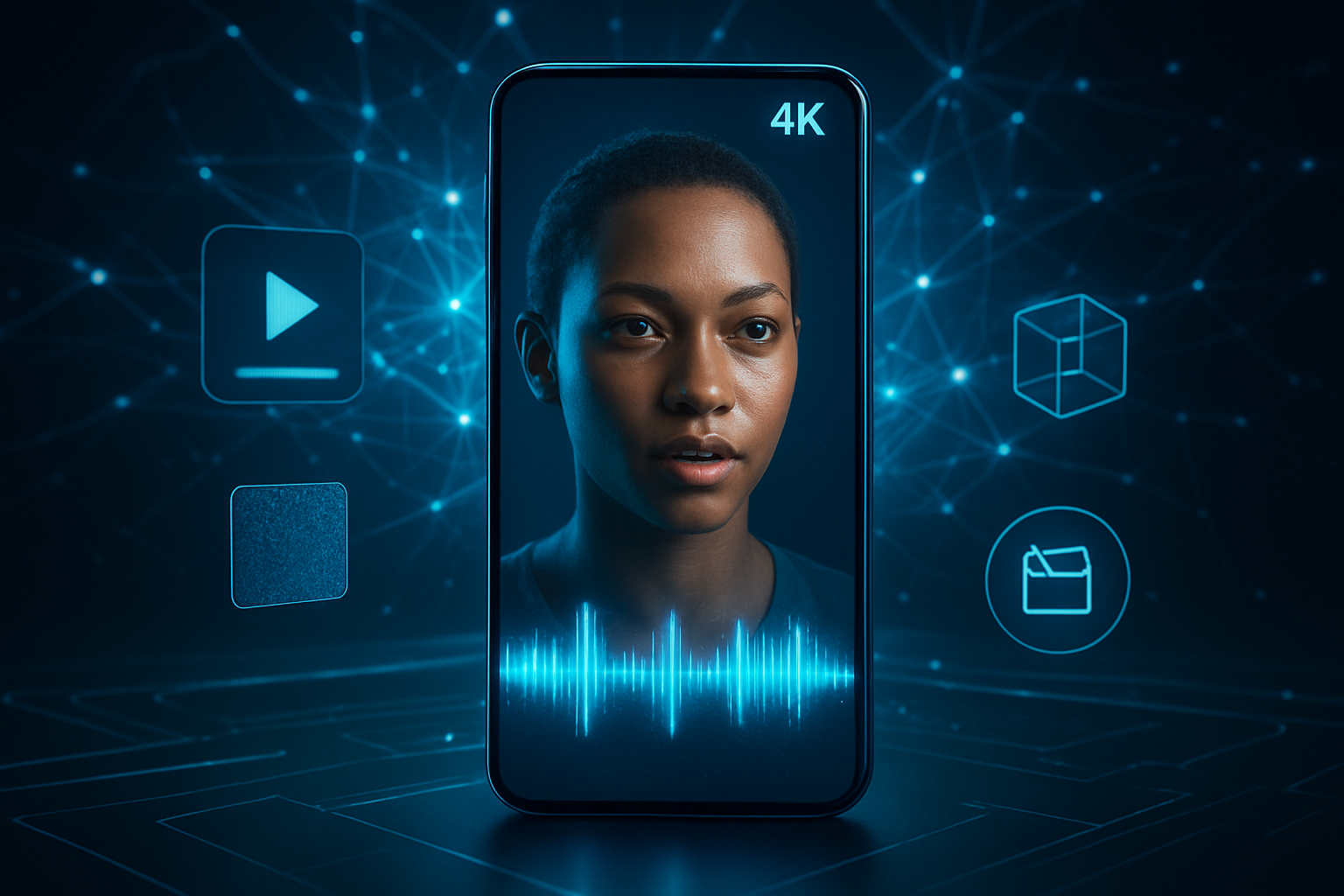
    In a move that solidifies its dominance in the generative media landscape, Google has officially launched Veo 3.1, the latest iteration of its flagship video generation model. The update, which arrived in January 2026, marks a transformative leap from experimental AI toward a production-ready engine capable of generating high-fidelity 4K video and—for the first time—synchronous, native dialogue and audio soundscapes.

    The launch is not just a technical showcase but a strategic maneuver within the Google ecosystem. By integrating Veo 3.1 directly into YouTube Shorts and YouTube Create, Alphabet Inc. (NASDAQ: GOOGL) is providing its massive creator base with professional-grade tools that were once the exclusive domain of high-budget film studios. This development signals a shift in the AI wars, moving away from simple prompt-to-video capabilities toward a comprehensive "storytelling-to-video" workflow.

    Veo 3.1 represents a massive technical overhaul of the original architecture. Built on a Gemini-based multimodal foundation, the model utilizes a hybrid Diffusion-Transformer (DiT) architecture that has been optimized for temporal consistency and high-resolution output. The most significant technical breakthrough is the "Ingredients to Video" suite, which allows creators to upload up to three reference images—such as a specific character, a background, or a style guide—to serve as constant latents. This solves the "identity drift" problem that plagued earlier models, ensuring that a character’s appearance remains identical across multiple generated scenes.

    Beyond visual fidelity, Veo 3.1 introduces a specialized sub-network for audio-visual alignment. Unlike competitors that require separate post-production for audio, Veo 3.1 generates natural dialogue, ambient noise, and sound effects in a single pass. The model calculates the physical movement of facial muscles and jaw structure in coordination with generated phonemes, resulting in lip-syncing that is virtually indistinguishable from real footage. This "learned physics" also extends to environmental interactions, with the model accurately simulating the way light refracts through water or how smoke dissipates in a breeze.

    Initial reactions from the AI research community have been overwhelmingly positive regarding the model's stability. While OpenAI (Private) and its Sora 2.0 model are still regarded as the leaders in "dream-like" cinematic aesthetics, researchers note that Veo 3.1 is significantly more practical for narrative storytelling. Experts highlight that Google’s decision to prioritize 4K upscaling and vertical 9:16 formats shows a clear focus on the current consumption habits of the digital-native generation.

    The strategic implications of Veo 3.1 are profound, particularly for the competitive balance between big tech and specialized AI labs. By embedding these tools directly into the YouTube app, Google has created a "distribution moat" that standalone players like Runway (Private) and Luma AI may find difficult to bridge. For professional creators, the convenience of generating a 60-second clip with perfectly synced dialogue and posting it immediately to YouTube Shorts is a compelling reason to stay within the Google ecosystem.

    Market analysts suggest that this launch is a direct shot at Meta (NASDAQ: META) and TikTok (ByteDance), both of which have been racing to integrate similar generative tools into their respective platforms. Analysts from firms like Gartner and Forrester point out that Google’s advantage lies in its "AI-native" development platform. "In 2026, video shorts dominate social and streaming," noted Jay Pattisall of Forrester. "Google’s integration of Veo into YouTube provides a built-in distribution advantage that competitors struggle to match without similar native generative suites."

    Furthermore, the launch positions NVIDIA (NASDAQ: NVDA) as a continued beneficiary of the AI boom, as the massive compute required to process 4K video and synchronous audio at scale continues to drive demand for next-generation Blackwell-series chips. However, for startups in the video editing and stock footage space, Veo 3.1 represents a major disruption, potentially rendering many traditional B-roll and basic editing services obsolete.

    The broader significance of Veo 3.1 lies in the democratization of high-end production. By lowering the barrier to entry for 4K narrative content, Google is enabling a new era of "faceless" storytelling and hyper-personalized entertainment. However, this advancement is not without significant ethical concerns. The ability to generate realistic "man-on-the-street" interviews or political statements with perfect lip-syncing has sparked renewed warnings from digital watchdogs about the potential for turbocharged misinformation and deepfakes.

    In response to these concerns, Google has expanded its use of SynthID, a digital watermarking technology that embeds metadata directly into the video pixels. While this provides a layer of digital provenance, experts worry that the speed at which AI content can be generated may overwhelm current verification systems. Comparison to previous milestones, such as the 2024 launch of Sora, shows that the industry has moved from "can we make video?" to "how do we control and verify it?" in less than two years.

    The environmental and economic impacts are also being debated. While Veo 3.1 reduces the cost of video production, the energy required to generate millions of 4K clips daily is substantial. Moreover, the entertainment industry is closely watching how these tools affect labor; what was once a week-long job for a small VFX and sound team can now be accomplished by a single creator in a matter of minutes.

    Looking ahead, the near-term evolution of the Veo line is expected to focus on real-time collaboration. Industry insiders predict that "Veo 4.0" will likely feature a "Director Mode," where multiple users can manipulate a 3D latent space in real-time, essentially acting as a virtual film set. This would have massive implications for the future of AR/VR, as users could potentially generate entire immersive environments on the fly.

    Challenges remain, particularly in the realm of long-form consistency. While 60-second clips are a massive improvement, generating a consistent 22-minute episode or a feature-length film remains the "holy grail" of generative video. Experts predict that the next 12 to 18 months will see a surge in AI-generated "interactive series" on YouTube, where viewers can influence the dialogue or setting of a show using text prompts, further blurring the line between gaming and cinema.

    Google Veo 3.1 is more than just a software update; it is a declaration of the "New Creative Standard." By combining 4K visual fidelity, native audio, and seamless platform integration, Google has moved generative video out of the lab and onto the phones of millions. The key takeaways from this launch are clear: consistency is the new currency, and ecosystem integration is the ultimate competitive advantage.

    As we move deeper into 2026, the industry will be watching to see how creators leverage these tools and how platforms like YouTube handle the inevitable flood of AI-generated content. The long-term impact of Veo 3.1 will likely be measured by how it changes our definition of "content creator" and whether the safeguards in place can keep pace with the sheer power of the technology. For now, the era of professional-grade AI cinematography has officially arrived.


    This content is intended for informational purposes only and represents analysis of current AI developments.

    TokenRing AI delivers enterprise-grade solutions for multi-agent AI workflow orchestration, AI-powered development tools, and seamless remote collaboration platforms.
    For more information, visit https://www.tokenring.ai/.
  • Google Veo 3: The New Frontier of AI-Driven Cinema and 4K Content Creation

    Google Veo 3: The New Frontier of AI-Driven Cinema and 4K Content Creation

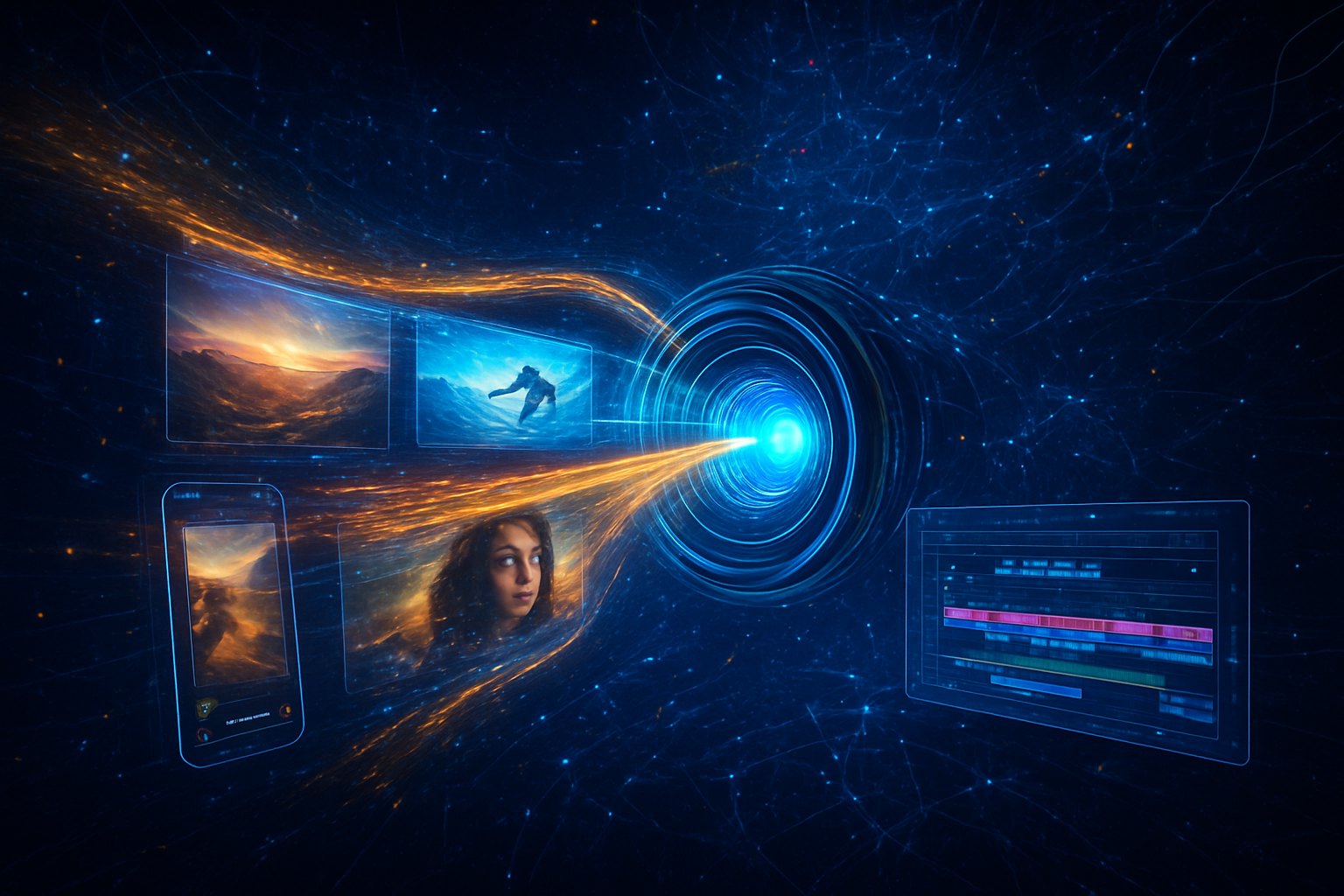
    The landscape of generative video has reached a fever pitch as Alphabet Inc. (NASDAQ: GOOGL) continues its aggressive push into high-fidelity, AI-driven cinema. Following the recent rollout of the Veo 3.1 update in early 2026, Google has effectively bridged the gap between speculative AI demos and production-ready tools. This latest iteration of the Veo architecture is not just a visual upgrade; it is a fundamental shift toward multimodal storytelling, integrating native audio generation and advanced character consistency that positions it at the forefront of the creator economy.

    The announcement of the "Ingredients to Video" feature in January 2026 has marked a pivotal moment for the industry. By allowing creators to transform static images into high-motion 4K sequences while maintaining pixel-perfect subject integrity, Google is addressing the "consistency gap" that has long plagued AI video tools. With direct integration into Gemini Advanced and a transformative update to YouTube Shorts, Veo 3 is moving beyond the research labs of DeepMind and into the hands of millions of creators worldwide.

    The Technical Leap: 4K Fidelity and the End of Silent AI Film

    Veo 3 represents a significant technical departure from its predecessors. While the original Veo focused on basic text-to-video diffusion, Veo 3 utilizes a unified multimodal architecture that generates video and audio in a single coherent pass. Described by DeepMind researchers as a "multimodal transformer," the model supports native 4K resolution upscaling from a high-fidelity 1080p base, rendering at a cinematic 24 frames per second (fps) or a standard 30 fps. This allows for professional-grade B-roll that is indistinguishable from traditional cinematography to the untrained eye.

    The most groundbreaking advancement in the Veo 3 series is its native audio engine. Unlike earlier AI video models that required third-party tools to add sound, Veo 3 generates synchronized dialogue, environmental sound effects (SFX), and ambient textures that perfectly align with the visual motion. If a prompt describes a "twig snapping under a hiker’s boot," the audio is generated with precise temporal alignment to the visual contact. Furthermore, the introduction of the "Nano Banana" consistency framework—part of the broader Gemini 3 ecosystem—allows the model to memorize specific character traits, ensuring that a protagonist looks identical across multiple shots, a feature critical for long-form narrative consistency.

    Directorial control has also been refined through a professional-grade prompting language. Users can now specify complex camera movements such as "dolly zooms" or "low-angle tracking shots" using industry-standard terminology. Initial reactions from the AI research community have been overwhelmingly positive, with experts noting that Google’s focus on "multimodal coherence"—the harmony between motion and sound—gives it a distinct advantage over competitors that treat audio as an afterthought.

    Strategic Integration: Dominating the Creator Ecosystem

    Google’s strategy with Veo 3 is clear: vertical integration across its massive user base. By embedding Veo 3.1 directly into Gemini Advanced, Alphabet Inc. (NASDAQ: GOOGL) has made Hollywood-grade video generation as accessible as a chat prompt. This move directly challenges the market positioning of standalone platforms like Runway and Pika. However, the most significant impact is being felt on YouTube. The "Dream Screen" update, powered by Veo 3, allows YouTube Shorts creators to generate immersive 9:16 vertical backgrounds and 6-second high-motion clips instantly, effectively democratizing high-end visual effects for the mobile-first generation.

    In the professional sector, the launch of Google Flow, a web-based "multitrack" AI editor, signals a direct shot at established VFX pipelines. Flow allows editors to tweak AI-generated layers—adjusting the lighting on a character without regenerating the entire background—providing a level of granular control previously reserved for high-budget CGI studios. This puts Google in direct competition with OpenAI’s Sora 2 and the latest models from Kuaishou Technology (HKG: 1024), known as Kling. While Kling remains a formidable competitor in terms of video duration, capable of 2-minute continuous clips, Veo 3’s integration with the Google Workspace and YouTube ecosystems provides a strategic advantage in terms of workflow and distribution.

    Ethics, Watermarking, and the Global AI Landscape

    As AI-generated video becomes indistinguishable from reality, the broader significance of Veo 3 extends into the realms of ethics and digital provenance. Google has mandated the use of SynthID for all Veo-generated content—an imperceptible digital watermark that persists even after editing or compression. This move is part of a broader industry trend toward transparency, as tech giants face increasing pressure from regulators to prevent the spread of hyper-realistic deepfakes and misinformation.

    The "Ingredients to Video" breakthrough also highlights a shift in how AI models interact with human-created content. By allowing users to seed a video with their own photography, Google is positioning Veo 3 as a collaborative tool rather than a replacement for human creativity. However, concerns remain regarding the displacement of entry-level VFX artists and the potential for copyright disputes over the training data used to achieve such high levels of cinematic realism. Compared to the first "AI video boom" of 2023, the current landscape in 2026 is far more focused on "controlled generation" rather than the chaotic, surrealist clips of the past.

    The Horizon: AI Feature Films and Real-Time Rendering

    Looking ahead, the next phase of Veo’s evolution is expected to focus on duration and real-time interactivity. While Veo 3.1 currently excels at 8-to-10-second "stitching," rumors suggest that Google is working on a "Long-Form Mode" capable of generating consistent 10-minute narratives by late 2026. This would move AI beyond social media clips and into the realm of full-scale independent filmmaking.

    The integration of Veo into augmented reality (AR) and virtual reality (VR) environments is another anticipated milestone. Industry analysts predict that as rendering speeds continue to decrease, we may soon see "Veo Live," a tool capable of generating cinematic environments on the fly based on a user's verbal input within a VR headset. The challenge remains maintaining character consistency over these longer durations and ensuring that the high computational cost of 4K rendering becomes sustainable for mass-market use.

    A New Era of Visual Storytelling

    Google’s Veo 3 and the 3.1 update represent a watershed moment in the history of artificial intelligence. By successfully merging 4K visual fidelity with native audio and professional directorial controls, Alphabet Inc. has transformed generative video from a novelty into a legitimate production tool. The integration into YouTube Shorts and Gemini marks a major step toward the "democratization of cinema," where the only barrier to creating a high-quality film is the limits of one's imagination.

    As we move further into 2026, the industry will be watching closely to see how OpenAI and other rivals respond to Google's "multimodal coherence" advantage. For creators, the message is clear: the tools of a billion-dollar movie studio are now just a prompt away. The coming months will likely see a surge in AI-assisted content on platforms like YouTube, as the line between amateur and professional production continues to blur.


    This content is intended for informational purposes only and represents analysis of current AI developments.

    TokenRing AI delivers enterprise-grade solutions for multi-agent AI workflow orchestration, AI-powered development tools, and seamless remote collaboration platforms.
    For more information, visit https://www.tokenring.ai/.